News 15-09-2026
США обновили правила операций с PDVSA
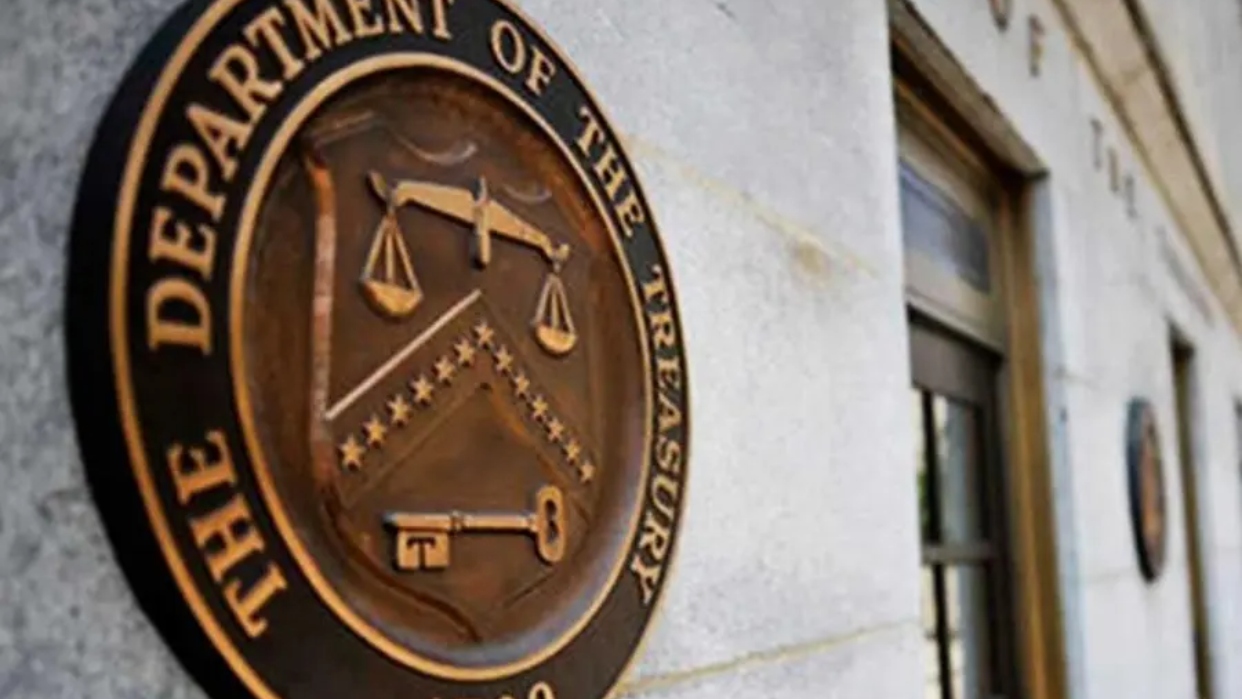
The U.S. Department of the Treasury’s Office of Foreign Assets Control (OFAC) has issued General License 52C, fully replacing the previous version, 52B. The document authorizes certain transactions with the state-owned oil company PDVSA and entities it directly or indirectly owns at least 50% of, but introduces strict conditions: commercial disputes arising from contracts must be heard in courts in the United States, the United Kingdom, France, or Singapore designated in advance. Monetary payments to blocked persons must be directed to special government or Treasury accounts; the only exception applies to local taxes, permits, and fees.
The license also permits dealings with the Venezuelan government when necessary for authorized PDVSA transactions, while maintaining broad restrictions. Transactions involving government bonds and Venezuela’s or PDVSA’s existing debts are prohibited, as are the sale, transfer, or use as collateral of the Venezuelan state’s stakes in oil companies. The document does not authorize the enforcement of judgments, seizures, or arbitration awards that would change ownership of blocked assets, and excludes individuals and entities on the U.S. Specially Designated Nationals (SDN) list. Restrictions remain in place regarding Russia, Iran, North Korea, and Cuba. Exporters of oil and petroleum products to markets outside the United States must report the parties to the transaction, amounts, dates, and delivery destinations within ten days of the first shipment and every 90 days thereafter. At the same time, the ownership structure of Citgo Holding, PDV Holding, and CITGO Petroleum Corporation remains protected from changes.
Full version: U.S. Issues General License 52C to Regulate Operations with PDVSA Under New Conditions
From U.S. Elections to the UN: A Dispute Over Rules and World Order
A legal dispute over mail-in voting in the United States, a debate over European identity, and the struggle over António Guterres’s successor at the United Nations may appear at first to be unrelated stories. For Latin American—and especially Venezuelan—audiences, however, they are united by one question: who sets the rules—citizens and institutions, or political forces capable of using administrative procedures and international structures to serve their own interests?
In the United States, the Supreme Court temporarily blocked restrictions on mail-in voting that the Donald Trump administration had sought to introduce ahead of congressional elections. According to El País, the proposed measures called for standardized envelopes with barcodes and the publication of lists of citizens eligible to vote remotely. States that failed to meet the new requirements risked losing postal delivery of ballots.
The court based its decision not only on political and legal objections, but also on practical risks. Too little time remained before the election to safely overhaul a system on which millions of voters depend. A U.S. Postal Service informant described implementation of the order as “risky and rushed” and warned of a possible “catastrophic failure”: errors in barcodes or digital infrastructure could disrupt the distribution of ballots across the country.
Justice Brett Kavanaugh emphasized that local election authorities did not have enough time to implement the new rules reasonably. Democratic state officials and civil rights organizations argued that the president could not impose regulations shortly before an important election that could “effectively eliminate mail-in voting.” Senate Minority Leader Chuck Schumer called Trump’s initiative “blatantly unconstitutional” and “indecent.”
For Venezuelans, this story may sound especially familiar. In a country where voter registration, candidate eligibility, the organization of voting abroad, and the technical details of elections are viewed as elements of political struggle, changing the rules on the eve of a vote rarely appears to be a neutral administrative measure. The U.S. dispute also demonstrates the importance of actual, rather than merely formal, access to elections: mail-in voting is particularly important for people who cannot leave work, live far from polling stations, or face other restrictions.
Trump justified the reform as a measure to combat fraud, although his claims of widespread fraud after the 2020 election were not supported by evidence. For a Venezuelan audience, this rhetoric is not new: allegations of violations can serve as a means of political mobilization and a struggle for legitimacy, rather than being solely the subject of independent technical verification. A significant contrast is the ability of U.S. states, civil society organizations, and courts to challenge a presidential order even during an election campaign.
The issue of institutions and political values also emerges in an Argentine interview on Perfil’s Modo Fontevecchia. Spanish sociologists Iago Moreno and Berna León suggest viewing the European Union not as an association based on ancestry, religion, or cultural exceptionalism, but as a project rooted in democratic principles and the memory of war.
According to León, after World War II Europeans faced a common question: how could they prevent a catastrophe of such magnitude from happening again? Moreno notes that European integration should be built on “principles and democratic values” intended to prevent a return to the former “horror.” In this interpretation, Europe is not an ethnic community but a civic space capable of including people of different origins and faiths.
The interview also criticizes the tougher U.S. foreign policy under Trump. Berna León speaks of the need to defend the “multilateral order” in the face of an American policy that he associates with the pursuit of a unipolar, or “mono-polar,” world. For Venezuela, this argument has not only ideological but also practical significance. Caracas has traditionally advocated multipolarity, criticized Washington’s sanctions and interventionist policies, and sought to maintain relations simultaneously with Europe, Latin America, China, Russia, and regional organizations.
Moreno proposes developing progressive and sovereignist ties in Ibero-America, including around the regulation of digital platforms. For Venezuela, where the information space, access to social networks, disinformation, and control over public debate remain subjects of sharp controversy, this issue is particularly relevant. At the same time, the interview is not directly devoted to Venezuela: its Latin American perspective is shaped primarily through Argentina and a comparison of the political trajectories of Argentina and Spain.
Host Jorge Fontevecchia raises a broader question: could a cultural and political bloc emerge comprising Europe, Latin America, and perhaps Canada, independent of both the United States and China? The guests warn against attempts to reduce such unity to Catholicism or a “Latin civilization.” León contrasts ethnic nationalism with a civic project, while Moreno cites Spain, whose history is connected with at least three religions. In his view, the best periods of Spanish history were associated with coexistence, while the most tragic were linked to imposing one identity on others.
This idea is particularly important for societies experiencing deep polarization. For Venezuela, it can be read as a warning against politics of exclusion—whether ethnic, religious, class-based, or ideological. In the interview, nationalism, closed borders, “Fortress Europe,” and far-right forces are presented as threats to the democratic project. Moreno criticizes those who want to “build walls again” and are prepared to tolerate people dying in the Mediterranean.
Argentina is described in this discussion as a “laboratory” of public policy watched closely by Europe’s far right. For Venezuela, this sends a mixed signal: changes in Buenos Aires affect the region’s diplomatic balance and its attitude toward Caracas, while also becoming part of a broader ideological exchange between Latin America and Europe.
If the dispute over mail-in voting shows a struggle over the rules of participation within a state, the debate over the future of the UN shifts the conflict to the global level. The Venezuelan outlet ERM Digital writes that rivalry between the United States and China could complicate the selection of the next secretary-general of the United Nations after António Guterres.
The procedure for electing the UN chief depends not on a simple majority, but on the absence of a veto from the five permanent members of the Security Council—the United States, China, Russia, the United Kingdom, and France. The article notes that Washington may count on London and Paris, while Beijing and Moscow are acting “in tandem.” Under these circumstances, the question of Guterres’s successor becomes a struggle for influence over one of the world’s principal multilateral institutions.
The publication claims that Trump is not interested in strengthening multilateral mechanisms and seeks to prevent China from “crowning” the next secretary-general. According to the outlet, his “sole concern” at the UN is to stop Beijing from determining Guterres’s successor. This view is close to the Venezuelan perception of international politics, in which the United States is often seen as a power that uses global institutions selectively, depending on its own foreign-policy objectives.
Those named among the frontrunners include Argentine Rafael Grossi, who is supported by the White House, as well as Carolyn Rodrigues-Birkett and Rebeca Grynspan, who led in informal Security Council polls. According to the article, China and Russia favor Grynspan because of her international economic agenda and her work heading UNCTAD. For Venezuela, which faces sanctions pressure, oil restrictions, and limited access to financial markets, a potential UN chief focused on trade, development, unilateral sanctions, and economic inequality would be especially significant.
The article recalls that the BRICS countries supported the idea of electing a woman and expanding regional representation. The UN has never had a woman as secretary-general, while Latin America and the Caribbean have held the post only once. For Caracas, this is connected to its longstanding criticism of the dominance of Western powers in global governance. The declaration by Brazil, Russia, India, China, and South Africa demonstrates the Global South’s desire to influence a process traditionally determined by a limited circle of great powers.
A separate dispute concerns Britain’s position on Rafael Grossi’s candidacy. London fears that the Argentine could assist Buenos Aires’s claims to the Falkland Islands. The publication’s author calls these concerns “a lie,” arguing that Grossi would not use the UN in the interests of the country of his origin. For Venezuela, the Falklands issue remains part of Latin American anti-colonial solidarity: Caracas has traditionally supported Argentina’s position and regards British control of the islands as an unresolved colonial problem.
According to ERM Digital, without an agreement between Trump and Xi Jinping, the election could drag on. The article cites as a historical example the nine informal rounds that preceded the election of Kofi Annan in 1996. For Venezuela, such uncertainty matters not only symbolically. An independent secretary-general focused on development and dialogue could become an important figure for states facing sanctions and international isolation. By contrast, a candidate perceived as close to Washington would inevitably provoke suspicion in Caracas.
All three stories point to the same problem: democratic procedures and international institutions do not exist in a vacuum. Electoral envelopes, technical standards, rules governing access to voting, European identity, the veto power of the Security Council, and the selection of the UN chief may appear to be separate administrative issues. In practice, however, it is through these mechanisms that it is determined who has the right to participate in decision-making, who is excluded, and whether an institution can preserve its independence under pressure from powerful political actors.

News 14-09-2026
Trump Says Elections Will Take Place in Venezuela
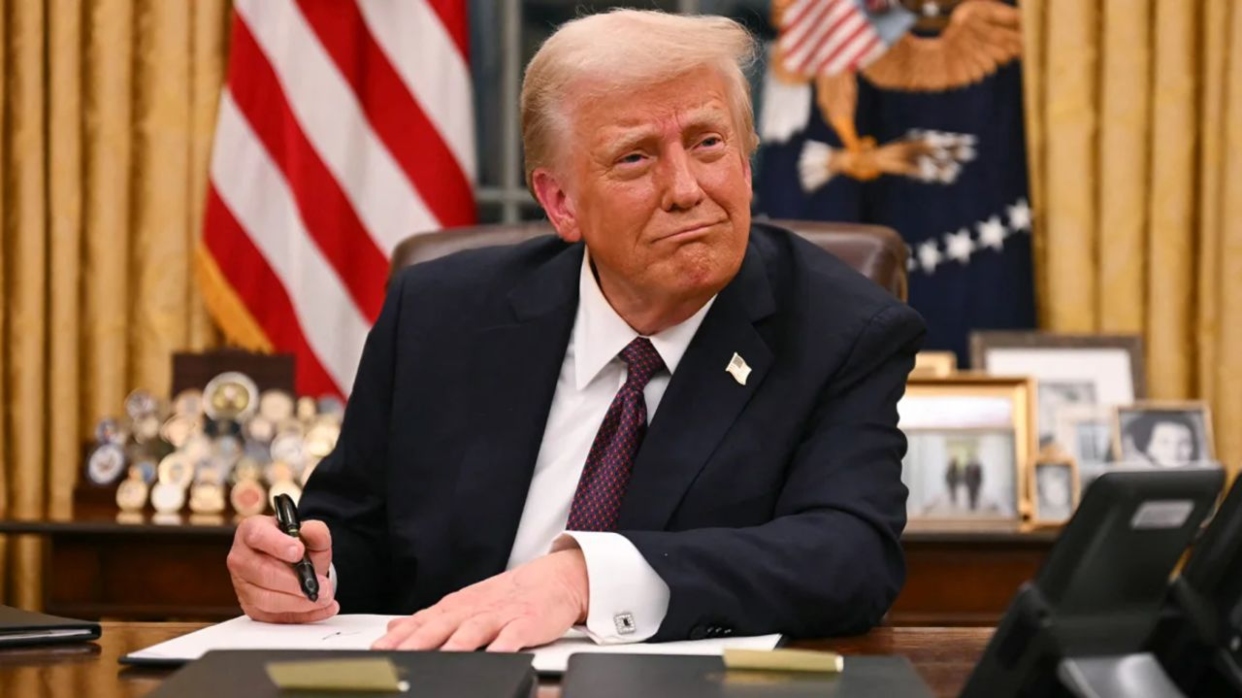
During an unofficial visit to Ireland, U.S. President Donald Trump said that elections in Venezuela should be held when the country and its citizens are ready. Asked by journalists when the vote might take place, he briefly replied: “When they are ready.” Trump also claimed that Venezuelans are “very happy” and noted increased activity in the oil sector: according to him, major energy companies are entering the country, drilling volumes and oil-revenue receipts are rising, benefiting both Venezuela and the United States.
Full version: Trump Says Elections in Venezuela Will Take Place When They Are Ready
Damascus Academy of Arabic: From Protecting the Language to Shaping Its Future
The Damascus Academy of Arabic was founded in 1919, as the Syrian state was taking shape after the Ottoman era. Even before its establishment, a translation and drafting department had been operating, dealing with official terminology and its Arabization. The academy was headed by Muhammad Kurd Ali and became the oldest modern Arabic language academy. Its original question was strictly practical: how could Arabic be made the language of the state and of knowledge?
Over more than a century, the academy played a major role in reviving the heritage, publishing, lexicography, and linguistic and literary research. Its members included not only philologists, but also specialists in medicine, law, history, and the natural sciences. For a long time, membership was associated with an almost lifelong affiliation with the institution, and the academy came to be known in the cultural imagination as the “academy of immortals.” Yet no history is sufficient to replace a reassessment of the present. The new Syria faces a broader question: what kind of academy does the new state need?
The first issue that deserves reconsideration is the transition from membership as a permanent status to membership as a scholarly responsibility linked to work and results. This does not diminish the achievements of distinguished scholars, nor does it mean breaking with the academy’s history. If membership is tied to genuine participation, a project, research, committee work, and a concrete contribution, it becomes more dynamic and opens the way for new generations of researchers and scholars. It would be natural to make membership fixed-term or renewable according to clear academic criteria. Then the departure of one member and the arrival of another would not be an expulsion, but a natural movement in the life of the institution.
The academy needs eminent scholars, but it also needs leadership capable of turning their ideas into programs, programs into projects, and projects into tangible impact. Not every great scholar is necessarily a successful administrator. Today, the management of research institutions is no longer a secondary matter: it involves personnel, funding, publications, partnerships, digital transformation, academic rights, and ties with universities and state institutions. The future academy can therefore be envisioned as standing on two complementary wings: scholarly leadership with the authority and ability to set directions, and an effective executive administration with clearly defined powers and accountability that can be evaluated. In this way, the academy will preserve the prestige of the scholar while gaining institutional effectiveness.
Scientifically, however, the academy Syria needs cannot remain confined to the parameters that were sufficient half a century ago, although grammar, morphology, lexicography, and work with the heritage remain integral to its mission. Alongside these, it should encompass modern linguistics, terminology, translation, Arabic-language teaching, language policy, computational linguistics, artificial intelligence, digital corpora, the language of the media, administration, and legislation, as well as Arabic digital content. The changes in Syria, the return of Syrians from different linguistic environments, expanding contact with foreign languages, the rise of digital culture, and the entry of AI into education, research, and work make the need for a Syrian language policy even more urgent.
Today, the question is no longer whether Arabic can create a term for something produced by the world. It is how Arabic is present in the very environment where knowledge is created. The difference between a language that waits for knowledge in order to translate it and a language that participates in producing knowledge is fundamental. That is why updating the academy is not a cosmetic reform, but a condition for Arabic to become not only an object of protection, but also an instrument of modern scientific and social development.
Renewal does not mean pushing aside older scholars for the sake of younger ones, just as preserving experience does not mean closing the doors to newcomers. The criteria should be competence, productivity, effectiveness, and scholarly presence—not personal connections, hostility, or belonging to a particular generation. A successful academy brings together the scholar who preserves the institution’s memory, the researcher who commands new linguistic tools, the lexicographer, the translator, the terminology specialist, the Arabic-language teaching researcher, and the expert in computer science and AI. It will then be more closely connected to the university, more visible within the state, and more influential in society. The paradox is that such renewal does not distance the academy from its beginnings; it brings it back to them. The most accurate image of the future is an “academy of scholarly leaders and effective administrations,” where a scholar is great because of their knowledge, while the institution remains greater than any of its members. A modern state does not need institutions living in their past, but institutions that know and preserve their history and then build upon it. The Damascus Academy of Arabic should remain ancient, but not outdated; a guardian of Arabic, but not merely a guardian; it should move from preserving the language to participating in creating its future.
Comments on the News
Who was Muhammad Kurd Ali, and what role did he play in Syrian cultural and political life apart from leading the Damascus Academy of Arabic? — Muhammad Kurd Ali (1876–1953) was a Syrian historian, journalist, writer, and politician, and one of the leading figures of the Arab Nahda, or Renaissance. In addition to heading the Arab Academy in Damascus for many years (from 1919), he founded the al-Muqtabas newspaper, served as minister of education in the government of King Faisal and during the French Mandate, and was a member of the Syrian parliament and Constituent Assembly. He authored the multivolume Khiṭaṭ al-Shām, an encyclopedia of Syria’s history, geography, and culture. He advocated Arab national consciousness, educational reform, and the standardization of Arabic, operating within the Mandate system and combining nationalism with political pragmatism.
What is generally meant in the Syrian context by “the new Syria,” and which political processes of recent years are shaping reforms of state institutions, including the language academy? — In Syrian discourse, “the new Syria” refers to a project to restructure the country after the conflict that began in 2011. In a narrower sense, it refers to the period after the change of power in December 2024, when a transitional government, a new constitution, elections, and institutional reform are being discussed. Key processes in recent years include UN Security Council Resolution 2254, the Geneva talks and the Constitutional Committee, the Astana process, normalization with Arab countries, Western sanctions, the economic crisis, the return of refugees, and reforms of security, judicial, cultural, and educational structures. Reform of the language academy fits into the broader effort to renew cultural policy, but concrete steps will depend on which government and cultural doctrine are established during the transitional period.
How are other Arabic language academies—for example, those in Cairo, Baghdad, or Amman—organized, and how does the Damascus Academy differ from them in terms of membership, funding, and governance? — The Cairo Academy of the Arabic Language (founded in 1932) is the largest and most influential. It is state-funded, has dozens of full members elected by the academy and approved by the authorities, and maintains an extensive system of committees on terminology and dictionaries. The Iraqi Academy of Sciences in Baghdad (founded in 1921; its language department was established later) is also state-funded and follows the Cairo model. The Jordan Academy of Arabic in Amman (founded in 1976) is a state body whose members are appointed by royal decree and whose budget comes from the treasury. The Damascus Academy (founded in 1919) is the oldest in the Arab world. Historically, it was more pan-Arab, with elected full and corresponding members from other countries, but under Ba’athist rule it effectively became a state institution under the Ministry of Culture. The common features are state funding, the appointment or approval of members, and governance through a president, council, and committees. The differences include Damascus’s age and historical authority, as well as its more limited resources and influence after 2011, while Cairo dominates standardization and Baghdad and Amman serve as regional centers.
Which waves of the Syrian diaspora and return from different linguistic environments are being referred to, and how does this affect the language situation and demand for Arabic in Syria? — The waves usually identified include the late nineteenth and early twentieth centuries (economic migration to the Americas); 1948 and 1967 (following the Arab-Israeli wars); the 1970s and 1980s (political emigration after the suppression of the Islamist uprising); and the mass wave that began in 2011 (refugees in Turkey, Lebanon, Jordan, Europe, the Gulf states, and North America). Returns may be voluntary, forced, or sporadic—from Turkey, Lebanon, Jordan, Europe, and the Gulf. A new phase of repatriation may be possible after 2024. The diaspora comes from various linguistic environments and brings German, Swedish, French, English, Turkish, Spanish, Portuguese, and different Arabic dialects. This strengthens multilingualism and dialect mixing, weakens Arabic among young people, and increases demand for Arabic as a second or heritage language, for Modern Standard Arabic courses, and for adapting academic standards to the education of returnees.

Full version: Damascus Academy of Arabic: From Protecting Arabic to Shaping Its Future
Trump and the Unpredictable Policies of the US
Donald Trump’s statements and reversals regarding Iran and Ukraine, as well as trade relations with Ireland and Mexico, have once again attracted international attention. Reactions to his policies show how Washington’s unpredictability affects its allies, conflict zones, and the global economy, while provocative nationalist rhetoric is increasing concern over the role of the United States in tensions in the Middle East. This material was prepared based on Instagram posts (Venezuela).
Venezuelan Reactions to Trump: Oil, Sovereignty, and Distrust
Donald Trump’s statements about Venezuela prompted two distinctly different but thematically connected reactions on local social media. On the one hand, they are seen as an opportunity to revive the oil industry, attract foreign currency, and create jobs. On the other, there are concerns that any agreements with Washington could become a new deal centered on the country’s natural resources and political future.
In a Diario Avance 24 post, Trump is presented as offering an optimistic assessment of developments in Venezuela’s oil sector. According to the account, Venezuela is experiencing a “positive moment” thanks to the arrival of major international oil companies. He links the expansion of energy activity to revenues for both Venezuela and the United States.
Chevron and ExxonMobil are named as participants in the presumed expansion of oil operations. The post also refers to millions of barrels of Venezuelan oil being shipped to Houston for processing. This is an especially sensitive issue for Venezuela: oil remains the main source of export earnings, government revenue, and foreign-currency income, while the state of the industry directly affects employment, the availability of imported goods, and everyday economic conditions.
In this interpretation, cooperation with major US companies appears to offer a possible path toward increased production, the restoration of export flows, and the creation of jobs. The optimistic message is that oil activity could generate economic momentum “on both sides of the Caribbean”: Venezuela would gain demand for its crude and potential investment, while the United States would receive oil supplies and increased use of its refining capacity.
However, the post contains no comments from Venezuelan politicians, PDVSA representatives, industry workers, or independent economists. Its assessment is based primarily on Trump’s words and does not address key questions: what share of the revenue will remain in the country, how stable the licenses and agreements will be, who will receive the new jobs, and whether the oil industry could once again become dependent on political decisions in Washington.
These doubts are particularly evident in another Venezuelan reaction—a satirical and sharply anti-interventionist Instagram post. Its author views possible US contacts with Venezuela’s opposition and authorities not as an attempt to help the population, but as a pragmatic search for political and economic gain.
The post mocks part of the opposition, accusing it of seeking to “sell Venezuela” to the United States. In this satirical framework, Trump supposedly rejects not intervention itself, but those he considers unsuitable intermediaries: “I don’t do business with clowns.” The rhetoric is based on the assumption that US foreign policy may be aimed primarily at gaining control over Venezuela’s assets, oil, and strategic resources.
The author describes two ironic scenarios: either Washington will support a “government of convenience,” or it will preserve the current authorities if they “give it everything.” The formula reflects deep distrust both of external actors and of Venezuela’s elites. In this depiction, the United States is a force capable of bargaining over oil and power, while local politicians are participants in a potential deal aimed at preserving their own positions.
The reference to the “government of Narnia” is used to mock alternative political projects and opposition figures whom the author considers detached from the country’s real situation. At the same time, the post does not claim to offer a neutral description of the negotiations or US policy: it is built on hyperbole, sarcasm, and fear of a loss of sovereignty.
Both reactions show why the issue of oil in Venezuela cannot be viewed merely as a commercial matter. After the nationalization of the oil industry, the sector became not only the foundation of the state model but also a symbol of national control over the country’s key resource. Later, it became central to disputes over sanctions, licenses, PDVSA management, the role of foreign corporations, and access to global markets.
For this reason, references to Chevron, ExxonMobil, and shipments to Houston mean more to many Venezuelans than simply an expansion of business. They may be seen as a sign of possible economic revival, but also as a reminder of the country’s longstanding dependence on oil exports and the US market. Hopes for investment, foreign-currency earnings, and jobs coexist with fears that the benefits of new agreements will go primarily to foreign companies and political groups rather than to the country’s population.
As a result, Trump’s statements about Venezuelan oil have become part of a broader debate: can international involvement help rebuild a devastated economy without turning sovereignty and natural resources into objects of political bargaining?


News 13-09-2026
Nabil Fahmy: Syria Needs State Reconstruction and the Return of Its Citizens
Arab League Secretary-General Nabil Fahmy said that Syria’s main challenge is not its relations with Arab countries, but liberating occupied territories, restoring international ties, rebuilding the state and strengthening domestic stability. He said Arab countries regard Syria as a full member of the League, and that its relations with the Arab region are developing positively.
Fahmy noted that discussions within the Arab League focus on restoring Syrian sovereignty, state institutions and stability, as well as on the situation of Syrians living abroad. He stressed the need for their return and participation in rebuilding the country. Fahmy also called on Israel to withdraw from the Golan Heights, saying that Israel’s occupation of Syrian territories had expanded following political changes in Syria.
According to Fahmy, explanations from Syria’s new administration helped Arab countries establish a more constructive political and economic dialogue with Damascus. Speaking about Lebanon, he called for strengthening the state’s sovereign decision-making, preserving its unity and preventing the country from being drawn into internal conflicts. At the same time, he said the situation cannot be reduced solely to Hezbollah’s weapons, as the ongoing Israeli occupation remains one of the key problems.
Regarding Iran, Fahmy condemned Tehran’s interference in the internal affairs of other countries, but stressed that Iran cannot be ignored. He advocated direct and frank dialogue, noting that strengthening state institutions and countries’ independence reduces opportunities for external interference. As an example, he mentioned Yemen and tensions in the Red Sea, where state weakness makes it easier for external actors to exert influence.
Assessing the confrontation between the United States and Iran, Fahmy said it would not end with a military victory for either side and would fluctuate between escalation and de-escalation. In his view, Iran is unable to confront the United States in a direct war and therefore seeks to influence American decisions through economic interests. Overall, he called for resolving regional crises through political means and dialogue, while prioritizing the restoration of states’ territorial integrity and sovereignty.
Comments on the News
What exactly does the required restoration of Syria’s state institutions after years of conflict entail, and which government bodies are considered essential for restoring stability? — This means rebuilding a legitimate and effectively functioning system of governance, including public services, courts, police, armed forces, local authorities, financial institutions and mechanisms of public oversight. The key institutions are considered to be the central government, parliament, an independent judiciary, local self-government bodies and professional security services operating within the law. Constitutional reform, combating corruption and including various ethnic, religious and political groups in governing the country are also important.
What is the international legal status of the Golan Heights, and why does their possible return remain a central issue of Syrian sovereignty? — The Golan Heights are considered Israeli-occupied Syrian territory according to the position of most states and United Nations Security Council resolutions, including Resolution 497, which declared Israel’s decision to extend its laws to the territory null and void. Israel has controlled the Golan Heights since 1967 and extended its laws to them in 1981. In 2019, the United States recognized Israeli sovereignty over the area, but that decision has not received broad international recognition. The possible return of the Golan Heights concerns not only Syria’s territorial integrity, but also security, access to water resources and a final settlement of the Syrian-Israeli conflict.
What obstacles hinder the return of Syrian citizens from neighboring countries and Europe, and what role could Arab states and the Arab League play in their reintegration? — The main obstacles include a lack of security and sustainable livelihoods in Syria, destroyed housing and infrastructure, the risk of persecution or arbitrary detention, unresolved documentation and property issues, as well as restrictions imposed by host countries and refugees’ own concerns. Return requires security guarantees, access to housing, education and healthcare, the restoration of documents and protection of property rights. Arab states can finance reconstruction, support voluntary and safe-return programs and provide jobs. The Arab League can coordinate such policies, seek international funding and facilitate dialogue between Syria, refugee-hosting countries and international organizations.


Full version: Nabil Fahmy: Syria’s challenge is liberating its territory—not war or peace in the conflict with Iran
Oscar Schémel: Venezuelans Are Tired of Confrontation and Want Peace
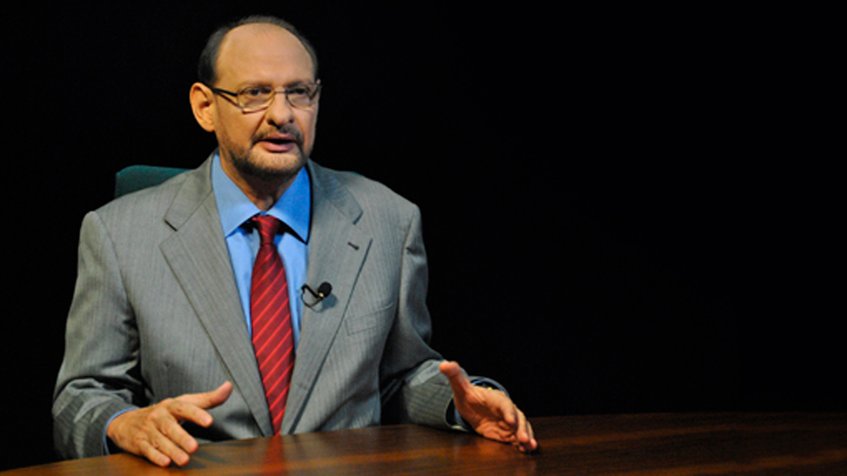
Oscar Schémel, president of the research company Hinterlaces, said that sovereignty, peace, and unity are becoming the foundation of Venezuela’s emerging national identity. According to him, most citizens are tired of political confrontation and now favor agreement and consensus. This is especially evident on economic issues, where positions are currently converging to an unprecedented degree. Schémel believes that ideology and politics are no longer ends in themselves but are viewed as tools for achieving prosperity, happiness, and social advancement, while confrontation has failed to produce the results the country expected. The analyst also called the current period an important stage of pragmatism and a reassessment of relations with the United States, stressing that this involves not only an oil contract but also the beginning of a new oil doctrine under Venezuelan President Delcy Rodríguez.
Full version: The Venezuelan People Are Exhausted by Confrontation and Call for Peace, Analyst Oscar Schémel Said
Iraq Intensifies Investigation into Drone Attacks on Saudi Oil Pipeline
Iraqi authorities have expanded security measures and their investigation following drone attacks on Saudi Arabia’s East–West oil pipeline in the areas of Riyadh and Medina. Saudi Arabia said the drones had been launched from Iraqi territory, while Baghdad confirmed that they had taken off from Maysan province in the country’s southeast. Iraq’s leadership has begun searching for those involved and inspecting the launch sites.
Security forces carried out raids in the Jazirat al-Tayeb area, finding traces and evidence near the Duweirij River indicating that drones had been launched there. Prime Minister Ali al-Zaidi also agreed to Iran’s proposal to conduct a joint investigation into launch platforms found near the border. According to Reuters, one of the border areas with Iran was closed after objects linked to the attacks were discovered. The Islamic Resistance in Iraq group, meanwhile, denied accusations that it had attacked Saudi facilities.
After Maysan’s involvement was confirmed, the prime minister dismissed the province’s operations commander and police chief and referred the heads of local security agencies for investigation. General Ali Abd al-Hussein Kazem was appointed as the province’s new commander, and an investigative committee was established to assess the work of the joint security body. Administrative and operational measures were temporarily strengthened at some border crossings; the Shalamjah crossing was closed as a precaution, although movement between Iraq and Iran continued through the Zurbatiyah and al-Munthiriya crossings.
Saudi Arabia’s Foreign Ministry said Riyadh had decided for now not to respond with force and to support the actions of the Iraqi government. The decision was made after Iraq’s prime minister asked Riyadh to give Baghdad time to prevent attacks launched from its territory. Saudi Arabia retained the right to take any measures necessary to protect its sovereignty, security, facilities, citizens and residents. The attacks caused casualties and damage, and the pipeline’s operation was temporarily suspended while its safety was inspected.
The attacks came after similar attempts on July 27, when Saudi Arabia also said that drones had been launched from Iraq by armed groups linked to Iran. Baghdad faced a serious challenge: it must identify those responsible, demonstrate control over its territory and prevent further conflict with Saudi Arabia and other countries in the region. The East–West oil pipeline, known as Petroline, stretches approximately 1,200 kilometers from Abqaiq to Yanbu and can transport up to 7 million barrels of oil per day to the Red Sea, bypassing the Strait of Hormuz.
News Commentary
How do Iraq’s historical and political relations with Iran affect the presence of Iran-linked armed groups in Maysan province and Baghdad’s ability to control border areas? — Iraq’s longstanding ties with Iran, which grew particularly stronger after the fall of Saddam Hussein’s regime and the fight against the Islamic State*, helped consolidate pro-Iranian political parties and armed groups. In Maysan, which borders Iran, this facilitates the movement of people, weapons and goods and expands such groups’ influence over local authorities and the economy. Formally, security is controlled by Baghdad, but in practice, weak state institutions, competition among security agencies and local ties make it difficult to exercise full control over the border.
Why is the East–West oil pipeline, or Petroline, which runs to the port of Yanbu, strategically important for Saudi Arabia and global oil supplies, particularly amid threats to shipping through the Strait of Hormuz? — The pipeline allows Saudi Arabia to transport oil from fields in the country’s east to the port of Yanbu on the Red Sea, bypassing the Persian Gulf and the Strait of Hormuz. It therefore provides an alternative export route in the event of military escalation, attacks or the blocking of shipping through the strait, a route through which a significant share of global oil trade passes. However, its capacity is limited compared with Saudi Arabia’s total export volume, so it reduces risks but does not eliminate them entirely.
How is the system for managing and coordinating security forces organized in Iraq’s provinces, and why did responsibility for the attacks lead to the dismissal of local commanders and a review of the joint security body? — In Iraq, security responsibilities are divided among federal forces, the army, police, Interior Ministry units, the Popular Mobilization Forces and, in some areas, local formations. Their coordination is generally carried out through provincial operations commands and joint committees, but their mandates may overlap and intelligence-sharing may be insufficiently effective. When attacks occur despite the presence of several security structures, the authorities view this as a failure of command and coordination. The dismissal of local leaders and review of the joint security body are therefore intended to establish who was responsible for preventing the attacks, identify shortcomings in information-sharing and redistribute responsibility.

Full version: “East–West” attack... Iraq discovers traces of drone launches and closes border area
Trump and the New Geography of Pressure
Venezuelan media are closely following Donald Trump’s foreign-policy moves—from his support for the war with Iran to statements about possible mediation in the dispute over the Malvinas (Falkland) Islands and his endorsement of Irish reunification. These stories show how the personal diplomacy of the U.S. president can strain relations with traditional allies, influence conflicts, and pose questions of sovereignty in new ways. This review is based on materials from Instagram (Venezuela) and Orain.eus (Venezuela).
Trump’s Remarks on Ireland Spark Sovereignty Debate
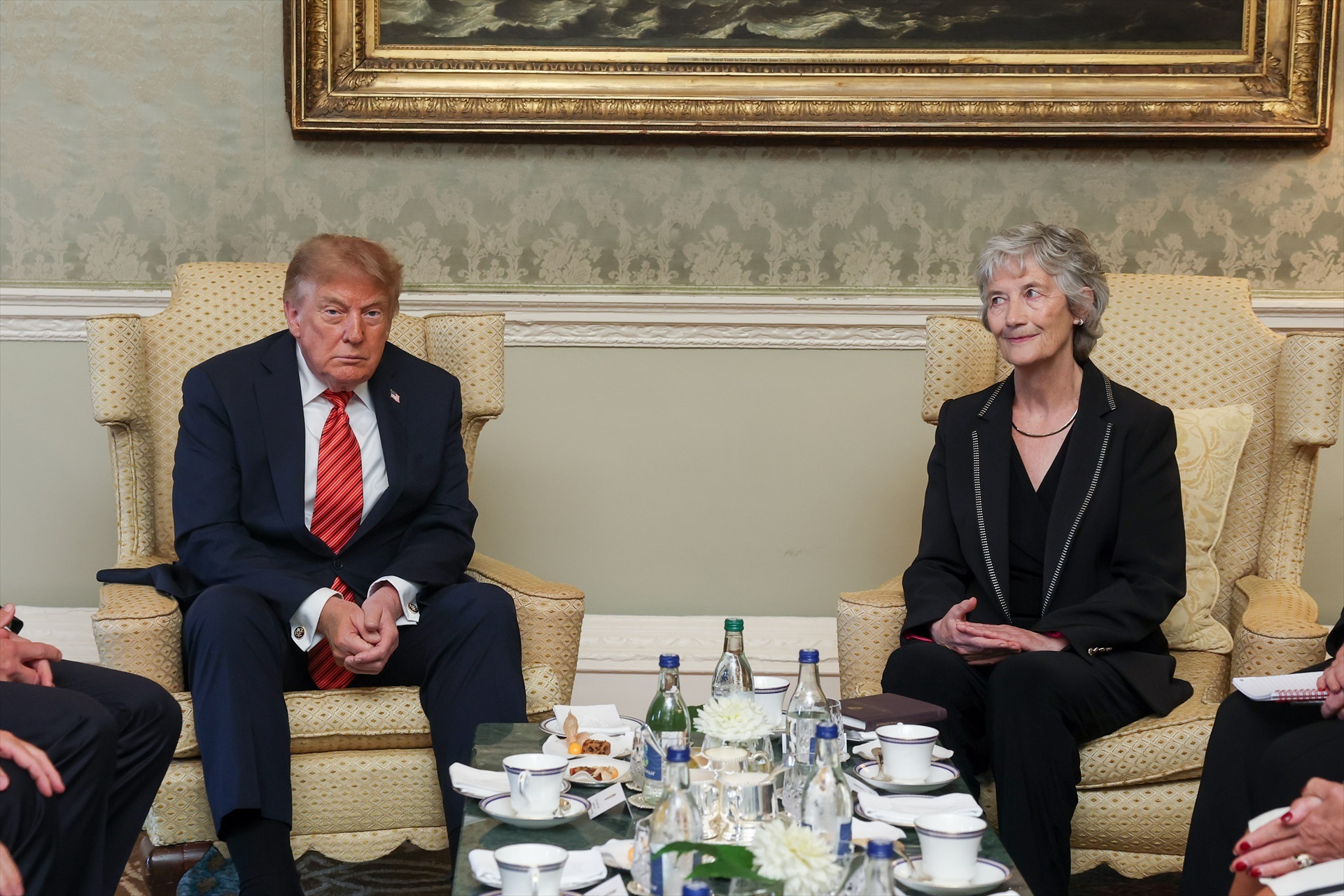
Donald Trump’s statement that Irish reunification would be desirable was not merely an episode during his visit to Dublin. It also prompted a new discussion about the limits of external interference in matters of national self-determination. According to Orain and a post circulated by a Venezuelan source via Instagram, the U.S. president said he “would like to see” a united Ireland and was certain that “sooner or later, it will happen.”
Trump called Irish Prime Minister Micheál Martin “the right person” to begin the process. At the same time, he acknowledged that the United Kingdom “will also have something to say.” According to the reports, the American leader also said he was ready to play the role of the “right person” to initiate discussions, although his trip to Ireland was largely connected with a private visit and golf.
Such remarks are particularly sensitive in Northern Ireland. The island’s current political arrangement took shape after the partition of Ireland in 1921. The ensuing conflict between unionists, who supported keeping the region within the United Kingdom, and Irish nationalists lasted nearly three decades, claimed more than 3,500 lives, and ended with the political settlement established by the Belfast, or Good Friday, Agreement of 1998.
The agreement provides for the possibility of a referendum on Northern Ireland’s constitutional future, but the issue must be addressed through the established legal process and only when there are grounds to believe that a majority of residents might support change. This is why Trump’s remarks drew criticism from British and Northern Irish politicians.
Gavin Robinson, leader of the Democratic Unionist Party, stressed: “The people of Northern Ireland will decide the territory’s constitutional status—not comments from London, Dublin, or Washington.” A Downing Street spokesperson, meanwhile, said that a new referendum would be impossible without clear public support. Conservative Party leader Kemi Badenoch called Trump’s comments “frivolous” and said they were creating “unnecessary tension.” She compared them with the U.S. president’s earlier remarks about the possible annexation of Greenland or Canada.
The Venezuelan reading of this story centers primarily on the issue of sovereignty. The reports do not include direct comments from Venezuelan authorities, politicians, or experts, but the choice of subject fits Caracas’s familiar view of international relations. For decades, Venezuela’s official rhetoric has emphasized noninterference, national independence, and the right of peoples to determine their own political systems.
From this perspective, the U.S. president’s words can be interpreted in two ways. On the one hand, the aspiration for Irish reunification can be associated with overcoming Britain’s colonial legacy, the history of a divided island, and the right to self-determination. On the other hand, public support from the leader of a foreign power for a specific outcome may appear to be an attempt to influence an extremely delicate domestic and regional debate.
This aspect is particularly important for Venezuela. Caracas regularly accuses Washington of using diplomatic, economic, and political pressure to influence the internal processes of other countries. Against the backdrop of sanctions, international disputes, and the politicization of the Venezuelan agenda, Trump’s remarks on Ireland may be seen as another reminder that influential states often publicly signal their preferred outcomes in conflicts that, according to supporters of the principle of noninterference, should be resolved exclusively by the people of the territories concerned.
Thus, the story has gone beyond the debate over Northern Ireland’s future. It has once again raised the question of where the line lies between expressing a political position and interfering in the sovereign affairs of other states. In both the Irish and Venezuelan contexts, the answer comes down to one principle: the final decision about a territory’s borders, status, and future should belong to its residents, not to foreign leaders.

News 12-09-2026
Israel Says It Destroyed Hezbollah Underground Complex in Southern Lebanon
The Israeli military said it had completed an operation against a Hezbollah underground complex in the Ali al-Taher heights area of southern Lebanon. According to the military, dozens of the organization’s fighters were killed inside the fortification, while Israeli units established fire control over the heights before withdrawing to rear positions near Shakif Castle.
The operation was preceded by several weeks of preparation. It began after Israeli forces seized Shakif Castle and crossed the Litani River, while units of the 36th Division began striking military infrastructure north of the river. The Israeli military considers the Ali al-Taher complex one of Hezbollah’s key command centers in the area.
According to the Israeli account, the complex consisted of eight tunnels with a combined length of more than 5.4 kilometers and enabled surveillance over a vast area. The operation was carried out in stages: reconnaissance and surveillance equipment was destroyed, tunnel entrances were exposed, the fighters inside were trapped, and an assault was then launched with drone and air support. The military said it used more than 1,100 tons of explosives to destroy the network and also discovered drones, anti-tank missiles, and other weapons.
The Israeli military claims that about 50 Hezbollah fighters were inside, some of whom managed to escape during the fighting. According to the military, those who remained were offered the chance to surrender, but after refusing, they were killed when the complex was blown up. Following the operation, Israel increased the readiness of its air-defense systems because of a possible response from Iran or Hezbollah, but reported no signs of an imminent attack being prepared. The authorities said the United States had been informed about the operation in advance and had passed the information to the Lebanese government; independent data on casualties has not yet been published.
Comments on the News
How do Shakif Castle and the Ali al-Taher heights affect control over southern Lebanon, particularly given their location relative to the Litani River and the border with Israel? — Shakif Castle (Beaufort) overlooks the Litani River valley and important roads leading to the Israeli border. Whoever controls this high ground gains advantages in surveillance, defense, and potential fire control over a significant part of southern Lebanon. The Ali al-Taher heights are also strategically important: they provide observation of border areas and routes leading toward the Litani. Together, these positions form an important system for controlling movement and defense in the region, although they do not by themselves guarantee complete control over the territory.
What role does Hezbollah play in Lebanon’s political and military life, and why are its underground facilities in this region so important for the country’s security? — Hezbollah is simultaneously a political party, a social organization, and an armed movement with considerable influence, particularly among the Shiite population. It participates in elections and state institutions but maintains an independent military structure that is not fully subordinate to Lebanon’s government bodies. Underground facilities in southern Lebanon allow weapons to be stored covertly, personnel to be moved, and command posts to be protected from surveillance and airstrikes. Their presence complicates Israel’s operations and increases the risk of a large-scale escalation, making them significant not only to the confrontation with Israel but also to Lebanon’s sovereignty and internal security.


Full version: Hezbollah Members Chose Death: Israel Withdraws from the Ali al-Taher Heights and Reveals Details of the Explosion
Delcy Rodríguez Discusses New Areas of Cooperation with Suriname
During her official visit to Suriname, Venezuelan President Delcy Rodríguez began talks with Surinamese President Jennifer Simons at the Presidential Palace in Paramaribo. The sides reaffirmed their intention to strengthen bilateral cooperation and conclude mutually beneficial agreements. The talks also provided an opportunity to assess the implementation of previous agreements and the work of technical commissions established after Suriname’s Foreign Minister Albert Ramdin visited Venezuela in May.
The new agenda’s top priorities included energy—including oil, gas and strategic resources—as well as the development of maritime and air links. The countries also intend to expand cooperation in agriculture and fishing, strengthen food security, and step up trade, tourism, and cultural and educational exchanges. Diplomatic relations between Venezuela and Suriname were established in November 1975; the current meeting is intended to advance them to a new stage of regional integration in the Caribbean and South America.

Full version: President Delcy Rodríguez Begins Working Meetings in Suriname
New Drug-Trafficking Methods on the Syrian-Jordanian Border
Drug smuggling across the Syrian-Jordanian border is increasingly moving beyond traditional methods. In the first half of 2026, Jordan’s border service thwarted 231 attempts at smuggling and illegal entry, seizing around 11 million Captagon pills, 14 kilograms of other drugs, including crystal methamphetamine and “Hydro,” as well as weapons. More than 1,663 packages of hashish and 125 GPS devices were also confiscated. Jordanian authorities consider drug trafficking and cross-border infiltration among the country’s main security threats.
Syrian authorities have also reported major seizures. On September 7, the transport of 218,000 Captagon pills and 44 kilograms of hashish was thwarted in the countryside of As-Suwayda Governorate. Earlier, on August 29, 138 kilograms of hashish and 382,000 pills were confiscated in the same area. Overall, more than 2.9 million Captagon pills and 724 kilograms of hashish were seized in various Syrian provinces during August. As-Suwayda accounted for more than 14% of all Captagon pills seized in the country, underscoring the region’s importance as a key route to Jordan and onward to neighboring markets.
According to experts, smugglers are actively using small drones and GPS-guided balloons capable of delivering drug shipments to predetermined locations. Empty balloons are launched at the same time to confuse surveillance systems. Drones usually carry small quantities, particularly crystal methamphetamine, while balloons can transport bags containing larger shipments. Specialists believe that repeated operations of this kind being thwarted indicates improved preparedness and coordination among security forces.
Another route runs through valleys and hard-to-reach areas in southern As-Suwayda, particularly during winter, when fog reduces visibility. Groups of around 20 porters cross the border on foot; each can carry approximately 35 kilograms and earn between $8,000 and $10,000. They are accompanied by armed men who provide cover during clashes. When threatened with arrest, smugglers abandon the cargo and retreat into Syria. The use of SUVs to transport large shipments and weapons has declined significantly since the fall of Bashar al-Assad’s regime. However, at the Jaber–Nassib crossing, drugs are still concealed in trucks or among commercial cargo.
Photographs published by the Jordanian military show that the most commonly used drones are quadcopters manufactured between 2013 and 2019. Some cost no more than $1,000, can fly between three and five kilometers, and are equipped with high-resolution cameras. They use Wi-Fi, GPS and ultrasonic sensors to avoid obstacles, while operators can preset routes and coordinates. Thanks to autonomous navigation systems, a drone can complete a flight without continuous manual control.
Amid the rise in drug trafficking, Amman and Damascus have stepped up military and security cooperation, seeking to pursue smuggling networks and identify production facilities on both sides of the border. Jordanian sources link the increased activity in As-Suwayda to the group led by Hikmat al-Hajri, accusing it of ties to the drug trade and external support, including from Israel. The article presents these accusations without the group’s own position. According to Jordanian sources, the group allegedly created favorable conditions for smugglers and received funding from traffickers for its armed activities. The renewed activity has also been linked to its opposition to the Jordanian-American-Syrian roadmap signed in Amman in September last year.
Comments on the News
Why has As-Suwayda Governorate become such an important hub for drug-trafficking routes into Jordan, and how do its mountainous terrain, proximity to the border and local social ties affect this? — As-Suwayda is located in southern Syria near Jordan and has a long border that is difficult to monitor fully. Its mountainous and rugged terrain facilitates the covert movement of people and cargo, particularly in remote areas and at night. Weak state institutions after years of war, the presence of local armed groups, and family or tribal ties on both sides of the border also help smugglers find guides, shelters and safe routes. However, this does not mean that the entire local population or the Druze community is involved in drug trafficking: most residents oppose it.
What is the Jaber–Nassib crossing, and why does it remain vulnerable to drugs being concealed in trucks and commercial shipments despite tighter controls? — Jaber–Nassib is an official road crossing between Jordan and Syria: in Jordan it is called Jaber, while in Syria it is known as Nassib. It is an important trade and transit route linking Syria, Jordan and the Gulf states. Tighter controls make overt smuggling attempts more difficult but do not eliminate the risk entirely: large volumes of cargo pass through the crossing every day, sophisticated concealment methods and forged documents are used, and inspecting every truck requires considerable time and resources. In addition, some drugs may be moved not through the official crossing but along illegal routes near the border.
Who is the group led by Hikmat al-Hajri, what role does it play in the political and armed life of As-Suwayda, and how well substantiated are Jordanian sources’ accusations of its links to drug trafficking and external support? — Hikmat al-Hajri is an influential Druze religious figure in As-Suwayda, around whom an armed and political movement has formed that opposes the central authorities in Damascus and calls for greater autonomy for the governorate. His supporters have taken part in protests and armed clashes, although the movement does not always operate as a single, tightly centralized organization. Allegations of involvement in drug trafficking and receiving external support come mainly from Jordanian and pro-Syrian sources and are often connected to political struggles; there is little independent public evidence sufficient to draw a definitive conclusion. Such claims should therefore be treated as disputed allegations, not established fact.


Full version: On the Jordanian-Syrian border… How the drug-smuggling game has changed
Venezuela on Trump, the U.S. Political Spectacle and the Legacy of 9/11
The Venezuelan agenda views Donald Trump’s high-profile statements and public appearances as a reflection of American political culture, while the 25th anniversary of the September 11 attacks is seen as an opportunity to reconsider U.S. leadership, security issues and the global consequences of decisions made in Washington. The coverage is dominated by commentaries and commemorative publications in which American politics appears not only as a domestic event but also as an international spectacle closely watched beyond the country’s borders. This review is based on material from Radio-Canada (Venezuela) and Perfil (Venezuela).
Canada Argues with Trump, Ceuta Seeks an Answer to the Migration Crisis
Two stories from different regions—the trade conflict between Canada and the United States and the migration crisis in the Spanish city of Ceuta—show how economic, diplomatic and humanitarian pressure is increasingly becoming part of international politics. For a Venezuelan audience, both cases may be particularly instructive: they demonstrate that the decisions of major powers, sanctions mechanisms, trade barriers and migration flows can affect sovereignty, domestic stability and people’s everyday lives.
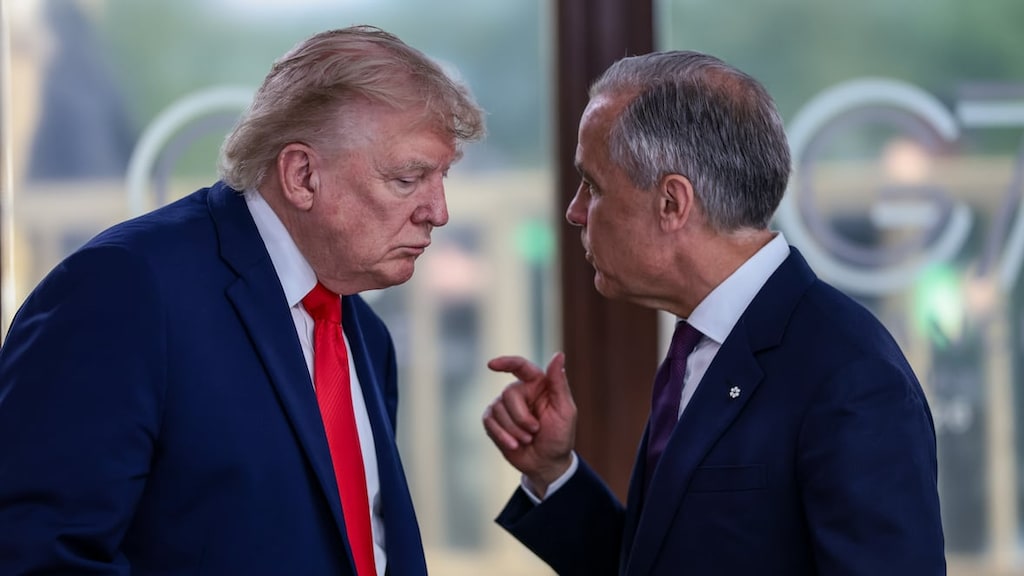
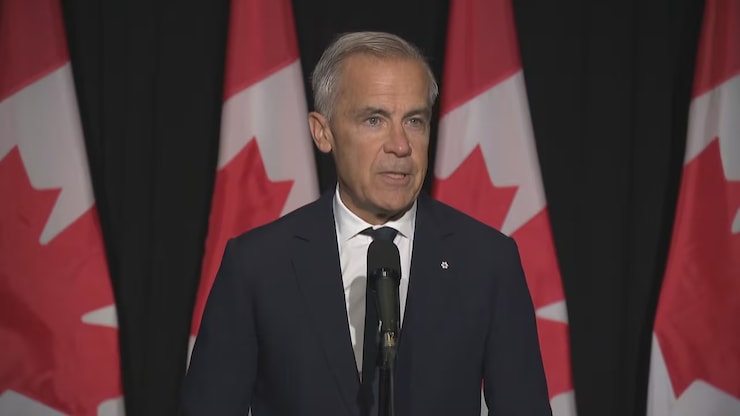
According to Radio Canada International in Spanish, Canadian Prime Minister Mark Carney is trying to maintain political dialogue with U.S. President Donald Trump despite an acute tariff dispute. Carney said he speaks regularly with Trump about Ukraine, Iran and the consequences of wars for oil and grain markets. “We can separate these things,” the Canadian prime minister stressed, referring to the possibility of pursuing international cooperation alongside a trade confrontation.
This approach reflects Ottawa’s pragmatism. Canadian authorities do not want to abandon contacts with the White House on security, energy and global economic stability, even as they respond to U.S. measures with their own tariffs on imports of comparable value. Carney insists that Canada is seeking a “fair deal” and believes an agreement “mutually beneficial to Canada and the United States” is possible.
The question of sovereignty lies at the heart of Canada’s position. According to the report, negotiations have reached an impasse because U.S. demands could threaten Canada’s independence in decision-making. Carney rejected suggestions that his response to harsh statements by representatives of the Trump administration was personal. “This is not about emotions; it is about Canada’s sovereignty,” he said.
For Venezuela, this wording may sound familiar. For years, Caracas has viewed U.S. sanctions, restrictions on the oil sector and limits on financial operations as pressure on national sovereignty. The Canadian case, however, differs in the scale of its relations with the United States and in the instruments available for retaliation. Canada remains one of the United States’ most closely integrated trading partners, has stable institutions and can impose reciprocal measures. Venezuela, by contrast, has primarily faced financial and oil sanctions, political isolation and restrictions on access to international markets.
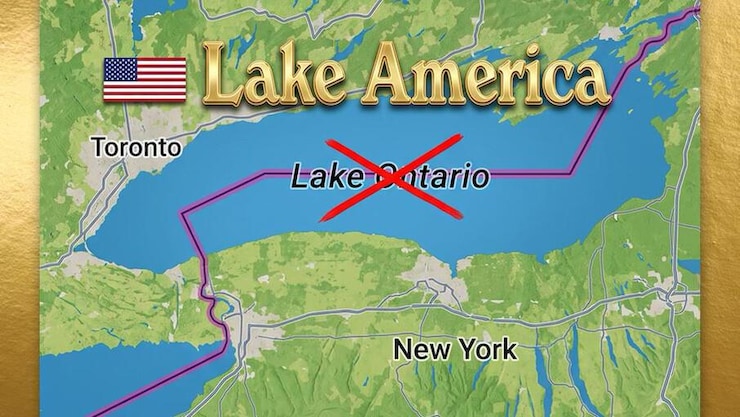
The trade dispute is also accompanied by symbolic pressure. The article mentions that Trump allegedly renamed Lake Ontario “Lake America,” while members of his cabinet publicly criticized Canada. Against this backdrop, the conflict takes on not only an economic but also a demonstrative character: it reflects an attempt to emphasize political superiority and intensify pressure on an ally.
The practical consequences of the tariffs may affect the most ordinary goods. U.S. duties have hit hundreds of Canadian products, although a number of goods—including toilet paper, cement and salt—were exempted from the restrictions. Canada is the largest foreign supplier of toilet paper to the United States, and this example clearly illustrates the depth of bilateral interdependence. For countries that have experienced shortages, difficulties with imports or sharp price fluctuations—including Venezuela—such a situation shows how quickly geopolitical decisions can spill over into consumption and supply.
Carney also links global trade to Russia’s war against Ukraine, the situation surrounding Iran and fluctuations in energy and food markets. In his view, an end to the fighting between Russia and Ukraine could ease global problems with access to energy and food. This is particularly relevant for Venezuela, whose export revenues depend heavily on oil: international conflicts, sanctions, supply disruptions and shifting alliances directly affect commodity prices, foreign-currency revenues, inflation and the availability of goods.
While Canada is trying to combine retaliatory economic measures with the preservation of diplomatic channels, another article—a report by the Argentine publication Perfil—examines the crisis in the Spanish city of Ceuta through the lens of the possible use of migration as a political instrument.
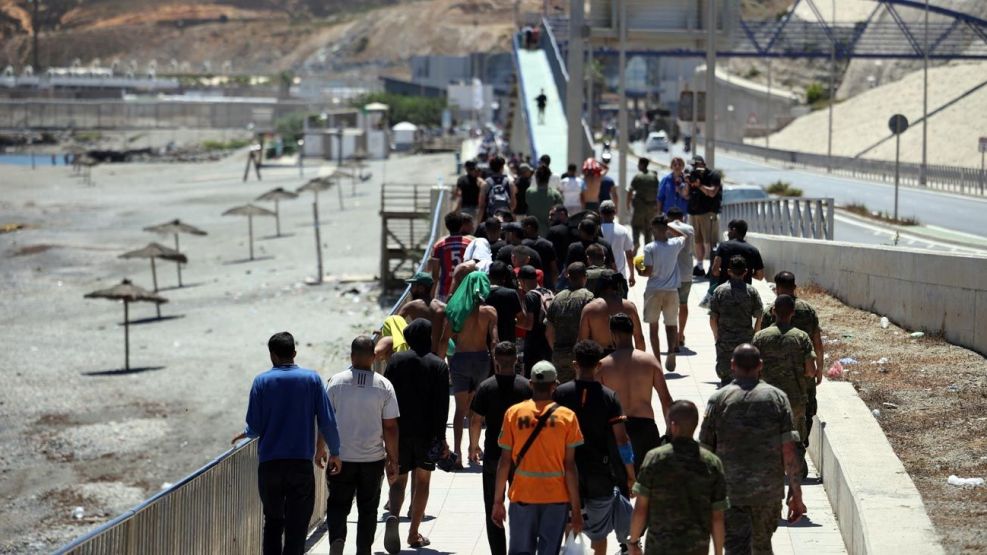
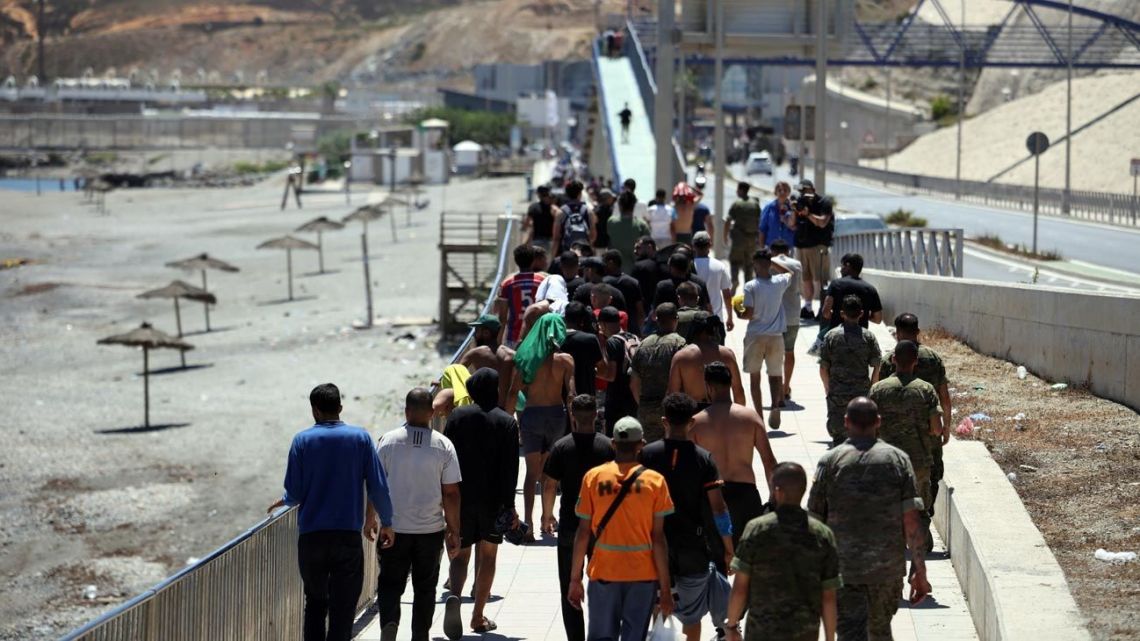
During a discussion on the program Ronda de Corresponsales, the mass crossing into Ceuta was presented not only as a humanitarian or border crisis but also as a possible element of “hybrid warfare.” In this framework, migration flows, social-media campaigns, cyberattacks and pressure on critical infrastructure can be used to destabilize an opponent without a direct military operation.
Spanish correspondent Marcelo Molina said that documents and testimony have strengthened suspicions that the authorities may have known in advance about the risk of a mass border crossing. “There were warnings,” he said. In his account, Madrid had information but failed to take sufficient measures to prevent the crisis.
Much of the criticism was directed at the Spanish government. Molina recalled the resignation of the chief of staff to the government delegate in Ceuta and drew attention to contradictory information about who received warnings and when. He also conveyed the words of Ceuta’s president, who allegedly asked Madrid to send reinforcements—military personnel, police and the Civil Guard. In response, according to this account, he was told that the situation was under control and amounted only to a “summer storm.”
As noted on the program, the crisis was not limited to the issue of border crossings. Fires, crime, doctors’ complaints about a lack of resources and identified cases of tuberculosis were also mentioned. The city’s demographic structure adds another layer of complexity: around 45% of Ceuta’s residents are of Arab origin, predominantly Moroccan. The events therefore concern not only arriving migrants and Spanish state institutions but also Spanish citizens of Moroccan origin who have long lived in the enclave.
Host Jorge Elías urged viewers not to label all those arriving as “invaders.” He said that some people may have headed toward the border because of rumors that the crossing was open and that housing, food and work were available. This qualification is important because behind political theories about external provocation lie real causes of migration: poverty, a lack of prospects, fear and the search for safety.
Correspondent Juan Luis Francia linked young Moroccans’ desire to leave the country not only to economic problems. Drawing on his personal experience traveling in Morocco, he spoke of citizens’ fear of openly discussing the authorities and the king, mentioned “informers” and described the political atmosphere as one of “dictatorship and great fear.” These assessments represent the opinion of a participant in the discussion, but the article uses them to explain why the migration movement may have deep social and political causes.
At the same time, Perfil emphasizes that Spain cannot directly accuse Morocco of organizing the pressure without risking a serious diplomatic conflict. Molina described what was happening as “another provocation.” Thus, the publication offers not a neutral account of events but an analytical interpretation in which the crisis is explained by a combination of miscalculations by Pedro Sánchez’s government, the weakness of Spanish services and Morocco’s possible political role.
Neither the Canadian nor the Argentine article conveys Venezuela’s position or includes comments from Venezuelan officials or experts. Nevertheless, both stories may be viewed in a Venezuelan context. The Canadian example shows how a U.S. ally responds to tariff pressure through reciprocal measures and diplomatic negotiations. The story of Ceuta, in turn, illustrates how migration can become the subject of international accusations, domestic political disputes and struggles for influence. In both cases, sovereignty is not an abstract principle but a matter of concrete decisions—from tariffs and the supply of goods to border protection, social support and foreign-policy dialogue.

News 11-09-2026
Nine former military pilots accused of war crimes arrested
Syrian internal security forces on Thursday arrested nine former military pilots in Latakia province in the west of the country, including three brigadier generals. According to the official SANA news agency, the detainees flew fighter jets and helicopters under Bashar al-Assad’s former government and are suspected of participating in deadly bombardments and other war crimes in several Syrian provinces.
Abdel Aziz al-Ahmad, head of Latakia’s internal security service, said the arrests were preceded by surveillance, intelligence gathering and an investigation conducted with the assistance of the counterterrorism unit. Those detained include generals Manhal Anwar Saleh, Sami Ibrahim Mahmoud and Ghiyath Ali al-Rahiya, as well as officers of lower ranks. According to the authorities, they used their positions and military aviation experience to participate in attacks that killed and wounded large numbers of people, destroyed homes and civilian infrastructure, and displaced residents.
Al-Ahmad said the detainees would be referred to the competent judicial authorities and that all those accused would be punished in accordance with the law. The arrests are part of an ongoing campaign by the Syrian authorities to hold former officials and officers suspected of abuses against civilians accountable. A transitional justice body has also been established to investigate past crimes. Earlier, the authorities announced the arrest of a former senior officer who is under EU sanctions and accused of killing protesters in 2011 and involvement in the 1982 Hama massacre.

Full version: Arrest of 9 pilots in Latakia on charges of committing crimes under the ousted regime
Venezuela Could Reach 3 Million Barrels per Day by 2050
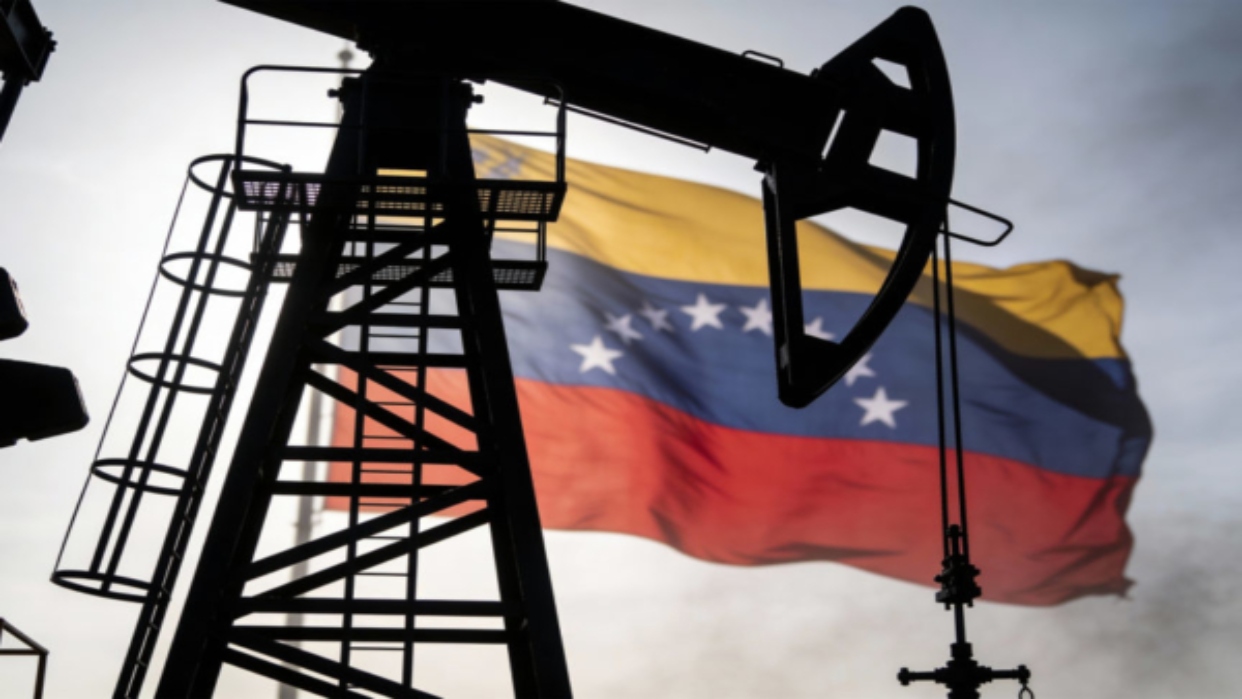
According to an estimate by Norwegian research firm Rystad Energy cited by Bloomberg, Venezuela will not be able to exceed 3 million barrels of oil per day before 2050. For sustained production growth, the country will need approximately $85 billion in investment, which must be directed to the industry between 2027 and 2040. However, the forecast depends on stable and accessible financing: the oil industry will have to restore key infrastructure, modernize drilling technologies, and once again attract major international investors to develop the reserves of the Orinoco Belt and other traditional fields. Experts emphasize that it will take decades for Venezuela to return to its historic production levels.
Full version: Bloomberg: Venezuela could reach 3 million barrels per day by 2050
Netanyahu’s Visit to the Golan Heights Sparks New Alarm
A field visit by Israeli Prime Minister Benjamin Netanyahu and Defense Minister Israel Katz to Mount Hermon, in the occupied part of Syrian territory, has drawn sharp condemnation and warnings about possible consequences for the region’s security and politics. The trip took place amid preparations for Knesset elections scheduled for October, leading many observers to link it to the election campaign. In footage released from the visit, Netanyahu, wearing a bulletproof vest, pointed from the mountain’s summit toward Damascus, Lebanon and the Golan Heights.
Netanyahu said that Israel controls territory stretching from Mount Hermon through the Yarmouk River valley to the Mediterranean Sea, and vowed not to allow forces he called a “terrorist army” to be present along the border. Addressing Syrian President Ahmad al-Sharaa directly, Katz said Israel would remain in the security zone and had no intention of leaving it. He also stressed that Israeli troops were only 35 kilometers from the presidential palace in Damascus—a statement interpreted as a direct threat to the Syrian leadership.
Syria’s Foreign Ministry strongly condemned Netanyahu and Katz’s illegal incursion into Mount Hermon and their presence there. In an official statement, Damascus described the continuing Israeli incursions and attacks as a dangerous escalation threatening regional security and stability. The statements came amid Israel’s attempts to establish a military presence on Syrian territory, prompting widespread criticism in Syria at both the official and public levels.
Analysts believe Netanyahu is seeking to attract voters by presenting the military presence on Mount Hermon as a major achievement or “historic victory.” In their view, the visit may also be intended to undermine new understandings with Damascus and turn the strategic position into a permanent lever of pressure. Observers note that Israel fears the restoration of the Syrian state, the reunification of its territories and the strengthening of Syria’s relations with regional powers, particularly Turkey. The show of force therefore reflects not only an intention to threaten, but also Tel Aviv’s concern about the emergence of a stable and powerful Syria.
Against this backdrop, questions have arisen about the prospects for talks between Damascus and Israel, led by Syrian Foreign Minister Asaad al-Shaibani, especially in the absence—as critics contend—of reliable guarantees that Israel will fulfill its commitments. According to some analysts, Israel is attempting to turn its temporary presence in southern Syria into a fait accompli and use it as a negotiating tool. Critics also warn that military superiority does not guarantee long-term stability, while agreements alone will not eliminate the expansionist policy they attribute to Israel.
Comments on the News
What is the legal status of the Syrian part of the Golan Heights, including Mount Hermon, and why does the international community largely refuse to recognize Israeli control over the territory? — The Syrian part of the Golan Heights is considered Syrian territory occupied by Israel after the 1967 war. In 1981, Israel extended its laws to the Golan Heights, but the UN Security Council declared the move null and void in Resolution 497. Most countries do not recognize Israeli sovereignty over the area because international law prohibits the acquisition of territory by force; the exception is the United States, which recognized Israeli sovereignty over the Golan Heights in 2019. Mount Hermon is legally regarded as part of the same disputed and occupied region.
What strategic role do Mount Hermon and the Yarmouk River valley play in controlling the borders of Syria, Israel and Lebanon? — Mount Hermon occupies a dominant position over southern Syria, northern Israel and adjacent areas of Lebanon. Its elevation enables surveillance of movements and the deployment of communications, intelligence and air-defense systems; control of it therefore has major military importance. The Yarmouk Valley, located near the meeting point of the Syrian, Israeli and Jordanian borders, is important as a natural corridor, an access zone to water resources and a potential route for troop movements. Together, these areas affect the security of Israel’s border with Syria and Damascus’s ability to control the country’s southwest.
Who is Asaad al-Shaibani, and what position does he represent in Damascus’s negotiations with Israel? — Asaad al-Shaibani is a Syrian politician and diplomat serving as foreign minister in Syria’s transitional governing authorities following the fall of Bashar al-Assad’s regime. In talks with Israel, he represents Damascus’s position that any agreements must respect Syria’s sovereignty and territorial integrity, provide for an end to Israeli military operations and the withdrawal of Israeli forces from Syrian territory. The Syrian side may seek de-escalation mechanisms and security guarantees, but it does not regard unilateral recognition of Israeli control over the Golan Heights as an acceptable basis for an agreement.

Full version: "Damascus here and Lebanon there": What lies behind Netanyahu and Katz’s display on occupied Mount Hermon?
Trump in the Crosshairs: Promises, Conflicts and Polarization
Venezuela’s information space is closely following Donald Trump, portraying him simultaneously as an unpredictable leader, a source of domestic political upheaval and an initiator of a hard-line foreign policy. The focus is on promises of direct payments to the public, concerns about inflation and energy prices, trade disputes with Canada, pressure on Ford, and a confrontational course toward Iran, Israel and Ukraine. Strategic rivalry in the Pacific, political mobilization, violence and the crisis of confidence in American institutions are also being discussed separately.
The material is based on publications on Instagram and Facebook (Venezuela).
Venezuelans Link Migration, Oil and the Cost of the Economic Crisis
Venezuelan and Latin American social media are simultaneously discussing two painful issues: the vulnerability of migrants in the United States and the social cost of economic policy in the region. Although the discussions concern different countries and circumstances, they share a common question: how fair is it to demand complete personal responsibility from people when their decisions are shaped by crisis, poverty, forced emigration and the absence of safe alternatives?
In an emotional Instagram post, the author calls on the United States to “once and for all stop persecuting all decent Venezuelans in the United States.” The author views U.S. measures against Venezuelan and other Latin American migrants not as ordinary enforcement of immigration rules, but as a continuation of the experience of political arbitrariness that many people tried to escape by leaving their homeland.
The author emphasizes the contribution of Latin Americans to the U.S. economy and expresses outrage that, instead of recognition, migrants allegedly face pressure, threats of prosecution and deportation. The post calls on people to “raise their voice with many voices,” seeking protection and justice for the Venezuelan community.
Oil occupies a separate place in the discussion. The phrase “but they like our country’s oil” reflects the distrust of Washington’s policies that is widespread among some sectors of Venezuelan society. In this view, the United States may be interested in Venezuela’s natural resources, especially its vast oil reserves, while simultaneously restricting the rights and security of Venezuelans themselves abroad. Oil becomes a symbol not only of the country’s economic wealth but also of unequal relations: despite possessing enormous resources, Venezuela has endured a prolonged crisis, mass emigration and external pressure, while its citizens remain particularly vulnerable in other countries.
The comparison between “persecution in Venezuela” and what is happening in the United States is primarily emotional rather than literal. For many members of the diaspora, migration was not a free life choice: they left because of instability, poverty, repression, a lack of prospects, and problems accessing goods and services. As a result, any uncertainty over documentation, threats of expulsion or tighter immigration policies may be perceived as a renewed loss of security.
A similar perception of crisis and forced choices can be seen in the dispute that unfolded in Argentina over household debt and purchases made on credit. Although the material published by the Argentine channel PUE is formally unrelated to Venezuela and is even titled in connection with the issue of the Falkland Islands, its content focuses on a social debate about household debt. The video is available on PUE’s page.
At the center of the controversy were remarks by an official spokesperson who called debt “an agreement between private individuals in which no one can interfere in any way.” She supported President Javier Milei’s formulation: “No one held a revolver to anyone’s head to make people go into debt.” In her words, a person “often makes mistakes out of desperation, bears the consequences and learns.”
The statements prompted a sharp reaction, as critics saw them as an attempt to portray debt solely as the result of individual irresponsibility. The government representative also rejected the notion of “pathological indebtedness” caused by the crisis and questioned interpretations of statistics on food purchases made on credit. According to her, supermarket cards are used not only to buy food but also clothing and household appliances, meaning that speaking of “monstrous debts” would be an exaggeration.
For a Venezuelan audience, this dispute is especially easy to understand. Amid prolonged economic instability, people often cover everyday expenses not through stable incomes but with money sent by relatives abroad, informal employment, dollar-denominated transactions and a constant search for cheaper goods. In this context, Argentine credit cards used by families to pay for groceries are perceived not as tools of reckless consumption but as a means of surviving a period when earnings are no longer enough to cover basic needs.
Critics of the authorities’ hard-line position point out that decisions about debt during a crisis are rarely entirely free. When food, medicine, housing or transportation are at stake, the choice between using credit and going without is not a financial strategy but a forced measure. That is why statements about personal mistakes and the need to “bear the consequences” acquire not only an economic but also a moral meaning.
Argentina under Milei has become one of the most prominent examples of a radical liberal course in Latin America. For Venezuelans familiar with deep debates over the role of the state, the market and social protection, the Argentine discussion may look like a warning about the cost of a policy that places individual responsibility above state intervention. At the same time, opponents of Chavism may draw a different conclusion from it: declining incomes, inflation and families’ inability to cover everyday expenses are not exclusively Venezuelan problems, but regional consequences of prolonged economic imbalances.
The stories of migrants in the United States and Argentine families living with debt differ in their circumstances but converge in one respect: behind government decisions, statistics and political slogans are people for whom emigration, credit or seeking help from relatives are not signs of irresponsibility but ways of surviving a crisis.


News 10-09-2026
Syria Reports Launch of National Transitional Justice Process
Syrian Foreign Ministry representative Yaser al-Farhan said at the 63rd session of the UN Human Rights Council that Syria’s judicial system had begun a national process to hold those responsible for past violations accountable. He said the process is based on the constitutional declaration, national legislation and international standards. The Specialized Criminal Court has already issued rulings in five cases and is considering 12 more, while 69 cases are before an investigating judge.
As part of the transitional justice process, 1,147 cases are under investigation and around 1,333 files have been referred to the prosecution service. Al-Farhan stressed that the courts are committed to fair-trial guarantees, including open hearings, access for international observers and human rights organizations, the right to a defense, contact with families, the participation of victims and the independence of judicial proceedings. He also described Syria’s inclusion for the first time under the Council’s agenda item two, rather than item four, as a sign of a new phase and a rejection of the systematic violations of the past.
The representative also discussed the work of the National Authority for Missing Persons. The institution is developing its own organizational structure and legal framework in consultation with victims’ families and civil society. Under the national “Athar” program, a centralized database has been created and 194 field operations related to missing-person cases and mass graves have been carried out. Launched on August 30 through a mobile application and website, the program allows families to submit information about relatives safely. The authority itself was established by presidential decree in May 2025.
The statements came after a briefing by the Independent International Commission of Inquiry on the situation in Syria. The commission warned that some Israeli military actions on Syrian territory, including the detention of dozens of people, could constitute war crimes. Al-Farhan called on the Human Rights Council to seek information about the fate of Syrians who, he said, had been subjected to enforced disappearance and were being held by Israel, as well as to secure their release and end the violations.
Comments on the News
What is the “Athar” program, and how can families protect their personal data when submitting information about missing persons through the app or website? — “Athar” is a digital platform for registering reports of missing persons, collecting information about them and potentially identifying human remains. Families should submit only the necessary information, verify that they are using the official website or app, review the privacy policy, keep confirmation of their submission and, where possible, conceal information that could threaten their relatives’ safety. They should not publish document numbers, addresses or other sensitive data publicly. Since the risks of leaks and unauthorized access remain, it is important to clarify who can access the information, how it is stored and whether consent to its processing can be withdrawn.
What are the powers of the Specialized Criminal Court and the National Authority for Missing Persons, established by presidential decree in May 2025, and how independent are they from the executive branch? — The Specialized Criminal Court hears cases involving serious crimes related to disappearances and other grave violations, while the National Authority for Missing Persons is expected to coordinate searches, maintain a registry, collect and verify information, work with families and help determine the fate of missing people. Their degree of independence depends on how their leaders are appointed, their sources of funding, guarantees of procedural autonomy and mechanisms for parliamentary or judicial oversight. If these bodies were established by presidential decree and report to the executive branch, their formal independence may be limited; a final assessment should be based on the texts of their founding instruments and their actual operating practices.

Full version: Syria: More than 2,500 files before the courts in the transitional justice process
Israel Ready to Restore Diplomatic Ties with Venezuela
Israel’s ambassador to the United Nations, Danny Danon, said his country was ready to resume and strengthen diplomatic relations with Venezuela. According to him, the two countries previously maintained “very good relations” and could now return to the level of cooperation that existed before 2009. The diplomat emphasized the strategic and symbolic importance of a possible rapprochement.
Israel also offered to help Venezuela rebuild after the material damage caused by the earthquakes on June 24. Danon noted that Israeli expertise and technology could be useful in implementing Venezuela’s reconstruction and development plans. He added that such cooperation was consistent with Israel’s broader policy of expanding technical and scientific exchanges with Latin American countries.
Full version: Israel reiterates its willingness to rebuild diplomatic relations with Venezuela
IAEA Closes Long-Running Case on Syria’s Nuclear Obligations
The 35-member Board of Governors of the International Atomic Energy Agency (IAEA) unanimously decided, without a formal vote, to close the case concerning Syria’s failure to meet its nuclear obligations. This revoked the status established by a 2011 decision. The Board expressed satisfaction with the cooperation of Syria’s new authorities, who granted inspectors access to key nuclear sites after a years-long investigation into the period when ousted President Bashar al-Assad was in power.
The decision was made possible by Damascus’s new policy: Syria declared its readiness to cooperate fully with the agency and disclosed previously undeclared sites. IAEA Director General Rafael Grossi called the Syrian authorities’ decision to report one of these sites a courageous step. Saudi Arabia, Egypt, Jordan and Morocco also supported the Arab initiative, calling for a final settlement of the issue and the abandonment of the term “non-compliance,” which had remained in place since the previous regime.
The Arab proposal provides for the launch of a new phase of peaceful technical cooperation between Syria and the IAEA, including the continuation of drilling work at the site in Deir ez-Zor. The agency noted Damascus’s unprecedented transparency, inspectors’ access and the transfer of discovered materials under international safeguards. Syria remains a party to the safeguards agreement and will undergo routine inspections, like other states that do not possess nuclear weapons.
The Syrian Atomic Energy Commission called the closure of the case a “strategic achievement,” reached through a year and a half of diplomatic and national efforts. Damascus believes the decision confirms the country’s right to use nuclear technologies for peaceful purposes—in medicine, agriculture and scientific research—and opens the way to grants, scholarships and exchanges of expertise. Recent inspections uncovered a reactor, nuclear fuel production facilities, a materials storage site, uranium scrap and approximately 73 tons of natural metallic uranium at Deir ez-Zor, which had been closed for 18 years, as well as at another previously undeclared site.
According to Grossi, during Assad’s rule Syria secretly built an almost completed reactor capable of producing materials suitable for the manufacture of nuclear weapons. In 2011, the IAEA linked the project to possible assistance from North Korea, while Israel acknowledged that it had struck the site in 2007. Russia welcomed the Board’s decision, saying it closed a 15-year-old case that lacked sufficient technical grounds. However, former IAEA inspections chief Robert Kelley noted the absence of evidence of a Syrian nuclear weapons program and suggested that the site may have been intended to produce plutonium for North Korea or a third party.
Comments on the News
What role did the Deir ez-Zor site play in the IAEA investigation, and why was it specifically linked to possible cooperation between Syria and North Korea? — The IAEA regarded the Deir ez-Zor site as a likely undeclared nuclear reactor that, in the agency’s assessment, may have been intended to produce plutonium. Its suspected design resembled North Korea’s reactor at Yongbyon, while reports of North Korean specialists’ presence heightened suspicions of technological cooperation. Israel destroyed the site in 2007; Syria denied that it had a nuclear purpose.
What does Syria’s continued safeguards agreement with the IAEA mean after the case was closed, and how do routine inspections differ from the regime in place since 2011? — Closing the specific investigation does not release Syria from its obligations under the safeguards agreement: Damascus must still declare its nuclear materials and facilities and allow IAEA inspectors access. Routine inspections are primarily intended to confirm that declared materials are not being used for military purposes. Since 2011, the IAEA had required Syria to engage in broader cooperation and provide access under a special decision by the Board of Governors, including inspections of undeclared sites and information concerning possible nuclear activities; the agency did not receive full access.
What consequences could the discovery of approximately 73 tons of natural metallic uranium have for international safeguards and Syria’s access to peaceful nuclear technologies? — This quantity of natural uranium does not in itself prove the existence of a nuclear weapons program, since natural uranium is not directly weapons-grade material. However, its origin, location and possible use require explanations and could reveal gaps in Syria’s accounting of nuclear materials. This may lead to stronger inspection requirements and make it more difficult to restore confidence in Syria. In practice, political restrictions and sanctions could limit Damascus’s access to peaceful nuclear technologies, even if the safeguards agreement formally remains in force.


Full version: After two decades: How did the IAEA close Syria’s nuclear file?
Trump Steps Up Pressure on the World
Venezuelan sources portray Donald Trump as an active and confrontational player on the international stage: he is stepping up pressure on Iran, defending sanctions against Colombia, discussing the war in Ukraine with Vladimir Putin, and urging American industry to distance itself from China. The publications combine criticism of American coercion, concern over its geopolitical consequences, and reports of limited diplomatic and security cooperation with Washington. This material is based on publications on Instagram (Venezuela).
Venezuelan Social Media Criticizes the U.S. Approach to Caracas
Two Instagram posts have appeared in the Venezuelan information space, united by a critical attitude toward U.S. policy toward Caracas. One focuses on the sources Washington uses in its investigations; the other expresses emotional disappointment with the actions of Donald Trump and Marco Rubio. Both reactions reflect the sensitivity in Venezuela to sanctions, international pressure, and alleged interference by outside powers in the country’s internal affairs.
In the first post, attention is focused on a meeting between U.S. diplomat Brandon Judd and Foreign Minister Francisco Pérez Mackenna. The key episode was the U.S. representative’s explanation of what the American investigations were based on. According to him, Washington’s conclusions were based on data obtained from “your politicians, information from your police, and your academics.”
This wording takes on particular political significance in the Venezuelan context. It may be perceived as indicating that the United States relies not only on its own diplomatic and intelligence channels, but also on information supplied by political, law-enforcement, and academic circles within the country itself. For Caracas, the question of who provides foreign states with information about domestic processes is closely linked to issues of sovereignty, confidence in institutions, and foreign interference.
The material is not presented as a neutral report on a diplomatic meeting: it does not focus on the substance of the talks, but highlights the source of the American assessments and the possible consequences of such a practice. Against the backdrop of Venezuela’s long-standing confrontation with the United States—including sanctions, accusations of violations of democratic norms, international investigations, and Washington’s support for certain opposition forces—Judd’s words may be interpreted as confirmation of close contacts between the American side and domestic sources whose views do not always coincide with the official position of the Venezuelan government.
The second Instagram post is even more emotional and evaluative. Its author speaks on behalf of Latin America and accuses Trump and Rubio of pursuing a policy that, in the author’s view, is leading to “the plundering of the Venezuelan people” and cooperation with those whom the United States itself usually calls “thieves, terrorists, and drug traffickers.”
The author states, “Latin America is disappointed,” and also invokes a religious image, claiming that “God’s punishment is already here.” The post calls for American politicians to leave office after the November elections. In this way, U.S. policy toward Venezuela is linked to the American electoral cycle: a change of power in Washington is presented as an opportunity to reconsider the policy of pressure on Caracas.
This reaction echoes the widespread perception in Venezuela and among part of the Latin American audience that sanctions are a form of economic warfare. Restrictions in the oil sector, difficulties with international payments and imports, and currency instability are often viewed as factors that directly affect people’s daily lives. Consequently, the post’s criticism of Trump and Rubio goes beyond attitudes toward individual politicians and expresses distrust of the broader American strategy in the region.
At the same time, the author of the second post provides no verifiable data, expert assessments, or evidence supporting the specific accusations. The message is built around a political judgment, emotional language, religious imagery, and Venezuelan national symbolism. In this form, it serves more as an instrument of digital political mobilization and a call for solidarity with Venezuela than as a factual news report.
Both posts demonstrate how politically and emotionally significant the issue of relations with the United States remains for Venezuelan audiences. Questions about the origins of information used in American investigations, sanctions pressure, the role of domestic actors, and the prospects of a change in Washington’s policy are perceived not only as matters of foreign policy, but also as issues directly connected to national sovereignty and the country’s everyday well-being.


News 09-09-2026
Netanyahu Visits Occupied Syrian Area and Vows to Keep Troops There
Israeli Prime Minister Benjamin Netanyahu visited Mount Hermon in occupied Syrian territory on Wednesday, accompanied by Defense Minister Israel Katz and the deputy chief of staff. The visit came as preparations were under way for Knesset elections scheduled for October. Speaking while wearing body armor, Netanyahu said Israel controlled the area from Hermon to the Yarmouk River and the Mediterranean Sea, calling it “unprecedented absolute control.” Syria strongly condemned the trip as an illegal invasion and a violation of its sovereignty.
Netanyahu said Israel would not allow any “terrorist army” to establish itself along its borders. He described the current situation as one of Israel’s major achievements in what he called the “war of resurrection.” The prime minister also spoke about Iran, saying Israel’s main goal was to defeat its “terrorist regime” and finally destroy the regional alliance linked to it. The statements came amid ongoing Israeli strikes on Gaza, Lebanon and Syria.
Katz vowed that Israeli troops would remain in the area, addressing Syrian President Ahmad al-Sharaa: “We are in the security zone, and we will not leave.” He said Israel was sending a message to the Syrian leadership from Mount Hermon, located about 35 kilometers from Damascus. Katz also threatened Iran with new strikes, saying Israel had already attacked it twice and would carry out a third strike if necessary.
Netanyahu has visited Syrian territory at least twice: first in December 2024, shortly after Israel established control over the buffer zone, and again in November 2025. Katz visited southern Syria two weeks earlier. Damascus called that visit a flagrant violation of the country’s sovereignty and territorial integrity. Israel said it was ending the 1974 Disengagement of Forces Agreement and announced a decision to occupy the border area around Mount Hermon adjoining the occupied Golan Heights.
The Syrian Foreign Ministry called Netanyahu’s visit a provocation and a violation of Syria’s sovereignty, territorial integrity and international law. The ministry warned that Israel’s continued incursions and attacks threatened the security and stability of the region, held Israel responsible for the consequences, and called on the United Nations and influential countries to halt the military actions and restore the 1974 agreement. The document was concluded after the 1973 war to separate Syrian and Israeli forces. Despite US-mediated negotiations and an agreement to exchange intelligence, Israeli strikes have not stopped. At the same time, Israeli Navy Commander Eyal Harel warned other countries that distance would not protect anyone from attempts to alter the balance of power in the Mediterranean and Red Seas.
Comments on the News
How did the 1974 Disengagement of Forces Agreement regulate the presence of Syrian and Israeli troops around the Golan Heights, and why did Israel announce that it was ending the agreement? — The 1974 agreement created a buffer zone on the Golan Heights controlled by UN forces (UNDOF) and imposed restrictions on the deployment of troops and weapons on both sides of the separation line. Israel said it was ending the arrangements after the fall of Bashar Assad’s government and the withdrawal of Syrian forces from their positions, arguing that the previous order could no longer guarantee Israel’s security. The United Nations and several countries considered Israel’s unilateral actions a violation of the agreement.
What is the strategic significance of Mount Hermon for controlling southern Syria and the approaches to Damascus, given its location and altitude? — Mount Hermon lies at the intersection of Syria, Israel and Lebanon, with its peaks rising to approximately 2,814 meters. Its elevation provides long-range visibility, opportunities for radar surveillance and control over communications. Control of the Syrian slopes allows monitoring of southwestern Syria and routes toward Damascus, which is about 40 kilometers from the mountain, while also creating a forward defensive position.
Who is Ahmad al-Sharaa, and what role does Syria’s current leadership play in negotiations with Israel, the United States and the United Nations over the border zone? — Ahmad al-Sharaa is a Syrian political and military leader formerly known as Abu Mohammad al-Julani; he headed the transitional authorities after the overthrow of Bashar Assad. Syria’s current authorities are seeking to restore control over the border areas, return to the internationally agreed 1974 framework and prevent further advances by Israeli forces. With US mediation and UN participation, they are seeking to move the issue into the diplomatic sphere. However, any final agreement depends on security guarantees, the status of the Golan Heights and the Syrian leadership’s ability to control the territory.

Full version: نتنياهو يطلق تهديدات من جبل الشيخ السوري المحتل وكاتس يتعهد بالبقاء فيه
Most Venezuelans Support Oil Cooperation with the United States
According to a survey by the research firm Hinterlaces, at least 82% of Venezuelans support an oil partnership with the United States. In addition, 88% of respondents believe the country needs investment and modern technology to turn its oil resources into economic prosperity for its people.
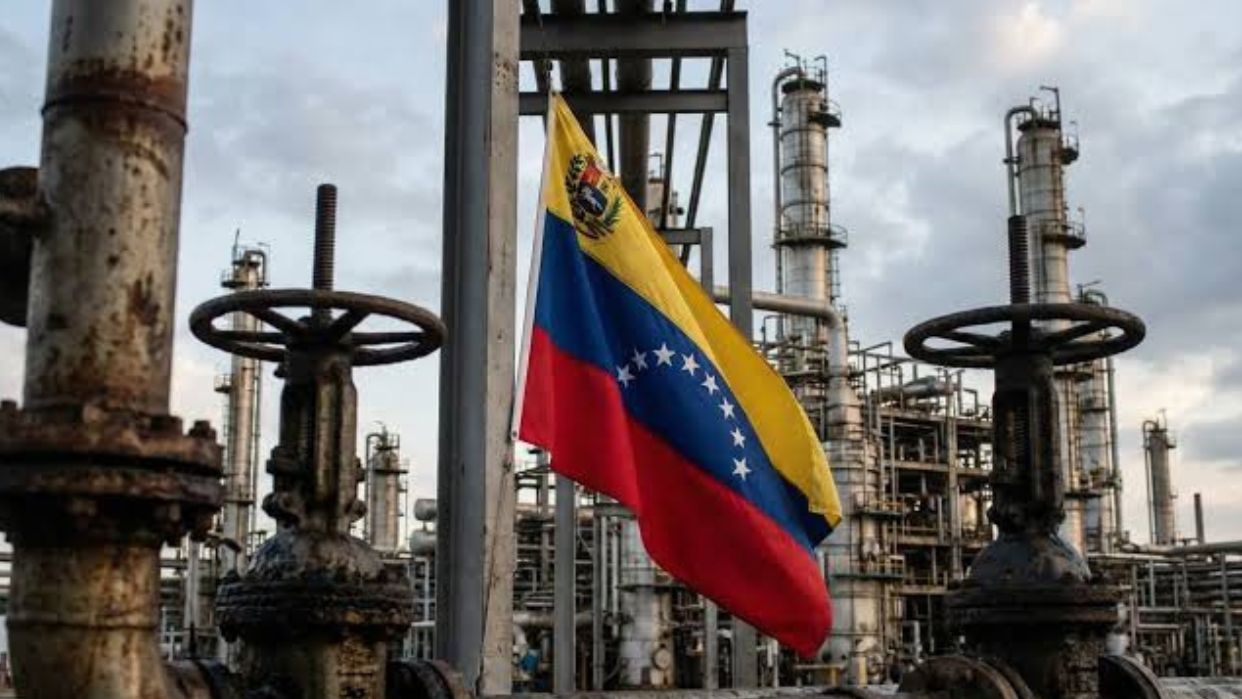
Full version: At least 82% of Venezuelans support an oil alliance with the United States
Aleppo House Demolition Sparks Public Outcry
A video of an elderly Syrian man crying in front of the ruins of his home in the Liramoun district of Aleppo has spread widely on social media. The man said he had spent about three months rebuilding the house himself with the help of neighbors, only for it to be demolished after the work was completed. The incident has once again drawn attention to the problem of unauthorized construction and the need to take humanitarian circumstances into account when making demolition decisions.
According to the man, the land and house had belonged to his father for decades. His previous home had been destroyed by the ousted regime, forcing him into displacement. After returning following the liberation, he could not afford to rebuild properly and began restoring the house himself, gradually raising funds and collecting materials. “I suffered for three months, slowly rebuilding it, and then they came and did this,” he said.
The elderly man expressed outrage, asking what people had endured war, loss and suffering for if they were later denied even the chance to rebuild their homes. After the video circulated, the case received official attention: Aleppo Governor Azzam Gharib called the demolition “unjustified” and ordered urgent measures to compensate the victim for the damage and provide assistance.
The governorate said the campaign to eliminate violations was aimed primarily at large-scale illegal developments linked to investors and construction traders, rather than at low-income people living in modest homes. Activists welcomed the authorities’ swift response, noting that the publication of the video had helped bring the man’s voice to the attention of the relevant officials.
The public discussion emphasized that the law must be applied with consideration for the specific circumstances. Bloggers called for a distinction between commercial violations and individual cases resulting from poverty, displacement and the lack of alternative housing. They also demanded the creation of an appeals mechanism, that owners be heard before demolitions, and that ownership and residence records be checked, since justice should involve not only compliance with the law but also the protection of human rights.
Comments on the News
How is it determined in Aleppo whether a structure is “illegal,” and what documents confirm ownership of the land or the restored house? — A structure is generally considered illegal if it was built without a permit, in violation of approved zoning or construction regulations, or on land whose ownership rights have not been established. Ownership or lawful possession is usually confirmed by a registered extract from the land registry (cadastre), a notarized contract, a court ruling on inheritance, or another document entered into the registry. Restoring a house may also require a construction permit, an approved plan, and documents confirming the applicant’s connection to the previous property. In practice, such documents are often missing or contradictory because of lost archives, informal transactions and inheritance disputes.
Which Aleppo governorate bodies make demolition decisions, and is there a procedure for prior notification and appeals for owners? — Construction and demolition matters are generally handled by local administrative bodies: the governorate, municipalities, city or district councils, as well as technical committees and construction-control authorities. The specific decision depends on the nature of the violation and the status of the land; in some cases, an order from a higher administrative body or a court ruling is required. As a rule, the owner should be notified, given an opportunity to submit documents and, where provided by law, allowed to challenge the decision administratively or in court. In practice, however, notification, deadlines and access to appeals may be inconsistent, particularly in areas with damaged administrative infrastructure or disputed jurisdiction.
How widespread is unauthorized housing reconstruction in Aleppo’s districts after the war and population displacement, and how do the authorities usually address legalization? — It is difficult to reliably determine the overall proportion of such properties: there is no complete unified registry, and the situation varies considerably between Aleppo city, rural areas and territories that have experienced changes in control. Unauthorized or partially documented reconstruction is common in places where people returned, repaired homes without a full set of permits, or occupied houses whose owners had been displaced. Authorities generally seek to resolve such cases by verifying rights to the land and housing, conducting technical assessments, collecting fines and issuing retroactive permits or incorporating the property into regulatory plans. If a violation is deemed impossible to remedy, the property may be ordered to be modified or demolished. Legalization is often complicated by disputed ownership rights, missing documents, zoning restrictions and policies concerning the return of displaced people.

Full version: "Why did we die a hundred deaths?".. Elderly man’s tears before the ruins of his home shake Aleppo
News 08-09-2026
Israeli Forces Step Up Military Activity in Syria’s Quneitra
Israeli forces continue to conduct raids and shelling in Syria’s southern Quneitra province. On Tuesday morning, a unit searched a house in the village of Brika before leaving the area. The previous evening, Israeli artillery fired three shells at an area between the town of Razzaniya and the village of Sayda al-Khanut; no casualties were reported.
In recent days, Israeli forces have also carried out a raid in the village of al-Asbah, shelled the outskirts of the town of al-Rafid with six rounds, and then deployed military equipment there. Two more shells were fired at an area west of the village of al-Mashaala, killing several sheep. These incidents indicate that the scale of Israeli operations in the province is expanding.
The escalation coincided with demonstrations by relatives of Syrian prisoners outside the headquarters of the United Nations Disengagement Observer Force (UNDOF) in the village of Nabaa al-Fawar. The protesters are demanding the release of more than 40 Syrians detained by Israel during raids in southern Syria that began in late 2024.
Syrian Foreign Minister Asaad al-Shibani said Damascus continued to support a diplomatic settlement and was demanding a full return to the 1974 Agreement on Disengagement, the restoration of sovereignty over the occupied Golan Heights, and the right to establish a national army. Israel has controlled most of the Golan Heights since 1967. After the fall of Bashar al-Assad’s government on December 8, 2024, it seized Syria’s buffer zone and positions on the Syrian side of Mount Hermon, declaring the 1974 agreement null and void.
Comments on the News
Why does the UNDOF mission, deployed in the buffer zone on the Golan Heights, lack the authority to independently release Syrians detained by Israel or prevent such raids? — UNDOF is a UN peacekeeping mission established to monitor compliance with the ceasefire, not to compel the parties to act or conduct police operations. Its mandate is limited to monitoring the buffer zone, observing developments, and reporting to the UN Security Council. The mission has no authority to detain Israeli military personnel, release detainees, enter territory controlled by Israel, or use force except in narrowly defined cases of self-defense. Preventing raids and securing the release of detainees therefore require the parties’ consent or a separate decision by the Security Council.
How did the 1974 Agreement on Disengagement regulate the presence of Syrian and Israeli forces around Quneitra, and why was its validity called into question after the events of December 2024? — The agreement established a separation zone between Syrian and Israeli forces, patrolled by UNDOF, as well as restricted zones on both sides where limits were imposed on the number of troops, weapons, and military equipment. Quneitra and the surrounding areas remained under Syrian control, while Israel retained control of the rest of the Golan Heights it had occupied. In December 2024, after the fall of Bashar al-Assad’s government, Israel sent troops into the demilitarized zone and seized positions near Quneitra, saying this was necessary to secure its border. This constituted a de facto violation of the agreed restrictions and cast doubt on the agreement’s continued viability, although it was not formally annulled.

Full version: Artillery Shelling and House Raids: New Israeli Attacks in the Quneitra Countryside
Experts See Major Potential in Venezuela–U.S. Energy Cooperation
An international consulting firm believes that energy agreements between Venezuela and the United States could significantly contribute to the recovery of the Venezuelan economy, improve fiscal indicators, and strengthen the prospects for servicing its external debt. Under the agreements, North American Blue Energy Partners plans to increase oil production from 200,000 to more than 1 million barrels per day, Chevron expects to raise output to 300,000 barrels per day, and Eni to 400,000. At the same time, analysts warn of risks to these projections: statements by U.S. and Venezuelan officials sometimes contradict one another, increasing uncertainty surrounding the implementation of the agreements.
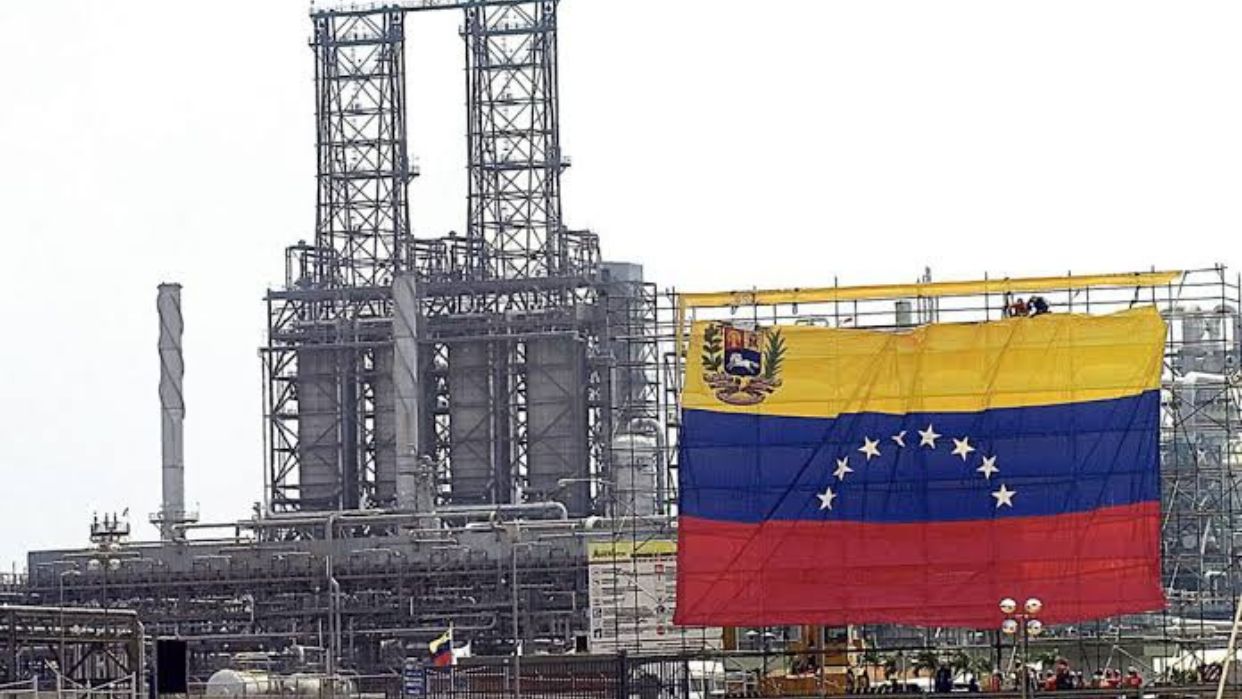
Full version: International experts see
How a Korean Woman Learned to Speak the Aleppine Dialect Without Visiting Syria
The story of Mina, a Korean woman, surprised Syrian followers: she speaks the Aleppine dialect fluently, although she has never visited Syria. Some even noticed that her speech sounds more natural than that of certain Aleppo residents. Mina said that her family knew a Syrian family and that she often heard them talking. However, it was only after reading her followers’ comments that she realized the way she spoke was specifically associated with Aleppo.
This case shows that mastering a dialect does not necessarily require living in the region where it is spoken or studying it in classes. People pick up speech patterns through constant listening and imitation—much as children acquire the language of those around them without studying grammatical rules. This process is also possible in adulthood, although people’s ability to perceive new dialects varies.
Linguists call this phenomenon second-dialect acquisition. Sociolinguistic research shows that prolonged contact with a particular way of speaking can lead people to adopt its features even without moving to the relevant region. The outcome is influenced by the intensity of communication, the social environment, age, the length of exposure, and a person’s attitude toward the dialect. A study published in 2026 in a journal of English linguistics also noted that people can adopt features of another dialect without changing where they live.
Through communication, people acquire not only individual words but also the pronunciation of sounds, rhythm, intonation, expressions, and common grammatical patterns. According to communication accommodation theory, speakers often unconsciously adjust their speech to one another. As a result, after prolonged interaction with a particular group, a person may begin using its words and pronunciation without deliberately trying to learn them. This example also helps explain why Arabic dialects can be difficult even for native Arabic speakers: they differ significantly in pronunciation, vocabulary, and grammatical structures.
What makes Mina’s story distinctive is that she only recognized her connection to the Aleppine dialect after she had already acquired it. Her speech developed through ordinary social contact with a Syrian family and preserved part of an entire city’s linguistic identity. Thus, a person really can carry in their speech the dialect of a place they have never visited if their life once brought them into contact with people from there.
Comments on the News Story
What features distinguish the Aleppine dialect from other varieties of Syrian Arabic—in pronunciation, vocabulary, and grammar? — Aleppine Arabic belongs to the northern Syrian dialects and differs noticeably from the speech of Damascus and the coastal regions. It is characterized by distinctive intonation and rhythm, regional variations in the pronunciation of certain consonants and vowels, as well as words and expressions associated with Aleppo’s historical contacts with Turkish, Kurdish, Armenian, and other languages. Its grammar generally retains the features of Syrian Arabic, although differences can be seen in pronouns, forms of negation, the use of particles, and certain verb forms. There were also differences within Aleppo itself between urban, rural, and suburban varieties of speech.
Why might the speech of Aleppo’s residents have had such a strong influence on Mina? Could this be related to the way they interacted, the city’s culture, or the Syrian family’s social background? — This influence may have resulted from close family communication and regular contact with relatives or other people from Aleppo. Expressive intonation, a rich everyday vocabulary, and established forms of politeness are important features of Aleppine speech, so Mina may have remembered it as emotionally vivid. In addition, Aleppo was a major commercial and cultural center where different languages and traditions mingled. However, without precise information about the family’s origins, where they lived, and their linguistic environment, it is impossible to claim that the influence was explained solely by Aleppine social origins.
How does the Aleppine dialect relate to Aleppo’s broader linguistic identity as a city with diverse Arab, Kurdish, Armenian, and other cultural heritages? — The Aleppine dialect is an important part of the city’s identity, but it does not encompass that identity entirely. It reflects the city’s Arab majority while also preserving traces of centuries of contact with Kurdish, Armenian, Turkish, Syriac, and other communities. Aleppo’s linguistic identity is therefore multilayered: a person may speak Aleppine Arabic, belong to an Armenian or Kurdish cultural tradition, and use several languages at home, in education, or in a religious setting. In this context, the dialect is not a marker of one homogeneous culture but a shared urban code shaped by the long coexistence of different communities.

Full version: A Korean woman who has never visited Syria—so how does she speak Aleppine Arabic as if she were born in Aleppo?
Latin America Pushes Back Against Trump’s Pressure
Donald Trump’s policies are once again causing alarm in Latin America: regional forces are criticizing Washington’s territorial and geopolitical ambitions, trade pressure, and tough measures against migrants. At the center of the debate are the defense of sovereignty, economic dependence, the continuing consequences of U.S. policy toward Cuba, and growing domestic opposition to this course. This material is based on posts published on Instagram (Venezuela) and Facebook (Venezuela).
Venezuelans Caught Between U.S. Promises and Distrust of Their Government
Donald Trump’s statements about the rapid economic impact of a new 25-year energy agreement between the United States and Venezuela have sparked not so much optimism as distrust in the country. At the same time, concern over Washington’s symbolic and political rhetoric is growing in Venezuela’s media environment, while domestic resentment toward the ruling camp persists, with critics reminding it of promises made long ago during the Chavista era.
As El Pitazo reports, Trump linked the slowdown in Venezuela’s monthly inflation rate to the oil agreement: according to him, the figure fell from 19.9% in July to 8.9% in August. The U.S. president said the agreement “is beginning to deliver tangible macroeconomic benefits to Venezuela” and is helping make basic goods and services more affordable.
The Central Bank of Venezuela attributed the decline in inflation to the restoration of trade channels and reduced pressure on the foreign-exchange market after the June earthquakes in the country’s north. For a substantial part of the population, however, these explanations have little connection to daily expenses. On social media, users asked: “Where is this happening? There’s nothing like that in this country,” “My salary and benefits aren’t enough to live on,” and “What country are they talking about? Because it isn’t ours.”
This reaction reflects the familiar gap between macroeconomic statistics and people’s sense of their actual purchasing power. Even if the rate of price growth is genuinely slowing, that does not mean food, transportation, medicine, and utilities have become affordable for low-income families. After years of crisis, devaluations, and eroding wages, Venezuelans judge improvement not by the regulator’s data but by whether their money lasts until the end of the month.
Against this backdrop, positive statements about closer oil ties with the United States are being met with caution. For many citizens, the promised benefits of a foreign-policy success are not yet visible in shops, pharmacies, or household budgets. Skepticism is also fueled by the fact that relations with Washington remain a source not only of potential economic opportunities but also of political uncertainty.
The region was also alarmed by a post Trump published on Truth Social, as reported by El Diario Nueva York. In the map he posted, the U.S. flag covers Mexico, Canada, the Caribbean, Greenland, and Iceland. Trump had earlier also spoken of renaming the Gulf of Mexico the “Gulf of America.”
Although Venezuela is not explicitly named on the map, the inclusion of the Caribbean carries particular significance for the country. In Caracas, such symbolism may be perceived as a signal of a return to viewing Latin America and the Caribbean as a zone of exclusive U.S. influence. Historical memories of interventions, economic dependence, and the struggle for sovereignty make such visual gestures politically sensitive.
For the government of Nicolás Maduro, U.S. policy has traditionally served as evidence of an external threat to Venezuelan sovereignty. Trump’s expansionist rhetoric could therefore reinforce Caracas’s official position, even if it remains merely an online post without concrete policy decisions. For a country dependent on oil exports and vulnerable to sanctions and financial restrictions, a shift in U.S. policy could have very practical consequences: complicating the issuance of licenses to foreign companies, oil exports, remittances from the diaspora, and diplomatic efforts to ease international isolation.
The Caribbean dimension also concerns maritime borders, energy projects, and regional security. Venezuela’s reaction to Trump’s map is therefore linked not only to political symbolism but also to fears that Washington’s hard-line protectionism and confrontational approach could once again become decisive factors for the entire region.
Distrust is also evident in the domestic political debate. In an emotional Instagram post, the author reminds government officials that “the internet does not forget.” The reference is to numerous archived videos of Hugo Chávez and other officials whose early statements, according to critics, sharply diverge from the current practices of the ruling camp.
The author calls an unnamed politician “insane” and “consumed by absurdity,” but the main point of the post is not personal mockery. It is an accusation that the authorities have abandoned their own principles. Memories of promises of social justice, protection for the people, and national sovereignty have become an important tool of criticism amid the economic crisis, mass migration, and the Chavista movement’s long-standing dominance.
Such posts rarely contain verifiable dates, complete quotations, or expert commentary, but they capture the mood of part of society. In Venezuela, social media are becoming a public archive: politicians’ old speeches and promises are used to challenge the official account of events and compare the revolutionary rhetoric of the past with everyday life today.
Ultimately, public reaction in Venezuela consists of several layers of distrust. Some people do not see the promised decline in the cost of living; others fear new pressure from the United States; still others remind the authorities of unfulfilled domestic promises. For many citizens, agreements, maps, and statements matter only when they are followed by a tangible improvement in living conditions—more affordable food, medicine, transportation, and incomes sufficient to get through the month without constant shortages.


News 07-09-2026
Syrian Education After the War: Toward Systemic Reform
Syria’s education system has faced the far-reaching consequences of decades of Bashar Assad’s rule. According to university lecturer Yassin Jamoul, corruption, politicization and the suppression of critical thinking have become entrenched within it. From an early age, children were drawn into organizations linked to the ruling party, then subjected to militarization and control through student structures. At the same time, history was rewritten to associate the concept of the homeland with the president personally, weakening a shared national identity.
The crisis was particularly evident in the assessment system, above all in the “baccalaureate” leaving examination. Jamoul believes that the exam has shifted from being a tool for testing knowledge to a mechanism of punishment: the results of several hours determine a student’s future after 12 years of education. This creates intense psychological and financial pressure on families and forces them to pay for private lessons. As an alternative, he proposes continuous assessment and separate specialized entrance examinations for different university faculties.
Stagnation also persists in higher education. Some universities still use engineering and humanities curricula developed in the 1970s. In Jamoul’s view, they do little to develop practical skills, independent thinking or problem-solving abilities. He also criticizes university administrators and lecturers who justify inaction by waiting for ministry approval, even though they have the means to update courses and introduce modern teaching methods.
At the same time, Jamoul defends Syrian teachers, viewing them more as victims of the system than as the main cause of its failures. A teacher’s salary may be about $90, while lessons take place in overcrowded lecture halls and classrooms: some university groups include as many as 1,500 students, and schools sometimes do not even have enough chairs for children. The return of children from countries of refuge remains a separate challenge: without language and educational integration programs, schools become an unattractive environment for them. More than 7,000 schools have been destroyed, and according to UN data for 2023, around 18% of Syrian children aged 6 to 17—more than two million—do not attend school. The number of first-graders has also fallen by approximately 40% compared with 2011.
To rebuild education, Jamoul argues, Syria needs not temporary measures but a profound restructuring of governance and funding. He proposes creating an independent Higher Education Council that would shape policy outside political struggles, as well as securing sustainable sources of funding. One possible solution, he says, is to revive the educational waqf—a traditional system of charitable financing for schools and universities. Despite the destruction, Jamoul remains hopeful about Syria’s human potential: the achievements of Syrian students in Turkey, Europe and other countries show that, given a safe environment that respects knowledge, the country will be able to rebuild its education system and prepare a new generation.
Comments on the News
How was Syria’s baccalaureate leaving examination historically structured, and why do its results have such a major impact on university admission? — The “baccalaureate” (Arabic: al-shahada al-thanawiyya al-amma) is a unified state examination taken at the end of secondary school, usually after the 12th grade. It includes written tests in core subjects and is offered in different streams, including science, humanities and others. Results are traditionally expressed in points and largely determine admission competition for public universities: applicants are assigned to fields of study according to their final score, the number of available places and the annual cutoff scores. The exam therefore serves not only as an assessment but also as the main selection mechanism, particularly when places in prestigious faculties are limited.
What is an educational waqf—the traditional mechanism for funding schools and universities—and what role could it play in rebuilding Syria’s education system? — An educational waqf is a religious and community fund to which a donor contributes property, land or capital, with the proceeds used to maintain schools, pay teachers’ salaries, provide scholarships, support libraries and assist students. Historically, waqfs in Syria supported madrasas and other educational institutions. With transparent management and state oversight, they could supplement the reconstruction budget by funding repairs to schools and universities, scholarships for displaced students and long-term education costs. Auditing, equal access and protection against politicization or discrimination would nevertheless be essential.
What language and educational difficulties do Syrian children returning from countries of refuge face, and what integration programs could help them continue their education? — Children may have limited proficiency in Modern Standard Arabic if they studied in Turkish, Kurdish, English or another language. They may also struggle to adapt to Syrian terminology, the curriculum, the grading system and more centralized exam preparation. Additional obstacles include knowledge gaps caused by interruptions in schooling, differences between curricula and the psychological consequences of displacement. Language courses and transitional classes, individual assessments of knowledge, accelerated catch-up programs, recognition of school records and flexible enrollment procedures could help. Teacher training, school psychologists, peer support and the option of taking some subjects in a child’s familiar language during the transition period would also be important.


Full version: After Assad’s regime destroyed it, can the new Syria revive its education system?
US Energy Secretary Expects Investment Inflow into Venezuela
US Energy Secretary Chris Wright said that agreements between Washington and Caracas could increase Venezuela’s revenues, create jobs, and return more oil to international markets. According to him, companies are already considering investments worth billions of dollars, spanning many years and even decades, signaling a shift in their assessment of future risks in the country. Wright called the agreements a major success and stressed that they could bring Venezuela additional tax revenues, royalties, and new opportunities for its citizens regardless of possible political scenarios.
At the same time, the secretary noted that restoring the oil industry will require large-scale investment and technological assistance. The outdated and severely deteriorated oil-refining infrastructure poses a particular challenge, and American and other international companies are expected to participate in its modernization. Restoring the refineries will allow Venezuela to process a larger share of its oil domestically and will be one of the key conditions for the energy sector’s full revival, while increased crude oil supplies will also affect the global market, which is experiencing an oil shortage.
Full version: US Energy Secretary Foresees Success and Major Investment in Venezuela Following Oil Deal
Syria Faces Reconstruction: Balancing Urgent Needs and Development
Syria has entered a transitional period burdened by a vast legacy of destruction, poverty and institutional crisis after many years of rule by the Assad family. The country needs bread, medicine and housing, as well as the restoration of roads, bridges, electricity supplies, water infrastructure, schools, hospitals, agriculture, industry, trade and investment. The state’s main task is to identify the most urgent priorities without neglecting the needs of other sectors.
The everyday difficulties faced by Syrians are real: many live below the poverty line and cope with destroyed infrastructure, an overstretched healthcare system, expensive food and salaries that are insufficient to cover rent and utilities. Citizens are therefore entitled to ask why tourism projects or new roads are needed when they struggle to buy bread and medicine. Yet the state must also consider the broader picture: security, border protection, the restoration of institutions and the fight against chaos create the conditions for schools, hospitals, the economy and supplies to operate steadily.
The priorities of an individual citizen and those of the state do not always coincide, but they should not become disconnected. People think about food, medicine, electricity and housing, while the government must also pursue major projects capable of ensuring the long-term stability of these sectors. The authorities should explain how infrastructure and economic development will improve people’s lives, while citizens need to understand that reliable supplies, housing and social services are impossible without roads, security and functioning institutions.
The activity of ministries, the holding of meetings, the signing of agreements and the launch of projects point to an attempt to govern the country more dynamically. The mere frequent appearance of an agency in the media does not mean that it is receiving all state funding: it may instead reflect the initiative of its leaders and their ability to attract partners. Tourism investment should not be rejected automatically either. It supports hotels, restaurants, transport, markets and crafts, creates jobs and generates income, while roads, bridges and wells are needed not only by tourists but also by agriculture, trade, humanitarian deliveries and other projects.
The government needs greater transparency: citizens should be shown how many jobs projects create, how they will affect prices and incomes, and what benefits low-income people will receive. Food, housing, security, healthcare, education, electricity, water, employment and the fight against corruption must remain at the heart of policy. Reconstruction will require time and patience, since the scale of destruction exceeds the state’s capacity. It is important for society to support reconstruction, criticize the authorities constructively, and combine trust with demanding oversight.
Comments on the News
What sources of funding and international partners could support Syria’s reconstruction, given the sanctions and the transitional government’s limited capabilities? — Potential sources could include grants and concessional loans from the World Bank, international financial institutions, the United Nations, the European Union, the Gulf Arab states and bilateral donors. The Syrian diaspora, private investment and public-private partnership mechanisms could also play an important role. However, funding will likely depend on sanctions being eased, guarantees of transparency, property-rights protection and the formation of inclusive state institutions. At the initial stage, priority could be given to humanitarian and basic infrastructure projects that are not subject to sanctions restrictions.
How are resources expected to be distributed among Syrian regions affected unevenly by the war, including areas with large numbers of returning refugees and internally displaced people? — The most justified approach would be to distribute resources according to a transparent needs-based system, taking into account the extent of destruction, population size, the number of returning refugees and internally displaced people, poverty levels, and access to water, electricity, healthcare and education. Funds should be directed not only to major cities but also to host communities, in order to ease tensions between returnees and local residents. Priorities should ideally be set through consultations with local authorities, communities, humanitarian organizations and independent experts.
What Syrian and international mechanisms could ensure transparent oversight of state projects and prevent corruption in the distribution of reconstruction funds? — This requires a single public registry of projects and contracts, open tenders, independent audits, publication of budgets and regular reporting on results. In Syria, parliamentary and judicial oversight, anti-corruption bodies, local councils and civil society organizations could play an important role. International donors may require compliance with procurement standards, conduct inspections and disburse funds in stages after results have been verified. Mechanisms to protect whistleblowers, hotlines for complaints and monitoring by the United Nations or independent international organizations are also needed.

Full version: Between People’s Pain and the Wisdom of Priorities in Building Syria
Venezuela: Concern and Resistance to Trump’s Foreign Policy
Venezuelan media portray the United States and Donald Trump as an increasingly destabilizing force on the international stage. The focus is on concerns over possible escalation involving Iran and oil shipments, Washington’s role in diplomacy over Ukraine, and opposition from neighboring and allied countries to Trump’s rhetoric, immigration policy, territorial claims, and pressure on partners. The overall tone of the coverage is one of international concern and resistance to U.S. actions. This material was prepared based on posts from Facebook (Venezuela) and Telemundo (Venezuela).
Trump, “America,” and Venezuela’s Concerns About U.S. Pressure
Two reports on Donald Trump’s actions and economic policies paint a picture that may be particularly sensitive for Venezuelan audiences. One concerns a symbolic gesture—a modified map of New Mexico—while the other focuses on the gap between the White House’s economic promises and the United States’ actual performance. Although neither the Reporte Índigo post nor the Telemundo report prepared by the Associated Press includes direct comments from Venezuelan politicians, experts, or officials, both topics can easily be interpreted in Caracas through the experience of sanctions, oil disputes, currency turmoil, and years of confrontation with Washington.
Trump posted a modified map of the U.S. state of New Mexico on Truth Social. On it, the word “México” is crossed out and replaced with “América,” while the state itself is renamed “Nueva América.” Formally, this is a social media post and a visual provocation, but for Latin American countries such imagery may carry a much broader political meaning.
The replacement of “Mexico” with “America” is particularly significant. In Latin American cultural and political tradition, America refers to the entire continent, including North, Central, and South America, rather than solely the United States. Therefore, using América as a synonym for the United States is often perceived as one country appropriating a shared continental identity and erasing the agency of the region’s other states.
For Venezuela, whose political discourse has for many years been built around sovereignty, Bolivarian integration, and resistance to external interference, this symbolism could provoke a particularly strong response. The authorities and pro-government media could present the post as an illustration of what they call the “imperial” approach of the United States: an attempt to define not only the rules of international politics and access to resources, but also the symbolic boundaries of the region.
Against this backdrop, the economic agenda of the Trump administration is no less important for Caracas. Telemundo and the Associated Press describe how promises of a rapid industrial revival, lower prices, and an economic boom are colliding with persistent inflation, expensive credit, rising public debt, and relatively modest economic growth. The U.S. president stated: “Success does not cause inflation. Stupidity causes inflation.” However, the report notes that inflationary pressure is attributed in part to Trump’s tariff policy and an oil shortage caused by the war with Iran.
RSM economist Joe Brusuelas believes that confidence in the administration has been undermined by “excessive forecasts that do not correspond to economic reality.” His assessment is especially understandable to Venezuelans familiar with situations in which declarations of an imminent recovery are not accompanied by stable monetary policy, increased investment, stronger institutions, and greater purchasing power for the population.
Trump is also demanding lower interest rates and promising GDP growth of “12, 13, 14, 15%.” Critics, by contrast, warn that cheaper money could intensify inflation. For a country that has experienced hyperinflation and a deep currency crisis, the debate over central bank independence does not look like an abstract American discussion, but rather an issue with clear social consequences—from the erosion of incomes to currency shortages and declining confidence in the national monetary system.
Administration representative Christopher Felen defends the White House’s economic course, expecting artificial intelligence, tariffs, and tax cuts to raise productivity. Economist Ernie Tedeschi calls such optimism “excessive” and emphasizes that government policy should not be built around the most favorable scenario.
According to the Telemundo report, the U.S. economy is growing by approximately 2% a year, while inflationary pressure persists, the national debt exceeds $40 trillion, and approval of Trump’s economic policies has fallen to 32%. For Venezuela, these figures matter not only as an indicator of the condition of the world’s largest economy. Higher U.S. interest rates, trade conflicts, and slower global growth can affect demand for and the price of oil, developing countries’ access to financing, and the stability of international markets.
For Caracas, this is directly connected to export opportunities, oil licenses, U.S. sanctions decisions, and negotiations over restrictions in the energy sector. Any changes in U.S. policy can affect Venezuela’s revenues and its ability to attract external financing.
In this context, the “New America” map and the debate over the state of the U.S. economy converge around a common theme: Washington’s influence on Latin America. The symbolic post may be perceived as a sign of a claim to political and cultural dominance, while White House economic decisions can alter the region’s trade conditions, borrowing costs, and oil revenues.
The sources do not cite a direct Venezuelan reaction to these episodes. However, for a country whose modern politics have been shaped largely by conflict with U.S. pressure, they may reinforce a familiar suspicion: that the United States sees Latin America not as a community of equal states, but as a sphere of its own influence. At the same time, the story of the U.S. economy serves as a reminder that loud political promises, tariffs, and pressure on financial institutions cannot replace market confidence, consistent policy, and genuine economic growth.

News 06-09-2026
Foreign Prisoners in Ukraine Say They Were Forced to Fight for Russia
At a prisoner-of-war camp in Ukraine, around 1,000 fighters from 20 countries—most of them African—are being held after they were captured while fighting alongside the Russian army. Several prisoners say they did not travel to Russia intending to take part in the war, but were forced to fight, highlighting the conditions faced by foreign recruits in the Russian-Ukrainian conflict.


Full version: Al Jazeera Net
Venezuela and India Agree to Modernize Zoos and Wildlife Centers
Venezuelan President Delcy Rodríguez signed a memorandum of understanding between the country’s Ministry of Ecosocialism and India’s Greens/Vantara center. The agreement provides for technical assistance, specialist training, and technology transfers to upgrade Venezuela’s network of zoos, bioparks, and wildlife rescue centers. The country has 16 zoos and aquariums, 12 nurseries, and four rescue centers, but their infrastructure requires modernization.
The first stage will involve work at El Pinar and Caricuao zoos. In addition, under the master development plan for La Guaira state, authorities plan to create an aquarium, a wildlife conservation center, a veterinary complex, and an animal hospital. Venezuelan veterinarians, assistants, and caretakers will be able to train in India, while Vantara specialists will assist with diagnosis, treatment, rehabilitation, and programs to return endangered species to their natural habitats.
Vantara, considered one of India’s largest wildlife rescue and conservation centers, said that all resources and infrastructure created under the agreement will remain in Venezuela. The parties expect to transform the country’s zoos into full-fledged biodiversity conservation centers and strengthen protection for local species amid the climate crisis. Venezuelan authorities called the agreement an important step in developing conservation institutions and training national specialists.
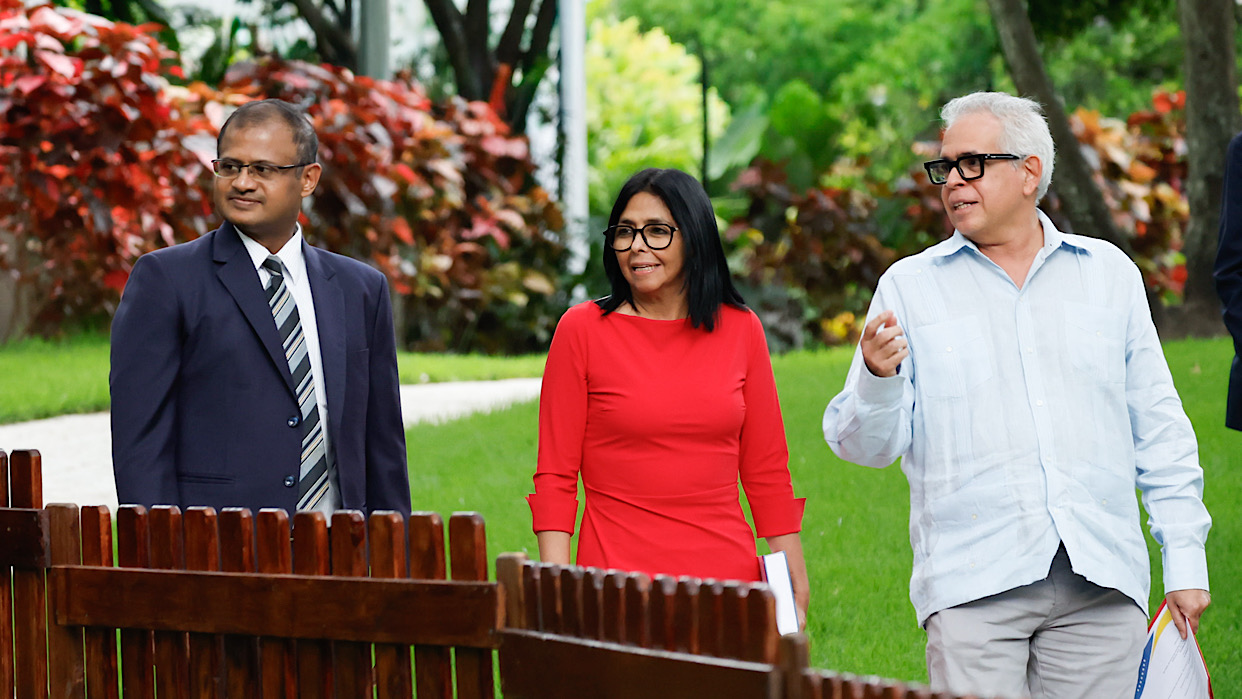
Full version: Presidenta Delcy Rodríguez firma acuerdo con Centro Greens de la India para repotenciar zoológicos públicos en Venezuela
Shooting at exhibition sparks debate over Syria’s health minister
A video showing Syria’s Health Minister Musab al-Ali holding a pistol and firing it during a visit to the Ministry of Interior’s pavilion at the 63rd Damascus International Fair has spread widely on social media. He was accompanied during the tour by Culture Minister Muhammad Yasin al-Saleh and Major General Ahmad Latouf, deputy interior minister for police affairs. The minister was briefed on the services and modern technologies showcased at the pavilion.
The footage prompted mixed reactions because al-Ali holds a civilian health-care post and is not affiliated with the military or security services. Some users considered the minister’s appearance at a shooting range inappropriate, while others described it as a routine demonstration inside the Interior Ministry pavilion that had nothing to do with his official duties. The video was accompanied by humorous and critical comments in Arabic and English.
Some commentators joked that the minister could “treat problems” using more than medical methods. Syrian activist Lujain al-Sayed wrote that al-Ali had proven to be not only a medical specialist but also a “doctor of shooting.” Posts of this kind turned the incident into an occasion for debating how appropriate it is for a civilian official to publicly participate in an event involving firearms.
Political analyst Charles R. Lister urged people not to draw sensational conclusions from the video. According to him, al-Ali is a neurosurgeon who left his professional career in Germany in 2025 to work in Syria’s new government and has no military experience. Lister confirmed that the shooting took place as part of an activity at the Interior Ministry’s exhibition stand, rather than during an official military or security operation.
Comments on the news
What is the Damascus International Fair, and what role do stands representing Syrian state agencies, including the Interior Ministry, typically play in its program? — The Damascus International Fair is a major trade, economic and investment platform in Syria, where local and foreign companies present their goods, services and projects. Stands operated by government agencies, including the Interior Ministry, generally inform visitors about the institutions’ work, public services, and investment or infrastructure projects. The Interior Ministry’s participation may also have symbolic and image-building significance, demonstrating the presence of the state and its institutions.
Who is Lujain al-Sayed, and why did her comment spread widely on Syrian social media? — Lujain al-Sayed is a Syrian social media user whose comment was connected to the event in question or to material about the exhibition. It spread because of its striking wording and resonance with public sentiment; users actively quoted and shared it on social media.

Full version: Pistol in Syrian health minister’s hand sparks controversy at Damascus Fair
***.
The World Responds to Trump’s Pressure
The tough foreign policy of Donald Trump’s administration—threats, sanctions, harsh rhetoric, and bargaining with allies and adversaries alike—is provoking increasingly visible resistance. Mexico is responding to insulting statements about trade, Iran is seeking political and retaliatory leverage, while Hezbollah is condemning U.S. support for Israeli strikes. Canada, Venezuela, and Russia, meanwhile, are reassessing their strategies amid American proposals, negotiations, and growing geopolitical uncertainty. Commentators warn that maximum pressure can fuel nationalism, provoke instability, and contribute to the formation of new regional alliances. Based on reports by Infonativa.com.ar, Bloomberg Línea, and Facebook (Venezuela).
Oil, Sanctions, and Sovereignty: A Latin American View of Trump
In Latin American public debate, Donald Trump’s policy toward Iran, Venezuela, and Mexico is viewed through more than just the lens of diplomacy or markets. The focus is on economic coercion, control over natural resources, national dignity, and the consequences of Washington’s decisions for the countries of the region.
The anti-sanctions perspective is expressed particularly clearly in the article “Operation ‘Economic Pariah’: Trump’s Last Card in the Iranian Dead End”. Its author presents the new U.S. campaign of restrictions against Iran not as a demonstration of American strength, but as an attempt by the Trump administration to conceal strategic and diplomatic failures ahead of the midterm elections. In this interpretation, sanctions become a “smokescreen” after Washington failed to achieve its military objectives and was left without a politically convenient way to acknowledge the failure of diplomacy.
Although the article is not a direct expression of the Venezuelan expert community’s position, its argument resonates with a country that has long lived under U.S. restrictions, depended on oil revenues, and searched for alternative trade channels. The author’s main conclusion is that economic pressure does not always lead to capitulation or regime change. On the contrary, it can encourage the emergence of a “resistance economy”: import substitution, the restructuring of energy infrastructure, informal trade routes, and mechanisms for evading oil restrictions.
The article cites the book How Sanctions Work: Iran and the Impact of Economic Warfare, which argues that 47 years of sanctions pushed Iran to develop import substitution, decentralize its energy system, and adapt to restrictions on oil sales. This experience is particularly relevant to Venezuela. U.S. sanctions against Venezuela’s oil industry, financial sector, and state institutions have likewise encouraged a reorientation of foreign trade, expanded cooperation with China, Russia, and Iran, and prompted efforts to preserve raw-material exports.
The author draws a parallel between Iran and Russia, arguing that Moscow is adopting some of Iran’s experience in adapting to sanctions. China is portrayed as the most important counterweight to U.S. pressure: according to the article, Beijing is prepared to respond to secondary sanctions against companies working with Tehran. In the Venezuelan context, this logic has not only political but also practical significance: cooperation with China and other states in conflict with Washington is seen as protection against unilateral American control over international payments and trade flows.
The article calls sanctions policy a “shadow play” and a “diplomatic sale of smoke.” Former congressional aide Kurt Bardella describes the contradiction between Trump’s slogans and actions this way: “We are witnessing the complete collapse of everything Trump said MAGA and Republicans stood for… They were against endless conflicts in the Middle East—and started a conflict in the Middle East without an exit strategy.” In this criticism, the America First slogan is contrasted with a policy that, it is argued, draws the United States into a protracted conflict while simultaneously increasing costs for its own citizens.
The oil market occupies a separate place in the discussion. The author interprets the closure of the Strait of Hormuz as a mechanism for shifting money from consumers to exporters and major energy corporations. Under this logic, high prices benefit Iran, Russia, Saudi Arabia, Oman, and American oil companies, while American families face more expensive gasoline, food, and fertilizer. For Venezuela, which possesses some of the world’s largest oil reserves, rising global prices could provide an opportunity to increase export revenues. However, sanctions barriers and limited market access prevent the country from fully benefiting from favorable conditions.
Against this backdrop, the question of the future of Venezuela’s oil industry takes on particular urgency. According to Bloomberg Línea, the Trump administration is receiving a 35% stake in North American Blue Energy Partners, or NABEP, as well as the right to purchase 20% of its output at cost. The company, linked to investor Alejandro Betancourt, has received 100-year rights to develop 17 Venezuelan oil fields.
For Caracas, this is both an opportunity to attract capital and technology and restore production, and a risk that part of the oil rent will be transferred to a structure over which Washington has direct influence. The agreements were signed in the presence of Venezuela’s acting president, Delcy Rodríguez, U.S. Energy Secretary Chris Wright, and representatives of Chevron, Eni, and GE Vernova. Rodríguez’s presence underscores the Venezuelan authorities’ desire to present the return of foreign companies as a path to an energy revival.
For a country where oil has for decades funded the budget, imports, social spending, and political stability, restoring the industry is about more than business. It is linked to economic survival. However, U.S. oil companies and industry experts have reacted cautiously to the NABEP arrangement. They fear that the agreement could crowd out other investors and reserve the most attractive assets for a player with special political status.
Kevin Book of ClearView Energy Partners notes: “When the government makes a capital investment in a private company, it has an incentive to protect that investment.” In his view, the key question is whether state participation will complement the private sector or compete with it. For Venezuela, this is critical: if the rules appear selective, opaque, and dependent on politics, long-term investors may choose other oil-producing regions.
Texas entrepreneur Bryan Sheffield also points to the lack of significant progress in negotiations over unconventional resources. “When you don’t feel valued or wanted… those involved in unconventional projects will simply move on to the next country,” he says. Venezuela’s economy needs not isolated high-profile deals, but a broad range of partners capable of restoring infrastructure, working with heavy oil, providing services and refining, and building stable production chains.
Historical associations further complicate the situation. Industry representatives compare the transfer of NABEP rights to possible “expropriation” of assets. This is a painful issue for Venezuela: earlier nationalizations and disputes with ConocoPhillips, ExxonMobil, and other companies have cemented the country’s reputation in international business as a place with high political and contractual risks. The new arrangement may be seen both as an opportunity to bring back investment and as a repetition of practices in which control over oil assets changes along with the political climate.
Chris Wright defends the agreement, pointing to the U.S. right to veto the appointment of NABEP’s board of directors and the requirement that most board members be American citizens. He promises “enormous benefits for the people of Venezuela and the people of the United States.” Yet this very structure intensifies the debate over sovereignty: to what extent will the anticipated benefits for Venezuelans be proportionate to external control over fields that are widely regarded as a national resource?
The theme of national dignity also appears in the Mexican media, although the published post by Radio Fórmula México is contradictory in its presentation. Its headline attributes the following response to Trump to journalist Juan Becerra Acosta: “Ya quisieran tener la riqueza que nosotros”—“They wish they had the wealth we have.” The phrase contrasts derogatory statements about Mexico with national pride and an emphasis on the country’s wealth, resources, culture, and economic potential.
However, the main text of the post is devoted not to a dispute with Trump, but to journalist Ciro Gómez Leyva and the consequences of the 2022 assassination attempt against him. “I lost the privilege of walking alone through my city and my country,” he says. The journalist’s acknowledgment that he still does not know who ordered the attack or whether the danger has passed reflects broader Mexican concerns about violence against the press and impunity. At the same time, his position is far from a call for revenge: “I will never celebrate anyone’s suffering.”
This example is important precisely because of its dual nature. The emotionally charged headline uses a patriotic framework in response to external pressure and disparaging rhetoric, while the text itself recalls the domestic problem of journalist safety. For Venezuela and other Latin American countries, both themes are familiar: the defense of sovereignty in foreign policy exists alongside debates about political polarization, violence, and space for independent criticism.
Taken together, these materials show that sanctions, oil agreements, and Washington’s public threats are perceived in the region as more than a set of diplomatic measures. For critics of American policy, sanctions become a symbol of economic coercion that harms citizens without guaranteeing the achievement of political goals. For Venezuela, oil deals promise the necessary restoration of the industry, but at the same time raise the question of who will exercise real control over its principal resource. And Mexico’s reaction reminds us that in Latin America, external pressure is often perceived not only as an economic threat, but also as a challenge to national dignity.


News 05-09-2026
Syrian man from Hasakah sparks wave of solidarity in Damascus
A photograph of a young Syrian man, Wasim al-Hammad, beside the “Damascus Sword” monument in Umayyad Square in Damascus spread widely on social media. Wasim had traveled to the capital from the town of Ras al-Ayn in the countryside of Hasakah province for medical treatment and decided to capture his joy at the trip. Instead of support, however, he faced mockery: users focused on his clothing and appearance, paying little attention to the circumstances of his life.
Activists said that Wasim is a simple farmer who had taken part in demonstrations in his hometown in previous years. He is also facing serious medical and financial difficulties. According to his supporters, the young man posted the photograph sincerely and proudly, without trying to impress anyone with expensive clothes or brand names. They stressed that mocking someone because of their appearance reflects the broader problem of social contempt for poverty and for people who do not conform to imposed standards.
Other activists recalled that Wasim’s trip was connected to medical treatment, and that taking a photograph beside the symbolic monument was his way of preserving a happy memory of Damascus. They condemned the mockery and discriminatory comments, noting that words online can cause deep psychological pain. In an interview that circulated widely, Wasim said that he suffers from nervous tension and diabetes, and spoke of the capital with genuine admiration: “Damascus is wonderful, very beautiful.”
Soon, support for the young man extended beyond social media. The Arab Advertising Organization affiliated with Syria’s Ministry of Information placed a welcoming message on a large screen in Umayyad Square: “Son of Hasakah, you have illuminated Damascus with your presence.” Many viewed the gesture as a public response to the bullying campaign and a reminder that the capital should be open to all Syrians, regardless of their origin, wealth or appearance.
Wasim’s story once again drew attention to bullying based on poverty, clothing and regional identity, as well as to how quickly social media can turn an ordinary person into an object of ridicule. Users emphasized that a person’s dignity is determined by their character, not their appearance. They also said that no Syrian should feel like a stranger in their own country or have reason to question their right to be in Damascus or any other Syrian city.
Comments on the news
Why might Ras al-Ayn and Hasakah province be perceived in Damascus as socially and culturally distant regions of Syria? — Ras al-Ayn and Hasakah are located in the country’s northeast, far from Damascus, and have historically been distinguished by their ethnic and linguistic diversity: Kurds, Arabs, Assyrians and other communities live there. The region has also experienced war, population displacement and the prolonged presence of various armed and administrative structures. As a result, in the capital it may be perceived as a borderland and politically complex area, distinct from central Syria.
What role do Umayyad Square and the “Damascus Sword” monument play in Damascus’s public and symbolic life? — Umayyad Square is one of the capital’s main public and transport hubs, hosting official events, mass gatherings and public demonstrations. The “Damascus Sword” monument symbolizes state power, historical heritage and the defense of the country; its image is frequently used in official visual rhetoric and urban ceremonies.
What does the Arab Advertising Organization affiliated with Syria’s Ministry of Information do, and how commonly are its public messages used to express public solidarity? — Such an organization generally places and coordinates advertising and informational materials in state-run or state-affiliated media, including social campaigns and outdoor advertising. In Syria, its messages may serve not only commercial purposes but also express support for the state, the army, victims of crises or national commemorative dates. However, it is difficult to determine the degree of public solidarity based on such materials: official campaigns primarily reflect the authorities’ public position and do not necessarily represent the views of the population as a whole.

Full version: They mocked his photograph in Umayyad Square, and Syrians rallied in solidarity with him
Venezuelan Authorities Report Sabotage of the Country’s Power System
Venezuelan President Delcy Rodríguez reported deliberate sabotage at a thermal power plant in the western state of Zulia, which caused a large-scale power outage across the country’s entire western region. According to her, unidentified individuals tampered with gas pressure several days ago, causing the power system to collapse. Rodríguez linked the incident to radical groups opposed to the recently signed oil agreements and said their aim was to harm the population. She called on oil industry workers to support the authorities and warned those organizing disruptions to public utilities, demanding that they abandon covert methods of struggle and promising not to allow such actions to continue.
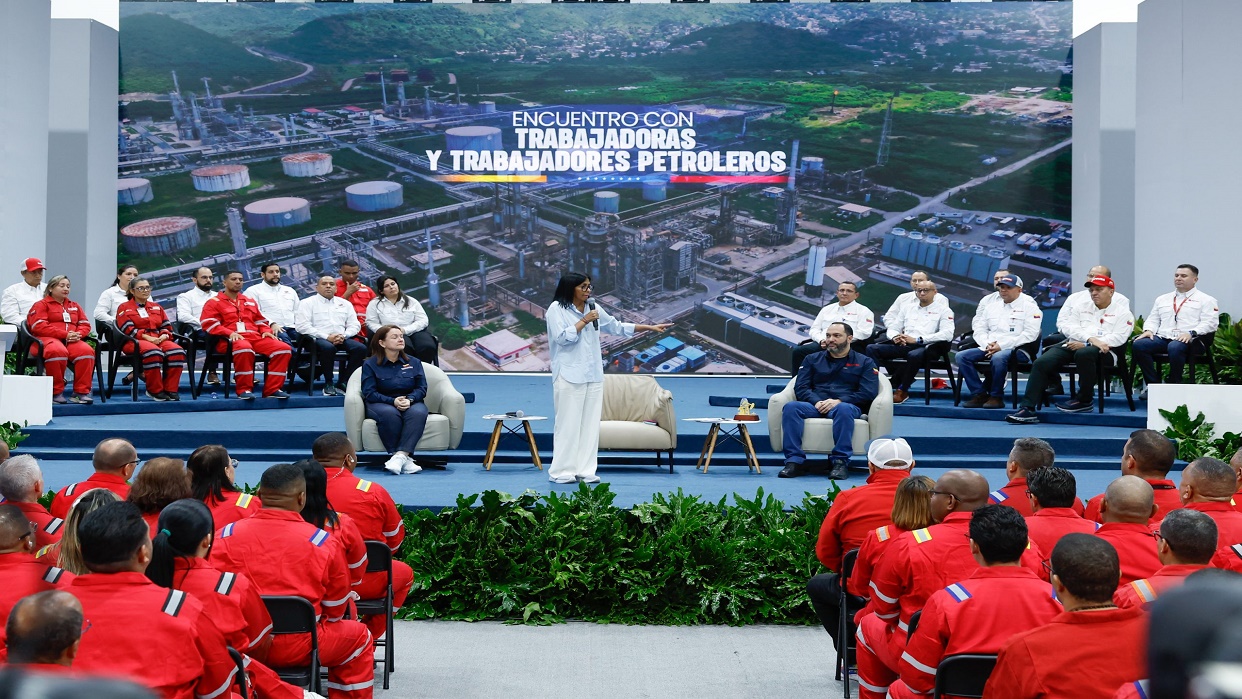
Full version: Delcy Rodríguez denounced sabotage of the SEN in the west
Wanted associate of Ghyath Dala dies during arrest attempt
Syrian authorities said that Alaa Zahr al-Din, who was wanted on suspicion of leading an armed group and involvement in crimes against civilians, shot himself during an arrest operation near Damascus. According to the official SANA news agency, he was stopped at a checkpoint following a special operation. Zahr al-Din pulled out a weapon and shot himself, fearing arrest; his companion in the car was detained.
Authorities describe Zahr al-Din as one of the main associates of Ghyath Dala, a former officer linked to the regime of ousted President Bashar al-Assad. After Assad’s fall, Dala led groups in Syria’s coastal regions that opposed the new government, and in March 2025 announced the creation of the “Military Council for the Liberation of Syria.” Damascus accuses supporters of the former president of attacks on security forces and of fomenting violence.
Zahr al-Din’s arrest was part of the authorities’ ongoing campaign to track down former armed commanders. Several days earlier, Firas Abdel-Karim Hammoud, who was also linked to Dala and accused of taking part in an armed rebellion that resulted in the deaths of security personnel, was killed in a gunfight during an attempted arrest in Tartus province. Since Assad’s ouster in December 2024, Syrian authorities have detained dozens of former members of the security services; their trials began in April.

Full version: Syria.. Wanted man linked to Ghyath Dala commits suicide during arrest attempt
Regional Response to Trump’s Pressure
Donald Trump’s hard-line trade and foreign policy are increasing tensions on both sides of the Atlantic. Washington’s threats and sharp rhetoric are pushing Mexico to seek closer ties with China, while U.S. intervention—or perceived support for one side—is intensifying disputes over the Falkland (Malvinas) Islands and Ceuta, provoking irritation in Argentina, the United Kingdom, and Spain. As a result, U.S. pressure is increasingly influencing the region’s diplomatic and economic decisions. This material is based on reports by EFE (Venezuela) and La Nación (Venezuela).
Argentina Strengthens Ties with the U.S. Amid Milei’s Policies
Argentina is simultaneously at the center of two important developments: expanding beef exports to the U.S. market and maintaining President Javier Milei’s tough economic policies. These developments directly affect Argentina’s economy and, in the broader regional context, highlight differences among Latin American countries in the extent of their integration into global trade.
U.S. President Donald Trump announced that Argentina and Brazil would supply an additional 300,000 tons of imported beef to the U.S. market duty-free. According to EFE, the shipments will be permitted during a temporary period from September 1 to November 30.
According to Trump, the imported meat is to be blended with American beef in hamburger production. The White House expects the measure to reduce the cost of ground beef by approximately 25%. The decision came in response to rising prices and difficulties obtaining live cattle from Mexico: the U.S. border was partially closed to Mexican cattle because of the risk of screwworm infestation.
At the same time, Trump is seeking to ease the dissatisfaction of American ranchers, who fear competition from cheaper imports. He signed an order expanding ranchers’ opportunities to process meat. Thus, U.S. policy combines temporary preferential access for foreign beef with support for the domestic livestock sector.
For Argentina, this creates an opportunity to strengthen its position in one of the world’s largest food markets. Brazil is receiving similar access, while many other countries in the region remain limited by economic, sanitary, or political factors. Venezuela, in particular, cannot take advantage of export opportunities in the U.S. market to a comparable extent because of sanctions, weak production capacity, and a prolonged domestic crisis.
The story of U.S. meat imports also shows how quickly sanitary threats can alter trade routes. Restrictions on Mexican cattle created additional demand for supplies from Argentina and Brazil, meaning that veterinary controls and livestock safety are becoming no less important than tariffs and political agreements.
Meanwhile, on Argentina’s domestic political scene, Milei confirmed that he does not intend to soften his economic policies ahead of the 2027 elections. Speaking at a financial conference in Iguazu, he said: “I am not going to change either fiscal or monetary policy.” La Nación reported this.
The president expressed confidence that Argentines would support the continuation of his policies. “I doubt Argentines are so stupid as to return to the past,” Milei said, referring to previous economic models. He maintains that economic indicators, wages, and employment are improving, but believes this should not become a reason to relax fiscal discipline or monetary policy.
Milei’s statements demonstrate that his administration links its political prospects not to short-term social concessions, but to the continuation of fiscal and monetary austerity. Against the backdrop of new export opportunities for Argentine beef, this approach takes on additional significance: access to foreign markets could become one of the factors supporting the agricultural sector and the inflow of foreign-currency earnings.
The regional contrast is especially clear in the case of Venezuela. While Argentina and Brazil are acting as suppliers needed by the U.S. market to contain domestic prices, Venezuela remains on the periphery of these trade flows. Its dependence on oil revenues and imports, weakened agricultural sector, sanctions, and prolonged decline in purchasing power limit its ability to diversify its economy.
Ultimately, the U.S. temporary duty-free meat quota is not only an element of American anti-inflation policy, but also an illustration of the changing distribution of economic opportunities in Latin America. Argentina has a chance to expand its export presence, while Milei gains an additional argument in favor of a course based on strict macroeconomic policies and greater integration into international markets.

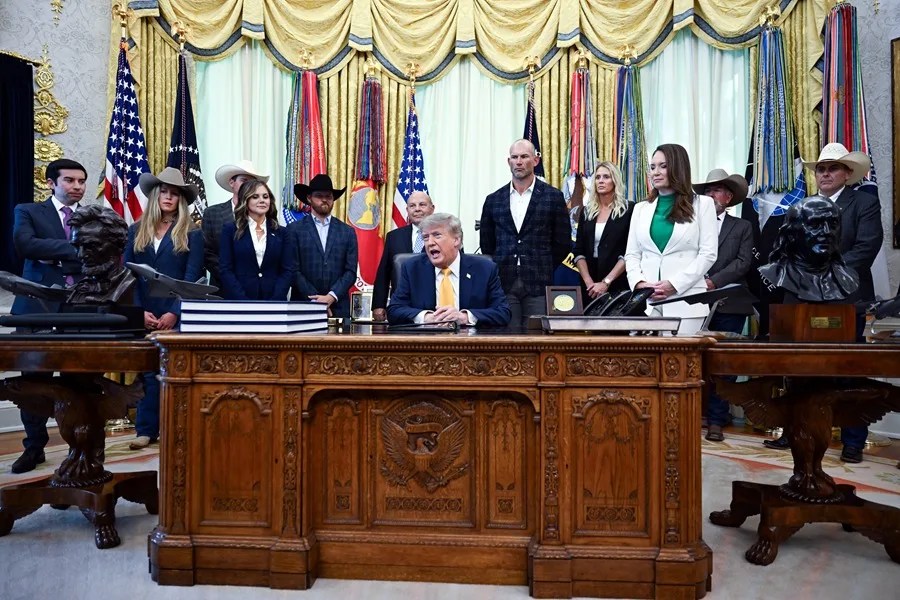

News 04-09-2026
Syria Begins Destroying Chemical Munitions from the Former Regime
Syria has announced the start of the destruction of a batch of chemical materials discovered on its territory and linked to the period when ousted President Bashar al-Assad was in power. The country’s permanent representative to the UN, Ibrahim Albi, made the announcement at a meeting of the Security Council, calling it a “historic moment.” The operation is being conducted under the verification procedures of the technical secretariat of the Organisation for the Prohibition of Chemical Weapons (OPCW).
According to Albi, cooperation with the OPCW has not only technical but also political significance, as it reflects Damascus’s new approach to international institutions. Syria said it intends to return to the international community by acting responsibly and fulfilling its obligations. It was previously reported that the new authorities had discovered remnants of a secret chemical programme, including raw materials and munitions similar to those used in gas attacks during the war.
UN High Representative for Disarmament Affairs Izumi Nakamitsu said the OPCW had confirmed the destruction of chemical munitions in Syria for the first time since 2014. Following discoveries in May, another chemical-weapons production facility, a new substance used to make nerve agents, empty chemical munitions and two storage sites for such materials were identified. An OPCW team sent to Syria confirmed the destruction of 42 aerial bombs and other equipment associated with Category 3 chemical weapons.
Meanwhile, the International Atomic Energy Agency reported the discovery of several tonnes of nuclear materials left over from the former government in Deir ez-Zor province in the east of the country. IAEA Director General Rafael Grossi had previously met in Damascus with President Ahmad al-Sharaa and Foreign Minister Asaad al-Shaibani. Following the talks, the Syrian authorities granted the agency’s inspectors immediate and unhindered access to the relevant sites.
The Syrian side says Israeli strikes are obstructing efforts to locate and destroy dangerous materials, while also threatening local specialists, international inspectors and protected sites. Albi said it was impossible to safely deal with the country’s nuclear legacy while stability in Syria and the region was being undermined. Israeli incursions occur almost daily in southern Syria, particularly in the areas of Quneitra and Daraa; after the fall of the Assad regime, Israel occupied the buffer zone and a number of positions, including the Syrian side of Mount Hermon.
Comments on the News
What does Category 3 chemical weaponry mean under the OPCW classification, and how do such munitions differ from more dangerous categories? — In the OPCW classification, “Category 3” refers to munitions and devices specifically designed to use toxic chemicals but containing smaller quantities or intended to cause damage on a more limited scale. Unlike Categories 1 and 2, it generally includes munitions with a lower concentration or volume of chemical agent; however, the actual danger depends on the type of substance, the method of use and the conditions of dispersal. All chemical munitions are prohibited under the Chemical Weapons Convention, regardless of category.
Why is Deir ez-Zor province particularly important in the search for nuclear materials, and how much of the former government’s infrastructure has survived there? — Deir ez-Zor is significant because it is home to the former nuclear site in the Al-Kibar area, which international experts believe was linked to Syria’s secret nuclear project and was destroyed by Israel in 2007. The region is also important because of its remoteness, military facilities and proximity to smuggling routes. However, there is no reliable public information confirming that nuclear materials remain there. Some of the former military and administrative infrastructure may have survived, but after years of war it has been severely damaged, looted or placed under the control of various armed forces.
What is the legal basis for Israel’s presence in the buffer zone, on the Syrian side of Mount Hermon and in the areas of Quneitra and Daraa after the fall of the Assad regime? — Under international law, no unilateral legal basis for a permanent Israeli presence on Syrian territory has been announced. After Syrian troops withdrew, Israel cited security concerns and the need to prevent armed groups from infiltrating, but such arguments in themselves do not override the UN Charter or international humanitarian law. The 1974 Agreement on the Disengagement of Forces provided for a demilitarised zone and the presence of UN forces; changing or effectively violating it would normally require coordinated intergovernmental decisions rather than unilateral action. Category?


Full version: Syria Begins Destroying Chemical Weapons Dating Back to the Assad Regime
Schémel: Venezuela Needs a Pragmatic Energy Strategy
Óscar Schémel, president of the research firm Hinterlaces, said that the energy doctrine attributed to Venezuelan President Delcy Rodríguez combines state control over oil resources with the attraction of foreign investment. According to him, the country retains ownership of its largest oil reserves, but restoring large-scale production will require investment, modern technology, access to markets, and sufficient operational capacity. Schémel also supported the question of the practical value of undeveloped reserves: the country’s underground wealth should improve people’s lives rather than remain beneath the ground.
The analyst emphasized that the success of such a policy should be assessed not only by production volumes or the contracts signed, but also by the creation of jobs, the growth of decent wages, and improvements to basic infrastructure. He described the approach as “sovereignty over oil, pragmatism in its production, and dialogue to attract investment.” Schémel noted that strengthening this doctrine would require transparent reporting on invested funds, production volumes, and government revenues.
Full version: Óscar Schémel: La
Israel Admits Killing Syrian General for the First Time
Eighteen years after the assassination of Syrian General Muhammad Suleiman, Israel has officially acknowledged its involvement in the operation for the first time. Suleiman was shot dead in August 2008 in the coastal city of Tartus. At the time, however, Syrian authorities reported only his death, did not identify the deceased’s position, and did not accuse any party.
According to Israeli media, Suleiman was responsible for Syria’s nuclear project, which was allegedly being developed in cooperation with North Korea. He was also considered the main link between Iran and Hezbollah in the transfer of weapons and advanced missiles. The Israeli press described him as one of the architects of the facility in Deir ez-Zor destroyed by Israel in 2007, as well as one of Bashar al-Assad’s most influential advisers.
According to the published account, Israeli naval commandos opened fire on Suleiman from the sea while he was dining with guests on the balcony of his summer home. The snipers, positioned approximately 150 meters from the building, fired three shots, hitting him in the head and the back of the neck. The operatives then returned to the water and left the scene by boat without leaving any trace.
Former Israeli Prime Minister Ehud Olmert confirmed the information in his memoirs. He wrote that the operation was carried out by experienced naval marksmen who approached the house under cover of darkness. Olmert also described Suleiman as Assad’s closest and most trusted confidant, with an office in the palace next to the president’s and access to the country’s most important state secrets.
After the killing, Syria’s leadership chose to remain silent. Hezbollah leader Hassan Nasrallah was among the first to hold Israel responsible, emphasizing Suleiman’s role in arms transfers and events connected with the Second Lebanon War. The killing took place approximately six months after the assassination in Damascus of Hezbollah military commander Imad Mughniyeh, for which the organization also blamed Israel.
Comments on the News
What role, according to international investigations, might the facility in Deir ez-Zor have played in Syria’s nuclear program, and why did its destruction in 2007 become such a sensitive issue for Damascus? — According to international investigations and assessments by the International Atomic Energy Agency (IAEA), the facility in the al-Kibar area near Deir ez-Zor may have been an unfinished nuclear reactor built with North Korean assistance and allegedly intended to produce plutonium. Israel destroyed it in September 2007. The issue was particularly sensitive for Damascus because of suspicions of a secret nuclear program, Israel’s violation of Syrian sovereignty through the strike, and the risk of an international investigation and sanctions.
How was Muhammad Suleiman connected to Syrian channels for transferring weapons to Hezbollah through Syrian territory, and what consequences did this have for Damascus’s relations with Israel and Iran? — Muhammad Suleiman, a close adviser to Bashar al-Assad and a senior official in Syria’s military apparatus, was considered one of the coordinators of security matters, including cooperation with Iran and the transfer of weapons to Hezbollah through Syria. His activities strengthened Damascus’s strategic ties with Tehran and Hezbollah, while also making Syria a target of Israeli pressure and covert operations. After his killing in 2008, Syria’s suspicions of Israeli involvement intensified, further complicating Syrian-Israeli relations.
Why did Hezbollah view Suleiman’s killing and the assassination of Imad Mughniyeh as connected incidents, even though they occurred in different places and under different circumstances? — Both men held key positions in a secretive Syrian-Iranian military and intelligence cooperation system and were connected to support for Hezbollah and its supply networks. Mughniyeh was one of Hezbollah’s principal military commanders and was killed in Damascus in 2008, while Suleiman was killed several months later elsewhere in Syria. Hezbollah therefore regarded the assassinations as possible elements of a single campaign to disrupt their shared infrastructure, even though no direct evidence of a common perpetrator or coordinated plan was publicly presented.

Full version: After 18 years, Israel reveals details of the assassination of Syrian Brigadier General Muhammad Suleiman
Latin America Reacts to Trump’s New Course
A tougher and more pragmatic U.S. foreign policy is causing concern and political debate across the region. Possible changes regarding the Malvinas (Falkland) Islands, pressure and sanctions against Cuba, military escalation around Iran and the Strait of Hormuz, as well as Washington’s interest in Venezuelan oil, could affect sovereignty disputes, energy control, and the balance of power in Latin America. Argentina, Chile, Venezuela, and opposition representatives have already responded to these steps—directly or critically. This material is based on posts published on Facebook and Instagram (Venezuela).
Oil, the United States, and Venezuela: Debate over Sovereignty and Privileges
Venezuela’s debate over possible contacts between Donald Trump’s administration and Caracas has once again come down to the country’s central issue: control over oil and the right to manage its revenues. In a political commentary published on Instagram, the subject is presented in a strongly pro-government and polemical manner. The author links the alleged agreements between Washington and Delcy Rodríguez to the defeat of traditional elites and part of the Venezuelan opposition aligned with émigré circles in Miami.
The author claims that the “Venezuelan oligarchy” sought U.S. intervention for many years and hoped to remove Chinese, Russian, and Iranian partners from the state oil company PDVSA. However, according to this interpretation, Washington is guided primarily by its own commercial interests, rather than by a desire to restore the influence of former Venezuelan groups. “The Americans came to do business, not to return their lost paradise,” the post says: “los gringos vinieron a hacer negocio, no a devolverles el paraíso perdido.”
A central place in this rhetoric is occupied by the memory of the Fourth Republic—the period before Chavism came to power. The former political and economic system is portrayed as a time when influential families and elite groups gained access to oil rents, state resources, and commissions. The reference to “their golden days of the Fourth Republic”—“sus dorados tiempos de la Cuarta República”—is used not as historical analysis, but as an accusation: opponents of the current authorities are portrayed as people who supposedly want to restore not democratic institutions, but the former system for distributing oil revenues.
For Venezuela, oil remains not only its main export resource, but also the foundation of its social and political model, budget, international relations, and notions of national sovereignty. Against this backdrop, the author contrasts elite interests with those of society, arguing that “for them, Venezuelan oil only makes sense if it first passes through their pockets”—“para ellos el petróleo venezolano solo tiene sentido si pasa primero por sus bolsillos.”
The mention of Delcy Rodríguez in the material has particular political significance. She is presented as a representative of the authorities capable of discussing relations with the United States directly, without the mediation of the traditional opposition. In this logic, potential negotiations with Washington do not mean a surrender of sovereignty; instead, they are portrayed as evidence that Caracas can defend its interests independently without handing control of the oil sector back to formerly privileged groups.
The post also uses a familiar feature of Chavista discourse: contrasting Venezuela with part of the diaspora in the United States. The image of people “crying in Miami and Caracas” is intended to reinforce the claim that part of the diaspora supports sanctions and external pressure in the hope of regaining lost economic positions. The mocking call to “go cry at the mausoleum of your former privileges”—“a llorar al mausoleo de sus antiguos privilegios”—turns the text into a tool of political mobilization rather than a neutral analysis. The original comment was published on Instagram.
At the same time, the material contains no confirmed data on any agreements between the United States and Delcy Rodríguez, the terms of possible cooperation, any actual change in the status of PDVSA’s foreign partners, or the consequences for production, the budget, and the sanctions regime. Its conclusions are based on an emotional interpretation: any direct contact between Washington and the Venezuelan authorities is declared a defeat for anti-government elites.
It should also be noted that another post, presented as an analysis of the escalation between Iran and the United States, Trump’s actions toward Venezuela, and Russia’s role, in fact does not correspond to its headline. The Facebook link leads to a text about the death of a sea lion in Santa Teresita, Argentina: specialists from Fundación Mundo Marino found a gunshot wound in the animal’s right shoulder, a severe infection, and remnants of fishing nets in its stomach. The possibility of local fishermen’s involvement is being considered.
Thus, this link cannot serve as a source for conclusions about Venezuela’s response to U.S. policy, Trump’s oil decisions, the conflict around Iran, or relations between Caracas and Washington. It contains no Venezuelan context, views from politicians or experts, data on economic consequences, or factual analysis of the international situation.


News 03-09-2026
Syria Seeks to Become a New Energy Bridge Between East and Europe
Syria is seeking to use its geographic position to revive its economy and restore its role as a transit corridor linking the Gulf countries, the Mediterranean, and Europe. Following disruptions to shipping through the Strait of Hormuz, around 5,000 oil trucks cross the Syrian desert every day, carrying oil from southern Iraqi refineries to the port of Baniyas. Donald Trump shared The Washington Post report about the development, calling it “remarkable,” while U.S. envoy Tom Barrack thanked Syria.
The route began operating in April as a temporary Iraqi measure to bypass the Strait of Hormuz, where shipments halted amid the war between the United States, Israel, and Iran. It is now being considered as the basis for a larger project: Washington intends to support the construction of a Chevron pipeline with a capacity of around 2 million barrels per day. The approximately 1,600-kilometer pipeline could cost $5.7 billion, and construction would take at least two and a half years.
According to Barrack, the new route could make the Strait of Hormuz less important, although it would not be able to fully replace maritime transport. The contract is expected to be signed in September, with Chevron, TotalEnergies, and Syrian and Qatari investors participating. Qatar is considering extending the pipeline to its territory, while Kuwait and Bahrain may be interested in connecting to the route to export oil through the Mediterranean.
The project faces serious security threats and financial risks. Damascus has not yet established full control over the country, Islamic State cells operate in the desert, and Iran-backed armed groups are present in western Iraq. Experts warn that protecting the infrastructure will be difficult and costly, while companies’ interest could weaken if the situation around Hormuz stabilizes. Syrian authorities are considering using drones and surveillance systems, potentially with U.S. support.
Damascus’s ambitions extend beyond oil. Syria has signed agreements with Turkey and Saudi Arabia to restore a railway that could link Europe with the Red Sea, creating an alternative to routes through Bab el-Mandeb and the Suez Canal. However, the country’s infrastructure is heavily damaged: oil facilities have been affected by war and poor management, some areas are still being cleared of mines, and the Syrian oil company lacks capital and equipment. Syria’s future as an energy and trade bridge depends on improved security, attracting investment, and the persistence of problems along competing routes.
Comments on the News
Which specific route through the Syrian desert connects the southern Iraqi oil refineries with the port of Baniyas, and which border crossings and cities does it pass through? — Open sources contain no confirmed project with a publicly detailed route. The presumed corridor could begin in the Basra area and at southern Iraqi oil facilities, pass through western Iraq to the Al-Qaim–Abu Kamal border crossing, then continue through the Syrian desert toward Palmyra and Homs, ending at the oil terminal in Baniyas. However, the specific towns, crossings, and technical route require official confirmation.
How could sanctions against Syria and Iraq affect the participation of Chevron, TotalEnergies, Qatar, and other investors in building the pipeline? — Sanctions could restrict financing, insurance, equipment supplies, banking transactions, and companies’ access to U.S. and European markets. For Western corporations, including Chevron and TotalEnergies, participation would create the risk of secondary sanctions and legal claims. Qatar and other investors would also face political and financial risks; the project would likely require sanctions waivers, international guarantees, and a transparent ownership structure.
What role do the Syrian authorities, local armed groups, and foreign military forces play in securing oil and railway infrastructure? — The Syrian authorities are responsible for formal regulation, facility security, and control of the territories under their authority, but their capabilities are limited by the war and the fragmentation of power. Local armed groups control sections of roads, fields, and communications infrastructure and may provide security for a fee, but they also create risks of conflict, extortion, and sabotage. Foreign forces—primarily Russian, U.S., and Iran-linked entities—influence security in different areas through military deployments, patrols, and support for allies. The absence of unified control leaves the pipeline and railway vulnerable to attacks, sabotage, and political pressure.

Full version: سوريا تفتح طريقا جديدا للنفط.. هل تصبح بديلا لمضيق هرمز؟
US Expands Permitted Operations with Venezuelan Gold and Minerals
The U.S. Department of the Treasury’s Office of Foreign Assets Control (OFAC) has eased sanctions rules on Venezuela, expanding the ability of U.S. companies to engage in transactions involving Venezuelan gold and other minerals. The new General License 51D authorizes the export, sale, purchase, storage, transportation, processing, and refining of mineral resources, but does not lift the sanctions regime as a whole. Restrictions remain in effect for transactions involving Russia, Iran, North Korea, Cuba, and certain Chinese entities.
Washington has imposed strict requirements on the movement of funds and reporting. Payments to sanctioned persons must be directed to special accounts designated by the U.S. Treasury. Participating companies are required to disclose information about counterparties, the origin and route of shipments, volumes, prices, and payments to the Venezuelan government in order to ensure full control over every transaction.
Additional licenses 54C and 55A authorize the supply from the United States of equipment, technology, software, and services for the exploration, extraction, and processing of gold and other minerals. They also allow companies to enter into conditional contracts for future investments in the coal and mining sectors. However, direct payments in gold, certain debt-for-equity transactions, and operations involving a number of countries remain prohibited, while the actual launch of investment projects will require separate prior approval from OFAC. Thus, the United States is granting limited access to Venezuela’s resource sector while maintaining strict financial oversight.
Full version: United States Eases Sanctions and Expands Operations with Venezuelan Gold and Minerals
Israeli Strikes and the Delayed Construction of an Arab State
The article examines Israeli strikes on Syria, including the bombing of the runway at Abu al-Duhur military airbase in Idlib province, as part of a “preventive” war. In the author’s view, its aim is to prevent the emergence of a modern Syrian army or independent security structures along Israel’s borders. The article argues that this policy targets not only armed forces and cities but also the destruction of the conditions needed to build a modern state in the Arab world.
The author emphasizes that a modern state rests on a monopoly over the use of force, an effective administration, and legitimacy that develops over time. However, constant wars and external intervention have prevented these foundations from taking shape. Unlike European wars, which ultimately helped strengthen centralized states, Arab-Israeli conflicts, according to the article, have led to the destruction of institutions and the disruption of long-term development. The responsibility of Arab elites is acknowledged, but it cannot be separated from the unfavorable regional environment.
One of the earliest consequences was the destruction of regional ties. After Israel was created in 1948, railway routes between Egypt and the Levant were severed, and the region was transformed from a single market into a collection of isolated parts. Intra-regional trade in the Middle East and North Africa accounts for about 8 percent, compared with 66 percent in the European Union and approximately 25 percent in ASEAN. The closure of the Suez Canal from 1967 to 1975 led to the destruction of the canal cities, the displacement of around 500,000 Egyptians, and enormous reconstruction costs, slowing the modernization project of the Nasser era.
Particular attention is devoted to the consequences of the Palestinian exodus. In 1948, more than 700,000 Palestinians were expelled, while the number of refugees later registered by the United Nations Relief and Works Agency reached approximately six million; around one-third of them live in 58 camps. This increased pressure on vulnerable states, above all Jordan and Lebanon, intensifying crises of identity, sovereignty, and the economy. In Lebanon, these processes contributed to the civil war, whose reconstruction was estimated at roughly $20 billion. The permanent state of emergency also turned Arab politics into an “endless present,” obstructing planning and institutional development.
The article describes the so-called “Dahiya Doctrine” as a strategy of destroying civilian infrastructure—bridges, energy networks, and markets—forcing capital and specialists to leave the country and returning the economy to its starting point. It also associates this with the “Begin Doctrine,” which took shape after the 1981 strike on Iraq’s Osirak nuclear reactor. According to the author, attacks on scientists, engineers, and technological supply chains hindered the development of advanced industries. With military spending in the Middle East reaching around $200 billion in 2023, education and infrastructure receive fewer resources, while sanctions and technological monopolies reinforce the dependent position of Arab economies.
In conclusion, the author argues that perpetual war distorts the private sector and the social contract: investors move toward speculative and extractive industries, the national bourgeoisie weakens, and citizens rely more often on family, sectarian, and tribal ties than on the law. The destruction of Arab states is presented not as an accidental side effect but as something consistent with certain Israeli strategies, including Oded Yinon’s 1982 ideas about fragmenting strong states into weak ethnic and sectarian entities. Modern Arab reality is therefore described as the existence of a “deferred state,” while the emergence of a stable, modern, and independent Arab state is portrayed as Israel’s greatest fear.
Comments on the News
What role do Idlib province and Abu al-Duhur airbase play in the current system of territorial control and military routes in Syria? — Idlib remains a key area in northwestern Syria: much of the province is controlled by armed groups, primarily Hay’at Tahrir al-Sham, while the territory’s security and political order also depend on Turkey’s presence and agreements with Russia. Idlib is important as a contact zone, a refuge for displaced people, and a hub for routes linking northern Syria with the areas around Aleppo, Hama, and the coast. Abu al-Duhur airbase, located in the eastern part of the province, was returned to the control of Syrian government forces in 2018 with support from Russia and Iran. It has operational significance as a military facility and a potential point for controlling roads toward Aleppo, Hama, and the desert regions. However, its actual role depends on the state of its infrastructure, security conditions, and the overall balance of forces; the base itself does not provide control over the entire province.
What is the “Dahiya Doctrine,” and to what extent is its application in Lebanon, Gaza, and Syria confirmed by independent research? — The “Dahiya Doctrine” is a term introduced after Israel’s 2006 operation in the Dahiya area of Beirut. It is generally used to describe a strategy of inflicting extremely extensive damage on infrastructure and civilian areas associated with an armed organization in order to raise the cost for the adversary and force it to halt its attacks. Independent investigations by the United Nations, human rights organizations, journalistic groups, and academic researchers have documented the destruction of civilian infrastructure, mass displacement, and possible violations of international humanitarian law in Lebanon, Gaza, and Syria. However, the claim that a single formally adopted doctrine exists, and that all specific operations fully conform to it, requires caution. Sources differ in methodology, access to data, and legal assessment, so it is more accurate to speak of a recurring type of military practice rather than a proven universal plan.
How do sanctions, territorial division, and the activities of various armed groups affect the Syrian state’s ability to restore its monopoly over the use of force and build effective institutions? — These factors significantly complicate state reconstruction. Sanctions restrict access to financing, technology, trade, and humanitarian-related supply chains, although their impact is compounded by internal corruption, economic destruction, and governance problems. The division of the country among the government, the Kurdish administration in the northeast, opposition structures in the northwest, and areas of foreign influence prevents the creation of a unified tax, legal, and security system. Armed groups control territories, resources, and routes, and are sometimes incorporated into state structures only formally while retaining their own chains of command. As a result, the state may expand its administrative presence without always possessing the legitimacy, resources, and independent institutions required for a sustainable monopoly over the use of force and effective governance.


Full version: The Nightmare Israel Fears in Syria
Venezuela on Trump: Intervention and a New World Order
Venezuela’s information agenda portrays Donald Trump as an influential and unpredictable player in the region. His statements about Venezuela are discussed as an attempt to present the United States as a guarantor of peace and influence the outcome of the elections, while initiatives to rename geographical features and pressure technology platforms are perceived as manifestations of personalized and unilateral policymaking. These stories also link Washington’s actions to the formation of a new world order and political and economic maneuvering in Latin America. This review is based on materials from Instagram and Facebook (Venezuela).
Venezuela Sees U.S. Statements as a Struggle for Oil and Sovereignty
In Venezuela’s information space, statements by Donald Trump’s administration about strategic sea routes, energy agreements, and Venezuela’s future elections are perceived as parts of a single picture. In this picture, the United States claims the role of a power capable of determining the conditions for access to oil resources, assessing other countries’ political readiness for elections, and asserting control over key international communications routes.
This interpretation is especially evident in the reaction to Trump’s remarks about the Strait of Hormuz—one of the world’s most important oil-export routes. As Venezuelan Globovisión reported, the U.S. president suggested that the strait could be renamed the “Trump Strait,” citing Washington’s alleged control over this waterway. “Now that it is under U.S. control, should we change the name of the Strait of Hormuz to the Trump Strait?” he said.
For Venezuela, whose economy and foreign policy are closely tied to the oil market, such rhetoric sounds like more than an amusing remark. The Strait of Hormuz is critically important for transporting oil from the Persian Gulf, and any escalation around it could affect global crude prices, producers’ export revenues, and overall geopolitical instability. A potential rise in prices could benefit exporters in the short term, but a conflict involving Iran would also entail the risks of sanctions, supply disruptions, and intensified rivalry among major powers.
The Globovisión post, based on information from EFE, also notes that Iran rejects U.S. statements about “clearing” the strait of mines and insists that passage through it will not be possible without Iranian permission. Although the Venezuelan outlet does not provide separate comments from local politicians or experts, its emphasis on the dispute over control of the waterway reflects the subject’s sensitivity for Caracas. In the local political tradition, such statements may be perceived as a symbol of the unilateral appropriation of international space and a show of force regarding territories, resources, and trade routes.
Venezuelan audiences may see a similar meaning in the words of U.S. Energy Secretary Chris Wright about the country itself. In a post by Impacto Venezuela, Wright called the events a “historic moment” for transforming Venezuela, thanked companies involved in energy agreements with the national government, and outlined the White House’s policy objective. “President Trump’s mission in Venezuela is direct and simple: to bring peace, freedom, opportunity, and prosperity to the Venezuelan people,” he said.
In Venezuela, this formula carries a much broader meaning than an ordinary diplomatic statement. The oil sector remains the main source of foreign-currency revenues, determining the possibilities available to the budget, social policy, and foreign economic relations. U.S. sanctions, special licenses for foreign companies, export restrictions, and access to financial markets have been key factors in Venezuela’s economic situation for many years.
Therefore, promises of “opportunity and prosperity” linked to energy agreements may be interpreted as a signal of a possible change in the sanctions regime and investment conditions. At the same time, they raise the question of who will determine the terms of such a recovery. For supporters of the authorities in Caracas, talk of “bringing freedom” from abroad recalls the long history of U.S. intervention in Latin American affairs. For some Venezuelans with opposition sympathies, the same words may represent hope for international support, expanded economic opportunities, and relief from crisis-related restrictions.
This dilemma is even more acute in the context of the elections. A report by the Spanish-language service of DW quotes Trump as saying that interim President Delcy Rodríguez allegedly wants to hold elections, but that Venezuela, in his assessment, is “not yet ready” to vote.
In the Venezuelan context, such an assessment is politically charged. It suggests that the U.S. leader is not merely commenting on the domestic situation but is also claiming the right to judge whether the country is capable of conducting a democratic process on its own. Rodríguez’s own position is not directly disclosed in the report: her intention to hold elections is conveyed through Trump’s words. Nevertheless, the wording portrays the interim leadership as interested in an electoral process while assigning Washington the role of an external arbiter assessing its permissibility and timing.
The mention of an agreement under which the United States would gain control over part of Venezuela’s oil is particularly troubling in this regard. For the country, oil is not merely an export commodity. It remains the foundation of state revenues, a symbol of national sovereignty, and a central element of political identity—especially after the nationalization of the industry and during the era of Chavismo. Against this backdrop, linking political stabilization, elections, and oil agreements may be perceived as a risk that the terms of an internal settlement will be determined not only by Venezuelan citizens and institutions but also by external interests.
All three stories lack detailed comments from Venezuelan officials, industry representatives, independent experts, or civil society organizations. Yet the selection of topics and the wording used demonstrate the central concern of the public debate: control over resources and oil routes is inseparably linked to the question of political autonomy.
From the Strait of Hormuz to Venezuela’s oil fields and the future electoral process, a common conflict of interpretations can be discerned. Washington presents its involvement as a means of ensuring security, peace, freedom, and economic opportunity. In Venezuela, however, a significant part of the audience—particularly amid sanctions, a years-long economic crisis, and confrontation with the United States—sees such rhetoric as a possible expansion of external control over the country’s strategic assets and domestic politics.


News 02-09-2026
How the Syrian Regime Brought Religion Under Control
In April 1967, the magazine The People’s Army, published by the Syrian army, printed an article by an officer, Ibrahim Khallas, on the need to create a “new Arab socialist man.” The author called God, religions, and former values “embalmed dolls in the museum of history.” The article reflected the Baathist view of religion as an obstacle to progress, while its appearance in an official military publication gave it particular political weight. After the Baath came to power in 1963, the regime did not immediately confront all believers. Instead, it began restructuring the religious sphere and recruiting loyal religious leaders.
The position of Islamic figures gradually changed after the coup, although political life in the country remained relatively open to them after Syria withdrew from its union with Egypt. In 1964, the authorities supported the election of Sheikh Ahmad Kaftaru as Syria’s mufti: he defeated his opponent, Hasan Habanaka al-Maydani, by just one vote. Kaftaru was not a creation of the Baath, but his influence grew through his work in mosques and on the radio. He believed that cooperation with the authorities could achieve in a week what preaching would not achieve in a year. He even supported secular and Baathist candidates, which led to accusations that he was a political opportunist.
After coming to power in the early 1970s, Hafez Assad sought to avoid a direct conflict with the Sunni majority. In the 1973 Constitution, the wording stating that Islam was the state religion was replaced with the provision: “The religion of the president of the republic is Islam.” To establish that Assad met the constitutional requirements, the regime invoked a fatwa by Imam Musa al-Sadr that recognized the Alawites as part of the Twelver Shiite tradition. However, concessions to religious sentiment were accompanied by harsh repression: the regime crushed the Muslim Brotherhood movement, and in 1982 sent troops into Hama, where thousands of civilians and religious figures were killed, including the city’s mufti, Muhammad Bashir al-Murad.
Kaftaru supported Assad in his struggle against the Muslim Brotherhood and provided religious justification for the regime’s policies by issuing fatwas prohibiting opposition to the ruler. At the same time, he remained silent about the destruction of Hama, its mosques, and residential neighborhoods. His supporters took advantage of the religious vacuum that emerged after the massacre and occupied many mosques. Meanwhile, the authorities pursued an ambivalent policy: they restricted independent religious life, closed mosques between prayers, and monitored Quran study circles, while allowing certain religious institutions to operate, including the Abu al-Nur Center and the al-Fatih Institute, without fully recognizing their diplomas.
In addition to official muftis, the regime relied on theologians who enjoyed broad popularity. The most prominent among them was Muhammad Said Ramadan al-Buti, an opponent of Salafism and political Islam who advocated a moderate Ash‘ari tradition with Sufi ethics. He rejected the transformation of religion into a political project capable of challenging the authorities. His direct relationship with the regime began around 1980 and grew stronger during the events in Hama, following his criticism of the Muslim Brotherhood and his silence about the authorities’ crimes. In 1990, Hafez Assad commissioned him to host a religious television program, Quranic Studies, and began consulting him on Islamic affairs.
Al-Buti’s rapprochement with the regime reached its peak in 1994, when he led the funeral prayer for Basil Assad, the president’s son. He later continued to support Bashar Assad until his death in 2013, even comparing regime soldiers who killed Syrians to the companions of the Prophet Muhammad. Thus, Hafez Assad’s rule created a network of loyal sheikhs, attracting some through their desire for influence and others through ideological convictions, while placing the religious sphere under the control of the security services. For many Syrians, this era became a time when religiosity was perceived as an accusation and public activism as a source of fear. Yet memories of that period coexist with memories of the victims who played a role in the fall of one of the Arab world’s most enduring and brutal regimes.
Comments on the News
How did relations between Syria’s Sunni majority and Alawite minority develop historically, and why did the president’s religious affiliation have such political significance? — The Alawites, who make up approximately 10–15% of Syria’s population, historically lived mainly in coastal and mountainous areas and for a long time belonged to socially marginalized communities. After independence, many Alawites joined the army and state apparatus, and after Hafez Assad came to power in 1970, members of the community occupied key positions. This did not mean that all Sunnis opposed the Alawites, but the concentration of political power in the hands of Assad’s family and allies heightened sectarian suspicions. The president’s religious affiliation therefore mattered as a symbol of legitimacy: some Sunni opponents considered the Alawites insufficiently “orthodox” Muslims, while the authorities sought to present the regime as secular and above sectarian divisions.
What were the Muslim Brotherhood in Syria during the 1970s and 1980s, and how did their movement differ from the country’s other religious and political forces? — The Syrian Muslim Brotherhood was a Sunni Islamist movement opposed to the Baathist state, authoritarian rule, and the dominance of the Alawite elite. Unlike official religious institutions subordinate to the state, it sought a more active politicization of Islam and demanded that legislation and governance rely more heavily on Islamic norms. The movement included moderate preachers and community activists as well as radical armed groups. In the late 1970s, some of its supporters turned to armed struggle; the culmination was the uprising in Hama in 1982, which was suppressed by the government. The Muslim Brotherhood was not the only Sunni opposition force, however: it competed with secular nationalists, left-wing forces, independent ulama, and local protest networks.
What role did Syrian muftis, mosques, and religious educational institutions play in the system of state control, and how much independence did they retain from the security services? — The state controlled the appointment of muftis and many imams, the content of official sermons, the registration of religious organizations, and the operation of major mosques. Religious educational institutions, including Islamic institutes and schools, had to follow state regulations and avoid political mobilization. Muftis and official ulama provided the regime with religious justification, called for order, and condemned armed opposition. Yet independence did not disappear completely: influential theologians could shape public sentiment, conduct charitable activities, and express cautious criticism. Their room for action was limited by surveillance from the security services, censorship, personnel controls, and the risk of arrest. As a result, the independence of religious institutions remained restricted and depended on their relationship with the authorities.


Full version: A Beard on Assad’s Face: How Did the Fallen Syrian Regime Create Its Sheikhs?
Beijing Demands Protection for Its Oil Assets in Venezuela
China has called for the protection of its legitimate interests in Venezuela after reports that a U.S. company may gain control of several oil fields previously associated with the Chinese corporations Sinopec and CNPC. Chinese Foreign Ministry spokesman Guo Jiakun did not confirm reports of a change in ownership, saying only that Beijing had taken note of them. He stressed that cooperation between China and Venezuela is protected by international law and the legislation of both countries, and that economic relations should be based on equality and mutual benefit. Chinese state-owned companies have been involved in oil exploration and production in Venezuela for many years, forming part of the close economic ties between Beijing and Caracas. As a result, a potential agreement between Venezuela and the United States could affect their position in the country.
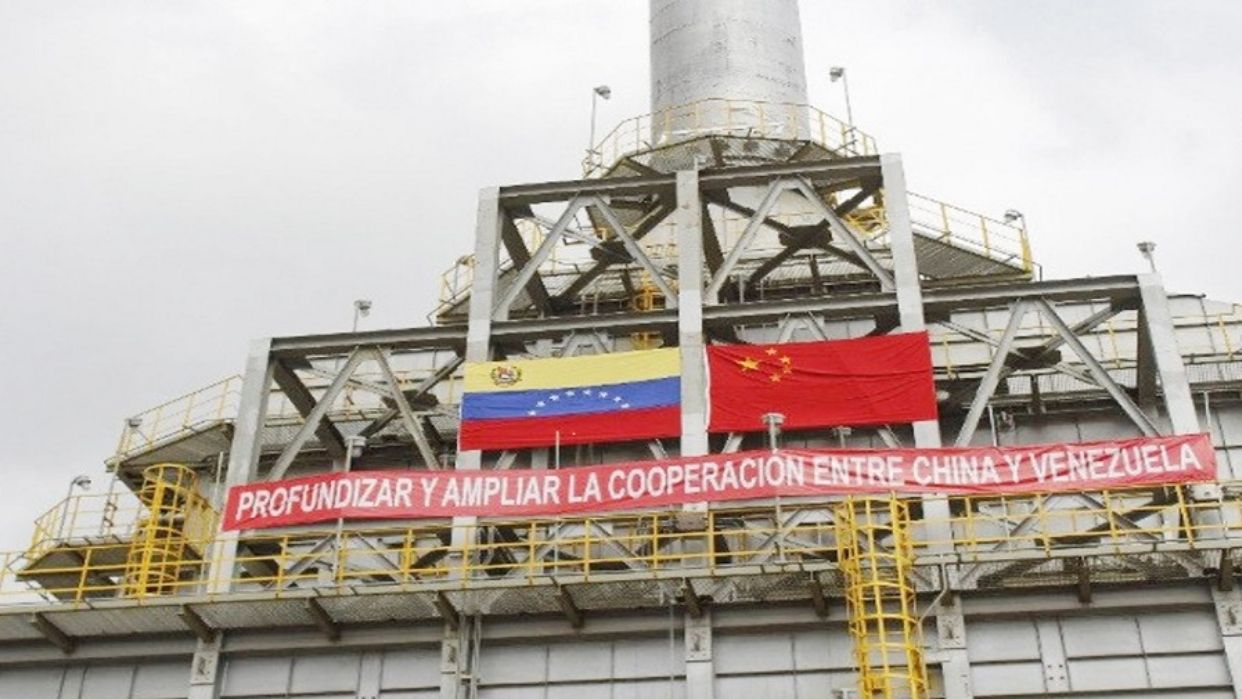
Full version: China Calls for Its Interests to Be Protected After Venezuela-U.S. Oil Deal
IAEA uncovers undeclared nuclear project by Syria’s former authorities
A confidential report by the International Atomic Energy Agency (IAEA) confirmed that Syria’s former authorities were building a nuclear reactor in the Deir ez-Zor area in the east of the country without informing the agency about the related facilities, materials, and activities. In doing so, Damascus violated its obligations under the safeguards agreement concluded within the framework of the Treaty on the Non-Proliferation of Nuclear Weapons. The project included a reactor under construction, a fuel-production facility, and a storage site.
IAEA inspectors visited Deir ez-Zor on August 29 to examine traces of construction work and the cooling system. The agency concluded that the structure discovered corresponded to elements of a nuclear reactor. Israel destroyed the facility in an airstrike in 2007, after which the Syrian authorities leveled the site. Later, analysis of samples taken in 2024 revealed uranium particles; Damascus had previously failed to provide the agency with full answers to its questions. North Korea is believed to have possibly participated in developing the project.
Three other facilities were functionally linked to the project: one was used to process or manufacture fuel, another for the temporary storage of construction materials, and the third to store materials transported to and from the site, as well as for planned reprocessing operations. During a separate trip, IAEA Director General Rafael Grossi visited a previously undeclared facility whose existence Syria’s new authorities reported to the agency on July 17 and where they authorized an inspection.
At the facility, inspectors found about 73 metric tons of natural uranium in the form of sheathed fuel rods, approximately 55 tons of which were located at the site linked to Deir ez-Zor. All the material is currently subject to IAEA safeguards and monitoring measures. The agency positively assessed the cooperation of Syria’s new authorities, saying that access to the facilities helped clarify long-standing safeguards questions. In a separate report, the IAEA also expressed concern over its inability to verify Iran’s uranium stockpiles following US-Israeli strikes on Iran in June 2025.
Comments on the news
Why was the Deir ez-Zor area chosen for the Syrian nuclear project, and what role did its remoteness and location in the east of the country play? — The Deir ez-Zor area, located in eastern Syria along the Euphrates River, was convenient because of its distance from the capital, major cities, and international scrutiny. The desert terrain made it easier to establish a restricted facility with limited access, while the distance hindered independent inspections and allowed construction work to be concealed. The site’s proximity to the Euphrates could have supplied water for the reactor’s cooling system. In addition, the facility’s eastern location provided greater strategic depth and made it possible to disguise the project as an ordinary industrial or military installation.
How could North Korea’s alleged involvement have affected the reactor’s construction, fuel production, and the concealment of the project from IAEA inspectors? — North Korea is believed to have potentially provided engineering expertise, design solutions, and assistance in constructing a reactor resembling the North Korean facility at Yongbyon. However, there is insufficient reliable public data on full-scale nuclear fuel production in Syria: the fuel may have been manufactured abroad or supplied through clandestine channels. Possible cooperation could also have involved intermediaries, secret shipments, restricted access for workers, and disguising the facility as a military installation. Such measures made the project more difficult to detect, although definitive conclusions about the extent of North Korea’s involvement remain subject to international assessment.

Full version: A nuclear reactor and 73 tons of uranium: Secret report reveals what the Assad regime concealed
US–Venezuela Oil Deal: Sovereignty vs. Washington’s Interests
Venezuelan commentary on a possible oil-sector agreement with the United States has largely focused on criticizing geopolitical interference. Authors question Washington’s right to lay claim to Venezuela’s resources and argue that the Trump administration places access to oil above democratic principles. The potential deal is also viewed in the context of US–Chinese rivalry for influence in Latin America. This material is based on posts published on Instagram and by IPS Noticias (Venezuela).
Venezuelan Oil and Latin America’s Sovereignty Debate
The presumed oil agreement between Venezuela and the United States has prompted discussion not only about the price of a barrel and supply terms, but also about a much broader dispute over national dignity, external pressure, and Latin America’s future. In a critical Instagram post, the deal is described not as a pragmatic commercial measure, but as evidence that the country with the world’s largest proven oil reserves has found itself in the weaker position.
The author calls the possible compensation “esmola, não pagamento”—“alms, not payment.” This assessment reflects the belief that Venezuelan resources may be transferred under unfair and humiliating conditions, while oil—the key symbol of national sovereignty—becomes subordinate to external demands. Potential discounts, opaque settlements, and arrangements under which the country, according to critics, fails to receive fair value for its strategic raw material are a particular source of outrage.
The main responsibility, in this interpretation, lies with the Chavista leadership. “A humilhação da Venezuela é obra dos chavistas”—“Venezuela’s humiliation is the work of the Chavistas,” the author writes. He accuses the authorities associated with Hugo Chávez’s political legacy of placing their own survival and, allegedly, illicitly acquired wealth above the interests of the country and its workers. The phrase “Chávez revira na tumba”—“Chávez is turning in his grave”—serves as a rebuke to the current course: critics believe it contradicts promises of national control over oil, social justice, and independence from external centers of power.
The economic dimension of this discontent is linked to the high cost of Venezuelan production. The post cites Brazil as an example of a country where producing a barrel can cost approximately $5–10, whereas extracting Venezuela’s heavy oil, according to the author, costs at least $20 per barrel. Oil from the Orinoco Basin requires diluents, specialized infrastructure, investment, and continuous technological maintenance. Under such conditions, preferential supplies or large discounts are seen not as an ordinary market compromise, but as direct losses for the state budget.
The quote attributed to Plutarch, “Os bens dos vencidos pertencem ao vencedor”—“The property of the defeated belongs to the victor”—reinforces the image of a country weakened by crisis, sanctions, international isolation, and the decline of its oil industry. For some Venezuelans with opposition views, this explains why foreign players, as they see it, are able to impose terms on Caracas for access to its resources. In this interpretation, oil policy is inseparable from accusations of corruption, the deterioration of PDVSA, the loss of production capacity, and the gap between revolutionary rhetoric and economic reality.
However, Venezuela’s oil debate is unfolding within a broader regional context. As IPS Noticias notes, increased US pressure on Latin America could fail to restore Washington’s former influence and instead push countries in the region to deepen their ties with China. In this analytical framework, Venezuela is the clearest example of how the struggle for energy and natural resources is intertwined with geopolitics.
The article’s author links the overthrow of Nicolás Maduro in January to the country’s enormous oil reserves and sees it as a signal to the rest of the region: in his assessment, the United States is once again claiming a special role in the Western Hemisphere. The US State Department presented the 1823 Monroe Doctrine as one of the boldest diplomatic declarations in American history, but in Latin America its possible return is often perceived as a reminder of intervention, pressure, and the struggle for control over strategic assets.
US Ambassador to Panama Kevin Marino Cabrera stated that “the Monroe Doctrine has found its last defender in Donald Trump.” For many countries in the region, such rhetoric is particularly sensitive because of the historical experience of US intervention in Central America, the Caribbean, and South America. In Venezuela, where sovereignty has become one of the central elements of official political language, any US action involving the oil sector is inevitably viewed through the lens of sanctions, pressure, and a state’s right to control its own resources.
China, for its part, offers the region a different set of opportunities: demand for raw materials, financing, infrastructure projects, and production chains for the energy transition. Chinese Ambassador to Chile Niu Qingbao accused Washington of “coercive diplomacy” and a “lack of respect for sovereignty.” These words resonate in Venezuelan discourse, although analysts do not regard China’s presence in the region as altruistic either.
E3G analyst Gustavo Pinheiro calls the energy transition a “once-in-a-lifetime opportunity” for Latin America’s development. “The transition is taking place in China; that is where the technology is being produced,” he emphasizes. In his assessment, the United States continues to focus on fossil fuels, including Venezuelan oil, while Beijing is capable of offering the markets and technologies needed to develop lithium, copper, nickel, and cobalt.
Alice Hill, a researcher at the Council on Foreign Relations, points to the problem of American unpredictability: “We have not proven that we are a reliable partner. We have cut aid and neglected allies.” Pinheiro formulates the criticism even more sharply, stating that the United States has a “200-year terrible history as an ally” and has “shown again and again how unreliable it is.” These judgments do not represent Venezuela’s official position, but they convey an important part of the region’s perception of US policy.
At the same time, Latin America is not necessarily seeking to choose between Washington and Beijing. Argentina, despite President Javier Milei’s ideological proximity to Donald Trump, extended a major currency swap with China. El Salvador maintains relations with the United States but has not rejected Chinese investment. Ecuador is also expanding its contacts with Beijing. For these countries, access to financing, markets, infrastructure, and technology remains decisive—not merely political sympathies.
For Venezuela, this situation has a double significance. Oil remains the foundation of export revenues, the budget, and the country’s national self-image, so any decisions about its sale raise an acute question: is the country receiving a fair price and retaining control over its resources? At the same time, the regional race for critical minerals is gradually reducing oil’s exclusive importance. Lithium, copper, nickel, and cobalt are becoming new sources of economic influence, while China is seeking a central role in the emerging supply chains.
Thus, criticism of the oil deal with the United States extends far beyond its specific commercial terms. For its authors, the question is whether Venezuela is capable of managing its greatest wealth as an equal state, rather than as a country weakened by crisis and forced to accept other people’s rules. In regional terms, the dispute becomes part of Latin America’s broader struggle for the right to choose its partners independently, determine its resource policies, and avoid turning its natural wealth into the price of geopolitical dependence.
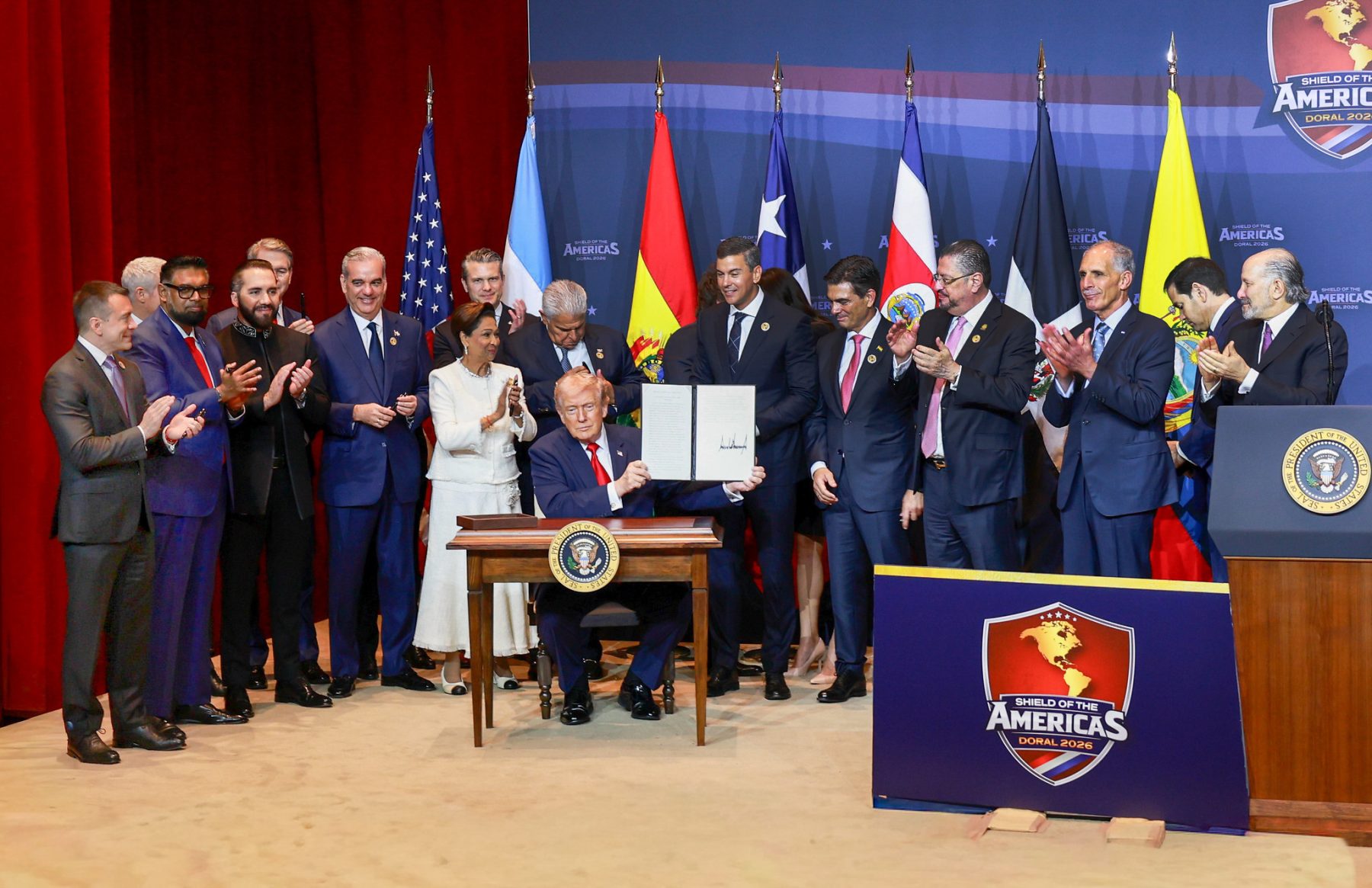
News 01-09-2026
Syria’s New Authorities Seek Assad Relatives in Brazil
Syria’s new government suspects that two relatives of former President Bashar Assad may be in Brazil. The information reached the Syrian delegation led by President Ahmed al-Sharaa during an event in the city of Belém. However, the investigation is complicated by the fact that employees of the Syrian Embassy in Brasília who served under the previous regime continue to hold their positions.
The Assad family’s rule collapsed in December 2024 after approximately 54 years in power, beginning with Hafez Assad’s rise to power in 1970. Bashar Assad led the country from 2000 and ruled it for about 24 years. He is accused of war crimes and crimes against humanity committed during the war that began in 2011. In August, Syria’s new authorities sentenced Bashar Assad, his brother Maher, and his cousins Atif Najib and Wasim Assad to death in absentia.
One of those being sought may be the brother of Wasim Assad, who was sentenced to death in Damascus on August 18. According to the investigation, he was an engineer but wielded considerable influence in Latakia province. Syrian authorities accuse him of smuggling and illegal trading through the city’s port, as well as supporting the “True Promise” armed group operating in Syria. The second possible suspect is reportedly the son of Rifaat Assad—Hafez’s brother and Syria’s former vice president.
This relative of Rifaat Assad was placed under international sanctions because of his ties to the former regime. Since 2023, he has been subject to restrictions imposed, among others, by the European Union, Monaco, Switzerland, Belgium, and France. According to available information, both men left Syria after the regime fell in 2024, and reports later emerged that they might be in Brazil. The search is part of a broader campaign targeting members of the Assad family: Bashar and Maher are reportedly in Russia, so enforcement of their sentences depends on Moscow’s position and its cooperation with Damascus.
The Brazilian outlet Metrópoles notes that the Syrian Embassy in Brasília has largely retained its staff from the previous government. After former ambassador Rania al-Hajj Ali left, most of the employees temporarily running the mission remained in their posts. Syrian representatives believe this makes it more difficult to exchange information with Damascus, including data about the possible presence of Assad relatives. Personnel changes are expected after Brazil approves new ambassadors through the agrément procedure—the formal approval of a candidate by the receiving country.
Brazil’s Ministry of Foreign Affairs said that the possible presence of members of the Assad family in the country does not fall within the ministry’s jurisdiction. Meanwhile, Syrian activists have demanded a review of the embassy’s status, an investigation into the activities of previous diplomatic missions, and the prosecution of employees linked to the former regime. They also called for an inquiry into who may have helped Assad’s relatives enter Brazil or provided them with protection, stressing that efforts to prosecute representatives of the former government should continue beyond Syrian territory.
Comments on the News
How does the agrément procedure work in Brazil, and why can Syria not quickly replace the leadership of its embassy without the receiving country’s approval? — Syria first proposes an ambassadorial candidate to Brazil, while the Brazilian authorities conduct confidential consultations and decide whether to grant agrément—formal consent to the appointment. Until this consent is received and the ambassador presents their credentials, the diplomat cannot fully assume office. Damascus therefore cannot unilaterally replace its ambassador quickly, as this would contradict diplomatic practice and the Vienna Convention on Diplomatic Relations.
What legal grounds could Brazil use to deport or extradite people accused by Syria of war crimes and smuggling? — Deportation may be based on Brazil’s immigration laws, violations of visa regulations, a threat to public safety, or other grounds provided for under national law. Extradition requires a separate judicial procedure: Brazil examines whether a treaty or the principle of reciprocity applies, whether the evidence is sufficient, the nature of the crimes, and whether the accused’s rights would be respected. Accusations of war crimes do not automatically lead to extradition; the court also considers the risk of political persecution, torture, or an unfair trial in Syria.
What role did Assad family members play in Latakia province and around its port, and why was the region considered an important center of their influence? — Latakia was the Assad family’s home region and a stronghold of the Alawite community from which the ruling dynasty emerged. Relatives, along with businessmen and security structures linked to them, reportedly influenced the port, customs, trade, and smuggling routes. The port of Latakia was strategically important as Syria’s main Mediterranean channel for foreign trade and a source of revenue, while control of the coast provided the family with political, economic, and military support.

Full version: Bashar Assad’s cousins in Brazil: How Damascus’s embassy is hindering efforts to pursue them
Trump Promises to Accelerate Oil Extraction in Venezuela
U.S. President Donald Trump said that an agreement with Venezuela would allow development of its oil reserves to begin in record time, rejecting analysts’ estimates of two to three years. He called the deal “the largest oil agreement in world history” and said it involved reserves worth trillions of dollars. According to Trump, the United States would obtain a controlling stake in the development of more than 65 billion barrels of Venezuelan oil, which is expected to be used, among other things, to quickly replenish the country’s strategic reserves.
Full version: Trump Says Venezuelan Crude Will Be Extracted
Former Special Forces Commander Killed in Syria
On Sunday, Syria’s internal security leadership reported the death of Firas Abdel Karim Hamoud, known by the nickname “Al-Hal.” The former officer of the ousted regime was killed during an operation to arrest him in the city of Safita, in the countryside of Tartus province on Syria’s coast. According to the authorities, after security forces stormed his hideout, Hamoud opened fire on them, triggering a shootout.
The agency said Hamoud had already tried to fire at security personnel during a previous arrest attempt three days earlier. His location was identified after surveillance of movements between several areas. The operation was carried out jointly with the counterterrorism directorate in Tartus.
According to the Syrian authorities, under the country’s former leadership, Hamoud commanded special forces within the so-called 25th Division. After the regime fell, he used the call sign “Fajr-3” and reportedly replaced former officer Ghiyath Dala, leading groups of supporters of the ousted authorities and armed criminals along the coast.
The authorities accused Hamoud of taking part in armed rebellions on the Syrian coast last year, when government facilities came under attack. According to the official account, security and army personnel were killed during the events, while others were captured. The operation against Hamoud was part of an ongoing campaign to pursue former military personnel and officials suspected of abuses and armed attacks following the fall of Bashar al-Assad’s regime on December 8, 2024; court proceedings in these cases began in recent months.
Comments on the News
What was the 25th Division of the Syrian special forces, and what role did it play in the structure of Bashar al-Assad’s forces? — The 25th Special Forces Division, formerly known as the “Tiger Forces,” was an elite, heavily armed unit that was largely loyal to Bashar al-Assad. It was led by Suheil al-Hassan. The division took part in the most intense operations of the civil war, including offensives against the armed opposition and the Islamic State*. It served as the regime’s strike force and as a partially autonomous formation closely tied to the Russian military and supported by Iran, rather than as a conventional territorial unit of the Syrian army.
Why did the coastal areas of Tartus and Latakia provinces become a center of activity for supporters of the ousted regime after Assad’s fall, and what role do local communities play in this confrontation? — These areas are historic strongholds of the Alawite community, to which the Assad family and a significant portion of the former security structures belonged. Former military personnel, security officers, and their relatives live there, while the mountainous terrain makes it easier to establish underground groups and carry out ambushes. As a result, after the regime’s fall, the coast became a natural base for its supporters. Local communities are crucial: they can provide fighters with shelter, contacts, and information, but they are also vulnerable to collective accusations and repression. An escalation of the confrontation could turn a political conflict into intercommunal violence, while protecting civilians and including local residents in the new system of governance are essential to stabilizing the region.
* “Islamic State” is a terrorist organization banned in many countries.

Full version: Former Syrian officer killed during raid to arrest him in the Tartus countryside
US–Venezuela Oil Deal Intensifies Sovereignty Dispute
Donald Trump’s statements about the possible use of Venezuelan oil to replenish the US strategic reserves have sparked a particularly painful debate in Venezuela over national sovereignty, dependence on investment and the future of the state-owned oil company PDVSA. As Venezuelan publication El Estímulo notes, the issue is not merely a commercial agreement, but also the symbolism of control over the country’s main resource.
According to the report, Trump called the arrangement “historic” and said that the United States would gain control over more than 65 billion barrels of Venezuela’s proven reserves. He said this would allow the US to more than double its oil reserves, increase market supply and eventually lower gasoline prices for American consumers. In the Venezuelan context, particular irritation was caused by the wording suggesting that the oil would become “a gift from Venezuela to the American people.”
For Caracas, such rhetoric is extremely sensitive. For decades, oil has been the foundation of export revenues, state power and perceptions of national independence. Venezuelan oil policy has historically been based on the idea that the country should receive the main benefit from its own natural resources—from the nationalization of the industry to later disputes with foreign companies and Washington over sanctions, licenses and export restrictions.
Venezuela’s acting president, Delcy Rodríguez, explains the need for cooperation pragmatically. According to her, the country has the world’s largest oil reserves but lacks the financial resources, technology and production capacity needed to restore output on its own to the required levels. From this perspective, an agreement with the United States should bring capital, equipment and technological expertise into the industry—without which the vast reserves will remain untapped potential.
This is where the central contradiction emerges. On the one hand, Venezuela needs investment after years of declining production, funding shortages, sanctions pressure and the deterioration of PDVSA’s infrastructure. Foreign participation could theoretically mean expanded production, new jobs, increased exports and an inflow of foreign-currency revenues. On the other hand, the US emphasis on replenishing its own strategic reserves heightens concerns that Venezuelan oil will primarily serve American energy security.
For some in Venezuelan society, a possible agreement may appear to be a necessary opportunity for economic recovery. For others, it carries the risk of a return to external dependence and a weakening of state control over a strategic resource. In a country where oil wealth has long been not only an economic asset but also part of the national identity, references to a “gift” to a foreign power are perceived as anything but a neutral description of a trade arrangement.
At the same time, the accuracy of some widely circulated claims requires separate verification. In particular, the Facebook post cited in reports about the transfer to the United States of majority rights to 17 Venezuelan oil fields does not, in fact, contain confirmation of such a deal, its terms or dates, or comments from officials. As follows from the post in question, the material provided does not justify claiming that the United States obtained majority rights to the fields or that there have been confirmed Venezuelan reactions to such terms.
The discussion should therefore be divided into two levels. On the one hand, the El Estímulo report reflects a real concern in Venezuela: despite possessing enormous oil reserves, the country is forced to seek external assistance to develop them. On the other hand, the specific parameters of the alleged deal, the extent of US control and the legal distribution of rights require independent documentary confirmation. Without such confirmation, it is premature to speak of the transfer of control over the oil fields as an established fact.

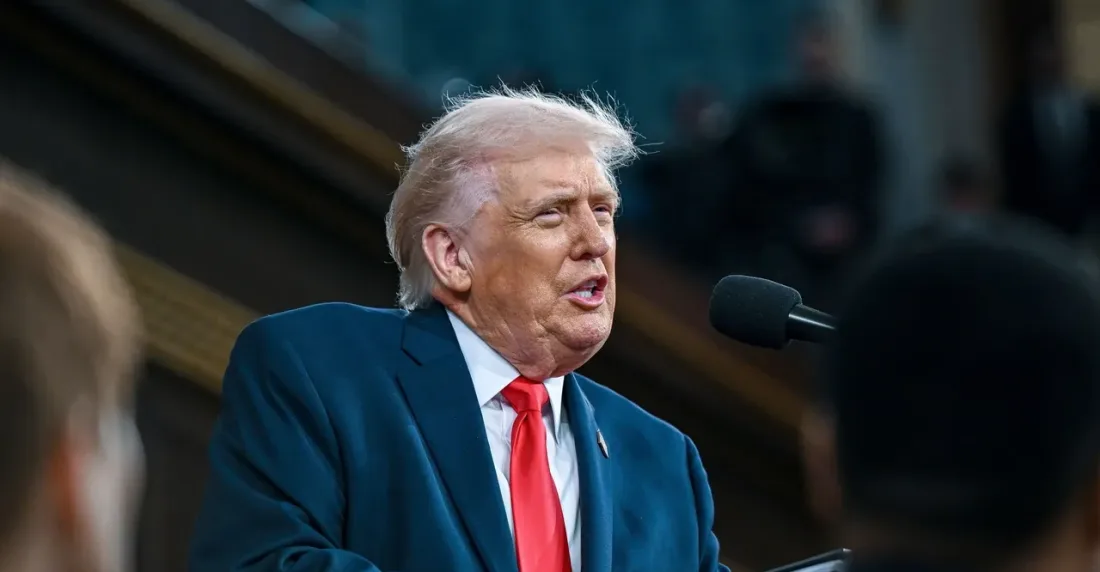
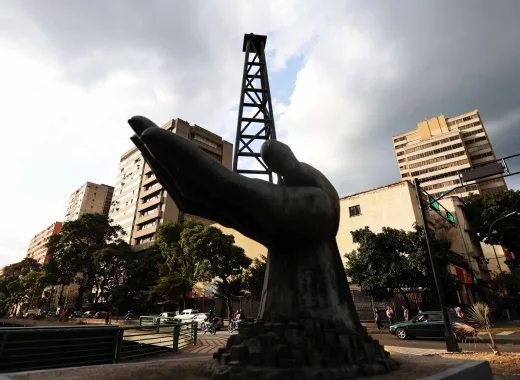
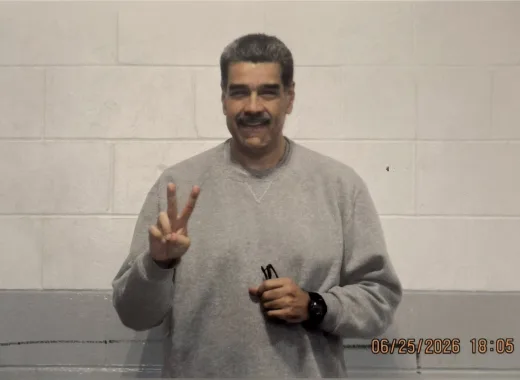
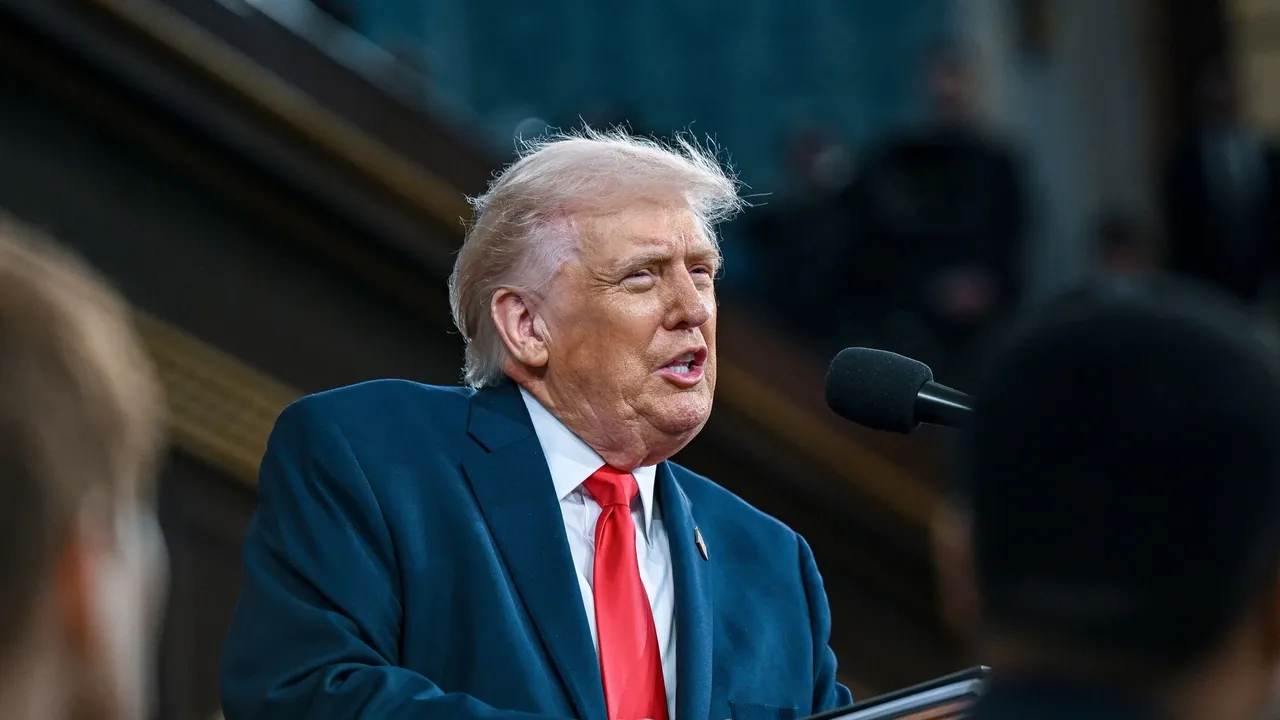
News 31-08-2026
Damascus Fair: From Trade Exhibition to Symbol of Urban Memory
The idea of a trade and industrial exhibition emerged among Damascus residents as early as the 1920s. The first fair was held in 1927 and showcased local agricultural products, followed by exhibitions of Eastern and Syrian handicrafts. After the large-scale strike of 1936, merchants and the government of Ata al-Ayyubi sought to revive the damaged economy and organized an exhibition in May of that year in a secondary-school building. It was opened by President Muhammad Ali al-Abid under the slogan “The Arab Horse.” Although the event was successful, it became a regular tradition only later.
In 1952, a law was passed establishing an annual trade exhibition called the “Damascus International Fair.” Its initial opening was thwarted by the coup that overthrew Adib al-Shishakli, but under President Hashim al-Atassi, the fair welcomed visitors for the first time. It was held in the al-Marj al-Akhdar district, also known as “Reed Meadow,” on the road to Beirut, between Umayyad Square and the National Museum, on the banks of the Barada River. Covering an area of 250,000 square meters, it brought together 26 Arab and foreign countries, and more than one million people visited the exhibition over the course of a month.
Gradually, the fair evolved from a business event into a genuine citywide celebration. Families saved money in advance, dressed up, and set out to explore the pavilions, fountains, and entertainment. Its location beside the Barada strengthened the tradition of evening walks and picnics: visitors rode in wooden boats, watched the illuminated fountains, and later listened to songs dedicated to the river. The organizers also sought to showcase the latest technologies. In 1954, for example, the American Cinerama film system was brought to Damascus. More than 12 tons of equipment were transported for the screening, and a screen approximately 23 meters high was installed. Around 100,000 people, including President al-Atassi, watched the film.
The fair’s success led to the establishment in 1955 of the General Directorate of the Damascus International Fair, an independent state institution under the Ministry of Economy. By 1956, 30 countries and 771 organizations were taking part, while attendance exceeded 1.78 million. After Syria and Egypt united in 1958, international participation fell to 19 countries and 668 organizations, but the fair still attracted about 1.35 million visitors. Syrian Airlines promoted the event by offering discounts of up to 25 percent on tickets in September; that month came to be known as the “month of the fair.”
The exhibition gained particular fame for its music festival. Major Arab artists performed on its stage, from Umm Kulthum, who opened the festival with two concerts in 1957, to Abdel Halim Hafez in 1976. Music by American, Soviet, Chinese, and Spanish ensembles was heard there, and the lineup also included Muhammad Abdel Wahab, Farid al-Atrash, Faiza Ahmed, Warda, and Sabah Fakhri. Above all, however, the fair remained associated in the public memory with Fairuz and the Rahbani brothers, who took part from 1958 to 1977 and dedicated songs to Damascus each year, including “Ask Me, O Damascus” and “Damascus, O Bearer of the Sword.”
In 2003, on the fair’s fiftieth anniversary, it was moved from the banks of the Barada to a new exhibition complex near Damascus International Airport. Many residents saw this as the loss of its historical context: the fountains, river excursions, open-air stage, and memories of performances by Fairuz and other celebrated artists remained behind with the old site. Against the backdrop of economic crisis and a weakening cultural life, the fair gradually lost its former luster, and its staging was suspended for long periods during years of instability. Nevertheless, the old site continues to occupy an important place in Syrians’ collective memory—as a symbol of an era when trade, music, and everyday life in Damascus merged into one grand urban celebration.
Comments on the News
How did the Damascus International Fair affect the development of the al-Marj al-Akhdar district and the present-day condition of the area along the Barada River? — The fair helped transform al-Marj al-Akhdar into a modern exhibition and public area, with pavilions, roads, gardens, and infrastructure facilities appearing there. After the fair was relocated and the area was subsequently built up, the land along the Barada lost its former exhibition function; some of the pavilions disappeared, and the district became divided among urban development, transport facilities, and poorly landscaped areas along the river.
Why did the union of Syria and Egypt in 1958 lead to a decline in international participation in the fair, despite attendance remaining high? — After the establishment of the United Arab Republic, the fair came to be viewed primarily as an event within the new political union. A shift in foreign-policy orientation, strained relations with Western countries, and increased state control made it more difficult for a number of foreign companies and countries to participate. At the same time, the fair remained popular with the public and continued to attract large numbers of local visitors.
What happened to the new exhibition complex near Damascus International Airport after political instability began, and why was it difficult to restore the fair to its former scale? — The new exhibition complex near the airport gradually lost its former role because of political instability, wars, economic difficulties, and disruptions to infrastructure. Restoring the fair to its former scale was difficult because of declining international confidence, sanctions, deteriorating transport and hotel infrastructure, and the reduced ability of Syrian businesses and the state to finance a major international event.

Full version: The Damascus International Fair: A Success Story in an Era of Fine Art and Overwhelming Joy
Venezuela Says It Retains Control Over Its Oil Resources
Venezuelan President Delcy Rodríguez said that the recently concluded oil agreement with the United States does not limit the country’s right to own and manage its resources. According to her, the 25-year agreement should provide access to the U.S. financing, technology and production capabilities needed to restore the oil industry, which has been damaged by years of sanctions. The president emphasized that increased production should contribute to economic development, create new opportunities and improve people’s well-being. Rodríguez also pledged to ensure public oversight: citizens should know how much oil is being produced, how investments are being spent and what benefits the agreement brings to the state.
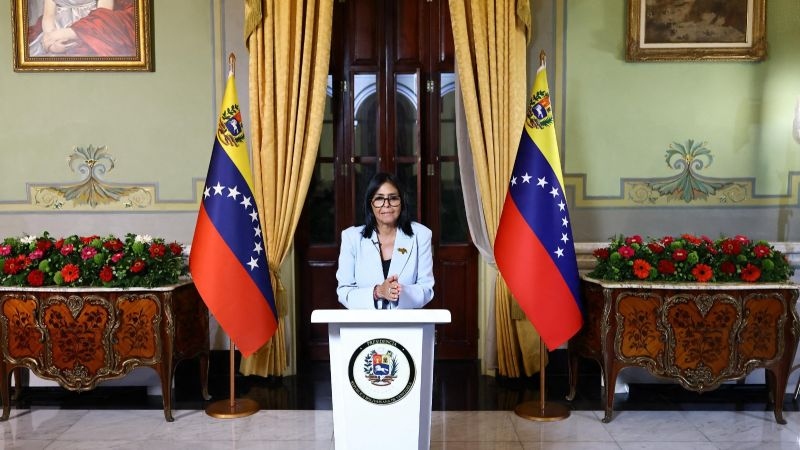
Full version: Presidenta Delcy Rodríguez: Venezuela conserva la propiedad y soberanía sobre sus recursos
Photos from Aleppo Refute Rumor That Syrian Flag Was Removed
Photos of Turkish Trade Minister Ömer Bolat and the delegation accompanying him during their visit to Aleppo circulated on social media. Users claimed that the city’s governor, Azzam al-Gharib, had ordered the Syrian flag removed from the Citadel of Aleppo to please the Turkish guests. The rumor sparked widespread attention after a group photo of the delegation was published in which the flag was not visible.
The visit took place on August 27, 2026. Bolat posted photos taken near the citadel and spoke about the shared history of the two countries, as well as Turkey’s role in rebuilding Syria. The governor of Aleppo welcomed the delegation and emphasized the geographical, fraternal, and economic ties between Aleppo and the Turkish city of Gaziantep. The main purpose of the trip was to hold talks on strengthening trade and investment relations between the two countries.
A reverse-image search and an analysis of the site showed that the photo was taken near a side tower of the citadel, where visitors usually take pictures. The Syrian flag is not normally installed on that tower. Photos published at different times, as well as an examination of the location through Google Maps, confirmed that the flag had not been there long before the Turkish delegation’s visit.
At the same time, official materials from the Aleppo governorate show that the Syrian flag is installed on another tower—the citadel’s main front tower. It was visible, in particular, in footage of a military parade in December 2025 and in archival UNESCO materials. These findings indicate that the flag is traditionally displayed on the main tower, rather than being a special feature added or removed in connection with visits by Turkish representatives.
An additional group photo, published by Gazwan al-Masri, who accompanied the delegation, was taken during the same trip in front of the main tower, with the Syrian flag visible in the frame. The flag is also clearly visible in photos from previous Turkish visits, including a delegation trip with Bilal Erdoğan in May 2026. Thus, the claim that it was removed to please Turkey was misleading and based on a photo taken from an angle showing a tower on which the flag is not usually flown.
Comments on the News
What role does the Citadel of Aleppo play in the city’s history, and why is the Syrian flag usually displayed on its main tower? — The Citadel of Aleppo is one of Syria’s most important historical symbols and an outstanding monument of medieval architecture. Rising above the city, it served as a military, administrative, and political center in different eras. For this reason, the flag on its main tower underscores state sovereignty, historical continuity, and Aleppo’s importance to the country.
What historical and economic ties exist between Aleppo and the Turkish city of Gaziantep, and how do they affect current trade talks? — The cities are linked by the region’s shared history, geographical proximity, trade routes, and longstanding family and business contacts. Before the war, Aleppo and Gaziantep interacted actively through cross-border trade, industry, and transport. Today, these ties provide a basis for discussing the restoration of trade and border crossings, although negotiations are also affected by sanctions, security concerns, destroyed infrastructure, and political relations between Syria and Turkey.
Who is Azzam al-Gharib, and what powers does the governor of Aleppo have regarding the management of historic sites and the organization of official events? — Azzam al-Gharib is a Syrian government official who served as governor of Aleppo province. The governor is responsible for the work of the local administration, coordinating government services, and organizing official events. At the same time, historic sites, including the Citadel of Aleppo, are protected by specialized authorities and regulated by national bodies responsible for antiquities and museums. The governor generally coordinates access, security, maintenance, and events, but does not make unilateral decisions regarding the restoration or status of a monument.


Venezuela: Oil Deal with the US Sparks Political Debate
Venezuelan media are discussing the oil agreement between Donald Trump and Delcy Rodríguez as a possible turning point in relations between Caracas and Washington. Official rhetoric presents the arrangement as a diplomatic success and a strategic opportunity for Venezuela, while critics question its consequences and whether control over the country’s national resources will be preserved. The materials are based on reports by La Sexta and Facebook (Venezuela).
Venezuela Insists on Sovereignty in Oil Deal with the US
Venezuelan authorities are trying to present the 25-year oil agreement with the United States as economically beneficial cooperation that does not affect national sovereignty. Caracas’s main argument has been President Delcy Rodríguez’s statement that the country will retain control and ownership of its hydrocarbon resources, despite Washington’s significant role in implementing the agreement.
As reported by laSexta, Rodríguez stressed that, in concluding the agreement, Venezuela would “retain sovereignty over its resources” and that this “must be absolutely clear.” In her assessment, the deal could generate more than $193 billion in revenue for Venezuelans.
For Caracas, this reservation has both legal and political significance. Oil remains the foundation of the country’s export earnings, its most important source of foreign currency and a symbol of national independence. Following the nationalization of the industry, the growing role of the state-owned company PDVSA, years of US sanctions, declining production and limited access to international financing, foreign participation in the oil sector is inevitably viewed as a sensitive issue.
American rhetoric only heightens these concerns. Donald Trump called the oil “a gift from Venezuela to the American people,” claimed that the United States would control more than 65 billion barrels, and linked the agreement to the goal of replenishing the US Strategic Petroleum Reserve. In Washington, the arrangement is presented as a way to strengthen energy security, increase reserves and potentially influence fuel prices. Trump is also using the deal in domestic political disputes with Joe Biden.
For a significant part of the Venezuelan audience, however, references to a “gift” and American control may sound like a claim on another country’s national wealth. Rodríguez’s statements are therefore intended to convince citizens that economic benefits and an inflow of funds do not mean that oil reserves or fields are being transferred under foreign sovereignty.
The headline of a video published by RTVE Noticias also conveys the Venezuelan position: “Venezuela retains ownership of its oil.” However, the content attached to the post does not correspond to the stated topic and is devoted to events in Norway. It is therefore impossible to establish from it the specific additional terms of the agreement, Rodríguez’s quoted statements or details of the US commitments.
The agreement’s 25-year term itself has prompted a mixed reaction. On the one hand, it could mean long-term demand for Venezuelan oil, stable foreign-currency revenues, and opportunities to restore infrastructure and invest in the industry. On the other, such a long-term arrangement will inevitably require public and political oversight: do the distribution of revenues, supply terms and the role of the United States genuinely serve Venezuela’s interests?
Thus, the dispute over the agreement is not only about barrels and revenues. The United States presents it as a strategic victory connected to its own reserves and domestic politics. Venezuela’s leadership responds with a different formula: the oil remains the property of the country, and cooperation with Washington should be viewed as a commercial mechanism rather than an abandonment of the policy of national control over the republic’s principal resource.
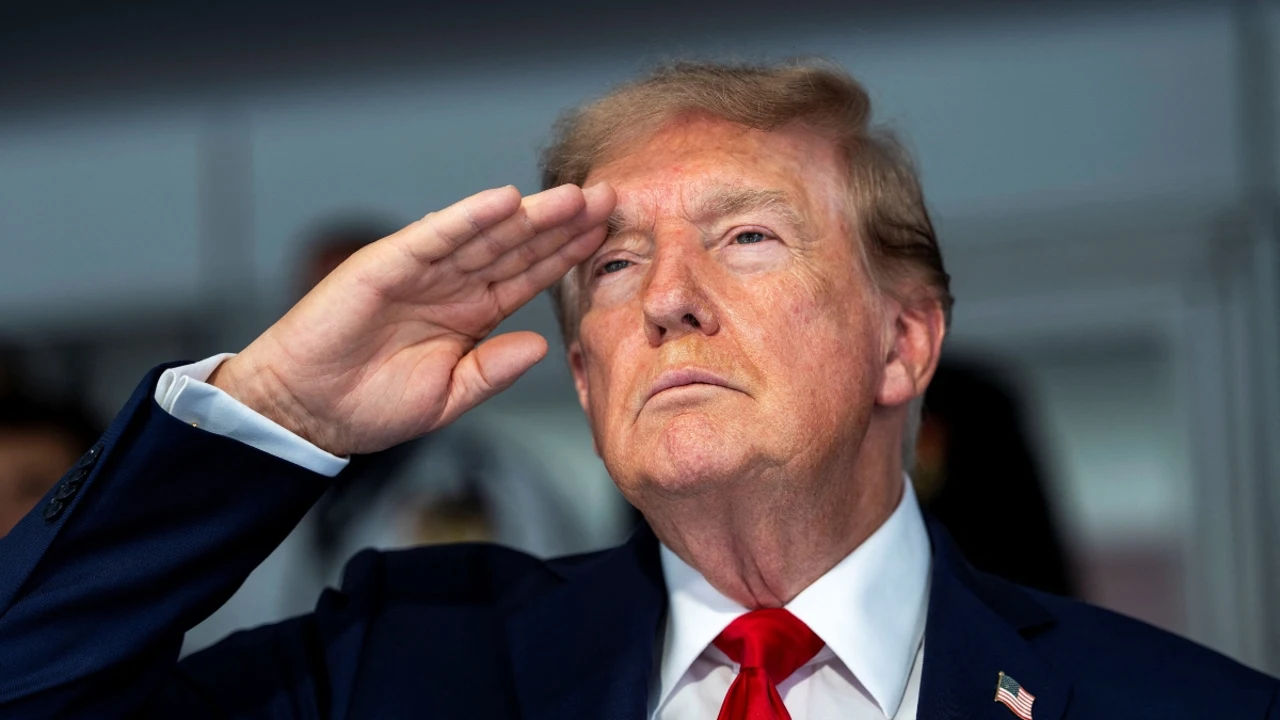

News 30-08-2026
Syrian Schoolgirl Officially Named Top Graduate of Al-Mahrah Province
Yemen’s Ministry of Education’s Higher Examination Commission officially recognized Syrian schoolgirl Rua Mahmoud Sheikh Muhammad, who lives in the country, as the top graduate in Al-Mahrah province. She scored 99.25% in her final exams. The decision was made at an emergency meeting chaired by Education Minister Adil Abdelmajid al-Abbadi, following a review of the results and the list of top graduates.
Rua’s name had previously been omitted from the list, although her score qualified her for first place. The commission attributed this to a technical error in the central computer system: because of a long-standing administrative practice, it automatically separated foreign students from the national list. The ministry promised to change the procedure and, beginning in the 2025–2026 academic year, include foreign students in the general rankings. It also said it would update the rules governing the publication of results to ensure transparency and equal opportunities.
The story sparked widespread reaction in Yemen. Activists, journalists and teachers expressed their support for Rua, stressing that achievement should be judged by knowledge, not citizenship. Deputy Parliamentary Speaker Mohsen Ali Basrah sent the minister an official inquiry demanding an explanation of the legal and educational grounds for excluding the schoolgirl. He also called for justice to be restored, her achievement to be publicly recognized and the actions of those responsible to be investigated.
Yemen’s Presidential Leadership Council also instructed the Ministry of Education to review complaints about the final-exam results and investigate possible errors in the grading, recording or publication of marks. President Rashad al-Alimi separately stressed the need to honor top graduates and give them priority in the allocation of scholarships and overseas educational grants. According to statements circulated publicly, the minister denied personal responsibility and any discriminatory conduct. The commission nevertheless later officially included Rua among the top graduates.
The schoolgirl herself said she had been deeply upset, but declared: “Success has no nationality.” She intends to continue her education and dreams of studying medicine. A private university in Aden, according to a page associated with the institution, offered her a full scholarship in recognition of her achievement and in support of talented students.
Comments on the News
How have Yemen’s war and political fragmentation affected the operation of the central computer system, exam grading and the publication of results? — The war has damaged government infrastructure, disrupted electricity and internet connections, and divided education authorities between rival administrations. This has led to failures in the unified computer database, delays in grading exam papers and publishing results, and difficulties verifying students’ records.
How is the legal status of foreign school students defined in Yemen, and do they have the same rights to state scholarships and overseas grants as the country’s citizens? — Foreign school students are generally treated as students without Yemeni citizenship and may need to verify their identity, legal status and educational documents. As a rule, they do not automatically have the same rights to state scholarships and overseas grants as Yemeni citizens: eligibility depends on the specific program, bilateral agreements and decisions by educational authorities.
What is Al-Mahrah province—the eastern border region of Yemen—and why might its residents’ educational opportunities differ from those of students in Aden and other major cities? — Al-Mahrah is a remote, sparsely populated province in eastern Yemen, bordering Oman and extending to the Arabian Sea. Long distances, weak transport and digital infrastructure, shortages of schools and qualified teachers, and the consequences of the conflict can limit residents’ access to education. Aden and other major cities generally have more educational institutions, specialists, administrative resources and opportunities to sit exams and obtain information.

Full version: After controversy over her exclusion, Yemen’s Ministry of Education adds Syrian student “Rua” to the list of top graduates
Venezuela and the US Agree to Jointly Develop Oil Fields
Venezuelan President Delcy Rodríguez announced a 25-year agreement with the United States to jointly develop oil fields and “green blocks”—areas not yet brought into commercial production—in the Orinoco Oil Belt. According to her, the deal is expected to attract investment, create jobs and help restore the national economy. Caracas, meanwhile, retains full ownership of its natural resources.
The project plans to develop eight such blocks. Authorities expect production to reach 1.5 million barrels per day, with total revenue of approximately $209 billion, of which $19 billion will go directly to Venezuela. The agreement provides for a minimum royalty of 16% and a 34% corporate income tax rate, which Rodríguez says is significantly more favorable than the terms offered under the oil opening of 30 years ago.
The head of state said the funds raised would be used to modernize public utilities, healthcare, education and infrastructure as part of the “Venezuela Reborn” project. She emphasized that Caracas had chosen the diplomatic path and sought to turn disagreements with Washington into cooperation, investment and increased production. Rodríguez also thanked US President Donald Trump, Secretary of State Marco Rubio and both administrations for their role in preparing the agreement, which is intended to strengthen Venezuela’s position in the global energy market.
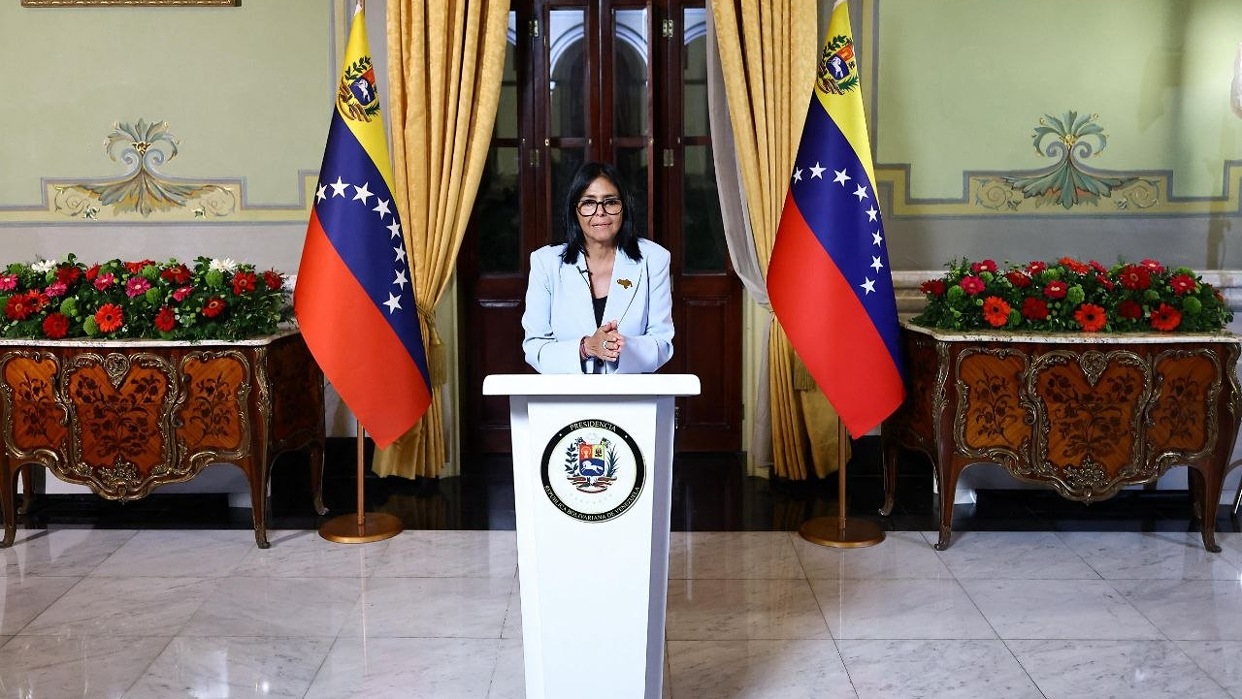
Full version: Energy transition and the future: The key points of the agreement between Venezuela and the US, according to Delcy Rodríguez
Shadi Jamil Apologizes for Supporting Assad After Concert Canceled
Syrian singer Shadi Jamil publicly apologized to the people of the country for a song in which he previously praised Bashar al-Assad. His statement came after widespread criticism of his former political views and the cancellation of a concert scheduled at the Damascus Opera House. In an audio recording circulated online, the artist said that acknowledging a mistake is a virtue.
Jamil asked forgiveness from all Syrians—from children and young people to parents, the wounded, and the families of those killed. The latest wave of outrage was sparked by an archived video of his performance in Venezuela in 2014, when he sang in support of Assad following his reelection to a third presidential term.
The release of the video reignited discussion about the singer’s position during the years of the Syrian uprising. Against this backdrop, calls intensified to cancel his concert, scheduled for July 8 at the Damascus Opera House. Syria’s Minister of Culture, Muhammad Yasin Saleh, said the event had been canceled because of Jamil’s past statements, stressing that artists who supported the former regime should not return to the opera stage without apologizing to the people.
The minister also promised to hold accountable the institution that issued permits for the concert in defiance of an order banning such performances. Jamil himself said he had not officially received an explanation for the cancellation and that the event had been approved by the artists’ union and other relevant authorities. He said he was ready to respect the authorities’ decisions, called for the past to be put behind them, and stressed that he did not intend to leave Syria, remaining closely tied to his homeland and his native Aleppo.
Comments on the News
What role did Syrian artists and state cultural institutions play in supporting Bashar al-Assad’s regime during the uprising and the subsequent war? — Some prominent artists openly supported Assad by performing at pro-government events, issuing statements, and taking part in campaigns that portrayed the uprising as a foreign conspiracy or a threat to the state. State cultural institutions—including theaters, concert halls, and festivals—helped sustain the official narrative by continuing to hold events in government-controlled areas, projecting an image of “normal” life and loyalty to the state. Artists’ positions were not uniform, however: some publicly criticized the authorities, left the country, or ended their professional careers, while others faced pressure, bans, and the risk of arrest.
How are the powers of the Damascus Opera House, the artists’ union, and Syria’s Ministry of Culture structured when public performances are approved or canceled? — Formally, the Damascus Opera House and other cultural institutions organize programs and coordinate performances with the Ministry of Culture; the artists’ union regulates professional status, membership, and performers’ eligibility to work. In practice, the final decision depends on state agencies and security structures: the ministry may approve or alter programs, while performances may be canceled because of an artist’s political position, security requirements, or other administrative directives. The union can restrict an artist’s participation through membership and professional procedures, but it is generally not an independent decision-making center separate from the state. The precise powers and approval procedures may vary depending on the specific event and the authorities’ current directives.

Full version: شادي جميل يعتذر للسوريين عن أغنية مدح فيها بشار الأسد
Reactions to the U.S.–Venezuela Oil Deal
The focus is on Donald Trump’s statement about an agreement that would allegedly allow the United States to control Venezuelan oil. Venezuelan and U.S. officials, as well as regional commentators, assess the arrangement differently: some confirm and defend it, while others question it and see it as a threat to Venezuela’s sovereignty. The discussion also addresses the deal’s democratic legitimacy, Washington’s increasing pressure on the country’s oil sector, U.S. migration policy, and Trump’s nationalist rhetoric toward neighboring states. This overview is based on materials from Instagram (Venezuela) and Yahoo Finanzas (Venezuela).
Venezuela Views the U.S. Oil Deal Through the Lens of Sovereignty
Donald Trump’s statement about an alleged large-scale oil agreement with Venezuela has prompted discussion not only about future investment, but also about control over the country’s main national resource. As reported by Radio Mitre and Yahoo Finanzas, citing EFE, Trump said the United States would gain “majority control” over more than 65 billion barrels of Venezuela’s proven oil reserves.
The U.S. president called the arrangement “the largest oil deal in world history.” According to his account, it would more than double U.S. oil reserves, increase supplies, and help lower gasoline prices for American consumers. This presentation is particularly concerning from the Venezuelan perspective: among the publicly stated benefits, U.S. energy security and domestic prices in the United States take precedence over Venezuela’s independent development.
For Caracas, oil is much more than an export commodity. It is the foundation of foreign-currency earnings, a key element of the state model, and a symbol of national sovereignty. Following the nationalization of the oil industry in 1976 and the subsequent expansion of state control over the deposits in the Orinoco Belt, ownership of oil assets acquired not only economic, but also historical and political significance. The very wording about U.S. “majority control” over the reserves could therefore trigger serious controversy, even if the agreement is accompanied by investment pledges.
According to reports, Secretary of State Marco Rubio presented the potential deal as an opportunity to restore Venezuela’s economy. He spoke of roughly $100 billion in private investment, the creation of thousands of jobs, and the possibility of “stimulating the reconstruction of Venezuela’s economy.” For a country that has endured a prolonged decline in production, inflation, emigration, deteriorating infrastructure, and limited access to international financing, these promises have practical appeal.
The potential return of capital, technology, and equipment could help restore wells, refining capacity, and export infrastructure. The materials mention Chevron—still the only major U.S. oil company with an active presence in Venezuela—Halliburton, and the possible participation of other private companies. Amid sanctions restrictions and a chronic investment shortage, access to such resources could become an important incentive for Caracas to pursue pragmatic cooperation.
However, the key terms of the alleged deal remain unclear. The published materials contain no comments from independent Venezuelan economists, oil-sector workers, trade unions, opposition politicians, PDVSA representatives, or the country’s official government. It is unknown what share of the revenue would remain in Venezuela, under what legal regime foreign companies would operate, how national assets would be protected, what role PDVSA would retain, and whether future revenues could translate into higher wages, restored public services, and social investment.
The political context is another factor. The EFE report says that after Nicolás Maduro was captured by U.S. forces on January 3, 2026, Venezuela entered a new phase in its relations with Washington. Delcy Rodríguez is described as the “acting president” and was recognized by the Trump administration as an acceptable negotiating partner. In this interpretation, the oil agreement is connected not only to commerce: it becomes part of a political realignment, the gradual normalization of relations, and the possible lifting of sanctions.
For many Venezuelans, the prospect of investment, jobs, and increased exports may represent hope for an exit from the protracted crisis. But that hope will compete with fears that opening the sector to foreign capital could turn into a transfer of control over the country’s national wealth. The historical memory of oil nationalism makes any terms that could be perceived as subordinating resources to outside interests especially sensitive.
Thus, the announced deal appears to bring two different approaches into conflict. Washington speaks of new reserves, reliable supplies, and cheaper gasoline for Americans. Venezuela, meanwhile, will have to determine whether the promised wave of investment can truly restore the country’s production, revenue, and infrastructure—without losing control over the oil that remains a vital part of its economic and political sovereignty.


News 29-08-2026
US Removes Syria from State Sponsors of Terrorism List
On August 24, 2026, the United States removed Syria from its list of state sponsors of terrorism, where it had been listed since December 29, 1979. The designation had both political and legal implications: it restricted foreign assistance, arms trade, exports, financial transactions, visa issuance, and the ability to file terrorism-related lawsuits. Its removal eliminates a major legal barrier, but does not by itself lift all sanctions or automatically restore relations.
By the time of the decision, Washington had already dismantled most of its comprehensive sanctions system against Syria. In July 2025, Executive Order No. 14312 ended the emergency regime underlying the main sanctions program, and in August, Syria-related sanctions regulations were removed from the Federal Register. In December of the same year, Congress repealed the Caesar Act. Thus, by August 2026, neither a general economic blockade of Syria nor a separate comprehensive Treasury sanctions program remained in effect in the United States.
Removing the designation allows Syria to legally seek certain forms of assistance and ends the ban on arms transfers linked specifically to its inclusion on the state sponsors of terrorism list. However, Damascus does not automatically acquire the right to receive aid, weapons, technology, or financing: separate decisions, compliance with human rights requirements, and authorization from the US administration are still required. Syria also remains subject to a policy of denying licenses for arms exports, while most goods covered by export controls still require special licenses.
In the financial sector, the decision removes some restrictions and reduces legal risks and reputational pressure surrounding transactions with Syria. Syrian financial institutions, including the Central Bank, had already been removed from sanctions lists in mid-2025. US persons became able to make payments, interact with Syrian banks, and establish correspondent banking relationships, provided that no sanctioned person is involved in the transaction. Nevertheless, banks will independently assess money-laundering and terrorism-financing risks, reputational threats, and commercial viability. In addition, Syria remains on the Financial Action Task Force’s list of jurisdictions under increased monitoring.
The decision also affects civil litigation: going forward, it narrows the application of the terrorism-related exception to sovereign immunity. However, it does not overturn final judgments already issued, terminate pending cases, or automatically resolve issues surrounding the seizure of Syrian assets. Removing the designation also does not exonerate Syria’s former authorities for war crimes, crimes against humanity, torture, enforced disappearances, or the use of chemical weapons, nor does it determine the country’s responsibility under international law.
Thus, Washington has drawn a political and legal distinction between Syria’s current government and the actions that kept the country on the list for decades. The decision is based on an assessment of current and expected support for terrorism, security cooperation, and written commitments made by the authorities in Damascus. It remains conditional and may be reconsidered: if credible evidence emerges that Syria is supporting international terrorism, the country could be added to the list again. The removal of the designation is therefore an important legal step, but full international economic and political normalization will depend on reforms, business confidence, and Damascus’s continued fulfillment of its commitments.
Comments on the News
What does Syria’s placement under increased monitoring by the Financial Action Task Force (FATF) mean, and how could it affect international bank transfers and investment? — FATF increased monitoring means that Syria must address identified deficiencies in its efforts to combat money laundering and terrorism financing. It is not equivalent to an international ban on transactions, but banks and investors will likely continue to apply enhanced due diligence and require additional documentation and approvals. As a result, transfers may take longer and cost more, while international investment is likely to remain limited until Syria demonstrates sustained improvements in its oversight mechanisms.
Which Syrian government bodies or Damascus-linked entities could still remain under US sanctions after the general sanctions regime is lifted? — The removal of broad sanctions does not necessarily affect targeted measures. Individual persons and organizations linked to the former regime, human rights violations, the production and trafficking of the drug captagon, terrorism, corruption, or the proliferation of weapons of mass destruction could remain subject to sanctions. These may include intelligence services, military units, individual officials, state-owned or state-controlled companies, and entities designated by OFAC on other grounds. The precise list depends on the wording of the US decision and subsequent updates to the sanctions lists.
How could removing Syria’s designation as a state sponsor of terrorism affect lawsuits by victims of torture, enforced disappearances, and other crimes committed during the Syrian conflict? — Such a removal generally does not automatically terminate lawsuits that have already been filed or deprive victims of all legal avenues. However, it may alter the grounds for new cases in US courts, access to special exceptions to sovereign immunity, and the ability to obtain compensation from the Syrian state. Lawsuits against specific officials, armed groups, or companies may continue on other legal grounds, while cases involving international crimes may be heard in courts in other countries under the principle of universal jurisdiction.

Full version: What Syria Will Gain After Being Removed from the Terrorism List
Trump Announces Unprecedented Oil Deal with Venezuela
U.S. President Donald Trump announced the signing of an agreement with the Venezuelan government on managing oil wells in the South American country. In a post on the Truth Social network, he called the deal “the largest oil agreement in world history” and said the document provides for the United States to gain majority control over Venezuela’s proven oil reserves, which exceed 65 billion barrels.
According to Trump, the agreement will more than double U.S. oil reserves and substantially increase crude oil supplies. The American president claims this should lead to a significant reduction in gasoline prices in the country. The post did not provide further details of the deal, including its legal terms and implementation timeline.
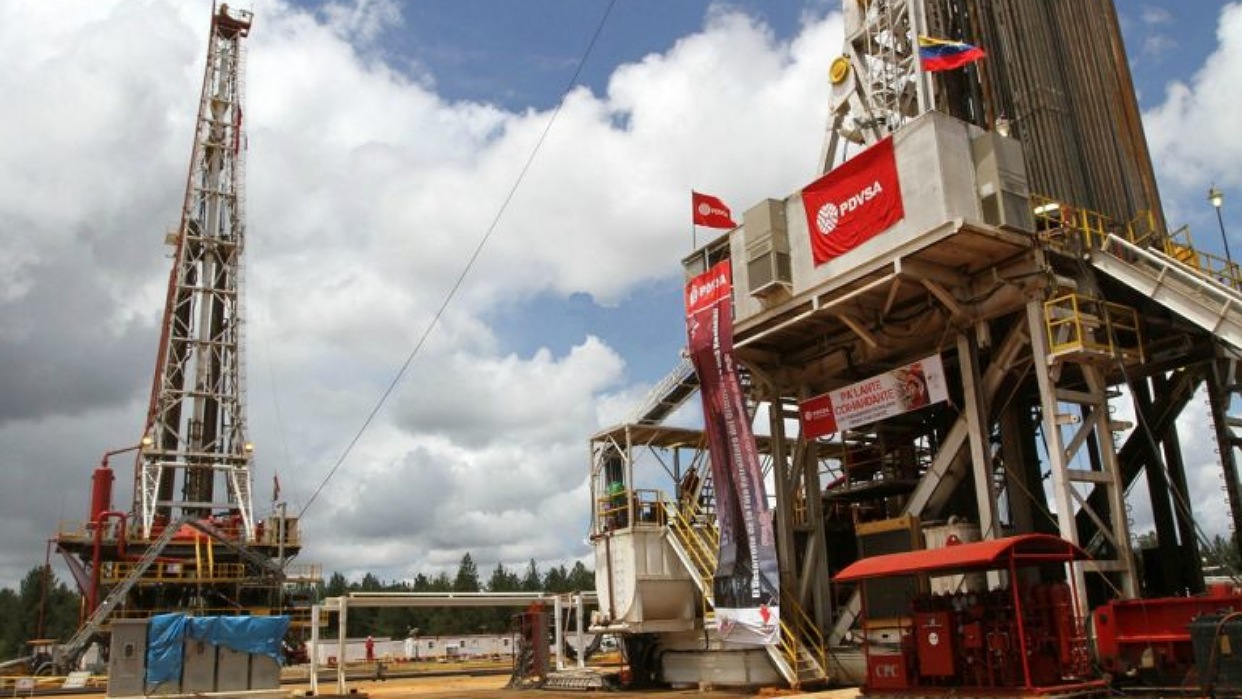
Full version: Donald Trump Announces
Turkey’s Rise in Syria Alarms Israel
Syria and the Middle East are undergoing sweeping changes: Iran and Hezbollah are losing influence, while the fall of Bashar al-Assad’s regime has given Turkey an opportunity to fill part of the resulting regional vacuum. Israel sees Ankara’s growing strength as an increasing strategic threat. This creates a risk of confrontation between two important US allies as direct American involvement in the region declines.
Tensions escalated sharply after Israel struck the Abu al-Duhur air base in Syria on August 18. Israel suspected that a visit by a Turkish military delegation to the base could precede the permanent deployment there of Turkish troops, air-defense radars, and drones. In Israel’s view, such infrastructure could limit its ability to strike Iran. Turkey called the attack illegal and accused Israel of violating Syria’s sovereignty and territorial integrity.
The article’s author believes the strike was not a response to an imminent military threat but an attempt to deter the expansion of Turkish influence in advance. More than 20,000 Turkish troops are stationed in Syria, while Ankara and Tel Aviv are competing for influence over the region’s future following the weakening of Iran and Hezbollah. Israeli experts are trying to convince Washington that tensions with Turkey have already gone beyond political rhetoric and, if left unchecked, could lead to an unwanted military conflict.
At the same time, Turkey is gaining increasing weight in the eyes of US President Donald Trump, who has praised President Recep Tayyip Erdoğan’s strength and the country’s regional influence. The US ambassador to Turkey and special envoy for Syria, Tom Barrack, said that Israel was “provoking the Turks” and that the strike on the Syrian base was an unnecessary escalation. According to the article, Ankara’s ambitions extend beyond Syria: Turkey is seeking to strengthen its position in Gaza and Lebanon, declaring its support for the reconstruction of Syria, Hamas, and the Lebanese state.
Israel fears the formation of what is known as a “Sunni ring of fire”—a Turkey-led alliance of Arab and Muslim countries that could surround Israel and deepen its regional isolation. Despite warnings from Israeli officials, an open war between Ankara and Tel Aviv does not currently appear to be the most likely scenario. However, Syria, Gaza, and Lebanon could become permanent flashpoints. To prevent escalation, Washington has been urged to establish a mechanism for preventing accidental clashes, including restoring the backchannel between Turkey and Israel through Azerbaijan.
Comments on the News
How is Turkey’s military presence in Syria structured, and which areas of the country are effectively under Ankara’s influence? — Turkey maintains its military presence mainly in northern Syria, relying on its own forces, observation posts, and allied Syrian armed groups. Its influence is most visible in the areas of Afrin, Jarabulus, al-Bab, and Tal Abyad, as well as in parts of the northwestern province of Idlib. Ankara controls security, border crossings, and military infrastructure, but these territories are not officially part of Turkey and legally remain Syrian.
Why is the Abu al-Duhur air base strategically important for controlling Syrian airspace and possible operations against Iran? — The air base is located in Idlib province, near important routes between northern and central Syria. In theory, it could be used to deploy aircraft, intelligence-gathering equipment, and air-defense systems, expanding control over the airspace. However, its importance for operations against Iran should not be overstated: the base is far from major Iranian facilities, and any actual operations would depend on the condition of the infrastructure, political agreements, air-defense capabilities, and access to air corridors. There is insufficient evidence to claim that it is already being used to prepare for such operations.
What role do Syrian Kurdish formations and the external forces supporting them play in the Syrian-Israeli rivalry? — Kurdish formations, primarily the Syrian Democratic Forces (SDF), control a significant part of northeastern Syria and rely mainly on US support. Their principal task is to oppose the terrorist group Islamic State and hold their territory, rather than directly participate in the Syrian-Israeli confrontation. Israel may view them as an indirect factor limiting the influence of Damascus, Iran, and forces affiliated with it, but there is no open strategic alliance between Israel and the SDF. Turkey opposes the leading role of Kurdish formations, while the United States seeks to preserve its partnership with them, making the issue part of a broader regional rivalry.


Full version: The Rivalry Between Two Allies in Syria: How Does America View Tensions Between Turkey and Israel?
Trump’s Oil Deal and Venezuela’s Sovereignty
Venezuela is discussing the oil deal announced by Donald Trump—seen by some as a major economic opportunity and a mutually beneficial “victory,” and by others as a dangerous concession of the country’s natural resources. At the center of the debate are questions about whether the country’s authorities have retained control over its oil assets and whether Trump is seeking stakes in Venezuelan oil fields. This material is based on publications by holanews.com and Facebook (Venezuela).
The U.S. Oil Deal Has Become a Symbol of Revival for Venezuela
In Caracas, the proposed oil agreement between Venezuela and the United States is viewed as a potential turning point for the economy, which has endured years of declining production, sanctions pressure, a lack of investment, and deteriorating infrastructure. Venezuelan authorities describe the arrangement as historic, while some opposition-minded citizens see the return of American capital and technology as a chance to “restore and elevate” the national oil industry.
Acting President Delcy Rodríguez, commenting on the arrangements, said they represented a “historic” stage in relations between Caracas and Washington. According to Hola News / EFE, the Venezuelan side links the agreement not only to increased oil production but also to economic recovery, job creation, and an improved standard of living.
According to Rodríguez, the project could encompass the development of 17 strategic fields with confirmed potential reserves of 65 billion barrels. Investment, she estimated, will exceed $100 billion, while tax revenues could amount to more than $209 billion. These funds, she stressed, should be directed toward “national development, job creation, higher workers’ incomes, and the well-being” of Venezuelan citizens.
For Caracas, restoring the oil industry’s productive capacity is particularly important. Current production stands at around 1.23 million barrels per day; Rodríguez called this the highest level since February 2019. However, for a country with the world’s largest proven oil reserves, this figure remains a reminder of the industry’s massive decline. State-owned PDVSA and the oil infrastructure as a whole have faced chronic shortages of capital, technical problems, and limited access to equipment and foreign markets.
In the official Venezuelan interpretation, the agreement should open a “new stage of recovery, growth, production, security, and prosperity for the people.” It is also linked to the resumption of diplomatic relations between Venezuela and the United States in March, following a seven-year break. The authorities emphasize that the partnership could strengthen not only Venezuela’s economy but also the energy security of the entire Western Hemisphere.
At the same time, Caracas and Washington place noticeably different emphasis on the arrangement. Donald Trump presented the deal as a mechanism that would give the United States “majority control” over Venezuela’s reserves and effectively allow it to double its oil reserves. Venezuelan authorities, by contrast, avoid language suggesting dependence or the transfer of control over resources, emphasizing mutual benefit, national development, and an inflow of investment.
A positive but more emotional reaction to the prospect of the United States returning to the industry was posted by the author of a comment on the U.S. Embassy in Venezuela’s page. The author described the agreement as an opportunity to “RESTORE AND ELEVATE” the country’s oil industry and thanked the United States for supporting Venezuela.
The author harshly assesses the industry’s previous management, stating that it had long been “in the hands of unworthy, corrupt people devoid of moral values.” This assessment reflects a widely held view among some Venezuelans: the causes of the oil crisis are attributed not only to external restrictions but also to corruption, ineffective management, and the politicization of PDVSA.
Under this logic, the United States is not a threat to national sovereignty but a potential source of technology, financing, and management expertise. Supporters of closer ties hope that American companies can help modernize production and refining facilities, increase exports, generate foreign-currency revenues, and create new jobs.
However, the issue of control over natural resources remains extremely sensitive for Venezuela. For decades, oil has been one of the country’s main symbols of sovereignty, particularly following the nationalization of the industry and the creation of PDVSA. Any possible expansion of American business participation therefore inevitably raises a question: can Venezuela attract the external capital it needs while retaining genuine control over its most important national asset?
Both Caracas’s official rhetoric and the emotional support expressed by some members of the public are united by a shared hope for recovery. Yet the need for more than $100 billion in investment, infrastructure modernization, and the return of foreign companies underscores the depth of the crisis: Venezuela’s enormous oil reserves alone do not guarantee prosperity if the country cannot secure the necessary technology, effective management, and stable political relations with external partners.
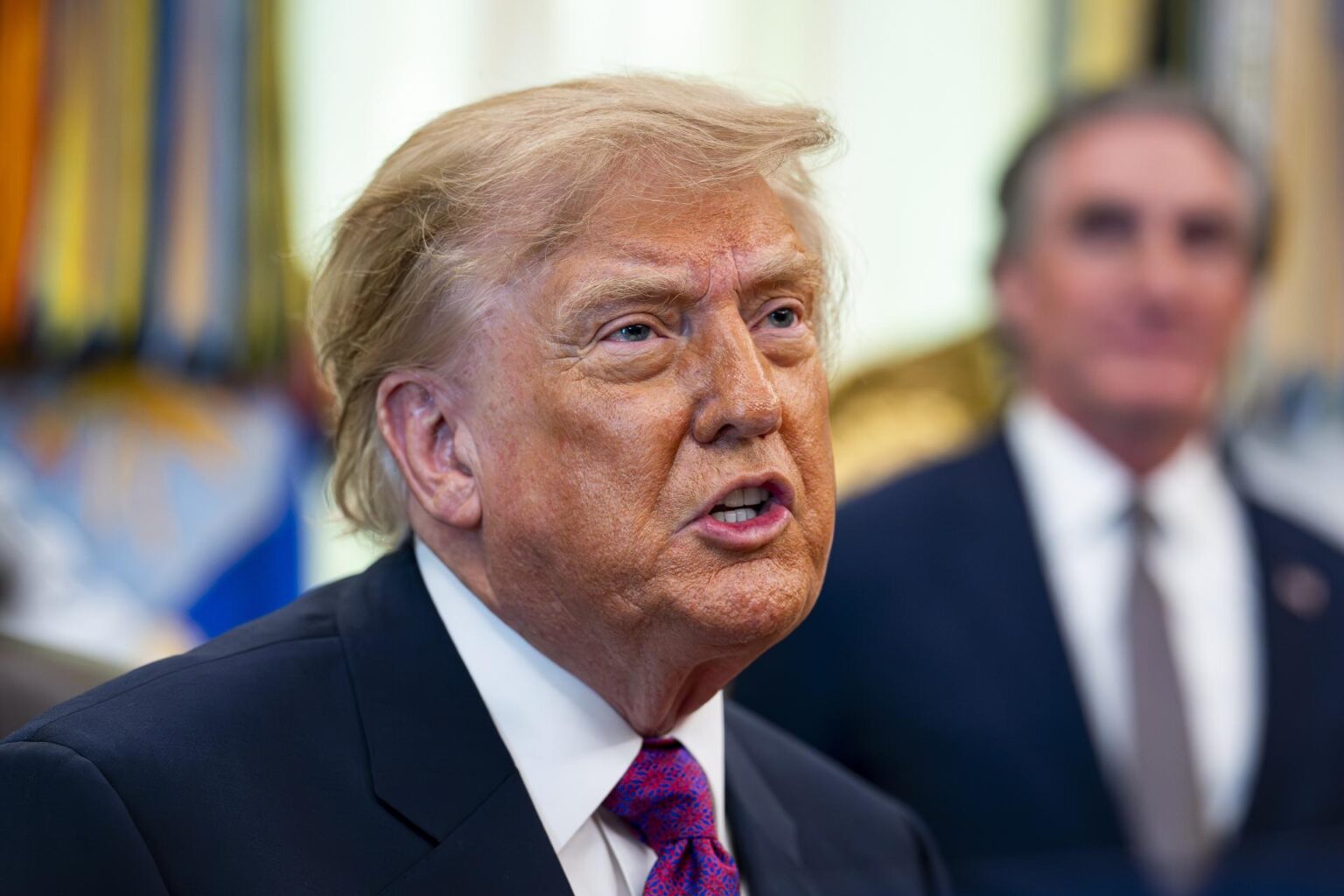
![Caracas, Aug. 28 (EFE). — Acting Venezuelan President Delcy Rodríguez confirmed this Friday a “historic oil agreement” with the United States and expressed her “deep” gratitude to that country’s President Donald Trump and U.S. Secretary of State Marco Rubio for their “willingness to support the development” of the alliance, which she called a “historic milestone in […]](https://d3k76ktnld9l0g.cloudfront.net/wp-content/uploads/2026/08/28232108/rss-efe74951f5b6c088da79bdb2ffa63b50f87402c131fw.jpg)

News 28-08-2026
First Visa Card Payment in Damascus Symbolizes Syria’s Financial Return
Syrian social media actively discussed a video showing President Ahmed al-Sharaa making the first electronic payment with a Visa card at a store in Old Damascus. The purchase took place a day after Syria was removed from the list of state sponsors of terrorism. Many users viewed the gesture as a symbol of the country’s return to the international financial system.
The president was accompanied on his visit by Safwat Raslan, governor of the Central Bank of Syria. He said the authorities were working to create a modern and reliable financial system that met Syrians’ expectations. According to him, the first payment made through a direct connection to Visa’s global network in central Damascus marked “a new beginning” associated with great hopes and responsibility.
Although the purchase amounted to no more than a cup of coffee, Syrians saw in it a significance far exceeding the value of the item. For many citizens, the ability to use international payment cards after more than 15 years of financial isolation had been virtually unattainable. Observers linked the move to the recent connection of Syria’s banking system to the international SWIFT network, the introduction of a single regulated exchange rate for the national currency, and measures to improve the investment climate.
In May, the Central Bank authorized licensed banks, financial institutions, and electronic payment companies to work directly with international payment networks, including Visa and Mastercard. These decisions are intended to help restore the confidence of foreign banks, attract investment, and expand domestic payment services. For many Syrians, the first card payment became a visible sign of the country’s gradual emergence from financial isolation and a source of hope for the recovery of the national economy.
Comments on the News
What sanctions and restrictions previously hindered Syrian banks’ connection to the international Visa, Mastercard, and SWIFT payment networks? — The main obstacle was the US and EU sanctions against Syria, including restrictions on dealings with the Central Bank of Syria, state-owned banks, and several private financial institutions. Banks also faced the threat of secondary sanctions for transactions with Syrian entities, while export controls and restrictions on dollar-denominated settlements made international transfers more difficult. Visa and Mastercard discontinued or restricted service to Syrian cards, while the disconnection of certain banks from SWIFT and enhanced compliance checks by international banks made cross-border payments extremely difficult. Even if sanctions are formally eased, restoring access will require technical checks and confirmation of compliance with anti-money-laundering requirements.
How could a single regulated exchange rate for the Syrian currency and the restoration of access to SWIFT affect inflation, prices, and citizens’ everyday banking operations? — A single exchange rate could narrow the gap between official and unofficial markets, make prices and settlements more predictable, and reduce opportunities for currency speculation. Access to SWIFT would simplify international transfers, import payments, remittances from relatives abroad, and banks’ work with foreign partners. However, this does not guarantee a rapid decline in inflation: prices could initially rise if the official rate is brought closer to a weaker market rate, while any lasting effect would depend on monetary discipline, foreign-exchange reserves, import volumes, confidence in banks, and the broader lifting of sanctions.

Full version: The Price of a Cup of Coffee… President al-Sharaa Makes the First Payment with a “Visa” Card
Washington Discusses Direct Stakes in Venezuela’s Key Oil Fields
U.S. President Donald Trump’s administration is holding intensive talks with Venezuelan authorities on acquiring direct stakes in the country’s oil resources, the American outlet Axios reports, citing senior officials who spoke on condition of anonymity. The potential deal could cover more than a dozen operating fields and significantly reshape the balance of power in the Western Hemisphere’s energy market. According to estimates, adding these assets could more than double U.S. oil reserves, while the combined technical capacity of the selected facilities could reach 90 million barrels per day.
The plan under discussion also envisions transferring operations, drilling, and sales to private companies, including major American corporations. Previously, these blocks were controlled by influential Venezuelan businessmen or linked to commercial interests oriented toward China. The agreement would accelerate the privatization and opening of Venezuela’s oil sector, while weakening the state-owned company PDVSA’s historic dominance and changing how revenues from energy resources are managed.
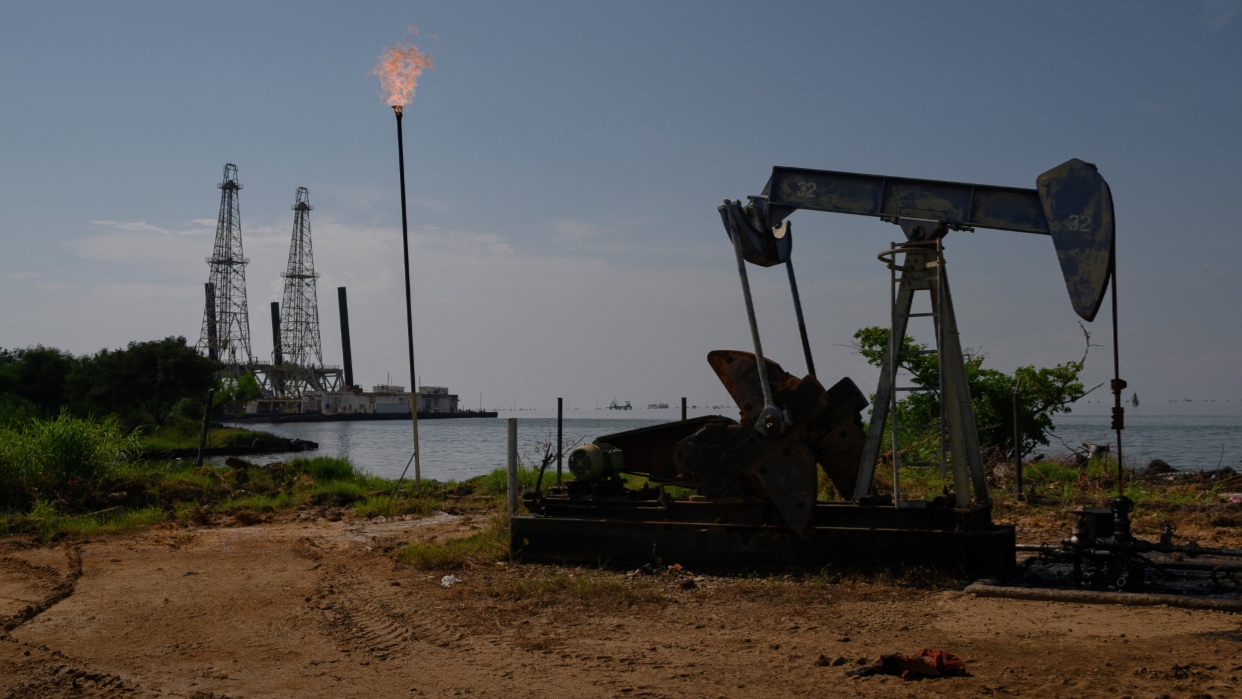
Full version: U.S. Negotiates with Venezuela to Acquire Stakes in Key Oil Fields
Washington Seeks to Turn Israeli Strike on Syria into Diplomatic Opportunity
The US envoy and the US ambassador to Ankara found no justification for Israel’s August 22 strike on Syria’s Abu al-Duhur airport. According to them, US intelligence had not confirmed Israel’s claims that Turkey had allegedly transferred military equipment to the base. Most countries viewed the attack as an unjustified violation of Syria’s sovereignty, while the Donald Trump administration’s position alarmed Benjamin Netanyahu, as Washington adopted a different approach to developments in Syria.
Observers believe Netanyahu sought to exploit the escalation ahead of elections to the Knesset. In June, the Israeli army carried out around 300 operations in the provinces of Daraa and Quneitra, supporting separatist groups aligned with Israel. However, the strategy backfired: the Israeli prime minister realized that a confrontation with Trump could deprive him of the public support he needed.
Forty-eight hours after the strike, Washington tried to turn the dangerous episode into a turning point and tasked Jordan with hosting direct talks between Syria and Israel. President Ahmad al-Sharaa’s government had agreed to dialogue with Israel from the outset, despite the absence of diplomatic relations. Damascus regards restoring the country’s territorial unity and withdrawing all foreign forces as its main transitional priorities.
Jordan was quick to support the American approach, as it is one of the key supporters of Syria’s new government and has consistently defended Syria’s sovereignty and territorial integrity. Amman strongly condemned Israel’s occupation of Syrian territory after December 8, 2024, and demanded the immediate withdrawal of its forces. Jordan had also previously taken part in Syrian-American mediation to resolve the events in As-Suwayda, but formations linked to Israel and led by Hikmat al-Hijri prevented the agreements from being fully implemented.
For the Trump administration, the Jordanian-Syrian channel is the most practical way to manage regional disagreements over Syria. Washington is also drawing on the experience of 2017, when US-Russian talks in Amman helped secure a ceasefire in southern Syria. Earlier Syrian-Israeli consultations, which began in Paris last year, broke down because of Israel’s hard-line position and the war with Iran. Israel insists on a comprehensive agreement covering the Golan Heights, while the United States prefers a phased arrangement backed by American and international guarantees.
The latest meeting in Amman lasted several hours and focused on the situation in southern Syria and the consequences of the strike on Abu al-Duhur. Syria was represented by Foreign Minister Asaad al-Shaibani, as well as officials from the security and intelligence services. The Israeli delegation was headed by Mossad chief Roman Gofman, which may indicate that the military and intelligence services are seeking a more pragmatic approach not directly tied to Netanyahu’s electoral calculations.
In coordination with Washington, Jordan wants to resume negotiations, secure Israel’s withdrawal from the occupied territories, and end attacks on southern Syria. Against this backdrop, Israel’s strategy of preserving a fragmented and weak Syria is losing strength: the country is consolidating its unity, Kurdish formations have declared their readiness to integrate into the Syrian army, and Damascus is expanding its control over coastal areas while reconsidering the format of Russia’s military presence. Diplomats allow for a temporary agreement in the near future, provided Netanyahu’s electoral interests do not prevail over American and regional priorities.
Comments on the News
What is the strategic significance of Abu al-Duhur airport, and why could its use have affected relations between Syria, Israel, and Turkey? — Abu al-Duhur airport in Idlib province is a military facility located in a strategically important area in northwestern Syria, near regions where the interests of Damascus, Turkey, and various armed groups intersect. Its use could strengthen the Syrian authorities’ control over the northwest and provide infrastructure for the movement of troops and supplies. This could concern Turkey, which retains influence in Idlib, as well as Israel, which closely monitors the movement of forces and the possible presence of formations linked to Iran in Syria.
What is Quneitra province, and why does its proximity to the occupied Golan Heights make it a center of the Israeli-Syrian confrontation? — Quneitra is a small province in southwestern Syria directly adjacent to the Golan Heights, most of which Israel seized in 1967 and later annexed; the international community does not recognize the annexation. As a result, any military changes in Quneitra can quickly affect Israel’s security. The area is important for surveillance, the deployment of armed groups, and control of cross-border routes, making it a persistent zone of tension between Israel and Syria.
What are the relations between Ahmad al-Sharaa’s government and the Kurdish formations prepared to integrate into the Syrian army? — These relations are centered on negotiations over the gradual integration of Kurdish forces, primarily the Syrian Democratic Forces, into state structures. The main disputes concern the degree of autonomy for Kurdish areas, the command and structure of units, control over weapons and resources, and guarantees of the Kurds’ cultural and political rights. A possible compromise would involve incorporating individual fighters or units into the Syrian army while preserving a degree of local administration. However, mutual distrust and differences in political objectives make the process difficult.
Why does Jordan play a mediating role in the Syrian talks, and what risks does instability in southern Syria create for Amman? — Jordan shares a border with southern Syria, maintains working contacts with Syrian and regional parties, and has a direct interest in reducing tensions. Amman can facilitate talks on security, trade, refugees, and combating smuggling. Instability creates risks of armed groups infiltrating the country, increased drug trafficking and smuggling, new refugee flows, and border clashes. It also increases Jordan’s economic burden and could draw the country into a broader regional confrontation.

Full version: After the Amman meeting: Is a Syrian-Israeli agreement now possible?
***.
Venezuelan Media See Pragmatism and Signs of Weakening in the US
Venezuelan media are simultaneously discussing two stories about the United States that differ in tone but are linked by a common theme: the possible return of American capital to the country’s oil industry and signs of Washington’s strategic overstretch due to the war against Iran. In the first case, American involvement is presented as a chance to restore Venezuela’s economy; in the second, it is seen as evidence of the limits of US military and political power.
In a video posted on Instagram, possible talks by the Donald Trump administration on the involvement of American companies in more than 12 Venezuelan oil fields are presented primarily through the lens of Caracas’s national interests. Citing Axios, the video says the assets may contain approximately 90 billion barrels of oil reserves.
The author of the report describes a potential agreement as “a strong boost for Venezuela.” The assumption is that the arrival of American companies could provide an influx of investment, access to modern technology, and assistance in restoring infrastructure that suffered serious damage during years of economic crisis, sanctions, and chronic underfunding.
Venezuelan oil remains the foundation of export and foreign-currency revenues, government income, and, consequently, social stability. The decline in production in recent years has been attributed to aging equipment, limited access to international financing and technological solutions, management problems, and US sanctions policy. Therefore, the prospect of American investors entering the sector is viewed not simply as a commercial deal, but as a possible shift from pressure to pragmatic engagement.
The video emphasizes that the participation of US companies could “restore the damaged industry, increase production, and multiply oil revenues.” At the same time, it does not examine the specific terms of any potential agreements, legal complications, the sanctions regime, revenue distribution, or risks to sovereign control over resources. The main emphasis is on the expected economic impact.
This perception is particularly revealing given the history of Venezuela’s relationship with the American market. For decades, Venezuelan oil was closely integrated into trade relations with the United States and the operations of international corporations. The nationalization of the industry became a symbol of economic independence, while the subsequent deterioration of relations between Caracas and Washington turned the oil sector into one of the main targets of sanctions and political confrontation. Against this backdrop, the possible admission of American companies to major reserves appears both an economic opportunity and a sensitive political compromise.
Venezuelan platform Nueva Pensamiento Crítico offers an entirely different image of the United States. The platform republished and translated a Washington Post article about the consequences of the US war against Iran. Formally, the article focuses on shortages of American weapons and concern among Washington’s allies in Asia, but the Venezuelan context gives it a pronounced anti-interventionist meaning.
According to the publication, combat operations against Iran are diverting ships, Patriot missiles, THAAD systems, Tomahawk cruise missiles, and other military resources from the Indo-Pacific region. This is creating problems for Taiwan, Japan, and South Korea, which are awaiting American supplies and security guarantees, while China and North Korea are gaining a more favorable strategic environment.
One Taiwanese official described the situation as “very difficult” and warned of “significant delays” in the delivery of Patriot missiles. American analyst Jennifer Kavanagh believes Taiwan will probably not receive the full amount of weapons promised: the United States’ top priority after the war will be replenishing its own arsenals.
Mark Cancian, an expert at the Center for Strategic and International Studies, notes that the United States was insufficiently prepared for a major conflict with China in the western Pacific even before the war with Iran began. He stresses the importance of missile-defense systems: “When the Patriot missiles run out, when the THAAD systems run out, it becomes impossible to stop incoming missiles.”
Kavanagh, for her part, points to the numerical imbalance. In her assessment, after its reserves are depleted, the United States may have roughly 1,000 interceptors left, while China possesses “3,000 ballistic missiles or more.” “It’s simply a math error,” she concludes.
In the Venezuelan interpretation, this story goes far beyond questions of American military logistics. It is used to illustrate the idea that, by intervening in conflicts far from its own territory, the United States is spreading its resources thin, weakening its guarantees to allies, and encountering the limits of its global power. The war against Iran is presented not as an isolated episode, but as part of a pattern in which Washington is simultaneously seeking to maintain influence in the Middle East, confront China in Asia, and exert political and economic pressure on other countries.
For Venezuela, which has faced sanctions, diplomatic pressure, and threats of intervention for many years, this interpretation has an obvious political meaning. It reinforces the claim, common in Bolivarian and anti-imperialist discourse, that the American interventionist model is in crisis. The inability of the United States to conduct large-scale operations while also supplying its allies with weapons is viewed as a sign of the relative weakening of the unipolar order.
This dynamic is also linked to the prospect of a multipolar world. The strengthening of China, the growing role of Iran and Russia, and the reduced operational capabilities of the United States in Asia may be perceived by Caracas as creating more room for an independent foreign policy and resistance to sanctions pressure.
Ultimately, Venezuelan publications present a dual picture of relations with Washington. American investment and technology could become useful tools for restoring Venezuela’s oil industry, yet US military policy is simultaneously interpreted as a source of global instability and evidence of the weakening of American hegemony. For Caracas, pragmatic economic cooperation does not eliminate political wariness: access to capital and markets is desirable, but strategic control over oil and an independent foreign policy remain key issues of national sovereignty.


News 27-08-2026
Syria Seeks a Comprehensive Approach to Border Control
The Mawazin program discussed the challenges of restoring control over Syria’s borders, which stretch for approximately 2,200 kilometers in total. Each section has its own specific characteristics: relations with Turkey, Iraq, Lebanon, Jordan, and Israel simultaneously involve security, economic, and national sovereignty issues. Military expert Ammar Farhoud said Damascus needs to move from temporary crisis response to creating a unified and sustainable border-control system.
The border with Turkey extends for approximately 910 kilometers. In its western section, mountainous terrain has long facilitated smuggling, later joined by illegal migration and the movement of foreign militants. East of the Euphrates, the continued presence of the Syrian Democratic Forces remains a key challenge. Even after their commander Mazloum Abdi announced their dissolution, risks remain involving the movement of weapons and militants, as well as attacks by groups unwilling to integrate into state structures. Farhoud stressed that the country needs institutions with an exclusive right to use force.
Along the border with Iraq, which is approximately 600 kilometers long, the problems vary across the areas of Al-Hol, Abu Kamal, Al-Harri, and Al-Tanf. According to the expert, Iranian goods enter through the Semalka crossing without customs or sanitary inspections. In the Al-Hol area, the threat posed by cells of the terrorist organization Islamic State* persists. In Abu Kamal and Al-Harri, weapons smuggling into Lebanon for Hezbollah, drug trafficking, and assistance in moving militants have been reported. Damascus–Baghdad agreements depend to a large extent on Iraq’s ability to control armed formations, including the Popular Mobilization Forces.
Farhoud viewed the visit of Iraqi Kurdistan President Nechirvan Barzani to Damascus as a political signal that Kurdish civilians must be distinguished from armed groups that reject integration. He also warned that Iran could use formations linked to it to expand operations and put pressure on its adversaries, affecting both the Syrian–Iraqi and Syrian–Lebanese borders. The Lebanese section, approximately 359 kilometers long—particularly the areas of Al-Qusayr, Tall Kalakh, and the coast—remains an important route for smuggling drugs, weapons, and food, affecting the Syrian market and farmers’ livelihoods.
According to the expert, Syrian authorities have managed to reduce smuggling along the Lebanese border by 60–70% thanks to the weakened presence of Hezbollah and Iranian formations, as well as agreements with local communities. In Daraa province, drug smuggling declined after state control was restored, but the problem persisted in As-Suwayda. This prompted Jordan to carry out airstrikes against warehouses linked to the illegal trade. Farhoud associates resolving the crisis in As-Suwayda with developing the region, incorporating its residents into state institutions, and coordinating with Jordan and the international community. In his view, a stable south could open a trade route between the Gulf states and Europe through Syria and Jordan.
The expert identified Israel’s military advance in the south, the establishment of forward positions, and control over the summit of Mount Hermon as the main challenge. The mountain provides surveillance, electronic intelligence, and access deep into Syrian territory. He believes that keeping Syria weak and unstable serves Israel’s interests, and that any agreement between Damascus and Tel Aviv must take Syria’s rights into account—from returning to the 1974 Separation of Forces Agreement to negotiations over the occupied Golan Heights. Overall, he said, border stability will require Turkish–Syrian rapprochement, stronger state institutions, and genuine partnerships with local communities.
*The organization has been designated a terrorist organization and banned in Russia.
Comments on the News
What role does the Semalka crossing play in relations between Damascus and the authorities of Iraqi Kurdistan, and why does controlling it matter not only for customs policy but also for Syrian security? — The Semalka crossing connects northeastern Syria, which is controlled by the Kurdish administration, with Iraqi Kurdistan. It is important for trade, revenue collection, and the movement of humanitarian supplies, and it also serves as a channel for political contacts. Control over the crossing affects the balance of power in areas where Syrian Kurdish structures, the international coalition, and various armed formations operate. The issue is therefore directly linked to security, supplies, and the ability to strengthen or restrain particular groups.
What is Iraq’s Popular Mobilization Forces system, and why do its ties to various armed groups complicate agreements between Baghdad and Damascus? — The Popular Mobilization Forces are an umbrella structure of armed formations officially recognized by Iraq and established in 2014 to fight Islamic State*. They include units with different political orientations, ranging from formations closely linked to Iran to groups focused primarily on Iraqi interests. Some of these forces operate or wield influence in Syria’s border areas. As a result, Baghdad–Damascus agreements on border control, security, and the movement of armed groups may encounter tensions between state decisions and the interests of individual factions.
What is the strategic importance of Mount Hermon for controlling southern Syria, and why is its summit important for surveillance and electronic intelligence? — Mount Hermon lies at the intersection of Syria, Lebanon, and the Israeli-controlled Golan Heights and dominates a significant part of southern Syria. Its elevation provides a broad view of roads, populated areas, and military facilities, while communications, radar, and electronic-intelligence equipment positioned on the summit can monitor troop movements, communications systems, and the activity of armed groups. Control of the Hermon area is therefore important for early warning, border protection, and the overall military balance along the Syrian–Israeli front.
* The organization is banned in Russia.


Full version: How Can Syria Regain Control of Its Complex Borders? A Military Expert Explains
Venezuela Assesses Earthquake Damage and Recovery Progress
Venezuelan President Delcy Rodríguez chaired a Council of Ministers meeting at the Miraflores Palace, where she and the vice presidents and heads of government agencies reviewed key issues on the national agenda. The main topic was the double earthquake that struck on June 24. Two months after the disaster, the authorities assessed its consequences and the implementation of the “Venezuela Rises Again” plan, which provides for housing reconstruction and social assistance for those affected. Rodríguez emphasized the tragedy’s severe humanitarian consequences and said the government remains committed to recovery efforts. According to her, organized citizens, rescue services, and the Bolivarian National Armed Forces joined the relief effort immediately after the emergency.
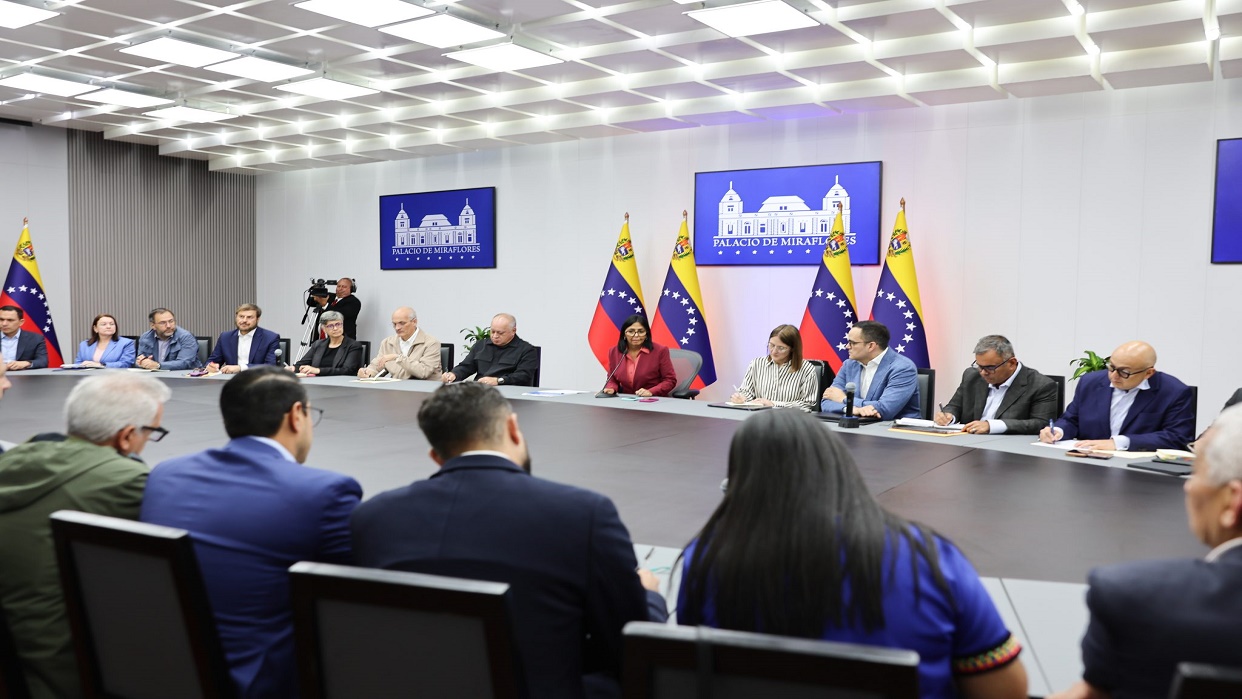
Full version: President Delcy Rodríguez Chairs Council of Ministers Meeting at Miraflores to Assess Actions Following Earthquake
Israel Shells Outskirts of Beit Jinn and Steps Up Activity in Southern Syria
Late Wednesday evening, Israeli forces fired three artillery shells from positions on the occupied Golan Heights. They exploded near Batt al-Warda Hill, close to the town of Beit Jinn in the western part of Damascus Governorate. The hill is strategically important because it overlooks the town directly and was previously used by Israeli forces to advance and carry out raids. Several months ago, Israeli troops had already entered Beit Jinn in heavy military vehicles via the road leading from the hill; in recent days, the area has also come under attack, including strikes on a passenger car and a bus.
At the same time, Israeli forces entered the Syrian village of Taranja in Quneitra Governorate, where they searched one of the houses. According to Syrian media, similar raids take place regularly in the area. In southern Syria, particularly in Quneitra and Daraa governorates, incursions, searches, arrests, and the establishment of military checkpoints have been reported.
Israel has controlled most of the Golan Heights since 1967. After the fall of Bashar al-Assad’s government in late 2024, Israel announced that it was ending the 1974 Agreement on Disengagement and occupied the Syrian buffer zone, as well as a number of other positions, including the Syrian side of Mount Hermon. freshr freshr

Full version: Occupation forces advance into Quneitra and shell the outskirts of Beit Jinn in the Damascus countryside
Trump’s Pressure: Visas, Tariffs and the Confrontation with Iran
The policies of Donald Trump’s administration are causing growing concern beyond the United States: visa restrictions are affecting foreigners, tariffs are increasing tensions in trade relations, and the escalation surrounding Iran is raising risks to regional stability. Canada, in particular, has responded forcefully, opposing U.S. trade pressure. This material was prepared based on posts published on Facebook and Instagram (Venezuela).
Venezuelan Posts: From a Mismatched Headline to Criticism of Trump
The two posts presented as material about Venezuelan perceptions of U.S. policy and Donald Trump differ significantly in content and informational value. One of them contains virtually no reference to Venezuela and provides no information about visa policy, tariffs, Iran, or American pressure. The other, by contrast, expresses an emotional anti-imperialist reaction characteristic of part of Venezuela’s political audience.
The Facebook post carries a headline claiming that the U.S. government has suspended visa procedures at embassies and consulates around the world. However, the text itself does not confirm this subject and is devoted to celebrations of Saint Rose of Lima Day in Peru on August 30.
The post says that “thousands of people will take part in the celebration,” visit the Basilica of Saint Rose of Lima, and leave letters at the “wishing well.” It also specifies that the doors will be open from 6:00 a.m. to 10:00 p.m. Thus, the subject is a religious and cultural event in Peru, not U.S. diplomatic or immigration policy.
The post contains no information about Venezuela, its government, diplomats, experts, or citizens. It does not mention U.S. tariffs, sanctions, Iran, Venezuelan migration, the oil sector, relations between Caracas and Washington, or the possible consequences of restrictions for the Venezuelan economy. It is therefore impossible to draw a local reaction to the tightening of U.S. visa rules from this material: it demonstrates a mismatch between the stated headline and the actual content.
The Instagram post is of a different nature. In it, Donald Trump is presented as a symbol of external pressure, territorial ambitions, and the arrogance of great powers. This is not a news analysis or a report containing official data, but an emotional political statement consistent with anti-imperialist rhetoric widespread in Venezuela.
The author uses sharp, colloquial language: “El viejo está del tomate,” which can be rendered as “the old man has lost it” or “he’s gone crazy.” The post continues: “se le ocurre que puede anexar lo que desea”—“he thinks he can annex whatever he wants.” These words express distrust toward the idea that the United States has the right to expand its influence or dictate terms to other countries.
The text also conveys hope that such a policy is limited in duration: “Le queda poco tiempo para ser un canalla”—“he does not have much time left to be a scoundrel.” The author invokes historical justice, stating: “muchos se volvieron soberbios. Rodaron por tierra”—“many became arrogant, and then were brought down.” In the author’s view, “everything will eventually be put right and corrected.”
For a Venezuelan audience, such assessments may be connected to the longstanding conflict between Caracas and Washington. This includes sanctions, restrictions in the oil sector, threats of secondary measures against Venezuela’s trading partners, and constant political pressure on the government of Nicolás Maduro. In this context, criticism of Trump is perceived not only as personal dislike of an American politician, but also as a protest against a U.S. policy that is often described in Venezuela as an attempt to impose an external will on the country and the region.
The post provides no facts, expert assessments, or official statements, so it cannot be regarded as a verified analysis of the consequences of American policy. However, it reflects an outlook in which sovereignty, resistance to external coercion, and the historical memory of the struggle against foreign domination occupy an important place. These themes echo the legacy of Simón Bolívar and the Chavista political tradition, which asserts that U.S. influence is neither inevitable nor eternal.


News 26-08-2026
US Removes Syria from State Sponsors of Terrorism List
Syria welcomed the US administration’s decision to remove it from the list of state sponsors of terrorism, where the country had remained for 47 years. In Damascus, the move was described as a historic turning point that could pave the way for economic recovery and postwar reconstruction. Experts discussed how the decision could affect Syrian-US relations, living standards, political stability and Damascus’s return to the global economy.
Military economics expert Ghazi al-Assaf noted that the decision is primarily legal in nature, while its economic consequences will emerge gradually. Removal from the list should reduce legal obstacles to financing Syria and could potentially shift cooperation with the International Monetary Fund and the World Bank from technical assistance toward lending and participation in infrastructure projects. In addition, it will reduce the risks that previously led banks and companies to avoid operating in the country.
Caroline Rose, senior director at the Soufan Center, said the decision could strengthen security cooperation between Washington and Damascus while creating conditions for technology transfers and military cooperation. It also signals to financial institutions and investors that the legal environment is becoming more favorable. However, she said, instability and ongoing security operations will continue to deter businesses: lifting restrictions will not be enough without stronger order and trust.
Political researcher Muayyad Ghazlan Qablawi called the decision the result of Syria’s efforts to return to the international community and overcome the isolation created by sanctions and the US classification. The move could restore hope among Syrians and help create new jobs, but this will require deep reforms and effective state institutions. Ending the designation could also ease access to international financing and weaken secondary sanctions, which previously discouraged even companies from countries not affiliated with the United States from investing.
At the same time, rapid changes in citizens’ daily lives should not be expected. The initial effect will likely be mainly psychological, as the decision should reassure investors and financial institutions. The return of companies, increased investment, job creation and lower prices will take months or years, since the Syrian economy has endured 14 years of war and a sharp contraction: GDP fell from approximately $60 billion to $20–22 billion during the later stages of the conflict.
Removal from the list does not cancel all existing sanctions and restrictions. However, further easing of measures could increase investor confidence, make it easier for banks to operate and accelerate their connection to the SWIFT system. Full integration into the global financial system will require modernization of banking infrastructure and electronic communications channels. The US Treasury Department said that ending the designation, imposed in 1979 over allegations of support for terrorist organizations, is intended to encourage investment and promote Syria’s political and economic stability.
Comments on the News
Which US and international sanctions against Syria remain after its removal from the State Sponsors of Terrorism list, and what restrictions do they continue to impose on banks and companies? — Removal from the State Sponsors of Terrorism list does not, by itself, cancel other sanctions. US restrictions under counterterrorism laws may remain in place, along with sanctions against the Syrian authorities, security forces, specific companies and individuals, as well as export controls and restrictions on financial transactions. European and British sanctions may also include asset freezes and bans on providing funds to sanctioned entities. As a result, banks continue to fear secondary sanctions, conduct enhanced customer checks and often avoid transactions involving Syria. Companies face greater difficulty attracting investment, insuring transactions, purchasing technology and making international payments.
Why does connecting Syrian banks to the SWIFT system require modernization of the domestic financial infrastructure, and what obstacles hindered this during the war years? — SWIFT merely transmits secure messages between banks; it does not replace a national banking system. Full connection requires stable correspondent banks, modern payment and compliance systems, transparent reporting, controls against money laundering and terrorist financing, and compliance with international standards. The war destroyed branches, telecommunications and payment infrastructure, weakened supervision and professional training, intensified dollar isolation and increased sanctions risks. In addition, foreign banks feared fines and reputational damage, so they closed correspondent accounts even when transactions through SWIFT were technically possible.
What role could the International Monetary Fund and the World Bank play in Syria’s reconstruction, given their different lending mechanisms and reform requirements? — The IMF generally provides short- and medium-term support to stabilize economies. It assists with monetary policy, budgets, inflation, banking reform and the balance of payments, usually linking financing to an agreed reform program. The World Bank focuses more on long-term development, financing infrastructure reconstruction, healthcare, education, social protection and public-sector institutional reform; its projects also require transparent governance and expenditure controls. Their participation would be possible only if legal conditions were met, an internationally recognized partner were in place, and sanctions were lifted or eased. In practice, the first steps would include assessing the damage, restoring financial reporting and institutions, and guaranteeing that aid would not be diverted to sanctioned entities.


Full version: After 47 years, how will lifting the “terrorism designation” affect Damascus’s foreign relations?
Venezuela Changes Urban Patrol and Roadblock System
Venezuelan President Delcy Rodríguez, together with Interior Minister Diosdado Cabello Rondón and Defense Minister Gustavo González López, presented a new plan for preventive urban patrols. In the coming days, the authorities intend to eliminate police roadblocks (“alcabalas”) in cities and increase patrols on the streets to make the security system more effective, professional, and respectful of citizens’ rights. According to Rodríguez, the reform aims to create a model that is closer to the population and focused on the comprehensive protection of Venezuelan families. The meeting also addressed improvements to the prison system: the government plans to cooperate with the International Committee of the Red Cross to conduct a detailed assessment of conditions in places of detention.
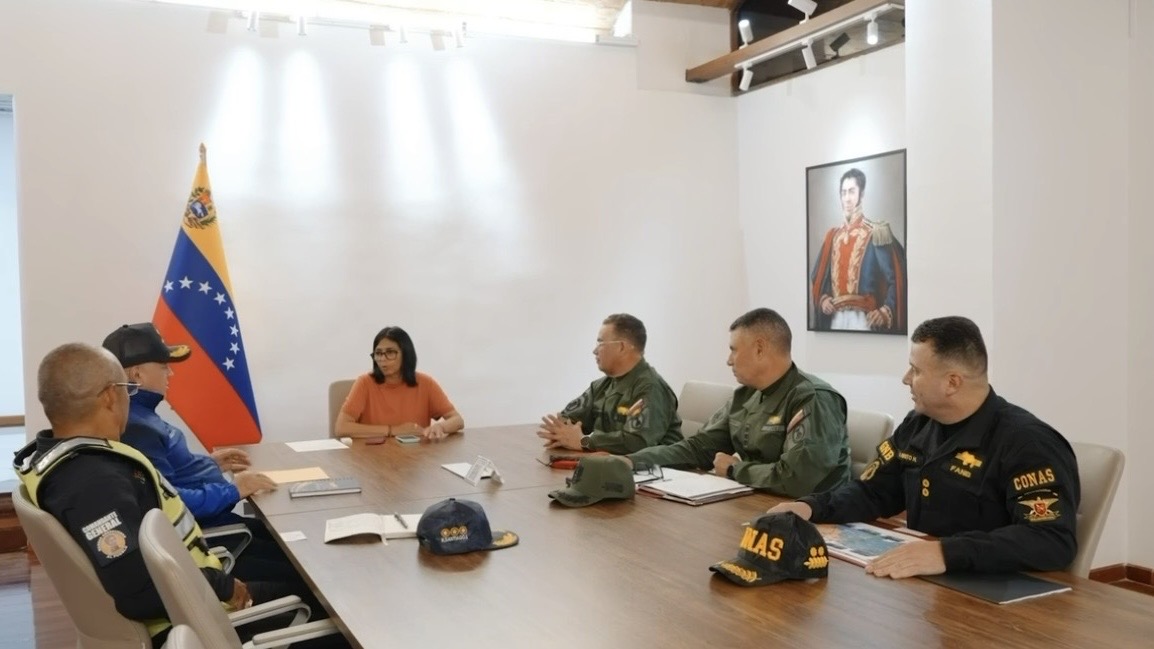
Full version: Delcy Rodríguez launches new preventive urban patrol plan and reviews roadblock system
Syrian Democratic Forces Announce Full Integration into State Institutions
Mazloum Abdi, leader of the Syrian Democratic Forces (SDF), announced at a press conference in Damascus that the group would cease to exist as an independent military force and be fully integrated into Syria’s state institutions. He described the decision as a transition from combat to reconstruction and from the age of weapons to an era of peace. According to Abdi, Syrian President Ahmed al-Sharaa also expressed readiness to guarantee Kurds the right to study in their native language.
The announcement came after Abdi met with al-Sharaa at the People’s Palace in the presence of government representatives and officials from the Kurdish autonomous administration. The sides discussed practical steps toward unification and the further strengthening of state control, security, and stability. Thus, after roughly a year and a half of negotiations, the SDF and the autonomous administration linked to it are ceasing to exist as separate structures.
The integration provides for the dissolution of the SDF’s military system and the transfer of the internal security forces known as the Asayish to Syria’s Interior Ministry. Civil servants working in education, the oil and gas sector, dam management, and other institutions will move into state agencies. The completion of the military brigades’ integration has already been announced, while the transfer of areas including education, migration, passport issuance, civil registration, and real estate management will continue in the coming days. However, no official decision has yet been made on the possible appointment of Abdi to a government position.
The practical implementation of the agreement began before the official announcement: the Syrian army and security forces were deployed in some areas of Hasakah, Qamishli, eastern Deir ez-Zor, and later in Raqqa and the Kurdish districts of Aleppo—Sheikh Maqsoud and Ashrafieh. Some SDF fighters underwent training in Damascus and other parts of the country, after which some received ranks and positions in the Syrian army. The SDF also handed over to the state oil and gas fields, dams, strategic facilities, and data on Islamic State militants (the organization is banned in Russia), who were transferred to Iraqi authorities with the assistance of US forces.
US Special Envoy for Syria Tom Barrack called the agreement a “historic event” leading to the creation of “one army, one government, and one state,” with no winners or losers. He said the unification would turn the previous division into a long-term partnership. The decision is based on agreements reached after clashes between the sides, including the January 29, 2026, agreement on a ceasefire, integration, and the return of displaced people. The SDF was created in 2015 with US support to fight the Islamic State and brought together Kurdish, Arab, Assyrian, and Turkmen formations. After the fall of Bashar al-Assad’s regime in December 2024, the conflict and negotiations continued until Damascus regained a significant portion of the territory during an operation in early 2026. Against this backdrop, the Syrian authorities pledged to protect Kurdish rights and recognized their cultural and linguistic identity as part of the country’s national identity.
Comments on the News
How will the status of the Kurdish autonomous administration change after education, civil registration, passports, and real estate management are transferred to Syria’s central state authorities? — It will likely lose a significant share of its de facto administrative powers and be transformed from a quasi-state structure into a local government body within the Syrian state. The extent to which the Kurds’ cultural and political rights are preserved will depend on the details of the agreement and how it is implemented in practice.
How will the integration of SDF fighters and Asayish forces into the Syrian army and Interior Ministry be organized, given the differences in their structure, training, and former chains of command? — A phased process is most likely: registering personnel, conducting background checks, assessing training, and assigning personnel to separate army and police units. Key unresolved issues will include preserving former chains of command, determining the status of local security forces, standardizing weapons, and placing all forces under unified state leadership.
What role will the United States, which previously supported the SDF, retain in implementing the agreement, and how will it affect Damascus’s relations with Turkey and Iraq? — The United States will likely retain diplomatic influence and seek security guarantees for the Kurdish population and its former partners, although its direct military presence may be reduced. For Damascus, the agreement could improve relations with Turkey if it limits autonomous military structures along the Turkish border, but Ankara will monitor whether the SDF retains independent military capabilities. Iraq will likely support stronger Damascus control over the border, as this could reduce the cross-border activity of armed groups and smuggling.


Full version: مظلوم عبدي يعلن حل قوات قسد واندماجها في مؤسسات الدولة
Canada and Iran Through Venezuela’s Lens on U.S. Pressure
Canada’s rejection of U.S. President Donald Trump’s threat to rename Lake Ontario, which the two countries share, “Lake America” has become more than a curious diplomatic episode in Venezuela’s media space. In an Agencia EFE report, the gesture is viewed as another escalation in the trade and political confrontation between Washington and Ottawa—one that now affects not only tariffs and markets, but also the identity, history, and symbols of their shared geographic space.
For Venezuelan audiences, the story carries special significance. For many years, Venezuela has faced U.S. sanctions, restrictions on oil operations and financial transactions, and barriers to international trade. Washington’s actions toward Canada are therefore perceived as an example of unilateral pressure that can be applied not only against countries considered opponents of the United States, but also against its closest partners and allies.
In this interpretation, Canada’s refusal becomes a symbol of the defense of national dignity and sovereignty. The issue is not merely the lake’s name: the very possibility of imposing a new name on a shared natural feature is seen as evidence of the United States’ desire to determine the terms for its neighbors. The Venezuelan perspective emphasizes that trade disagreements can grow into political conflicts affecting states’ right to manage their own symbols and public space.
The topic was further developed in an episode of Canal Red Latinoamérica, “Canada Challenges the U.S. / Trump Launches an ‘Economic Pariah’ Operation Against Iran”. Within the stated editorial framework, Canada’s conflict with the United States is compared with American pressure on Iran. The expression “economic pariah” reflects a critical view of the use of sanctions and economic isolation as foreign-policy instruments.
For Caracas, the pressure on Tehran is especially familiar. Venezuela’s experience with sanctions makes the idea that financial and energy restrictions can serve not only to regulate trade but also as a mechanism of political coercion particularly resonant. From this perspective, U.S. policy toward Iran does not appear to be an isolated case; rather, it forms part of a broader model in which Washington seeks to isolate governments that do not agree with its course.
Canada occupies a special place in this picture. Being deeply integrated into the U.S. economy and a traditional American ally, it demonstrates how vulnerable even Washington’s closest partners can be to trade and political pressure. For Venezuelan audiences, this supports the argument that U.S. sanctions and tariff policies are extraterritorial and global in nature.
The Canal Red Latinoamérica episode also includes a review of Mexican President Claudia Sheinbaum’s press conference. The Mexican theme links Canada, the United States, Iran, and Latin America within a common context of seeking an independent policy in the face of economic and diplomatic pressure. For the countries of the region, this means preserving room for sovereign decision-making rather than reducing relations with the United States solely to dependence on the North American market.
The Venezuelan interpretation of Canada’s response boils down to the idea that resistance to unilateral measures is possible even amid close economic interdependence. For Caracas, this supports a policy of diversifying markets, developing ties with non-Western partners, and coordinating regionally against sanctions. In this reading, the Canadian case and the pressure on Iran become part of a broader dispute over the limits of economic power, national sovereignty, and states’ right to reject conditions imposed from outside.
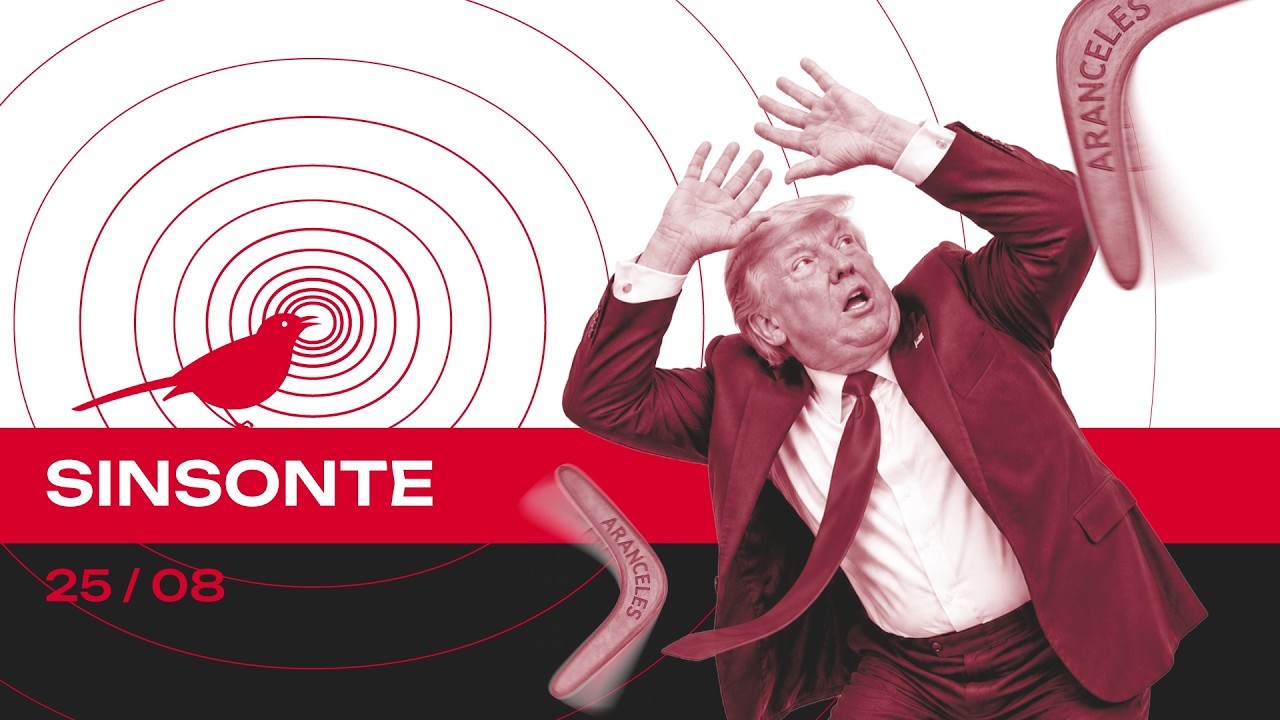
News 25-08-2026
Katz: Israel will not leave Syrian territory while threats remain
Israeli Defense Minister Israel Katz, who visited areas of Syria, said that Israeli forces would not leave Mount Hermon (Jabal al-Sheikh) or the security zone established in Syria as long as threats against Israel remain. Israeli media reported his remarks on Tuesday.


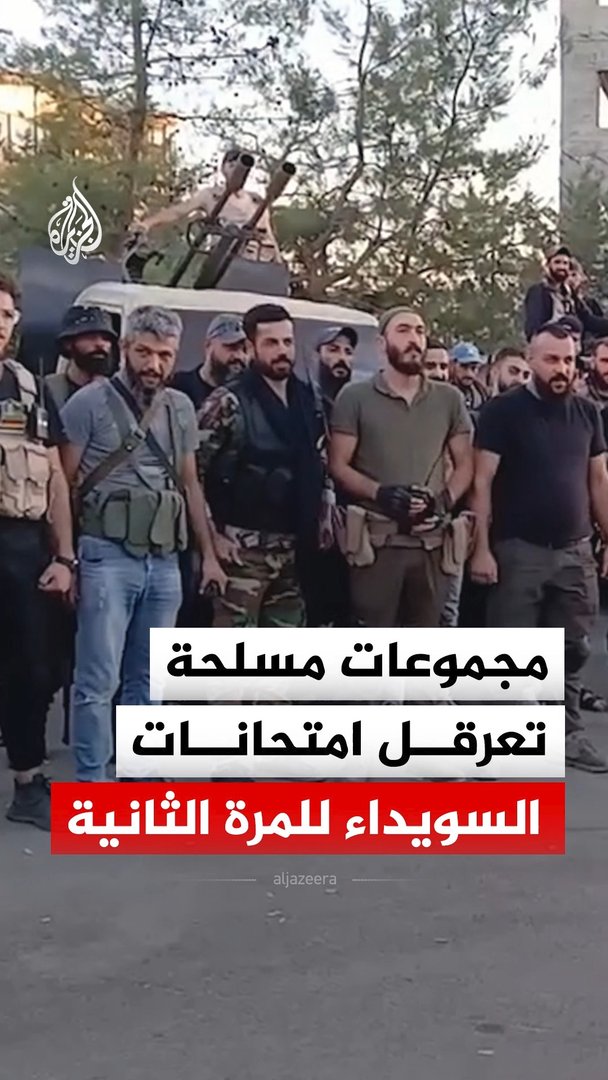
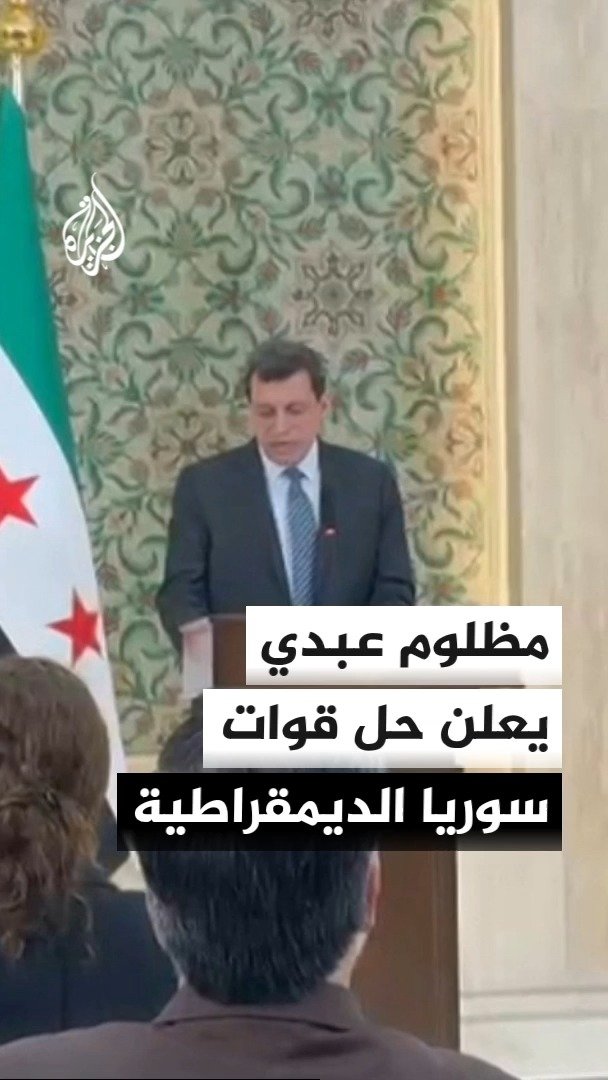
Full version: Al Jazeera Net
Economist Warns of Risks of Full Dollarization in Venezuela
Luis Vicente León, president of the research firm Datanálisis, said that official dollarization in Venezuela remains a complex and risky step because of the lack of funds and international reserves. According to him, dollarization could strengthen fiscal discipline: the government would lose the ability to cover deficits by issuing money, which would help contain inflation. However, solid macroeconomic conditions are essential for its sustainable implementation, and the country has not yet achieved them.
León noted that the economy’s dependence on oil revenues makes it particularly vulnerable to sharp price fluctuations. In his assessment, the current increase in revenue is largely linked to external circumstances, including higher oil prices amid geopolitical conflicts in the Middle East, but the situation could change as the global market stabilizes. Without sufficient reserves and its own monetary policy, the government would find it difficult to respond to falling revenues. Therefore, full dollarization is acceptable only if the country has financial reserves and room for maneuver.
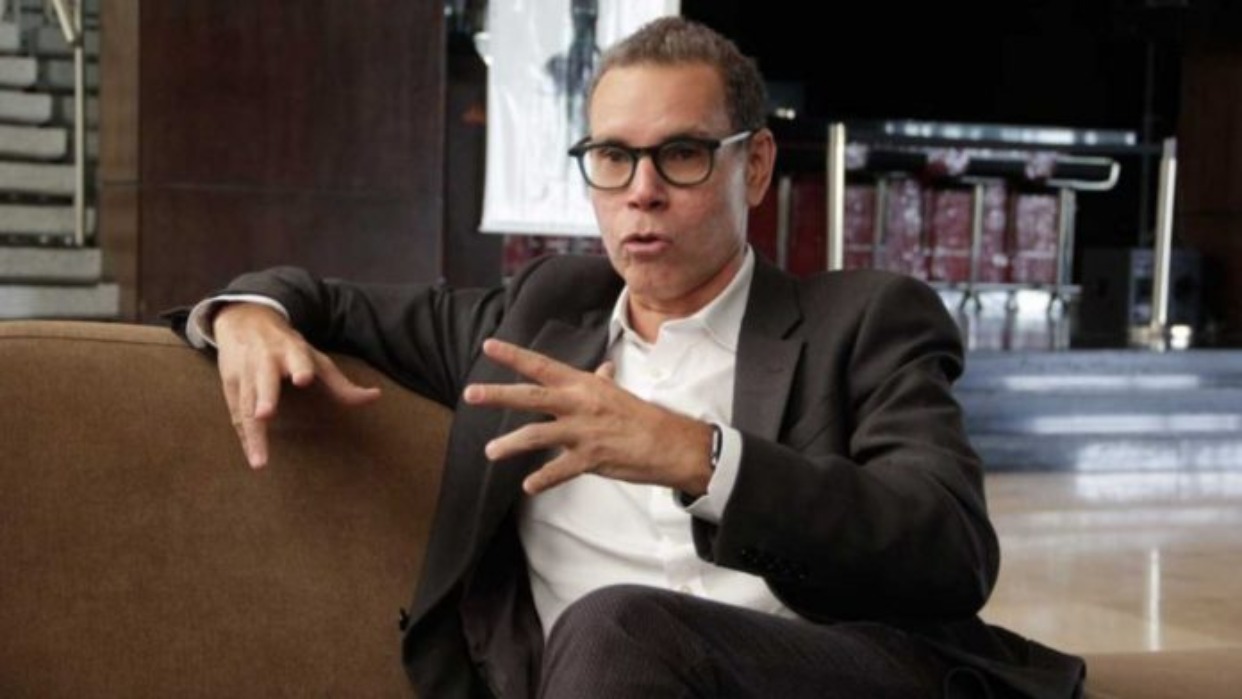
Full version: Luis Vicente León warns that Venezuela cannot formalize dollarization without sufficient international reserves
From Wars to Direct Dialogue: A History of Syrian-Israeli Relations
The meeting between a Syrian delegation led by Foreign Minister Asaad al-Shaibani and the Israeli side, with U.S. mediation in Jordan, was not the first contact between the two parties. However, it marked a shift from exchanging indirect messages to open dialogue. The talks took place against the backdrop of recent Israeli strikes on Syria and rising tensions in the south of the country. Their main goal was to reduce the risk of further escalation.
After Syria gained independence in 1946, Damascus took part in the 1948 Arab-Israeli War and opposed the partition plan for Palestine. Following the defeat of the Arab armies, a Syrian-Israeli armistice was concluded under UN auspices on July 20, 1949. It provided for the withdrawal of forces from occupied territories and the creation of demilitarized zones, but these areas soon became a постоянный source of disputes. Israel sought to establish control over them, while Syria viewed such actions as violations of the agreement, and armed clashes continued throughout the 1950s and 1960s.
After the Ba'ath Party came to power in 1963, Syria intensified its ideological and military confrontation with Israel, supporting Palestinian fighters and opening training camps. In 1965, Israeli spy Eli Cohen, operating under the name Kamel Amin Thaabet, was exposed and executed in Damascus. Tensions peaked during the 1967 war, when Israel seized the Golan Heights and the city of Quneitra. Disputes over reports that Quneitra had fallen even before Israeli forces had actually arrived intensified the chaos and contributed to the Syrian army's disorderly retreat.
After the defeat, the Sa'iqa organization was established to wage a people's war against Israel, but it also became an arena for a power struggle between the political and military wings of the Syrian leadership. In 1970, this confrontation ended with Hafez al-Assad coming to power. During the 1973 war, Syrian forces initially advanced on the Golan Heights, but Israel regained its positions with support from the air and ground. The 1974 Agreement on the Disengagement of Forces, reached through U.S. mediation, returned Quneitra to Syria and created a UN-controlled buffer zone, but the Golan Heights remained occupied. After that, the border remained one of the quietest lines of contact in the Middle East for nearly five decades.
Despite the relative calm along the border, Syria continued to confront Israel through Lebanon, first supporting Palestinian groups and later Hezbollah. Negotiations took place at the 1991 Madrid Conference, in Washington and at Wye River in 1992–1996, and in 2000 Farouk al-Sharaa met Ehud Barak under the mediation of Bill Clinton. However, the parties failed to agree on the terms of an Israeli withdrawal from the Golan Heights. Israel also carried out strikes against targets in Syria, including an alleged nuclear facility at al-Kibar near Deir ez-Zor, which was destroyed in 2007; Israel officially acknowledged the operation only in 2018.
After the Syrian uprising began in 2011, Israel significantly intensified its airstrikes, seeking to prevent the expansion of Iran's presence and the transfer of advanced weapons. Strikes targeted the airports of Damascus and Aleppo, as well as the Iranian consulate in Damascus in 2024. After Bashar al-Assad's government fell and a new administration came to power, Israel carried out hundreds of attacks on military facilities, warehouses, airports and maritime infrastructure. It also advanced in the south beyond the buffer zone, declaring that the previous agreement was no longer in force. Against this backdrop, strikes on the presidential palace, the Defense Ministry, security facilities and strategic infrastructure turned the latest Syrian-Israeli contact into an attempt to contain the escalation and find a path toward a more lasting ceasefire.
Comments on the News
What role does the disengagement zone on the Golan Heights play today, and how is the UN peacekeeping mission established after the 1974 agreement organized? — The disengagement zone separates Israeli and Syrian forces and limits their presence on both sides of the 1974 ceasefire line. Compliance with the regime is monitored by the United Nations Disengagement Observer Force (UNDOF), which patrols the zone, oversees adherence to military restrictions and reports to the UN Security Council. The mission does not have a broad peace-enforcement mandate; its primary task is to observe and maintain the ceasefire regime. Its work has been complicated by the Syrian civil war and security threats, so some observers are stationed outside the disengagement zone, while patrols are conducted with enhanced security measures.
Why did the return of Quneitra to Syria in 1974 not resolve the question of the status of the Golan Heights? — Quneitra and the adjoining area were returned to Syrian control under the disengagement agreement, but this was a military agreement, not a peace treaty. It established a ceasefire line without determining final sovereignty over the Golan Heights. Israel retained control over most of the Golan, while Syria continued to demand the territory's full return. The issue therefore remained part of the broader, unresolved Syrian-Israeli conflict.
How did Syria's support for Palestinian groups and Hezbollah in Lebanon affect the nature of the Syrian-Israeli confrontation after the 1970s? — It transformed the conflict from a primarily interstate confrontation into a more complex struggle involving non-state armed actors. Damascus used its support for Palestinian organizations and Hezbollah as a tool to pressure Israel and preserve its influence in Lebanon, while avoiding a direct, full-scale war. For Israel, this meant having to counter not only the Syrian army but also missile, guerrilla and cross-border threats. As a result, the confrontation involved indirect clashes, support for allies, operations in Lebanon and strikes on facilities linked to Syria and Iran, while the formal ceasefire regime on the Golan Heights remained in place.


Full version: From Hostility to a Meeting: How Did Syrian-Israeli Relations Reach This Point?
Tariffs and Sanctions: Trump’s New Economic Strategy
At the center of the regional agenda is concern over mounting U.S. economic pressure on allies and adversaries alike. Canada is being pushed toward a trade conflict by threats of tariffs, while Iran is facing tighter sanctions and financial isolation. Against this backdrop, experts are asking whether Washington’s confrontational strategy can contain broader geopolitical rivals, above all China. This material is based on publications by TRT Español, FXStreet, and Facebook (Venezuela).
U.S. Sanctions on Iran Heighten Concern and Demand for Gold
The new U.S. campaign to isolate Iran economically has triggered both political concern in countries already familiar with sanctions pressure and a notable reaction in financial markets. For Venezuela, which has faced restrictions on oil trade, international payments, shipping insurance, and access to the financial system for many years, the events surrounding Tehran are seen as a particularly close and potentially dangerous precedent.
At the center of the campaign is a U.S. operation that Treasury Secretary Scott Bessent called “Economic D-Day”; in some publications, it is referred to as Operation Outcast or “Economic Pariah.” Its stated goal is to deprive Iran of every possible source of revenue that, according to Washington, could be used to finance the Islamic Revolutionary Guard Corps. Bessent promised that “all economic ties with Tehran will be severely punished,” but did not publicly disclose the full list of specific measures or agencies that would be involved.
As TRT Español notes, Iranian authorities dismissed the threats as a repeat of a strategy that had already been tried and proved ineffective. Iranian Foreign Minister Abbas Araghchi said: “We have seen this movie before.” According to him, after the “most devastating sanctions” imposed approximately 14 years ago, the period of “maximum pressure,” and other stages of restrictions, another “most devastating economic operation” will likewise fail to achieve its objectives.
Iranian Foreign Ministry spokesman Esmaeil Baghaei, for his part, stressed that sanctions primarily affect “ordinary citizens.” He also accused the United States of trying to intimidate third countries and restrict their trade with Iran, calling such practices a violation of the principles of free trade and national sovereignty.
The threat of secondary sanctions is particularly important for Venezuela. Caracas and Tehran maintain political and economic ties in areas including fuel, petroleum products, technical cooperation, industry, and logistics. Pressure on banks, brokers, carriers, insurers, commodity buyers, and intermediaries could affect not only Iran directly, but also any external economic infrastructure that helps sanctioned countries maintain trade relations.
A publication by El Periódico describes the U.S. initiative as an “unprecedented” offensive and asks whether Donald Trump will be able to “change the course of history” or whether Washington will once again repeat the results of its previous sanctions policy. For a Venezuelan audience, the historical parallel with Cuba, Iran, and Venezuela itself is obvious: prolonged economic isolation did not bring about rapid political transformation, but it seriously complicated people’s daily lives, imports, access to foreign currency, oil revenues, and international payments.
In Caracas, U.S. sanctions are traditionally described as illegal unilateral coercive measures and a form of economic warfare. Against this backdrop, Tehran’s rhetoric about defending sovereignty and adapting to external pressure resonates in Venezuela. Both countries are relying on alternative trade routes, unconventional payment mechanisms, partnerships outside the Western financial system, and expanded ties with states that do not support U.S. sanctions policy.
At the same time, the new wave of restrictions has already affected the global gold market. According to FXStreet, gold rose to a three-month high of $4,681 per ounce before trading near $4,631, up 0.62%. The market reacted to reports of sanctions against nearly 60 entities linked to Iran.
The restrictions, the publication notes, cover digital assets, technology, gold, aviation, and maritime shipping. These are particularly sensitive areas for states with limited access to traditional banking channels and international financing: export operations, foreign-currency revenues, equipment supplies, and commodity trading may pass through them. Special attention is being paid to the “shadow fleet,” brokerage firms, and international networks of intermediaries.
Rising geopolitical tensions have increased gold’s appeal as a safe-haven asset. According to the World Gold Council, gold ETFs recorded inflows of 46.7 million tonnes worth $6.4 billion over the week—the largest figure in ten months. North American and European funds accounted for most of the inflows. Prices also received additional support from a 3.5-basis-point decline in the yield on 10-year U.S. Treasury bonds, to 4.700%.
The technical picture presented by FXStreet remains favorable for gold. After breaking above the 200-day moving average at $4,516, the nearest targets were identified as $4,700, $4,764, and $4,800 per ounce. If the market breaks and holds above these levels, it could set its sights on $5,000.
For Venezuelans, gold has not only an investment significance but also a broader political and economic one. In a country that has experienced devaluations, currency controls, and a high dependence on oil exports, physical gold is often perceived as a more tangible reserve than the national currency and unstable financial instruments. Rising global prices may matter both for government reserves and personal savings, although the sources do not separately examine Venezuelan production, reserves, or the domestic precious-metals market.
Thus, U.S. pressure on Iran is perceived in Venezuela on two levels at once. Politically, it is seen as a warning that the model of secondary sanctions against trading partners and intermediaries may expand. Financially, it is a factor intensifying global uncertainty and directing capital into gold. For countries living under U.S. restrictions, the cost of such confrontation is measured not only in diplomatic statements, but also in access to fuel, technology, payment systems, exports, and citizens’ everyday well-being.

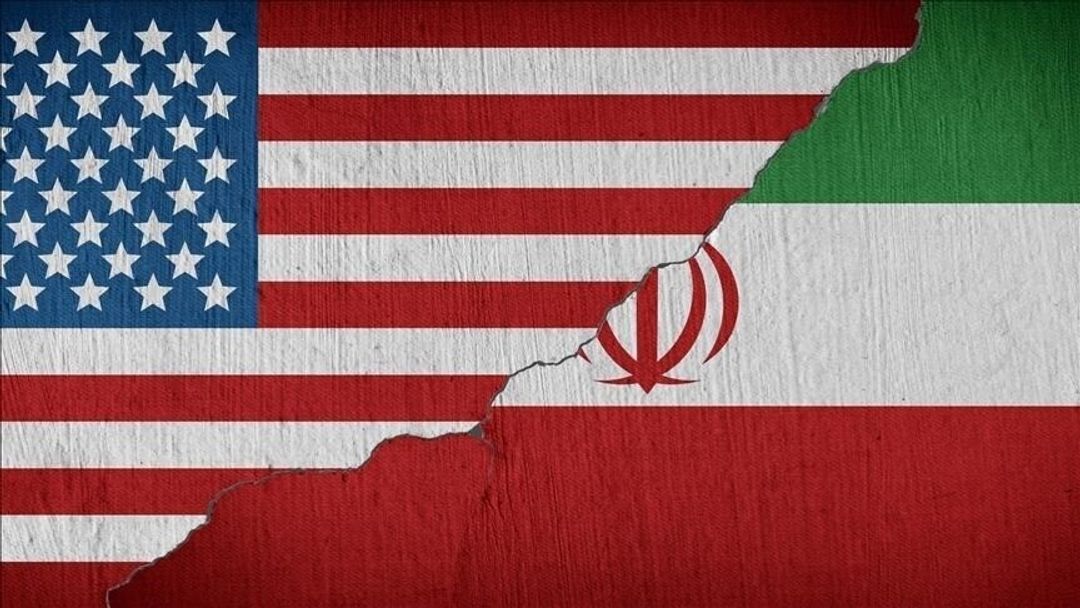

News 24-08-2026
Jordan Facilitates Talks to Ease Tensions Between Syria and Israel
A meeting focused on reducing tensions between Syria and Israel was held in Jordan on Sunday. The talks took place at Damascus’s request, with U.S. mediation, following Israeli strikes on Syrian territory last week. Jordan expressed support for the Syrian government and called for an immediate end to the attacks, the withdrawal of Israeli forces from occupied Syrian lands, and compliance with the 1974 disengagement agreement.
According to Syria’s state news agency, the Syrian delegation was led by Foreign Minister Asaad al-Shaibani and also included the heads of general and military intelligence. They met with senior Israeli officials. The discussions covered practical mechanisms for ending strikes, arrests, and operations against Syrian facilities, as well as resuming negotiations on a security agreement that could serve as the basis for a broader settlement.
The Syrian side stressed that Syria is a sovereign state with the right to rebuild and develop its national army and independently choose its partners and allies. Damascus rejected any arrangements that would restrict its sovereignty or threaten its territorial integrity, and reiterated that the Golan Heights are Syrian land. At the same time, the discussion of their final status was considered premature: the immediate priorities were identified as the withdrawal of Israeli forces to the lines that existed before December 8, 2024, and the full restoration of the 1974 agreement.
The participants also discussed strengthening stability in Syria and the region, including efforts to reduce tensions between Turkey and Israel so that their confrontation would not spill over into Syrian territory. Damascus said that any security measures must take Syria’s sovereignty and unity into account. According to Axios, the meeting was attended by al-Shaibani and the head of Israel’s foreign intelligence service, Mossad, Roman Gofman. Israeli sources described the talks as positive and successful.
Direct contacts between Damascus and Tel Aviv, according to al-Shaibani, were suspended after Israel struck the Abu al-Zuhur air base. On Tuesday, Israel carried out eight strikes on the base’s runway in the eastern part of Idlib province. The Syrian authorities called this unjustified aggression and a violation of the country’s sovereignty. The government of Benjamin Netanyahu claimed that Syria had allegedly been preparing to violate the understandings by allowing Turkish forces to deploy at a base near Aleppo; Turkey called the explanation a false pretext for illegal attacks.
Syrian President Ahmed al-Sharaa previously said that Damascus, with the participation of several countries, was working on a security agreement with Israel. According to him, the success of these efforts could pave the way for comprehensive peace, but should not mean that Syria gives up its rights to the occupied Golan Heights. Israel has controlled most of the Golan since 1967, and after the fall of Bashar al-Assad’s regime in late 2024, it announced the termination of the 1974 disengagement agreement and occupied the buffer zone, as well as a number of Syrian positions, including the Syrian side of Mount Hermon.
Comments on the News
How is the buffer zone created by the 1974 disengagement agreement organized, and what role do the United Nations Disengagement Observer Force (UNDOF) play in monitoring it? — The 1974 agreement created a Zone of Separation between Israeli and Syrian forces, where armed forces are not supposed to be stationed, as well as zones on either side with restrictions on the number of troops and types of weapons. UNDOF patrols the area, verifies compliance with the agreement, and reports to the UN Security Council. The mission’s mandate does not include peace enforcement: the safety of its personnel depends on the consent of the parties and the overall security situation.
Why is the Abu al-Zuhur air base in Idlib province strategically important for the possible deployment of Turkish forces and for the security of northern Syria? — The air base is located in central Idlib and could serve as a hub for surveillance, supply, and the deployment of forces in northwestern Syria. Its use would allow Turkey to respond more quickly to threats along the border and support allied formations. However, the base was damaged during the war, and its operation depends on political agreements, the condition of its infrastructure, and the consent of other influential parties to the conflict; its importance alone does not mean that the deployment of Turkish forces is guaranteed.
How do international law and the UN position determine the status of the Golan Heights, which Israel has controlled since 1967 and whose annexation most countries do not recognize? — Under UN Security Council Resolution 497, Israel’s decision to impose its laws and administration on the Golan Heights is considered null and void and without international legal effect. Most countries regard the territory as occupied Syrian land and do not recognize its annexation. Israel controls the Golan and says it is essential to its security, while the UN and most countries maintain that the territory’s final status must be determined through negotiations and that changing borders by force is impermissible.


Full version: With U.S. Mediation, Syria Reveals Details of Its Delegation’s Meeting with Israeli Officials in Jordan
Venezuela Continues Reviewing Prisoners’ Cases
Venezuela’s judicial system continues to assess the cases of people in custody, lawmaker Jorge Arreaza, who heads the special commission overseeing implementation of the amnesty law established in February, said on August 23. Responding in a television interview to a question about the possible release of other political prisoners, he said that those who had committed serious crimes against the state and violated the provisions of the Constitution must show remorse. According to Arreaza, cases are continuously being reviewed under the law and with due regard for protecting state institutions. However, the most important condition of any agreement should be a commitment by all sides not to repeat their previous actions or commit new violations.
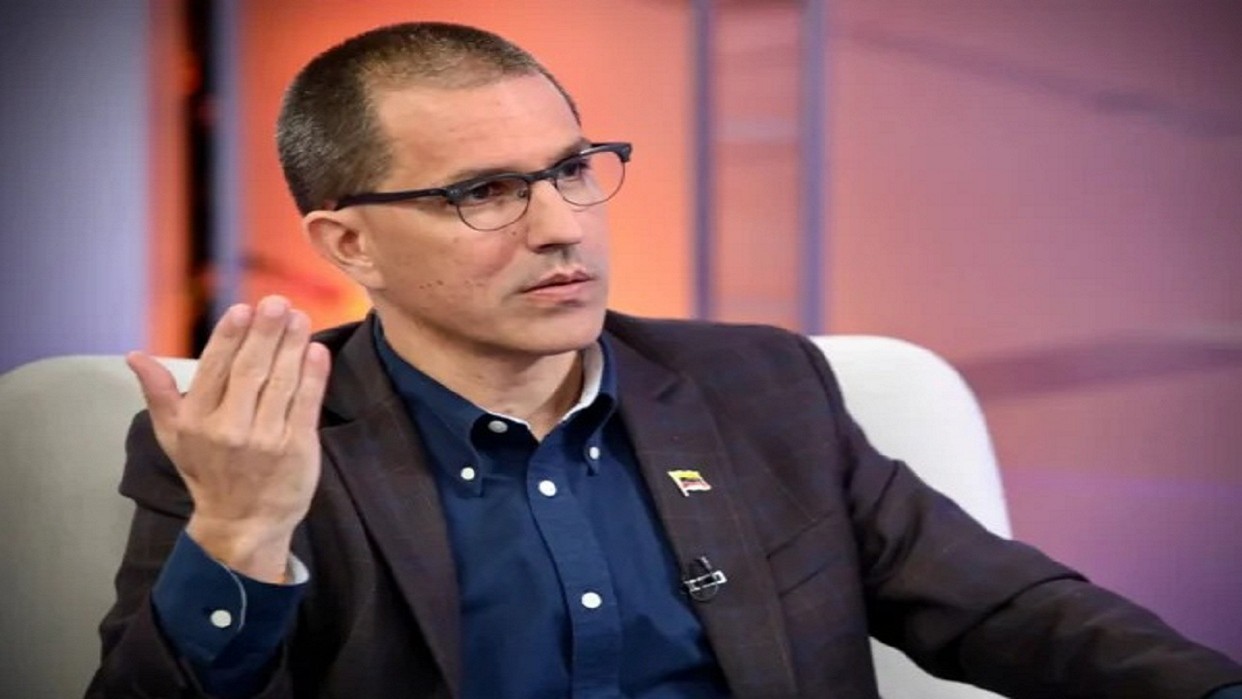
Full version: Arreaza on prisoner releases:
Video of Israeli Vehicles Was Not Filmed in Syria’s Daraa
A video circulated on social media that was presented as footage of Israeli military vehicles driving through the streets of Syria’s Daraa while allegedly being welcomed by local residents. The recording shows three armored vehicles and a white car, while a voice off-camera says, “Welcome, come through.” The post sparked outrage and criticism of the Syrian government and President Ahmed al-Sharaa.
Some accounts linked the video to a statement by Israeli Chief of Staff Eyal Zamir about the creation of a 40-kilometer defensive zone inside Syria. According to available information, the Iraqi television channel “i News” was the first to promote this interpretation on August 21, after which the clip quickly spread on Facebook, X, and TikTok.
However, a fact-check uncovered discrepancies: the video contained no other evidence of the alleged Israeli incursion into Daraa, the speech did not sound Syrian, and local media reported no such event. In addition, the café signs, gas station, and fuel tanker visible in the footage did not match the Syrian surroundings.
A search for the sign “Hamodi Coffé” showed that a café with the same name, logo, and design is located in the city of Qabatiya in Jenin Governorate, in the northern West Bank. The same café and gas station also appear in archival materials from a local fuel company, while similar tankers and yellow taxis can be seen nearby. This confirmed that the footage was not filmed in Daraa, but in the occupied West Bank.
The original was posted on August 10 by a Palestinian TikTok user from Qabatiya, accompanied by an ironic caption saying that residents had “become too accustomed to them,” referring to regular Israeli raids. Another angle of the same incursion was published by local Palestinian channels on August 9. The false version gained traction against the backdrop of a real escalation: Israel had conducted raids and carried out strikes on sites in southern Syria and the Damascus area, which Syrian authorities condemned in appeals to the United Nations.
Comments on the News
What are the geographical and political differences between Syria’s Daraa Governorate, Qabatiya, and the northern West Bank that could have led them to be mistaken for one another? — Daraa is a governorate in southwestern Syria, near the border with Jordan and the Golan Heights. Qabatiya is a Palestinian town south of Jenin in the northern West Bank, which is under Israeli occupation. They are therefore different territories with different political contexts: Daraa is part of Syria, while Qabatiya is in the Palestinian territories, which are controlled to varying degrees by the Palestinian Authority and Israel.
Why is Qabatiya regularly subjected to Israeli raids, and what role do such operations play in the broader situation in the occupied West Bank? — Israel says the raids are aimed at locating suspects, making arrests, and destroying the infrastructure of armed groups, particularly those linked to Palestinian factions. For West Bank residents, these operations also mean tighter military control, destruction, casualties, and rising tensions. They are part of a broader policy of regular searches, arrests, and military operations in the occupied territory.
What is the “40-kilometer defensive zone” mentioned here, and how are such Israeli statements connected to its policy toward southern Syria? — A “40-kilometer defensive zone” generally refers to a security strip that Israel has said it seeks to establish in southern Syria, rather than an internationally recognized border or a separate administrative area. Such statements are linked to efforts to prevent armed groups from approaching the Golan Heights and to stop weapons transfers. At the same time, they may serve to justify an expansion of Israel’s military presence and control over Syrian territory.

Full version: Israeli patrol and Syrian welcome in Daraa: What is the truth behind the circulating video?
Trump’s Trade War and Canada’s Response
Canada reacted sharply to Donald Trump’s confrontational course, accusing Washington of launching a trade war. Statements by Mark Carney and the U.S. president’s retaliatory warnings are heightening tensions, turning a dispute over tariffs into a crisis in bilateral relations marked by mutual threats. This material is based on Instagram posts (Venezuela).
Venezuelan Commentators See Trump’s Policies as U.S. Self-Isolation
In the Venezuelan social media sphere, Donald Trump’s trade and political rhetoric toward Canada is viewed not as a demonstration of American strength, but as yet another sign that Washington risks weakening its own position. The authors of two Instagram posts link tariffs, pressure on partners, and the United States’ hard-line foreign policy to Venezuela’s experience of living for many years under sanctions and in conflict with U.S. authorities.
In one post, the main conclusion is stated unequivocally: “Estados Unidos es el único que sale perdiendo”—“The United States is the only one that loses.” In the author’s view, tariffs on trading partners do not strengthen the U.S. economy, but instead cause the country to “está aislando su economía”—“is isolating its own economy.”
This assessment is based on the assumption that Canada, which previously supplied raw materials to the U.S. market, will redirect those flows to China and Europe. In this view, Washington’s protectionism does not force its partners to submit, but pushes them to seek new markets, routes, and alliances. As a result, U.S. companies may lose access to resources, investment, and foreign markets, while other centers of the global economy gain additional opportunities.
This perspective is particularly understandable to a Venezuelan audience. U.S. sanctions and restrictions against Caracas have long been seen here not only as pressure on Venezuela, but also as a policy that narrows the space available to the United States itself. Within this narrative, economic coercion accelerates affected countries’ rapprochement with China, Russia, and other alternative partners, helping create trade ties without Washington’s participation.
At the same time, the post’s author provides no official data on the volume of Canadian exports, negotiations, or specific tariff decisions, and does not cite statements by officials. This is an evaluative comment: the trade confrontation is portrayed as evidence of the decline of American influence, rather than as a tool for restoring it.
Trump’s policies are described even more emotionally in another Venezuelan Instagram video. Its author quips: “pero no sé lo vayan a decir, no sea que los quiera invadir para llevar democracia”—“just don’t tell him that, or he might want to invade them to bring democracy.” The sarcasm reflects widespread distrust in Venezuela toward the language of U.S. foreign policy, in which talk of democracy and human rights is often perceived as a possible justification for sanctions, pressure, or intervention.
The author also characterizes Trump’s approach with the phrase “si no están con él están en su contra”—“if they are not with him, they are against him.” In the Venezuelan context, this formulation refers to the long-standing confrontation between Caracas and Washington: sanctions, U.S. support for alternative political centers, and public calls for a change of government in the country. Thus, even the U.S. dispute with Canada is interpreted here as part of a broader model in which Washington seeks to compel loyalty from both opponents and allies.
Another part of the video targets Latin Americans who support Trump. The author mockingly speaks about those who want to “be Americans,” although, in his view, American society “will never consider them equals.” This reflects criticism of migration-related, racial, and social inequality in the United States, as well as opposition to Trump’s support among part of the Latin American diaspora.
Neither reaction claims to offer a neutral analysis of U.S.-Canadian relations. Instead, they convey a Venezuelan interpretation of events shaped by memories of sanctions, threats of intervention, and a long-running political conflict with the United States. From this perspective, tariffs and ultimatum-like rhetoric do not restore Washington’s control over global trade; on the contrary, they may strengthen multipolar economic ties and increasingly leave the United States outside new trade routes and political agreements.


News 23-08-2026
What Your Child’s Behavior Is Trying to Say
Children humming while playing, making up songs, producing cheerful sounds, laughing, and suddenly becoming talkative often seem like ordinary expressions of personality. Yet these behaviors may conceal ways in which a child expresses and regulates emotions, copes with difficult experiences, and seeks to communicate with those around them. Parents should observe such signals without jumping to conclusions: the context, frequency, and the child’s overall well-being can help them better understand what the child is feeling and what kind of support they need.


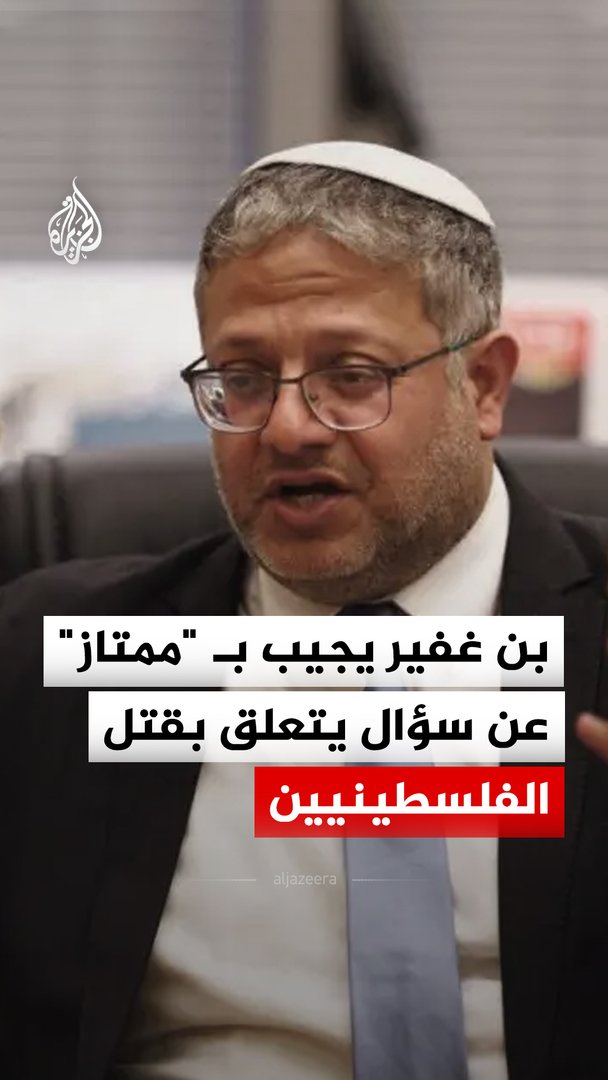
Full version: Al Jazeera Net
Civil Protection Strengthened in Venezuela Amid Torrential Rains
On August 22, Venezuelan President Delcy Rodríguez ordered the activation of the civil protection system to respond immediately to the consequences of heavy rains in Greater Caracas. According to her, Tropical Wave No. 40 is passing over the country, while global climate change is intensifying extreme weather events. Downpours have already caused flooding and road closures in the areas of El Valle, Coche, Antímano and La Vega, as well as in Miranda state. National and local services are working in the hardest-hit areas, assessing damage, clearing roads and responding to residents’ requests as the rain continues. Authorities recommend following further updates through official and reliable sources.
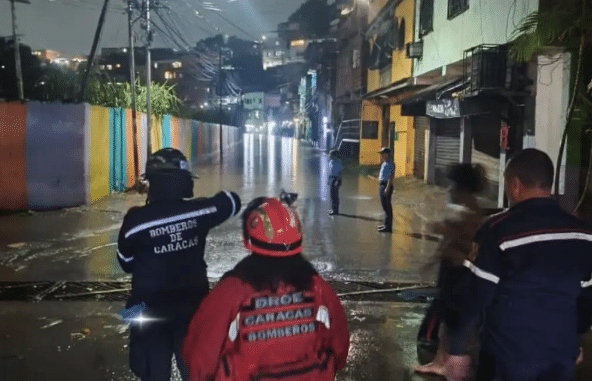
Full version: President Delcy Rodríguez Orders Activation of the Civil Protection System in Response to the Impact of Heavy Rains
Israel and Turkey Trade Accusations Over Syria
An official video by the office of Israeli Prime Minister Benjamin Netanyahu about the “Turkish security threat” in Syria has sparked a wave of mockery and criticism. The video was intended to justify Israel’s strike on the Abu al-Duhur air base, showing maps and data on the movements of Turkish troops. However, analysts and journalists viewed the publication as an attempt to create a new external enemy and divert attention from Israel’s domestic problems.
Doron Spielman, a spokesperson for Netanyahu’s office on international media, claimed that Turkey allegedly intends to expand its military presence at Abu al-Duhur air base in northern Syria. He compared the territories controlled by the various sides, asserting that Turkey is present in approximately 5% of Syria, while Israel controls 0.1% of its south. The Israeli side also accused Turkish President Recep Tayyip Erdoğan of seeking to expand his “aggression” against Israel in Syria and warned that it would not allow Ankara to advance toward its borders.
Turkey’s Directorate of Communications rejected this version of events, calling the statements by Netanyahu’s office “nonsense devoid of historical facts and political seriousness.” Ankara said the claims represented “cheap politics” intended to strengthen Netanyahu’s position domestically and conceal his responsibility for war crimes. Turkey warned that artificially declaring it a new threat could create serious risks for regional and global peace.
Journalists and observers also questioned the maps and information featured in the video. According to journalist Rina Netjes, Israel’s claims are completely inaccurate: Turkey’s military presence in northern Syria has declined significantly compared with the period before December 2024. Other commentators accused Israel of manipulating maps to justify strikes on Syria, pointing to the withdrawal of Turkish forces from several bases in the Afrin area. The distances shown in the video also prompted particular irony, as did its references to Israeli control over the Golan Heights, which much of the international community considers occupied Syrian territory.
Researchers believe that the English-language video, produced in the style of American analytical materials, may have been aimed primarily at US security circles and intended to influence Turkish-American relations over Syria. Tensions between Ankara and Tel Aviv intensified after the strikes on Abu al-Duhur: Israel claims that a Turkish military mission was located there, while Turkey denies this and promises to defend Syria and its territorial integrity. Against this backdrop, Ankara requested an international arrest warrant for Netanyahu in a case in which he is accused of genocide, while the United States urged the sides to engage in dialogue and exercise restraint.
Comments on the News
What is the strategic significance of Abu al-Duhur air base, and why is its location in northern Syria important to Turkey’s and Israel’s interests? — Abu al-Duhur air base is located in Idlib province and can be used to deploy troops, conduct reconnaissance and strikes, and control transport routes in northwestern Syria. The area is important to Turkey because of its proximity to the Turkish border, the presence of armed groups, and the risk of new refugee flows. For Israel, northern Syria matters as part of its broader rivalry with Iran and forces aligned with it. However, the base’s direct impact on Israel depends on who controls it and what weapons are stationed there.
How has Turkey’s military presence in the Afrin and Idlib areas changed since December 2024, and which forces actually control these territories? — Since December 2024, Turkey’s presence should be assessed separately from the control exercised by local forces. Turkey retains influence through military observation posts, bases, advisers, and support for allied formations, but it does not necessarily exercise full direct control. In Afrin, Turkish-backed Syrian armed groups play the leading role, while in Idlib control is divided among various local forces, including structures linked to Hay’at Tahrir al-Sham. The situation on the ground can change rapidly.
Why do the Golan Heights have a special status under international law, and how does the dispute over the territory’s ownership affect Israel’s statements about Syria’s borders? — The Golan Heights are considered occupied Syrian territory: Israel seized most of the region in 1967, and in 1981 the UN Security Council declared Israel’s decision to extend its laws there null and void. Most countries do not recognize the Golan Heights as part of Israel. Consequently, Israeli statements about Syria’s borders are viewed in the context of the ongoing territorial dispute and do not alter the internationally recognized position that the territory’s final status must be determined by agreement.


Full version: Official Israeli video about the “Turkish threat” in Syria sparks criticism
News 22-08-2026
Strike on Abu al-Duhur: Israel Sets Limits on New Syria’s Power
The Israeli strikes on the Abu al-Duhur military airfield east of Idlib were not only a preemptive attack but also an attempt to determine what military capabilities would be acceptable for the new Syria. Although the airfield has not been used for several years and no active air operations are taking place there, Israel apparently sought to destroy its potential future significance—above all, the possibility of rebuilding aviation infrastructure that could eventually pose a threat.
The attack marked a notable expansion of Israel’s operational zone: it was the first strike in the far north of Syria, approximately 70 kilometers from the Turkish border. It came several hours after a Turkish military delegation visited the airfield. Israeli sources claimed that Ankara planned to establish a military base there, but Syrian and Turkish officials denied this. Against the backdrop of Israeli Prime Minister Benjamin Netanyahu’s harsh rhetoric toward Turkey and President Recep Tayyip Erdoğan, the strike was a direct signal to Ankara.
Abu al-Duhur forms part of a broader Israeli campaign that began after the fall of Bashar al-Assad’s regime on December 8, 2024. Since then, according to the data cited, Israel has carried out more than 480 airstrikes and approximately 900 ground incursions into Syrian territory. The targets included facilities linked to the restoration of military infrastructure and Syrian-Turkish cooperation, including the Tiyas Air Base near Palmyra and Hama Military Airfield. At the same time, Israel has expanded its areas of control and established new military positions, seeking not merely to contain threats but to shape a reality on the ground that serves its interests.
Israeli policy has been accompanied by statements describing Syria as an “expanded Gaza” and asserting that confrontation with it is inevitable. Some Israeli officials have already referred to Syrian President Ahmed al-Sharaa as Israel’s “next enemy.” According to the authors of the article, Netanyahu’s government is distributing strikes across several fronts in order to ease restrictions on expanding the war and strengthen the prime minister’s position ahead of the October elections, with the support of far-right forces.
Damascus, by contrast, is attempting to present itself as a party interested in stability, reconstruction and the establishment of state institutions. The Syrian authorities are avoiding direct military action, taking part in indirect negotiations mediated by the United States and seeking a security agreement, while rejecting Israeli conditions as a form of surrender. Following the strikes, Syria continued its diplomatic and legal efforts, condemning the attacks through international channels and seeking support from Arab, regional and other international partners.
For Turkey, the strike posed a threat to its national security. U.S. envoy Thomas Barrack called the attack an “unjustified escalation” and warned that Syria could become a flashpoint between two U.S. allies—Israel and Turkey. According to him, a coordination mechanism is being established to prevent further incidents; Turkey, however, was not notified of the strike in advance. Ankara said it would continue its determined cooperation with the Syrian government and would not allow the country to be destabilized.
Despite the tensions, a direct military confrontation between Turkey and Israel is unlikely: its cost would be too high, given Israel’s military capabilities, Turkey’s NATO membership and its close ties with the United States. Nevertheless, the strike demonstrates the desire of Israel’s right wing to reshape Syria according to its own security perceptions and prevent its recovery. After more than 14 years of war, Syria needs a chance to rebuild its state. Its new leadership will therefore likely continue pursuing a pragmatic policy, rely on Arab countries and friendly partners, contain Israeli aggression and strengthen cooperation with Turkey.
Comments on the News
What is the strategic significance of the Abu al-Duhur airfield for controlling northwestern Syria, and why is its location near the Turkish border important to Israel and Turkey? — Abu al-Duhur airfield is located in Idlib province and could serve as a base for intelligence gathering, troop transfers and control of the roads connecting Idlib, Aleppo and central Syria. Its proximity to Turkey is particularly important for Ankara: the site would allow it to support allied forces more quickly and influence security in the border area. For Israel, the airfield’s significance is mainly connected to the possibility of monitoring the movements of Iranian, Syrian or other armed formations; direct Israeli military presence there has not been confirmed.
What does Syrian-Turkish military cooperation look like after the fall of Bashar al-Assad’s regime, and what specific Turkish interests could be linked to the restoration of airfields? — Following Assad’s fall, cooperation, according to open-source reports, includes contacts with Syria’s new authorities, training and advisory activities, security coordination and the possible restoration of military infrastructure. Ankara is interested in preventing the strengthening of Kurdish armed groups along its border, facilitating the return of Syrian refugees, expanding its own influence and creating a manageable security system in northern Syria. Restored airfields could facilitate supply operations, surveillance and the rapid movement of forces, although specific agreements concerning individual sites require confirmation.
What role do the Tiyas Air Base, Hama and other former Syrian army facilities play in the current balance of power in Syria, given the presence of various foreign forces? — These sites remain important hubs for logistics, surveillance and air support. Tiyas in central Syria is particularly important because of its location between desert areas and major cities; Hama is significant for controlling the central-western axis and transport routes. Their actual role depends on who physically controls the bases and whether their infrastructure can be restored. Russian, Turkish, American, Israeli and other forces pursue different objectives, so the airfields may be used as elements of deterrence, supply and efforts to combat extremist groups rather than as parts of a unified national system.
Who is Ahmed al-Sharaa, how did he come to lead Syria after Assad’s fall, and how firmly does his government control the country and its armed formations? — Ahmed al-Sharaa is a Syrian Islamist political and military leader formerly known as Abu Muhammad al-Julani. He headed Hay’at Tahrir al-Sham, an organization that emerged from the former structures of Jabhat al-Nusra. Following the opposition forces’ offensive and the fall of Assad’s regime, his movement became the core of the new authorities. However, the government’s control cannot be considered fully consolidated: autonomous armed groups, Kurdish forces, local formations and foreign military forces remain present in various regions. Al-Sharaa’s authority therefore depends not only on formal state institutions but also on his ability to reach agreements, integrate armed groups and preserve the country’s territorial unity.

Full version: احتمالات المواجهة الثلاثية في سوريا.. الشام يتحضر لأمر عظيم
US Eases Restrictions on Telecommunications Deals with Venezuela
The US Treasury Department, through the Office of Foreign Assets Control (OFAC), has issued General Licenses No. 61 and No. 62, authorizing the supply of technology products and services to Venezuela’s telecommunications sector. The authorization applies, among others, to the National Telecommunications Commission (Conatel) and the state-owned telephone company Cantv. It covers operations necessary for the installation, maintenance, repair, modernization, operation, and technical support of telecommunications systems, carried out from the United States or by US persons. At the same time, contracts with the Venezuelan government must comply with the laws of an individual US state or another US jurisdiction, while any disputes arising from such agreements must be heard in the United States, the United Kingdom, France, or Singapore.
Full version: Estados Unidos autoriza operaciones de telecomunicaciones con Cantv y Conatel
Arab and Muslim Countries Condemn Israeli Strikes on Syria
Twelve Arab and Muslim countries have strongly condemned Israeli airstrikes on the Abu al-Duhur military base in northwestern Syria. In a joint statement, the foreign ministers of Qatar, Algeria, Jordan, Palestine, Lebanon, Somalia, Saudi Arabia, Türkiye, Indonesia, Malaysia, Mauritania and Pakistan called the attack “a dangerous escalation” and a blatant violation of Syria’s sovereignty, security, stability and territorial integrity.
The statement’s authors expressed serious concern over the continuing strikes on Syrian territory and infrastructure. They said such actions hinder the restoration of security, state institutions and the country as a whole, while aggravating the humanitarian consequences of the war. They warned that further violations could increase regional tensions and undermine the norms of international law, calling on the international community to ensure compliance with the 1974 disengagement agreement and the withdrawal of Israeli forces from the occupied territories.
Robert Ford, a former US ambassador to Syria, said that Türkiye and Israel had entered into a competition for influence in Syria. In his assessment, the government of Benjamin Netanyahu is interested in keeping Syria weak and seeks to limit the restoration of its military capabilities, as well as Türkiye’s military presence. Ford warned that the rivalry could develop into an unintended confrontation—for example, if an Israeli strike hit a Turkish unit and Ankara retaliated. He urged Washington to act as a mediator immediately and establish the parties’ “red lines.”
Ford also noted that Syrian President Ahmed al-Sharaa is capable of maneuvering politically and diplomatically between Türkiye and Israel, but needs international support and effective mediation. In his view, Syrian-Turkish ties could strengthen in the coming years in the areas of trade, energy and infrastructure reconstruction. At the same time, he stressed the need to address Israel’s security concerns urgently: a lack of regular contacts could lead to a sudden escalation between Israel and Türkiye.
Israeli aircraft carried out several strikes on the runway at the Abu al-Duhur base in Idlib province early Tuesday, seriously damaging its infrastructure. Sentinel-2 satellite images taken before and after the attack, on August 17 and 19, recorded five impact sites, signs of fires and destruction along the runway, on the taxiways and in the construction area east of the airfield. As a result, the restoration of the base was effectively derailed. Israel claimed that Syria had come close to violating previous security arrangements by allowing Türkiye to deploy forces at an airbase near Aleppo.
Comments on the News
What is the strategic significance of Abu al-Duhur airbase for control over Idlib province and neighboring areas, given its proximity to zones of Turkish and Syrian military presence? — Abu al-Duhur airbase is located in southeastern Idlib province and is important as a hub for supplies, troop transfers and monitoring routes between Idlib, Aleppo and Hama. Control of the base helps exert pressure on armed groups in Idlib and protect approaches to government-held areas. However, the base itself does not provide full control over the province: the situation depends on Turkish observation posts, local armed forces and ceasefire agreements.
What does the 1974 disengagement agreement provide for, and which Syrian territories does the international community consider occupied by Israel? — The 1974 agreement created a disengagement zone in the Golan Heights, separated Syrian and Israeli forces and imposed restrictions on the deployment of troops in adjacent areas; UN forces monitored compliance with the arrangement for many years. The international community, with the exception of Israel, considers the Golan Heights—Syrian territory captured in 1967—to be occupied by Israel. Israel’s annexation of the territory has not been recognized by the UN. This does not refer to all of Syrian territory.
How could the possible deployment of Turkish forces at a Syrian airbase near Aleppo be connected to the rivalry between Ankara and Israel and to previous security arrangements? — Such a deployment could expand Türkiye’s ability to monitor and support operations in northern Syria while creating an additional deterrent for Israel. Ankara and Jerusalem are competing for influence in post-conflict Syria, although their interests and contacts are changing. The deployment of Turkish forces would also require coordination with the Syrian authorities and consideration of Russian and US interests; it could complicate previous arrangements for preventing clashes and coordinating military operations, especially if Turkish infrastructure were located near Israeli operational zones.
Full version: 12 دولة تدين "بشدة" الغارات الإسرائيلية على مطار أبو الظهور بسوريا
International Criticism of Trump’s Policies
The focus is on the consequences of American leadership under Donald Trump: criticism of Washington’s alleged failures and controversial decisions, concerns over its role in tensions surrounding Iran, and calls for a tougher stance toward the Nicaraguan government led by Daniel Ortega. The discussion also addresses U.S. influence over strategic resources and political transitions in various regions. The material was prepared based on publications by La Sexta and Facebook users in Venezuela.
Sanctions Against Iran and a U.S. Court: A Venezuelan Reading of Events
The escalation between the United States and Iran, along with the decision by U.S. Supreme Court Chief Justice John Roberts to temporarily allow the Donald Trump administration to continue construction of a ballroom at the White House, may be perceived in Venezuela’s information space as interconnected manifestations of American coercive policy—both abroad and at home. In both cases, attention is drawn to the limits of executive power, sovereignty, the role of the courts, and Washington’s economic priorities.
In an international report published by the Spanish outlet laSexta, based on reports from Reuters, EFE, and Europa Press, the central theme was a new wave of U.S. pressure on Tehran. In Caracas, threats to impose “the toughest sanctions in history” on Iran and its trading partners inevitably evoke parallels with the long-standing restrictions Washington has imposed on Venezuela’s oil industry, financial operations, and state institutions.
U.S. Treasury Secretary Scott Bessent’s statement in this context is particularly revealing: “either you are with us, or you are against us.” Warnings that countries purchasing Iranian oil, making money transfers, or participating in maritime transportation could face punishment may be viewed as more than simply a measure against Tehran. For Venezuela, they appear to signal to states seeking to maintain independent foreign trade rather than follow U.S. political demands.
Iranian authorities called the American campaign “economic terrorism” and a crime against civilians. This assessment is close to Caracas’s official rhetoric, which regularly characterizes U.S. sanctions as “unilateral coercive measures” that violate international law and primarily affect the daily lives of ordinary people. Tehran’s statements that the pressure will not break the country’s “independence, national sovereignty, and interests” therefore resonate especially clearly in Venezuela’s political context.
The situation surrounding Iran is also important to Venezuela for economic reasons. The rise in the price of Brent crude above $93 a barrel shows how strongly tensions around the Strait of Hormuz can affect the global energy market. For an oil-producing country, high prices may mean increased potential export revenues. However, this effect is accompanied by serious risks: higher insurance and transportation costs, shipping restrictions, the threat of secondary sanctions, and tighter control over supply routes.
U.S. statements about “full control” of the Strait of Hormuz, blockades, and the interception of commercial vessels may cause particular concern. For Venezuela, which has already faced sanctions against PDVSA, restrictions on fuel supplies, and pressure on tanker transportation, this looks like an example of military and financial power being used to control strategic energy flows. Under such conditions, the short-term benefit of expensive oil may be nullified by worsening opportunities for independent trade.
At the same time, the laSexta report itself contains no comments from Venezuelan politicians, experts, or government representatives. It is an international news report, not a piece about Caracas’s position. The Venezuelan dimension arises mainly through context: the policy of maximum pressure against Iran recalls mechanisms that Venezuela views as economic warfare and interference in the sovereign affairs of states.
A similar critical undertone may also emerge from a U.S. domestic political story shared by the Venezuelan account NX Noticias. U.S. Supreme Court Chief Justice John Roberts temporarily suspended the effect of lower-court rulings, allowing the Trump administration to continue construction of a ballroom at the White House. The project is estimated to cost $400 million.
For an audience in Venezuela, this story may be more than a procedural dispute over the renovation of the presidential residence. The fact that the Supreme Court chief effectively neutralized the practical effect of lower-court decisions is presented as a temporary victory for the executive branch in its conflict with judicial constraints. The central question becomes how effectively American institutions can restrain the president when political or symbolic initiatives are at stake.
The $400 million price tag is also significant. Against the backdrop of American rhetoric about democracy, fiscal responsibility, and humanitarian crises in Latin American countries, spending on a ballroom at the presidential residence may be perceived as a contrast between publicly proclaimed principles and the actual priorities of the U.S. political elite. For some Venezuelan viewers, it becomes an illustration of the privileges of power.
The NX Noticias post also contains no direct statements from Venezuelan officials, politicians, or experts. But its selection of details—Trump’s name, Roberts’s involvement, the suspension of lower-court decisions, and the project’s cost—creates a critical subtext. In Venezuela’s regional debate over institutional independence, the story may be used to challenge the image of the United States as an unquestionable model of institutional democracy.
Thus, the news about sanctions pressure on Iran and construction at the White House concerns different spheres, but in the Venezuelan reading the two stories are united by a common theme. The first raises the question of whether states have the right to trade oil independently, conduct financial operations, and determine their foreign policy without risking external punishment. The second highlights contradictions within the American system itself—between the executive branch, the courts, and public statements about democratic standards.
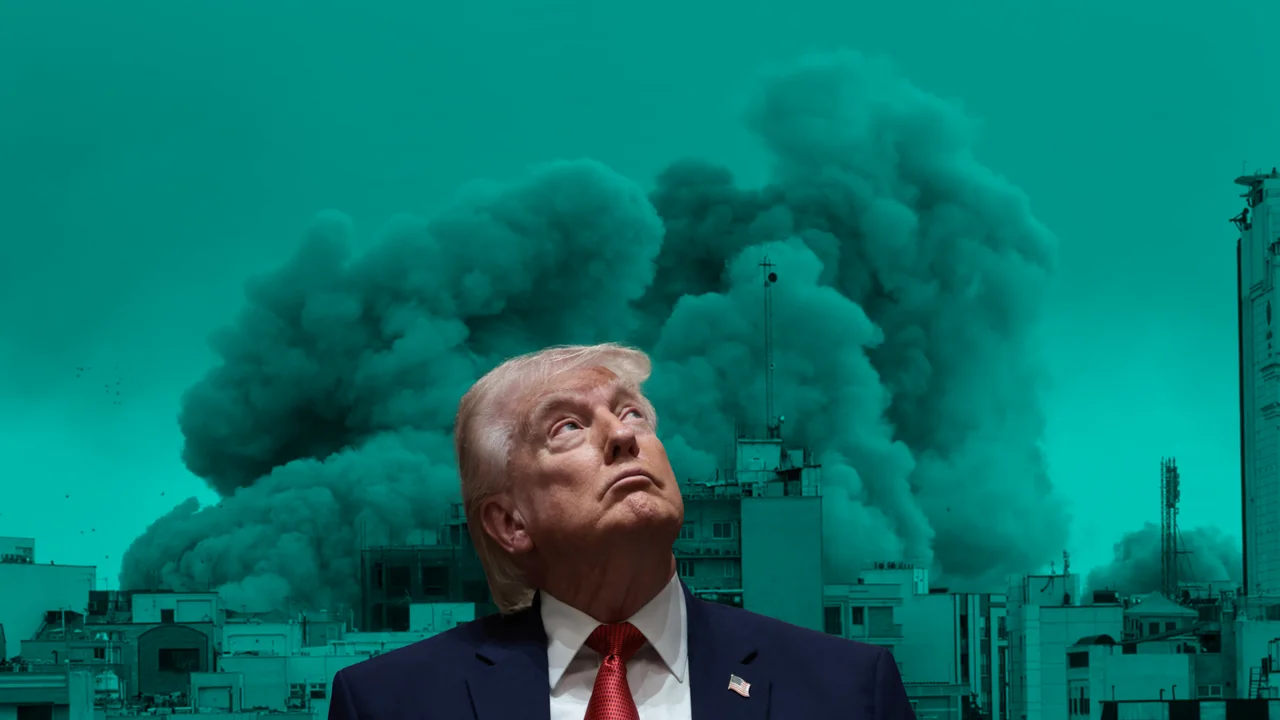

News 21-08-2026
Syrian Foreign Minister’s Visit to Pakistan First in 19 Years
Syrian Foreign Minister Asaad al-Shaibani arrived in Islamabad at the head of a high-level delegation. The two-day official visit marked the first trip by a Syrian foreign minister to Pakistan in nearly two decades. During talks with his Pakistani counterpart, Muhammad Ishaq Dar, the two sides emphasized the deep “fraternal ties” between the two countries.
The foreign ministers discussed the state of bilateral relations, possible areas for expanding cooperation, as well as regional and international developments. Following the one-on-one meeting, expanded talks involving the delegations are planned. Al-Shaibani is also expected to meet with Pakistani Prime Minister Shehbaz Sharif and other senior officials.
The visit comes amid Islamabad’s strong condemnation of the Israeli strike on Abu al-Duhur military airfield in Syria’s Idlib province. Pakistan once again declared its support for Syria’s sovereignty and territorial integrity. The last visit by a Syrian foreign minister to Pakistan took place in 2007, when Walid Muallem visited the country; a Pakistani delegation, for its part, traveled to Damascus in June last year.

Full version: First visit in 19 years: Syrian foreign minister arrives in Pakistan
Venezuela May Lead the Region in Economic Growth
The United Nations Economic Commission for Latin America and the Caribbean (ECLAC) forecasts that Venezuela’s economy will grow by 6.5% in 2026—the highest rate in the region. Nicaragua follows with 4.5%, Panama with 4.4%, Paraguay with 4.3%, and Guatemala and the Dominican Republic with 4% each.
ECLAC notes that some countries will maintain relatively dynamic growth, while others will continue to face sluggish development. Overall, Latin America is posting average growth of around 2.3% for the fifth consecutive year—insufficient to significantly increase per capita incomes or reduce the development gap.
According to the organization, the region will maintain the macroeconomic stability it has achieved but will develop less actively. A partial recovery could raise overall growth to 2.5% in 2027, although substantial differences between countries and subregions will remain.
Full version: ECLAC estimates Venezuela will have the highest economic growth in Latin America
Israel Intensifies Pressure on Syria over Turkey’s Role
Tensions in Syria are rising amid Israeli strikes on military facilities and disagreements over Turkey’s presence and its support for Damascus. Israeli Prime Minister Benjamin Netanyahu said his country would not tolerate a Turkish military presence that could threaten Israel. His remarks came after eight airstrikes hit the runway of the Abu al-Duhur military airbase in the eastern part of Idlib province, damaging the facility’s infrastructure.
Political analyst Mahmoud Alloush believes Israel’s actions are aimed not only at preventing the possible deployment of Turkish forces at the base. In his view, Israel is seeking to prevent the rebuilding of a new Syrian army, extend its demand for disarmament from the south of the country to all of Syria, and influence relations between Damascus and Ankara. Israel views Turkish assistance to the Syrian authorities as a threat and is effectively offering Syria a choice: accept its vision for the country’s future or face the consequences of cooperation with Turkey.
According to Alloush, Israel is trying to draw Syria and Turkey into a broader confrontation on Syrian territory. Damascus, however, has no interest in war. President Ahmed al-Sharaa has warned of attempts to impose a conflict on the country that does not serve its interests. The Syrian leadership is relying on diplomatic channels and is ready to discuss a security agreement with Israel. Nevertheless, negotiations that have continued for around a year and a half repeatedly reach an impasse after each new escalation of Israeli military activity.
Alloush believes Damascus is unlikely to accept demands that limit its military potential or strategic ties with its partners, above all Turkey. In his assessment, Israel is unable on its own to determine the structure of the Syrian army or the foreign alliances of the new state. Further developments could lead either to a revision of the rules governing the confrontation between Israel, Syria and Turkey, along with intensified behind-the-scenes contacts, or to a more complex escalation that would be difficult to stop.
Military expert Nouar Kabakibo says Israel’s current policy is systematic and began in December 2024 with an expansion of strikes on Syrian military facilities. Ground incursions, the establishment of bases and other violations on the ground followed. Initially, the main area of pressure was southern Syria; in March 2025, Israel also attacked and disabled the airfields at Palmyra and Tiyas (T4). The latest justification for new strikes has been the Turkish presence, while any incident—for example, the interception of a weapons depot or shipment allegedly bound from Syria for Lebanon—could be used to substantiate claims of a threat to Israeli security.
Kabakibo believes Israel is thereby sending Turkey a signal that it is prepared to attack any facility it considers dangerous, including targets near the Turkish border or in areas historically associated with Ankara’s influence. The expert also warned that Netanyahu continues to act contrary to US restrictions. According to him, the United States may try to reduce the scale of Israeli strikes or deal with their consequences, but it is not always capable of preventing the operations. As an example, he cited the 2007 strike on a Syrian nuclear facility in Deir ez-Zor, carried out by Israel despite the absence of US support.
Comments on the News
Why are the Palmyra and Tiyas airfields of such strategic importance for controlling airspace and moving forces in central Syria? — The Palmyra and Tiyas (T4) airbases are located in central Syria, between the coast, Damascus, the desert and the Euphrates Valley. They make it possible to control air routes over vast desert areas, rapidly deploy troops and equipment, support operations against ISIS* and protect communications routes leading to the east of the country. Tiyas is also important as a major military hub with runway infrastructure and supply facilities.
What is Turkey’s current military presence in Syria, and on what grounds does Ankara support the Damascus authorities? — Turkey maintains a military presence mainly in northern Syria: at bases and observation posts, as well as through support for allied Syrian formations in areas under its de facto control. Ankara justifies its policy on national-security grounds—above all, countering Kurdish formations that it links to the Kurdistan Workers’ Party, combating terrorism, preventing a new wave of refugees and creating conditions for their return. At the same time, the extent and form of its support specifically for the Damascus authorities depend on the particular political period. Turkey may support dialogue with the Syrian government without abandoning its own military leverage or security demands along the border.
What was the Syrian nuclear facility in Deir ez-Zor that Israel struck in 2007, and why does the episode still influence regional calculations? — It was a facility under construction in the al-Kibar area on the banks of the Euphrates. In 2011, the International Atomic Energy Agency stated that the site was probably an almost-completed nuclear reactor intended to produce plutonium. Syria denied that the facility had a military purpose and did not grant inspectors full access. Israel destroyed the facility in September 2007 and officially confirmed the operation only in 2018. The episode remains significant as an example of a preemptive strike against a suspected nuclear program, a demonstration of Israel’s readiness to act independently, and a warning to Iran and other states in the region about the consequences of covert military nuclear construction.


Full version: Messages of Fire to Ankara: Where Is Israel’s Syrian Adventure Heading?
Trump’s Escalation Against Iran Raises Alarm
Reactions to U.S. policy toward Iran largely reflect concern over intensifying economic and military pressure. Tehran rejects the “economic war” announced by Washington, while regional reports warn of the risk of conflict and retaliatory actions. Commentators describe the U.S. policy as a failure in the Middle East that could affect oil markets and shipping, while also pointing to growing pressure on China and uncertainty surrounding the U.S. military presence in the region. This material is based on YouTube and Facebook posts (Venezuela).
U.S. Sanctions on Iran Heighten Venezuela’s Concerns Over the Oil Market
Venezuelan and Latin American media view the latest tightening of U.S. measures against Iran not only as another escalation in the confrontation between Washington and Tehran, but also as a threat to global energy stability. In this interpretation, the sanctions affect oil exports, international payments, shipping, cargo insurance, and the trade ties of third countries, particularly China, India, and Pakistan.
As reported by Canal 26, the United States announced a new package of restrictions against Iran, which Washington described as “the toughest sanctions in history.” Their stated aim is to reduce Tehran’s revenues, complicate its financial and trade operations, and intensify pressure on countries maintaining energy ties with Iran. China occupies a particularly important place in this campaign: in Caracas, the U.S. demand that Beijing join the restrictions is seen as a signal that the risks of secondary sanctions are expanding to any partner of sanctioned states.
Venezuela is particularly sensitive to this issue, as it has itself faced U.S. restrictions for many years in the oil sector, finance, international payments, and access to markets. For Caracas, sanctions are not an abstract diplomatic mechanism but a factor affecting export revenues, equipment imports, foreign-currency earnings, and the state’s ability to finance social spending. Pressure on Iran is therefore viewed as a continuation of the already familiar model of economic coercion against countries pursuing a foreign policy independent of the United States.
A teleSUR post says that Iran rejected the economic war announced by U.S. President Donald Trump and warned of “huge global consequences.” Iranian Foreign Minister Abbas Araghchi called Washington’s actions “economic terrorism,” stressing that they threaten not only Iran’s sovereignty but that of other states as well.
For Venezuelan audiences, this wording echoes Caracas’s official rhetoric. Venezuelan authorities and media close to them have repeatedly described unilateral U.S. restrictions as extraterritorial pressure aimed at changing the political course or leadership of countries deemed unfriendly. In this context, Iran is not merely the target of sanctions but a state whose experience reinforces Venezuela’s argument that sanctions are an instrument of geopolitical control.
The oil market is a particular source of concern. Iran and Venezuela possess large reserves and export potential, but both countries have suffered the consequences of restrictions on their energy sectors. Sanctions can lead to the redistribution of supplies, higher transportation and insurance costs, more complicated payments, and greater caution among banks, traders, and shipping companies. Such processes affect not only the target countries but also oil importers, global prices, and fuel availability.
In a DNews report, the Trump administration’s actions are described as the “most destructive economic war” against Iran. Under this interpretation, the threat may extend beyond Iranian organizations to foreign companies, banks, airports, and government institutions maintaining ties with Tehran. This is especially important for Venezuela: pressure on buyers, carriers, and financial intermediaries working with Iran could increase overall business caution toward Venezuelan oil as well.
The report also links the sanctions escalation to tensions surrounding the Strait of Hormuz, one of the key routes for global energy supplies. Brent crude rising above $90 a barrel demonstrates how quickly political and military risks in the region affect the global market. Reports of oil being transported at night through a “safe corridor,” amid an overall decline in traffic, indicate that economic pressure is being accompanied by the effective militarization of energy routes.
High oil prices could theoretically expand Venezuela’s export opportunities, given that the country has the world’s largest proven oil reserves. However, existing sanctions, logistical constraints, and financial restrictions prevent Caracas from automatically benefiting from higher prices. Limited access to buyers, insurers, shipping fleets, banking services, and technology remains a serious obstacle.
Latin American sources also draw attention to the cost of escalation for the United States itself. The DNews report mentions gasoline costing more than $4 a gallon, inflation risks, and U.S. government debt exceeding $40 trillion. In this view, sanctions policy harms not only the intended target but also American consumers and the global economy.
At the same time, the report notes that Trump says he has no immediate intention of launching a military operation, while simultaneously tightening economic restrictions against Iran. Venezuelan media see a contradiction here: formally, the issue is sanctions, but their consequences are already affecting maritime-route security, global energy prices, and U.S. relations with the largest Asian oil importers.
Thus, Venezuela’s reaction to the sanctions against Iran centers on three interconnected issues: the defense of sovereignty, solidarity among countries subject to restrictions, and concerns about the stability of the global oil market. From this perspective, U.S. measures against Tehran extend far beyond the Middle East, affecting trade with China, the operation of the international financial system, fuel prices, and the position of all exporters whose economies depend on oil.

![#GuerraIran #EstrechoDeHormuz #Petroleo[00:00] 🔥 Donald Trump announces the “most destructive economic war” against Iran, rejecting the possibility of negotiations or withdrawal ...](https://i.ytimg.com/vi/Ia0zUBQvm_A/maxresdefault.jpg)
News 20-08-2026
Israeli Strike on Airbase in Idlib Sparks New Wave of Debate
Political and public discussions intensified after an Israeli strike on the Abu al-Duhur military airbase in eastern Idlib province, Syria. The escalation coincided with a dispute over a statement by a Syrian diplomatic source denying the existence of any security agreement between Damascus and Israel. Israel, for its part, said it carried out the strike to prevent the possible deployment of Turkish military forces at airbases near Aleppo.
The Syrian diplomat stressed that reports of a secret agreement with Tel Aviv were untrue. The remarks sparked anger among Syrians, many of whom accused Israel of using unverified claims to justify strikes and interference in the country’s internal affairs. Social media users also said that Syria remains a sovereign state and has the right to conclude defense agreements with any partners if it deems this necessary to protect national security.
Hussein al-Sharaa, the father of Syrian President Ahmed al-Sharaa, said that the ongoing Israeli attacks were undermining the country’s stability, hindering its recovery and weakening its military capabilities. He said Damascus’s restraint was motivated by international considerations and the task of rebuilding the state, rather than by weakness. He also stressed that Syrians were ready to form combat forces within a short period and said that the Israeli-occupied Golan Heights must be returned.
Analysts link the escalation to four obstacles facing Israeli Prime Minister Benjamin Netanyahu’s policy: the strengthening of Syrian state institutions; the rapid development of Syrian-Turkish military cooperation; differences between Netanyahu’s approach and that of US President Donald Trump’s administration toward Damascus and Ankara; and the expansion of US-Turkish cooperation in the region. According to this assessment, the strikes may be aimed less at changing the rules of confrontation than at slowing new regional developments.
Comments on the News
What strategic role does the Abu al-Duhur airbase play in controlling eastern Idlib and the approaches to Aleppo? — The Abu al-Duhur airbase has important operational value because of its location between eastern Idlib, southern Aleppo province and parts of central Syria. It could potentially be used to station aircraft and drones, conduct reconnaissance, transport troops and provide supplies. Control of the base helps monitor routes to Aleppo and armed groups in Idlib. However, its actual value depends on the condition of its infrastructure, the availability of air-defense systems and the ability to hold the surrounding areas.
How could Syrian-Turkish military cooperation affect Turkey’s presence at former Syrian airbases and the balance of power in northern Syria? — Such cooperation could lead to the creation of joint observation posts, force training and the limited deployment of Turkish military personnel or equipment at selected facilities. This would strengthen Ankara’s influence and allow it to coordinate border control, operations against armed groups and logistics. At the same time, a Turkish presence at Syrian airbases could provoke opposition from Damascus, Russia, Iran and Kurdish forces. It would therefore most likely depend on political agreements and be limited or implemented in stages.

Full version: How did the president’s father and Syrians respond to Israel’s claims about the security situation?
Enrique Márquez to Present National Accord Plan
Venezuelan politician Enrique Márquez will officially present the “Pact for Venezuela” initiative on August 20 at a press conference at the JW Marriott hotel in the El Rosal district of Caracas. According to the organizers, he will explain the project’s goals and main provisions, aimed at reaching nationwide agreements, creating guarantees to stabilize the country, and restoring its institutions. Márquez believes the initiative should strengthen governance through reinstitutionalization and dialogue among various political forces, ensuring a peaceful transition toward democratic normalization.
Full version: Enrique Márquez to present the
Israel Steps Up Military Activity in Southern and Other Parts of Syria
Israeli forces entered the Syrian village of Jabata al-Khashab in the northern part of Quneitra province at dawn on Wednesday and detained two young men. After searching the area, they withdrew toward the border zone. At the same time, new incursions and artillery shelling were reported in Daraa province and west of Damascus, prompting Syrian authorities to warn of the consequences of further escalation.
The raid followed an overnight Israeli shelling of the Wadi Abidin area in the Yarmouk River basin in western Daraa. Israeli bulldozers also carried out clearing work in the Ash-Shahar forest near Jabata al-Khashab, while other units advanced toward Batt al-Warda hill near Beit Jinn in the western part of Damascus province. These actions formed part of an ongoing buildup of Israel’s military presence in southern Syria.
Israel Defense Forces Chief of Staff Eyal Zamir visited units operating in Syrian territory and discussed an assessment of the situation with military personnel. He said Syria was one of the areas where the challenges were changing, and stressed Israel’s readiness to use force to prevent hostile forces from being deployed near its borders. The previous day, Israeli aircraft carried out eight strikes on the runway of the abandoned Abu al-Duhur military airfield in Idlib province, damaging the infrastructure.
The Syrian Foreign Ministry sent two identical notes to the United Nations condemning the attack on the airport and demanding an immediate end to the violations, full compliance with the 1974 Disengagement of Forces Agreement, and the withdrawal of Israeli troops from territories occupied after December 8, 2024, as well as from the entire occupied Golan Heights. Israel says its operations are aimed at preventing hostile forces from being deployed near the border. After the fall of Bashar al-Assad’s government in December 2024, Israel expanded its strikes: they had previously focused mainly on facilities belonging to pro-Iranian groups, but later came to include weapons and missile depots, as well as strategic military positions across Syria.
Comments on the News
How does the 1974 Disengagement of Forces Agreement regulate the military presence of Syria and Israel in the Golan Heights area, and what role does the UN play in ensuring compliance? — The 1974 agreement created a buffer zone between Israeli and Syrian forces in the Golan Heights and established limited-force zones on either side, where troop numbers, weapons, and military infrastructure are regulated. Compliance is monitored by the United Nations Disengagement Observer Force (UNDOF), which patrols the buffer zone, verifies adherence to the terms, and reports to the UN Security Council. However, the peacekeepers are not an independent military force capable of compelling the parties to comply; they depend on the parties’ cooperation and on their UN mandate.
Why are the Yarmouk River basin, Quneitra province, and the Beit Jinn area of particular strategic importance for controlling Syria’s southern border? — These areas form an important belt along Syria’s borders with Israel and Jordan. The Yarmouk basin controls water resources, valleys, and approaches to the three countries; Quneitra directly adjoins the disengagement line in the Golan Heights and serves as a key area for surveillance and military operations; Beit Jinn lies near the approaches to southwestern Damascus and makes it possible to control routes between the capital region, the Golan Heights, and the country’s southern areas. Control of these regions affects border security, the supply of troops, and the ability to deploy armed formations.

Full version: Israeli messages from southern Syria... Zamir on a field tour after shelling and arrests
News 19-08-2026
Israel Strikes Abu al-Duhur Military Airfield in Syria
On the night of Tuesday, August 18, Israeli aircraft carried out eight strikes on the runway of the Abu al-Duhur military airfield in the eastern part of Idlib province, a Syrian military source said. According to the source, the facility’s infrastructure was damaged, but there were no deaths or injuries. Syrian media described the attack as the first on the airfield since the fall of the former regime.
Syria’s Foreign Ministry condemned the operation as “unjustified aggression” and a gross violation of the country’s sovereignty and territorial integrity. The ministry said that Israeli attacks had continued since December 8, 2024, despite Damascus’s efforts to avoid escalation. Syria called on the international community and the UN Security Council to condemn the strikes and demand that Israel comply with international law.
US Special Envoy for Syria Tom Barrack expressed deep concern and described the attack as an unnecessary escalation that did not contribute to regional stability. He stressed that the government of President Ahmed al-Sharaa did not take a hostile position toward Israel and had repeatedly called for tensions to be reduced. Barrack said Washington would continue arranging diplomatic contacts between the parties.
Qatar, Saudi Arabia, Jordan, Turkey and Egypt also condemned the strikes. These countries demanded an end to the violations, accountability for Israel and respect for Syria’s sovereignty. Turkey said the attacks were damaging Syrian infrastructure and military capabilities. According to Al Jazeera, the aircraft entered Syrian airspace through Lebanon and attacked the airfield located between Aleppo and Idlib provinces.
Abu al-Duhur was heavily damaged during the war, captured by the opposition in 2015 and returned to the control of the former Syrian army in 2019, but it never resumed operations. Analysts believe the latest strike could be a signal to Turkey, as the airfield lies within its traditional sphere of influence, as well as an attempt to prevent the restoration of Syria’s air force. In recent years, Israel has regularly struck military facilities, weapons depots and airfields in Syria, particularly since the fall of Bashar al-Assad’s regime.
Comments on the News
Why did Abu al-Duhur airfield fail to resume operations despite being returned to the control of the Syrian army in 2019, and what significance could it have for restoring Syria’s air force? — Returning the airfield to army control did not automatically mean that it would be restored. The facility likely requires demining, runway repairs, and the restoration of power supplies, navigation, communications, hangars and air-defense systems. Its operation is also complicated by the proximity of unstable areas of Idlib and a shortage of operational aircraft, fuel, spare parts and trained personnel. In the future, Abu al-Duhur could become a reserve airbase and a key facility for rebuilding the Syrian air force, but its importance will depend on security, funding and outside support.
What does “Turkey’s traditional sphere of influence” mean in the area between Aleppo and Idlib, and why could a strike on a facility in this area be viewed as a signal to Ankara? — This is not necessarily territory officially recognized as belonging to Turkey, but rather an area where Ankara retains significant political, military and economic influence through its armed forces, allied Syrian groups, border structures and humanitarian ties. A strike on a facility there could therefore be perceived not only as an operation against a specific target, but also as a demonstration of readiness to operate in an area Turkey considers strategically important. Such a move could warn Ankara, test its response or increase pressure on it, although by itself it does not prove an intention to begin a direct confrontation.
How have the fall of Bashar al-Assad’s regime and the arrival of Ahmed al-Sharaa’s government changed Syria’s relations with Israel, Turkey and the United States? — The transfer of power has altered the diplomatic configuration but has not eliminated the main contradictions. Israel is likely viewing the new situation primarily through the lens of security: preventing hostile armed groups from gaining strength, controlling border areas and protecting the Golan Heights. The risks of clashes and mutual distrust remain. For Turkey, the new government may be a more acceptable partner, particularly on security, refugee returns and control over northern Syria, although disputes over influence and Kurdish forces remain. The United States may shift from a policy of pressure on the former regime to conditional engagement with the new leadership. Support will depend on counterterrorism efforts, the protection of minorities, the creation of inclusive institutions and relations with US partners in northeastern Syria.


Full version: Targeting Abu al-Duhur Airport: Syria Accuses Israel, US Envoy Calls It Unjustified Escalation
Venezuela’s Economy Grew 7.14% in the Second Quarter of 2026
According to the Central Bank of Venezuela, the country’s GDP increased by 7.14% in the second quarter of 2026 compared with the same period last year. The main driver of growth was the oil industry: its activity rose by 9.1%, indicating a sustained acceleration in operations in the sector that is crucial to the economy. Non-oil activity also showed positive momentum, growing by 5.79%, supported by foreign-currency sales to manufacturing companies and closer interaction among various segments of the economy. Growth is taking place amid expanded access for private and international capital to the oil, mining, and electricity sectors, as well as cooperation between Caracas and Washington that began after January. Venezuela has thus extended its streak to 21 consecutive quarters of year-on-year growth.
Full version: Venezuelan GDP Increased 7.14% in the Second Quarter of 2026
Damascus Court Sentences Wasim Assad to Death
On Tuesday, the Damascus Criminal Court sentenced Wasim Assad to death after finding him guilty of war crimes and crimes against humanity. According to the court, he created and controlled armed groups that carried out killings, torture and extrajudicial executions of civilians in Eastern Ghouta and its surrounding areas during the rule of the former regime. The trial took place במסגרת transitional justice, with the participation of state bodies, the prosecution, the defense and human rights organizations. The court stressed that such crimes are not subject to a statute of limitations.
The investigation established that in 2011, Assad coordinated his actions with officers from the 4th Division and formed two armed groups within the auxiliary forces. He supplied them with weapons, ammunition, food and money, and directed their activities. The groups were particularly active in the town of al-Malihah: after shelling, they took up positions, looted homes and shops, and then sold the stolen goods at specially established markets. Assad’s subordinates also abducted civilians, tortured them and executed detainees, whose bodies were discarded in the gardens of al-Malihah.
The presiding judge, Fakhr al-Din al-Aryan, said that one protected witness survived after revealing his religious affiliation. The court regarded the episode as evidence that religion had been used to select victims and that the killings had been committed on the basis of identity. Assad was found directly responsible for intentional killings accompanied by exceptional cruelty and torture. He was additionally sentenced to three years for intentionally causing injuries resulting in permanent disability and three years for fraud; however, the final punishment was the death penalty as the most severe sanction.
The court acquitted Wasim Assad on charges of smuggling and drug trafficking because of a lack of sufficient direct material evidence. In particular, photographs showing him with suspects were not considered, by themselves, grounds for a conviction. If new evidence emerges, the prosecution may reopen the case. The court also maintained the seizure of the defendant’s property, converting it into an enforceable attachment, and ordered him to pay compensation to recognized claimants, while leaving the rights of other victims and the relatives of those killed unrestricted.
The convicted man’s remaining assets, after compensation has been paid and obligations settled, are to be confiscated for the benefit of the state. The court extended witness-protection measures and prohibited disclosure of the witnesses’ identities and places of residence, keeping the information in sealed records. A copy of the ruling was sent to the National Authority for Missing Persons to assist in the search for the remains of victims who are believed to have been buried in the gardens of al-Malihah.
The court said it had relied on the principle of interaction between national justice and international criminal law, classifying the acts as war crimes and crimes against humanity. This allowed it to reject any possible appeals to statutes of limitations, immunity or amnesty. A representative of the National Authority for Transitional Justice confirmed that the death penalty remains legal in Syria and that courts are not authorized to abolish or suspend it. Wasim Assad, Bashar Assad’s cousin, was arrested on June 21, 2025, at the Syrian-Lebanese border. He had previously been linked to abductions, looting, extortion, and networks involved in the production and smuggling of Captagon.
Comments on the News
What was the Syrian army’s 4th Division, and what role did it play in suppressing the uprising after 2011? — The 4th Division was an elite military formation that was among the government’s most loyal units. It was commanded by Maher Assad, Bashar Assad’s brother. The division had heavy weapons and carried out missions considered particularly important to the regime. After the uprising began in 2011, it was deployed to areas affected by protests and fighting. It took part in city sieges, offensive operations and the suppression of the opposition, often alongside other security structures and allied forces.
Why were Eastern Ghouta and the town of al-Malihah strategically important during the fighting around Damascus? — Eastern Ghouta was a large agricultural and suburban area east of Damascus controlled by various armed groups. Its proximity to the capital allowed the opposition to threaten government facilities and key transport routes, while for the authorities, control of the area was essential to protecting Damascus and its surroundings. Al-Malihah was particularly important as a hub on the southern approaches to the capital: roads and supply lines ran through it, and control of the town helped government forces divide opposition-held areas, advance toward Eastern Ghouta, and secure military facilities and the airport.
How is Syria’s National Authority for Missing Persons organized, and how can it use court materials to search for victims’ remains? — The National Authority for Missing Persons is being established as a state body responsible for centrally collecting information on people who disappeared during the war, maintaining a unified register, accepting claims from families, coordinating exhumations and the identification of remains, and cooperating with courts and international organizations. Court materials may contain witness testimony, security-service documents, photographs, maps, coordinates, and information about detention sites and burial grounds. By comparing these data with archives, satellite imagery, relatives’ testimony and the findings of forensic examinations, the authority can identify probable burial sites and the identities of those killed. This requires the body to be independent, witnesses to be protected, and evidence to be preserved so that the search for remains does not become a politically controlled process.

Full version: Syrian Criminal Court Rules to Execute Wasim Assad
News 18-08-2026
How Syria–Lebanon Relations Changed: From Mandate to New Agreements
Modern Syrian–Lebanese relations were shaped to a great extent during the French Mandate. In 1920, France created two separate entities, proclaiming the State of Greater Lebanon and incorporating the coast, the Bekaa Valley, and the southern districts into the former Mount Lebanon. The legal separation was formalized by the Mandate documents of 1922, Lebanon’s 1926 Constitution, and the treaties of 1936. At the same time, supporters of Syrian and Arab nationalism continued to advocate the unity of historic Syria. In 1943, Lebanon adopted the National Pact, combining the country’s independence with its “Arab face.” After French and British troops withdrew in 1946, relations began to develop between two independent states with an inherited and incompletely demarcated border.
In the following years, economic and political differences between the countries grew. In 1950, after negotiations on common interests and a single currency failed, they completed a full customs and economic separation. During the 1958 Lebanese crisis, internal divisions in Lebanon and concerns about the influence of the United Arab Republic led to US intervention and a Syrian–Egyptian–Lebanese agreement reaffirming Lebanon’s independence. The 1969 Cairo Agreement legalized Palestinian armed activity from southern Lebanon, and in 1970 the Palestine Liberation Organization’s leadership moved there. This became one of the factors that led to the 1975 civil war between the right-wing Christian camp and the left-wing Muslim bloc allied with the PLO.
In June 1976, the Syrian army officially entered Lebanon at the request of President Suleiman Frangieh and a number of Christian politicians seeking to prevent a victory by leftist forces. In October of that year, Syria’s presence received Arab cover במסגרת the Arab Deterrent Force. After the Syrian–Christian alliance broke down in 1978 and Israel invaded in 1982, Syria reduced its area of presence to the Bekaa Valley and northern regions, while also supporting the creation of Hezbollah together with Iran. In 1987, Syrian troops returned to West Beirut, and the 1989 Taif Agreement provided for their redeployment to the Bekaa Valley. However, on October 13, 1990, Syrian forces seized East Beirut, overthrew Michel Aoun’s government, and established full control over the country.
The Treaty of Brotherhood, Cooperation and Coordination, signed in 1991, cemented Syria’s influence over Lebanese politics, personnel appointments, and foreign relations. In 1998, with Damascus’s support, Emile Lahoud became president. After Israeli forces withdrew from southern Lebanon in 2000, demands for the withdrawal of Syrian forces intensified. Bashar al-Assad’s regime pressured former Prime Minister Rafik Hariri and the opposition, contributing to the adoption of UN Security Council Resolution 1559 in 2004, which called for the withdrawal of foreign troops, the disarmament of armed groups, and an end to interference in elections. Following Hariri’s assassination in February 2005, the Cedar Revolution began, and in April the last Syrian soldier left Lebanon.
Syria’s withdrawal led to a victory for the March 14 Alliance, but tensions with Damascus persisted. The 2006 war and the May 2008 clashes deepened the confrontation between the March 14 forces and the March 8 bloc allied with Syria and Iran. In October 2008, Syria and Lebanon established official diplomatic relations for the first time since gaining independence. Saad Hariri’s visit to Damascus in 2009 was an attempt at reconciliation, but its results were limited. After the Syrian uprising began in 2011, Lebanon became divided over the conflict and received large numbers of refugees, while Hezbollah announced in 2013 that it was intervening militarily on the side of Assad’s government. The policy of non-intervention failed to isolate Lebanon from the war.
The border became a complex security and trading zone. In 2017, Operation Dawn of the Outskirts targeted the Islamic State and Jabhat al-Nusra, while in 2018 Syrian government forces restored control over a significant part of the border areas. Lebanon’s economic crisis and the US Caesar Act of 2019 disrupted trade and transit, while simultaneously expanding the illicit trade in fuel, goods, currency, and drugs. After Syria returned to the Arab League in 2023, limited contacts resumed on refugee and border issues. Following the fall of Assad’s regime on December 8, 2024, Syria’s new authorities declared their respect for Lebanon’s sovereignty. In March 2025, the countries signed an agreement on security coordination, border control, and the start of border demarcation. In 2026, officials continued exchanging visits, discussing the fate of prisoners, missing persons, and disputed sections of the border. However, security problems, smuggling, and regional interference remain.
Comments on the News
How did the historical concept of “Greater Syria” influence Syrian and Lebanese nationalists’ attitudes toward the border created by the French Mandate? — The idea of “Greater Syria” was based on the belief that Syria, Lebanon, Palestine, and Jordan formed a single historical and geographical space. Consequently, many Syrian nationalists regarded the border drawn by the French Mandate authorities after World War I as an artificial division. Lebanese nationalists, particularly supporters of an independent Lebanon, viewed that border instead as the foundation of the country’s sovereignty. This difference preserved mutual distrust and made the border issue part of a broader dispute over national identity.
Why did the 1969 Cairo Agreement become so important in strengthening the PLO’s role and subsequently changing the balance of power in Lebanon? — The agreement allowed the Palestine Liberation Organization (PLO) to conduct armed operations against Israel from areas of southern Lebanon and granted it substantial autonomy in the Palestinian refugee camps. Although Lebanon’s sovereignty was formally preserved, the state lost some control over the south of the country. The PLO became an independent military and political actor, and its presence heightened tensions among Lebanon’s communities and became one of the factors contributing to the civil war that began in 1975.
What role do disputed sections of the Syrian–Lebanese border, particularly in the Shebaa area, play today in relations between Damascus, Beirut, and Hezbollah? — The Shebaa Farms area is used by Hezbollah to justify continuing its armed struggle against Israel: the movement considers the territory Lebanese and maintains that it remains under Israeli occupation. The UN generally treats Shebaa as part of the Golan Heights, whose status is linked to the Syrian–Israeli conflict rather than viewing it as unequivocally Lebanese territory. Syria supports Lebanon’s position, but for a long time it did not formalize it through complete and unambiguous internationally recognized documentation. As a result, the dispute enables Damascus to maintain influence over Lebanese politics, while allowing Hezbollah to justify retaining its weapons. For Beirut, it remains an issue of sovereignty and diplomatic pressure on Israel.


Full version: Chronology of the Key Milestones in Syrian–Lebanese Relations
6,438 people killed after earthquakes in the country
Jorge Rodríguez, president of Venezuela’s National Assembly, published a weekly report on the aftermath of the earthquakes and the progress of recovery efforts as of August 17. According to official figures, 6,438 people were killed, while rescuers retrieved and assisted 6,462 victims in areas where buildings had collapsed and landslides had occurred. Hospitals and other medical facilities provided care to 86,358 people, ranging from patients who received first aid to those who underwent surgery or received outpatient treatment.
In the affected areas, 59,109 homes were inspected: 34,680 were deemed habitable, 13,733 were approved for use with restrictions, and 10,696 were classified as high-risk. A total of 335 homes have already been handed over to families left without housing. Meanwhile, municipal crews have removed 528,222.30 metric tons of construction debris—25.15% of the amount scheduled for removal during the current phase of reconstruction. Heavy machinery is being used to clear streets and restore main access routes.
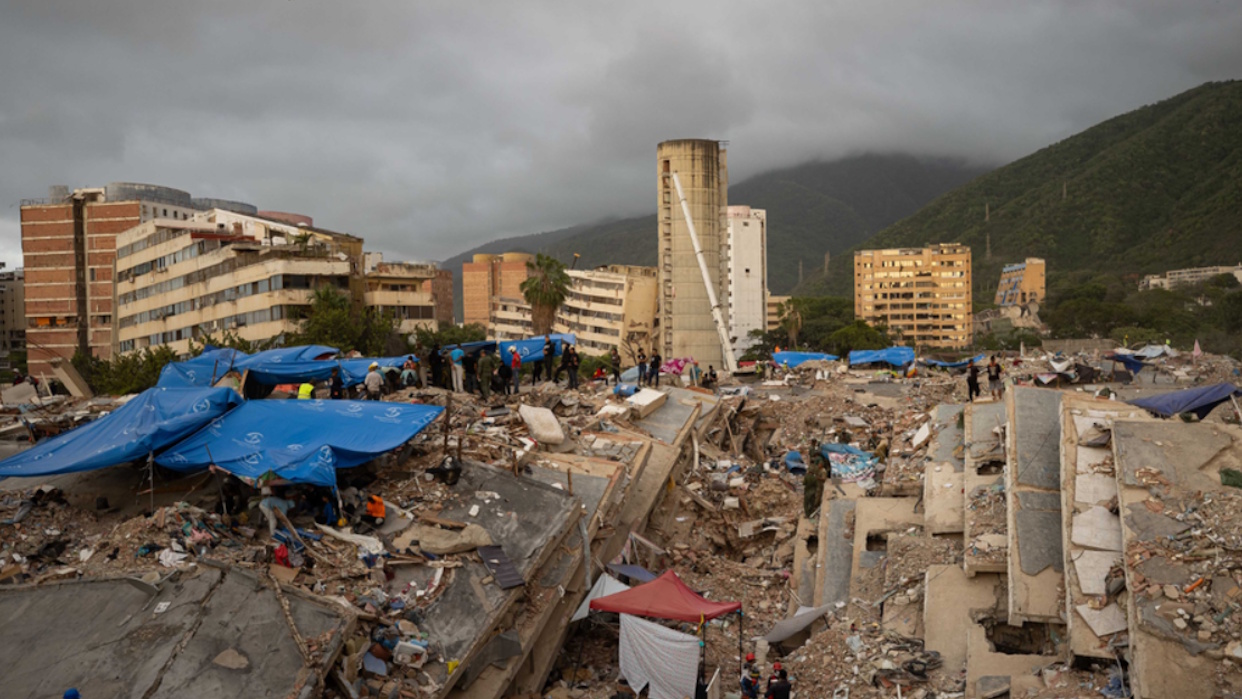
Full version: Jorge Rodríguez reports 6,438 dead in weekly toll after double earthquake
Syria’s Recovery Acceleration Discussed in Istanbul
Syrian Foreign Minister Asaad al-Shaibani met in Istanbul with Tom Barrack, the US special envoy for Syria and Iraq. The sides discussed strengthening bilateral relations, recent developments in the region, and priorities for Syria’s economic recovery. Particular attention was given to completing the process of lifting sanctions on the country and speeding up the reconstruction of its destroyed infrastructure.
This was not the politicians’ first meeting: in June, they also discussed the development of Syrian-US ties and efforts to stabilize the region. According to a World Bank assessment published in October 2025, rebuilding Syria after the destruction accumulated between 2011 and 2024 will require approximately $216 billion. This amount is about ten times the country’s GDP, underscoring the scale of the economic and infrastructure challenges facing Syria.

Full version: Meeting in Istanbul: Al-Shaibani discusses speeding up Syria’s reconstruction with Barrack
News 17-08-2026
Israeli forces conduct raid in Daraa and detain local residents
According to the official Syrian television channel Al-Ikhbariya, Israeli soldiers entered the village of Abidin in western Daraa province in approximately ten vehicles on Monday morning and detained several young men. No further details about the size of the unit or the circumstances of the detentions have yet been reported.
The raid took place amid Israel’s ongoing operations in southern Syria. A day earlier, Israeli forces searched several villages in Quneitra province, set up a temporary checkpoint in the village of Saida al-Jolan, and checked passersby. Local sources also reported that five military vehicles entered the village of Jabata al-Khashab and that one of the houses was searched; Israeli military aircraft were also seen flying over the region.
The day before that, Israeli units entered the Yarmouk River basin, moving from the Tal Abu al-Ghayzar area toward the village of Jamla. Eight vehicles took up positions on a bridge near the village of Saysun amid residential neighborhoods, while soldiers periodically opened fire toward the Maaria Valley. These events formed part of a months-long escalation in southern Syria involving raids, the detention of civilians, and the establishment of military posts. Following the fall of Bashar al-Assad’s government in December 2024, Israel announced that it was ending the 1974 disengagement agreement and established control over the buffer zone.
Full version: Al-Ikhbariya al-Suriya: Occupation forces advance into western rural Daraa and abduct young men
Venezuela Reports 21 Consecutive Quarters of Economic Growth
Venezuelan President Delcy Rodríguez said the country’s economy has grown for 21 consecutive quarters. According to her, the recovery is being supported by a sustained increase in food consumption, a revival in trade, and the development of local production chains. In the first half of the year, food consumption rose by 9.6%: demand for protein products increased by 11.8%, demand for grains and other cereals by 4.78%, and demand for fats by 6.99%.
Speaking at the opening of a Mercal store in Caracas, Rodríguez called for efforts to be coordinated among the agribusiness sector, the communal economy, and entrepreneurs. She also stressed the importance of expanding supplies of Venezuelan products to the markets of Caribbean countries. The president highlighted increased production of fish, pork, buffalo meat, eggs, poultry, rice, corn, and vegetables, linking it to the goal of strengthening food independence and supplying the domestic market.

Full version: Delcy Rodríguez said Venezuela’s economy had recorded 21 consecutive quarters of growth
Detainees’ Condition Sparks Public Outcry in Syria
The cases of two young Syrians—Muhammad Gmeira and Abdel Salam Akko—have sparked widespread outrage following reports of a sharp deterioration in their health during or after detention. The cases have once again drawn attention to conditions in detention facilities, respect for detainees’ rights, and access to medical care in prisons and police stations. Citizens have demanded that the circumstances be established and that all those responsible for violations be held accountable.
According to Muhammad Gmeira’s family, the young man was summoned to a police station in the city of Al-Haffah, Latakia province, over a financial complaint. He suffered from hemophilia, a disorder affecting blood clotting. Relatives claim that he arrived at the station in stable condition and was able to speak, but that his condition sharply deteriorated several days later. The family also said he may have been beaten despite warnings about his serious illness. Gmeira was later transferred to Latakia University Hospital, where an examination revealed a brain hemorrhage.
According to the same account, the young man’s condition deteriorated further after three cardiac arrests. He remains unconscious in the intensive care unit. Latakia’s head of internal security, Brigadier General Abdel Aziz al-Ahmad, said the competent authorities were examining the case and the circumstances of the detention. He said a special commission had been formed to investigate the matter, and that legal measures would be taken against anyone whose guilt or abuse of authority was confirmed.
Abdel Salam Akko, 24, was released after spending approximately a year in Hama Central Prison. Syrian media reported that he had been detained in a case related to drug trafficking. According to published reports, he suffered from a serious chronic illness and was severely emaciated; he was taken several times for treatment and emergency care in the presence of relatives. The prosecution agreed to release him after his health deteriorated.
Both cases prompted intense discussion on social media. Journalists and human rights activists demanded that justice be restored, those responsible be held accountable, and violence against detainees be prevented. The Interior Ministry announced an official investigation, while representatives of the security and medical authorities visited Gmeira in hospital and said he had been provided with medication and the necessary treatment. Attention is now focused on the investigations’ findings: they are expected to show whether the violations were the actions of individual employees or evidence of deeper problems in the treatment of people in custody.
Comments on the News
What are the powers and actual role of the special commission formed to investigate Muhammad Gmeira’s case, and can it operate independently of the officers who worked at the Al-Haffah station? — A special commission usually gathers statements and documents, establishes the circumstances of what happened, and submits its findings to senior officials or the prosecution. Its actual independence, however, depends on its composition, powers, and chain of command. If it includes representatives of the same security agencies, its ability to investigate the actions of officers at the Al-Haffah station may be limited. An independent investigation requires access to detainees and case materials, witness protection, the ability to question police officers, and the mandatory transfer of evidence to the prosecution or a court.
How is medical care organized in Syrian prisons and police stations, and who is responsible for ensuring emergency treatment for detainees with illnesses such as hemophilia? — At a police station, primary responsibility lies with the facility’s management and the officers responsible for holding detainees; in a prison, it lies with the penitentiary administration and prison medical service. When a person’s life is at risk, they must call a qualified doctor, provide the necessary medication—including clotting factors for hemophilia—and immediately take the person to hospital if necessary. In practice, access to treatment in Syria is often hindered by shortages of medication, procedural violations, and the absence of independent medical oversight.
What judicial and oversight mechanisms in Syria allow relatives and human rights defenders to seek accountability for torture, negligence, or denial of medical care to detainees? — In formal terms, complaints may be filed with the prosecution, courts, and internal oversight bodies of the relevant security agency, as well as through lawyers and official statements by relatives. It is possible to request a medical examination, the registration of deaths or injuries, and an investigation into officials’ conduct. However, such mechanisms often fail to ensure an independent and effective investigation, particularly when the accused belong to influential agencies. Human rights defenders therefore usually also collect medical records, witness statements, and other evidence for international accountability mechanisms.

Full version: From prison to hospital: Gmeira and Akko cases spark anger in Syria—what happened?
Latin America Amid the U.S. Military Escalation
Venezuela’s agenda is focused on the region’s reaction to mounting U.S. military pressure and the conflict involving Iran. Iranian officials are demonstrating their readiness for confrontation, warning of possible restrictions in the area of the Strait of Hormuz and describing the conflict with Washington as existential. At the same time, Donald Trump’s decisions and the U.S. role in global politics are being critically assessed, while Latin America is debating relations with Washington, issues of sovereignty, visa restrictions, and the domestic consequences of U.S. actions. This material is based on publications on Instagram and the Escambray website (Venezuela).
Latin America Debates the Cost of an Alliance with Washington
Two international stories—the reduction of U.S.–South Korean military exercises and Colombia’s appeal to the United States for assistance after an earthquake—are being given broader political significance in Latin American media. They are linked by questions about how stable Washington’s decisions are, how external alliances affect national economies, and whether humanitarian policy is being replaced by geopolitical calculations.
According to a Bloomberg Línea post, Donald Trump ordered a “substantial” reduction in joint U.S.–South Korean exercises. The president explained the decision by citing the high cost of the drills and the fact that they sent North Korea an “inappropriate signal.” At the same time, Trump spoke positively of North Korean leader Kim Jong Un, saying that Pyongyang had shown “respect” for the United States.
For a Venezuelan audience, this story extends beyond the Korean Peninsula. In a country that has faced U.S. sanctions, diplomatic pressure, and threats of further restrictions for many years, the reduction in large-scale military activity may be seen as evidence that displays of force are not an immutable feature of Washington’s policy. As the Korean example shows, security decisions may depend on a president’s political will, negotiating tactics, and financial calculations.
Particular attention is drawn to the combination of the military step with Trump’s positive comments about the North Korean leadership. This approach highlights a personalized and pragmatic style of diplomacy: a state considered an adversary of the United States may become a participant in direct dialogue when the political circumstances change. For Caracas, this echoes longstanding calls for negotiations without preconditions, sanctions pressure, or threats to use force.
The argument about the cost of the exercises also has an important economic dimension. For Venezuela, where oil revenues, the budget, sanctions, and international trade are closely tied to foreign policy, it serves as a reminder that U.S. strategy is determined not only by ideology or security concerns but also by domestic financial interests. Bloomberg Línea, however, does not cite comments from Venezuelan officials or experts: the regional interpretation is based primarily on the selected emphases—the cost of the exercises, the “inappropriate signal” to North Korea, and the respectful description of Kim Jong Un.
The discussion surrounding Colombia was no less revealing in this context. In an article by the Cuban publication Escambray, Colombian President Abelardo de la Espriella appeals to Trump to temporarily lift the 12.5 percent tariffs on Colombian goods. The reason cited is the need to support businesses after a magnitude 7.4 earthquake.
The Colombian leader also thanked the United States for sending rescue teams and promising $26.5 million in aid. He described the alliance with Washington as “an imperative for the reconstruction” of the country. Escambray, however, views this formulation critically, suggesting that humanitarian and economic policy may be made dependent on the government’s foreign-policy preferences.
From a Venezuelan perspective, the contradiction is particularly striking: even a state oriented toward close cooperation with the United States is forced to seek trade concessions when U.S. tariffs exacerbate the consequences of a domestic crisis. For Caracas, which traditionally describes sanctions and financial restrictions as a form of economic aggression, this may support the argument that political proximity to Washington does not guarantee economic security.
The article also raises the question of how neutrally the Colombian authorities distribute and accept international aid. It notes that Bogotá highlights assistance from the United States, Israel, Ecuador, and Peru, while critics speak of an “ideological bias.” Senator Ariel Ávila put the criticism bluntly: “Refusing aid because of ideology is unacceptable and is evidence of an indifferent government in which politics takes precedence over humanity.”
The Israeli rescue mission became a separate topic. According to information cited by Escambray and the publication Periodistas Unidos, Israeli rescuers traveled in luxury vehicles under the protection of Cali’s municipal authorities. Meanwhile, Mexico’s “topos,” as the reports claim, worked at their own expense and relied on assistance from local residents. This contrast is used as a symbolic juxtaposition between public diplomacy involving influential allies and the practical solidarity of those directly engaged in rescue operations.
For Venezuela, such criticism has an additional historical context. The country’s collective memory retains the experience of politicized humanitarian aid, including during the confrontation on the Venezuelan–Colombian border in 2019. Consequently, reports about the selective acceptance of international assistance are perceived not merely as an organizational issue amid a disaster, but as a possible use of the humanitarian agenda to consolidate geopolitical alliances.
Both stories show how Latin American media connect U.S. decisions in Asia and the Americas with broader issues of sovereignty, sanctions, military policy, and humanitarian aid. The reduction of exercises with South Korea is viewed as a sign that diplomatic de-escalation may depend on the personal decisions of the American president. The Colombian case, by contrast, is used to criticize a model in which an alliance with Washington and certain partners becomes more important than equal access to assistance for those affected.
Within this logic, the region’s main conclusion is that neither military rhetoric nor close foreign alliances can, by themselves, ensure stability. Effective policy amid conflicts and natural disasters requires direct dialogue, economic self-reliance, and humanitarian decisions focused primarily on people rather than on the ideological affinity of allies.

News 16-08-2026
Jumblatt discusses his political path, regional conflicts and crises
In the final, 16th episode of the program “Witness of the Era,” Walid Jumblatt discussed the key events of his political life. He said that the ousted Syrian regime and Hezbollah had extensive surveillance capabilities targeting people entering Lebanon, particularly through Beirut International Airport. According to him, checkpoints existed there that made it possible to track the movements of individuals of interest to those structures.
Jumblatt spoke at length about the assassination of Wissam al-Hassan, head of the intelligence branch of Lebanon’s Internal Security Forces, on October 19, 2012. He suggested that Hassan may have been under surveillance from the time he left Paris, where he lived with his family, and that the booby-trapped vehicle had been prepared in advance. Jumblatt noted that, despite his professional experience, Hassan considered Lebanon safe for him, and admitted that his death was especially painful because of their close friendship.
The politician denied reports in the Lebanese newspaper Al-Akhbar about a secret meeting with former Hezbollah Secretary-General Hassan Nasrallah concerning the movement’s participation in the war in Syria. Jumblatt said he did not remember any such closed-door talks and that his meetings with Nasrallah had been held openly. He also confirmed that he had publicly opposed Hezbollah’s military involvement on the side of Bashar al-Assad’s government.
Speaking about the 2016 presidential election, Jumblatt explained that he supported Michel Aoun in an effort to strengthen reconciliation between the Druze and Christians, regardless of the politician’s ties to Syria and Iran. He said that the October 17, 2019 protests exceeded his expectations, transcended sectarian and regional divisions, and led to the resignation of Saad Hariri’s government. Jumblatt criticized the lack of reforms and accountability during the economic crisis and said he was ready to undergo any investigation into the sources of his wealth.
Regarding the Beirut port explosion, Jumblatt suggested that the chemical substances stored there might have been connected to the transport of materials to Syria along routes controlled by Hezbollah, although he acknowledged that he did not know the exact circumstances of the blast. He accused unnamed parties of obstructing the investigation and threatening people involved in it. Discussing the war in Gaza, Jumblatt called Hamas part of the Palestinian people, said that the October 7 attack had once again brought the Palestinian issue to the forefront, and warned of the risk of the mass expulsion of Palestinians and a new Nakba—the catastrophe associated with the mass Palestinian exodus in 1948.
Jumblatt also said that Hezbollah had gradually become drawn into a large-scale confrontation with Israel, which led to the explosions of communications devices and the killing of several of its leaders, including Hassan Nasrallah. In his view, Israel had spent years building an extensive intelligence network inside the movement, but it was impossible to destroy it completely—political and ideological approaches were needed. Speaking about Syria, Jumblatt admitted that he had not expected the Assad regime to fall so quickly at the end of 2024. He subsequently contacted President Ahmad al-Sharaa and urged him to preserve the country’s unity by linking Jabal al-Druze with Damascus. He stressed the need for accountability and reconciliation, rejected Hikmat al-Hijri’s appeal to Israel, and said that al-Hijri did not represent all Druze. Jumblatt categorically rejected any Israeli presence in Jabal al-Druze.
Comments on the news
What role does Walid Jumblatt play in Lebanese politics as a Druze leader and head of the Progressive Socialist Party, and why is his position important for relations between the Druze and Christians? — Walid Jumblatt is one of Lebanon’s most influential Druze representatives and the former leader of the Progressive Socialist Party. His political role involves defending the interests of the Druze community, maintaining a balance among Lebanon’s political forces, and participating in negotiations between rival camps. His position is important for Druze-Christian relations because, in areas where the two communities live together, political cooperation or confrontation between their leaders can directly affect stability and intercommunal trust.
What is Jabal al-Druze in southern Syria, why is the region particularly important to the Druze, and how does its connection with Damascus affect the question of Syrian unity? — Jabal al-Druze, also known as As-Suwayda Governorate, is a predominantly Druze mountainous region in southern Syria. It is especially important as a historical and cultural center for Syria’s Druze, associated with the memory of resistance to the French Mandate and the Great Syrian Revolt of 1925. Maintaining its connection with Damascus supports Syria’s formal unity, although local residents seek broad autonomy in security and governance. The region therefore simultaneously seeks to protect its distinct identity and oppose the country’s partition.
Who is Hikmat al-Hijri, and why might his appeals to Israel have caused disagreement among Syrian Druze over foreign intervention? — Hikmat al-Hijri is one of the spiritual leaders of Syria’s Druze and an influential figure in As-Suwayda. His appeals to Israel for protection or support may have been viewed by supporters as an attempt to protect the population from threats, while opponents saw them as risking foreign intervention and undermining Syria’s sovereignty. This reflects a broader division between those who consider outside assistance necessary for the community’s security and those who fear dependence on Israel and the possible weakening of Syrian unity.


Full version: Jumblatt reveals how Assad hunted his opponents inside Lebanon
More Than 1,000 Venezuelans Freed as Part of National Reconciliation
Venezuelan President Delcy Rodríguez announced that 1,046 citizens who had been detained have returned home under agreements reached among various political and social forces in the country. In a post on the social network X, she said the authorities were reaffirming their commitment to national reconciliation and intended to continue the process responsibly. According to the authorities, the prisoners’ release is aimed at strengthening political and social stability, as well as helping citizens return to normal life and reintegrate into their communities.
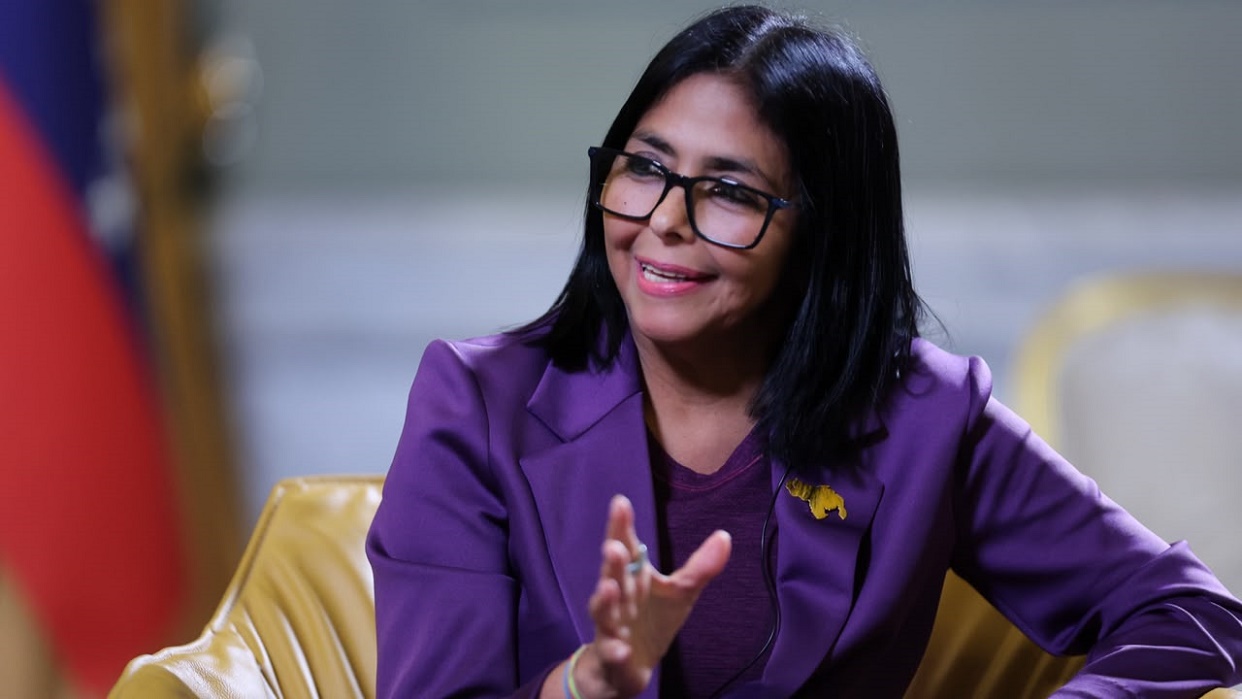
Full version: President Delcy Rodríguez Reports 1,046 Nationals Returning Home After Reconciliation Agreements
Israeli Forces Conduct New Raids in Syria’s Quneitra Province
Israeli forces again entered southern Syria and carried out searches in several communities in Quneitra province. According to local sources, five military vehicles arrived in the village of Jabata al-Khashab in the northern part of the province and searched one of the houses. A temporary checkpoint was also set up in the village of Saida al-Jolan, where passersby were checked.
Another unit of six vehicles entered the town of al-Rafid at night and searched a residential building. Reconnaissance drones were also active over the area. Local residents heard Israeli military aircraft flying over Quneitra, as well as over the southern districts of As-Suwayda province, located near the border with Jordan.
The actions followed a similar advance by Israeli forces in the Yarmouk Valley area in western Daraa province. There, eight military vehicles moved from the Tal Abu al-Ghaytar crossing toward the village of Jamla and took up positions on a bridge in the village of Saysun, amid residential neighborhoods. Periodic gunfire toward the Wadi Maaria area was also reported. The escalation in southern Syria has continued for several months and includes house raids, the detention of civilians, and the establishment of military posts. Tensions intensified after the fall of Bashar al-Assad’s government in December 2024, when Israel announced the termination of the 1974 Agreement on Disengagement and established control over the buffer zone.

Full version: Israeli forces advance into the Quneitra countryside in Syria and conduct a campaign of house raids
Latin America Responds to Trump’s Pressure
Countries across the region are reacting to Washington’s use of economic and diplomatic leverage: seeking tariff delays after a natural disaster, criticizing visa restrictions, and discussing possible countermeasures. At the same time, the United States’ expanding geopolitical claims—including statements about the strategic importance of the Strait of Hormuz—are heightening concern far beyond Latin America. The materials feature calls for dialogue, the protection of national interests, and resistance to coercive policies. This overview is based on materials from Facebook (Venezuela).
Trump Links Security and Tariffs to the Struggle for Influence
Public statements by Donald Trump contain two themes characteristic of his political course: domestic order in the United States and the use of economic pressure in foreign policy. A brief report by elEconomista.es covers the U.S. president’s appearance at a police event in New York State, where he attributed a “historic decline in crime rates” to his administration and used this argument to criticize the Democrats.
The main purpose of this rhetoric is to portray Trump as a guarantor of public order and contrast his approach with the policies of his opponents. The report provides no specific statistics, expert assessments, or reactions from Democratic representatives. Nor does it contain Venezuelan sources, politicians, or public commentary, so it cannot be regarded as reflecting the position of Caracas or Venezuelan society.
Nevertheless, such political communication may be recognizable to a Venezuelan audience. Issues involving crime prevention, the maintenance of public order, and the legitimacy of government in Venezuela, as in many countries in the region, often become central elements of political mobilization. Statements about security can be used to reinforce the image of strong leadership, consolidate support, and justify tougher state action.
At the same time, the American report does not link Trump’s remarks to Venezuela, sanctions, migration, the oil sector, or bilateral relations. It records solely the U.S. president’s domestic political position: he “attributed a historic decline in crime rates to himself” and directed this claim against the Democrats.
A different context appears in an international report by the Venezuelan publication Macronews, which focuses on a new escalation in the U.S.–China trade confrontation. The publication says that the White House is accusing Chinese exporters of using Mexico, Canada, and more than 40 other countries to evade U.S. tariffs through transshipment and changes in supply routes.
According to the U.S. side, Asian goods entering the American market through Mexico or Canada may receive “unlawful preferential advantages,” harming U.S. industry and the manufacturing sector. The report provides no legal evidence of the alleged schemes, does not specify the categories of goods involved, and contains no responses from Mexico, Canada, or China. However, its presentation highlights the risk to international production and logistics chains.
For Latin American countries, the issue is particularly sensitive because Mexico is one of the region’s largest manufacturing and transportation hubs. Tighter controls over the origin of products, shipping routes, and intermediary transactions could lead to additional inspections, barriers, and the threat of new tariffs for countries closely tied to the U.S. market.
In the Venezuelan context, the situation is seen as more than an ordinary dispute between Washington and Beijing. China remains an important partner for Venezuela in trade, energy, infrastructure projects, and financial and political cooperation. As a result, U.S. attempts to restrict China’s economic presence in the region may be viewed as part of a global rivalry that affects Caracas’s access to alternative markets, investment, and international connections.
The Macronews publication also draws an indirect parallel with Venezuela’s experience of sanctions. U.S. restrictions often affect not only the target country itself, but also banks, carriers, insurers, intermediaries, and companies from third countries. Against this backdrop, accusations of “triangulating” Chinese goods through Mexico and Canada may be perceived as another example of extraterritorial economic pressure: the risks arise not only for Beijing, but also for partners involved in its trade chains.
Thus, the two stories demonstrate different aspects of Trump’s policies. Within the United States, he relies on the image of a leader who ensures order and security. In the external economic sphere, the administration uses tariffs and control over access to the U.S. market as tools in its struggle with China and to influence intermediary countries. For Venezuela, the second story has more direct political and economic significance, as it affects a strategic partner and heightens regional concerns about the expansion of American restrictive mechanisms.

News 15-08-2026
UN: More than three million Syrians have returned to their areas
UN High Commissioner for Refugees Barham Salih said that since December 2024, more than three million Syrian refugees and internally displaced people have returned to their places of residence. According to him, this demonstrates Syrians’ determination to restore and rebuild their country. Following a week-long visit to Syria, he urged the international community to significantly increase its support for the country’s recovery and stabilization.
Salih stressed that Syria is undergoing a historic turning point and that recovery on such a scale is impossible without international assistance. He called on governments, financial institutions and development partners to quickly turn the return of the population into practical support—helping restore livelihoods, infrastructure and basic services while continuing to provide humanitarian assistance.
During his trip, the commissioner visited Damascus, Idlib and Aleppo, where he met with government representatives, returnees, displaced families and local communities. In Damascus, he also held talks with Syrian President Ahmad al-Sharaa, Foreign Minister Asaad al-Shaibani and other officials. UNHCR said the visit reflected its readiness to support Syria in moving from years of displacement toward recovery, the return of its people and stability. During the Syrian conflict from 2011 to 2024, millions of citizens were forced to leave their homes, with many ending up in camps in the north of the country under harsh conditions.

Full version: 3 million displaced Syrians and refugees have returned to their areas
Expert: Central Bank interventions will not stop the bolívar’s decline
José Gil Yepes, director of the Datanálisis research firm, said that the Venezuelan Central Bank’s regular injections of foreign currency into the banking system have only a short-term effect and do not address the causes of the bolívar’s depreciation. According to him, the stability of the national currency depends on growth in production, employment, productivity, competitiveness, and economic stability—not on a temporary increase in the money supply. The expert stressed that long-term stabilization requires investment and export diversification, which would reduce the country’s dependence on sharp fluctuations in global oil prices.
Full version: Gil Yepes warns that BCV interventions are insufficient to halt the devaluation
Returning to Homs: Rebuilding Homes Amid Ruins and Scarce Resources
Those returning to Homs are forced to start their lives over amid widespread destruction. In many areas, homes have been reduced to ruins: walls are damaged, floors have burned out, tiles have been torn up, and façades are covered with cracks. According to an Al Jazeera Mubasher report, varying degrees of destruction have affected 16 districts of the city, leaving its central neighborhoods in many respects resembling a ghost town.
Reconstruction is being hampered by a sharp rise in the prices of building materials and labor. Residents say material costs have increased roughly fourfold compared with the prewar period, while supply shortages and higher contractor fees have sometimes made repairing completely destroyed homes more expensive than building new housing. For many families, returning their homes to their former condition has become virtually unattainable.
At the same time, Homs has faced a sharp influx of people: between 300,000 and 400,000 residents have returned to the city, making it the leading destination in Syria in terms of the scale of return. The infrastructure was unprepared for such a burden: the volume of household waste has risen from 700 to 1,700 tons, while the need for debris removal, water, electricity, and other basic services has increased significantly. Despite this, the authorities cannot prevent people in urgent need of housing from returning.
Residents are seeking specialists among their relatives to assess the safety of damaged buildings, while young engineers are voluntarily advising them through the Engineers’ Union. This mutual assistance reflects the city’s continuing social cohesion. Despite the enormous costs, residents are determined to rebuild their homes and maintain their ties to their old neighborhoods. For example, Khalidiya, which was almost deserted just a year ago, has once again begun receiving families and passersby.
Comments on the News
How have the war and subsequent displacement affected the structure of Homs’s neighborhoods and the return of families to districts such as Khalidiya? — The war destroyed housing and infrastructure, altered the demographic makeup of neighborhoods, and led to the prolonged displacement of residents. The return of families to Khalidiya and other districts depends on the reconstruction of homes, the availability of public utilities, security guarantees, and economic opportunities; as a result, it is taking place gradually and unevenly.
What role does the Syrian Engineers’ Union play in assessing the safety of damaged homes and coordinating reconstruction efforts? — The union takes part in the technical assessment of damaged buildings, classifying them as habitable, in need of repair, or dangerous. It may also provide engineering expertise and coordinate reconstruction efforts with government agencies, municipalities, and other organizations. However, actual reconstruction depends on funding and administrative decisions.


Full version: High Costs and Lack of Support: Two Obstacles Hindering the Renovation of Homes of Those Returning to Homs
News 14-08-2026
Israel Escalates Tensions in Southern Lebanon Despite Agreement
The Israeli army continued to violate the ceasefire agreement in southern Lebanon. On Thursday, its aircraft carried out strikes, while troops blew up and set fire to homes in the towns of Majdal Zoun and Al-Mansouri, as well as in nearby valleys. Israeli infantry units moved between Aita al-Jabal and Beit Yahoun, while drones and reconnaissance aircraft actively patrolled the areas around Baalbek, Tyre and their surroundings. Lebanese Prime Minister Nawaf Salam described the events as “systematic demolition and destruction” and a serious violation of international law.
The escalation followed a statement by Israeli Defense Minister Israel Katz that Israel intends to maintain a military presence in “security zones” in Lebanon, Syria and the Gaza Strip. During a visit to Lebanon, Katz said he had instructed the army to prepare for a prolonged presence in the region. The remarks came amid efforts by the ruling Likud party, led by Benjamin Netanyahu, to strengthen its image as the guarantor of security ahead of Israel’s parliamentary elections, scheduled for October 27.
The United States rejected the idea of a permanent Israeli military presence in southern Lebanon. A State Department spokesperson said such a policy was inconsistent with the obligations set out in the agreement and would not contribute to long-term peace and security for either country. Washington reaffirmed its support for Lebanon’s unity and sovereignty, stressing that the agreement provides for the phased redeployment of forces, contingent on verified Hezbollah disarmament and the dismantling of its military infrastructure.
Salam described Katz’s statements about keeping Israeli troops in the occupied areas of southern Lebanon as completely unacceptable. He said they contradicted the framework agreement between Lebanon, Israel and the United States. The Lebanese prime minister also welcomed Washington’s position. A new meeting between Lebanese and Israeli representatives is scheduled for early September, but the talks will take place against a backdrop of continuing attacks and mutual accusations of violating the agreement.
Lebanese Army Commander Rudolf Haykal said the armed forces would not abandon their main mission—to defend every part of the country’s territory. Speaking at a live-fire exercise in the Breital area, he emphasized that the army sought to preserve Lebanon’s security and internal stability. The military must also ensure its full deployment in the south and in parts of the Bekaa Valley, so that it becomes the country’s sole armed force in accordance with domestic decisions and international agreements.
Amid the crisis, Beirut and London signed a memorandum of understanding under Britain’s program to support Lebanon’s security. The document provides for strengthening the capabilities of the army, internal security forces, and the ministries of defense and interior; combating terrorism and criminal violence; modernizing facilities and digital infrastructure; and training personnel. Despite the agreement brokered by the United States on June 26, Israel continues the military campaign it launched on March 2. According to the figures cited, 4,335 people have been killed and 12,277 wounded; the agreement provides for a gradual Israeli withdrawal in exchange for the deployment of the Lebanese army and the disarmament of armed groups.
Comments on the News
What role does the United Nations Interim Force in Lebanon (UNIFIL) play in monitoring compliance with the agreement in the south, and why does its presence not prevent all violations? — UNIFIL monitors the situation, patrols the area, records alleged violations and helps maintain communication between the parties. However, its mandate is limited: peacekeepers are not an independent combat force, do not control the entire territory and generally operate jointly with the Lebanese army. They also depend on the parties’ political consent and therefore cannot fully prevent the actions of armed groups or retaliatory strikes.
Why are the Bekaa and Baalbek areas strategically important to the confrontation between Israel, Lebanon and Hezbollah, even though they are located far from the Lebanese-Israeli border? — The Bekaa Valley connects Lebanon with Syria and has historically served as an important route for the movement of people, weapons and material resources. Baalbek is considered one of Hezbollah’s key centers of political and social influence. Strikes or increased control in these areas could therefore disrupt supply lines and command links, even if the immediate fighting is taking place in the south.
How are responsibilities divided among the Lebanese army, the internal security forces and Hezbollah, and why is transferring control of the south to the army such a serious political challenge? — The Lebanese army is responsible for national defense and the deployment of forces in the south, while the internal security forces mainly handle policing and domestic order. Hezbollah maintains its own armed structure and security network, as well as considerable political influence. Giving the army full control of the south is difficult because Hezbollah considers its weapons necessary to deter Israel, while its opponents demand a single state monopoly on the use of force. In addition, the army faces a shortage of resources, and any attempt to disarm or displace Hezbollah could trigger an internal conflict.


Full version: Israel confirms it will remain in Lebanon amid condemnation from Beirut and a warning from Washington
Venezuela Launches New Phase of Development at Lorán Gas Field
Venezuelan President Delcy Rodríguez presided over the signing ceremony for an agreement on the second phase of a license to explore, develop and produce non-associated natural gas at the Lorán field, located in Block 2 of the Deltana Platform. The contract was signed by PDVSA Gas and an international consortium comprising Britain’s BP, the UAE’s XRG and Qatar’s UCC; Shell previously carried out the project’s first phase. According to Rodríguez, after 23 years Venezuela has been able to give new momentum to gas production at the major field, located near the Manati field off the coast of Trinidad and Tobago. The authorities expect the development of Lorán to enable the country to become a gas exporter and benefit not only Venezuela but other nations as well.
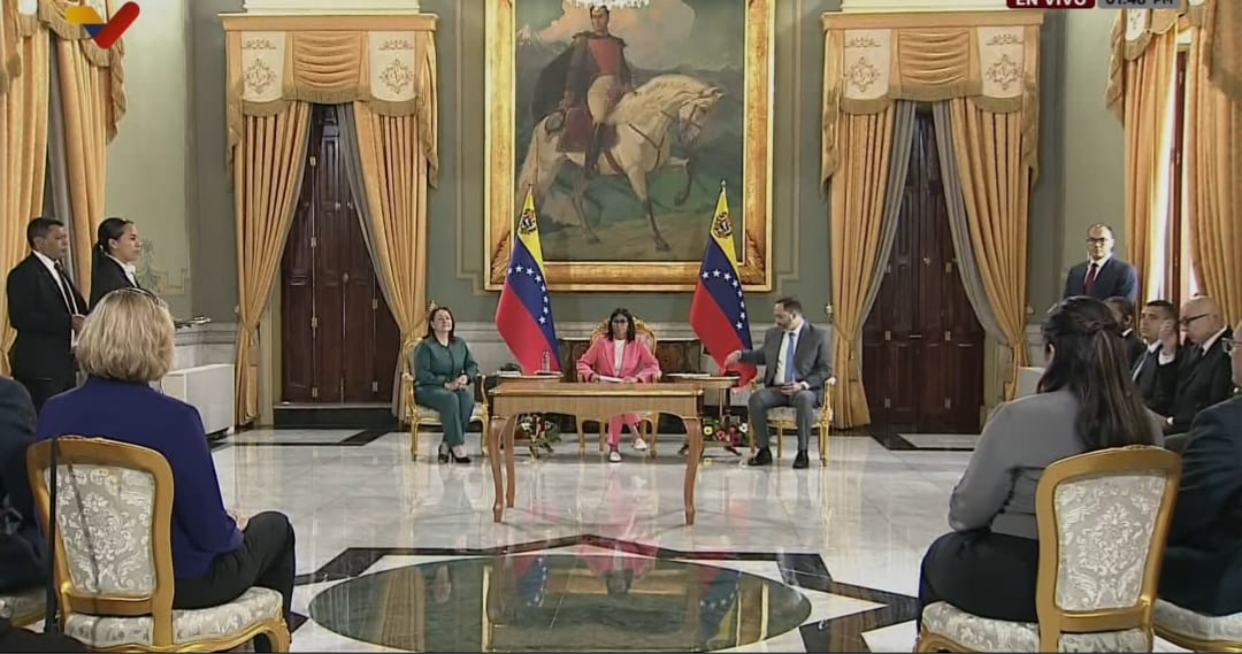
Full version: Delcy Rodríguez Signs Agreement with Three Oil Companies to Launch Second Exploration Phase at Lorán Field
Moscow and Damascus Reconsider the Format of Russia’s Presence in Syria
An agreement between Moscow and Damascus, reached after a year and a half of tense negotiations, could radically alter Russia’s military presence in the Middle East. Under the deal, Hmeimim Air Base and the naval base in Tartus are to be converted into joint training centers. This does not necessarily mean Russia will withdraw completely, but it does imply a significant reduction in its presence at two strategically important facilities that have helped expand Russian influence in the Mediterranean since 1971.
Over the next three months, the civilian facilities at Hmeimim Airport and the berths at Tartus port are expected to be transferred to the control of the Syrian government. At the same time, the parties intend to ensure the uninterrupted operation of the infrastructure. The transition period will likely pass relatively smoothly, although disagreements could arise over equipment, logistical supplies and document archives accumulated over decades.
Over the course of one to three years, the number of Russian service members is expected to gradually decline. The training centers will be able to accommodate instructors, technical specialists and a limited contingent, but not full operational forces with fighter aircraft, air-defense systems and naval units. According to Russian experts, the Russian presence could shrink from several thousand personnel to several hundred specialists.
The most significant strategic loss for Moscow would be Tartus—the only Russian naval base in the Mediterranean. Russia may try to compensate by strengthening maritime cooperation with friendly countries, increasing naval visits to ports in Libya, Algeria and Egypt, and stepping up activity in the Black and Caspian seas. However, Moscow has no full replacement for Tartus with comparable operational depth in the Mediterranean. Hmeimim, by contrast, could eventually be integrated into Syria’s civil aviation network and, within five to seven years, become a major regional hub for passenger and cargo transport.
The future of both bases remains uncertain: Syrian President Ahmed al-Sharaa said that negotiations on converting them into training centers have not yet concluded. In the author’s view, the current model could become a transitional stage toward the complete withdrawal of foreign military facilities if the domestic situation in Syria stabilizes. However, a hasty abandonment of the Russian bases could upset Syria’s fragile regional balance, as the country continues to grapple with the consequences of a prolonged war.
Comments on the News
Why is Tartus considered strategically important for Russian operations in the Mediterranean, and what capabilities would Moscow lose without a permanent naval base? — Tartus is Russia’s only major naval facility in the Mediterranean and an important logistics and support point. It allows ships to be serviced and resupplied, equipment to be repaired, and Russian forces in the region to be supported in their operations and supply efforts, including routes to the Black Sea, North Africa and the Middle East. Without a permanent base, Moscow would have to rely on temporary access to other countries’ ports, reducing its operational autonomy and complicating the deployment of forces.
How is Hmeimim Airport connected to Russian military operations in Syria, and what obstacles could arise if it is incorporated into the civil aviation network? — Hmeimim serves as Russia’s main military airfield and air-logistics hub in Syria. Personnel, equipment and cargo are transferred through it, and it supports Russian air operations. Incorporating it into the civilian network would require the separation of military and civilian infrastructure, stronger security measures, and the modernization of terminals and air-traffic-control systems. Additional obstacles could include political disagreements, questions over control of the facility and the continued accommodation of Russian military needs.
Who is Ahmed al-Sharaa, and what role does his transitional government play in negotiations over the future of Russian facilities and foreign military forces in Syria? — Ahmed al-Sharaa is a Syrian political and military leader who headed the transitional administration after the fall of Bashar al-Assad’s government. His transitional government is seeking to consolidate control over the country and revise agreements concerning the presence of foreign forces. It is therefore taking part in negotiations over the status of the Russian facilities in Tartus and Hmeimim, as well as the future of other foreign military contingents, seeking security guarantees, political and economic concessions, and recognition of Syrian sovereignty.

Full version: What will happen to the Russian bases in Syria?
Iran Rejects Trump’s Claims and Shows Resolve in the Strait of Hormuz
The Iranian and Venezuelan narratives respond to U.S. pressure with a firm rejection of Donald Trump’s version of events while highlighting Tehran’s ability to control the situation in the Strait of Hormuz. The focus is not on confirming American claims, but on the escalating confrontation between Washington and Tehran. Based on publications by RFI and Instagram (Venezuela).
Hormuz and Cartels: Venezuela Sees Growing U.S. Pressure
Two international developments—the U.S.-Iran dispute over control of the Strait of Hormuz and the expansion of the American anti-cartel coalition in Latin America—may be viewed in Venezuela through a common lens of sovereignty, sanctions, and confrontation with Washington. Although Caracas has offered no direct comments in either case, the political and economic context makes these developments sensitive for a country dependent on oil exports and engaged in a prolonged confrontation with the United States.
An RFI report describes the clash between Tehran and Washington over the Strait of Hormuz. Hossein Taeb, head of Iran’s Basij paramilitary forces, said: “The Strait of Hormuz is under the management and control of the Islamic Republic.” This position contradicts Donald Trump’s statements about “full control” by the United States and the naval blockade he described as a “steel wall.”
The report appeared amid claims that the strategic sea route had effectively been blockaded following U.S. and Israeli strikes on Iran. A significant share of global oil supplies passes through the Strait of Hormuz, meaning that any restrictions on shipping could trigger sharp price fluctuations, logistical disruptions, and instability in energy markets.
For Venezuela, this situation has a dual significance. On the one hand, higher oil prices could theoretically increase Caracas’s export revenues. On the other, market instability, difficulties with maritime transport, and the possibility of further sanctions pressure pose additional threats to an economy already facing financial, trade, and logistical restrictions.
Iran remains a politically close partner of Venezuela, and its confrontation with the United States may fit a familiar pattern for part of the Venezuelan audience: a state under American pressure publicly demonstrates its ability to resist. However, the RFI report contains no reaction from Venezuelan authorities, experts, or representatives of the oil industry. It does not examine the consequences for PDVSA, Venezuelan oil exports, fuel supplies, or bilateral energy cooperation between Caracas and Tehran.
Nor does it draw a direct parallel with U.S. restrictions on Venezuelan oil trade or Iran’s earlier assistance to Venezuela’s oil-refining sector. As a result, the Venezuelan perspective in the story about Hormuz remains largely contextual: it can be inferred from the country’s dependence on oil, the authorities’ anti-sanctions rhetoric, and its strategic ties with Iran.
The other development concerns U.S. security policy in Latin America. In an Instagram post, U.S. Secretary of War Pete Hegseth said that cartels designated by Donald Trump as foreign terrorist organizations should be viewed in the same category as al-Qaeda and ISIS. This gives the fight against drug trafficking a tougher military and political framework.
For Venezuela, such language is particularly sensitive. In Caracas, American accusations linked to drug trafficking, terrorism, or cross-border crime have long been viewed as potential tools for sanctions, diplomatic isolation, and foreign intervention. From this perspective, comparing criminal groups with international terrorist organizations may blur the line between a law-enforcement operation and an expansion of the U.S. military presence in the region.
Hegseth also welcomed Colombia’s joining the American Coalition Against Cartels Forum, or A3C, as its 19th member. In addition, he called on coalition states to withdraw from the International Criminal Court, claiming that the ICC seeks to strip countries and their national judicial systems of sovereignty.
This argument coincides with the politically important issue of defending state sovereignty in Venezuela. Venezuelan authorities regularly criticize international legal mechanisms and U.S. sanctions policy as selective and politicized. The American secretary’s call to abandon the ICC may therefore be perceived not only as a dispute over international law, but also as part of a broader struggle over who sets the rules for security and justice in the region.
Colombia’s participation is especially significant for Caracas, as Colombia is Venezuela’s neighbor and a longtime Washington partner. The expansion of the anti-cartel coalition could be interpreted as a strengthening of the U.S. military and political infrastructure along Venezuela’s borders. Against the backdrop of difficult relations between Caracas and Bogotá, this creates a risk of new accusations of cross-border crime, increased regional oversight, and additional grounds for pressure on Venezuela.
No direct statements by Venezuelan officials or experts regarding Hegseth’s initiative are cited. Nevertheless, the set of emphases—equating cartels with ISIS, expanding the A3C, including Colombia, and criticizing the ICC—corresponds to a widespread view in Venezuela’s information space that Washington is linking security, migration, drugs, and international justice into a single strategy of influence.
Thus, the developments surrounding the Strait of Hormuz and U.S. anti-cartel policy formally concern different regions, but in the Venezuelan context they converge around several themes: oil vulnerability, sanctions, international isolation, the alliance with Iran, and concerns about the expansion of American influence in the security sphere.


News 13-08-2026
Fourth Berth at Tartus Port Begins Commercial Operations
The fourth berth at Syria’s Tartus port received a commercial vessel for the first time, entering full commercial operation. This came 48 hours after the official announcement that the berth had been returned to Syrian control and incorporated into the port’s operating system. According to Mazen Alloush, a representative of Syria’s Border Crossings and Customs Administration, the vessel docked and began cargo operations, expanding Tartus’s ability to receive ships and handle various types of cargo.
The berth’s launch was part of an agreement between Syria and Russia reached after a year and a half of negotiations. Under the memorandum, Syria will take control of civilian facilities along the coast, including the fourth commercial berth in Tartus and Khmeimim Air Base in Latakia province, with these facilities gradually being integrated into the national civilian administration system. The military facilities are to be converted into joint training centers within no more than three months.
The berth is 630 meters long, and the depth alongside it exceeds 13 meters. This allows it to receive up to three large vessels simultaneously, with a combined carrying capacity of approximately 55,000 tons. The new infrastructure is expected to ease pressure on the other berths, increase Tartus’s capacity, and support the development of Syria’s foreign trade and maritime transport.


Full version: After being recovered from Russia, the fourth berth at Tartus Port enters commercial operation
Venezuela to Restore the Macagua and Tocoma Hydroelectric Plants
Venezuelan President Delcy Rodríguez signed an agreement between the state-owned electricity company Corpoelec and Argentina’s IMPSA. The document launches restoration work at the Macagua and Tocoma hydroelectric plants, which are expected to increase the capacity of the national power system, improve supply reliability, and support the country’s economic development. According to Rodríguez, the Tocoma project was originally designed to generate the additional megawatts Venezuela needs.
The decision comes amid the highest electricity consumption in eight years: this week, it reached 15,726 megawatts. The authorities are also taking into account the effects of recent seismic events and climate change, and have therefore launched an electricity conservation plan to protect infrastructure and maintain stable supplies in the regions. The president urged citizens to use energy responsibly, as extreme weather conditions pose growing risks to Venezuela and other countries.
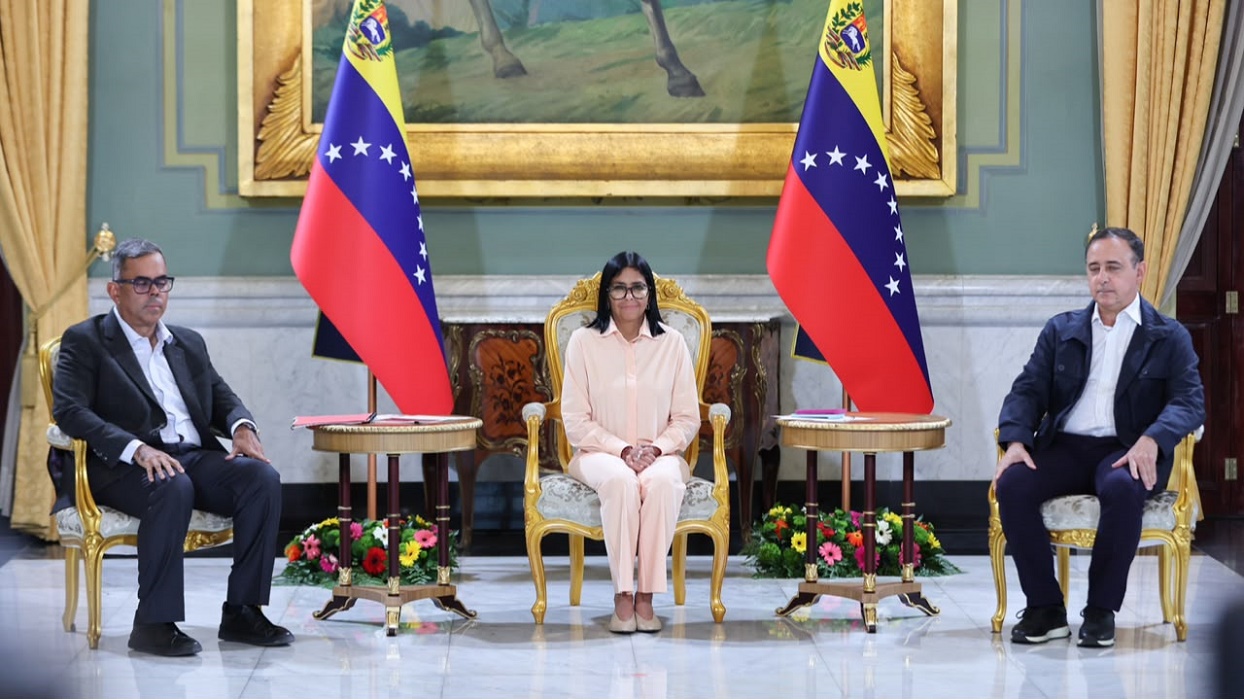
Full version: President Rodríguez: Agreements signed between Corpoelec and IMPSA will launch work at Macagua and Tocoma
Syrian Court Sentences Former Leaders to Death
A Damascus court sentenced former President Bashar al-Assad, his brother Maher al-Assad, and Atif Najib to death. These are the first domestic judicial decisions against the former head of state and members of his inner circle since the fall of the previous government. The court linked the case to the suppression of protests in Daraa in 2011 and to a broader system of repression: Najib, who was present at the trial, was responsible for charges directly connected to events in the city, while the Assad brothers were convicted in absentia on broader charges of serious crimes.
The verdict’s historical significance does not yet mean that it has unquestionable legal force in Syria or abroad. Confidence in the decision will depend on the publication of a reasoned text accessible to the public, explaining the court’s authority, the facts established, the evidence, the standard of proof, and the guarantees afforded to the defense. The safety of witnesses and transparency at every stage of the proceedings are also important. A swift verdict does not in itself prove that justice was absent, but cases involving crimes against humanity and the responsibility of senior officials generally require extensive disclosure of materials and a fully functioning defense.
The key issue is proving individual criminal responsibility. Bashar al-Assad’s presidential office or Maher al-Assad’s military leadership, by themselves, are not sufficient grounds for a conviction. The court must establish the specific form of responsibility attributable to each defendant: issuing orders, instigation, aiding and abetting, participation in a joint criminal plan, or command responsibility for subordinates under his effective control. It must also be shown that the leader knew, or had reason to know, about the crimes and failed to take measures to prevent them, stop them, or punish those responsible.
Additional difficulties are connected with Syrian law. It does not contain comprehensive, standalone offenses covering crimes against humanity, war crimes, enforced disappearances, and the responsibility of commanders and superiors. The court must therefore apply existing provisions without creating new crimes retroactively, and must explain in detail the connection between the defendants’ specific actions, the scale of the violations, and the chain of command.
The death sentences handed down in absentia against Bashar and Maher al-Assad raise serious concerns regarding the right to a fair trial and the possibility of enforcing the decision. International standards permit trials in absentia only in limited circumstances—for example, when the accused was timely and effectively notified and given a genuine opportunity to participate in the proceedings. In addition, after being arrested or voluntarily appearing, the accused must have a clear and practically accessible opportunity for a retrial in their presence. The death penalty increases the risks, since a judicial error can no longer be remedied, and many states will not extradite suspects without reliable guarantees that the sentence will not be carried out.
The verdict could serve as a basis for international requests for wanted notices, travel restrictions, extradition, and cooperation, but it does not by itself guarantee the arrest or punishment of those convicted outside Syria. An Interpol Red Notice is not an international arrest warrant: it requests that a person’s location be identified and that the person be provisionally detained, while further action depends on the law of the country concerned, its relations with Syria, and its assessment of the case’s political nature. Bashar al-Assad’s presence in Russia demonstrates the limits of this mechanism. Bilateral extradition requests, cooperation with countries exercising universal jurisdiction, and the transfer of case materials to foreign prosecutors are also possible, but everything will depend on states’ willingness to cooperate and independently assess the legality of the case.
Finally, this verdict cannot replace a comprehensive system of transitional justice. Syria needs truth-seeking, efforts to locate the missing, protection of security-service archives and detention facilities, the identification of mass graves, compensation for victims, support for survivors and families, and reform of security and judicial institutions. Complex international crimes may require a specialized court or a hybrid Syrian-international mechanism. The decision will constitute a genuine turning point only if it is accompanied by independent justice, the right to a defense, the presumption of innocence, reasoned and appealable judgments, and accountability for those responsible on all sides of the conflict—from perpetrators to political and military leaders.
Comments on the News
How were Syria’s government bodies and chain of command structured in 2011, and what documents could confirm Bashar or Maher al-Assad’s effective control over units accused of crimes? — Formally, Syria was a presidential republic: the president was commander in chief, while the army was subordinate to the Ministry of Defense and the General Staff. In practice, a significant role was played by the presidential administration, security services, the Ba’ath Party, and informal ties within the security apparatus. Evidence of effective control could include orders concerning appointments and redeployments, operational instructions, communications logs, meeting minutes, intelligence reports, supply records, testimony from commanders and subordinates, and materials showing that leaders knew about the crimes and failed to take measures to prevent or punish them. Political status or kinship with a commander is usually not enough: the court must prove an actual ability to issue orders and control a unit.
Why is Daraa considered the symbolic starting point of the Syrian uprising, and what significance do the events of 2011 have for current debates on transitional justice? — Daraa is regarded as the symbolic starting point of the uprising following the arrests and mistreatment of teenagers who wrote anti-government slogans in March 2011. The protests and their suppression soon spread to other cities. For transitional justice, the events of 2011 are important as a possible starting point for systematic violations: they raise questions about which crimes should be investigated, who should be held responsible, how the chain of command should be documented, and how criminal proceedings can be combined with truth-seeking, reparations, and institutional reform.
What provisions of Syrian criminal law can a court apply to crimes against humanity if separate international offenses and command responsibility are not expressly established in national legislation? — Depending on the specific facts, the court could apply general offenses under Syrian law, including intentional homicide, causing bodily harm, unlawful imprisonment, torture, rape, abduction, destruction of property, and other crimes, as well as provisions on participation, instigation, and aiding and abetting. The court may treat the widespread or systematic context as a circumstance of the case, but this does not always replace a separate crime against humanity provision. Establishing a superior’s responsibility would require proof of participation, ordering, or assistance, or—if the court finds such a provision applicable—effective authority over subordinates, knowledge of the crimes, and failure to act. The retroactive application of more serious or new provisions is restricted by the principle of legality.
Which countries use universal jurisdiction in cases involving crimes committed in Syria, and how do their procedures differ from possible prosecution inside the country? — The most prominent cases have been brought or pursued in Germany, France, Sweden, the Netherlands, Austria, and Belgium; investigations have also been conducted in other European states. Universal jurisdiction allows genocide, crimes against humanity, and war crimes to be prosecuted regardless of where they were committed or the nationality of the victims, although national laws often require a link to the country—for example, the suspect’s presence there or the victim’s residence. Such proceedings generally rely on the principle of individual responsibility and evidence collected abroad, while the trial takes place in the courts of the country handling the case. Prosecution inside Syria could encompass a broader range of suspects and provide access to national archives, but it would require an independent judiciary, security guarantees, access to crime scenes, and solutions to questions involving amnesties, immunities, and political interference.

Full version: After the death sentence: How Syria could arrest “Assad”
Trump Steps Up Pressure on Allies and Rivals
A review of recent publications shows how Donald Trump’s administration is using U.S. military, strategic, technological, and trade power—from the situation surrounding Iran and the Strait of Hormuz to Panama, Europe, and Mexico. This policy is causing concern over Washington’s unilateral actions, resistance to tariffs and technological pressure, and increased scrutiny of U.S. relations with allies and competitors. The material is based on publications by Instagram, Yahoo Finanzas, and Facebook (Venezuela).
The U.S., Hormuz, and Cuba: A Venezuelan Reading of Pressure Politics
Statements by U.S. officials about the Strait of Hormuz and Cuba’s future, reported in foreign media publications, may be perceived in Venezuela as parts of a single picture: Washington is seeking to influence strategic energy routes, the political orientation of states, and the terms of their participation in the global economy. At the same time, the original materials contain no direct comments from Venezuelan authorities, politicians, or experts—the issue is specifically how these reports might be perceived in a country that has long been subject to U.S. sanctions and diplomatic pressure.
A Prensa.com publication quotes Donald Trump on Iran and the Strait of Hormuz. He accused Tehran of “talking a lot and doing little” and claimed that the United States had “full control” over this strategic maritime passage. Trump also suggested that Washington could permanently manage the strait.
A more detailed version of this position was published by Yahoo Finanzas. Trump said: “The United States has full control of the Strait of Hormuz” and intends to maintain it. He called the U.S. naval blockade a “steel wall,” claiming that Iran “can do nothing about it.” Iran, meanwhile, says it effectively controls a substantial part of the passage and is considering imposing a transit fee in response to the war that, according to Tehran, the United States and Israel began on February 28.
The Strait of Hormuz is of exceptional importance to the global market: a significant share of oil and gas shipments from the Persian Gulf countries passes through it. Therefore, any statements about military control, a blockade, or long-term management of this route automatically affect not only regional security but also commodity prices, maritime transport, vessel insurance, financial settlements, and the stability of global supplies.
This issue is particularly sensitive for Venezuela. The country remains a major oil-producing state whose economy depends heavily on export revenues, while also facing restrictions on its oil sector, financial barriers, and the risk of secondary sanctions. A sharp rise in oil prices in the event of a crisis around Hormuz could theoretically increase the value of Venezuelan exports. However, instability along shipping routes, higher insurance costs, payment difficulties, and a tougher U.S. policy could eliminate any potential benefit.
In Venezuelan political discourse, phrases such as “full control,” “steel wall,” and the possible permanent management of an international strait may be interpreted as a demonstration of the United States’ unilateral right to determine access to global energy routes. Caracas traditionally associates such actions with a policy of “economic blockade,” interference in the internal affairs of states, and the use of financial and military superiority to pressure governments that refuse to comply.
The alliance between Venezuela and Iran gives the situation particular symbolic weight. Caracas and Tehran maintain political, energy, and technical ties, and pressure on Iran may be perceived in Venezuela as a signal directed not only at the Middle Eastern country but also at all states seeking to preserve an independent foreign policy and develop alternative economic partnerships.
A similar perception may be prompted by U.S. Secretary of State Marco Rubio’s statement on Cuba. In a Telemundo 51 publication, he said that it was in the “national interest” of the United States for Cuba to be “prosperous and secure” and also “aligned with Washington.”
For supporters of Venezuela’s Bolivarian government, the very idea that Cuba should be politically “oriented” toward the United States may appear to confirm that Washington is seeking not only the democratic or humanitarian changes it publicly cites, but also the formation of a geopolitical configuration in Latin America that serves its interests. Cuba remains a longstanding ally of Caracas, and attempts to alter its foreign-policy course may be perceived as a threat to Venezuela’s regional network of partnerships.
Rubio also acknowledged that rapidly transforming Cuba’s political system would be extremely difficult. “You can’t preserve a system that has been in place for 70 years and put down roots, and then expect to tear it all out overnight and plant something completely new,” he said. In the Venezuelan context, these words may have a dual meaning: on the one hand, they recognize the risks of abruptly changing a government and political model from outside; on the other, they hint at the possibility of a long-term strategy of gradual pressure, isolation, and the country’s reorientation.
Neither the reports about Hormuz nor the publication about Cuba includes official Venezuelan reactions. However, for audiences in Caracas, these stories can easily be linked to the country’s own experience with sanctions against PDVSA, restrictions on oil exports, the targeting of tanker shipments, problems with international payments, and political campaigns aimed at isolating the country internationally.
Thus, Trump’s statements about the Strait of Hormuz and Rubio’s words about Cuba may be perceived in Venezuela not as isolated foreign episodes. Within the local political framework, they become illustrations of a broader struggle over oil sovereignty, control of strategic routes, and the right of states to pursue an independent foreign policy without pressure from Washington.


News 12-08-2026
Damascus court hands death sentences to key figures from former regime
Syrian society and social media users reacted widely to the decision by Damascus’s Fourth Criminal Court to sentence Atif Najib—the former head of the Political Security Directorate in Daraa province and Bashar Assad’s cousin—to death. The court also sentenced Bashar Assad and his brother Maher Assad to death in absentia, ordering that they be placed on an international wanted list. Atif Najib was found guilty of torturing numerous detainees and bearing direct responsibility for the deaths of many of them.
Najib’s name is particularly associated with the events of March 2011, when 15 children in Daraa were arrested and tortured for writing anti-government slogans on a school wall. The incident became one of the first sparks for protests that grew into the Syrian uprising and the subsequent war. Shortly before the verdict was announced, Najib arrived at the Fourth Criminal Court building; videos of his appearance spread across social media.
After the ruling was announced, takbirs and cheers rang out from mosques across Daraa province. Activists and bloggers called the verdict a historic day and the first step toward holding senior figures involved in suppressing Syrians accountable. Celebrations were also held outside the Palace of Justice in Damascus. Abd al-Basit Abd al-Latif, chairman of the National Transitional Justice Authority, said the ruling in Najib’s case was an important milestone on the path toward restoring victims’ rights and strengthening the rule of law, but not the end of the process.
Authorities and the public stressed that transitional justice must encompass everyone responsible for violations and war crimes, without exception. Amer al-Ali, head of the Central Authority for Oversight and Inspection, described the verdict as a response to years of killings, torture and the suffering of victims’ families, saying that the punishment was not an act of revenge but a means of restoring justice. Public reactions combined celebration that Daraa’s and the revolution’s demands had been fulfilled with calls to prosecute defendants in hiding and bring the process to completion, so that victims’ rights could be recognized and the country’s wounds healed.
Comments on the news
What role did Daraa play at the beginning of the Syrian uprising, and why did events in this city become a symbol of the revolution’s demands? — Daraa is regarded as the place where mass protests against the government began in March 2011. After teenagers were arrested and brutally mistreated for writing anti-government slogans on a wall, residents demanded their release and reforms. The crackdown intensified public anger and helped spread demonstrations throughout the country. Daraa therefore became a symbol of demands for freedom, dignity, justice and an end to repression.
What does transitional justice mean in the Syrian context, and how should it address crimes committed by the different sides in the conflict? — Transitional justice is a set of measures aimed at establishing the truth, holding perpetrators accountable, compensating victims and preventing the recurrence of crimes after war or political repression. In Syria, it should be impartial and cover alleged war crimes and crimes against humanity committed by government forces, the armed opposition, extremist groups and other participants in the conflict. This may include independent investigations and trials, documentation of violations, efforts to locate the missing, the release of people held unlawfully, reparations for victims and guarantees of reform within state institutions.

Full version: From the “Daraa spark” to the gallows: Syrians react to Atif Najib’s death sentence
Israel and Venezuela Resume Consular Cooperation
Israel welcomed an agreement with Venezuela to establish a coordination mechanism that will allow citizens of both countries to receive consular services and assistance abroad. The arrangement resulted from talks held in recent weeks between Israeli Foreign Minister Israel Katz and Venezuelan Foreign Minister Félix Plasencia, and marks the first official channel of communication between the two governments since 2009. However, full diplomatic relations have not yet been restored: this would require an exchange of ambassadors. The break occurred 17 years ago, when President Hugo Chávez expelled the Israeli ambassador amid the conflict in the Gaza Strip and unilaterally severed ties with Israel in support of the Palestinians; under Nicolás Maduro, the distance between the countries remained. The new agreement will once again allow Venezuelans and Israelis to use official channels to obtain documents and assistance, while Israel said it intends to continue strengthening ties with Latin American countries.
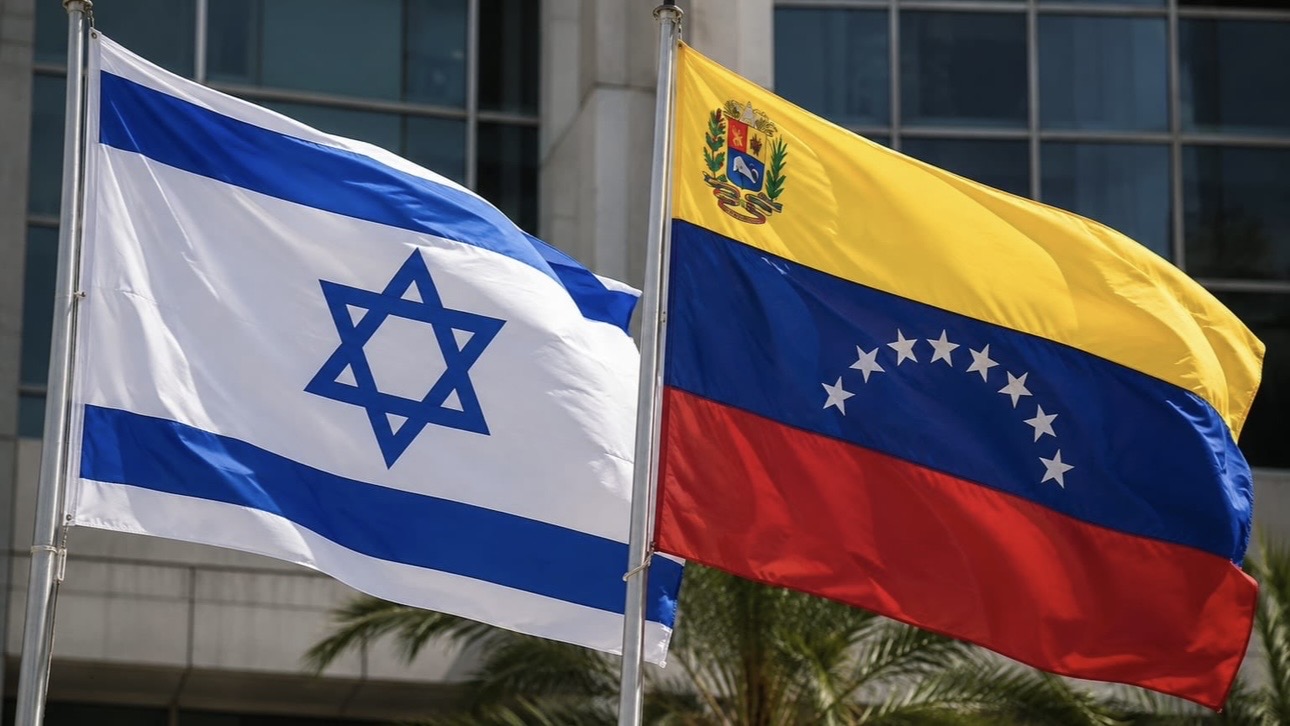
Full version: Israel Welcomes Agreement to Restore Consular Services with Venezuela
Syrian Court Sentences Former Regime Leaders to Death
The Damascus Criminal Court sentenced former Syrian President Bashar al-Assad, his brother Maher al-Assad and Atif Najib to death, finding them guilty of deliberate killings and torture classified as crimes against humanity and war crimes. The sentences against Bashar and Maher al-Assad were handed down in absentia, while Najib attended the hearing. The court held them responsible for torturing large numbers of detainees and for the deaths of some of them in custody.
Several other defendants who remain in hiding were also convicted in absentia, including former Defence Minister Fahd al-Freij and former head of Air Force Intelligence Jamil al-Hassan. Najib, who previously headed the Political Security branch in Daraa, was also found guilty of abductions, unlawful detention, inciting civil and sectarian conflict, embezzling state funds and money laundering. The court consolidated the sentences and imposed the harshest penalty—death. The case against Ayman Alloush was discontinued because of his death.
The ruling was based on testimony from witnesses and victims, official documents, medical reports, audio and video materials, as well as international reports. The court said the evidence confirmed Najib’s responsibility for placing snipers and armed men on the security service building, stopping ambulances and withholding the bodies of those killed. Witness statements matched in terms of the circumstances, timing and locations of the events; some witnesses testified under numbers for security reasons. The court described the case as an important precedent for national transitional justice.
Najib rejected all the charges and responded to testimony from victims with the phrase, “I do not accept the testimony,” calling their statements rumours from the internet and the streets. Presiding Judge Fakhr al-Din al-Aryan said the defendant had shown neither remorse nor regret, so no mitigating circumstances were applied. The verdict was declared final and not subject to appeal. The convicted men were also ordered to pay compensation to civil claimants, while preserving the rights of other victims and the families of those who disappeared.
The case once again drew attention to events in Daraa, where protests began in 2011 after approximately 15 children were arrested for writing anti-government slogans, after which unrest spread throughout Syria. The public trial of Najib began on April 26, 2026, following his arrest in Latakia on January 31, 2025. Relatives of the victims gathered outside the courthouse and greeted the announcement of the verdict with celebratory shouts after more than 15 years of waiting for accountability. Syria’s defence and interior ministers called the ruling a victory for the people and a step towards justice, while Amnesty International urged that the prosecution of those responsible be used to establish the truth and provide compensation to tens of thousands of victims. The enforcement of the in-absentia sentences depends on locating the defendants; the arrest warrants remain in force and have been circulated internationally, while their assets have been placed under enforcement seizure.
Comments on the News
What role did Daraa play at the beginning of the 2011 Syrian uprising, and why did the arrest of schoolchildren become a symbol of the subsequent protests? — Daraa is considered the place where the first major protests against Bashar al-Assad’s government began in March 2011. The immediate cause was the arrest and mistreatment of a group of schoolchildren who had written an anti-government slogan on a wall. The episode became a symbol of repression, humiliation and the authorities’ refusal to meet residents’ demands, while the subsequent use of force helped spread the protests across the country.
What does “transitional justice” mean in the Syrian context, and how does the process relate to international investigations into crimes committed during the war? — Transitional justice is a set of measures aimed at establishing the truth, holding those responsible accountable, providing compensation to victims and reforming state institutions after mass human rights violations. In Syria, it may include documenting disappearances, torture, killings and destruction, searching for missing persons and providing guarantees that such crimes will not be repeated. International investigations and independent UN mechanisms collect and preserve evidence, but generally do not replace national courts; they can support future trials or be used in courts in other countries under the principle of universal jurisdiction.
What practical consequences do international arrest warrants and asset seizures have for those convicted in absentia if they are outside Syria? — Such measures can restrict travel, since the country where the accused is located may detain them and consider extradition. Asset seizures can block bank accounts, real estate and other financial resources in jurisdictions applying the relevant sanctions or court decisions. However, the consequences depend on the country: an international warrant does not mean automatic arrest everywhere, and a conviction in absentia may not be recognised by the country where the convicted person is located.


Full version: Damascus Criminal Court: Bashar and Maher al-Assad and Atif Najib sentenced to death
Trump in the Crosshairs of the Venezuelan Press
Venezuelan media are critically analyzing Donald Trump’s domestic and foreign policies: tighter immigration controls, expanded presidential powers, opaque decisions, and the actions of security forces. Particular attention is focused on the confrontation with Iran, Israel, Nicaragua, and Russia, presented as an expression of pressure, legal disputes, and Washington’s strategic miscalculations. This overview is based on reports by El País and El Nacional (Venezuela).
Venezuelans Criticize Trump’s Policies: From ICE to the Oil Industry
In Venezuelan public and expert circles, the Donald Trump administration’s decisions on migration and oil are viewed not as isolated steps in U.S. policy, but as measures with direct consequences for millions of the country’s citizens. Tighter immigration controls in the United States affect Venezuelan migrants and their families, while the new regulatory framework for the oil sector, critics argue, has so far brought Venezuela neither sustainable investment nor a recovery in production.
Particular concern was prompted by plans of U.S. Immigration and Customs Enforcement (ICE) to purchase between $10 million and $20 million worth of G.L.O.V.E. electric gloves. As EL PAÍS reports, the device, manufactured by Compliant Technologies, allows an officer to inflict a painful electric shock on a person through physical contact by pressing a button.
The manufacturer describes the gloves as a “nonlethal” tool intended to reduce the risk of injury and promote de-escalation. However, human rights defenders and observers see the technology as creating a risk of simplifying the use of force against people already in a vulnerable position because of their lack of documents, asylum proceedings, or the threat of deportation.
Jenn Rolnick Borchetta, deputy director of the American Civil Liberties Union’s police oversight project, said that ICE had shown a tendency over the past year to use force too quickly. “Now they will be able to administer electric shocks with the simple press of a button—possibly in a way that no one else will even notice,” she warned. In her view, adding gloves that make it “so easy to inflict terrible pain” amounts to “a recipe for harming the public.”
For Venezuelans, this is not merely a question of American policing practices. Because of the country’s prolonged economic and political crisis, millions of Venezuelan citizens have left the country, while the United States remains a key destination for people seeking asylum, work, and the ability to support relatives through remittances. Arrests, deportations, or the use of force against migrants can directly affect families in Venezuela, where remittances from abroad are especially important amid low incomes, high inflation, and the bolivar’s instability.
This wary attitude is also reinforced by Venezuela’s own historical experience. Distrust of security forces in the country is linked to memories of arbitrary detentions, mistreatment, and weak accountability among security agencies. As a result, electric gloves presented as a means of control are perceived by many not as a neutral piece of equipment, but as a potentially unobtrusive instrument of violence against those least able to defend their rights.
At the same time, Venezuelan experts are skeptical of Washington’s promises to revive the country’s oil industry. In an analytical article for El Nacional, oil specialist Evanan Romero argues that the U.S. administration’s announced “Apertura 2.0,” or the reopening of the oil sector to private capital, has not become a full-fledged recovery program six months on.
According to Romero, the initiative currently consists primarily of memorandums and letters of intent rather than legally binding contracts, large-scale investments, new drilling rigs, and jobs. He acknowledges that Venezuelan oil shipments to the United States have increased: in July, the country sent approximately 786,000 barrels per day there, the highest level since early 2019. However, overall exports during the same period, according to the data cited, fell from 1.24 million barrels per day in May to 1.16 million barrels per day in July.
Romero considers this gap fundamental. In his view, control over export flows and revenues is not equivalent to restoring production, infrastructure, and the technological base. “Trump handed Venezuela’s oil industry over to the wrong people,” he says, summarizing his main criticism.
Romero took part in the oil-sector opening of the 1990s alongside former PDVSA head Luis Giusti and contrasts that reform with the current model. According to him, the previous Apertura Petrolera brought the country approximately $70 billion and enabled the development of the Orinoco Oil Belt. The current system, the expert claims, preserves a closed allocation of rights and opaque decision-making mechanisms.
He also specifically criticizes the role of the state oil company PDVSA. In his assessment, the company claims 60% of production without investing a comparable amount of capital, while its management consists mainly of lawyers, financiers, and intermediaries rather than production and industrial-management specialists. “The monopoly remains alive and operates in the interests of Delcy Rodríguez and Jhovanny Martínez, not the country,” Romero said.
The article emphasizes that external audits of financial flows alone cannot solve the problems that have accumulated. Revenues, it notes, are audited by four major accounting firms, while funds entering the Central Bank of Venezuela are monitored. But without competition, transparent rules, legal protections for investors, and genuine investment, these measures cannot restore the devastated industry.
The state of the oil sector is linked in the article to decades of nationalization, expropriation, halted technological processes, and the militarization of management. The El Furrial field in Monagas state is cited as a telling example. In 1998, it produced approximately one million barrels of light crude per day, whereas today, according to Romero, output does not reach 80,000 barrels per day.
The expert also draws attention to legal opacity associated with the Anti-Blockade Law, which allows contracts to remain confidential. In his view, major international companies are unwilling to invest in the absence of clear and open rules. Another problem is the 25% royalty rate and parafiscal payments, which reduce the commercial attractiveness of projects, particularly in the Orinoco Belt.
The region’s heavy crude requires dilution with light oil and must then be transported approximately 250 kilometers from Morichal to the José terminal. These costs, Romero argues, effectively “eat up” the margin. At the same time, the sector suffers from equipment theft, dismantling of infrastructure, fuel shortages, and security problems. According to the article, smuggling and armed groups operate in the western oil-producing regions, while the presence of the REDI and ZODI military structures does not provide reliable protection for facilities. In Lake Maracaibo, shortages of diesel and kerosene have partially paralyzed operations.
Romero proposes creating an independent commission made up of “Venezuelans of unimpeachable reputation.” In his conception, the body would vet investors, the origin and volume of their capital, their experience and documents, and the compliance of their projects with national interests, while also guaranteeing an open and competitive process. He compares the current distribution of opportunities in the sector with the practice of granting oil concessions to associates during the era of Juan Vicente Gómez nearly a century ago.
Thus, Venezuelan criticism of Trump’s policies centers on a common concern: Washington is tightening control—over migrants inside the United States and over Venezuela’s oil flows—but this control does not necessarily make people safer or the country’s economy more sustainable. In the case of ICE, the issue is the risk of expanding coercive tools against migrants. In the case of oil, it is the possibility of keeping the same opaque structures in power that, critics argue, contributed to PDVSA’s deterioration and are incapable of ensuring the professional recovery of the industry.
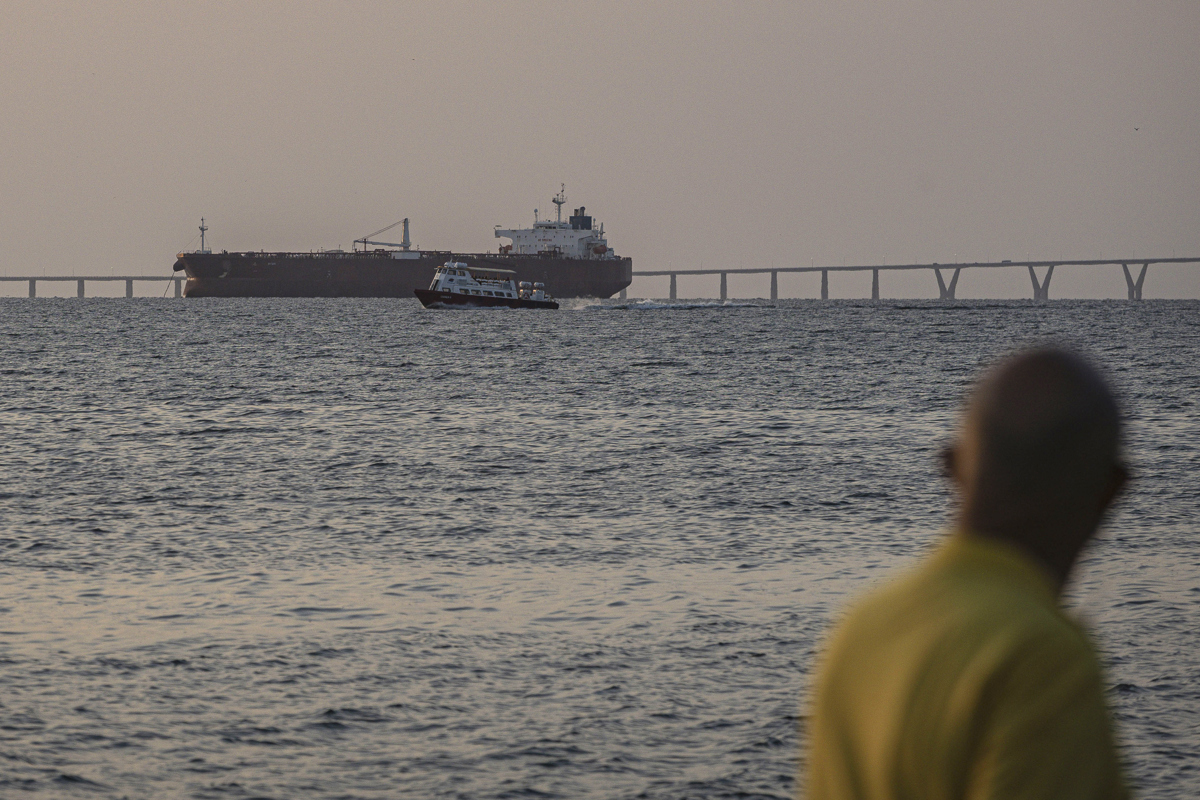
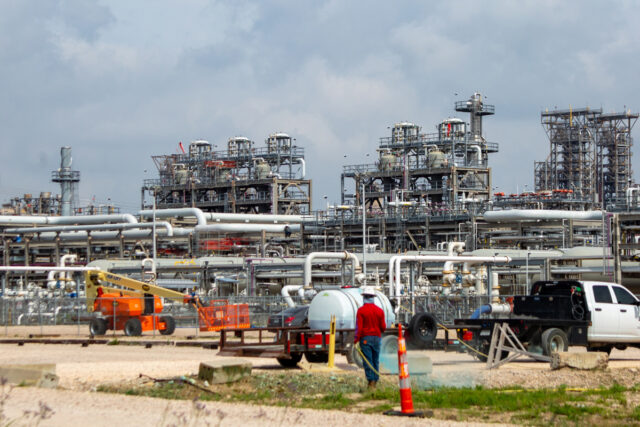
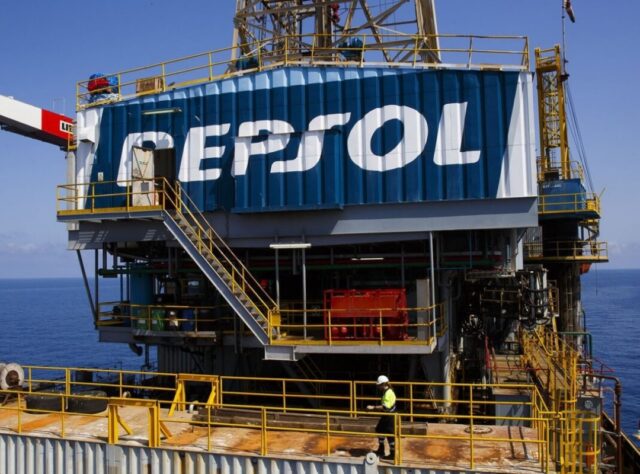
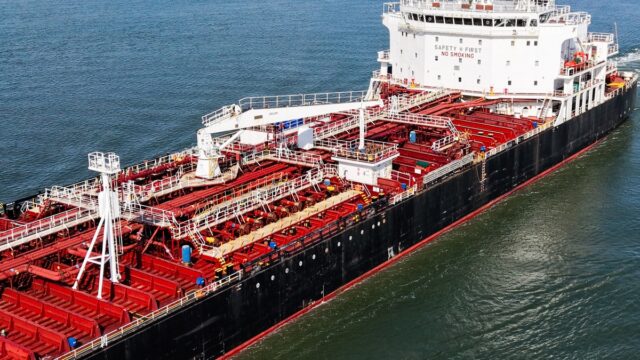
News 11-08-2026
Curfew Lifted in Kobani After Operation Ends
On Tuesday morning, the Internal Security Directorate of Aleppo province lifted the curfew in the city of Kobani after the operation was completed and calm was restored. According to official data, 19 security personnel were wounded and seven people were detained on suspicion of organizing the unrest. The restrictions were imposed on Monday evening after an administrative building was attacked during protests in the city in the eastern countryside of Aleppo.
According to the authorities, rioters damaged the Kobani district administration building, removed its sign, and lowered the national flag at the headquarters of the internal security forces. Security forces were deployed in greater numbers in the city, located near the Turkish border, to arrest the attackers, protect property, and restore order. The authorities said that attacks on state institutions and their symbols were unacceptable.
The unrest followed reports of attacks on displaced Kurds returning to the Ras al-Ayn area of Hasakah province. Kurdish representatives accused armed groups of carrying out the attacks. The authorities said that a number of suspects had been detained and warned that the incidents must not be used to incite sectarian strife. The return of more than 400 families to the countryside around Ras al-Ayn was temporarily suspended for security reasons, but officials promised it would resume after the necessary procedures were completed.
At the same time, internal security buildings in Hasakah and Qamishli were attacked, and law-enforcement personnel were assaulted inside one of the facilities. Patrols were increased in the cities to contain tensions and preserve civil peace. The deputy commander of Hasakah’s internal security forces and Mazloum Abdi, leader of the Syrian Democratic Forces, condemned the attacks. The authorities stressed that they were seeking to prevent local incidents from developing into a wider conflict.
Comments on the News
Why are Kobani and other areas of northeastern Syria particularly important to the Kurdish population and the Syrian Democratic Forces? — Kobani became a symbol of Kurdish resistance after the battles against the Islamic State in 2014–2015. Northeastern Syria is also the main center of Kurdish political and military influence, where Kurdish self-governing institutions operate and the Syrian Democratic Forces (SDF), a US-backed, Kurdish-led coalition, are based. For Kurds, the region is associated with protecting their communities, political autonomy, and control over territories they regard as historically significant; for the SDF, it is linked to maintaining its defensive positions and influence.
Why is the return of displaced Kurdish families to the Ras al-Ayn area considered an especially sensitive issue from the perspective of security and intercommunal relations? — Ras al-Ayn, known in Kurdish as Sere Kaniye, became an area of population displacement after Turkey’s 2019 operation and the subsequent transfer of control to Syrian armed groups backed by Turkey. Many Kurdish families left the area, and its demographic composition changed. Their return is connected with concerns about security, possible seizures of homes and land, revenge, and new clashes between Kurds, Arabs, and other communities. The process therefore requires security guarantees, the resolution of property disputes, and the consent of local authorities and the armed forces controlling the territory.

Full version: Syria... Authorities Announce Calm Has Returned to Ayn al-Arab Amid Warnings of Strife
Delcy Rodríguez Discusses Economic Cooperation with U.S. Representatives
Venezuelan President Delcy Rodríguez held a strategic meeting with senior representatives of the U.S. Department of the Treasury and Department of State. The sides reviewed an agenda for joint economic development, including strengthening existing agreements in the trade, financial, and energy sectors, as well as measures to stabilize the energy market and resume financial mechanisms capable of supporting Venezuela’s socioeconomic development. The meeting underscored the importance of maintaining direct diplomatic channels to discuss regional stability and hemispheric interests. The U.S. delegation was led by Deputy Assistant Secretaries of the Treasury for International Finance Jonathan Grinstein and for Terrorist Financing Jonathan Burke; Rodríguez was accompanied by Venezuelan government officials responsible for diplomatic and economic affairs.
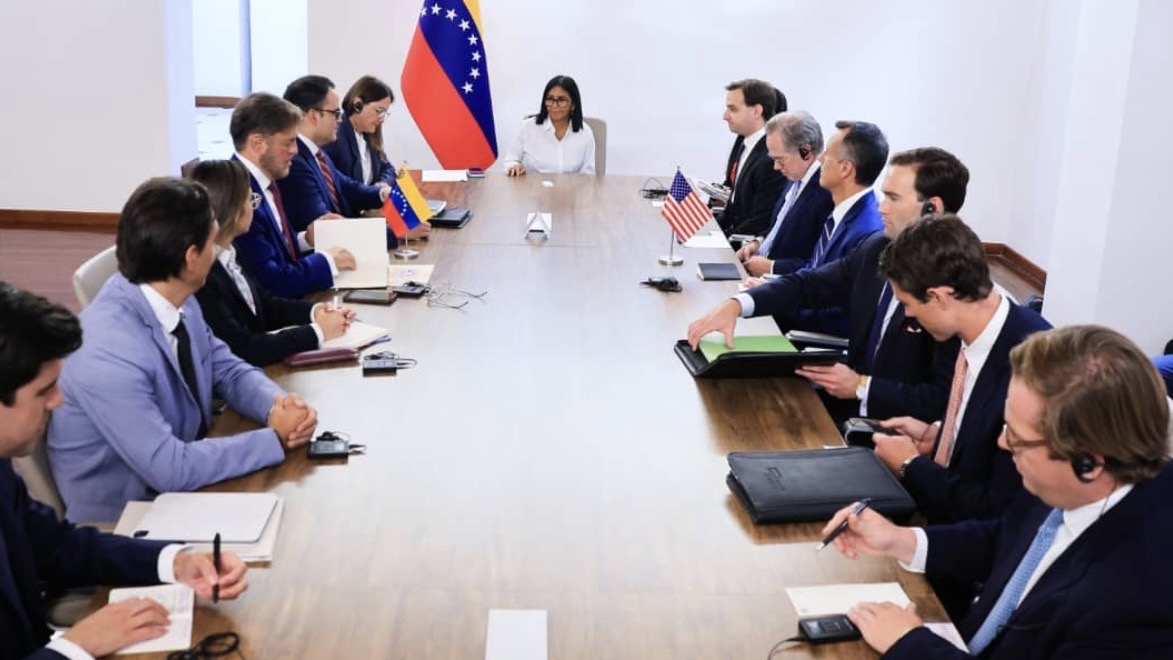
Full version: Delcy Rodríguez met with a high-level United States delegation
Visit to Hmeimim Becomes Symbol of a New Stage for Syria’s Sovereignty
Syrian social media widely discussed Foreign Minister Assad al-Shaibani’s visit, together with Syrian officials, to Hmeimim Air Base and the port of Tartus. The trip focused on implementing an agreement to transform Russian military facilities into joint training centers. Particular attention was drawn to a Russian officer walking behind the Syrian delegation.
Users compared the episode with a well-known scene from 2017, when a Russian officer prevented Bashar al-Assad from walking alongside Russian President Vladimir Putin at the same base. At the time, many interpreted the gesture as a symbol of the former Syrian regime’s dependence on Moscow in exchange for military and political protection. The current photograph, by contrast, shows Syrian representatives moving independently around the facilities and positioned ahead of Russian personnel.
Commentators described this as reflecting a shift from the previous model of external patronage toward the restoration of Syrian initiative and control over state institutions. The phrase “Syria today versus Syria yesterday” circulated widely on social media, underscoring the contrast between the two political eras.
Observers believe the issue involves not only symbolism but also broader arrangements referred to as the “al-Sharaa–Putin deal.” They reportedly provide for restructuring Russia’s military presence, possible rearmament of the Syrian army based on a national defense concept, resolving the issue of representatives of the ousted regime who are in Russia, and formalizing any foreign presence through special agreements guaranteeing Syria’s sovereignty.
According to the arrangements reached, civilian facilities—including Hmeimim Airport and the fourth commercial berth at the port of Tartus—are to be placed under the control of the Syrian state and gradually integrated into civilian infrastructure. The military status of the Russian bases is expected to be replaced with a format involving joint training and instruction centers, with no more than three months allocated for completing the transformation. Syrian analysts describe the arrangements as the result of 18 months of diplomatic and strategic efforts to change the nature of relations with Russia.
Comments on the News
What is the strategic significance of Hmeimim Air Base and the port of Tartus for Russia and Syria, and why is control over these facilities particularly important for Syrian sovereignty? — Hmeimim provides Russia with an air foothold in the Eastern Mediterranean and logistical support for operations, while Tartus offers naval infrastructure and access to the region. For Syria, these facilities are important both as a symbol and as an instrument of control over strategic territory: the presence of foreign armed forces must be based on the consent of the Syrian state, meaning their status is directly linked to issues of sovereignty, jurisdiction, and control over the country’s borders.
What would the transition of Russian military facilities into joint training centers mean in practice? Would Russia retain a permanent military presence, and what powers would the Syrian side receive? — Such a format generally means reducing or changing the nature of Russia’s presence, but not necessarily withdrawing it completely. Russia may retain personnel, instructors, and limited infrastructure if this is provided for in the agreement. The Syrian side would likely receive greater formal authority over security, access, and administrative control, although the actual conditions depend on the text of the arrangements between Damascus and Moscow.
Who exactly is being referred to as representatives of the ousted regime in Russia, and how could their status be connected to the arrangements between Damascus and Moscow? — This usually refers to former senior officials, military personnel, and security officers associated with Bashar al-Assad’s government who left for Russia after its fall. Their status could form part of a political bargaining process: Moscow may seek guarantees for them, including protection from extradition or prosecution, while Damascus may link such guarantees to a revision of military agreements, access to the bases, and the terms of Russia’s future presence.

Full version: From al-Shaibani’s image to Assad being stopped in 2017: Hmeimim comparisons dominate social media
Venezuela on Trump’s Confrontation with Iran
Venezuelan media are analyzing the escalation of the conflict between Donald Trump and Iran, including his demand for compensation and claims that the United States has full control over the Strait of Hormuz. The reports portray U.S. policy as a demonstration of military and geopolitical power in the Middle East, while also examining regional uncertainty, Israel’s role, and resistance to Trump’s approach. Based on Diario Las Américas and Facebook posts (Venezuela).
U.S.-Iran Dispute Increases Risks for Oil Market
Another escalation in rhetoric between Washington and Tehran has once again brought sanctions, compensation, maritime security and possible consequences for the global oil market to the forefront. In a report by the Venezuelan publication Diario Las Américas, the conflict is presented primarily from the U.S. perspective: Donald Trump rejected Iran’s demands for military compensation and said that the United States, in turn, also intends to seek compensation from Tehran for damages.
Trump’s key statement was: “I am also demanding compensation from Iran.” According to him, such claims will be included “in all future negotiations.” Thus, the dispute over possible payments, the lifting of restrictions and the unfreezing of assets is turning into a broader political conflict, with each side putting forward its own demands and linking them to future contacts.
The report, based on accounts by EFE and Europa Press, reproduces the U.S. argument. Iran is linked to attacks on U.S. citizens, support for armed conflicts in Lebanon, Syria, Yemen and Gaza, as well as the suppression of domestic protests. The text uses the politically charged description of Iran as the “world’s leading sponsor of terrorism,” while Iran’s position is not presented in detail.
The issue is particularly significant for Venezuela. Caracas remains a major oil-producing state whose export capacity and budget revenues depend on global oil prices, U.S. sanctions policy and relations with states that are also in confrontation with Washington. Venezuela maintains ties with Iran in the areas of fuel, oil refining, trade and political cooperation, making the discussion of sanctions, external pressure and frozen assets especially familiar to a Venezuelan audience.
The Strait of Hormuz—one of the world’s most important oil-trade routes—remains an additional risk factor. Any threats to block it or restrict shipping could trigger a sharp rise in commodity prices. For Caracas, this could theoretically mean increased oil revenues. At the same time, however, higher oil prices are accompanied by global instability, increased transportation and insurance risks, and stronger sanctions and diplomatic pressure on countries cooperating with Iran.
At the same time, the Diario Las Américas report contains no comments from Venezuelan authorities, local experts or representatives of the oil sector. The publication does not directly examine how the escalation could affect Venezuelan exports. The article’s local relevance lies primarily in the fact that an international conflict is being viewed by an audience in a country that has long lived under U.S. sanctions and in political confrontation with the United States.
It should also be noted that one of the materials circulated on social media was mistakenly linked to the issue of Iran and the Strait of Hormuz. The headline of a Latinus Facebook video claimed that Trump had said the United States had “100 percent control” of the strait and was maintaining the blockade of Iran. However, the accompanying text concerns an entirely different incident—the alleged theft of a mobile phone from a provincial vicar, Fray José Alcaraz, at the San Francisco de Asís church in Tijuana, Mexico.
The report says that the church is asking citizens to help identify the suspect and warns them not to respond to messages or calls from the clergyman’s number. The publication contains neither Venezuelan sources nor assessments of the consequences of the situation surrounding Iran for the oil economy, sanctions, exports or Caracas’s policy. Therefore, this content cannot be considered a Venezuelan reaction to Trump’s statements, the situation surrounding Iran or a possible blockade of the Strait of Hormuz.
Ultimately, the main conclusion for Venezuela lies not in any specific official reaction from Caracas—which is absent from the materials cited—but in the very logic of the unfolding conflict. Oil, sanctions, access to international assets, control over strategic maritime routes and geopolitical alliances remain interconnected factors capable of directly affecting countries under U.S. pressure and maintaining relations with Iran.
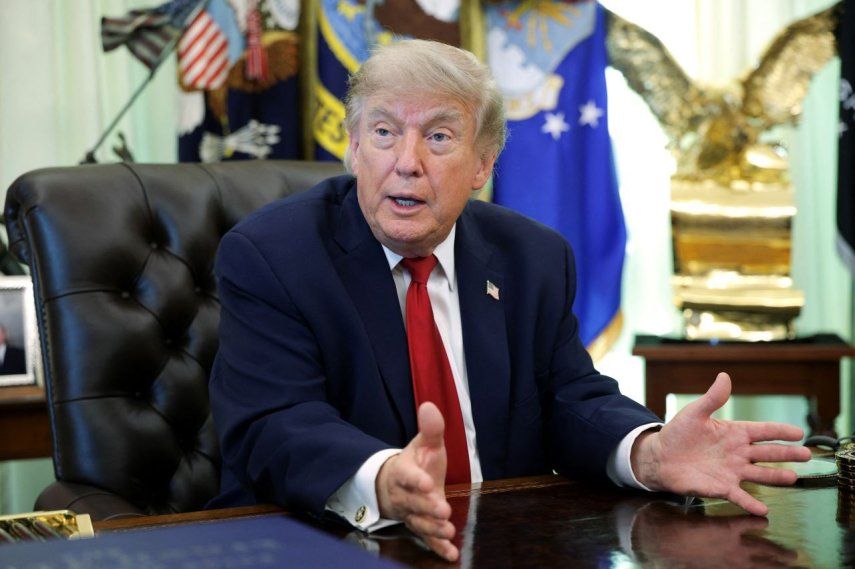


News 10-08-2026
New Agreement Changes the Format of Syria–Russia Cooperation
A new memorandum between Damascus and Moscow on the Hmeimim and Tartus bases opens a new stage in bilateral relations. The negotiations lasted about a year and a half and concluded after Syrian President Ahmed al-Sharaa’s two visits to Moscow—in October 2025 and January 2026. Analysts believe the agreement is intended to replace Syria’s previous dependence with a pragmatic partnership based on the country’s full sovereignty, while also settling political, military and economic issues.
Under the agreement, civilian facilities—including Hmeimim Airport and Tartus port’s fourth commercial berth—will be transferred to the management of the Syrian state and gradually integrated into civilian infrastructure. The military status of other facilities will be transformed into a format of joint training and education centers; the process is expected to be completed within three months at the latest. Syrian researchers believe this will enable Damascus to regain control over its territory and airspace.
Military cooperation, however, will not end. The bases are expected to be used to train and equip the Syrian army using Russian technologies, rather than for Moscow’s independent strategic objectives. Russian analyst Yevgeny Sidorov compared the new format with Soviet–Syrian cooperation in the 1970s and 1980s, but emphasized its pragmatic and non-ideological character. Cooperation could include weapons maintenance, training, as well as joint security operations and humanitarian tasks such as combating piracy.
The memorandum allows Damascus to retain important benefits from cooperation with Moscow: maintenance of military equipment, access to Russian oil technologies, and Russia’s diplomatic support in the UN Security Council and on difficult regional issues. At the same time, the agreement limits the use of Tartus as an exclusive base for expanding Russia’s logistical presence in Africa. For Syria, it is also a way to legally revise its relations with Moscow without turning Russia into an adversary.
The most contentious issues remain transitional justice and the extradition of wanted individuals, particularly former President Bashar al-Assad. Moscow is unlikely to agree to hand him over, citing the political asylum granted to him and humanitarian considerations. However, the sides may reach confidential agreements aimed at preventing a rupture in relations. Damascus, meanwhile, expects that Russia’s previous protection will no longer extend to representatives of the former regime, including Maher al-Assad and members of the security forces. Despite their differences, al-Sharaa and Vladimir Putin are demonstrating a conciliatory attitude, while Iran remains the main exception to Damascus’s more flexible foreign policy.
Comments on the News
How could the transfer of Hmeimim Airport and part of Tartus port to Syrian management affect the operation of these facilities and the local economies of Latakia and Tartus? — The transfer of management could strengthen Syrian control, increase the involvement of local authorities and generate additional revenue from port, logistics and aviation services. However, without Russian investment, technical support and security guarantees, disruptions, reduced cargo traffic and job losses are possible. The outcome will depend on the terms of the agreement, the level of funding and the ability of Syrian institutions to manage the facilities effectively.
What does the transition of the Russian bases to a joint training-center format mean for the Syrian army, and how much does it change the role of Russian servicemen in the country? — This could represent a formal shift from a permanent military presence to a more limited role for instructors and advisers. Russian servicemen will likely focus more on training, coordination and technical support for the Syrian army rather than on independent combat operations. For Damascus, this preserves access to Russian expertise, but it also requires the Syrian army to become more self-reliant.
Why could the issue of handing over Bashar al-Assad and other representatives of the former Syrian regime complicate the agreement between Damascus and Moscow despite their publicly conciliatory stance? — For Moscow, handing over Assad would pose a serious political and reputational risk: it could be seen as abandoning a former ally and undermining Russian guarantees. For Syria’s new authorities, by contrast, the demand for his extradition may be linked to questions of justice and domestic legitimacy. As a result, public statements about cooperation may coexist with tough, confidential negotiations over guarantees, the status of former officials and possible legal proceedings.


Full version: After the Hmeimim and Tartus Agreement: What Did the Russians Lose and What Did Damascus Gain?
Venezuela Announces Timeline for Restoring Power System
Venezuelan President Delcy Rodríguez said that one of the power transmission lines knocked out by the twin earthquakes on June 24 would be brought back online on Sunday. This will allow the restoration of power loads to continue and gradually normalize the operation of the National Electric Power System. According to Rodríguez, the Carabobo Thermal Power Plant is expected to restore about 75% of its capacity after sustaining damage.
A key stage will come on October 1, when Unit No. 6 at the Planta Centro power plant is scheduled to be launched, adding 600 megawatts to the system. Rodríguez stressed that the government is carrying out restoration work around the clock and urged residents to use electricity sparingly and support the authorities’ efforts, emphasizing the need for “national unity.”
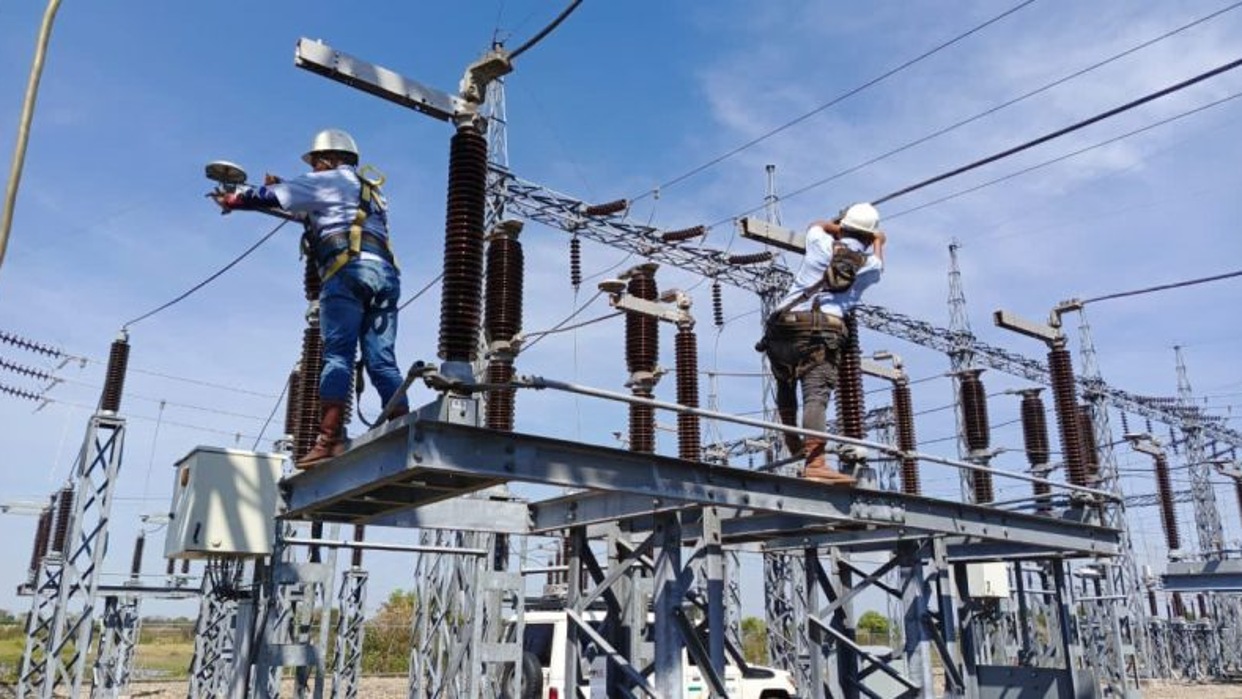
Full version: Presidenta Delcy Rodríguez establishes dates for restoring the power system
Former Syrian ambassador’s appearance in Moscow sparks wave of criticism
The appearance of Bashar al-Jaafari, Syria’s former permanent representative to the United Nations and former ambassador to Moscow, in a video filmed at a Moscow restaurant has sparked a sharp reaction among Syrians. He attended Syrian journalist Akram Huzam’s birthday celebration alongside people linked to Bashar al-Assad’s former regime. The singing, applause and festive atmosphere were seen as provocative against the backdrop of the continuing consequences of the war and the former rule.
Huzam posted the video several days ago, after which it quickly spread on social media. Users began asking why Jaafari remained in Moscow and what his position was following the fall of the regime. His appearance also renewed attention to the fate of former officials who left Syria and moved to Russia. Some commentators condemned Jaafari’s participation in the event itself, while others criticized his conspicuously festive demeanor alongside representatives of the former authorities.
Syrian journalist Hasib al-Zayni said he initially did not believe that the person in the video was really Jaafari. He criticized the invitation extended to the former diplomat, calling it contempt for Syrians’ feelings. According to the journalist, Huzam explained that he had invited Jaafari because he intended to interview him and was prepared to act as “the devil’s advocate.” However, Jaafari attended the celebration without agreeing to an interview, prompting al-Zayni to say that Huzam had “lost the interview and gained the anger of Syrians.”
Critics stressed that professional motives should not serve as an excuse for ignoring journalists’ moral responsibility. Political analyst Mahmoud Ahmad Hafez described Jaafari’s conduct as a kind of “glass diplomacy” after the end of his official career. Activist Omar Madania also said that Jaafari and other former regime officials were dancing in Moscow at the expense of the Syrian people. These statements reflect a broader dispute over whether former government representatives living abroad should remain beyond political and public scrutiny.
Jaafari was one of Syria’s most prominent diplomats for many years: he represented the country at the United Nations, defended the regime’s positions at Security Council meetings and political negotiations, and became deputy foreign minister in 2020. He was later appointed ambassador to Russia, where he continued to represent Assad’s government until its fall in December 2024. After that, Jaafari almost disappeared from public view, but the video from the Moscow celebration has once again put him in the spotlight and intensified calls for information about the fate of former officials and for those involved in abuses during the former rule to be held accountable.
Comments on the news
Why did Moscow become a place of residence for many former Assad-regime officials, and what official status do they have in Russia after the fall of the regime? — Moscow was historically the Assad government’s main international ally, while Russia provided it with military, political and diplomatic support. Former officials and members of the security services could therefore rely on Russian connections, security and the possibility of obtaining refuge. However, their exact official status in Russia depends on the individual: publicly confirmed information about citizenship, asylum or residence permits is not available for all of them. After the fall of the regime, residence in Russia by itself does not mean automatic immunity from investigations or international requests.
What justice or investigative mechanisms exist in Syria regarding former officials accused of abuses if they are abroad? — Possible avenues include national investigations and trials in Syria, international investigations under the auspices of the United Nations, and cases brought under universal jurisdiction in foreign courts. Several European countries have already investigated and heard cases involving torture and crimes against humanity committed in Syria. The practical difficulty lies in gaining access to suspects, evidence and archives: without cooperation from the country of residence, extradition or arrest is often impossible. The International Criminal Court also does not have automatic jurisdiction over Syria, since Syria is not a party to the Rome Statute and the UN Security Council has not referred the Syrian situation to the court.
Why does the work of Syrian diplomats at the UN Security Council, including their defense of the Assad government’s positions, remain such a painful subject for Syrian society? — For many Syrians, the diplomats represented not the state in a neutral sense, but a government accused of repression, mass detentions, torture and attacks on civilians. Their statements denying or justifying such accusations were perceived as a denial of the victims’ suffering. Russia’s support for the Assad government in the Security Council was particularly painful, including its use of the veto, because this blocked a number of international decisions and deepened the sense of impunity. At the same time, Syrian society is not homogeneous: views of the diplomats depend on political beliefs, region and personal experience of the war.

Full version: "Assad’s diplomat": Bashar al-Jaafari’s appearance at a Moscow celebration angers Syrians
News 09-08-2026
Syria Needs More Than a Transition—It Needs Full State-Building
Syria is entering a phase that goes beyond conflict management and organizing a political transition. Forming a government, drafting a constitution, holding elections, and restoring order to political life are important, but they do not by themselves create a stable state. The main task is to build institutions capable of continuing to function regardless of changes in governments and political alliances.
The key difference between establishing political authority and building a state is that the former answers the question of who governs the country and how, while the latter asks whether state institutions can effectively implement decisions and operate continuously. Elections provide political legitimacy, and a constitution establishes the legal framework. However, limited resources, an unclear division of powers, and a lack of accountability can reduce their impact to a minimum. Institutional reform must therefore proceed alongside the political transition rather than be viewed as its automatic consequence.
Syria needs to restore the state’s ability to perform its core functions, rather than limiting itself to rebuilding cities and infrastructure. Years of conflict have damaged public administration, the economy, the labor market, public services, legislation, and relations between citizens and the authorities. Success should be measured by whether institutions can uphold the rule of law, manage resources, provide services, protect rights, resolve disputes, and plan for the future. A strong state is defined not by the size of its bureaucracy, but by its ability to make, implement, and, when necessary, revise decisions.
This will require shifting the focus from the form of the political system to the quality of governance. Priorities include reforming the civil service, ensuring judicial independence, updating legislation, improving the efficiency of economic institutions, and strengthening transparency and genuine accountability. Citizens’ trust does not arise from official statements, but from everyday experience: the equal application of the law, fair access to services, and institutions’ ability to respond to problems. The participation of civil society, the private sector, and local authorities can strengthen the state, while well-designed decentralization can improve services without undermining the country’s unity.
State-building cannot be separated from rebuilding the social contract that defines the rights and responsibilities of citizens and the authorities. People need security, justice, services, and protection of their rights, while the state expects respect for the law, civic participation, and contributions to development. Transitional justice, accountability for those responsible for abuses, and support for victims are necessary to establish a new relationship with the state. Without acknowledging and overcoming the legacy of the past, it will be difficult to convince Syrians that the new era truly breaks with previous practices.
Economic recovery also depends on more than the amount of funding available. More important is whether institutions can manage resources effectively, set priorities, ensure transparency, and create stable conditions for production and investment. International and regional support, including investment and the sharing of expertise, can accelerate recovery, but it cannot replace domestic state-building. The central question, therefore, is not when the transitional period will end, but what will remain afterward: resilient institutions, the rule of law, and a reliable social contract capable of preserving stability and ensuring development.
Comments on the News Article
What does decentralization mean in the Syrian context, and how can the powers of local authorities be expanded without intensifying territorial and political divisions among the country’s regions? — Decentralization in Syria could mean transferring powers over public utilities, education, healthcare, local development, and budget management to municipalities and provincial authorities while preserving a unified country, nationwide laws, and central control over borders, defense, and foreign policy. To prevent deeper divisions, this would require common legal standards, a transparent system for distributing funds among regions, equal representation for different communities, accountability for local authorities, and the gradual implementation of reforms through dialogue.
Which Syrian state institutions have suffered the most during the years of conflict, and what measures are needed to restore their professional independence and accountability? — The courts, police and other law-enforcement agencies, local government bodies, parliamentary mechanisms, the civil service, and the healthcare and education systems have been particularly badly affected. Their restoration requires selecting personnel according to professional criteria, vetting those implicated in serious abuses, independent oversight, public budgets, protection for judges and journalists, citizens’ access to information, and mechanisms for handling complaints. It is also important to ensure the law is applied uniformly and to prevent reforms from becoming collective punishment or a political purge.
How can transitional justice in Syria combine holding perpetrators accountable, supporting victims, and preventing new forms of revenge or violence? — This requires a comprehensive approach: investigating the most serious crimes regardless of which side of the conflict the suspects belonged to; ensuring fair trials and the rights of the accused; establishing programs to search for the missing and determine the fate of those who disappeared; and providing compensation as well as medical and psychological assistance to victims. Truth commissions, local dialogues, and limited forms of conditional reconciliation may be used only where they do not involve grave international crimes and do not replace accountability. The process must be transparent, take victims’ interests into account, and include measures to reform the security forces in order to prevent violence from recurring.

Full version: From Managing the Transitional Phase to Building the State: What Does Syria Really Need?
Delcy Rodríguez Discusses Funding for Earthquake Recovery
President of Venezuela Delcy Rodríguez held a working meeting with the country’s economic team and the heads of state financial institutions to identify funding sources for the urgent repair of damage caused by the earthquakes that occurred on June 24. The participants also assessed the progress of emergency infrastructure work and the implementation of key areas of the National Economic Agenda.
The meeting addressed mechanisms for raising funds for urban reconstruction projects and social protection programs. The authorities’ goal is to use state resources more effectively in the affected areas and provide comprehensive assistance to the population. The meeting was attended by the heads of Banco de Venezuela, the Ministry of Economy and Finance, the Central Bank, and the financial division of state oil company PDVSA.
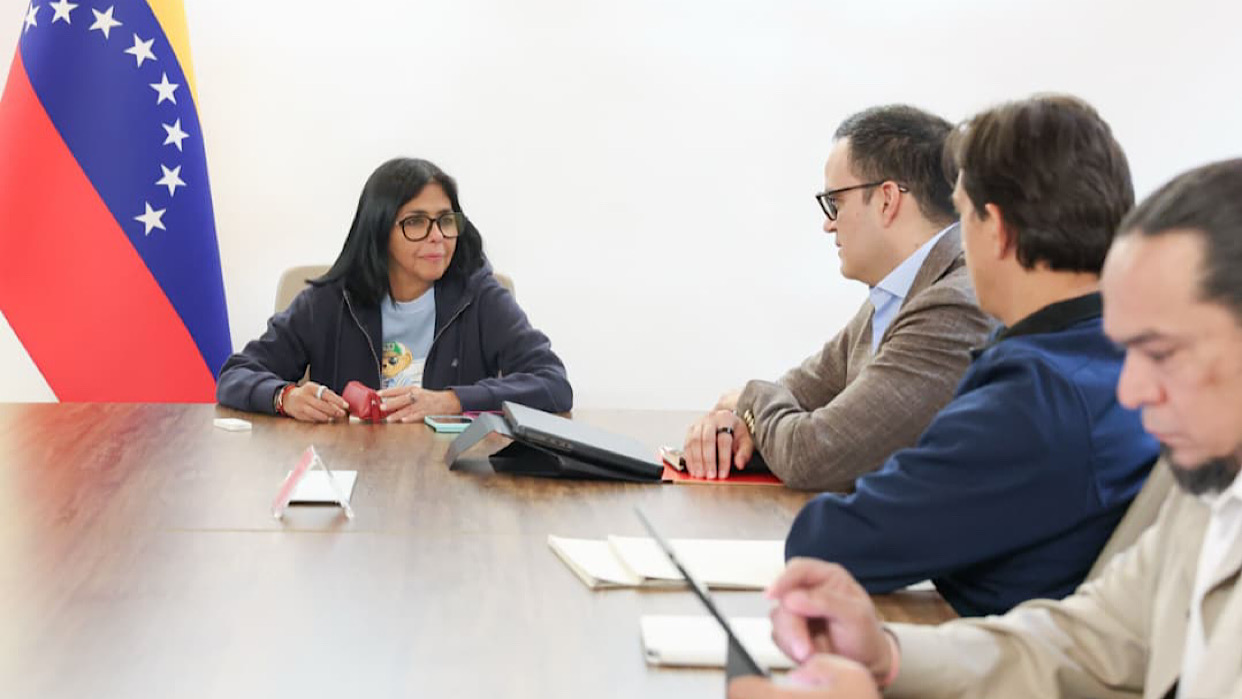
Full version: Presidenta Delcy Rodríguez evalúa financiamiento y avances en obras post-sismos
Jumblatt: Hamza al-Khatib’s Story Became a Turning Point
Walid Jumblatt said that his last meeting with former Syrian President Bashar Assad in June 2011 brought an end to their brief period of reconciliation. In an interview with Al Jazeera’s Witness of the Era, he said he asked Assad about Hamza al-Khatib—a child from Daraa province who became one of the first symbols of the suppression of Syria’s protests. Hamza was detained during the demonstrations, and his body, bearing numerous signs of torture, was handed over to his family in May 2011, sparking widespread outrage.
According to Jumblatt, Assad answered the question about the boy by saying, “We did not torture him—we killed him,” adding that the authorities had informed his relatives. Jumblatt said the wording shocked him. The conversation then turned to Atef Najib, head of the Political Security Directorate in Daraa and Assad’s cousin. His name was linked to the detention of children who had written anti-government slogans on their school walls.
Hamza, who was born in the village of Jiza in the Daraa countryside, quickly became known as one of the main symbols of the early months of the Syrian revolution. Photographs of his body and reports of torture intensified protests inside and outside the country, while the authorities denied that the security forces were responsible for the abuses. Jumblatt believes that the question of Hamza opened a broader discussion about the violent suppression of demonstrations in Daraa and the expansion of arrests and violence against protesters.
The meeting took place after Jumblatt’s visit to Damascus in 2010, organized as part of a political reconciliation following years of disagreements linked to the assassination of former Lebanese Prime Minister Rafik Hariri and the acute political crisis in Lebanon. At the time, Assad, according to Jumblatt, suggested that they “forget the past” and start a new chapter. However, after the Syrian protests began and repression intensified, Jumblatt’s attitude toward the president changed, and the June meeting became their last.
In the interview, Jumblatt also warned of attempts to separate Suwayda and Jabal al-Arab from their Syrian and Arab surroundings. He criticized the use of the name “Jabal Bashan” instead of the traditional “Jabal al-Arab,” saying that this might involve more than a geographical term—it could represent a revision of the region’s identity. Jumblatt opposed the project to establish a Druze state in southern Syria and criticized the position of one of the Druze spiritual leaders, Hikmat al-Hajri. In his view, such an idea benefits Israel because it encourages the fragmentation of Syria into sectarian entities. The Druze, he stressed, need a united Syrian state that guarantees the rights of all citizens, not an isolated and vulnerable enclave.
Comments on the News
What role did the protests in Daraa play at the beginning of the 2011 Syrian uprising, and why did this region become one of the main centers of the protest movement? — The protests in Daraa were one of the immediate starting points of the nationwide uprising. In March 2011, the arrest and brutal treatment of teenagers who had written anti-government slogans sparked demonstrations that were suppressed by force and quickly spread across the country. Daraa was particularly important because of its strong local and tribal ties, discontent over corruption, unemployment and water shortages, and the authorities’ neglect of the region. Its proximity to Jordan also facilitated the movement of people and information.
Why did the assassination of Rafik Hariri lead to a prolonged political crisis between Walid Jumblatt and the Syrian leadership, and how did it affect Damascus’s relations with Lebanon? — The assassination of former Lebanese Prime Minister Rafik Hariri in 2005 prompted suspicions of the involvement of Syrian forces and their Lebanese allies, although the question of legal responsibility remained the subject of investigations and political disputes. Jumblatt, who had previously cooperated with Damascus, became one of the harshest critics of Syrian influence and supported the mass protests known as the “Cedar Revolution.” This intensified the internal confrontation in Lebanon, contributed to the withdrawal of Syrian troops, and severely damaged relations between Jumblatt and the Syrian leadership for many years.
What is the historical and political significance of the Jabal al-Arab region for the Druze community, and why is replacing this name with “Jabal Bashan” perceived as an attempt to alter the region’s identity? — Jabal al-Arab, also known as Jabal al-Druze, is the historic center of Druze settlement in southern Syria and a symbol of their religious, social and political autonomy. The region is associated with the Druze uprising against the French Mandate led by Sultan al-Atrash and occupies an important place in the community’s collective memory. Consequently, replacing the familiar name with “Jabal Bashan” is perceived by many as an erasure of historical memory and the imposition of a different interpretation of the region’s origins. At the same time, the meaning of the new name and the context of its official use may depend on the particular source or political side.


Full version: "You’re Almost Losing Your Mind".. Jumblatt Reveals His Conversation with Assad About Hamza al-Khatib
Latin America Between U.S. Pressure and the Search for Compromise
This issue examines the region’s response to the Trump administration’s policies on Venezuela, Cuba, and migration. The materials show how U.S. sanctions, oil policy, and tighter border controls are becoming instruments of political and economic pressure, prompting debate over a possible transfer of power in Venezuela and the future of relations with Havana. Against this backdrop, Latin American leaders are pursuing different strategies, ranging from strong criticism to pragmatic dialogue with Washington. The review is based on materials from Instagram and Facebook (Venezuela).
Venezuelan Social Media: Distrust of Foreign Aid and Confusion Over Oil
In the Venezuelan social media sphere, international relations are often viewed through the lens of dependency, sanctions pressure, and the struggle for control over natural resources. Two posts dealing with foreign policy and the economy demonstrate both deep distrust of support offered from abroad and the problem of information confusion surrounding an especially sensitive subject—Venezuelan oil.
In an Instagram post, the author expresses a widespread attitude in the country toward loans, humanitarian aid, military supplies, and trade agreements with major powers. The main argument is stated in extremely categorical terms: “Nothing in life is free.” In the author’s view, every form of foreign “assistance” comes with strings attached, and the recipient ultimately risks becoming even more dependent.
A central element of this criticism is the commodity-based economic model. Venezuela, which possesses the world’s largest oil reserves along with other natural resources, exports raw materials that then return to the country in the form of processed products and technology, but at a much higher price. This arrangement is perceived as an unequal exchange: most of the added value, technological control, and access to markets remain with the countries engaged in processing and manufacturing.
The author is also outraged by the supply of outdated equipment: “They sell us everything that is already obsolete for them—aircraft, weapons, and so on.” This statement alludes to long-running debates in Venezuela over military procurement, limited access to new technologies, sanctions, and dependence on foreign suppliers. Under this interpretation, the country receives not modern tools for development, but equipment that developed countries no longer consider in demand.
Such sentiments are particularly evident amid U.S. sanctions, restrictions on the oil sector, and Caracas’s search for partners in Russia, China, Iran, and elsewhere. For part of Venezuelan society, foreign support remains contradictory: it may be necessary to sustain the economy while simultaneously being viewed as an instrument of political and economic control. This post is not a fact-check of a specific deal or a neutral news report; rather, it reflects an emotional perception of the international system rooted in historical distrust of foreign powers and a sense of injustice over dependence on raw materials.
Against this backdrop, another post by a Venezuelan news account is also telling, as its stated subject does not match its content. The headline promises a report on Donald Trump’s statement regarding Venezuelan oil—a matter that inevitably draws the country’s audience, since oil remains the foundation of its exports, budget revenues, and international political disputes.
However, the text itself is devoted not to Venezuela, Trump, or the oil sector, but to the alleged intention of Colombia’s president-elect, Abelardo de la Espriella, to withdraw the country from China’s Belt and Road Initiative. The post discusses the possible consequences of such a decision for Colombia’s investment, trade, and foreign-policy ties, but provides no documents, verifiable statements, or specific quotations from Venezuelan politicians or experts. Nor does it explain how the subject is directly connected to Venezuela’s oil policy.
The mere mention of Trump and Venezuelan oil can provoke a strong public reaction. In Venezuela, his first presidential term is associated with sanctions against the state oil company PDVSA, export restrictions, pressure on Caracas’s foreign partners, and a strategy of “maximum pressure.” As a result, many readers may have expected information about a possible tightening of U.S. policy—or, conversely, its adjustment.
The Colombia–China agenda does nevertheless have indirect significance for Venezuela. Colombia remains a key neighbor, trading partner, and one of the main destinations for Venezuelan migrants. Changes in its relations with China, the United States, and international investors could affect cross-border trade, transport routes, migrants’ circumstances, employment, and regional policy. But the original post does not explain these connections, and its attention-grabbing headline combines two different subjects without any confirmed analytical link.
Ultimately, both posts reveal characteristic features of Venezuela’s information environment. On the one hand, there is a strong fear that foreign aid and cooperation conceal unfavorable conditions and deepen dependence. On the other, the audience’s heightened sensitivity to oil, sanctions, and U.S. policy makes it particularly vulnerable to sensational headlines, even when their content does not correspond to the subject announced.


News 08-08-2026
Shelling of Marib: dead, wounded and a retaliatory strike
Yemeni media reported a series of explosions in the city of Marib on Friday following a rocket-and-drone attack by the forces of “Ansar Allah” (the Houthis) on targets inside the city. According to available information, the strike caused casualties and injuries, and in response pro-government forces in Yemen said they carried out a military operation against Houthi positions in Marib Governorate.
A source in Yemen’s military structures said that the government air defenses shot down several Houthi drones in the skies over Marib. The state TV channel Saba, which broadcasts from this city, said that the “Houthi militia” shelled the densely populated city with rockets and drones, but did not provide details on the scale of the damage. The Minister of Health and Population in the Yemeni government, Qasem Buhaybah, said two civilians were killed and 14 people were injured, stressing that the strike hit residential neighborhoods and displacement camps.
Buhaybah said that Marib is the largest center for refugees and internally displaced persons in Yemen, and called what happened an attack on people who had already been forced to flee their homes because of the war. He urged hospitals and medical institutions to switch to a state of heightened readiness. At the same time, there was no official final report at the time of publication on all hit targets or the final death toll, and figures from different sources on losses differed.
Meanwhile, the Shabwa defense forces, loyal to the Yemeni government, announced a retaliatory operation on the Harib front in Marib, saying it was a response to the killing of two of their fighters in a drone strike. Al Jazeera journalist Ahmed ash-Shalfi posted a video showing smoke above a residential area, and witnesses said that some of the rockets and drones hit the Sahn al-Jin area, where military forces and equipment are based, but where civilians also live. Against this backdrop, Yemen is experiencing a noticeable escalation: earlier, the country’s Ministry of Defense reported new casualties, and Houthi attacks also affected Hadramaut and Saudi Najran.
Comments on the news
What is the Sahn al-Jin camp in Marib and why are military forces, equipment and civilians there at the same time? — Sahn al-Jin is a district/camp in Marib Governorate in eastern Yemen that, in wartime conditions, is used not only as a place to house the military, but also as an area where civilians who fled fighting are concentrated. This is because there are many displaced people in Marib, and the governorate itself has long been relatively safer than other areas, so security forces, military equipment and civilians ended up close to one another.
Why is Marib considered the largest hub for internally displaced persons in Yemen, and what role does it play in the current war? — Marib became the largest center for internally displaced persons because, during the war, people moved there in large numbers from more dangerous governorates: for a long time it retained the reputation of being a place where one could find shelter, work, and assistance. In the current war, Marib has strategic importance: it is a resource-rich governorate, important for controlling eastern Yemen, and therefore fierce fighting is taking place there between recognized authorities and the Houthis.

Full version: قتلى مدنيون وعسكريون في هجوم للحوثيين على مأرب
Court Closes the Case and Fully Frees Judge María Lourdes Afiuni
The court ruling granted Judge María Lourdes Afiuni full freedom and permanently closed her case, bringing an end to criminal prosecution that lasted 16 years. The decision was reported by her brother, Nelson Afiuni, after an official document terminating the case was handed over to the family by an official.
According to him, at the time the notice was delivered, Afiuni was unable to receive it in person because she was with her mother at a medical center in the capital. This measure formally ends all charges, removes the consequences of the proceedings, and fully restores the judge’s civil rights. Her case became one of the most high-profile in the country in the context of judicial independence.
Full version: Otorgan libertad plena y cierran el caso de la jueza María Lourdes Afiuni
Israel drags out talks on southern Lebanon despite “positive” signals from the US
At the seventh round of negotiations in Rome, Israel refused to withdraw forces from a new zone in southern Lebanon and demanded first that it be confirmed that the Lebanese army has fully taken control of two territories where it has already been deployed. According to a source in the Lebanese presidency, the Thursday meeting under American auspices did not produce a final decision on the so-called “exemplary zones”: Beirut insisted on moving to new sectors, while the Israeli side pushed for completion of the verification of the first two.
In Washington, however, the talks were assessed as “positive.” A State Department spokesperson said the sides had become “much closer” to expanding the experimental format and putting it into practice. But, as The Wall Street Journal writes, Lebanese officials believe that Israel’s ongoing strikes on southern Lebanon noticeably complicated the seventh round and made a quick diplomatic breakthrough unlikely.
According to the newspaper, Beirut had expected to secure Israel’s agreement to withdraw troops from several more villages and hand them over to Lebanese control, but Tel Aviv refused. Israel is also insisting that a third party verify whether the withdrawal areas are clear of fighters from Hezbollah and its infrastructure. Italy is being considered as one of the most likely candidates for such a role.
In addition, Israeli military sources, as reported by the WSJ, acknowledge that Hezbollah cannot be disarmed by force alone. In their view, doing so would require a political agreement. Lebanon and Israel signed a framework agreement on June 26 following five rounds of talks in Washington. It provides for Israel’s gradual withdrawal from occupied areas in southern Lebanon in parallel with the deployment of the Lebanese army and the disarmament of Hezbollah, starting with two pilot zones.
In practice, the Lebanese army has already deployed as of July 21 in Zoutar-ash-Sharkiya—one of the two test zones—after the Israeli forces pulled back from its outskirts. Later, positions in Srifa and Frunе were reinforced. At the same time, contacts between the sides continue, and on the ground further steps are being discussed regarding troop withdrawal, army deployment, and the control system.
Meanwhile, conditions in southern Lebanon remain tense. The Lebanese agency reported that an Israeli drone dropped a flash-bang grenade toward an army bulldozer working to clear a road in the Al-Mansouri area, to enable the return of displaced residents. The Lebanese army said that one serviceman received a minor injury after an Israeli strike on the bulldozer. According to reports, army units entered Al-Mansouri on Friday morning to open roads that had been blocked by recent airstrikes.
On the eve of those events, dozens of families left Al-Mansouri after an Israeli evacuation warning—the first such order since June 14. Since March 2, Israel has continued military operations in Lebanon, and, according to the Lebanese Ministry of Public Health, they have already killed 4,333 people and injured 12,250. Against the backdrop of new strikes and evacuations, the chances of real diplomatic progress remain limited despite optimistic statements from the United States.
Comments on the news
What are the “exemplary” or “pilot” zones in southern Lebanon, and why are they used to test the withdrawal of Israeli forces and the deployment of the Lebanese army? - These are limited areas in southern Lebanon selected as test sites to check how the agreement will be carried out in practice: whether Israeli forces will leave, and whether the Lebanese army will be able to take and hold those territories. Such zones are used because it is easier to monitor compliance with the deal, assess risks, and, if necessary, adjust the control mechanism before wider deployment.
Why is Italy being considered as a possible “third party” to verify the withdrawal zones, and what role do European countries typically play in arrangements of this kind between Israel and Lebanon? - Italy is seen as a relatively neutral and acceptable participant to both sides, who can help with on-the-ground monitoring and verification. In situations like these, European countries generally do not make decisions for the conflict sides themselves; they act as mediators, observers, participants in peacekeeping missions, or technical guarantors of monitoring. In the Lebanese-Israeli context, their role is often tied to supporting international monitoring mechanisms and reducing the risk of direct escalation.
Where are Zoutar-ash-Sharkiya, Srifa, Frunе, and Al-Mansouri, and why are these particular localities considered important in negotiations and military operations in southern Lebanon? - All of these localities are in southern Lebanon, in areas where the line of contact with Israel is especially sensitive and where military and political clashes often occur. They are important because control over such points affects border security, troop movement routes, and how far the line of hostilities can be pushed back. In negotiations, such places often become markers: whoever controls them gains an advantage in verifying troop withdrawal and in determining the future security order in the south of the country.


Full version: لا اختراق في روما.. إسرائيل ترفض انسحابا جديدا من جنوب لبنان
The World Debates Trump’s Crackdown on Immigration and Visa Policy
In news coverage, the United States is again at the center of attention due to its tougher approach to migration, visas, and border control. Even when debates differ in assessments and emphasis, the overall tone is the same: the world is closely watching how entry and movement rules are changing—and what that means for ordinary travelers, families, and those making plans for work or study abroad. What comes to the fore is the practical side of the reaction—growing caution, tighter oversight, and the need to adapt more quickly to new requirements, not just the details of specific decisions. The “external regulation” effect is also becoming clear, when changes in U.S. policy trigger a chain of reviews and expectations worldwide. This material was prepared based on publications from canalb.pe (Venezuela) and www.facebook.com (Venezuela).
The U.S. Tightens Visas: How It’s Being Perceived in Venezuela
In Venezuela, the United States’ new measures to toughen visa policy are being seen not as a routine bureaucratic development, but as another barrier for people whose lives have long been tied to migration, separation from loved ones, and the search for a chance to start over. Against the backdrop of years of crisis and mass departures of citizens, any decision from Washington in the field of migration is read here through the lens of personal and family losses, as well as hopes for lawful departure, studying, working, or reuniting with close relatives.
As reported by Canal B, the administration of Donald Trump and Secretary of State Marco Rubio plan to check applicants’ activity on social media. For Venezuelans, this is especially sensitive: today, almost everyone has a digital footprint, and posts, comments, likes, and even political statements can become grounds for refusal. In the local context, this fuels concern that under increased scrutiny will be not only those who genuinely try to bypass the rules, but also ordinary citizens—people who already face limited access to consular procedures and high uncertainty.
As the article notes, Rubio emphasizes that a visa is not a right, but a privilege—and that U.S. authorities will check for any signs of support for organizations that Washington considers terrorist. For Venezuela, these statements carry not only legal meaning, but political meaning as well. Many here view U.S. migration policy as part of a broader conflict between Caracas and Washington, in which rules for Venezuelans can change depending on the political situation.
The same logic is reflected in another publication available as a Facebook post by lawyer Jessica Dominges, where Trump’s measures are seen as an attempt to curb visa abuses connected to so-called “birth tourism.” At the same time, a key legal point is highlighted: an executive order cannot overturn the 14th Amendment to the U.S. Constitution. For Venezuelan families, this is crucial, because many see the United States not only as a place to work and find security, but also as a country where a child’s status can determine the future of the entire family.
That is why in Venezuela, news like this triggers concern not only among those planning a trip, but also among migrants already living in the United States. Increased scrutiny of visas and social-media activity is perceived here as an intensification of pressure on families, a rise in fear of denial, and another narrowing of opportunities for lawful departure. This is felt especially sharply in a country where remittances from the U.S., stable work abroad, and legal certainty for children have long ceased to be an abstract topic and have instead become a matter of everyday survival.
In the end, news about visa restrictions in the Venezuelan reading goes far beyond U.S. domestic policy. It becomes a story about how decisions in Washington affect the lives of millions of people in a country where migration, family separation, and legal uncertainty have long been part of everyday life.
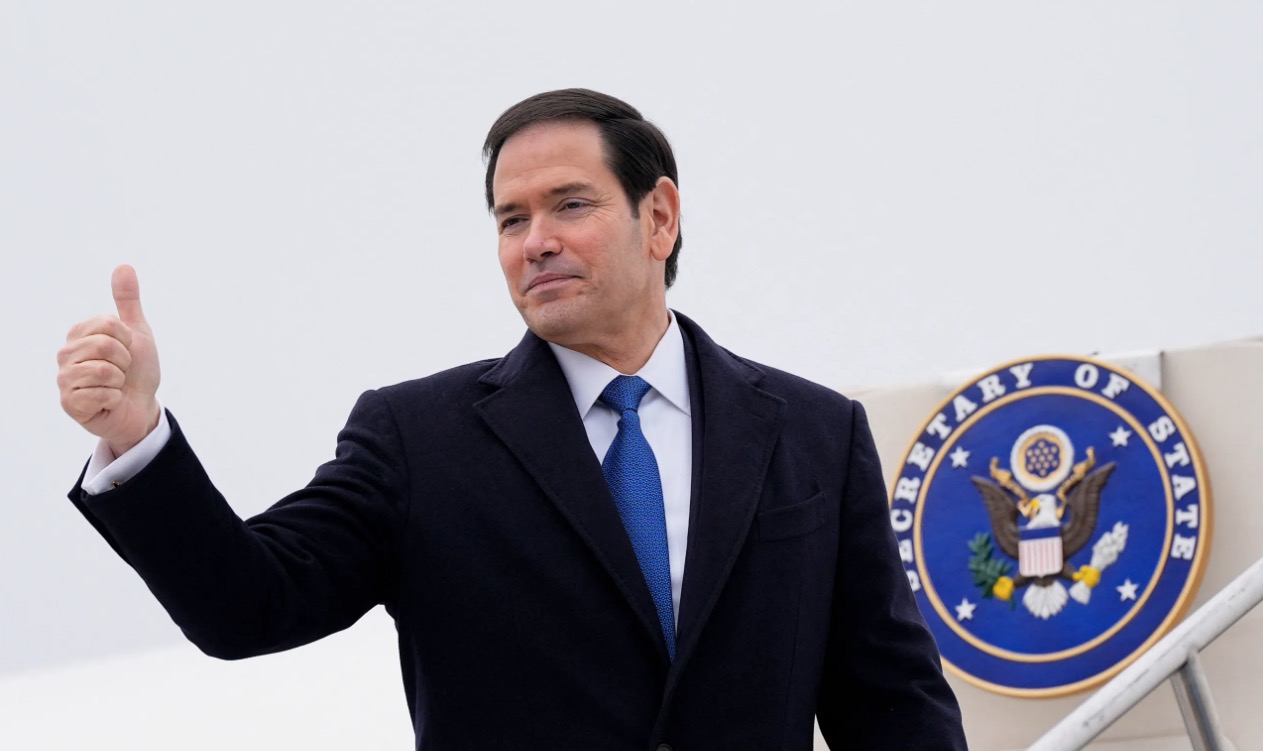
News 07-08-2026
Explosion in Jaramana: 14 injured, authorities promise a fair investigation
On Thursday evening, a blast went off in a passenger bus traveling along the main streets during rush hour in the Syrian city of Jaramana (Rif-Damascus Province). According to the latest figures from the director of health for the province, Dr. Taufik Hisba, 14 people were injured and there were no deaths. Videos have appeared online showing that the bus roof was completely destroyed, with passengers’ and passersby’s belongings scattered around. This was the first such explosion in the city since the fall of the previous regime.
Three of the injured are in critical condition and need surgery, while another seven were taken to a hospital in Damascus. Doctors faced a disturbing discovery: parts of bodies that had initially been brought to the forensic department from the “Ar-Radi” Hospital in Jaramana turned out not to be remains of the dead, but amputated limbs of surviving passengers. In total, three limbs were found—one of them completely severed. After the data were checked again, the medical staff established that all victims are in the “Al-Mujahhid” Hospital, and that the alarm about alleged deaths had been false.
The explosion occurred amid a clear rise in tensions in Jaramana. In the past few days, limited protest actions have taken place there calling for those responsible for violations in the Suwayda province to be held accountable. About an hour before the tragedy, the sheikhs of Suwayda’s Druze community called for an end to violence and intercommunal strife, for preserving the unity of Syrian society, and for punishing those acting outside the law. This gives the incident an added regional dimension, as Jaramana is regarded as a city with a strong Druze community.
The Syrian Ministry of the Interior said that security forces immediately cordoned off the scene, began collecting evidence, and are conducting an investigation to establish all the circumstances of the crime. The ministry stressed that the blast occurred after the sheikhs and elders of Jaramana issued statements expressing support for the Syrian state and the unity of the country. Authorities urged citizens to remain vigilant and not be drawn into provocations aimed at stoking interethnic hatred.
Syrian Foreign Minister Assad ash-Shaybani said that the terrorist attack would not stop Syrians from restoring and building the state, and that all those responsible would be found and punished. The head of the Civil Defense, Raid as-Salih, also expressed confidence that the tragedy would not weaken society’s resolve. The governor of Rif-Damascus Province, Amer ash-Shaykh, promised that “the crime will not go unpunished.” It is worth noting that on July 7, two explosions already occurred in Damascus near the Ministry of Tourism: one person was killed and 36 were injured. According to the investigation, the cell of ISIS was responsible for that attack.
Comments on the news
What events in Suwayda province sparked dissatisfaction among the Druze community, and why did this lead to protests in Jaramana? — After the fall of the Assad regime in December 2024, the new Syrian authorities—formed with the dominance of the Hayat Tahrir ash-Sham group—began to establish control over Suwayda, the province where Druze make up the majority of the population. Discontent was triggered by attempts to disarm local Druze units and integrate them into new security structures, arrests of activists, harsh raids, and clashes in which local residents died at the beginning of 2025. Alarm was heightened by reports of attacks on Druze religious sites in other parts of Syria: many Druze interpreted this as a sign of an aggressive policy by the new authority with Islamist roots. Jaramana— the largest center of the Druze community in the metropolitan region—responded with solidarity protests. Druze took to the streets demanding guarantees of safety, protection for sacred sites, and an end to security operations in areas where the community lives in concentrated settlements. For residents of Jaramana, events in Suwayda became a warning signal: they saw in them a model of how the new authorities might act against minorities across the country.
What is unique about Jaramana’s history and demographics? — Jaramana is an ancient satellite city of Damascus southeast of Syria’s capital, notable for its centuries-old mixed population. For ages, Druze, Christians of different denominations (Orthodox, Catholics, Protestants) and Sunni Muslims have lived side by side here; within the city’s territory there was also a camp for Palestinian refugees. During the civil war, Jaramana remained under the control of government forces and received tens of thousands of displaced people, primarily from the nearby Eastern Ghouta: the city’s population more than doubled—from roughly 100,000 to 200,000 people. At the same time, the local Druze and Christian community preserved relative autonomy, had their own armed formations, and community leaders served as intermediaries between the central authorities and residents. After the fall of Assad, Jaramana became a symbol of Druze-Christian presence in Damascus and a kind of “barometer” of sentiment among religious minorities, so any incident there immediately resonates across Syria.
How was the new Syrian government formed after the fall of the Assad regime, and who was Raid as-Salih, head of the Civil Defense? — After Bashar Assad fled on December 8, 2024, power in Damascus passed to an opposition coalition headed by Ahmed ash-Sharaa (known previously as Abu Muhammad al-Julani). The core of the new government consisted of the structures of the “Syrian Salvation Government”—the administration that, since 2017, had governed the opposition-held region of Idlib. The prime minister of the transitional cabinet was Muhammad al-Bashir, and at the end of January 2025, ash-Sharaa announced he would be president of the transitional period. Key posts were filled by people from the Idlib administration: Murhaf Abu Kasra became defense minister, Assad ash-Shaybani—foreign minister, and Ali Keda—interior minister. Before entering government, the head of the Civil Defense, Raid as-Salih, led the “Syrian Civil Defense,” known as the “White Helmets”—an organization created during the war to rescue civilians from under rubble after airstrikes. In the West, the “White Helmets” received widespread recognition (as-Salih was even nominated for the Nobel Peace Prize), but Damascus, Moscow, and Tehran accused them of ties to radical groups and of staged videos. Because of threats from the Assad regime, as-Salih spent many years in exile—in Turkey and Europe—returning to Syria only after the fall of Assad. His appointment to the cabinet was seen by the new authorities as a step toward winning Western trust and a demonstration of “moderation,” though for many skeptics it merely underscored the government’s links to Islamist structures.


Full version: 14 مصاباً في تفجير جرمانا.. والداخلية السورية: نتعقب المتورطين
2015 authorities and opposition resume dialogue with U.S. support
Jorge Rodríguez, head of the National Assembly elected in 2020, announced the start of a new phase of national dialogue with former parliament members from 2015. The information was shared via his official Telegram channel. The talks’ agenda includes three key areas: assistance to the population following the double earthquake that occurred on June 24, institutional strengthening, including updates to the Supreme Court and the National Electoral Council, and political guarantees for all participants in the country’s political process.
On the government side, the delegation is led by Rodríguez himself, and includes Jorge Arreasa, Ana María San-Juan, América Pérez, Genesis Garbett, and Pedro Infante. The opposition is represented by the Assembly 2015 led by Dinora Figuera, together with its team and a separate support commission. It is important to note that U.S. delegates will monitor the negotiations: they will accompany each stage to ensure the dialogue remains fair, constructive, and leads to concrete outcomes for Venezuela’s stability.
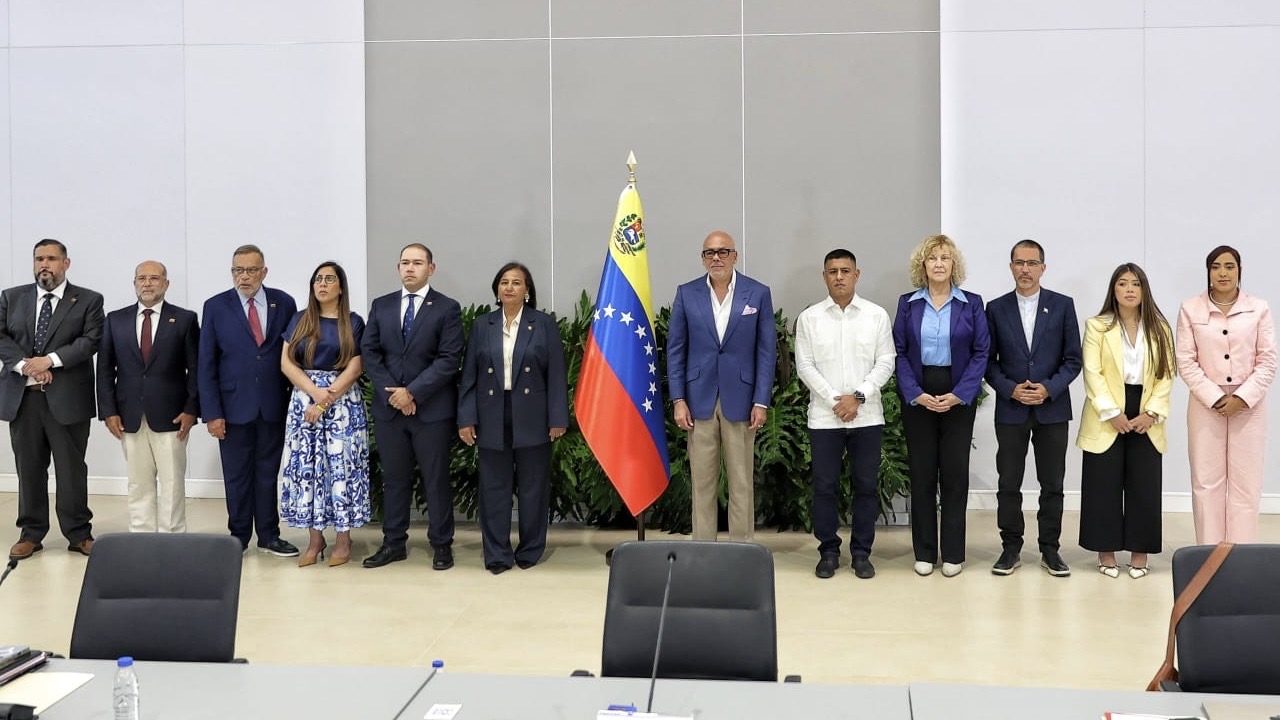
Full version: Gobierno y sectores de la AN 2015 retoman contactos en una nueva mesa de diálogo
A Visit to Ankara: Damascus insists on a state monopoly on weapons
Syrian Foreign Minister Asaad ash-Shibani visited Ankara on Thursday, where he met with his Turkish counterpart Hakan Fidan. This is the second visit by the Syrian minister to Turkey since the beginning of the year. At a joint press conference, ash-Shibani stressed that the country’s government intends to put an end to the existence of any weapons outside state control and continues its fight against terrorism. He also said it is necessary to strengthen stability in southern Syria, halt repeated Israeli strikes, and return to compliance with the 1974 agreement, urging the international community to take responsibility.
For his part, Hakan Fidan said Syria has become noticeably more stable and reaffirmed Turkey’s readiness to develop relations with it at all levels. He highlighted the importance of joint work in the field of defense and counterterrorism operations, but also noted that Israel’s ongoing attacks pose a direct threat to Syria’s security and called for international pressure on the Israeli side. Ash-Shibani added that the two countries’ shared border must remain a corridor for trade, prosperity, and mutual security. A separate topic was the return of Syrian refugees to their homeland—Damascus considers this a national priority and intends to link return projects to early recovery programs with practical support from Turkey.
According to Syria’s SANA agency, the sides also agreed to establish a Supreme Coordination Council between Syria and Turkey, discussed stepping up the work of relevant committees, and speeding up a rail link project. Turkey’s Anadolu agency reported that an important topic was the inclusion of northeastern Syria in state structures—a question Ankara attaches particular importance to. The visit took place right after negotiations between Syrian President Ahmed ash-Sharaa and Minister ash-Shibani with the leadership of the Syrian Democratic Forces in Damascus, indicating a continuation of efforts to integrate Kurdish formations and their institutions into a single state.


Full version: Шибани confirms from Ankara work to end weapons outside state authority
News 06-08-2026
Syria’s Economy in 2026: Growth Above 10% and the Challenges of Reform
Syria’s economy is entering 2026 at a turning point: a faster recovery is expected, along with improved confidence among investors and consumers, driven by the return of about 1.5 million refugees and the gradual reintegration of the country into regional and international economic life. According to the International Monetary Fund, GDP growth this year could exceed 10%, despite ongoing regional tensions. However, the durability of this upswing will directly depend on addressing deep imbalances in the banking sector and continuing structural reforms.
The IMF links the expected surge in growth to improved conditions in agriculture, expanded hydrocarbon production, the restoration of electricity supply, and steady growth in trade and services. There is also a clear improvement in public finances: in 2026, projections call for a significant increase in tax, customs, and energy revenues. Inflation has risen this year due to higher import costs amid external pressures, but the fund expects it to ease by 2027 if a sound fiscal-monetary and monetary policy is implemented.
Syria’s Finance Minister Mohammed Yasser Barnia described the IMF statement as an important signal of confidence in the government’s reform drive, aimed at restoring macroeconomic stability, improving the efficiency of public finances, and creating a more attractive environment for investment and the private sector. An Al Jazeera correspondent in Damascus noted that the fund’s praise followed progress by Syria in public finance management and transparency. The IMF and the World Bank have tied these achievements to the possibility of increased grants for Syria by 2027. The World Bank has already approved two key projects: $20 million to improve the efficiency of public financial management, and $225 million to support healthcare, water supply, and basic services.
The fund emphasizes that Damascus’s needs go far beyond traditional humanitarian aid. The country requires rapid international financial support that will enable job creation, the restoration of infrastructure, and an acceleration of restructuring in the banking sector to facilitate domestic and international payments. Osama al-Kadi, First Adviser at Syria’s Ministry of Economy, said that the current results are the result of 16 months of intense work on developing monetary-policy tools and external openness. He also noted that Syria has risen by more than 70 places in the economic index of Reporters Without Borders between 2025 and 2026.
Among the key steps to rebuild the monetary system are an agreement between the central banks of Syria and Turkey to gradually withdraw the Turkish lira from northern areas and switch to the Syrian lira, as well as the opening of joint deposit accounts to simplify payments. Consulting firm Oliver Wyman has been tasked with conducting a gap assessment to connect Syria to the SWIFT system. In the coming weeks, it is expected that the country’s name will be removed from the list of states supporting terrorism, which by the end of 2026 should improve cooperation with correspondent banks. The plan also includes settling historical imbalances involving roughly 15 banks established earlier with the participation and influence of Rami Makhlouf, pending approval of a new banking law by parliament.
Osama al-Kadi forecasts stabilization of the monetary and financial system by the end of 2027, as well as the entry of Arab, Turkish, and American banks by mid-year. This should improve the quality of banking services and deepen economic recovery. That said, these expectations are directly linked to the continuation of reforms, the rebuilding of industrial production sectors, and infrastructure restoration. For now, there is hope that positive assessments by international institutions will translate into real support and tangible improvements in the lives of Syrians in the coming years. Thus, Syria faces a real test: whether it can turn positive macroeconomic indicators into sustainable, inclusive growth and long-term stability.
News comments
Who is Rami Makhlouf and why did the banks created with his involvement become a source of “historical imbalances,” as mentioned in the article? — Rami Makhlouf is Bashar Assad’s cousin and one of the most well-known Syrian oligarchs close to the regime. Through his companies and ties to state banks, he controlled entire sectors of the economy—from telecommunications to construction and finance. Banks created with his participation served the interests of a narrow elite, operated through non-transparent arrangements, and were effectively used to siphon funds and enrich the clan. This led to “historical imbalances”: excessive concentration of assets, politicization of lending, capital flight, and the distortion of the banking system, which began to serve the ruling circle rather than the economy. After Assad fled, Makhlouf’s legacy remained as weak, non-transparent, and distrusted financial institutions.
How did the Turkish lira end up in circulation in northern areas of Syria, and what does its gradual withdrawal mean for the local economy? — The Turkish lira appeared in northern Syria due to many years of control over these territories by pro-Turkey armed groups and their close economic dependence on Turkey. Local trade, fuel imports, food, and construction materials were geared toward the Turkish market, while wages and prices were often tied to the lira. The gradual withdrawal of the lira means a shift to the Syrian pound or other payment instruments. For the local economy, this is a double-edged process: on one hand, it pulls the region back into the orbit of the official Syrian financial system and reduces dependence on foreign currency; on the other, it may trigger a sharp rise in prices, the loss of savings for the population, and a temporary paralysis of trade, because old contracts and transactions will have to be recalculated using new exchange rates.
What financial restrictions does Syria face due to being on the list of states supporting terrorism, and why would removal improve how banks operate? — Syria’s inclusion on this list (especially on the US list) means severe sanctions: bans for American companies and banks from doing business with Syria, asset freezes, restrictions on dollar operations, and de facto isolation from the international payment system SWIFT. Foreign banks refuse to open correspondent accounts for Syrian banks, fearing secondary sanctions. This makes normal external trade settlements impossible, blocks access to loans from the IMF and the World Bank, prevents attracting investment, and even disrupts remittances from the diaspora. Removal would lift these barriers: Syrian banks would be able to restore correspondent relationships, service foreign trade, attract foreign capital, and use international financial instruments. This is critical for the country’s reconstruction and for stabilizing the national currency.


Full version: اقتصاد سوريا 2026.. زخم التعافي يصطدم باختبار "سويفت" والإصلاح المصرفي
Trump Says He Loves Venezuela and Highlights Successes in Oil
At a recent institutional meeting, US President Donald Trump spoke positively about the state of relations with Venezuela, emphasizing the development of diplomatic ties between Washington and Caracas, as well as the momentum in the energy sector. The head of the White House said openly: “I love Venezuela; everything is going very well for us,” thereby noting progress in cooperation in hydrocarbons, which has become a key factor in the two countries’ trade talks. These words underscore the United States’ interest in the stability of fuel production and exports, as well as its willingness to maintain dialogue to support mutual economic development through joint projects in the oil industry.
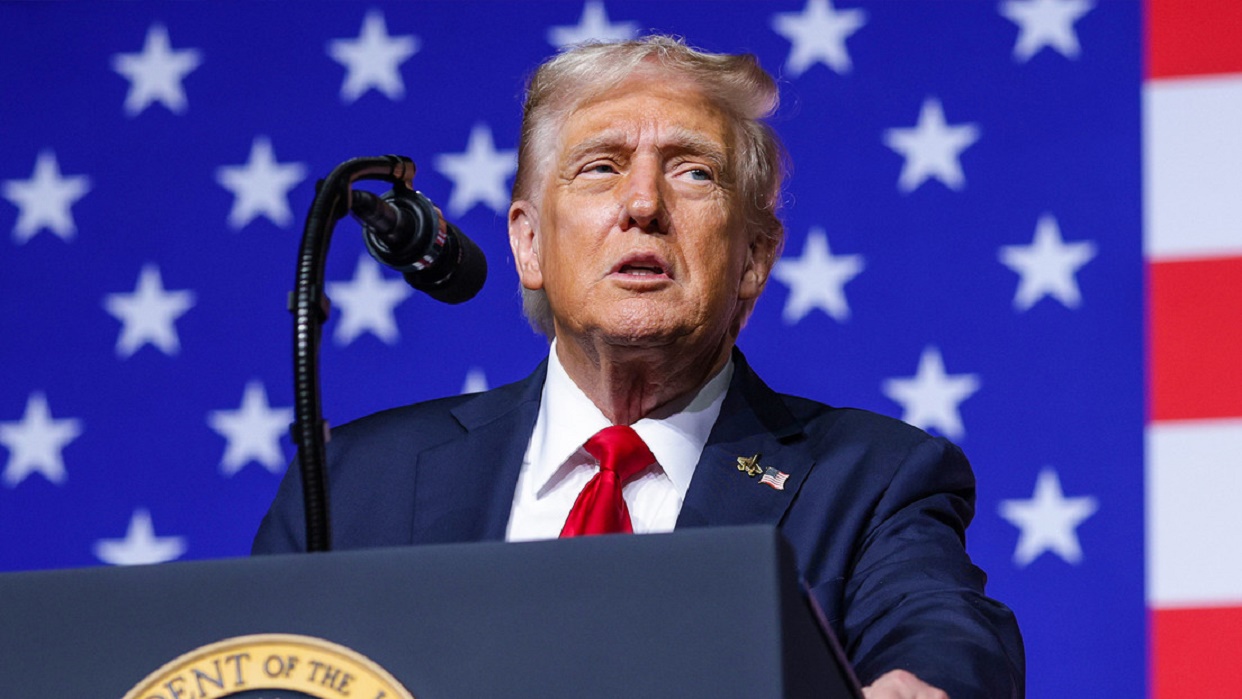
Full version: Donald Trump sobre el avance en el sector petrolero: Me encanta Venezuela, nos está yendo muy bien
Russia and Syria: a new stage of partnership after a change of power
Relations between Moscow and Damascus are once again in the spotlight. Russia has appointed Dmitry Dogadkin as the new ambassador to Syria, Syrian authorities have announced the launch of regular direct flights between the capitals starting August 16, and the Russian House in Damascus is resuming operations after a break of more than a year and a half. These moves prompt a question: is this merely routine diplomatic procedure, or the beginning of a new phase in strengthening Russian influence and expanding partnership?
Russian experts believe that the ongoing contacts show that Damascus does not want to break with Moscow and is using manoeuvres to steer away from Western demands. On the agenda are security issues, the fate of military bases, the rebuilding of the economy, and even the printing of national currency. In their view, Syria needs Russia to protect its interests on the international stage, while Russia needs Syria to preserve bases and supply lines in the region—especially against the backdrop of discussions about the “four seas” and new logistics routes.
Now the relationship is in a phase of reconfiguration after the fall of the Assad regime. Moscow clearly does not intend to leave Syria, but it seeks to reshape its presence to fit the new political reality, while keeping the Hmeimim airbase and the Tartus naval base. For Russia, this is an important foothold in the Eastern Mediterranean, a springboard for activity in Africa, and a tool for countering the West. The new Syrian leadership, in turn, is trying to diversify partnerships and reduce dependence on Moscow where alternatives exist, but it continues cooperation in areas that require Russian expertise and technologies.
The relationship has a long history: it began back in the mid-20th century, and took on a strategic character after Hafiz Assad came to power in 1970. In 1971, the Soviet Union received a naval base in Tartus, and in 1980 the countries signed a treaty of friendship and cooperation. After the collapse of the USSR, ties revived under Bashar Assad and Vladimir Putin: Moscow wrote off Syrian debts and expanded military cooperation. A turning point came in 2011: from the end of 2015, Russia provided Damascus with political cover and decisive military support, which shifted the balance of forces in the conflict and allowed Syrian authorities to regain control over significant territories.
After Assad fell and fled to Russia, the new Syrian authorities chose a pragmatic line: not to let things come to a rupture, but to renegotiate their interests anew. Analysts explain this by saying that relying too heavily on the United States is too risky, the security situation remains fragile, and Israel’s policy and the broader geopolitical instability in the region add uncertainty. Damascus needs Russian support in the military, economic, and agricultural spheres. Moscow, for its part, wants to keep Syria as a foothold in the Mediterranean and a card in dialogue with the West.
According to the International Crisis Group, Syria maintained constructive ties with Russia even after its break with Iran and Hezbollah: Ahmad ash-Sharaa visited Moscow twice and allowed Russia to keep key bases. Experts see a clear pattern—Russia’s role is reduced where alternatives appear, but it is preserved where the need remains: military equipment, oil and wheat supplies, and printing money. Switching to other suppliers would require many years and billions of dollars that Damascus does not have. At the same time, it is not easy for society to forget Russia’s role in the killing of Syrians, even if policy is usually driven by interests and looks ahead.
Comments on the news
What is the “Russian House” in Damascus and what role does it play in Russian-Syrian relations after its work was resumed? — The Russian House is the Russian Center for Science and Culture, operating under the aegis of Rossotrudnichestvo. After the fall of the Assad regime and the arrival of the new authorities, its work was temporarily suspended and then resumed. It performs “soft power” functions: teaching Russian, cultural events, humanitarian projects, and maintaining direct contact between societies. In addition, it serves as an unofficial channel of communication between Moscow and Syria’s transitional government, allowing Russian presence and influence to be maintained even amid changes in the political regime.
Who was Ahmad ash-Sharaa before coming to power, and why is his position on Russia considered pragmatic? — Ahmad ash-Sharaa, previously known as Abu Muhammad al-Jawlani, was born in Riyadh into a family of people from the Golan Heights. He moved from being a member of the Iraq branch of al-Qaeda to the founder of Jabhat al-Nusra in 2012, then cut ties with global jihadism, reformed the group Hay’at Tahrir ash-Sham, and became ruler of Idlib. In December 2024, he led an offensive that overthrew Bashar Assad and became the de facto leader of transitional Syria. His position on Russia is considered pragmatic because he puts the rebuilding of the destroyed country, lifting sanctions, and economic stability ahead of ideological struggle against Moscow. He is willing to negotiate with Russia and even keep its military bases if that helps legitimize his rule and develop Syria.
What is implied by the concept of the “four seas” in Russian geopolitical thinking, and how is it connected to preserving bases in Syria? — The concept of the “four seas” describes Russia’s desire to ensure its presence in four key maritime basins: the Baltic, Black, Caspian, and Mediterranean. The first three are “border” seas near Russia’s coasts, where it feels confident, and the Mediterranean is a strategic gateway to global trade routes and to the Middle East. The naval base in Tartus and the Hmeimim airbase in Syria are the only way to maintain a permanent military presence in this “fourth sea.” Therefore, Moscow is interested in agreements with the new Syrian authorities to keep the bases: without them, Russia loses its status as a global maritime power and its ability to project power into Africa and the Middle East.

Full version: ذاكرة القصف وحسابات المصالح.. هل تتصالح سوريا الجديدة مع روسيا؟
Latin America worries about US pressure, tariffs and influence
In Latin America, unease is growing over how Washington uses economic and political levers in the region: from tariffs and trade disputes to attempts to influence countries’ internal decisions. Against this backdrop, discussions are turning to the risks for local economies and the resilience of alliances already in place—along with the question of how far American involvement in the region’s external and internal agendas may go. Taken together, this builds a picture of “external pressure,” to which many in the region are responding with close attention and an effort to keep their own political course. This piece was prepared based on publications by France 24 (Venezuela) and BBC (Venezuela).
Trump, Truth Social and Pix: power, money and sovereignty
Two news items coming from the United States and Brazil, viewed through a Venezuelan lens, are forming one troubling picture: where politics, the market and personal gain begin to intertwine too closely, public trust is quickly eroded, and the fight for economic sovereignty becomes a question not only of technology, but of power.
In a France24 report about a new paid service for access to Donald Trump’s posts via Truth Social in Venezuela, the development is perceived not as just another episode of American political life, but as a sign of a deeper crisis. Criticism in the United States is built around the idea that Trump is selling access to his messages, which can move markets—creating unequal conditions for investors. American senators and politicians—Mark Warner, Elizabeth Warren and Adam Schiff—call it an abuse of office and demand an SEC investigation. For a Venezuelan reader, this sounds especially familiar: it echoes debates about corruption, lack of transparency, and the merging of power with private interests.
Particular concern stems from the fact that through Truth Social, Trump publishes messages about wars, tariffs or Iran—and the markets react instantly. This makes political communication part of a financial game. Analyst Art Hogan notes that the new service gives investors and algorithms “an advantage in a fraction of a second,” while law professor Ann Lipton believes Trump has an incentive to post messages that can move markets. From a Venezuelan perspective, this looks like a dangerous normalization of the idea that information from a leader turns into a commodity, and that access to it can be bought for large sums. Even the subscription price—estimated at tens of thousands of dollars—reinforces the sense of exclusivity and the notion that power serves not everyone, but only the chosen few.
Against this backdrop, the story about Brazil’s instant payments system Pix—covered by BBC Mundo in https://www.bbc.com/mundo/articles/c98vj2g5npjo—reads in Venezuela as an opposite, but no less important, narrative. Here, Pix is seen not merely as a convenient payments service, but as a symbol of digital sovereignty and the state’s ability to build its own infrastructure without dependence on Visa, Mastercard or US platforms. This is especially important in a region where the question of economic independence has always been closely tied to politics.
The article emphasizes that Pix is a state tool, created and run by the Central Bank of Brazil. The conflict between Brazil and the United States over this system shows how quickly a successful Latin American initiative becomes a target of external pressure. Lula responds to the criticism with the slogan: “Pix es de Brasil,” and for a regional audience it sounds like a statement of the country’s right to set the rules for its own financial infrastructure. Even Flavio Bolsonaro, according to BBC Mundo, tries to claim this symbol for political purposes—confirming that Pix has become not only an economic, but also an election-related tool.
The Venezuelan viewpoint makes especially visible the words of those who assess Pix not as a private innovation, but as a public system. Polina Kempinski notes that Brazil has become known for its digital banks and domestic financial innovation. Paul Krugman praises Pix for its low costs and almost instantaneous transfers, contrasting it with the weaknesses of cryptocurrencies. Joseph Stiglitz says that Washington does not like the idea of Brazil’s independent payments system, not controlled by Visa and Mastercard. And the Federation of Brazilian Banks (Febraban) explicitly underscores that Pix is a payments infrastructure, not a commercial product—and that it strengthens competition. For Venezuela, this line is particularly important because here the dispute is read not only as a trade conflict, but as a struggle over control of the financial architecture.
Both stories converge on one point: power is increasingly trying to monetize access—whether access to political messages or access to payments infrastructure. In Trump’s case, it raises suspicions of using presidential influence for private gain. In Pix’s case, the issue is the attempt to preserve public control over the most important digital system despite outside pressure. That is why the Venezuelan perspective brings these storylines together into a broader conclusion: where politics turns into business, and financial decisions become tools of influence, society risks losing equality, trust and sovereignty.


News 05-08-2026
Iraqi oil will once again head to the Mediterranean via Syria
Syria is planning to put back into service the Haditha–Baniyas oil pipeline, through which Iraqi oil will be able to reach the Mediterranean coast. According to Yusuf Kablawi, head of the Syrian Oil Company, the rehabilitation will take between 30 months and three years. Talks with Baghdad on the final contract are already under way and are expected to be concluded within the next two to three months. Only after the deal is signed will engineering surveys begin, followed by procurement of materials and construction work. For now, the parties have not disclosed either the investment amount or the level of transit fees for Damascus.
In July 2025, two memorandums of understanding were signed in the United States. The first was between the Syrian Oil Company and Iraq’s Basra oil company, and the second was with an international consortium led by the American company Chevron. The consortium also included UCC Holding and TI Capital. The ceremony took place in the presence of Iraq’s prime minister and the U.S. energy minister. The consortium will handle preparation of technical, economic and financial studies, as well as development of the project’s implementation structure.
The capacity of the upgraded pipeline is expected to be 1.5–2 million barrels per day. For Syria, it is a direct source of revenue: transit fees, storage charges, and port services. For Iraq, it is an additional Western export route via the port of Baniyas, reducing dependence on existing corridors. In addition, if the final contract allows for it, part of Iraq’s oil could be sent for processing at a plant in Baniyas.
The project effectively revives the historical Kirkuk–Baniyas route, which operated from 1952 and was halted after damage during the U.S. invasion of Iraq in 2003. The old pipeline was about 895 kilometers long and had an oil throughput capacity of 13.5 million tons per year. Along it there were 23 oil storage facilities with a total capacity of 575,000 tons. The new targeted capacity is significantly higher than the previous one, so the project will require large-scale upgrades to pumping stations, storage facilities, and the Baniyas port infrastructure.
The pipeline talks are taking place amid Damascus’s efforts to rebuild the oil sector after the war and sanctions. Syria currently produces about 100–110,000 barrels per day. Kablawi expects output to rise to 250,000 barrels by the end of 2027 and to reach one million barrels per day by 2030. By comparison, before the war began in 2011, according to the U.S. Energy Information Administration, the country produced about 383,000 barrels per day. The new target looks highly ambitious.
The return of foreign companies is already beginning. The U.S. company HKN Energy has taken over the management and operation of the Rumeylan oil field in the Hasakeh province, repairing wells, drilling new ones, and upgrading infrastructure. Company chief Mark Rollins said his team has been working at the site for two months and called Rumeylan one of Syria’s most important fields. This process was accelerated by the U.S. lifting comprehensive sanctions in July 2025 and repealing the “Caesar Act” in December of the same year; British Gulf Sands has already resumed investment in the Diyala field in Hasakeh province.
Comments on the news
What is the “Caesar Act” (Caesar Act) imposed by the United States on Syria, and why did its repeal in December 2025 become a decisive condition for the return of foreign oil companies? — The “Caesar Act” is a broad U.S. sanctions regime targeting the government of Bashar Assad, based on reports of torture and violence in prisons. The law prohibits foreign companies from doing business with Syrian authorities, freezes assets, and effectively blocks investment in the Syrian economy, including the oil sector. Due to the threat of secondary sanctions, even major international oil majors avoided any contact with Damascus. Repealing this law in December 2025 removes the main legal and financial barrier: oil companies no longer risk losing access to the U.S. financial system, meaning they can legally participate in rebuilding Syria’s oil infrastructure.
Who effectively controls oil fields in the northeast of Syria, including Rumeylan in Hasakeh province, and does this create obstacles to Damascus’s plans to restore the pipeline? — These fields are controlled by the Syrian Democratic Forces (SDF), whose core consists of YPG units supported by the United States. Rumeylan is one of the country’s largest fields, and Damascus does not have operational control over it. Production revenues go to the autonomous administration of the northeast rather than to the central government. This creates a serious obstacle: restoring the pipeline from the northeastern fields to the coast requires either an agreement between Damascus and the SDF or the return of territories under Syrian army control. As long as this has not happened, Damascus’s plans to resume full-scale oil pumping remain in question.
Why is the port of Baniyas important for Syria’s oil infrastructure, and what historical role did it play even since the days of the Kirkuk–Baniyas route? — The port of Baniyas is a key energy hub on Syria’s Mediterranean coast. It hosts an oil refinery, tanker terminals, and oil storage facilities. Historically, the port was the endpoint of the Kirkuk–Baniyas pipeline, which since the 1950s delivered Iraqi oil to the coast for export to Europe. This made Baniyas strategically important not only for Syria but for the entire Middle East oil market. Today, its significance remains: through Baniyas, Syrian oil can be shipped and, potentially, Iraqi oil as well if the pipeline is restored. The port’s return to full operation is a central condition for integrating Syria’s oil sector into the global market.


Full version: سوريا تتوقع إعادة تأهيل خط أنابيب النفط مع العراق خلال 3 أعوام
Delcy Rodríguez: We haven’t left—we continue helping those affected
After the earthquakes that struck on July 24, Venezuela’s vice president, Delcy Rodríguez, said that the government has not halted its work and remains with the people. She stressed that the authorities are providing comprehensive support to affected families—especially those who have lost loved ones and their homes. Rodríguez noted that many international journalists turned off their cameras and left, but unlike them, the country’s leadership continues to help the most vulnerable citizens. The statement was a response to those who believe attention to the disaster has already faded, and a confirmation that the work will be carried through to the end.
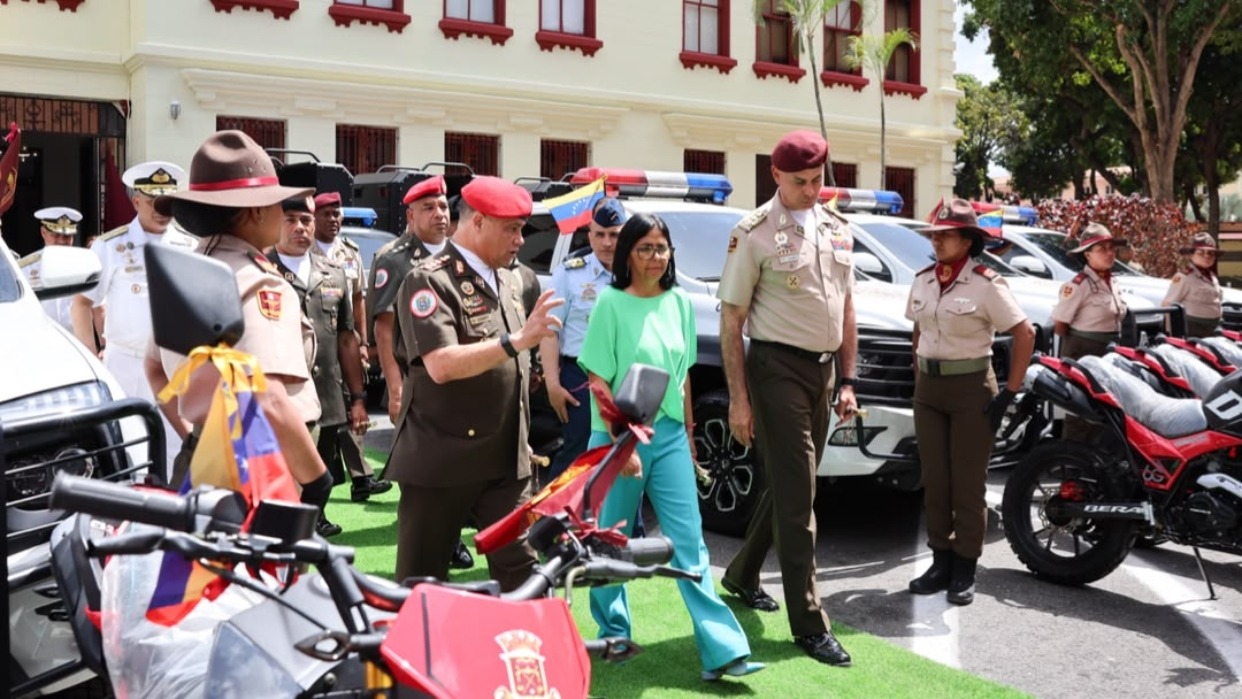
Full version: Delcy Rodríguez: Algunos apagaron sus cámaras y se fueron, nosotros seguimos aquí trabajando junto al pueblo tras el 24J
IMF: Syria’s economic growth will accelerate to double digits in 2026
The International Monetary Fund expects that growth in Syria’s economy will accelerate to double-digit figures as early as 2026 and remain high in 2027. The IMF links this to the recovery of agriculture, increased oil and gas production, improved electricity supply, as well as the expansion of trade and services. At the same time, the fund warns that the recovery remains uneven across regions, inflation is accelerating this year, and the banking sector is still “highly imbalanced” and cannot fully finance the economy.
The assessments were released following a mission by an IMF team led by Ron van Rooden to Damascus from July 19 to 23. Fund representatives discussed economic developments and reform priorities; however, as stated in the announcement, the visit does not mean that a loan agreement or a new financing program has been reached.
Syria’s economic recovery began in 2025: after the change of regime, consumer and investor confidence rose, about 1.5 million refugees returned, and Syria is gradually restoring economic ties with neighboring countries and the rest of the world. This partially offset the effects of a severe drought that hit agriculture. In 2026, according to forecasts, the momentum will strengthen thanks to better rains and harvests, increased fuel extraction and electricity generation, as well as a rise in the number of visitors, government spending, and the return of refugees. The IMF’s new estimates are noticeably more optimistic than the April forecast of the World Bank, which expected Syria’s economic growth in 2025 to be only 2–4%. Support also came from the European Union lifting most sanctions and a U.S. license allowing investments, financial services, and transactions related to Syrian oil.
Despite the pickup in economic activity, inflation— which slowed in 2025 to low double-digit figures—has risen significantly since the start of 2026. The IMF explains this by higher import costs, above all for fuel and food, due to the regional conflict, as well as strong domestic demand boosted by higher wages for public-sector employees and by increases in utility and housing tariffs. Price hikes for electricity and services, as noted, are intended to cover operating costs and reduce the indirect financial burden on the state, but they also intensify pressure on household budgets. The fund expects inflation to slow in 2027, provided that import price pressures ease and the authorities adhere to disciplined fiscal and monetary policy. By way of comparison: the World Bank projected inflation to fall from 72.1% in 2024 to 11.5% in 2025, while noting that around 90% of households still struggle to meet basic needs.
Syria’s central government budget closed 2025 with a small surplus: the government kept spending within available resources, focusing on urgent needs, and stopped financing the budget through the central bank. In 2026, a significant increase in revenues is expected: first-half proceeds from taxes and customs rose noticeably, oil and gas revenues are expected to grow, and there are expected one-off receipts from telecommunications licenses and transit fees for fuel. At the same time, Syria’s Ministry of Finance reports that the 2026 budget provides for expenditures of around $10.5 billion, with expected revenues of 8.716 billion and a deficit of approximately $1.8 billion. The IMF advises preparing the 2027 budget based on conservative revenue estimates, restraining current spending, reducing off-budget operations, and improving the collection of taxes and customs duties.
The IMF gave a positive assessment of the issuance of a new national currency, but notes that monetary policy remains severely constrained due to the lack of effective tools and disruptions in the banking sector’s operations. The fund calls for the prompt preparation of a new central bank law and banking legislation that would give the central bank a clear mandate to ensure price stability, strong supervisory powers, and mechanisms to resolve problems at troubled banks.
Other priorities include a comprehensive assessment of banks’ financial stability in line with international standards, restoring payment systems, rebuilding depositor confidence, and expanding credit to businesses and citizens, including domestic and international transfers. In addition, Syria needs to strengthen its system for combating money laundering and terrorist financing so that it can exit the FATF “gray list,” where it remains under enhanced monitoring.
The IMF emphasizes that Syria needs strong and fast international financial support—not only for humanitarian needs, but also for restoring housing, infrastructure, public services, and creating jobs for returning and internally displaced people. At the same time, the government’s ability to attract external financing will depend on a comprehensive resolution of the country’s old debts and the development of a local capital markets. As AFP notes, the Syrian government has not yet sought help from the IMF, and any such request would likely be linked to a restructuring of the country’s external debt.
The IMF and Syrian authorities have agreed an expanded program of technical assistance. It covers budget management and government liquidity, tax and customs reforms, debt management, capital market development, restoring and overseeing banks, updating financial legislation, and improving statistics on GDP, prices, and the balance of payments. This, it is expected, will lay the groundwork for resuming Article IV consultations, which the Syrian authorities requested; the most recent completed consultations of this kind were held as far back as 2009.
News comments
What happened in Syria during the mentioned “change of regime,” and when exactly did it take place? — In late November 2024, a coalition of armed groups led by Hay’at Tahrir ash-Sham launched a rapid offensive from the north of the country. By December 8, 2024, the forces of the previous government had lost control of Damascus, the Assad regime had effectively fallen, and Bashar al-Assad himself fled to Russia. Power then passed to a transitional government led by Muhammad al-Bashir.
What is known about the new Syrian national currency, and why did its issuance become an important step for monetary policy? — After the change of authority, the Central Bank of Syria announced that it would move toward issuing new banknotes without portraits and symbols of the overthrown regime. The main goal is to restore confidence in the Syrian pound, reduce dollarization in the economy, stop the depreciation of the national currency, and create a foundation for a more predictable monetary policy. Issuing the new currency is also seen as a signal to the international community that the transitional authorities are ready for financial reform.
Why is Syria on the FATF “gray list,” and what are the consequences for the banking sector and international settlements? — FATF placed Syria on the list of jurisdictions under increased monitoring due to systemic problems in combating money laundering and terrorist financing. Being on the “gray list” forces foreign banks to apply enhanced screening measures to Syrian counterparties, often rejecting or delaying payments and cutting correspondent banking relationships. This effectively blocks Syrian banks’ access to international markets and makes any cross-border transactions difficult.
What is the real scale of Syria’s external debt, and who are the main creditors? — The exact size of Syria’s external debt remains hard to verify because official statistics have not been published for many years. Estimates suggest that Syria’s total external debt may range from $20 billion to $40 billion, and according to some data, it is significantly higher. The main creditors are believed to be Russia, Iran, China, as well as some Arab countries and international financial institutions. A large portion of the debt was accumulated even before the conflict began, and after 2011 it grew further due to military loans and supplies made via routes circumventing sanctions.
What exactly does the U.S. license allow regarding Syrian oil, and which European sanctions did the EU lift? — The OFAC U.S. license regarding Syrian oil generally allows limited transactions involving energy commodities—for example, temporary purchase and transportation of crude oil or ensuring fuel supplies to Syria for humanitarian needs. The EU, in turn, announced a partial suspension of sanctions in sectors such as financial services, transport, and energy to support the transitional process. At the same time, the arms embargo and sanctions targeting individuals linked to the former regime remain largely in place. The exact parameters depend on the specific text of the license and the EU decision.

Full version: IMF expects Syria’s economy to grow by more than 10%
News 04-08-2026
Villegas: Venezuela’s fate in the hands of Delcy Rodríguez and dialogue
Journalist and political analyst Vladimir Villegas said on Monday that the near future of Venezuela’s political stability largely depends on decisions by the national executive leadership and personally on Delcy Rodríguez, noting that the country’s next course depends on these actions. In an interview with the Globovisión channel, he called the dialogue that began on August 1 the starting point on the path toward elections and stressed that its success is possible only with the participation of all political forces and with due consideration of each side’s views.
Among the first issues to be discussed, Villegas highlighted the elimination of the consequences of the double earthquake on June 24, unresolved matters within the Peace Commission, the holding of open competitions for appointing new judges, and the need to decisively respond to the weakness of the minimum wage. He urged the parties to resolve political disagreements strictly within the framework of the Constitution and dialogue, reminding them of the importance of democratic debates on these pressing problems.
Full version: Vladimir Villegas:
Syrian Helicopter in Iraq Turned Out to Be a Fake: Video From 2016
A video has been circulating on social media showing a helicopter flying low over the ground under heavy fire. The authors claimed that a Syrian military aircraft had entered Iraq’s airspace, attacked the “Hashd ash-Shaabi” bases, and was forced to retreat. However, the video itself only shows shots fired toward a distant aircraft—there is no evidence of an air battle or of the helicopter’s state affiliation.
The clip sparked a heated reaction among Iraqis: some mocked the weak response by the military, while others wondered why drones are being purchased if even a helicopter cannot get out of the barrage. Many said the incident demonstrates a loss of sovereignty and called on authorities to take decisive action. Users urged that Iraq not be turned into a stage for other people’s disputes and called attention to corruption and external threats.
Media outlets also joined in, including a channel with a million-strong audience, which gave the video an almost official status. At the same time, neither Baghdad nor Damascus issued any statements. The lack of response from the authorities intensified suspicions that the footage was either old or taken out of an entirely different context.
Verification showed that an earlier version of the video appeared as far back as July 20, 2023, and during further searching a full version was found on YouTube from January 2016. In it, people speaking with an Iraqi accent record the same flight and mention that the helicopter belongs to the Iraqi army. Thus, the aircraft was not Syrian—it was an Iraqi helicopter that took part in battles with terrorists nearly ten years ago.
Additional shots and features of the landscape made it possible to identify the filming location: the Makхul Mountains, northeast of Baiji, in Salah ad-Din Province. In that area in the mid-2010s, the Iraqi army and the Hashd ash-Shaabi militia forces fought fierce battles against ISIS. In other words, the original story is simply a typical combat episode from that war—not a border violation.
The appearance of the old video comes amid growing tension in the region. The Iraqi government has officially stated that it will not allow attacks from its territory against neighbors, and that the army is ready to counter any provocations. This followed strikes on Saudi oil facilities, which were blamed on Iran-backed Iraqi groups, and subsequent airstrikes by the United States and Saudi Arabia. The timing coincidence raises questions about why someone needed to resurface an old clip right now—creating an image of Iraq as an open target for foreign incursions.
Comments on the news
What is “Hashd ash-Shaabi” and how is this Iraqi coalition connected to Iranian military networks operating in Syria? — Hashd ash-Shaabi (“Popular Mobilization Forces”) is an Iraqi coalition created in 2014, consisting mainly of Shiite militias that originally mobilized to fight ISIS. Formally, Hashd was later integrated into the structure of Iraq’s security forces, but its most influential factions (“Kataib Hezbollah,” “Asaib Ahl al-Haq,” and the “Badr” organization) are closely tied to Iran’s Islamic Revolutionary Guard Corps (IRGC), above all to the “Quds” Force. The link to the Syrian theater runs through the shared “Axis of Resistance” network: Iranian commanders coordinate the actions of the Syrian army, Lebanon’s Hezbollah, and Iraqi Shiite groups. It was fighters of Hashd ash-Shaabi (along with Afghan and Pakistani IRGC formations) who fought in Syria on the side of Bashar al-Assad’s government, receiving weapons, training, and orders via Iranian channels. Therefore, Hashd is not purely an Iraqi phenomenon—it is part of a cross-border military network controlled by Tehran.
Why did neither Baghdad nor Damascus issue an official denial of the video, and what real security-interaction channels exist between Syria and Iraq? — Official silence is a typical tactic in cases like this: if the incident is real, it involves intelligence-sensitive operations that are not disclosed; if the video is fake, a denial would only give it extra publicity. As for real channels: coordination mechanisms between Baghdad and Damascus have long existed to fight ISIS—liaison officers along the border, joint operational points (including with Russian and Iranian military participation), and agreements to patrol desert areas. Iraqi aviation has repeatedly carried out strikes on ISIS hideouts on Syrian territory—such raids are usually coordinated in advance with Damascus or Moscow, but they are not publicized. At the same time, there are no full-fledged official intergovernmental defense treaties between Syria and Iraq—much is handled through informal military contacts and coordination via third parties.
Have there been precedents of Syrian aviation crossing into Iraq to strike ISIS, or are similar clips used in an information war to delegitimize Damascus? — No publicly confirmed precedents of strikes by specifically Syrian fighters on Iraqi territory have been recorded. In practice in recent years, the picture is rather the opposite: Iraqi Air Force has bombed ISIS positions in Syria’s desert areas with Damascus’s tacit approval, and Iranian drones have operated on both sides of the border. A video showing alleged Syrian aviation invading Iraqi airspace fits well into the logic of information warfare: it portrays Damascus as a violator of a neighboring state’s sovereignty and works to delegitimize the Syrian government in the eyes of Arab public opinion. Since neither Iraqi nor Syrian command has confirmed what happened, such a clip should be viewed as a likely propaganda insertion—though it cannot be entirely ruled out that rare episodes of pursuing militants across the border occur without official declaration.

Full version: مشاهد لمروحية عسكرية سورية في أجواء العراق تثير جدلا.. ما القصة؟
Trump, Iran and the dispute over diplomacy—or escalation
While Washington tries to shape its line on Iran, international attention is focused not so much on individual events as on the very design of the policy itself: how pressure and negotiation rhetoric fit together, and why each new phrasing becomes a pretext for diametrically opposed interpretations. In headlines, the theme of “inconsistencies” is appearing more and more often—either Trump and Tehran are getting closer to an agreement, or the sides are merely laying the groundwork for the next round of confrontation. Some observers see signs of de-escalation and a diplomatic breakthrough, while others are sure this is just another iteration of pressure, where every concession or signal is taken as part of the bargaining. Against the backdrop of external commentary, one overall conclusion emerges: for many, the U.S. position on Iran remains risky and internally inconsistent, and its success or failure is assessed not by facts, but by how the tone and logic of actions are changing.
The material was prepared based on publications from www.instagram.com (Venezuela) and www.france24.com (Venezuela).
Venezuela and Latin America read signals from Washington
Today, Venezuelan and regional agendas are watching two storylines at once—seemingly different at first glance, but in fact linked by a shared logic of pressure, markets, and geopolitics. On the one hand, Bloomberg Línea, through a Venezuelan lens, describes the dispute between Donald Trump and Tehran over U.S.-Iran negotiations as a story with direct consequences for oil, currency, business expectations, and the risk of escalation. On the other hand, France24 reports on Marco Rubio’s reaction to the strengthening U.S. influence in Latin America, where his words about an “extraordinary achievement” are being received not as neutral commentary, but as a demonstration of America’s leverage over the region.
In the Bloomberg Línea piece, it is emphasized that Trump and Tehran are “telling different stories” about whether negotiations are taking place at all. Washington talks about the “last chance” for Iran and insists that contacts continue, while the Iranian side denies it and claims it communicates only with Oman regarding maritime transit in the Strait of Hormuz. For Venezuela, this storyline matters not only as a Middle East news item, but also as a reminder that any tension around Hormuz can immediately affect the global oil market—meaning it can also hit a country whose economy is still sensitive to oil prices, sanctions, and external pressure. The text directly asks what lies behind these opposing versions and how the market responded; this, more than the diplomatic sparring itself, is what Venezuelan readers are most interested in. Original
The regional context reinforces this interpretation. For Venezuela, the conflict over Iran is easy to read through its own experience: limited access to global markets, sanctions pressure, dependence on intermediaries, and the familiarity with how foreign-policy crises are reflected immediately in prices, the exchange rate, and business expectations. The mention of Oman as an intermediary evokes how, in crises, direct dialogue is often replaced by indirect contacts—a scenario well known to Venezuelan foreign-policy practice. That is why the risk of escalation involving the U.S. and Iran is viewed in Caracas not as abstract diplomacy, but as a factor of global instability capable of striking imports, markets, and domestic sentiment.
At the same time, in a piece that is drawing attention in Latin America, France24 says that Marco Rubio believes the strengthening of U.S. influence in the region is an “extraordinary achievement,” linking it to Donald Trump’s policies and the increase in the number of pro-American leaders. For Washington, this is presented as a success, but for the Venezuelan audience such wording sounds different: like a reminder of an old pattern in which regional politics is measured by the degree of loyalty to the United States. The mention of Venezuela, in particular, comes across as especially sensitive. The report claims that after the January events, Caracas is allegedly “cooperating” with the U.S. energy and economic agenda, and that Nicolás Maduro no longer appears as an independent center of power. For Venezuela, this is directly tied to the themes of sanctions, pressure, and forced compromises—as well as the question of who actually sets the limits of its foreign policy. France24 material
For Caracas, such rhetoric is especially painful because it brings historical associations with U.S. policy in Latin America during the Cold War—supporting leaders convenient to Washington and putting pressure on governments that tried to chart their own course. That is why Rubio’s words are understood not only as an assessment of American diplomacy, but also as a signal that the U.S. is again seeking to reshape the region to fit its interests. In this reading, Venezuela turns out not merely to be part of the news background, but a symbol of a broader struggle for sovereignty, influence, and the right to determine its own political course.
Taken together, both storylines produce a single overall picture: both the dispute between Trump and Tehran and Rubio’s statements about the region are being read in Venezuela through the same lens—external signals capable of affecting oil, markets, the sanctions environment, and the balance of power in Latin America. That is why such messages here are not seen as a set of separate diplomatic episodes, but as parts of one big conversation about pressure, intermediaries, levers of influence, and the fragility of regional stability.


News 03-08-2026
A craftsman from Aleppo passes his ancient art of wood carving to his son
In the labyrinths of Aleppo’s old markets, the Syrian artisan Ayman Said leans over wooden panels, creating Eastern patterns and Arabic calligraphy. In this way, he is trying to preserve an art form that is around 1,400 years old and protect it from disappearing. The 42-year-old master has been practicing the craft for three decades—not only keeping the tradition alive, but also passing it on to his son. He believes the art can survive only if it moves into the hands of the new generation, which will keep the memory of this artistic heritage. Said works in painting and wood carving, creating three-dimensional panels and ornaments in the spirit of Arab and Islamic heritage, even though the number of masters in this profession has dropped significantly and it has been added to a list of crafts at risk of extinction.
For centuries, the art of raised Arab ornamental painting—also known as “al-rasm al-ajami”—has been one of the key elements of architecture and decoration in the region. It adorned the ceilings and walls of mosques, churches, and palaces. Examples of this style can still be seen in famous monuments, including the Throne Hall of the Citadel of Aleppo and the Al-Aqsa Mosque in Jerusalem. With changes in building traditions and tastes in home interiors, the use of this art in large buildings has declined; however, it has found a new niche in the production of souvenir boxes, artistic panels, and small wooden items that are in demand among lovers of handcrafted goods.
A father of three children, Ayman Said began learning the craft at the age of twelve and today tries to teach it to his son so that the cultural heritage can continue to live on in future generations. He works in the traditional atmosphere of Aleppo’s old markets and believes that preserving this craft means preserving part of the city’s cultural memory. According to him, raised ornamentation was one of the brightest features of the Eastern style that distinguished the ceilings and walls of traditional Arab houses.
The work process begins with a drawing on paper, which is then transferred onto the wood. After that, the masters use a special paste made from plant materials to form raised patterns. Next, the base is covered with paint and a protective layer, and the ornaments are painted by hand with a brush. In the final stage, thin black lines are applied to give the work its finishing look.
Said admits that he approaches the craft with the same enthusiasm as many years ago and says, “This profession doesn’t let you get bored.” Each new piece reveals previously unknown details, sustaining his interest and desire to improve his skills. He notes that the colors and materials of wooden decoration change how space is perceived: some shades create a sense of coolness in sunny rooms, while others add warmth to spaces with insufficient light. “Customers who come to my workshop spend a long time looking at the walls and ceilings, noticing the smallest details of the work,” the master adds.
Ayman Said calls for creating a traditional market where craftsmen could work under one roof—something he says would help protect old trades from extinction. Such a venue could bring together different types of crafts: raised painting, copper production, weaving, and carpet weaving. In his view, having workshops side by side would strengthen healthy competition and raise the quality of the products. While traditional crafts are giving way to a modern way of life, Ayman Said continues to create patterns in wood and puts the craft he inherited from his family into his son’s hands, hoping that his works will not become the last trace of an art form that has lived for 1,400 years.
News comments
What is “al-rasm al-ajami,” and why is this technique considered a distinctive hallmark of Aleppo’s Arab and Islamic heritage? — “Al-rasm al-ajami” is a traditional technique of decorative finishing for wooden panels featuring a volumetric raised ornament, gilding, and painting. The word “ajami” in Arabic means “Persian” or “non-Arab,” indicating the influence of an Iranian artistic tradition that Aleppo’s masters reinterpreted and perfected. Paste is applied to a wooden base to create protruding patterns, which are then covered with paint and gold. During the Ottoman Empire era, this technique flourished specifically in Aleppo, decorating the interiors of palaces, mosques, public buildings, and wealthy residential homes. It is considered a symbol of the city’s Arab-Islamic heritage and is protected by UNESCO as an element of intangible cultural heritage.
What stages of destruction and restoration did Aleppo’s old markets go through after the start of the war in Syria, and how did that affect traditional crafts? — The covered markets of old Aleppo (Souq Al-Madina), with more than 1,200 shops, were severely damaged during the fighting from 2012 to 2016, when the city was divided into areas of control. The markets burned repeatedly, and were subjected to shelling, looting, and vandalism: hundreds of workshops, storage facilities, and historic caravanserais were destroyed. After the eastern part of Aleppo returned under the control of government forces in December 2016, phased restoration efforts began with the participation of UNESCO, international foundations, and local communities. Many shops and workshops were restored and reopened. However, traditional crafts suffered a major loss: a significant number of artisans were killed, emigrated, or lost their equipment, and many unique skills were lost due to the lack of passing experience to the younger generation. Today, the slow revival of craft schools and workshops is underway, but full restoration of both the markets and the craft tradition will take years.
What plant components are traditionally used to prepare the paste that masters use to form raised patterns in the “al-rasm al-ajami” technique? — The paste base is a mixture of chalk powder with glue, but plant components traditionally include wheat starch or wheat flour, which are cooked with water until they reach a thick paste-like consistency. The recipe often also includes linseed oil for elasticity and gum arabic—natural acacia resin—which strengthens the mixture and gives it plasticity. Sometimes small wood shavings were mixed into the paste for additional strength of the relief. It is the plant component that gives the paste the required consistency, allowing the master to shape delicate raised designs before they harden, after which the surface is gilded and painted.


Full version: See.. A Syrian craftsman protects a 1,400-year-old heritage from extinction
Analysis
Key points: - On July 29, SUNAVAL met with investment funds at the Bolívarian Stock Exchange of Caracas to discuss the rebuilding of La Guaira after an earthquake. - SUNAVAL head Carlos Herrera said that traditional financing is not enough; innovative capital-raising mechanisms are needed. - Tibisay Marcano highlighted the problems faced by small businesses: premises, warehouses, and equipment were lost; a bank loan does not solve the issue. - The exchange president is seeking support from multilateral organizations, but the resources of the banking system and the capital market are insufficient. - Participants called for new financial instruments, tax incentives, and long-term investments. - It was proposed to separate strategies: on the one hand, housing and infrastructure; on the other, restoration of production. - The author raises the question of La Guaira’s long-term economic identity over the next 50 years, citing examples of successful regions. - La Guaira has advantages: a port, an airport, proximity to Caracas, tourism, and access to the Caribbean. - Multilateral organizations are limited; what’s needed is international private capital.
Plan for the final text: 1. The meeting’s context and the regulator’s statements about the scale of the task. 2. The problem of small business and the limitations of the banking system, along with the need for new instruments and two strategies. 3. The author’s vision: the question of La Guaira’s future economic role, its competitive advantages, and examples of successful regions. 4. The role of multilateral organizations, mobilizing private capital, and the conclusion that a long-term development project is necessary.
La Guaira: from clearing up the aftermath to a development strategy
On July 29, in Caracas, at the venue of the stock exchange, a meeting was held convened by the National Securities Superintendency (SUNAVAL). Representatives of investment funds and regulators discussed how the capital market could help restore the La Guaira state after a devastating earthquake. SUNAVAL head Carlos Herrera emphasized that the scope of the challenges—from housing to reviving production—far exceeds the capacity of ordinary financing, so unconventional mechanisms for attracting capital are needed.
Particular attention was paid to the fate of small entrepreneurs. As Tibisay Marcano, director of the public offerings department, noted, many shops and small companies lost premises, warehouses, and equipment and, in practice, cannot resume operations. Bank credit is not enough for this, and without functioning businesses there will be neither jobs nor sustainable recovery. At the same time, the president of the Caracas Exchange acknowledged a structural problem: neither the national banking system nor the local capital market today has resources sufficient for a project of this scale. That is why the discussion is about creating new financial instruments, tax incentives, and mechanisms for long-term investment.
The article’s author suggests going further and dividing recovery into two different strategies. The first is financing housing and infrastructure for thousands of families affected. The second is targeted support for the productive sector: hotels, restaurants, logistics, transport, and tourism, where even small investments can quickly kick-start the economy. Mixing these tasks, the author argues, leads to inefficient use of funds. The central question, however, should be phrased even more ambitiously: what economic vocation does La Guaira want to pursue over the next fifty years? Examples such as Las Vegas, Napa Valley, Silicon Valley, and Orlando show that transforming a region is possible only with a clear long-term strategy.
La Guaira has unique advantages: the country’s main port, an international airport, proximity to Caracas, tourism potential, and access to the Caribbean Sea. However, these factors alone do not create development—what is needed is a project attractive to large investors. Multilateral organizations can help only partially due to long procedures and constraints, so the key opportunity is attracting international private capital. The meeting convened by SUNAVAL showed that Venezuela’s securities market is willing to participate in solving the problem, but the rebuilding of La Guaira should be not just the elimination of the consequences of a natural disaster, but the beginning of a long-term economic revival of the entire region.
Comments on the news
Which earthquake is specifically meant in the article, and why were its consequences for La Guaira so catastrophic? — If the article does not name the date and scale, it likely refers to the San Narciso earthquake of 1900. It was one of the strongest earthquakes in Venezuelan history: its epicenter was in the Caribbean Sea, near the coast of La Guaira; the magnitude is estimated at roughly 7.7–8.0; and it triggered a tsunami with waves up to ten meters high. La Guaira is a narrow port city located at the foot of mountains on the seashore, so it was nearly at the epicenter and took the full force of the wave. By comparison, the destructive events in La Guaira in 1999 were not an earthquake, but flooding and mudslides known as the Vargas tragedy. These two disasters can be easily confused, but an article that specifically mentions an earthquake almost certainly refers to the 1900 catastrophe.
How do international sanctions and Venezuela’s political isolation affect the ability of regions such as La Guaira—whose author calls private capital essential for long-term recovery—to attract private capital? — Sanctions—primarily American—do not create a direct ban for investors; rather, they create impassable legal and financial barriers. The port and airport of La Guaira are publicly owned, and working with any Venezuelan state-owned companies linked to the Maduro government is risky due to “secondary sanctions”: any dollar payments, use of the international banking system, and even partnering with local firms may result in asset freezes and cut the investor off from the U.S. market. At the same time, Venezuela does not receive loans from the IMF, the World Bank, or the Inter-American Development Bank, so it essentially does not repair infrastructure. Private investors also do not come because the country has weak property guarantees, a lack of independent courts, strict currency controls, and the possibility that any property may be expropriated. The port, airport, and tourism potential are attractive, but without the removal of sanctions, a stable legal system, and the ability to insure political risks, large capital considers an investment in La Guaira too risky—regardless of how promising the region may look.


Full version: Sunaval y la reconstrucción de La Guaira
From the Underground to the Presidential Palace: Ahmad ash-Sharaa’s Confession
The second episode of the program “Interview” on Al Jazeera, in which the host Ali ad-Dafiri spoke with Syria’s President Ahmad ash-Sharaa, sparked a strong response on social media. The discussion touched on key turning points in his biography—from childhood and his trip to Iraq to the fight against “Islamic State” and a rethinking of his earlier ideological positions. Viewers and analysts were split in their opinions, but almost everyone noted the unusual nature of the life of a man who made the journey from an underground fighter to the head of state.
During the conversation, ash-Sharaa for the first time gave a detailed account of how in 2003, at the age of twenty, he entered Iraq to protect the Iraqi people before the American occupation. In his words, it was a normal and natural step—without any pre-planned scheme. Soon, however, he was arrested, and over the next five years he spent in prison under someone else’s name—“Amjad Muzaffar.” When asked about official documents, he recalled only this name and identified himself as “Amjad Muzaffar Hussein.”
This detail revealed a family secret: it turned out that the name belonged to his father, who signed letters sent through the ordinary postal system in order to evade surveillance by Syrian security services. Thus, ash-Sharaa bore his father’s alias in Iraqi captivity, adding a personal and family dimension to his story. Activists on social media actively discussed the account, seeing in it evidence of the pressure and persecution his entire family had faced.
Ash-Sharaa also directly addressed those who tried to remind him of his former name, “Abu Muhammad al-Julani.” He said he was not ashamed of his history: “I belong to the Golan, and that does not disgrace me. More than 23 years of intense work, and in this story there is a burden, blood, martyrs, people’s cries and suffering. I’m proud of it. It has become part of Syrian heritage.” Such a response won broad support—many saw in him honesty, courage, and a refusal to renounce his own path.
Observers also highlighted two main lessons from the interview. Some see in ash-Sharaa an example of an astonishing rise: not long ago, he moved across Syrian provinces with a handful of people and without even minimal weaponry, and today he receives world leaders in the presidential palace. Others stress his ideological evolution—from a narrow factional logic and the old discourse to building a state and national institutions. This move is viewed as a well-deserved and necessary adjustment, especially important for the restoration of a new Syria, where the president presents himself not as a break with the past, but as a continuation of the story in a new, broader political dimension.
News Comments
Why did Ahmad ash-Sharaa take the alias “al-Julani,” and what does belonging to the Golan Heights mean to him—territory that has remained a symbol of Syrian identity since 1967? — “Al-Julani” means “a man from the Golan” and refers to the Golan Heights, occupied by Israel in 1967. Ash-Sharaa’s family is from there, and the alias for him was not just a piece of cover—it was a statement of Syrian identity and resistance to occupation. For many Syrians, the Golan is a wound that will not heal in national memory, so for him that name symbolized the struggle to return the land. Coming out of the underground and becoming president, he returned to his real name in order to appear as a leader of all Syria, not only an armed group.
What is Hay’at Tahrir ash-Sham (HTS), and how did its former leader Ahmad ash-Sharaa make the transition from “an underground figure” to President of Syria? — HTS is a former jihadist group that grew out of the Syrian branch of Al-Qaeda (“Jabhat al-Nusra”). Later, it severed formal ties with Al-Qaeda, changed its name, and became the dominant force in the Idlib province, where it created its own administration. Ash-Sharaa managed a double transformation: externally—from a radical field commander to a pragmatic politician who softens the rhetoric in every possible way and promises rights for minorities; and tactically—by using alliances, amnesties, and military force, he led an offensive that toppled the Assad regime. After capturing the capital, he consolidated power and presented himself as a transitional leader, not only the leader of a rebel group.
How did the Syrian “mukhabarat” (state security) operate, and why did Syrian families linked to the opposition have to use false names and secret communication channels to survive? — “Mukhabarat” was a sprawling network of security services that permeated all of Syrian society: they had informants in schools, hospitals, mosques, and markets. They could arrest people without trial, torture them, extort confessions, and punish entire families for the “guilt” of one relative. Therefore, any connection to the opposition—even just a phone call or a letter—could cost someone’s life. Families had to use invented names, code words, pass messages through trusted intermediaries, or, conversely, completely sever contacts so the regime couldn’t find them and punish everyone. Such conspiracy was not paranoia, but the only survival strategy under a total surveillance system.

Full version: From “Amjad Muzaffar” to “Abu Muhammad al-Julani”… How did Syrians react to al-Sharaa’s interview?
News 02-08-2026
Damascus Reassembles Arab Poets: the International Festival Opens
The Syrian capital has kicked off the first International Festival of Arabic Poetry in Damascus. The ceremonial opening took place at the Damascus Opera House and brought together 55 poets, writers, and lecturers from 16 Arab countries. Organizers describe the forum not merely as a literary event, but as a comprehensive cultural project intended to redraw and document the region’s literary map. Here, words become a bridge for human and aesthetic exchange between participants and the public.
In remarks, Syrian Minister of Culture Muhammad Yasin Saleh announced a set of new initiatives. Among them is the completion of work on the “Sham Burda” poetry prize in honor of the Prophet, as well as the establishment of the “Damascus Sword” award in the field of Arabic poetry. In addition, a committee has been created for Nabataean poetic heritage, aimed at honoring Bedouin and urban traditions, and a platform called “Divan of Syrian Poets” has been launched—a living archive of national poetry. In cooperation with the Ministry of Agriculture, the organizers also decided to restore cultural symbols to purebred Syrian horses.
The festival program, which will run for six days—from August 2 to 7—goes far beyond traditional poetry readings. At the Opera and the Dramatic Theatre, evenings of classical and Nabataean poetry will be held with authors from Iraq, Saudi Arabia, Yemen, Kuwait, Jordan, Libya, and Syria. Discussions are planned on supporting creative youth, along with talks about the experience of poets such as Suad as-Sabah, live podcasts, art and book exhibitions, and presentations of new publications. The musical portion will be closed by a concert by singer Bashar Zarkan.
The festival also links literature with historical sites: for guests, excursions have been arranged—they will visit Old Damascus, Bosra, Saydnaya, and Maaloula. The opening ceremony included a video presentation titled “Damascus and Poetry,” the song “Syrian Qasida,” a children’s program, and a segment dedicated to departed intellectuals. According to the organizers, the festival goes beyond beautiful words and turns to the human and moral core of poetry, and that the discipline of words and ethical values should become the foundation of a society that lives by the law and rejects injustice. Damascus is once again asserting itself as the cradle of Arab poetry.
Comments on the news
What is Nabataean poetry, and why is a separate committee created to preserve it under the Syrian Ministry of Culture?
Nabataean poetry is folk poetry in colloquial Arabic (as opposed to classical literary Arabic poetry). It is widespread among Bedouin and rural communities in Syria, the Levant, and the Arabian Peninsula. It is distinguished by a particular rhythm, an oral tradition of transmission, and themes tied to life, honor, love, and tribal customs. A separate committee has been set up because this form of poetry is passed down orally and is at risk of disappearing due to urbanization, wars, and generational change. The Ministry of Culture aims to document, preserve, and popularize it as part of Syria’s intangible cultural heritage.What are Saydnaya and Maaloula known for, and why are they included in the festival’s excursion program?
Saydnaya is a town in the mountains north of Damascus, known primarily for the ancient Orthodox monastery of the Virgin Mary (Deir-Saydnaya), which is considered one of the oldest functioning monasteries in the world and an important Christian pilgrimage site. Maaloula is a unique settlement where Western Aramaic is still spoken—an Aramaic language closely related to the one that, it is believed, Jesus Christ spoke. It is home to ancient monasteries of Saint Thecla and Saint Sergius (Mar Sarkis), carved into the rocks. Both places attract pilgrims and tourists thanks to their religious history, ancient architecture, and picturesque mountain landscapes.


Full version: With the participation of 16 countries... Opening of the first edition of the Damascus International Festival of Arabic Poetry
A New Era of Dialogue: Expert Assesses a Shift in Venezuela’s Political Map
On Saturday, a new phase of negotiations began between the Venezuelan government and the radical opposition. Working groups were led by Jorge Rodríguez, the head of the parliament, and Dinora Figuera, a former member of the National Assembly elected in 2015. The well-known sociologist and head of Hinterlaces, Óscar Schemel, called it a “new era” and a strategic reshaping of the country’s political landscape. In his view, the absence of María Corina Machado from the talks clearly shows a split between those who favor confrontation and those who choose institutional dialogue. The main technical task at present is reforming the National Electoral Council (CNE) and the Supreme Court (TSJ) to provide guarantees for future elections.
According to polls, public demand has clearly shifted toward the center: 65% of citizens support pragmatic forces, while opposition parties have backing from only 5% of the population. This points to fatigue with ideological polarization and a priority placed on economic stability, working services, and everyday certainty. Schemel also noted that official power is undergoing a transformation toward a more pragmatic and adaptive model while preserving its ideological roots. The expert emphasized that the dialogue underway symbolizes the decline of an era of extremes and opens a new chapter in Venezuela’s political life.
Full version: Oscar Schémel: nueva etapa de negociación redefine el mapa político venezolano
Return of the grandson of the “Arab Gandhi” to the destroyed Golan Heights after 13 years in...
After more than 13 years in Turkey, where he fled the war, the grandson of the late Syrian thinker Jaudat Said, known as the “Arab Gandhi,” returned to his village in the Golan Heights. Ibn Rushd Hajji Bayram left it as a ninth-grade student, and now, after the fall of the Assad regime in December 2024, he found his homeland in ruins. He spoke about how his family was forced to flee and shared memories of his grandfather, who devoted his life to the ideas of nonviolence and intellectual reform.
Hajji Bayram recalls that the war first forced the family to relocate to Damascus, and in 2012 they made the final decision to leave. “There were 30 of us. We gathered the whole family and understood that we could no longer stay here. At the time, the intelligence services were looking for my grandfather,” he says. In December 2012, they went to Turkey by a long land route—together with their grandfather, their mother, brothers, and uncle, fleeing persecution by the regime.
In Turkey, the family began rebuilding their lives. “We spent 13 years there. When I left Syria, I was in ninth grade, and there I continued my education, entered university, and graduated from the Faculty of Dentistry,” he shares. The first scenes of killings still remain in his memory, and he admits it is a very heavy feeling. Jaudat Said, for decades, had been a beekeeper and livestock breeder, but the war destroyed everything he had created.
Hajji Bayram also spoke about his grandfather’s creative path: for many years, Said worked as a teacher. His ideas drew the regime’s anger, and when the state realized their influence, Said was removed from teaching. At the same time, he continued writing books, but throughout his life he refused to take any money for his work, believing that knowledge belongs to everyone. The thinker’s philosophy was built on the principle of nonviolence, which he called the essence of the Islamic message. He was inspired by the Meccan period of the life of the Prophet Muhammad and loved to repeat: “You cannot change a person without persuading him,” as well as “If we want to change society, we must start with ourselves.” Jaudat Said was born in 1931 in the village of Bir Ajim into a Circassian family and died in Istanbul in 2022 at the age of 91.
Hajji Bayram speaks of his return as one of the strongest impressions of his life. He found the place where he grew up turned into ruins: “When I returned, the village had no life, but there were memories. I felt as if I had never left it.” He walked again along the familiar lanes and past the schools, and despite the devastation, the past came alive in his mind. In conclusion, he called the events in Syria a “liberation war” and expressed hope that the country will overcome the consequences of the war and begin a new stage of reconstruction.
Comments on the news
How did the Circassian community end up in Syria, and why are there Circassian villages in the Golan Heights, such as Bir Ajim? — The Circassians were resettled to the Middle East after the Caucasus War in the 1860s, when the Russian Empire conquered the Caucasus. The Ottoman Empire dispersed hundreds of thousands of Circassians across its provinces, including Syria and the Golan Heights. The settlers were expected to serve the empire: protect trade routes, guard the borders, and develop sparsely populated lands. That is how Circassian villages came into being, including Bir Ajim, whose residents still preserve their Circassian identity and language.
Why did the village of Bir Ajim, located in the Golan Heights, remain under Syrian control despite the fact that most of the Golan Heights has been under Israeli occupation since 1967? — In 1967, Israel seized almost all of the Golan, but after the 1973 war, a Disengagement of Forces Agreement (1974) was signed. Under it, the Israeli army withdrew from some territories, and along the ceasefire line a UN buffer zone was established. Syria regained a narrow strip with the city of Quneitra, and Bir Ajim was precisely on the Syrian side of that line—east of the Israeli positions. Therefore, the village remained under Damascus’s control, and its residents remained Syrian citizens.
Why did the Assad regime consider Jaudat Said’s ideas so dangerous that the intelligence services hunted him, and how did his preaching on nonviolence threaten the authorities? — Jaudat Said was a Circassian Syrian thinker and Islamic scholar, known as the “voice of nonviolence.” He argued that change should not happen through armed struggle, but through education, moral upbringing, and peaceful resistance. For an authoritarian regime, this idea was more dangerous than armed opposition: it undermined the very logic of rule based on fear and violence. If people stop fearing and choose nonviolent disobedience, the authorities are left with neither a moral nor political justification for repression. That is why the intelligence services monitored Said, restricted his movements, and tried to silence him— the regime saw his preaching as a hidden threat to its very existence.


Full version: بعد 13 عاما من اللجوء.. حفيد "غاندي العرب" يعود إلى الجولان السوري (فيديو)
Practicing Engagement with the United States: Diplomacy, Institutions, and Everyday Connections
Talk of the United States in today’s roundup sounds pragmatic: the U.S. is seen not so much as a source of yet another dispute, but as a convenient reference point and a practical partner in regional diplomacy. The focus is on official visits, the work of embassies, public information, and how American decisions and institutional mechanisms are reflected in the everyday needs of Latin American countries. The article emphasizes the theme of access and the effort to observe how Washington’s priorities are shifting—and what effects that brings to the region, especially for Venezuela, as well as for neighboring countries, where direct contacts and clear rules of interaction matter.
This material is based on content from www.visittheusa.com (Venezuela) and www.facebook.com (Venezuela).
The United States as a boundary, not just a travel destination
Two different publications—one about the practical requirements for entry into the United States, the other about how Mexico is shaping relations with Washington—together show the same Latin American reality: the United States remains central, but far from a simple benchmark for the region. In one case, it concerns information on visittheusa.com/es, where travel to the U.S. is described as a process dependent on visas, authorizations, and formal requirements. In the other, it is about a statement from Mexico’s SRE, which highlights a pragmatic alliance with Washington based on trade, history, and shared interests.
For a Venezuelan reader, the first text sounds especially familiar. It is not political analysis, but it very accurately captures everyday reality: getting to the United States is not a matter of desire—it is a matter of meeting strict rules. The piece reminds readers that for many foreigners a visa is required, while ESTA is available only to countries participating in the visa waiver program. Against the backdrop of Venezuela—where there are already plenty of economic, social, and administrative constraints—this fact is not perceived as a dry consular detail, but as yet another practical barrier. For those who view the U.S. as a place for tourism, studying, family reunification, or temporary migration, this arrangement means having to think ahead about interviews, proof of financial means, immigration history, and waiting times.
The text contains no quotes from politicians or experts, and that is precisely what makes it telling: it does not argue, assess, or explain—it simply lays out the rules. But for a Venezuelan audience, that is enough to see a familiar storyline: the need to prepare carefully for any international trip, turning it into an administrative-and-economic project. In conditions where the stability of documents and resources is not always guaranteed, even a brief list of requirements is felt as a reminder that mobility today is distributed extremely unevenly.
Quite differently, yet still around the United States, a Mexican publication presents relations with Washington as a long-term and beneficial alliance that must be managed pragmatically. In the SRE message, published on behalf of the Government of Mexico, Roberto Velasco Álvarez said that Mexico and the United States are linked by “more than two centuries of continuous diplomatic relations,” and also drew attention to a symbolic parallel between Benito Juárez and Abraham Lincoln. For a Mexican audience, such historical references are important: they help portray relations with the northern neighbor not as dependence, but as an equal and long-standing connection—one in which national dignity and diplomatic autonomy have a place.
At the same time, the main point of the text is not ideology, but advantage. Velasco emphasized that bilateral trade brings in $872 billion per year. The material also states that cooperation covers security issues and even agriculture, including efforts to fight the gusano barrenador. In the Mexican context, these are not abstract diplomatic formulas: the focus is on jobs, logistics, border economics, migration, and protecting the agro-industrial sector. This kind of tone is usually aimed not only at the general public, but also at markets, business, and political elites: the channel to the United States must remain open because too much depends on how it works.
Particular significance is attached to the mention that cooperation is built on “four principles,” clearly defined by President Sheinbaum. This emphasis matters for understanding the Mexican line: engagement with the U.S. should be pragmatic, but not subordinate—while preserving the country’s own agenda and maintaining control over national interests. Within Mexico, this is presented as a continuation of a course toward a managed partnership rather than confrontation. In other words, the aim is not to distance Mexico from Washington, but to make relations with it predictable and useful.
If we look at both texts together, a difference becomes clear between two types of ties with the United States that are especially visible in Latin America. For one reader, the U.S. is primarily a country that is difficult to reach due to visa barriers and administrative restrictions. For the other, it is a key economic partner that must be approached through carefully planned, beneficial, and institutionally formalized diplomacy. In Venezuelan perceptions, the Mexican example is especially illustrative: it shows that even with a complicated history, it is possible to look for workable compromises rather than conflicts—where trade, security, and political symbolism reinforce one another.
The overall conclusion from these publications is simple: for the region, the United States remains not only a desired destination, but also a system of filters, rules, and interests. For some, it is primarily a matter of access and documents; for others, it is a matter of diplomatic calculation and economic feasibility. That is why both the practical warning about visas and the Mexican statement about cooperation read not as isolated messages, but as parts of a single larger Latin American story of relations with Washington.