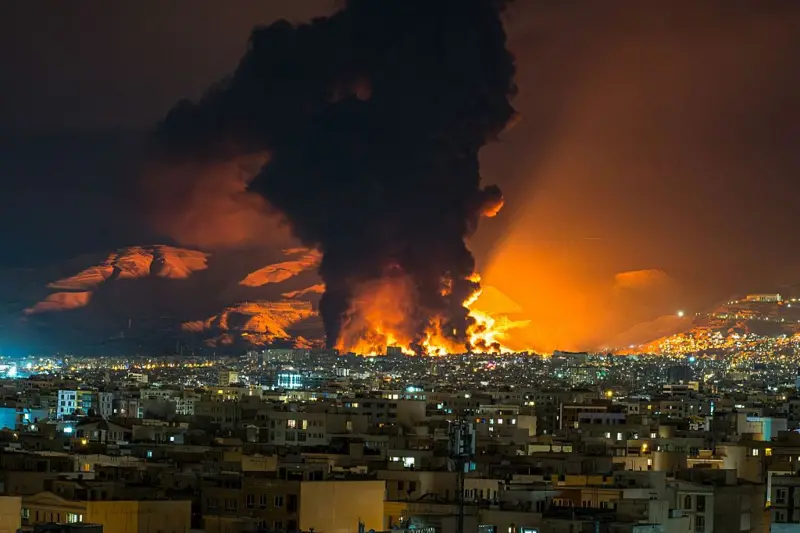
International reports are increasingly shifting focus from tactical details of conflicts to the broader consequences of Washington's decisions: a possible or ongoing escalation between the US, Israel and Iran is seen as a source of instability around the world — from military uncertainty to oil price spikes and supply-chain disruptions. Analysts emphasize the risk of a protracted war that will be defined not only by geographic fronts but also by the strategic interests of great powers, including beneficiaries like Russia. Special attention is paid to how third countries and leaders formulate their positions — from open support of the US to criticism of the consistency of American strategy — and how this breaks accustomed alliances and markets. This piece is based on materials from BBC and Bloomberg Línea (Venezuela).
Oil, migration and other people’s wars: how global crises reshuffle Venezuela’s agenda
In Venezuela, a country living between the oil needle and a migratory éxodo, foreign policy has long stopped feeling “distant.” BBC Mundo’s analysis of how a war around Iran becomes an opportunity for Vladimir Putin and Russia, read from Caracas, sounds like a commentary on the country’s own future: the price of oil, sanctions and Venezuela’s place in the Moscow–Tehran–Caracas axis. Likewise, Bloomberg Línea’s piece on why Donald Trump’s hardline migration policy does not create jobs for Americans is perceived as a direct continuation of Venezuela’s story — no longer as an oil exporter, but as an exporter of people.
Both texts — the BBC Mundo analysis of Putin’s gains from a war around Iran (https://www.bbc.com/mundo/articles/c1kg13z28p3o) and the Bloomberg Línea article on US migration policy (https://www.bloomberglinea.com/mundo/estados-unidos/la-ofensiva-migratoria-de-trump-no-genera-mas-empleos-para-trabajadores-nacidos-en-eeuu/) — are read in Venezuela not as “foreign news” but as parts of a single equation: can Caracas survive off global crises — oil and migration — and for how long.
The view of the US–Israel–Iran war described by BBC Mundo matches what Caracas has long been used to seeing mirrored in its own history. According to the piece, Moscow benefits from escalation around Iran along two key lines: rising oil prices and the ability to pressure the West over sanctions. The Russian budget, calculated on oil at roughly $59 a barrel, gets a massive bonus when the barrel approaches $120. In Venezuela, where the economy is even more dependent on “black gold,” this arithmetic is almost automatically transferred onto itself. Every report of a price spike is not read abstractly but as a chance for the government to “breathe” — to increase spending, shore up domestic support, restore at least part of the damaged infrastructure or, at minimum, clientelist networks.
In that sense, the portrayal of Putin as a “peacemaker” who in reality benefits from continued war fits well with criticism voiced inside Venezuela toward its own leadership. Outwardly — the diplomatic vocabulary of “de-escalation,” “dialogue” and “peaceful solutions.” In practice — a bet that each new round of global tension will raise oil prices and thereby buy Caracas a little more time. For part of the opposition and independent analysts this is a long-standing image of a government that, like the Kremlin in BBC Mundo’s interpretation, talks about peace but economically feeds on war — even if it is someone else’s.
A point of particular interest in Caracas is another motive in the BBC Mundo piece: discussion in Washington of the possible easing of oil sanctions against “some countries” to offset the consequences of war, with a direct reference to Russia. In Venezuela this scenario is read two ways. On one hand, lifting or loosening restrictions on Moscow would increase competition in the markets Caracas is desperately trying to re-enter — in Asia, and indirectly in Europe through complex schemes of blending and re-export. Russia, while remaining a political ally, in oil terms becomes a direct competitor.
On the other hand, if the West is willing to make concessions to Russia under the pressure of energy realities, Venezuelan elites see an argument: then why maintain such harsh sanctions against Caracas? In pro-government circles this is read as an opportunity to build pressure — if the “empire” eases the regime for a nuclear power engaged in full-scale war, the political justification for Venezuela’s economic blockade weakens. Inside the country this feeds hope for a more favorable deal with Washington.
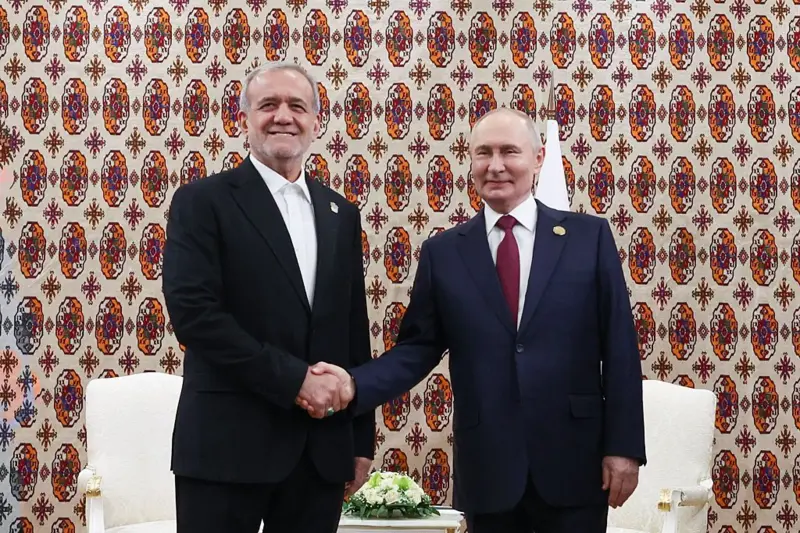
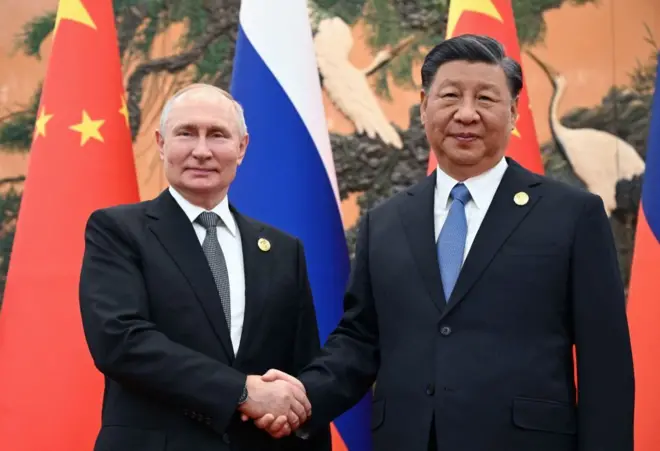
Another important angle in the BBC Mundo article is the description of a “Comprehensive Strategic Partnership” between Russia and Iran without a formal mutual-defense treaty. From the Venezuelan vantage point this fits into the already familiar picture of the Russia–Iran–Venezuela triangle, which official discourse positions as an axis of resistance to sanctions. Energy cooperation, military and technological ties, exchanges of experience in circumventing financial restrictions — all of this has long been part of rhetoric about a “multipolar world.” That Putin, according to the piece, is trying to use the war around Iran to present himself as a mediator and “guarantor of stability” is read in Caracas as confirmation: Moscow acts not only as a supplier of weapons and technology but also as a political umbrella for states in sanctions isolation, among which Venezuela sees itself as a full participant.
That is why quotations from the Russian media field cited by BBC Mundo find such a recognizable echo. Formulas like “high oil prices — a reason for (the West) to lift sanctions,” which have appeared in the headlines of Komsomolskaya Pravda or Moskovsky Komsomolets, almost literally repeat the theses of Venezuelan pro-government media. Every jump in the barrel price is presented there as proof of the West’s “hypocrisy,” dependent on the resources of those it punishes with sanctions. Oil turbulence becomes an argument for lifting restrictions — not as a gesture of reconciliation but as a forced concession to “energy realism.”
At the same time, in Venezuela’s popular consciousness the story of Russian oil and sanctions is reflected through recent national experience. The country has already lived through its own “golden age” of high prices followed by a crash that led to the deepest economic and social crisis. When Venezuelans read about how Russia survives by relying on windfall income from expensive oil, this evokes associations not only with Caracas’s chances to obtain additional resources but also with risks. Dependence on short-term cycles and postponing structural reforms already cost Venezuela dearly; many see the Russian scenario as the same trap — adjusted for scale and military might.
The sanctions bloc is discussed just as vigorously. Volodymyr Zelensky’s warning, quoted by BBC Mundo, that easing sanctions on Russia would be a “severe blow” to Ukraine fits into Venezuela’s long-standing debate about whether sanctions work as a tool of political pressure. Inside the country there has been debate for years about the extent to which restrictions hit the government versus the population, and whether they can lead to democratic change at all. The Russian case, where analysts estimate oil and geopolitics soften the blows of sanctions, is used as an example: even a large and relatively diversified economy finds ways to adapt if the global conjuncture favors it. And what can be said about Venezuela, dependent on a single resource and seeking protection in alliances with Moscow and Tehran.
Against this background, the traditional Venezuelan cultural stance — deep mistrust of “great powers” — is reinforced. Decades of anti-imperialist rhetoric, mixed with actual episodes of external pressure, have made skepticism toward both the US and Russia almost instinctive. Putin’s role in the Iran story, as described by BBC Mundo, is met with irony: few in Caracas believe in a “good side” among Washington, Moscow and Tehran. Rather, the world is perceived as a playing field for major powers, where oil and wars are bargaining chips, and Venezuela strives to be a small but useful player thanks to its reserves and willingness to participate in “anti-sanctions” schemes.
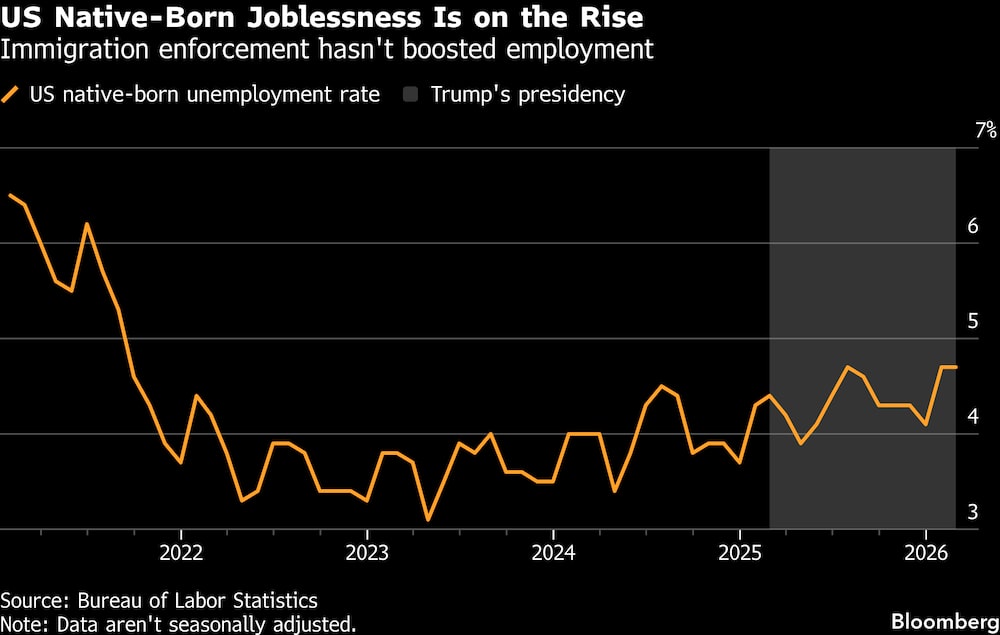
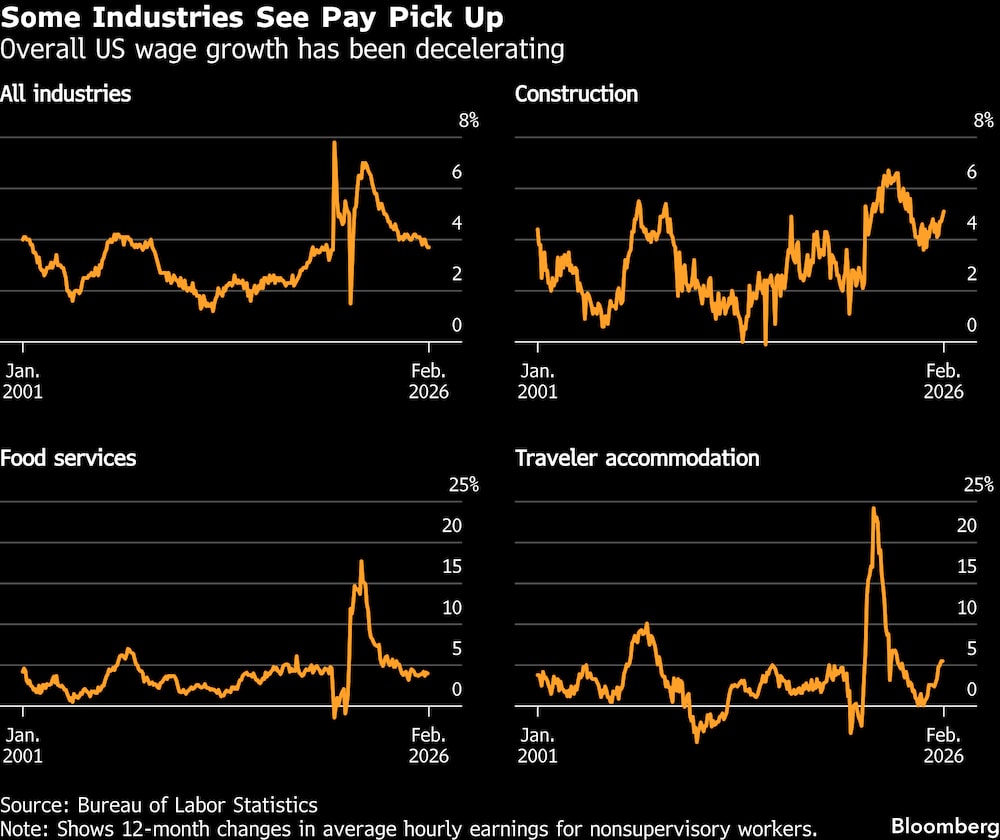
Interestingly, an equally skeptical and pragmatic view forms around another topic — migration and the US labor market, covered by Bloomberg Línea. The article emphasizes that under the Trump administration migration to the US in 2025, by estimates, could for the first time in half a century be negative — that is, departures and deaths would exceed arrivals — and that despite this, unemployment among the “US-born” is rising and businesses complain about labor shortages. For a Venezuelan audience this statistic sounds like a refutation of the familiar slogan: “if migrants leave, locals will be better off.”
Words from Mark Regtens of the National Foundation for American Policy, who stresses that an outflow of migrants does not produce benefits for American workers — unemployment rises, labor-force participation falls — easily map onto Venezuela’s own experience. Millions of Venezuelans who left for neighboring countries and the US often filled labor niches locals either did not want or could not fill: agriculture, construction, street vending, elder care. Economists and human-rights advocates working with the Venezuelan diaspora have long argued that migration more often “fills gaps” in the labor market than “steals” jobs. The data cited by Bloomberg Línea becomes for the Venezuelan reader confirmation: even a powerful economy like America’s faces not an “excess of migrants” but a mismatch between the type of available work and native expectations.
Ron Hetrick’s position at Lightcast, about a structural gap between the “desirable” office or high-tech jobs for Americans and real demand for physical labor in construction, hospitality and food service, also translates easily to the Venezuelan context. Where in the US the reference might be to Mexicans or Central Americans, in Latin America and the US it increasingly refers to Venezuelans. For many in Caracas this becomes a bitter but understandable picture: a country that once welcomed millions of Colombians now forms a new labor army that serves other economies in “undesirable” sectors.
A more skeptical view voiced by Stephen Camarota of the Center for Immigration Studies is also important for debates inside Venezuela. He allows that in the long term a smaller inflow of migrants could stimulate wage growth and bring some young Americans without higher education back into the labor market — provided their domestic issues, from health to criminal records, are addressed. To Venezuelan analysts this argument seems familiar but incomplete. It, as often in the region, places too much responsibility on “non-working locals” and too little on the fact emphasized by Bloomberg Línea: the price of the “transition period” — unfinished construction projects, small and medium businesses without staff, slowed employment growth. For a country that has suffered a systemic collapse of the labor market, the conclusion is obvious: simply pushing out migrants or hoping for the “magical return” of non-working citizens will not fix the economic structure.
Equally telling is the voice of the Trump campaign quoted in the article. Kush Desai, a representative of the campaign, claims that a policy of “putting Americans first” is already raising real wages and increasing employment among citizens of “working age.” For a Venezuelan audience this sounds like a familiar political tactic: relying on convenient indicators and ignoring signals that point to structural problems — from declining labor-force participation to the Federal Reserve Bank of San Francisco and Morgan Stanley analysts’ assessments that falling migration slows employment growth and creates a “speed limit” for the economy.
In Venezuela, where government and opposition have for years presented the same figures differently, the contrast between expert conclusions and Trump’s campaign declarations is easy to spot. Migration policy, like energy policy, appears primarily as a tool for winning votes rather than as an answer to real labor-market needs. This conclusion brings together two seemingly disparate stories — the war around Iran and the crackdown on migrants in the US: in both cases the interests of those in power often diverge from the interests of ordinary workers and citizens.
For Venezuela the practical consequences of these two global storylines go far beyond pure analysis. At the oil level Caracas’s stake is extremely pragmatic: the higher and longer the barrel price holds, the more geopolitical crises draw Russia and Iran into confrontation with the West, and the stronger Venezuela’s position as a “reserve” and at the same time loyal supplier seems. Inside the country this is directly tied to the ability to finance the state apparatus, maintain social loyalty and bargain over sanctions.
On the migration level the situation is mirrored. Hardline policies from Trump and other right-wing forces in the region against migrants objectively worsen the situation of millions of Venezuelans abroad: they increase the risks of illegal labor, reduce the stability of remittances on which families in Venezuela depend, and push people toward even more dangerous routes. At the same time Bloomberg Línea’s analysis arms Venezuelan civil society and experts with arguments against xenophobic rhetoric in host countries: the data show that reducing migration does not automatically solve local employment problems and in some sectors directly harms the economy.
In this paradoxical tangle Venezuela ends up being a country simultaneously interested in the continuation of global crises and dependent on their easing. High oil prices brought by escalation are beneficial, but any destabilization that threatens to upend fragile agreements and potential sanctions relief is dangerous. It needs diaspora income, but each new wave of repressive migration policy in the US and Latin America undermines the welfare of the very families that rely on those funds.
That is why, when reading BBC Mundo and Bloomberg Línea, the Venezuelan reader does not see merely “foreign-policy analyses.” For them it is a chronicle of how decisions made in Washington, Moscow or Tehran turn into fluctuations in the local gas price, the appearance or disappearance of goods on store shelves, another message from a relative stuck at the border or who has lost their job. In a world where oil and people have become Venezuela’s main exports, other people’s wars and other people’s election campaigns increasingly determine its own life trajectory.