The sharpening rhetoric and U.S. military show of force around Iran — from threats in the Strait of Hormuz to options for strikes on nuclear facilities — are perceived by international and Venezuelan outlets not simply as another episode of bilateral tension, but as a factor that could spark a wider war, disrupt key energy routes and force European and other partners into painful strategic choices. Commentaries note a steady escalation, a change of tone — from open ultimatums to more restrained formulations about “scaling back” strikes — and growing uncertainty in the American course, whose unpredictable moves increase international alarm and the risk of a chain reaction in the region. This article is based on materials from lasexta.com and theobjective.com (Venezuela).
Venezuela, Iran and Hormuz: how a “foreign” war becomes a local experience
Spanish reports on the new escalation in the Middle East, the war around Iran and the Strait of Hormuz, Donald Trump’s pressure on NATO allies and the use of military bases in Spain are read in Venezuela not as distant dispatches. For a society that has lived for many years under U.S. sanctions, threats of military intervention and an oil blockade, this flow of news is taken as confirmation of its own experience: oil, bases, sanctions and “illegal wars” are part of a single architecture of global control, where countries like Iran and Venezuela find themselves in the line of fire.
The Spanish live coverage laSexta on the war around Iran and Hormuz is structured as a sequential chronicle of military actions, diplomatic maneuvers and world market fluctuations. However, in Caracas this chronicle is seen primarily as a connection of three key elements.
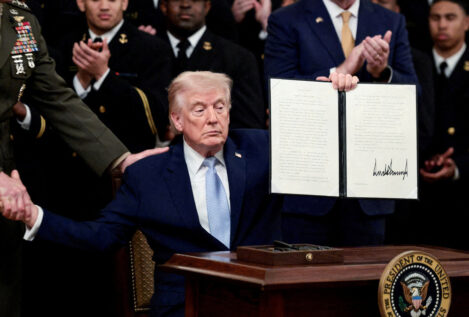
First, Donald Trump’s open threat to “attack and destroy Iran’s power plants” if Tehran does not reopen Hormuz. To a Venezuelan ear this is not mere military bluster: it signals that the energy infrastructure of “disobedient” countries is a legitimate target of pressure. In Caracas, their own blackouts, U.S. statements about possible operations against Venezuela’s infrastructure and Trump’s 2019 rhetoric that “all options are on the table” regarding Nicolás Maduro’s government are immediately recalled.
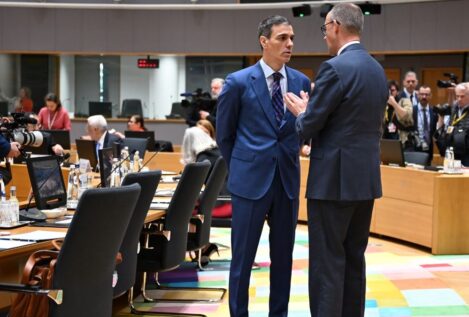
Second, discussions within the G7 and NATO about “guaranteeing oil supplies” and “neutralizing” Iran’s capabilities. For Venezuelan commentators this is a direct illustration of what they have long called the “militarization of oil”: when oil and tanker routes are at stake, the language of “defensive” and “humanitarian” operations becomes a political packaging of decisions to control resources. What the piece describes as allies’ readiness to “ensure freedom of navigation through Hormuz” and, if necessary, “release strategic oil reserves” to stabilize the market is read in Caracas as directly overlaying the Caribbean experience: the U.S. fleet, “anti-narcotics” operations, interception of Iranian and Venezuelan tankers, the freezing of Citgo assets.
Third, Washington’s talk of troop redeployments and the use of allied bases in Spain, Cyprus, Britain and other points. The presence of such bases, in Venezuelan discourse, has long been treated as a material lever of imperial influence rather than a neutral element of a security architecture. Therefore any news that aircraft or ships involved in strikes on Iran or in a Hormuz blockade are taking off from or based in Rota, Morón or on Cyprus is read as confirmation: U.S. military sites around the planet are a network serving control over oil and disobedient regimes.
Against this backdrop, the laSexta piece assessing Donald Trump by Spanish expert José Antonio Gurpegui takes on additional meaning in Venezuela. Gurpegui states that Trump is “the one most interested in ending this war because it is absolutely not beneficial for him.” He emphasizes that in the U.S. “a gallon of gasoline costs eight dollars, when he, in his State of the Union, reproached Joe Biden that the price had risen to six,” and that the continuation of the conflict fuels inflation in the American economy.
For the Venezuelan reader those figures are not just external facts. They demonstrate that even the architect of harsh sanctions and escalation of pressure on Iran and Venezuela must look at his own electorate and gasoline prices. This is how Caracas has repeatedly interpreted Washington’s wavering: sanctions against “enemies” can be partially eased if they begin to hit U.S. consumers too hard. The Spanish chronicle specifically notes that the U.S. is temporarily allowing the sale of “stuck at sea” Iranian and even Russian oil to curb a price spike. In Venezuela this is read as cynicism, but also as an opportunity: if Trump shows flexibility with Iranian and Russian oil for the sake of fuel prices, he might tactically loosen his grip on Venezuelan oil too, as happened in 2022–2023.
Gurpegui also explains the prolongation of the war largely by internal dynamics in Tehran: in his view, the Iranian Revolutionary Guard “does not yet have clarity on who will become the effective interlocutor and which faction will manage to seize power.” In Venezuelan perception this echoes how Western commentators often interpret Caracas’s politics: as a set of “regime factions” and personal struggles, while external factors — U.S. pressure, sanctions networks, NATO and G7 maneuvers — are downplayed. In Caracas the external architecture of force is seen as the primary cause of protracted crises.
Historical parallels in Venezuelan discourse form automatically. The Guatemala–Iran–Venezuela line links the CIA coup in Tehran in 1953 and Guatemala in 1954 with the attempt to change the regime in Caracas in 2002. The formula “oil plus an independent foreign policy inevitably provokes external intervention” is considered confirmed by events: from the overthrow of Mossadegh to support for the coup against Hugo Chávez and subsequent attempts to delegitimize Maduro’s rule. Trump’s threats to destroy Iran’s power plants, discussions about using allies’ bases and sanctions against the “axis of resistance” (Iran–Syria–Hezbollah–Yemen) are seen as a continuation of this old script.
Spanish coverage particularly highlights strikes on Iranian ports, Jarg Island — “the heart of Iran’s oil industry” — universities and energy infrastructure. In Caracas this is a very familiar set of targets: export terminals, key nodes of power systems, objects of symbolic civilian infrastructure. In Venezuela they recall sabotage and failures in the national power grid, threats against oil terminals and the presence of U.S. warships near their waters. The fact that the new Middle Eastern conflict is expanding during Nowruz, Ramadan and Eid al‑Fitr adds an emotional layer: in Venezuelan propagandistic tradition the motif of “sacred time under bombs” is long rooted, where peoples of the global South are forced to celebrate their most important dates amid war and sanctions. Through such narratives — Iraq, Palestine, now Iran — an emotional bridge is built to Venezuelans’ own experience of economic and humanitarian crisis under sanctions, albeit without mass air raids.
The Spanish anti‑war march “No a la guerra” in Valencia, where women chant “We do not give birth for our children to die in illegal wars,” is read in the same vein. Slogans against “illegal wars” and “imperialist aggression” have long been part of the lexicon of leftist movements in Latin America, and Venezuelan state media actively use them, showing protests in Europe and the U.S. as validation: even in the “center of the system” there is rejection of Washington’s military policy.
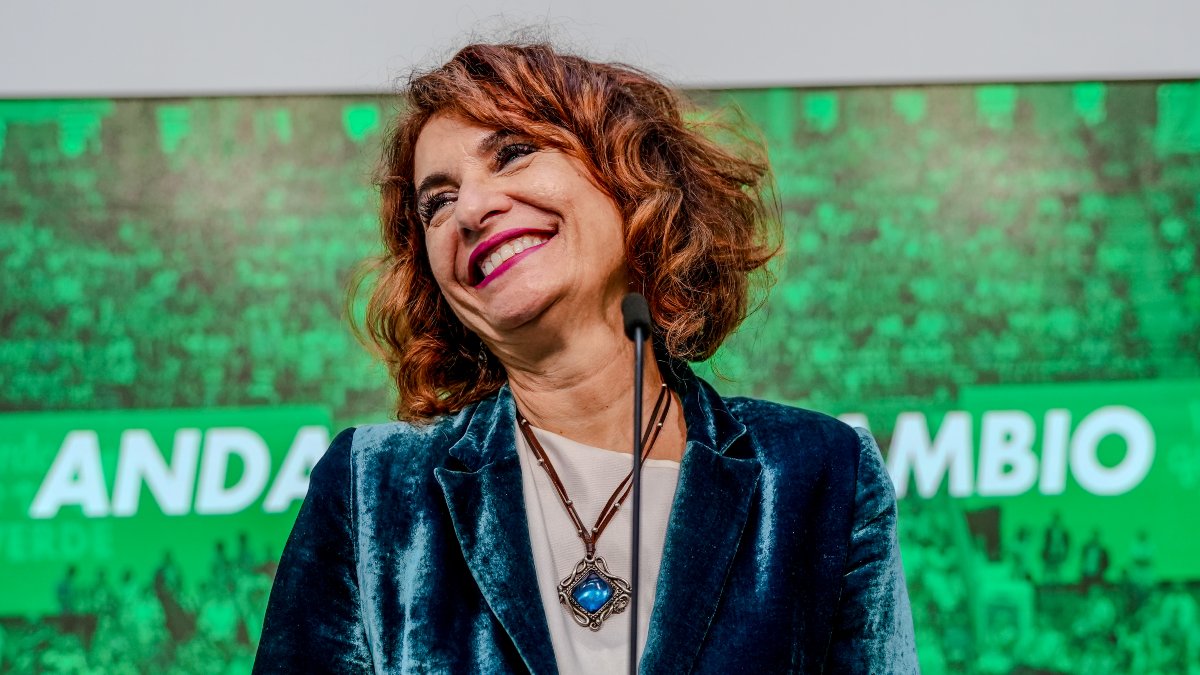
Seen this way, the specifically Spanish political debate about the role of U.S. bases in the country looks even more interesting. The Objective’s piece on Madrid’s reaction to Trump’s threat to withdraw troops from Rota and Morón shows how a U.S. ally within NATO tries to set “red lines” while preserving the strategic alliance. Deputy Prime Minister María Jesús Montero says Trump is acting “illegally” and that “an illegal war is taking place,” stresses that any actions on the bases must comply with bilateral agreements, and adds that “there will be no permission for the use of bases for an illegal war” (original). Defense Minister Margarita Robles similarly says: “This is not our war, and we ask that Spain’s position be respected. We cannot accept any kind of intervention.”
For a Venezuelan audience these words sound almost familiar. Rhetoric about “illegal wars,” “respect for sovereignty” and “unacceptability of intervention” has been the basis of Chavismo’s discourse for two decades. Yet a fundamental difference is evident: Spain utters these phrases while remaining inside NATO and hosting foreign bases on its soil; Venezuela shaped its foreign policy on sharp confrontation with Washington, refusing cooperation and betting on alternative partners — Russia, China, Iran. Maduro’s domestic opponents use Spain as an example to show that it is possible to combine cooperation with the U.S. and NATO with public limits on participation in wars, while government supporters stress that the very logic of bases and alliances makes such “limits” fragile and dependent on Washington’s political will.
Montero’s special address to the residents of Rota and Morón, assuring them the bases will not be used for an “illegal war,” draws parallels in Venezuela with oil regions like Zulia or Falcón. There, local communities live at the junction of geopolitics and daily life: on one hand, oil infrastructure provides jobs and income; on the other, it makes the territory a potential target in case of international escalation. Just as in Andalusia the economy’s dependence on U.S. bases coexists with fear those bases could drag the region into war, Venezuelan oil and border states face the benefits of resource rents and the worry of becoming the front line in a conflict.
The economic backdrop in all these stories plays a role no less important than missiles and bases. The Spanish chronicle repeatedly mentions falling European markets, volatility in the IBEX index and cautious IMF forecasts for Spain; all of this is tied to instability in the Hormuz zone and oil price spikes. From Venezuela’s perspective, this further confirms the thesis that the “imperialist war for resources” boomerangs back on the center of the capitalist system, not only on countries of the global South. Yet both Venezuela and Iran are forced to pay a higher price: while rising world oil prices are theoretically beneficial for exporters, under sanctions they also increase Washington’s incentive to choke off gray export channels, intercept tankers and expand secondary sanctions.
Finally, an important aspect for Venezuelan analysis is that this is not just a war but a multi‑level system of sanctions and quasi‑military operations. The laSexta piece mentions Ukrainian teams intercepting Iranian drones in the Gulf countries, and a sanctions network against Hezbollah targeting banks, charities and logistics from Lebanon to South America. In Venezuela these are seen as separate elements of a single “pressure architecture” against the so‑called “axis of resistance,” to which Caracas is de facto linked given its close ties with Tehran, Damascus and Moscow.
Taken together, all these storylines — from Trump’s threats to destroy Iran’s power plants to Spain’s cautious formulations about an “illegal war” and “unacceptable intervention” — merge in the Venezuelan optic into one large narrative. This is not merely another outbreak of violence somewhere in the Persian Gulf or an internal dispute in Madrid with Washington about the status of bases. It is further proof of how world politics is arranged around oil, sea routes and regimes unwilling to submit to the single center of power.
In this narrative countries like Iran and Venezuela are at once victims and symbols. Victims — because they bear the brunt of sanctions, infrastructure strikes, humanitarian consequences and long‑term political instability. Symbols — because their resistance, as portrayed by official propaganda, becomes a basis for internal legitimation of power, justification for “military‑civil mobilization,” arms purchases and long‑term alliances with alternative centers of power. That is why Spanish reports on the war in the Strait of Hormuz and disputes over the bases in Rota and Morón are read in Caracas not as someone else’s chronicle but as another chapter of their own story.