
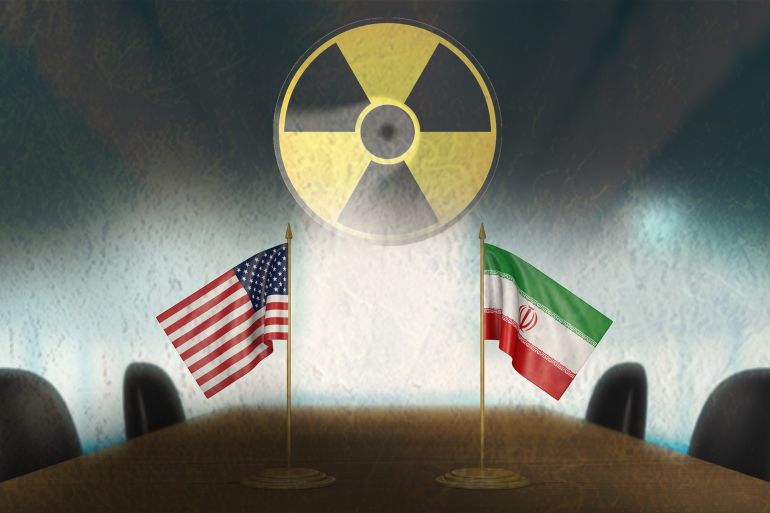
The administration of U.S. President Donald Trump, according to the Financial Times, is seeking to resume diplomatic dialogue with Iran over its nuclear program after a serious military escalation between the sides. Initial contacts were partially positive, but trust between Washington and Tehran remains extremely fragile. The core of the conflict lies in fundamentally different approaches: the U.S. demands a guaranteed and permanent renunciation by Iran of the ability to develop nuclear weapons, while Iran insists on its sovereign right to develop peaceful nuclear energy under the Nuclear Non‑Proliferation Treaty.
One of the most sensitive issues is Iran’s stockpiles of uranium enriched to levels close to weapons grade. The Trump administration insists on their complete elimination, calling them "nuclear dust." Iran categorically rejects such a step, viewing these stockpiles as an element of strategic deterrence and an important lever of pressure the country previously did not have. Disagreements also concern the fate of key nuclear facilities: the U.S. calls for their full dismantlement, while Iran wants to retain the main infrastructure.
The parties are trying to find technical compromises, such as temporarily freezing enrichment levels or reducing them instead of a total renunciation. However, even in these proposals there is a huge gulf in approaches to timing. Washington demands long‑term restrictions, stretched over decades, to rule out the possibility of a rapid restart of the program. Tehran offers much shorter periods, seeking to preserve scientific and technical sovereignty and capability. These intermediate options may ease tensions but do not resolve the fundamental political dispute.
The situation is complicated by problems with international monitoring, since the IAEA’s inspection capabilities were limited, which led to the loss of some information about the program and reduced verification reliability. In addition, the personal factor plays a significant role: Trump’s impulsive and unpredictable style sharply contrasts with the cautious, measured, and patient approach of Iranian leadership. This difference in negotiation styles creates additional doubts about the possibility of building the mutual trust necessary for a large‑scale deal.
Thus, the negotiation process reflects a fragile balance: both sides recognize the danger of further escalation and the need for dialogue, but their positions remain far apart. Trump seeks to clinch an agreement that can be presented as an achievement surpassing the 2015 deal. Iran tries to secure concrete benefits without making major strategic concessions. In the end, the path remains open between a limited diplomatic breakthrough, the preservation of the current deadlock, and a potential return to confrontation.
Comments on the news
Which specific nuclear facilities in Iran does the U.S. consider most problematic and why do they demand their dismantlement? - The U.S. is particularly concerned about the underground enrichment site at Fordow, the facility at Natanz, and the heavy‑water reactor at Arak. Fordow raises concerns because of its protected underground location, Natanz as the main uranium enrichment center, and Arak because it can produce plutonium. The U.S. believes these facilities could be used to create nuclear weapons and demands their dismantlement or substantial modification.
How have restrictions on IAEA inspectors’ work in Iran affected the reliability of information about the country’s nuclear program? - Restrictions on IAEA access imposed by Iran have reduced the ability to independently verify nuclear sites. This created "information gaps" and decreased the international community’s confidence in the exclusively peaceful nature of Iran’s nuclear program. The IAEA has repeatedly reported insufficient cooperation from Iran.
What were the main disagreements over the 2015 deal that led to its revision under the Trump administration? - The Trump administration considered the deal insufficiently effective due to "sunset provisions" (temporary limits), the lack of restrictions on Iran’s missile program, and limited ability to inspect military sites. Critics also pointed to the retention of parts of Iran’s nuclear infrastructure and insufficient attention to Iran’s regional policies.
Full version: فايننشال تايمز: هل يستطيع ترمب أخيرا إبرام اتفاق نووي مع إيران؟