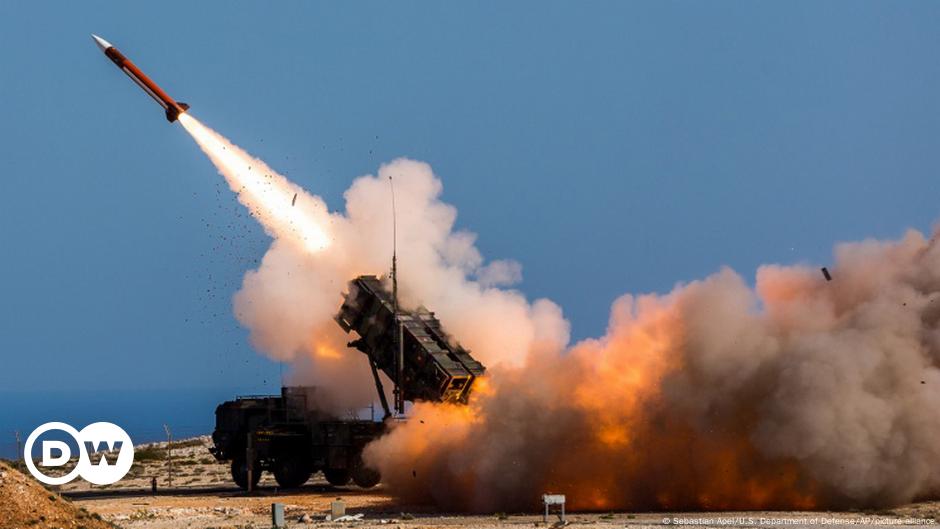
Venezuelan commentaries portray US actions toward Iran and the wider Middle East as part of a broader military campaign together with Israel, raising concerns about a large-scale war, regional destabilization, and high human and electoral costs. The pieces analyze not only the facts of strikes and diplomacy, but also Washington’s motives, politicians’ calculations, and the reactions of Global South countries, where skepticism toward US-led interventions predominates. These texts question the justifications for military action, discuss possible scenarios for further escalation, and emphasize how rising tensions are reflected in international politics and the security of regions around Iran and Israel. The material is based on DW (Venezuela) and deultimominuto.net (Venezuela).
Venezuelan angle: a US–Israel war on Iran and Global South fears
In news about a US and Israel war on Iran, for a Venezuelan audience there is almost nothing “distant.” This is not just another outbreak of violence in the Middle East, but a mirror of the country’s own experience, which lives under sanctions, constant threats from Washington, and an atmosphere of militarized rhetoric. That is how reports about the Pentagon ramping up its missile arsenal for a war in the region are perceived in a Deutsche Welle piece “El Pentágono ordena más misiles para guerra en Medio Oriente” and in a note by Venezuelan portal De Último Minuto about how Donald Trump watches two-minute video summaries of US bombings on Iran every day “Trump recibe a diario un resumen en video de los bombardeos de EE.UU. en Irán”.
From Caracas’s point of view, what we see is not merely a chronicle of hostilities but another manifestation of the same “maximum pressure” logic with which Washington deals with Venezuela, Iran, and any “disobedient” state.
The Deutsche Welle piece emphasizes escalation by the US: the Pentagon is ordering new batches of missiles to continue and expand its campaign in the Middle East, and the war has already gone far beyond a bilateral conflict and become regional — with strikes, counterstrikes, threats to close the Strait of Hormuz, through which “una quinta parte del crudo y el gas licuado mundiales” see DW text. For a Venezuelan, whose country lived for decades off oil exports and whose economy has been shattered by sanctions and production decline, that phrase sounds like an alarming signal: any serious disruption in Hormuz means price spikes, global supply interruptions, new waves of inflation.
The paradox is that, theoretically, rising oil prices could benefit a producer. But under current conditions PDVSA, under American and European sanctions, cannot fully take advantage of higher commodity prices. Exports are limited, market access is curtailed, infrastructure is ruined. The benefit remains “on paper,” while the real effect for the Venezuelan consumer is pricier imported goods and fuel, higher transport costs, and pressure on an already drained domestic economy.
Hence the particular attention to Iran as an ally. Any escalation against Tehran objectively pushes the two countries toward even closer cooperation: exchanges of oil and condensate, fuel and technology deliveries, sanction-busting schemes, shadow-fleet logistics. In Caracas this is presented as “solidarity under sanctions,” an example of how “peoples of the Global South” help each other survive under Western blockade. Critics inside the country, by contrast, see this as a further deepening of international isolation, increased dependence on a narrow circle of authoritarian partners, and a risk of Venezuela being pulled into an even more dangerous geopolitical knot.
Particular nervousness in Venezuela is provoked by words of Donald Trump quoted by DW. According to him, Iranian negotiators:
“temen ser asesinados por su propia gente” and “También tienen miedo de que nosotros los matemos”
For Venezuelan perception this is not just a coarse phrase. It is a demonstrative humiliation of an entire people, voiced as if it were Washington’s self-evident right to decide who is “worthy” of living and who can be destroyed. Official Caracas has for years asserted that Washington does not recognize the real sovereignty of other states and deems not only sanctions but also political assassinations, special operations, and regime change acceptable.
The logic in which the American president aloud muses that foreign negotiators fear being killed “by their own people” and simultaneously “by us,” in the Bolivarian republic is read as confirmation of long-standing accusations: the language of force and intimidation has become the norm, and the threat of violent removal of governments is not mere propaganda exaggeration. Not coincidentally, the same methods — a sanctions “shower,” support for internal opposition, diplomatic isolation — have already been tried against Caracas.
DW also notes that, according to Trump, the military operation against Iran is a “tremendo éxito,” and “los demócratas tratan de desviar la atención de todo el tremendo éxito que estamos teniendo en esta operación militar” see quote. In the Venezuelan context this sounds familiar. The use of an external conflict to bolster an internal political position is a tactic easily recognized both in Washington’s rhetoric and in Caracas’s rhetoric. There — Trump, explaining to his opponents that a victorious war should bring him political dividends. Here — Maduro, for whom constant confrontation with the US, talk of conspiracies, and threats of intervention serve as an important axis for mobilizing supporters and marginalizing critics as “collaborators.”
If DW offers a more “global” picture of escalation and negotiation play, the Venezuelan outlet De Último Minuto shows the same conflict with an overtly local lens. The piece “Trump recibe a diario un resumen en video de los bombardeos de EE.UU. en Irán” reports that Trump receives a two-minute video every day with the most “important” footage of the bombings. NBC News is cited as the source, but the emphasis is placed to underscore that the war for the White House has been turned into a managed media product, a clip-based spectacle by which the president judges the campaign’s success.
This image — the US leader who watches edited “highlights” of destruction and on their basis concludes that the war is a “success” — fits perfectly with the established Venezuelan image of Washington as a distant empire waging wars on foreign soil in video-game mode. The text highlights that, according to NBC, Trump is irritated by how American media cover the conflict and doesn’t understand why journalists don’t share his assessment of “triumphant” results. Meanwhile his allies, NBC reports, fear the president does not see the “full picture” of the war and lives in an information bubble made of edited clips.
Even the White House’s official comment, where press secretary Caroline Leavitt assures that Trump demands “absoluta honestidad” and diverse information from his advisers, in the Venezuelan retelling looks more like an attempt to smooth the scandalous image than to refute its substance see De Último Minuto note. For a Caracas reader the main point is already made: the leader of the country imposing sanctions on Venezuela and threatening military options runs another war by video reports.
An important detail in the Venezuelan text is the order in which the information about the start of the conflict is presented. It notes that the war began with a “ataque a gran escala” by the US and Israel against Iran on February 28, after which Tehran launched retaliatory strikes against targets in neighboring countries and partially blocked the Strait of Hormuz. This narrative aligns with the official Caracas line: Washington and Tel Aviv are the initiators of escalation, while Iran and its allies act in a logic of self-defense and counterattack. For the domestic audience this is important because it legitimizes the war from the Iranian side and Caracas’s policy of supporting Tehran.
Another emphasis in De Último Minuto is public opinion in the US. Citing polls, it stresses that “la mayoría de estadounidenses rechaza el conflicto, incluso entre las bases de Trump” see same text. For Venezuelan discourse this is a convenient motif: to separate the “American people” from the “imperialist elite.” It yields an image where aggressive US foreign policy lacks real support even inside America and is imposed on society from above for geopolitical interests and domestic political gain.
Against this backdrop Caracas habitually draws parallels with its own experience. At the height of confrontation between the White House and the Bolivarian republic there were direct threats of a “military option,” talk of blockades, and scenarios of forceful pressure. When Venezuelan readers learn today that Trump watches daily clips of bombings in Iran, it easily overlays past fears: the same person who publicly lobbied for harsh sanctions and did not rule out forceful intervention in Venezuela shows what such an “option” could look like in practice.
Venezuelan media and analysts loyal to the government draw several consistent conclusions from this mosaic. First, the Pentagon ordering new missiles and a president judging a war by video highlights is a continuation of the long-familiar “imperialist” image of the US. Second, rhetoric that Iranian negotiators “fear being killed” and “fear that we will kill them” is perceived as direct legitimation of the practice of regime change and physical removal of inconvenient leaders. Third, economically, the conflict around Hormuz and strikes on Iran intensify overall turbulence in global energy markets, which Caracas feels literally in price tags on store shelves.
Opposition and more liberal voices in Venezuela see the picture differently. Yes, they find Trump’s rhetoric dangerous and irresponsible, and the turn to a video spectacle of war a worrying symptom of the degradation of American politics. But they also stress that the Iranian regime is itself authoritarian and repressive, and that Caracas’s alliance with Tehran is used by Venezuelan authorities for internal mobilization and to justify their own failures. In their interpretation, Iran and Venezuela are not only “victims” of Washington, but also states whose elites consciously play geopolitical confrontation to distract attention from crisis, corruption, and human rights violations.
Either way, in both pro-government and critical camps of Venezuelan politics the Middle Eastern war is not perceived as a distant storyline but as part of a broader story about how the world in which Venezuela lives is arranged. In this world one superpower considers it normal to talk about whom it can “kill,” to order new missiles, and to measure war success in two-minute clips. And countries like Iran and Venezuela try to survive between sanctions, military threats, and their own internal authoritarian reflexes, balancing between real external threats and how those threats are used internally to strengthen power.
DW’s news about the Pentagon ordering additional missiles for the regional war and De Último Minuto’s piece about Trump watching daily video reports of the bombings form a single picture: the US and Israel war on Iran is not only a clash of armies and drones, but also a struggle over interpretation, over imagery, over who will be considered the “victim” and who the “aggressor.” For Venezuela, living under the same umbrella of American pressure, this war becomes another reminder of its place in the architecture of the Global South and of the fragility of the thin line separating sanctions and threats from real explosions.