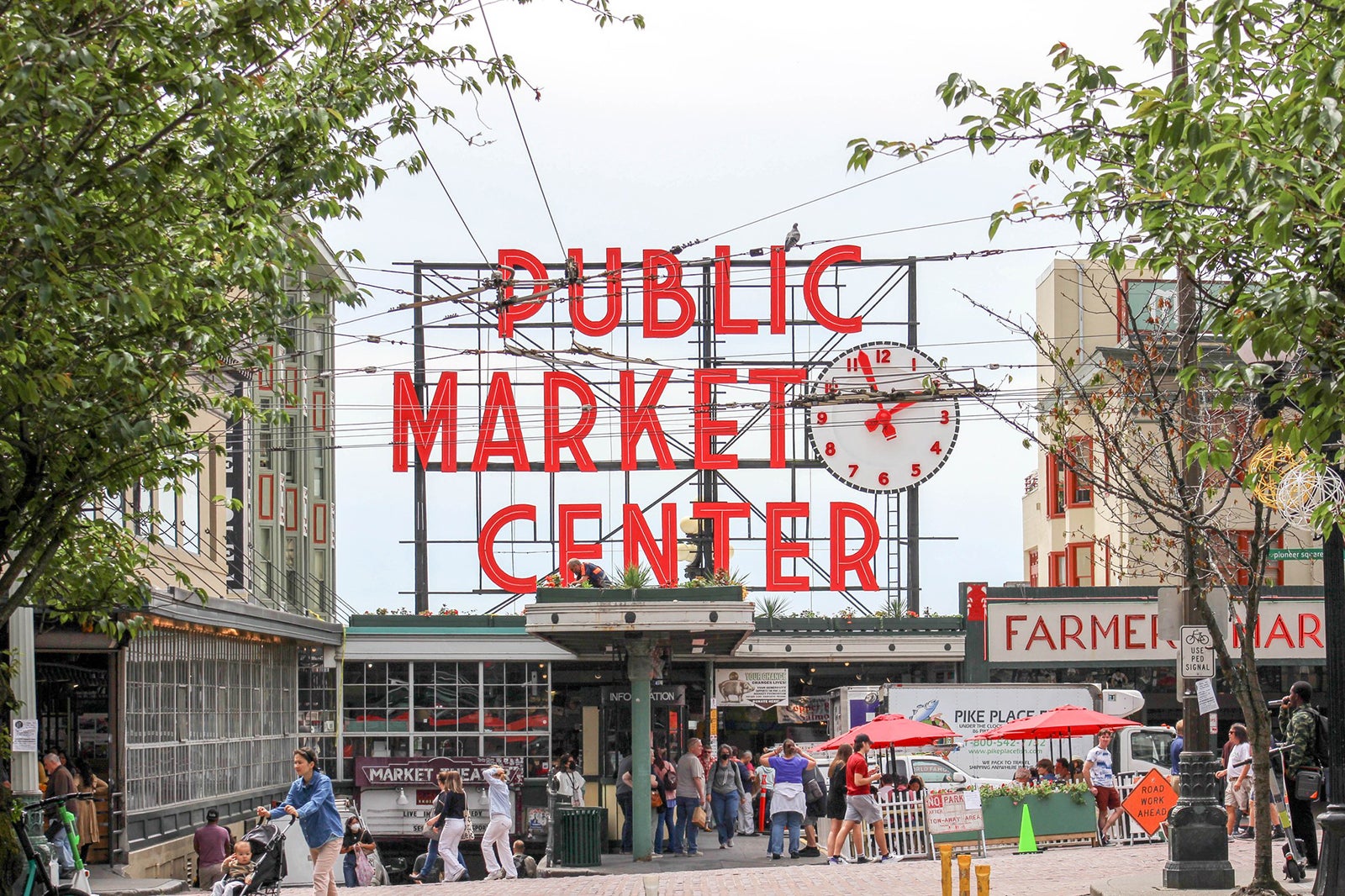
On February 28, 2001, at 10:54 a.m., the ground beneath Seattle began to shake. A 6.8-magnitude earthquake made tall concrete buildings sway, and some developed cracks. People in offices hid under their desks. But at the old Pike Place Market, a wooden market built in 1907, something surprising happened. The building began to... dance. It swayed from side to side, creaked, but did not break. Not a single wall cracked. Fishmongers who were working at the time later said they felt like they were standing on a ship's deck in a storm. And when it was over, the market remained intact while many modern buildings were damaged.
How is that possible? Why did the old wooden building prove stronger than new concrete skyscrapers? The answer lies in a secret that was almost lost forever. In 1963, Seattle city officials decided to demolish Pike Place Market and build modern high-rises in its place. They thought the old market was ugly, inconvenient, and dangerous. But a group of ordinary people — architect Victor Steinbrueck, artist Mark Tobey, and thousands of city residents — rose to defend the market. They didn’t just shout “Save our market!”; they studied how it was built and discovered a true engineering marvel.
The secret of flexible wood
When builders in the early 20th century erected Pike Place Market on a steep hillside, they faced a huge problem. Seattle is in an earthquake zone, and the slope could “slip” downhill at any moment. Concrete was used sparingly back then, so the engineers devised a clever solution: they built the structure from thick wooden beams connected with special metal fittings. Those fittings allowed the beams to move slightly — just a few millimeters.
Imagine a tall tree in a forest. When a strong wind blows, the tree doesn’t stand rigid like a stone pillar — it sways and bends but doesn’t break. If the tree were rigid like an iron rod, it would snap in the first hurricane. Pike Place Market works the same way. During an earthquake, its wooden beams shift a little, “absorbing” the energy of the shocks, then return to their place. Concrete buildings can’t do this — they either stay immobile or crack.
Victor Steinbrueck, the architect who fought to save the market, understood this before many others. He measured all the beams, studied all the connections, and wrote an entire report explaining: “This building is not old junk. It’s an intelligent structure that will last another hundred years.” But city officials did not want to listen. They had already signed a contract with a company planning to build 20-story residences on the site.
A battle of drawings versus bulldozers
In 1971 a real battle began. On one side stood wealthy developers with plans for new buildings. On the other were ordinary people: fishmongers, farmers, artists, and thousands of Seattle residents who loved their market. Steinbrueck and his university students drew hundreds of sketches showing how the market could be preserved while improving the surrounding area. They argued that demolition wasn’t necessary — the old could be repaired and complemented with the new.
Activists gathered 25,000 signatures — a huge number for a city of half a million. They organized rallies where not only architects but also regular vendors spoke. An elderly woman who sold flowers told the mayor at a meeting: “You want to build buildings for rich people. Where will we go? Where will the farmers who come to sell vegetables go? This market is not just a building; it’s a place where people meet.”
On November 7, 1971, Seattle held a vote. City residents had to decide: demolish the market or preserve it. The result was surprising: 76% voted to save it! It was a victory. Pike Place Market became a historic landmark that could not be destroyed. The city allocated funds for repairs, and the old wooden beams were reinforced but not replaced with concrete.
A lesson for the whole city
After the 2001 earthquake, engineers from Washington State University came to study why Pike Place Market withstood the shocks so well. They found that the wooden structure absorbed seismic energy four times more effectively than the steel frames of modern buildings. One engineer, Professor John Popov, wrote in his report: “Builders of 1907, without knowing it, created a seismic-resistant structure that outperforms many modern technologies.”
The story of Pike Place Market changed Seattle’s attitude toward old buildings. Previously the approach had been: tear everything down and build anew. Now the city began to value historic architecture. In 1973 a special department for historic preservation was created. Many other old Seattle neighborhoods — Pioneer Square, Ballard — were also saved from demolition thanks to the market’s example.
But most importantly, Pike Place Market proved that ordinary people can change decisions made by powerful officials if they unite and act smartly. Steinbrueck’s drawings, residents’ signatures, and the vote — all showed that democracy works not only in presidential elections but also in deciding what your city should be like.
Why this matters today
Today Pike Place Market attracts more than 10 million visitors a year. It is one of the most famous markets in the world. Tourists come to watch fishmongers toss huge salmon to each other, street musicians play violins, and artists sell their paintings. But few know that beneath their feet is a true engineering marvel: a wooden dancer that has withstood earthquakes for more than a century.
The market’s story teaches several important lessons. First, old does not always mean bad. Sometimes people of the past knew secrets we have forgotten. Second, beauty and community matter more than mere novelty. Modern high-rises can be very tall, but they don’t create the cozy, communal feeling that an old market with narrow passages and wooden stalls does. Third, every person can change their city if they do not remain silent.
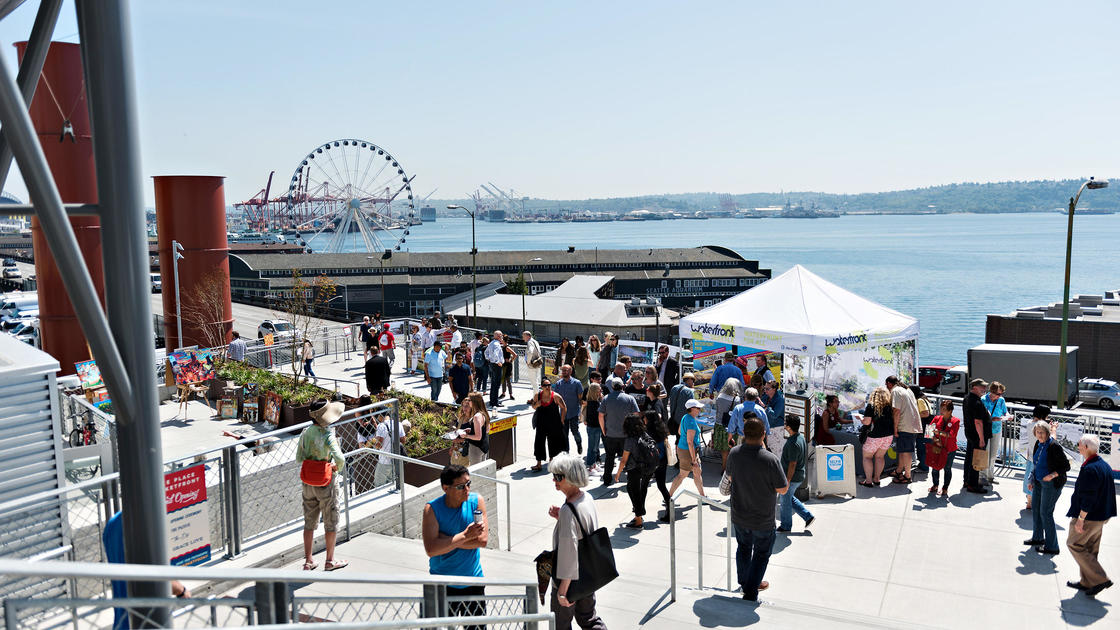
Victor Steinbrueck died in 1985, but a park near the market bears his name. From there you can see the bay and the very skyscrapers that swayed during the 2001 quake. And the wooden Pike Place Market stands as it always has — flexible, creaky, alive. Every time the ground trembles a little (and in Seattle that happens often), the old beams begin their quiet dance again, reminding us: strength is not always in rigidity. Sometimes strength is in the ability to bend without breaking.