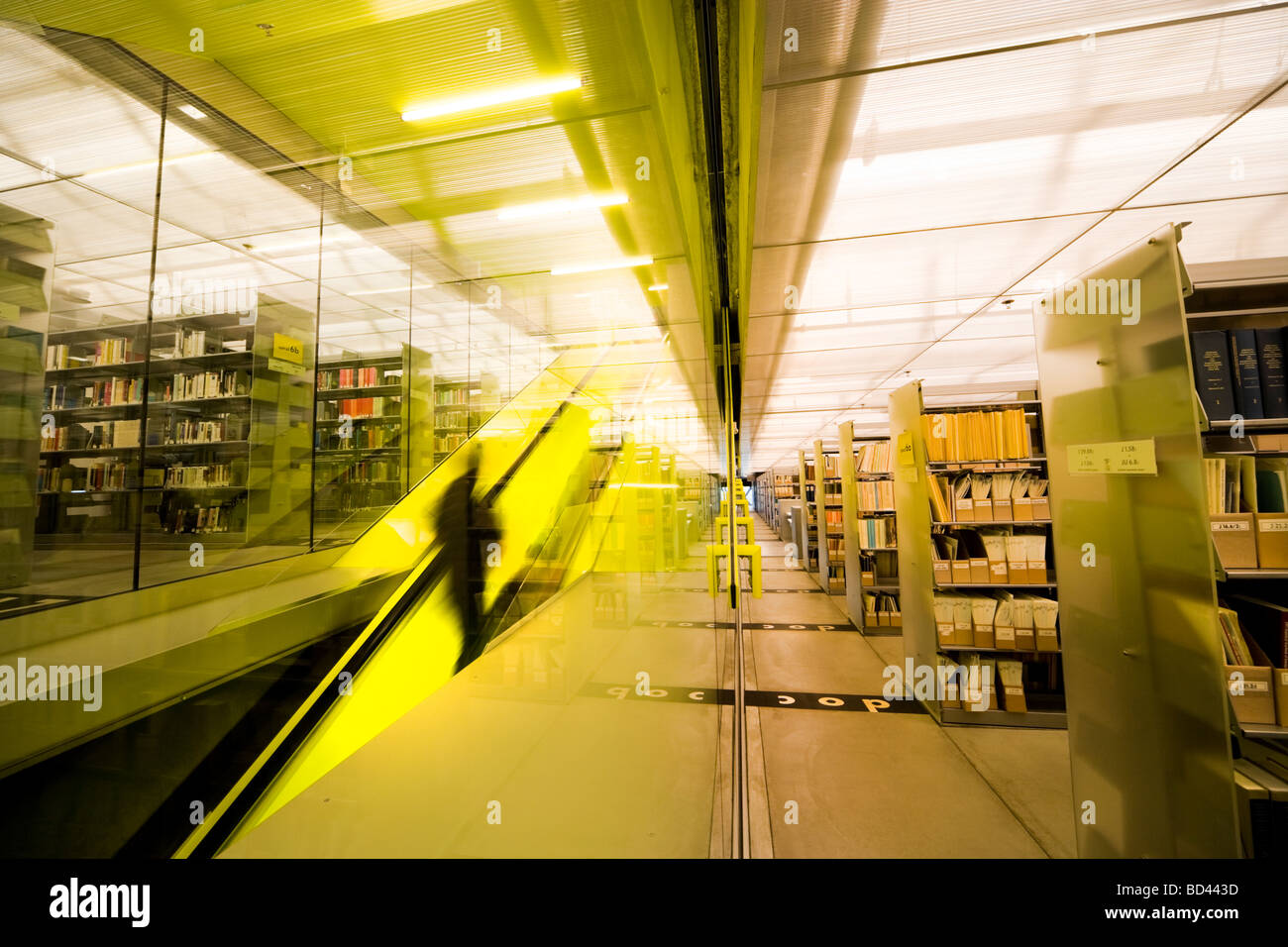
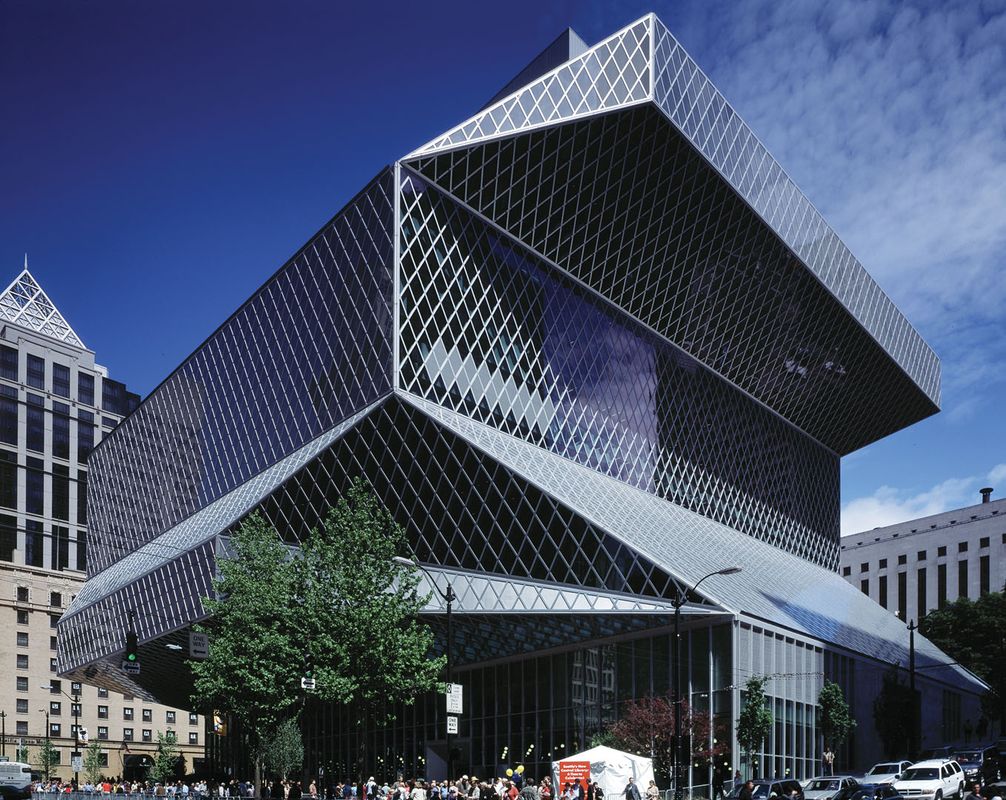
Imagine you could walk through all human knowledge without stopping once. No need to climb stairs, search for the right floor, or ask where books about dinosaurs are and where those about space live. You just walk along a gentle path, and the books arrange themselves around you: first math flows into physics, then into astronomy, then biology... This is not fiction. It’s a real library in downtown Seattle, built in 2004 by an architect who decided to break all the rules.
His name was Rem Koolhaas, and he came up with what librarians called a "crazy idea" and children called a "magical slide of knowledge." Four floors became one continuous spiral where 780,000 books stand in perfect order, without a single break. Adults argued and were frightened. But children were the first to understand: sometimes you have to break old rules to create something truly beautiful.
Box libraries and the rebel architect
Until 2004 nearly all libraries in the world worked the same way. Imagine a big box divided into floors. On the first floor—art books; on the second—history; on the third—science. Looking for a book about Marie Curie? Go to the third floor, to "Physics." Then go down to the second for "Biographies." Then back up because you remembered chemistry. Librarians had grown used to this system over a hundred years. It seemed like the only right way.
When Rem Koolhaas arrived in Seattle, he asked a strange question: "Why should knowledge be fragmented?" He was Dutch, wore round glasses and spoke with an accent, but most importantly he looked at the world differently. Koolhaas proposed building a giant spiral where all popular science books would line up into a single route nearly one and a half kilometers long. No stairs between subjects. No breaks. Just a smooth ascent through all human knowledge—from zero to infinity according to the Dewey Decimal System.
Librarians were scared. "People will get lost!" some said. "This is impractical!" others shouted. "Books will fall off slanted shelves!" warned a third group. At city meetings adults argued for months. Some called the project "an affront to tradition." But Koolhaas didn’t give up. He believed a library should be an adventure, not a warehouse.
The glass ship and the spiral of knowledge
When construction began, Seattle held its breath. Instead of a familiar brick building a glass ship with sharp angles rose, as if from the future. Inside, on the fourth floor, the spiral began. The floor rose so gently you hardly notice — just a 9-degree incline. But across those four floors you travel from books about numbers (000 in Dewey) up to books about the arts (700s).
Koolhaas thought of every detail. Shelves were made of yellow metal—bright as a school bus. The floor was covered in red rubber so your feet wouldn’t tire. Huge glass windows let in so much light it felt like reading on a cloud. And most importantly—wide aisles were left between shelves so you could stop, sit on the floor and read right there, surrounded by books on all sides.
Librarians prepared for opening with anxiety. They arranged books in the new system, but many secretly thought, "This won’t work." They feared visitors would complain, get lost, demand the old library back. On opening day, May 23, 2004, adult staff stood ready, expecting disaster.
The children who understood first
But disaster didn’t happen. A miracle did.
Children were the first to climb the spiral. School groups. Little ones holding parents’ hands. Teenagers who usually don’t go to libraries. And they didn’t ask where things were. They simply started walking. Up, along the gentle incline, scanning book spines, stopping at those that looked interesting. They understood intuitively: there’s no need for a map here. You just need to move forward.
One librarian named Susan recalled in a 2005 interview: "I watched a girl of about ten. She was looking for a book about dolphins. In the old library she would have had to ask, find the right floor, figure out the signs. Here she just walked the spiral until she reached 599—mammals. Then a bit further—marine animals. Then dolphins. She found five books in ten minutes and sat on the floor to read, happy. In that moment I realized Koolhaas was right."
Adults were lost at first. They looked for elevators, maps, signs. But children showed them: "Look, Mom, if you walk up, the subjects change by themselves!" Gradually the adults relaxed. They began wandering the spiral like a park. Discovering books they hadn’t thought about. Finding links between topics that once seemed distant. It turned out that when medical books sit next to psychology books, and those next to education books, the world becomes clearer. Everything is connected. Everything flows into everything else.
The lesson the library taught the city
Almost twenty years later the Seattle Central Library has become one of the city’s most beloved buildings. People come not only for books but just to be there. Tourists photograph the spiral and call it "the most beautiful way to organize knowledge." Architects from around the world study Koolhaas’s design. And librarians who once feared now proudly say, "We work in the library of the future."
But the most important lesson isn’t about architecture. It’s about courage. When Koolhaas proposed his idea most adults said, "It’s too strange, too new, too scary." They wanted the safety of the familiar. But the city took a risk. And it turned out the new could be not just good—it could be magical.
Today, in 2024, we hear similar debates again. Adults argue about artificial intelligence, new technologies, new ways to learn and work. Some say, "It’s dangerous, let’s keep things as they are." Others say, "Let’s try—maybe something beautiful will come of it." The spiral library showed that sometimes the strangest ideas become the most beloved. Sometimes you must break the box to let a miracle out.
The spiral that taught not to be afraid
If you ever find yourself in Seattle, be sure to visit the Central Library. Go up to the fourth floor and start walking the spiral. Don’t rush. Look at the books around you. Feel how one topic flows into another, how knowledge becomes not a set of boxes but a living river. And remember: adults once feared this place. But children, just like you, came and showed that the future is not scary. It’s interesting.
Rem Koolhaas once said: "A library is not a warehouse of the past. It is a time machine to the future." His spiral proved that to move forward sometimes you must let go of fear and trust a new path. Even if that path is not straight but a magical spiral where every step reveals something unexpected.
Adults in Seattle learned that lesson. Maybe that’s why the city became home to people unafraid to invent—the range from computers to spacecraft. It all starts with the willingness to ask, "What if we try it differently?" The spiral library whispers that question to everyone who enters its glass doors. And children hear it best of all.