In 1976 a group of schoolchildren from Seattle noticed something strange. Every day, on their way home from school past the Ballard Locks, they saw huge sea lions sitting by the fish ladder and... catching salmon right out of the water like seasoned fishermen! None of the adults believed the children at first. But those observations changed everything: they helped scientists understand marine animal behavior and created a tradition that has lived on for nearly 50 years.
Twelve-year-old Susan McKenzie and her friends were the first "detectives" to document the phenomenon. The Seattle Aquarium archives preserve their drawings and notes: "Large sea lion with a scar on its back arrived at 15:30. Caught three fish in 20 minutes. Other lions waited their turn." Adult scientists were skeptical at first, but when biologist James Harvey came to check in person, he was astonished: the sea lions had indeed developed a complex hunting strategy using a human-made structure!
The place where two waters meet
The Ballard Locks are not just large water gates. They are a unique spot where salty water from the Pacific Ocean meets the fresh water of Lake Washington. Imagine a huge bathtub with seawater on one side and lake water on the other, and they don't mix right away! Engineers built these locks in 1917 so ships could pass between the ocean and the lake.
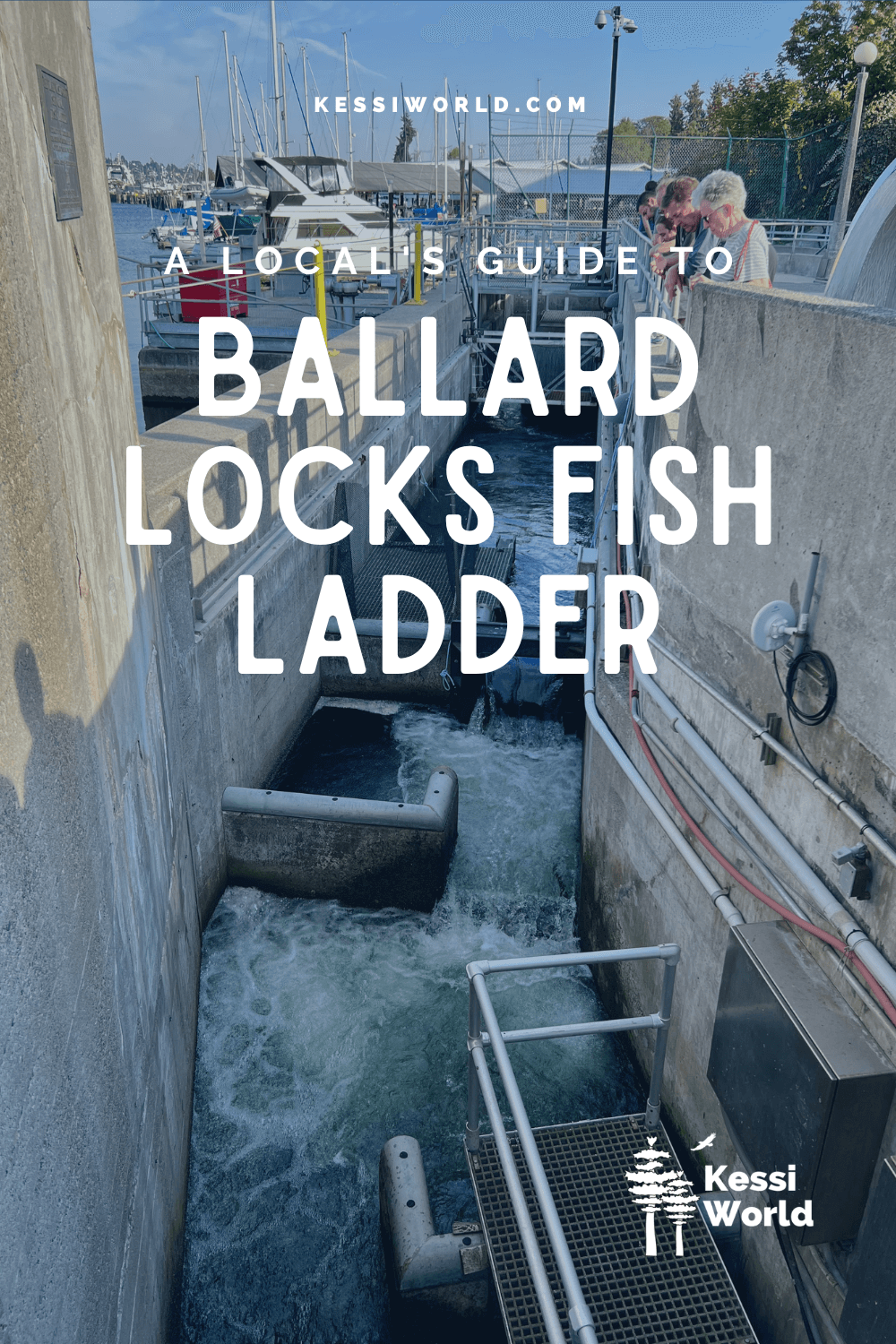
But the most important feature is the fish ladder. Salmon born in rivers around the lake head out to the ocean and return years later to spawn. The fish ladder is a special water corridor with viewing windows that lets you watch thousands of silvery fish jump upstream, overcoming steps as tall as a two-story building. Each year about 500,000 salmon pass through these locks!
It was here that the sea lions set up their "restaurant." They figured out they didn't need to chase fish in the open ocean — they could simply wait at the ladder, where tired salmon essentially "swim up to the table."
How children taught scientists to observe
Susan and her friends kept an observation journal for three months. They noticed the sea lions had a "schedule" — they arrived at certain times when there were more fish. Some lions were "greedy" and tried to catch several fish at once; others waited patiently. One old lion the children dubbed "Scar" was a real master — he caught fish on his first try 8 out of 10 times!
When the children showed their notes to marine biologist James Harvey, he first smiled: "I thought the kids were just imagining things." But after studying their data, he realized the schoolchildren had collected information better than many professional researchers. In a 1978 interview Harvey admitted: "These kids opened our eyes. We scientists were so busy with complex instruments and theories that we forgot to simply watch and record."
The children's observations became the basis for the first serious study of sea lion–salmon interactions in an artificial setting. Scientists found that sea lions could eat up to 5% of the total salmon passing through the locks — significant, but not critical for the fish population. Moreover, the presence of sea lions helped researchers understand how salmon respond to predators and led to improved fish ladder designs elsewhere.
A tradition that united the city
The story of the children and the sea lions quickly spread throughout Seattle. The local paper, the Seattle Times, ran a piece titled "Young Naturalists Uncover an Underwater Drama." Families began coming to the Ballard Locks — not only to see the salmon, but to watch the "famous" sea lions.
By the 1980s this had become a true city tradition. Every summer thousands of people come to the fish ladder viewing windows. Grandparents bring their grandchildren, teachers organize school trips, and tourists travel specifically to see this natural wonder. Local resident Robert Chen recalls: "My father brought me here in 1982 when I was seven. I saw a huge sea lion catch a salmon right in front of the window. It was like a movie! Now I bring my children here."
Interestingly, the sea lions also "got used" to people. They are not afraid of onlookers behind the glass and sometimes even "put on a show" — diving and flipping as if they know they're being watched. Some scientists believe sea lions learned to use the presence of people: when there is a lot of noise, salmon get more nervous and make more mistakes, making hunting easier.
Why this matters to all of us
The story of the sea lions at the Ballard Locks teaches us several important lessons. First, children can be real scientists — you only need to look carefully at the world and record your observations. Susan McKenzie later became a marine biologist and says: "That experience showed me that science isn't just labs and microscopes. Science begins with curiosity."
Second, when people build things (like locks), nature always finds a way to adapt. Sea lions didn't just learn to catch fish in new conditions — they created a whole "hunting culture" passed from older lions to younger ones. Scientists observed adult sea lions "teaching" pups to wait by the ladder and choose the right moment to strike.
Third, the story shows how nature can bring people together. Thousands of families come each year to the locks — not to a mall or a stadium, but to windows that reveal real wild life. Parents and children are amazed together, discuss what they see, take photos — and this creates a special bond between generations and between people and nature.
Today an educational center operates at the Ballard Locks, teaching children not only about salmon and sea lions but also about the importance of observing the world around them. A large reproduction of Susan McKenzie's 1976 journal hangs on the center's wall — a reminder that great discoveries are sometimes made not by professors in white coats but by ordinary schoolchildren with a pencil and notebook who simply stopped and looked.