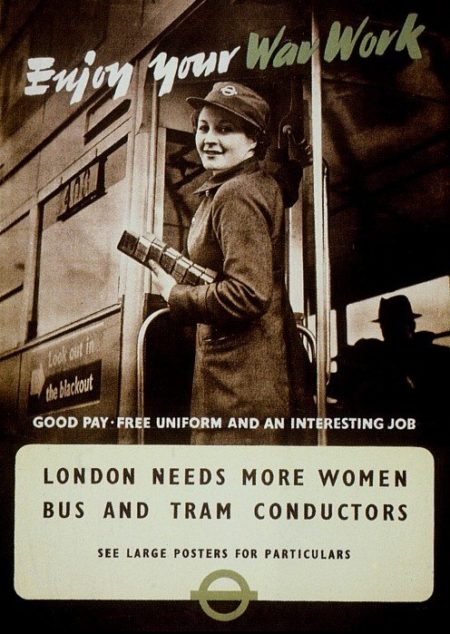
Imagine: an early morning in 1940, and a young woman named Elsie puts on a streetcar conductor's uniform for the first time. Her hands tremble as she grabs the door handle of the giant red car. Just yesterday she was at home, cooking dinner and sewing curtains. Today she will operate a vehicle that carries hundreds of people across the city. Why? Because the men went to war, and someone had to save Seattle's streetcars.
When the city ran on rails
In the early 1900s Seattle was a streetcar city. Picture a web of shiny rails covering the streets like a network of metallic threads. More than 230 kilometers of track! Streetcars ran everywhere: to the port, up the hills, to parks, to schools. They jingled bells at corners, sparked on the overhead wires, and smelled of ozone and machine oil.
For Seattle residents the streetcar was more than transportation. It was a place where neighbors met, where children rode to school clutching their textbooks, where couples sat in the back seats and looked out the windows. Conductors knew passengers by name, remembered which stop old Mrs. Johnson used, and always warned schoolchildren not to stick their hands out of the windows.
But by the late 1930s something began to change. The city decided buses were the future. They didn’t need tracks, could run on any street, and were easier to repair. Companies began removing rails, one route after another. Streetcars vanished like dinosaurs.
The women step in
Then World War II began. the men who had been conductors and drivers went off to fight. Streetcars sat empty in the barns. The city needed transport more than ever: people were traveling to factories making planes and ships for the war. Who would drive the streetcars?
The transit company did something unexpected: they hired women. At the time this was almost a scandal! Many believed women couldn’t handle such “men’s” work. But there was no choice.
Hundreds of women came for training. Among them were housewives, teachers, shop clerks, and students. They were taught to read schedules, collect fares, fix minor breakdowns, and the hardest part — operate the heavy controller lever that regulated the streetcar’s speed. Some women later said that after the first day their hands hurt so much they couldn’t hold a fork at dinner.
But they learned. They memorized every turn, every incline, every dangerous point on the route. One conductor named Ruth later said she learned her route so well she could run it with her eyes closed — she felt every bump in the rails, every bend in the line.
The last fight for the streetcars
These women came to love their work. They were proud to keep the city running while the men were at war. They decorated their cars, befriended passengers, and competed to see who could keep the best schedule. Some passengers would wait specifically for “their” conductor so they could ride with her.
When city officials announced plans to close several more streetcar lines, these women protested. They wrote letters to newspapers, gathered signatures, and argued that streetcars were essential to the city. “We carry workers to the factories!” they said. “We help win the war!”
For a time they won. A few routes remained. The streetcars kept running.
But when the war ended in 1945, the men came home. And the women were told: “Thank you for your service, but now your place is back at home.” Almost all were let go. Elsie, Ruth, and hundreds of other women took off their uniform jackets and returned to ordinary life.
And the streetcars? Their demise only accelerated. By 1941 the last streetcar had run through Seattle’s streets. Rails were pulled up and melted down for metal. The city fully transitioned to buses. What the women conductors had fought so hard to preserve vanished just a few years after they left.
What remained after the ringing bells
Today Seattle has streetcars again — modern, new, on a few routes. But that’s another story. The old streetcars those wartime women drove remain only in photographs and memories.
The story of the women conductors teaches a few important lessons. First, people are capable of much more than others expect. Those women proved they could do “impossible” work — and do it well. Second, progress sometimes means losing something valuable. Buses were more convenient for the city, but streetcars were part of its soul.
And third, it’s important to remember those who did ordinary work in extraordinary times. These women were not generals or heroes in the traditional sense. They simply rose early every day, put on a uniform, and carried people across the city. But it was thanks to such ordinary heroes that life kept turning even as everything around them changed.
The next time you sit on a bus or a streetcar, think of the women who once gripped the heavy controller, felt the rails vibrate beneath the wheels, and rang the bell at the stops. They fought for what they believed in, even knowing they might lose. And that makes their story truly important.