Imagine you have a favorite place your whole family has been going to for many, many years. Maybe it's the park where you learned to ride a bike, or the café where your grandmother always buys you hot chocolate. Now imagine that one day someone decides to close that place and take it to another city. That's what happened to Seattle's children and families in 2008, when their basketball team, the SuperSonics, left forever.
This is not just a story about sports. It's a story about how an entire city—adults, teenagers and even small children—tried to save something that was part of their lives. And although they didn't succeed, their struggle taught Seattle something very important.
A team that was part of the family
The SuperSonics (or just the "Sonics," as they were affectionately called) played in Seattle from 1967. That's more than forty years! Many grandparents had gone to games when they themselves were children, then brought their kids, and those kids brought their own. In some families, season tickets were passed down like a family heirloom, almost like grandma's necklace or grandpa's watch.
A girl named Sara told reporters that her grandfather took her to games every Sunday. They bought popcorn, cheered for the team, and after the game her grandfather always said: "Remember, Sara, the Sonics are not just a team. They are our neighbors, our city." There were thousands of stories like that.
The team wore green and yellow, and Seattle kids wore tees in those colors to school. Players visited schools, taught kids how to shoot hoops, and talked about the importance of teamwork. For many children, meeting a Sonics player felt like meeting a superhero.
When things began to change
In 2006 a new owner bought the team—a businessman from another state named Clay Bennett. At first he promised the team would stay in Seattle. But then it became clear: he wanted to move the Sonics to his hometown, Oklahoma City. He said the old arena (the building where the team played) was too outdated, and that the city had to build a new, very expensive arena. If not—he warned—the team would leave.
For adults it was a complicated situation involving money, contracts and politics. But for kids it was simple and clear: their team, their traditions, their memories—these could disappear. And they decided to fight.
Kids who wouldn't give up
Across Seattle children and teens started doing what they did best: they made posters, wrote letters, and created petitions. A group of students from Hamilton Middle School wrote more than two hundred letters to the team owner, the mayor and even the state governor. In their letters they shared their stories.
Ten-year-old Marcus wrote: "My dad taught me to shoot like the Sonics players. If the team leaves, it will be like losing part of my dad." Nine-year-old Kayla drew a picture of herself in a Sonics uniform and wrote: "When I grow up, I want to play for Seattle. Please don't take my dream."
A group of teenagers created a website called "Save Our Sonics," collecting fans' stories. Thousands of messages arrived— from five-year-olds to eighty-year-old grandmothers. Everyone told what the Sonics meant to them.
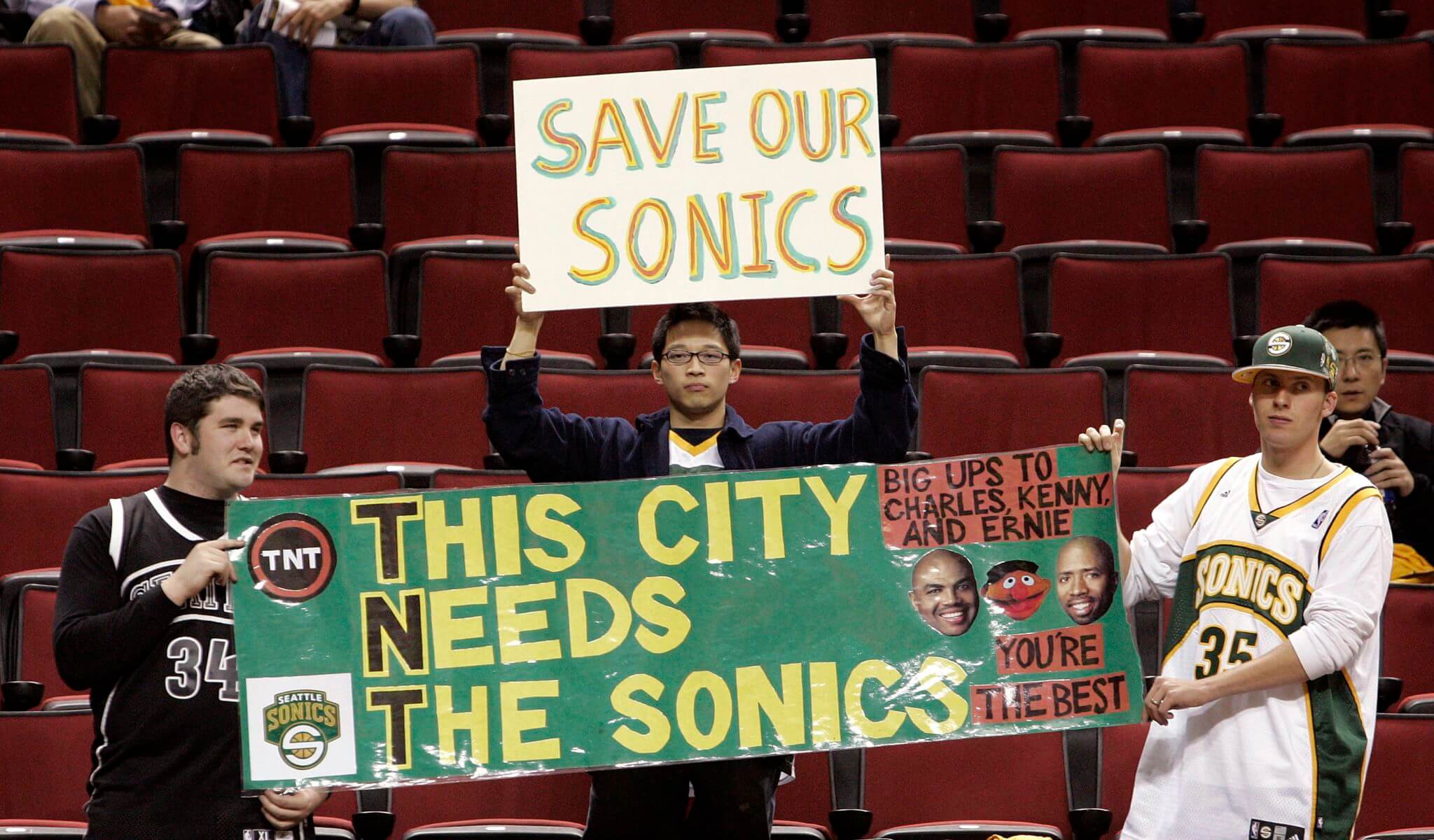
There were big rallies outside the arena. Kids came with their parents, holding signs that read "Don't go!" and "Sonics are Seattle!" They sang songs supporting the team. Some girls braided green and yellow friendship bracelets and handed them out to anyone who wanted to help save the team.
A sad ending and a new beginning
Despite all efforts, in 2008 the team left for Oklahoma City. Many call the day of the last game in Seattle one of the saddest days in the city's history. The arena was packed. People cried—adults and children alike. They sang the team's anthem one last time.
Sara, the girl who’d gone to games with her grandfather, later recalled: "I didn't understand why adults couldn't fix this. I thought that if something mattered to so many people, it should stay. But I learned that sometimes, in the adult world, money matters more than people's feelings."
But the story didn't end there. The fight for the Sonics taught Seattle residents something important: you must protect what makes your city special. After losing the team people in Seattle became more active in defending other important places—parks, old buildings, neighborhoods where low-income families live.
What remained after the Sonics
Today, many years later, Seattle still remembers the Sonics. You can see people wearing old green-and-yellow team shirts. Some cafés display photos of players. And the kids who fought to save the team grew up and became adults who teach their children: it's important to fight for what you love, even if you're not sure you'll win.
The city still hopes basketball will return to Seattle someday. Plans for a new arena are being made. Money is being raised. And you know what? Many of the people fighting for this now are the same kids who wrote letters and held signs fifteen years ago.
The Sonics' story is a sad one. But it's also a story about how, when people come together and fight for what matters, things change. Maybe not immediately, and not always in the way we want. But the voice of even the smallest people—the children who write letters and make posters—matters. It shows adults that some things are more important than money: friendship, tradition, memories and the feeling that you're part of something big and special.
And who knows? Maybe one day the girl who lives in Seattle now will bring her granddaughter to a game of a new Seattle team and say: "See? We didn't give up. And here we are."