Imagine a machine the size of a five-story building stuck beneath your city. It can't move forward. It can't go back. It simply sits in the dark, 30 meters underground, and nobody knows how to rescue it. This is not fiction from a sci‑fi film — it's a true story that happened in Seattle between 2013 and 2017. It's a story about how people turned a huge problem into an incredible victory for nature.
The concrete wall that stole the sea
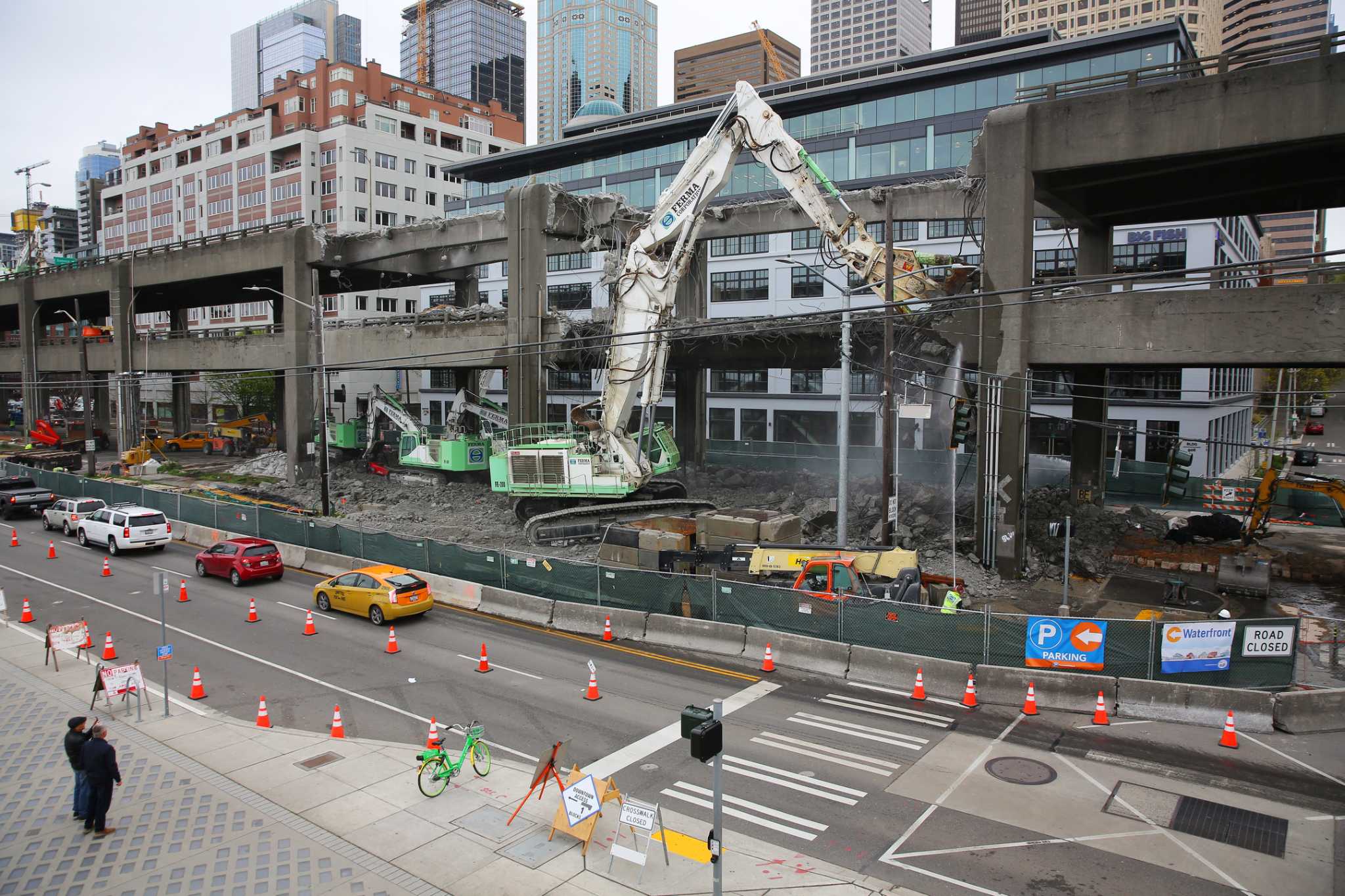
For more than 60 years Seattle residents lived next to a concrete monster. It was the Alaskan Way Viaduct — a two-level roadway that ran along the city’s entire waterfront like a massive gray wall. It was built in 1953, when engineers believed cars were more important than people and nature. The road blocked the entire view of Elliott Bay. People couldn't see the water. Birds were afraid to nest near the roaring traffic. Fish in the bay suffered from pollution and noise.
Every day about 110,000 vehicles drove on that viaduct. They released exhaust directly above the water. Concrete columns stood in the water and destroyed places where fish spawned. Worst of all, the structure was old and dangerous. During the 2001 earthquake the viaduct cracked, and everyone realized: it could collapse at any moment.
City officials made a bold decision: the viaduct had to go. But what would happen to all those cars? Engineers came up with a plan: they would build a tunnel deep underground and reclaim the surface for parks, bike lanes, and clean air. For that they needed the largest machine ever built.
Bertha: an iron worm with character
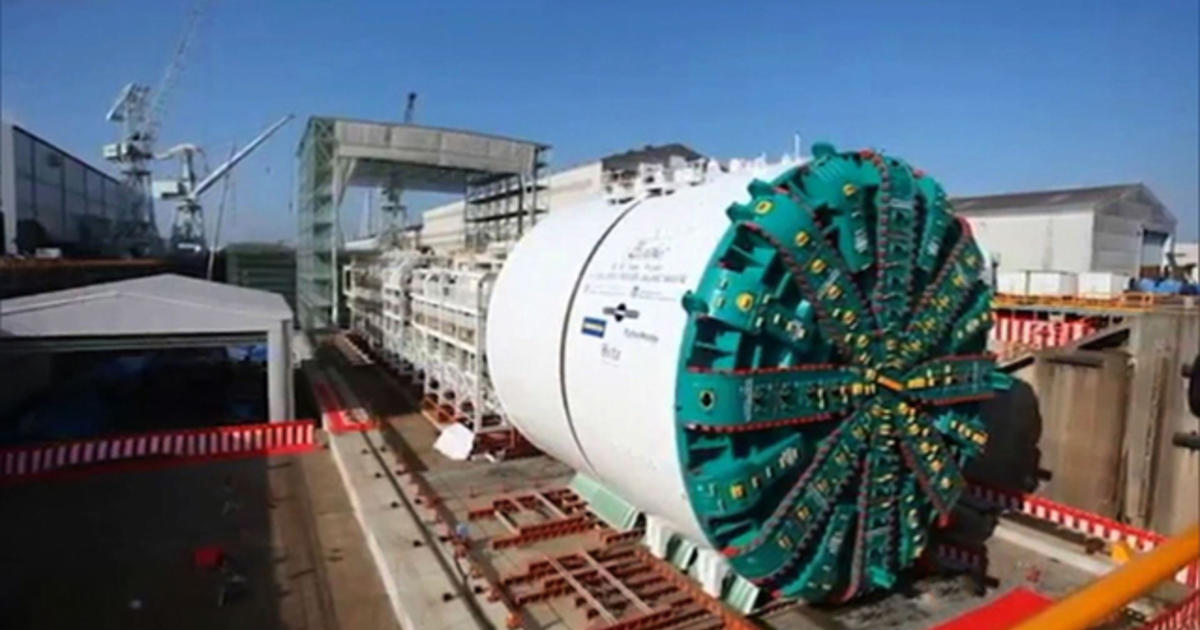
The machine was named Bertha — after Seattle’s first female mayor, Bertha Knight Landes. It was a tunnel boring shield — a giant cylindrical machine that chews through the earth like a worm through an apple. Only this "worm" weighed 7,000 tons (like a thousand elephants!) and was as tall as a five‑story building — 17.5 meters in diameter. It was so large it had to be assembled in Seattle from parts shipped from Japan.
Inside Bertha huge rotating cutters ground rock and soil. Conveyors behind them hauled the excavated material out. At the rear the machine immediately erected tunnel walls from concrete rings. Bertha was supposed to travel 2.8 kilometers under the city — the equivalent of about 65 football fields end to end!
Work began in July 2013. At first everything went smoothly. Bertha advanced 10–12 meters per day, boring under Seattle’s older buildings. But in December 2013, after only about 300 meters, disaster struck: Bertha stopped. Its cutters hit something hard and ceased turning. Bearings inside the machine — parts that help the cutters spin — began to overheat. The temperature rose so high metal started to melt.
Engineers stopped Bertha to inspect the problem. And they discovered: ahead lay a steel pipe 38 centimeters in diameter that everyone had forgotten about! That pipe had been buried back in the 1950s and wasn’t marked on any maps. Bertha tried to grind through it and broke her cutters.
Two years in an underground prison
Now engineers faced an impossible task: how do you repair a house‑sized machine stuck 30 meters underground? They couldn't just open a hatch and climb inside — above Bertha were buildings, roads, and tons of soil.
The engineering team devised a plan that sounded like the plot of an adventure movie. They decided to dig a massive pit directly in front of Bertha — 37 meters deep and the size of a football field. It was like excavating an entire underground stadium! To prevent the pit walls from collapsing they froze the surrounding soil using special pipes carrying chilled liquid. Temperatures dropped to minus 20 degrees Celsius and the ground turned to solid ice.
Work continued for nearly two years. Workers descended into that frozen pit every day to reach Bertha’s front. Finally, in March 2015, they were able to open the machine’s "face" and see the damage. All the cutting tools were broken or dulled. They had to be replaced — each cutter weighed several tons!
But the engineers didn't just fix Bertha. They made her stronger and smarter. They installed new sensors to warn of overheating. They reinforced the bearings. They even let Bertha "rest" — replacing worn components that had been operating under enormous pressure.
In December 2015 Bertha began moving again. This time she advanced more slowly, but with greater confidence. Engineers monitored every movement closely. In April 2017, almost four years after work began, Bertha emerged at the other end of the tunnel. People applauded and wept with joy. The most challenging tunneling project in American history had been completed!
The city that saw the water again
When the old viaduct was dismantled in 2019, something magical happened. The city suddenly changed. People who had walked for 60 years under a dark concrete canopy could once again see blue sky and glistening water. It was as if a huge gray blanket had been lifted from the city.
But the most remarkable changes came next. Ecologists — scientists who study nature — began noticing incredible shifts:
Air became cleaner. Previously 110,000 cars per day emitted exhaust directly over the water. Now those cars travel in a deep tunnel with exhaust treated by special filters. Harmful particulates in the air dropped by 40%. Residents near the waterfront experienced fewer asthma and allergy cases.
Fish returned. Removing concrete columns from the water restored spawning habitats. Scientists observed a 25% increase in juvenile salmon. These fish are very sensitive to water quality, and their return indicates the bay is getting healthier.
Birds made homes again. The new waterfront was planted with 500 trees and thousands of shrubs. Within a year birds not seen in downtown Seattle for decades arrived: great blue herons, cormorants, even rare peregrine falcons. They nest in the trees and hunt fish in the bay.
The city cooled down. The concrete viaduct had heated in the sun and created an urban heat island — temperatures under the viaduct were 3–5 degrees Celsius higher than other parts of the city. Now trees and grass provide shade and cooling. This matters especially in summer heat.
Numbers that tell the truth
| Indicator | Before viaduct removal | After removal |
|---|---|---|
| Vehicles per day on the waterfront | 110,000 | 0 (all in tunnel) |
| Harmful particulates in the air | 100% (baseline) | 60% (40% reduction) |
| Juvenile salmon in the bay | 100% (baseline) | 125% (25% increase) |
| Green plantings | 0 trees | 500 trees + thousands of plants |
| Bird species on the waterfront | 12 species | 34 species |
| Park area | 0 sq. meters | 80,000 sq. meters |
People who never gave up
The story of Bertha and the viaduct is not just about machines and concrete. It's about people who believed in a better future and refused to give up, even when everything went wrong.
Chris Dixon, the project's chief engineer, said: "When Bertha got stuck, many demanded the project be canceled. They said it was too expensive, too complicated, too dangerous. But we knew: if we gave up, the city would be left with that gray wall forever. We worked for our children and grandchildren so they could see the water and breathe clean air."
María Gonzalez, an ecologist who studied the changes after the viaduct removal, recalled: "I remember the first day we saw a salmon where a concrete column once stood. I cried. It was a fish only 10 centimeters long, but it meant nature forgives us and returns."
And ten‑year‑old Emily Chen from Seattle wrote in her school essay: "I used to think the waterfront smelled like gas and was noisy with cars. Now I ride my bike there with my dad. We see seagulls, smell the salty air, and watch the sunset over the water. It's my favorite place in the city."
A lesson for the world
Seattle's story shows an important truth: sometimes you must remove something old to create something new and alive. Many cities worldwide built similar elevated highways in the 1950s–1960s. Back then people thought cars were the future and nature could wait. Now we know that was a mistake.
After Seattle’s success other cities began removing their viaducts. San Francisco tore down its waterfront viaduct after the 1989 earthquake. Seoul in South Korea removed an elevated highway and turned it into a park with a river. Even in Russia, in Moscow, discussions are underway about making waterfronts greener and more people‑friendly.
The Seattle project cost $3.3 billion — a huge sum. Many said it was too expensive. But ecologists calculated: cleaner air saves the city $50 million a year in respiratory illness costs. Parks increased nearby property values by 20%. Tourists started coming more often — they want to stroll a beautiful waterfront, not stare at gray concrete. Over ten years the city will recoup the investment, and nature received an invaluable gift.
What we can do
Bertha’s story teaches us a few key lessons:
Don't be afraid of big problems. When Bertha got stuck, many thought the project had failed. But engineers didn't give up. They devised a solution no one had tried before. Sometimes the biggest problems lead to the smartest solutions.
Nature returns quickly. Within a year of removing the viaduct birds were nesting and fish were spawning. Nature doesn't need years to recover — it just needs a chance.
Think about the future. The people who built the viaduct in 1953 didn't consider how it would affect air, water, and wildlife. They only thought about cars. Now we know every building and every road affects nature. We must think not just about today, but about what the world will be in 50 or 100 years.
You might ask: "I'm not an engineer or a builder. What can I do?" A lot! Plant trees in your yard. Walk or bike instead of asking your parents to drive you. Tell friends how important clean air and healthy nature are. Small actions add up to big changes.
Big Bertha was stuck underground for two years, but she helped the city breathe again. She showed that human ingenuity and care for nature can work together. When engineers refused to give up and fixed Bertha, when the city removed the gray wall and planted trees, when people chose clean air over another road — they together created a small miracle. And that miracle continues every day when birds sing on the waterfront, salmon swim in clean water, and children ride bikes where cars once thundered.
Sometimes the biggest victories begin when someone says, "Let's try to do better." And doesn’t give up, even when a giant machine is trapped underground.