What at first glance looks like three unrelated stories — Jeffrey Epstein’s correspondence with members of the political‑financial elite, the escalation of Donald Trump’s rhetoric around the death of ICU nurse Alex Pretti, and pressure on FBI leadership in Atlanta over the 2020 election case — actually forms a single picture. The throughline is one: how people and institutions in power manage crises tied to their own image and legitimacy, and how that management gradually undermines public trust in politics, justice and state structures. Through intimate letters, public social‑media posts and backstage personnel decisions, the same pattern emerges: elites try to control the narrative, justify their ties and actions, deflect suspicion, and at the same time reallocate blame. The central question becomes less about the guilt of particular figures than about democratic institutions’ ability to withstand pressure from political interests, media campaigns and the moral failings of elites.
In the story about the newly released Jeffrey Epstein files published by the U.S. Department of Justice and detailed in the ABC News piece about Howard Lutnick and former Prince Andrew, the theme of toxic ties between the wealthy and influential and a disgraced sexual offender comes to the fore. The documents cited by ABC News in “Howard Lutnick, ex‑Prince Andrew among those mentioned in latest Epstein files release” (source) show how everyday and even casual contacts with Epstein looked long after his status as a “sex offender” became official. Howard Lutnick, now the U.S. Secretary of Commerce, in 2012 calmly plans lunch with his wife and friends on Epstein’s private island, Little St. James, in the Caribbean. Correspondence with Epstein’s assistant Leslie Groff reads like ordinary yachting logistics: “Ok, lunch on Sunday. See you then,” “We are heading towards you from St. Thomas. Where should we anchor exactly?” All this takes place four years after Epstein’s guilty plea on prostitution charges, including with a minor.
Lutnick himself, in a 2025 public interview, already describes Epstein as “the greatest blackmailer ever” and “gross” — a “horrible, disgusting” man. He claims he thought of him as a kind of pathological extortionist who could trade compromising videos for leniency in the 2008 “deal of the century.” But the published correspondence forces a reassessment of the distance between rhetoric and behavior: if he truly believed in a large‑scale blackmail scheme, why, years after the conviction, plan a family visit to his island? The Commerce Department press office tells ABC News that Lutnick had “limited interactions” with Epstein, that they occurred in the presence of his wife, and that Lutnick was never charged. Legally, that caveat matters: lack of charges means no established facts of criminal conduct. Ethically and politically, the question is different: how do high‑ranking officials choose their contacts, and where is the line for acceptable association with those convicted of sexual crimes?
The case of former Prince Andrew, examined in the same ABC News piece, illustrates a similar but even sharper situation. Correspondence between him and Epstein after Epstein’s release in 2010 undermines the usual official narrative of “infrequent and superficial” contact. Epstein writes to “the Duke” in August 2010: “I have a friend who i think you might enjoy having dinner with,” describing her as “26, Russian, clevere [sic] beautiful, trustworthy.” Andrew replies in a friendly, undistanced manner, asks what exactly he was told about her and what details he should know, and signs off: “A, HRH The Duke of York KG.” Subsequent messages show regular communication, discussion of private meetings in London and Paris, offers to organize a dinner at Buckingham Palace “and lots of privacy,” where Epstein, according to him, wants “private time with you” and is meanwhile considering whether to “bring them all. so as to add some life.”
It’s important to explain the political and institutional significance of this story. The British monarchy is built on symbolic impeccability: members of the royal family are not just politicians or businessmen but embodiments of stability and moral standard. When it emerges that one of them was not merely acquainted with a convicted sex offender but discussed private meetings with him and the use of royal residences for informal “dinners with privacy,” trust in the institution itself is threatened. Formally, Andrew, as ABC News emphasizes, denies wrongdoing, but the reputational consequences have already led to his stripping of titles and removal from residence. This is a classic example of how legal innocence (no conviction) does not equal political or moral impeccability. That such correspondence appears as part of a DoJ release also signals another trend: U.S. law‑enforcement agencies are increasingly a source of information about the ties of global elites that go far beyond narrow criminal cases.
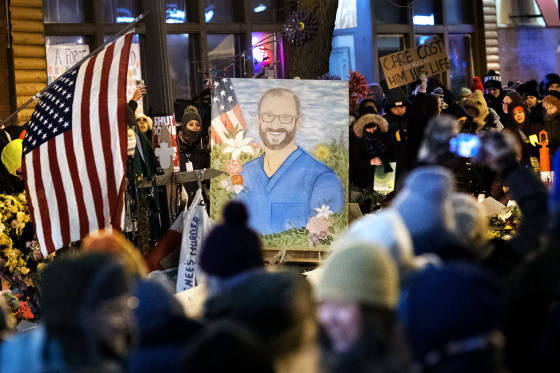
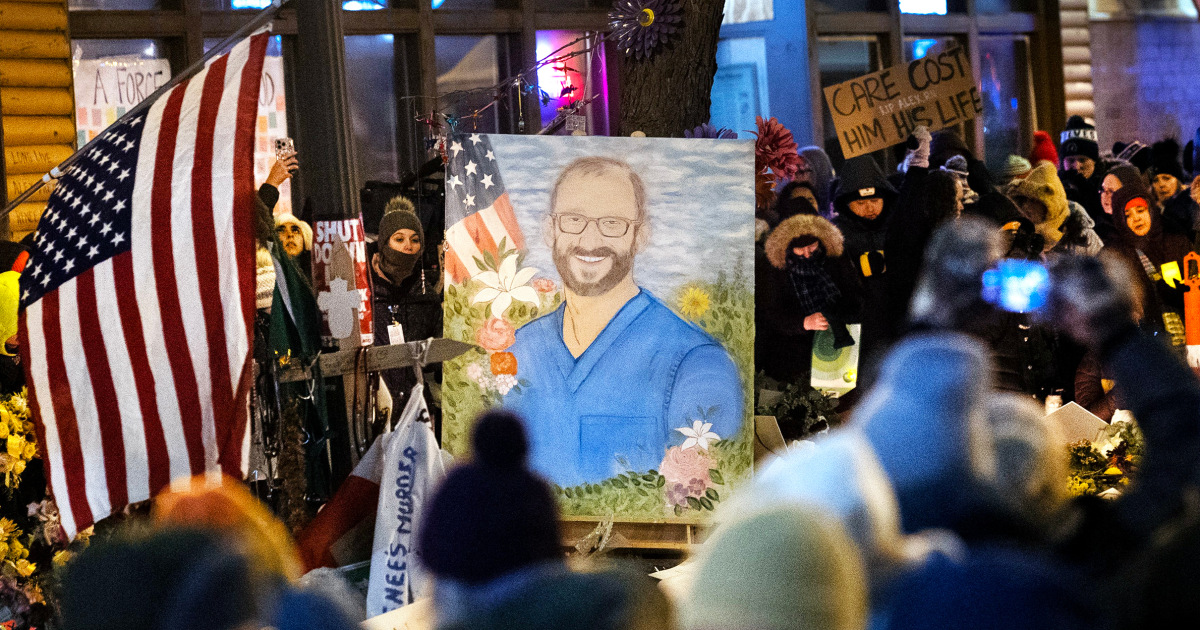
Against this backdrop, the NBC News story on Donald Trump’s rhetoric over the death of Alex Pretti, an ICU nurse from Minnesota, shows another aspect of the crisis of trust — a clash between presidential narrative, a Justice Department investigation, and public perception of federal force violence. In “Trump calls Alex Pretti an 'insurrectionist' and 'agitator' after new video of ICU nurse emerges” (source), the article describes how the president first promises to “de‑escalate” the situation around Pretti’s death, calling the outcome “very unfortunate,” and then, after the release of video showing Pretti shouting at ICE agents and kicking their vehicle, sharply escalates his rhetoric. In a Truth Social post he calls the nurse “agitator and, perhaps, insurrectionist,” describes him as “crazed and out of control,” and contrasts him with the “calm and cool” ICE officer.
It’s important to clarify terms. The word “insurrectionist” in the modern American political context after January 6, 2021, is effectively equated with participation in an uprising or an attempt to violently overturn the constitutional order. When the president applies that label to a man who is already dead and who is the subject of a Justice Department investigation, he is effectively staking out a desired political interpretation of events: not a tragic incident during an apprehension, but an act of aggression against the state. Yet the family’s lawyers, NBC News notes, insist on a “fair and impartial investigation” and explicitly call the death “murder.” The Justice Department, through Deputy Attorney General Todd Blanche, announces a federal civil‑rights probe intended to determine whether Pretti’s civil rights were violated by the high‑profile actions of federal agents.
Notably, the same Todd Blanche appears in another story — the one about pressure on the FBI over the 2020 election case. The MS NOW piece “Atlanta FBI boss ousted after balking at 2020 election probe” (source) reports that Atlanta FBI chief Paul Brown was forced out after questioning the necessity of a renewed probe into Fulton County and refusing to carry out searches and document seizures. MS NOW sources claim he resisted pressure to conduct broad operations into a long‑closed election that had already been subject to audits, recounts and court rulings confirming Joe Biden’s victory in Georgia. Nevertheless, the FBI executed a search warrant at the Fulton elections hub and seized 700 boxes of material.
It’s important to explain why this is institutionally sensitive. The FBI and Department of Justice must demonstrate political neutrality, especially on election matters. When a senior agent expresses doubts about the motives behind an investigation tied to repeatedly debunked “stolen election” claims and is then removed, it is perceived not merely as a personnel decision but as a signal: resistance to a politically motivated course is punished. Fulton County Chairman Robb Pitts calls the events “a distraction and intimidation tactic” and insists that “any honest review of these files will show... Fulton County elections are fair and lawful, and the outcome of the 2020 election will not change.” At a press conference, Deputy Attorney General Blanche stresses the importance of “election integrity,” while avoiding direct comment on the specific Georgia investigation. An ambiguity arises: on the one hand DoJ proclaims protection of fair elections; on the other its actions objectively fuel the narrative of an unresolved “Fulton mystery” that, some argue, must be investigated repeatedly.
Juxtaposing these three stories reveals a broader pattern in the transformation of trust in power. In the Epstein case, the moral capital of elites is eroded: it becomes clear that even after conviction many VIPs continued close ties, used his resources, invited him to residences, and years later either minimize the extent of contacts or portray themselves as “deceived” and “misled.” In the Alex Pretti story, confidence in law enforcement is undermined: the administration first brands the deceased as a “gunman,” “domestic terrorist” and “would‑be assassin,” then retreats under criticism, and then — after a video emerges — ramps up accusatory language again, while the Justice Department opens a civil investigation seeking to demonstrate institutional independence from the White House’s political narrative.
In the Paul Brown and Fulton raid story the issue shifts from individual morality to institutional resilience. When election probes — despite court rulings and audits — are repeatedly resurrected under presidential pressure, which MS NOW notes “repeatedly amplified the baseless claim that the 2020 election was ‘stolen’ from him in Georgia,” it normalizes the idea that facts and official results can be endlessly revisited if the demand for “truth” is loud enough. Seizing 700 boxes and the visual impact of a raid on the elections office operate politically regardless of eventual legal findings.
Also worth noting is the media’s role as intermediary between official documents and public opinion. ABC News obtains DoJ files and publishes specific e‑mails that change perceptions of Epstein’s late friendships with influential people. NBC News first covers the Pretti video, then tracks Trump’s shifting rhetoric and balances that with the family’s position and the Justice Department’s investigation announcement. MS NOW relies on anonymous internal FBI sources describing internal disputes and pressure from above. All three outlets do more than report events: they help construct alternative versions of reality distinct from those promoted by politicians. That, on one hand, strengthens public oversight; on the other, it raises the stakes: every leak, every new batch of documents can not only affect an individual politician’s image but also undermine entire institutions’ reputations.
The complex concepts here largely concern the boundary between legality and legitimacy. Legality is formal compliance with the law: the absence of charges against Lutnick, no conviction against Prince Andrew, a valid search warrant in Fulton. Legitimacy is public recognition of the moral and political justification for those actions and roles. Elites can remain “legally clean” while losing legitimacy: when the public sees a minister who calls Epstein “the greatest blackmailer” once having sailed to his island, or a prince who gladly welcomed him to Buckingham Palace; when a president changes his assessment of a deceased citizen depending on politically useful video; when the FBI appears as an instrument of endless probes into long‑settled elections.
Key trends visible across the three narratives can be summarized as follows. First, the erosion of trust in elites as moral authorities continues. The Epstein case, even in its “additional” phase years after his death, keeps exposing new layers of dependency, friendship and convenient silence. Second, the politicization of law enforcement intensifies: the DOJ and FBI simultaneously try to demonstrate independence (investigating Pretti’s death, defending “election integrity”) while executing politically charged requests (re‑searches of elections, working with materials that have major reputational effects). Third, leaders’ rhetoric — from monarchs to presidents — is increasingly subject to evidentiary scrutiny: it’s not just “what they say,” but “what they did when they thought it would remain private,” as Epstein’s correspondence with “The Duke” or letters involving Lutnick and his wife demonstrate.
The consequences of these processes are not instantaneous. They appear as a slow, steady erosion of faith that the system can cleanse itself. When figures like Prince Andrew lose titles and regional FBI heads lose posts, this can be seen as signs that accountability mechanisms are working. But when new layers of kompromat keep surfacing, investigations live under political pressure, and explanations of elites’ contacts are offered retroactively, a significant portion of the public comes away with a different feeling: not that the system controls the elite, but that the elite controls the system — until leaks, media and accidental witnesses make that control too obvious. It is in this gap between the official picture and documentable reality that the main crisis of trust in power is being born today.