Three seemingly unrelated stories — the Justice Department investigation into Federal Reserve Chair Jerome Powell and Donald Trump's reaction, the musical legacy of Bob Weir of the Grateful Dead, and a local shooting in the Shawnee neighborhood of Louisville — actually form a single picture of how power, influence and public trust play out in contemporary America. The question is about the limits of permissible pressure on independent institutions, the role of charismatic figures who build alternative centers of influence, and how everyday violence remains almost the “background” of the news feed amid major political and cultural conflicts.
An NBC News piece on the Justice Department's probe into Jerome Powell (“Trump denies involvement in DOJ's Fed subpoenas”) describes an extremely rare and troubling situation for the American system: the sitting administration is, in effect, initiating a criminal-justice mechanism against the head of an institution that by definition should be maximally independent from the White House — the Federal Reserve. The formal pretext is Powell’s testimony to the Senate about a costly renovation of the Fed’s buildings. Powell says the Justice Department is threatening him with potential criminal charges and ties this to pressure from the administration: “No one — and certainly not the chair of the Federal Reserve — is above the law,” while stressing that this “unprecedented step” should be viewed “in the broader context of threats and ongoing pressure” from the administration.
The Federal Reserve (the Fed) is the United States’ central bank, responsible for monetary policy: setting the key interest rate, controlling inflation, and ensuring financial stability. A core principle of its operation is institutional independence: the Fed should make decisions “in the best interests of the public,” not based on political expediency. Interest rates are not merely a technical parameter but one of the main levers for managing the economy: higher rates cool economic activity and reduce inflation; lower rates stimulate growth but can overheat prices and create asset bubbles.
This lever is precisely where the conflict has unfolded. NBC News emphasizes that the Justice Department’s probe came “after a yearlong campaign by Trump to pressure Powell to cut rates.” Powell directly connects the threat of criminal prosecution to the Fed’s refusal to follow the president’s political wishes: “The threat of criminal charges is a consequence of the Federal Reserve setting interest rates based on our best assessment of what serves the public interest, not the preferences of the president.” This sentence concentrates the core conflict: whether monetary policy should be subordinated to short-term political interests or preserved within a technocratic framework that is unelected but accountable for long-term stability.
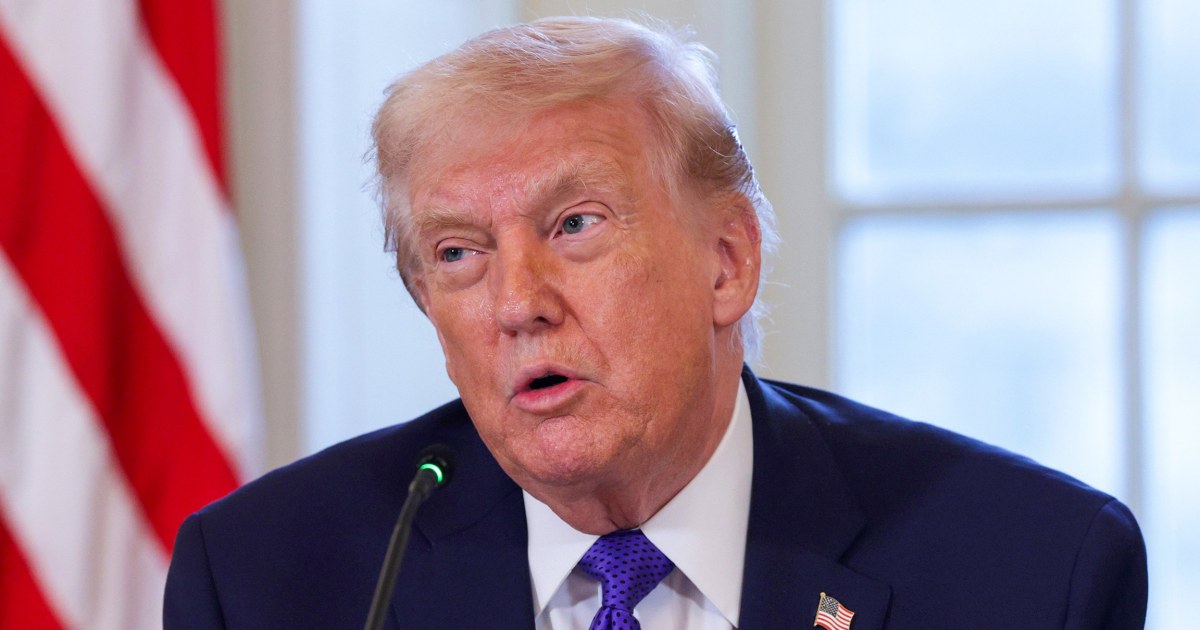
Donald Trump, in an NBC News interview, distances himself from the Justice Department: “I don’t know anything about that,” saying the subpoenas and investigation “have nothing to do” with interest rates. Still, he does not miss a chance to publicly attack Powell again, calling him “not very good” at running the Fed and even “not very good at building buildings.” In late December, speaking at Mar-a-Lago, he threatened legal action, suggesting the idea of “suing Powell for incompetence” and mocking the stated renovation cost: “$4 billion… it will cost more than $4 billion… the highest construction price.” These remarks matter not only as examples of Trump’s blunt style but as demonstrations of how a public narrative (accusations of incompetence, inflated costs) can then be formalized into legal action through the Justice Department.
It is notable that the Justice Department’s rationale, quoted by their spokesperson, relies on a politically appealing thesis: “The attorney general has instructed U.S. attorneys to prioritize investigating any misuse of taxpayer funds.” NBC News separately notes that the Fed is not funded by taxpayer dollars: its budget is formed from service fees, loans to commercial banks, and income from its securities holdings (U.S. Treasuries, foreign currency and other securities). So the external formula about “taxpayer money” does not quite match reality, but it sounds loud and convenient politically.
Congress’s reaction shows that the Fed’s independence is seen as a systemic red line even by members of the president’s party. Republican Senator Tom Tillis, a member of the banking committee, says he will not vote to confirm any of Trump’s Fed picks, including a future chair: “If anyone still doubted that advisers in the Trump administration are actively seeking to end the independence of the Federal Reserve, they should have no doubt now.” Democratic Senator Elizabeth Warren goes further, calling Trump’s actions “an abuse of the Justice Department’s powers by an aspiring dictator to make the Fed serve his interests and the interests of his billionaire friends,” and urges the Senate to block any of Trump’s appointments to the Fed. Phrases like “aspiring dictator” and “ending the Fed’s independence” indicate the dispute over Powell is viewed not as a private quarrel but as a threat to fundamental democratic balances.
NBC News reminds readers that the Justice Department has previously opened probes into current and former officials after Trump’s direct public calls. In October, via Truth Social, he urged Attorney General Pam Bondi to “finally” bring charges against James Comey, Adam Schiff and New York Attorney General Letitia James — all his longtime public opponents. A prosecutor relatively sympathetic to him, Lindsay Halligan, who served as the U.S. attorney for the Eastern District of Virginia, ultimately did bring charges against Comey and Letitia James, but those cases collapsed in court: a federal judge found Halligan was appointed unlawfully. This episode illustrates how attempts to use prosecutors as tools of personal political battles undermine trust in justice and ultimately turn into legal chaos and reversal of decisions.
Thus, the central through-line of this story is the blurring of boundaries between political will and independent institutions designed to serve not a particular administration but the resilience of the system. The Fed, the Justice Department, U.S. attorneys — all of them in the American model should balance one another. When a president first publicly attacks the Fed chair, then hints at lawsuits, and an investigation suddenly appears in an agency he controls (the Justice Department) targeting that same person, it is perceived as a deliberate campaign of pressure, even if the president formally “knows nothing” about specific actions.
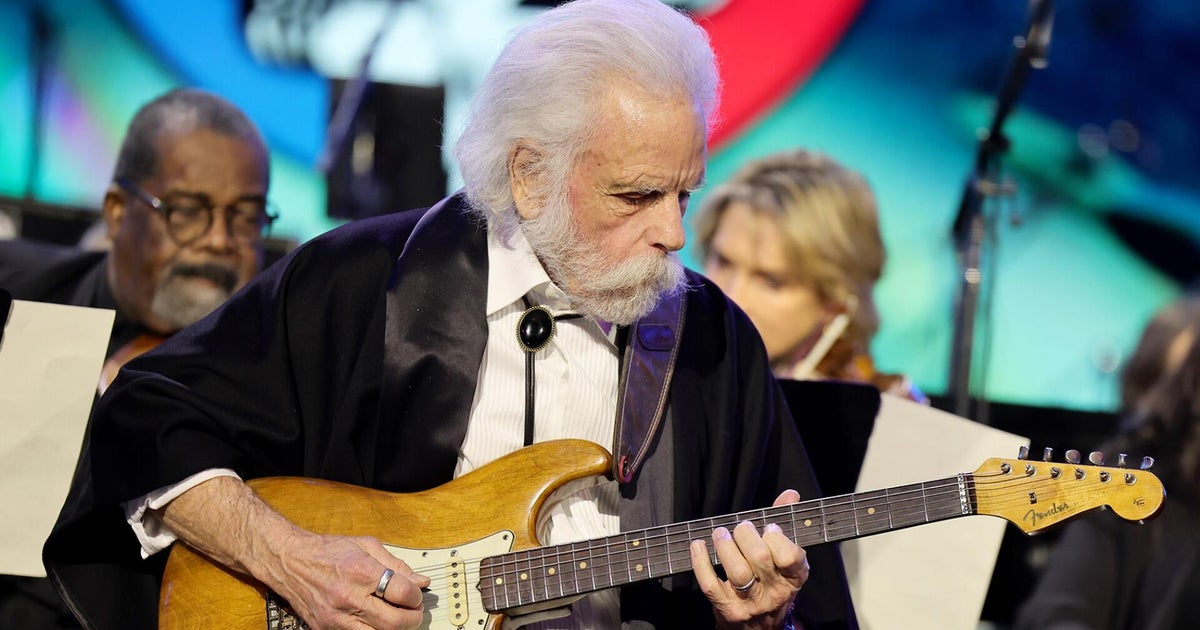
It is instructive to compare this with another form of influence — cultural. A CBS News segment (“Breaking down Bob Weir’s impact on music”) discusses the legacy of Bob Weir, co-founder of the Grateful Dead, who died last week at 78. Although the piece is brief and the broadcast conversation focuses on music, it too is about independence — but of a creative sort. The Grateful Dead historically symbolized an alternative culture, antagonistic to the mainstream industry; they developed a model that prioritized the live concert experience, improvisation, and a direct bond with audiences over radio hits and album sales. Bob Weir, Rolling Stone senior writer Angie Martoccio says, left a mark not only as a guitarist and songwriter but as someone who shaped a different type of relationship between artist and audience, a different understanding of how a musical community could exist.
Comparing the fields of politics and economics with the world of music, a parallel emerges: in both realms, the ability to act independently of short-term pressure and market forces is valued — whether it’s presidential pressure on a central bank or the music industry’s pressure on an artist. Weir and the Grateful Dead for decades built their own system, sometimes almost parallel to the official cultural industry, without entering into direct institutional conflict with it. In the Fed case, the conflict becomes overt because the independence of monetary policy is institutionally codified and legally protected, and attempts at political interference look like attacks on the architecture of power itself.
The third story — a WLKY local report on a shooting in the Shawnee neighborhood of Louisville (“Police respond to shooting in Shawnee neighborhood”) — brings the discussion sharply back to everyday reality. Louisville police received a call around 10:20 a.m. near the intersection of 41st and Herman streets; WLKY reporters on site counted “more than a dozen shell casings” on the road. A man was shot in the arm; his life is not in danger. There are no suspects; citizens are asked to call the LMPD anonymous tip line or use the online portal to submit information.
This short notice, repeated almost verbatim twice in the text, is typical of local crime reporting. Its significance in the broader picture lies precisely in this: amid sweeping debates about threats to the Fed’s independence, possible “dictatorial” uses of the Justice Department, and discussions about Bob Weir’s influence on music, routine street violence remains a constant backdrop, consuming law-enforcement resources and shaping a sense of insecurity while rarely becoming the subject of major political dispute until it escalates into mass tragedy. Yet such incidents define the public’s real demand for an effective but fair policing system: people want police to respond quickly and professionally, and they want courts and prosecutors to focus not on politicized cases against opponents of power but on directly protecting citizens’ safety.
That in turn brings us back to the role of the Justice Department and prosecutors in the Powell story. A priority framed as “investigating misuse of taxpayer money” can, in the eyes of part of the public, clash with more immediate threats — from street violence to systemic corruption. When high-profile political cases look initiated “from above,” especially after the president’s public calls, trust in the justice system erodes, and even legitimate investigations can be seen as continuations of political battles.
Summing up the key findings and trends running through all three stories, they form several important lines. First, institutional independence — whether of the Fed, the Justice Department, or cultural institutions — is constantly under pressure from political and economic interests. In the NBC News piece this pressure is explicit: the president’s personal attacks on the Fed chair, threats of lawsuits, followed by a criminal investigation that many in Congress see as an attempt to “finish off the Fed’s independence.” Second, charismatic figures — from Trump to Bob Weir — create ecosystems of influence: the former trying to subordinate state institutions to his political will, the latter, as described in the CBS News segment, building a community where music became a space of freedom and self-governance. Third, real local needs for safety and justice — as in the Shawnee shooting reported by WLKY — often remain in the shadow of grand political narratives, even though they determine everyday quality of life.
Finally, there are long-term consequences for public trust. Attempts to use the Justice Department as a pressure tool against political opponents, which have already led to failed cases against James Comey and Letitia James, undermine the legitimacy of that institution. If the same logic is applied to the Fed chair, the risks are not only weakening a particular institution but creating a dangerous precedent: any future president might try to turn the justice system into an extension of his political arm. Against this backdrop, figures symbolizing alternative models of influence and independence, like Bob Weir, gain additional symbolic weight, reminding us that lasting trust cannot be imposed by force — it must be earned, whether in music, the economy, or public power.