At first glance three stories — federal subpoenas for Minnesota Democrats, Donald Trump’s economic message, and the high‑profile sex‑trafficking case against the Alexander brothers — look unconnected. Together, however, they form a much clearer picture: how, in the United States during Trump’s second term, politics, law enforcement, media attention and the struggle for trust in the justice system are becoming increasingly intertwined.
In a BBC piece about the U.S. Department of Justice (DOJ) issuing subpoenas to Minnesota Democratic leaders on charges of “sabotaging” immigration authorities, a conflict between federal power and local administrations unfolds, which the BBC describes as openly politicized: Governor Tim Walz calls the probe a “partisan distraction,” state Attorney General Keith Ellison accuses Trump of “weaponising the justice system,” and Minneapolis Mayor Jacob Frey tells CBS that the DOJ is going after him for disagreeing with the Trump administration.
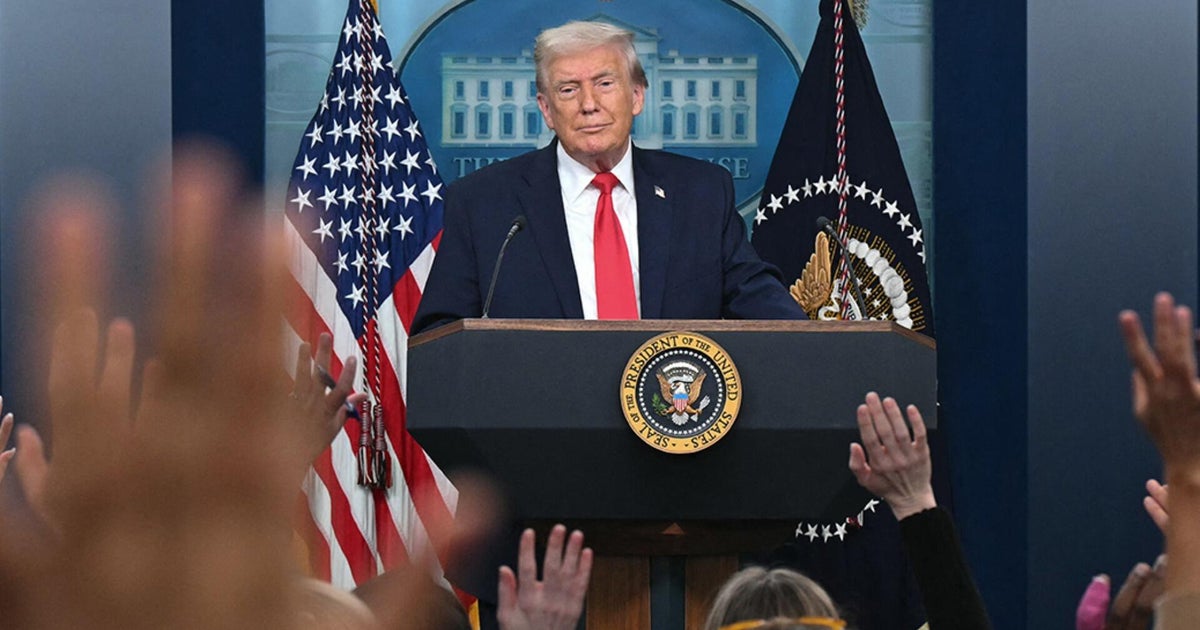
At the same time, a CBS News report highlights how the White House is crafting an economic narrative: the president is “selling” his economic agenda in a briefing marking the first year of his second term, and correspondent Aaron Navarro breaks down how that message is being presented to the public. The economy ceases to be just a set of indicators and instead becomes a political message meant to overshadow scandals, protests and accusations of abuse of power.
And finally, in an extensive ABC News investigation into the Alexanders — real‑estate scions facing federal and state sex‑trafficking, assault and gang‑rape charges in New York and Florida — questions arise in full force: what constitutes a fair trial, how to balance the #MeToo movement with the presumption of innocence, and how law enforcement proves the truth in cases that rely heavily on testimony and memory. The ABC piece analyzes prosecution and defense strategies, inconsistencies in testimony, disputes over evidence and even the difficulties of verifying documents from a “city at war.”
The common thread in all three stories is the fight over who defines “law” and “justice”: the White House or the states, prosecutors or defendants, media or juries, collective movements like #MeToo or the classic criminal‑justice model. Everyone invokes justice, but in practice they are fighting for public perception and political consequences.
The theme of “weaponising the justice system,” spoken almost explicitly in Minnesota, has become key in the Trump era. The very fact that the federal DOJ is serving subpoenas to top state officials — Governor Walz, Attorney General Ellison and Mayor Frey — on suspicion of “conspiracy to impede the work of federal immigration agents” is politically charged. This is part of a now‑familiar conflict between federal immigration policy and so‑called sanctuary jurisdictions — cities and states that limit cooperation with immigration authorities to avoid turning local police into an arm of ICE. The BBC piece notes that Attorney General Pam Bondi’s visit to Minnesota came “after intense protests,” and Walz directly says the DOJ is “not seeking justice” in the case of protester Renee Good, 37. It’s important to explain: when local officials say the DOJ is not pursuing “justice” in the death of a protester, they are effectively accusing the federal center of selective law‑enforcement — punishing political opponents (Democrats allegedly obstructing deportations) while ignoring potential abuses by officers whose actions led to the woman’s death.
Thus, a legal tool — a subpoena, a grand jury, a federal investigation — becomes an element of political play. Ellison calls it “weaponising the justice system” — a term meaning that formally neutral institutions (courts, prosecutors, police) are used to fight political opponents. Interestingly, the very same thesis is often used by Trump himself when he talks about investigations into him: he also claims the justice system has been “weaponised” against him. In Minnesota, the roles are reversed: now Democrats are accusing the Republican federal government of the same thing.
Trump’s economic message, which CBS breaks down, looks in this context like more than a report on GDP and unemployment. It’s an attempt to seize the narrative: when the president faces criticism over protests, immigration and DOJ politicization, he goes to the press and talks about the economy as proof of his effectiveness and legitimacy. Economic rhetoric — “look at the labor market, the stock market, income growth” — becomes a counterargument to accusations of authoritarianism. In a polarized environment, the economy turns into part of the political narrative rather than merely economic analysis. CBS’s coverage shows this: it doesn’t just list government measures but “dissects the message,” i.e., analyzes what the president wants voters to hear and remember a year into the second term.
At the other pole is the Alexander case, where the political context is not as visible on the surface, but the logic of “weaponisation” and the struggle for narrative control is equally present. Oren, Tal and Alon Alexander epitomize late‑capitalist elite: sons of Israeli immigrants, stars of New York’s ultra‑luxury real‑estate market, their “brand,” ABC reports, was “ultra‑lux real estate, and the lifestyle to match.” It’s a world of private jets, the Hamptons, Aspen, Las Vegas and the Bahamas, parties with promoters and “always surrounded by beautiful women.” That image now forms the backdrop for grave allegations: in a 16‑page indictment, the U.S. Attorney for the Southern District of New York alleges that over more than ten years the brothers conspired to “repeatedly and violently drug, sexually assault and rape dozens of women,” using “the promise of luxury experiences, travel and accommodations” as bait.
It’s important to explain the term sex trafficking, which appears in the ABC piece. In everyday understanding, “trafficking” is associated with human trafficking and forced prostitution. Under U.S. federal law, the concept is broader: it includes recruiting, transporting, harboring or obtaining individuals for sexual exploitation by force, fraud or coercion, or by abusing someone’s vulnerability. Money or explicit “payment” is not required — “something of value” can include luxury trips, housing or access to elite circles. That’s the disputed threshold. The prosecution says the defendants systematically used drugs (the case mentions Quaaludes, MDMA, cocaine, GHB, Ambien) “to incapacitate women to further their sex‑trafficking scheme,” i.e., to render women unable to resist and thus turn the “glamorous lifestyle” into an instrument of exploitation. The defense counters that “there is not a single alleged instance of sex in exchange for something of value” in the transactional sense, and therefore calling it trafficking is legally improper.
The Alexanders’ defense constructs a classic counternarrative: “boys partying hard,” “young and navigating adult social environments,” high‑status men using success to meet women in clubs, bars and parties, now being accused years later of crimes. In briefs, attorneys say women “participated voluntarily” and later “either regretted their decision or, after talking with other alleged victims, revised their accounts” or “developed a perception different from reality.” The brothers’ spokesman, Judah Engelmajer, emphasizes another angle: many accusations first appeared as “late‑filed civil claims,” which he says were motivated by “financial recovery, not proof,” rather than criminal prosecutions with “objective evidence”: absent medical reports, immediate police complaints, or forensic testing.
That the brothers’ parents in an ABC statement stress a plea for a “fair process, grounded in facts, where their voices can finally be heard” is essentially an appeal to the same theme as in Minnesota: let the system work by its rules, don’t replace it with public narratives and tabloids. For them, the media “weaponisation” of justice is that allegations “were widely amplified long before any criminal charges were brought,” meaning a reputational verdict was delivered before a legal one.
From the prosecution’s perspective the case looks very different: it is a typical #MeToo‑era “ensemble” construction where, ABC writes, “prosecutors have assembled a chorus of women accusers,” and the trial will present not only those whose cases are in the federal indictment but also women from civil suits and from a parallel Florida case, to show a “pattern of behavior” — “drugged sexual assaults that were the hallmark of the defendants' conspiracy.” This is an important point for understanding the American process: by proving a scheme or conspiracy, the prosecution tries to go beyond isolated episodes and build a picture of systematic conduct. For that purpose courts may admit testimony about so‑called prior bad acts — past misconduct not necessarily part of a specific charge but useful for jurors to see a recurring pattern.
Legally, this is an ambiguous tool: on the one hand, it helps provide context; on the other, it increases the risk that jurors will judge not on a specific episode but on an overall impression of the defendant. In the Alexanders’ case this is intensified by the fact that many incidents took place more than ten years ago, sometimes before the rise of #MeToo, and the evidentiary record consists of fragmented recollections (“flashes of memory”), conflicting witness statements and scrutiny of how alleged victims behaved afterward.
ABC gives several such examples. The story of “M.G.”: she describes flirting with Oren, a drink she says led to aggressive behavior, torn clothing and an attempt to leave a house where “the door wouldn’t open.” She alleges Oren penetrated her with his fingers despite her “no.” Her friend, who picked her up from the house, recalls M.G. being “distressed” and saying he “tried having sex with [her] after she said no,” but does not recall conversations about penetration and did not notice anything odd about doors when leaving. The defense uses these discrepancies as an argument: “M.G.’s story is like a C‑grade Horror film,” defense lawyers say, and the mismatched details are grounds to doubt the entire account.
The story of S.M., a model who says Oren gave her a glass of wine and a VR headset and then, she alleges, pushed her onto a bed and raped her while she said “no.” The defense points out that the next day she posted a bikini photo on social media captioned “Cloudy with a chance of awesome,” and days later texted Oren a smiling photo of them together and even met him again. Attorney O’Donnell in cross‑examination argues that because she behaved that way afterward, she could not have considered it rape. S.M. replies: “I feel like I was in some sort of denial,” she “wanted it not to be true,” and the absence of an immediate cut‑off in contact and “normal” photos do not negate the lack of consent that night. Here the complex psychology of sexual‑assault victims surfaces: delayed reporting, attempts to normalize what happened, maintaining contact with an abuser — all of these are well‑known to specialists but often meet juror skepticism, as ABC’s former prosecutor expert Matt Murphy notes: in such cases “consent can be a very complex issue,” and jurors “struggle with continued contact, friendly text messages, alcohol use, and of course, pending civil suits.”
The central legal question in the Alexander case is not only whether they are guilty but how the justice system should handle such narratives. The prosecution uses an “ensemble” strategy and pattern proof; the defense responds by alleging “litigation motivation” — that this is the product of collective civil suits seeking financial payouts. Both sides, in one form or another, invoke the idea of weaponisation: for the defense it’s the weaponisation of civil procedure and media against wealthy men; for the prosecution it’s the fight against systematic exploitation that was previously hidden by money and influence.
Returning to Minnesota and Trump’s economic narrative, it becomes clear that at the end of the 2020s law and politics in the U.S. hardly operate separately. The probe of state Democratic leaders for allegedly sabotaging immigration policy is a direct continuation of the national conflict over migration, the border and states’ roles. Governor Walz calls it a “partisan distraction” — an attempt to divert attention from the killing of protester Renee Good, where, he says, the DOJ shows no interest because it questions police actions. Attorney General Ellison accuses Trump of turning the DOJ into a tool for political retribution. Mayor Frey sees the subpoenas as punishment for political disagreement. All three seek to shape a public narrative about events, just as the Alexanders and their lawyers do around their case.
Against that backdrop, the economic message dissected by CBS News becomes a kind of counterprogram: the president speaks not of justice but of growth, wages and markets, hoping voters will judge him by the state of their wallets rather than by how the DOJ treats opponents or how federal prosecutors handle high‑profile cases against the rich and famous. But precisely because these stories are unfolding simultaneously, they inevitably illuminate each other. When the same institutions — the DOJ, federal prosecutors, courts — are involved in politically sensitive probes of elected officials, enforcing aggressive immigration policy and pursuing sex‑trafficking and assault cases against elite figures, the public views them through a single lens: whom and what do they really serve?
Key trends and conclusions emerging from these materials are as follows. First, law enforcement is becoming more politicized: Minnesota’s complaints against the DOJ, accusations of weaponisation, selective interest in protester deaths — all of this undermines the notion of impartial state prosecution. Second, the battle for narrative intensifies: Trump, his opponents, and defendants like the Alexanders understand that case outcomes are decided not only in court but also in the media. Phrases like “DOJ does not seek justice,” “we ask only for a fair process, grounded in facts,” and “serious allegations would traditionally produce objective evidence” are not just legal formulas but elements of an information war.
Third, the structure of complex criminal cases is shifting. The Alexander case shows a trend toward “ensemble” sex‑crime prosecutions, where many incidents across time and circumstances are assembled into a single scheme, and a prosecution’s success depends on victim credibility and solid corroboration, as ABC’s expert emphasizes. This continues the #MeToo trajectory but sharpens debates over the limits of the presumption of innocence, the use of prior‑act testimony, and the admissible role of emotional testimony.
Finally, a fourth conclusion: in an environment where the executive actively markets economic success while law‑enforcement institutions repeatedly find themselves at the center of political and moral storms, public trust in institutions becomes a key resource. Without it, any economic gains may prove insufficient to convince the public that justice is truly “grounded in facts,” rather than in political ends or public sentiment.
Thus three different narratives — subpoenas for Democratic officials in Minnesota, Trump’s economic briefing, and the sprawling sex‑trafficking case against the Alexander brothers — add up to one story about how, in today’s America, justice, politics, the economy and the media are woven into a single battleground for interpreting reality.