
All three stories — the search of a Washington Post reporter’s home, the end of a popular music festival in Oregon, and the ratings victory of NBC’s evening newscast — at first glance seem unrelated. Together, however, they show how the infrastructure of news and public life is changing: where news is born, who controls access to information, and how audiences choose whom to trust and what to pay attention to. Through these narratives it becomes clear that trust, transparency and manageability have become key resources — for intelligence services, for local organizers, and for major media groups.
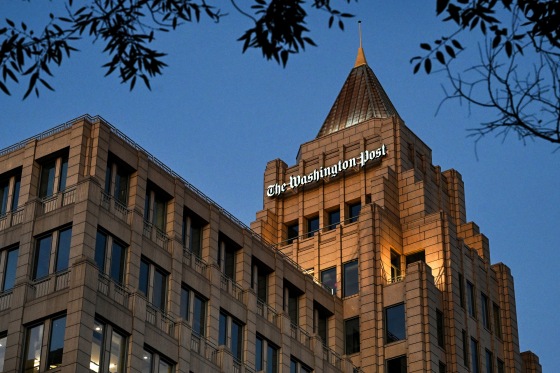
The case of the search of Washington Post reporter Hannah Natanson’s home, reported by NBC News, looks like a classic example of the clash between national security interests and press freedom. The FBI visited the reporter in Virginia as part of an investigation into a government contractor — Navy veteran and systems administrator Aurelio Perez-Lugones, who has been charged with “unlawful retention of national defense information.” Formally, the investigation’s target is not the reporter or even the Washington Post itself, but a specific contractor who had access to classified data. Yet the very fact that FBI agents went to the home of a reporter at a major newspaper instantly situates the case within the realm of conflicts over press freedom.
It is important that the criminal complaint against Perez-Lugones, as NBC News emphasizes, does not mention any ties to journalists. Still, the logic of such investigations usually involves attempts to determine whether the accused shared classified materials, including with the press. Natanson, according to the Washington Post, covers the federal government and issues related to public officials — precisely the area where contractor, bureaucratic and journalistic interests can potentially overlap.
The term “unlawful retention of national defense information” in the U.S. often appears in cases related to leaks or mishandling of classified documents. It can refer to intentional removal of documents as well as to someone with clearance who failed to return or properly destroy materials. In practice, such cases almost always raise the question: where is the line between lawful investigation and pressure on journalists’ sources? If intelligence agencies routinely search reporters’ homes, sources within government will be afraid to talk to the press, even when exposing corruption or abuses.
This episode illustrates a key trend: the state is tightening control over information flows under the banner of security, while society expects transparency and accountability. Media outlets find themselves both mediators and participants in the conflict. A search at a reporter’s home is a signal not only to a specific newsroom but to the industry as a whole: the state is willing to enter reporters’ private spaces if it believes defense secrets are at stake. For trust in the media this imbalance is acutely sensitive: the forceful intervention itself can be perceived as an attempt to intimidate or curtail independent journalism, even if the formal aim is different.
A very different scale and theme is the local FairWell Festival in Redmond, Oregon, reported by KTVZ. Organizers announced the festival, held for three years on the Deschutes County fairgrounds, will not return in 2026. The language in the statement is very soft: it stresses “deep gratitude to the community” and “memories,” but it also, in passing, acknowledges problems — traffic congestion around the venue, long lines for food and drinks.
At first glance this is almost a mundane story about the cancellation of a popular event. But it reveals another facet of contemporary public life: infrastructural overload and the limits of “mass events.” The festival became a victim of its own success: the more people attended, the worse the user experience. Traffic jams and multi‑mile queues are not just inconveniences but indicators that local infrastructure (roads, parking, food and beverage points, service staff) was not designed for such demand.
Here emerges a theme central to the media age: audience and attention are easy to scale (social media, advertising, hype around an event), while physical systems are not. If intelligence services in the Washington Post episode fight for control over information, festival organizers in the KTVZ story confront the fact that attracting people proved easier than providing decent conditions for them. This is also a matter of trust: attendees stuck in endless lines will vote with their feet in the future. Behind the PR’s polished language there may be a more pragmatic decision — not to risk reputation and financial stability because of increasingly complex logistics and scaling costs.
Notably, KTVZ emphasizes its role as a platform for “civil and constructive conversation,” asks readers to review commenting rules, and invites idea submissions for stories. This is an important detail: the local TV station clearly positions itself not only as a news provider but also as a moderator of local public dialogue. In an era when major national media are arenas for political battles, regional organizations try to build an image of a safe space for community discussion — whether about a festival, transportation, or urban policy. Thus, trust and audience participation are central here as well.
At the other end of the media spectrum is a major national news brand, NBC Nightly News with Tom Llamas, reported in a press release by NBCUniversal News Group. Here we see how audience trust and attention are measured in ratings and shares within so‑called key demographic groups. The text emphasizes that the program was number one among evening newscasts in the first week of 2026 in the key A25-54 demo — viewers aged 25 to 54, who are particularly targeted by advertisers. The A18-49 group (ages 18–49) is similarly mentioned. These labels may sound technical to a lay reader, but for the media market they are the main language of influence assessment.
According to NBCUniversal News Group, NBC’s evening broadcast drew nearly a million viewers in the A25–54 demo (992,000) and 6.7 million viewers overall, surpassing ABC’s World News Tonight in the key demo and CBS in total metrics. Importantly, this victory came “amid a heavy cycle of breaking news” — when there’s a lot of high‑profile, sudden national news, audiences often return to traditional, major news programs. Again the central theme appears: in moments of uncertainty people seek reliable, recognizable information sources, and the competition between NBC, ABC and CBS becomes a competition for status as the country’s primary “narrator” of events.
The press release stresses that this is the “first fully rated weekly win over ABC” since Llamas became anchor in June, and that the gap in key demos compared with last year has significantly narrowed. Behind these dry percentages and numbers lies a struggle for long‑term trust: if viewers in the “valuable” age groups (25–54 and 18–49) start switching to NBC more often, it could mean more sustained influence in the future, including in digital spaces. Computational “demography” is essentially a way to measure loyalty and trust.
Note another layer: all these stories exist thanks to and through a particular news ecosystem. The search of the reporter’s home is covered by NBC News — one major national outlet reporting on another major outlet. The festival is covered by regional channel KTVZ, for whom local events and their social consequences are core content. NBCUniversal presents its own ratings win in corporate material from NBCUniversal News Group, framing internal success as a matter of public significance. In each case the news is both a reflection of reality and a tool for shaping images: of the state, the community, and the brand.
The common thread running through all three narratives is a struggle for control over attention and narrative, at different levels. In the first case, the state and the press clash over secrecy: security agencies protect control over information, while journalists defend the public’s right to know. In the second, the community and festival organizers clash with physical limitations: the desire to be “massive” and visible bumps up against residents’ concerns and irritation over traffic and lines; media act as intermediaries, offering a forum for discussion rather than mere reporting. In the third, major TV networks use demographic metrics, Nielsen data and press releases to fight for the status of the primary national news source.
It is also telling that the notion of “breaking news” appears in both the FBI story and the NBC case — those urgent, breakthrough events that audiences react to most strongly, and where trust in the source determines whose version of reality people accept as “main.” The search at the Washington Post reporter’s home could itself become such breaking news, because it touches on the core value of free speech. NBC Nightly News’ win “amid a heavy news cycle,” as NBCUniversal News Group emphasizes, shows that in such moments viewers chose that brand, at least for that week. FairWell Festival, by contrast, disappears from the calendar as an annual event — and now its slot in the public schedule and the information space may be taken by other initiatives.
Finally, all three stories highlight the fragility of public trust. Any sense of abuse of power — whether excessive FBI intervention in journalism or opacity in festival organizers’ decisions — erodes trust in institutions. Media outlets such as NBC News and KTVZ are expected to sustain that trust by providing context and offering spaces for feedback. But media themselves become objects of measurement and promotion, as in the case of NBCUniversal News Group, where corporate success is presented as a societally meaningful victory.
Key takeaways and trends are as follows: the state increasingly uses legal and forceful tools to control information under the banner of security; local communities face infrastructure limits and challenges in organizing mass events; and major media turn audience attention into a measurable resource they fight for using data and brands. At the intersection of these processes a new public‑life landscape emerges, where trust, transparency and the ability to explain complex matters in plain language become not just professional standards but conditions for survival — for festivals, news programs, and journalists working under the intense scrutiny of the state.
![‘Nightly News’ leads ‘World News Tonight’ from ABC in the A25-54 demographic; Tuesday delivers the largest single‑day victory over the network in four years; the first fully rated win over ABC since Llamas began in June. Jan. 13, 2026 – ‘NBC Nightly News with Tom Llamas’ — No. 1 among evening news for the first week of 2026, dominating the key A25-54 demo [...] Read more... from NBC NIGHTLY NEWS WITH TOM LLAMAS DOMINATES THE START OF 2026 WITH A MAJOR WEEKLY WIN IN THE KEY DEMO AMID HEAVY BREAKING NEWS](https://nbcuniversalnewsgroup.com/nbcnews/wp-content/uploads/sites/2/2026/01/NN_TL_FS_NN_1-IN-Key-Demo-for-the-week-1.jpg)