Several, at first glance unrelated, news items — a partial shutdown of the U.S. federal government, the arrest of journalist Don Lemon, and a large-scale enforcement operation by immigration agencies in Minneapolis — actually form a single story. At the center is a sharp hardening of immigration enforcement policy, an expansion of federal law-enforcement powers, and a growing clash between security, human rights, and press freedom. Even local news, like a heavy snowstorm in the Carolinas, only underscores the contrast: alongside familiar natural threats in everyday life, another political-legal threat grows louder — tied to how the state treats its own citizens and migrants.
An ABC News piece on the partial government shutdown in the U.S. describes a fraught Senate deal over funding federal agencies and, in particular, the Department of Homeland Security (DHS), under whose umbrella immigration services including ICE — U.S. Immigration and Customs Enforcement — operate. According to ABC News’ article about the temporary pause in government operations, the Senate decided to separate DHS funding from the rest of the budget and extend it for just two weeks to allow time to discuss Democrats’ demands for reforming ICE’s operations, including mandatory always-on body-worn cameras and a ban on agents wearing masks while performing official duties. These demands did not arise in a vacuum: against the backdrop of an enforcement campaign in Minneapolis, federal agents have, in recent months, fatally shot at least two U.S. citizens — critical care nurse Alex Pretty and Rene Good. Pretty’s death is directly named in the ABC News piece as the trigger for the political crisis around DHS: it was after his death that the fight to change rules for immigration agencies “ignited.”
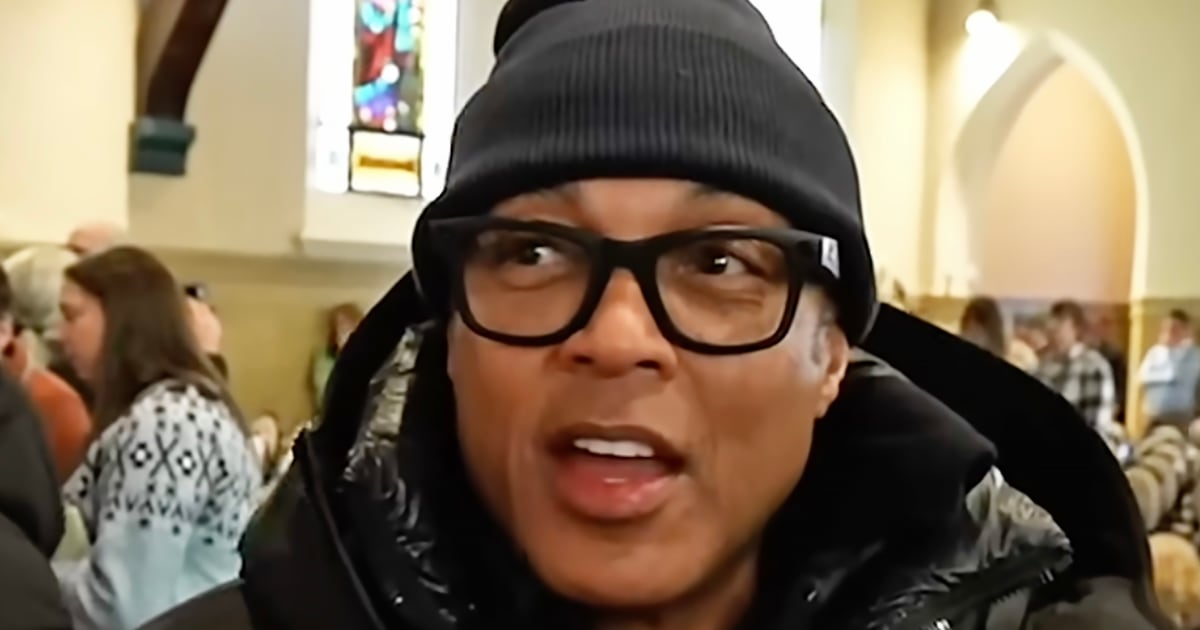
At the same time, NBC News reports on another high-profile episode of the same crisis — the arrest of former CNN anchor Don Lemon, who was covering a protest at Cities Church in Minnesota, where protesters say the pastor simultaneously serves as acting director of the local ICE field office. NBC News’ article on Lemon’s arrest says he was charged with conspiracy to violate the right to freedom of religion and with attempting to obstruct the exercise of that right. In the federal charging document, the journalist is effectively equated with participants in a “coordinated attack” on the church, as characterized by Attorney General Pam Bondi. But, looking at what actually happened in Minnesota, it is clear these events are part of the same story: a large-scale immigration “sweep” in the Twin Cities (Minneapolis–Saint Paul), the deployment of 3,000 federal agents there, more than 3,000 arrests of undocumented migrants, the deaths of two Americans at the hands of agents — and a rising wave of protest that authorities have met not with a revision of tactics but with criminal prosecutions of activists and journalists.
These two threads — legislative maneuvering in Washington and forceful action in Minnesota — are tightly intertwined. At the top levels of power, as ABC News describes, Democrats led by Senate minority leader Chuck Schumer are formulating a DHS reform package: elimination of so-called roving patrols (mobile teams of agents operating without strict ties to a particular location and often exercising broad discretion in choosing targets), increased accountability, a ban on masks, and mandatory active body cameras. After the vote, Schumer, according to ABC, spoke of a “cry from the public” and said that without “real, strong changes” Democrats would withhold votes for funding. The very fact that funding for a major enforcement agency is conditioned on reforms shows the depth of the trust crisis in how the state operates on immigration and homeland security.
Pressure is felt not only from law enforcement but also within politics. One of those who blocked passage of the budget package was Republican Senator Lindsey Graham. ABC News details how he lifted his “hold” (an informal Senate blocking mechanism) only after Majority Leader John Thune promised to bring Graham’s bill banning “sanctuary cities” to a vote. “Sanctuary cities” refers to jurisdictions (cities or counties) that refuse to actively assist federal immigration authorities in arresting and deporting undocumented migrants — for example, not providing ICE with the immigration status of detainees unless required by law. Banning such practices would, in effect, force local authorities into closer cooperation with ICE. Thus, Graham is not merely pushing a personal priority; he is demanding strengthened federal immigration enforcement at the same time Democrats are trying to limit its powers. The senator also sought votes on the Arctic Frost amendments — provisions that would allow members of Congress to sue the government if investigators accessed their phone records without notice. Those provisions were removed from House-passed funding, but their linkage to immigration signals growing distrust among lawmakers of opaque intelligence practices.
Against this backdrop, NBC News’ story about Don Lemon’s case becomes not an isolated episode but a symptom of a broader transformation — a shift in the balance between state power and civil society. Lemon was charged under the so-called FACE Act (Freedom of Access to Clinic Entrances Act), originally enacted to protect access to clinics providing reproductive services, primarily abortion, from blockades and threats. The law contains rarely used provisions related to houses of worship, and it was those provisions, as high-ranking Justice Department official Harmit Dillon acknowledged, that the Trump administration decided to actively apply for protests at a church — a use not previously seen. NBC News quotes her: “In all the years before I became assistant attorney general for civil rights, no one had used the houses-of-worship portion of the law to prosecute protesters… We started doing that.” Importantly, the same administration had earlier pardoned several anti-abortion activists convicted under the same law and effectively stalled new abortion-related cases by creating additional bureaucratic barriers. The result is that one law is being used differently: in favor of allies and against opponents.
This selective application is what prompts a sharp reaction from human rights advocates and the professional community. The Committee to Protect Journalists, NBC News notes, said Lemon’s arrest “should alarm all Americans.” CNN’s statement emphasized “grave questions about press freedom and the First Amendment.” Los Angeles Mayor Karen Bass said that instead of de-escalating after the deaths of citizens at the hands of agents, the president only amplifies tensions, and that the arrests of Lemon and another journalist, Georgia Fort, demonstrate that hardening course. Fort, NBC News reports, was arrested early in the morning at her home, in front of her three daughters; she said flatly that she was arrested “for doing her job, despite constitutional press protections.”
Thus, the logic of the enforcement campaign in Minnesota reads as follows: a mass deployment of ICE and other units, several fatal incidents involving U.S. citizens, an intense public reaction, protests at a church connected (according to protesters) to ICE leadership, and in response — not only immigration raids but also an active criminal law-enforcement tilt against those reporting on and organizing resistance. Lemon’s attorney, Abbe Lowell, called this explicitly “an unprecedented attack on the First Amendment and an attempt to distract from the crises facing the administration.” In this sense, the arrest of not just any journalist but “one of the country’s most recognizable journalists,” as NBC News notes, becomes a signal: the state is willing to use stiff legal tools, including unconventional readings of statutes, to suppress not only alleged violations but also public exposure of those violations.
Interestingly, in Washington there is simultaneously a struggle to change the very practices that on the ground lead to tragedies and protests. Speaking after the Senate vote, Schumer called the footage of federal agents shown across the country “not America” and said it “must change,” promising to press for an end to roving patrols and for greater accountability. He emphasized that negotiations would primarily be between Democrats and Republicans in Congress, not with the White House, effectively signaling distrust of President Trump as a partner in DHS reform. At the same time, House Speaker Mike Johnson is prepared to bring funding up for an expedited vote that would require a two-thirds majority — again necessitating a bipartisan coalition. This indicates that despite sharp conflict, there is willingness for institutional compromise — provided reform demands are met.
However, the path to these reforms is politically fraught. The conservative wing of the Republican Party, led by figures like Lindsey Graham, insists not on restraint but on strengthening immigration-control tools — for example, a broad assault on sanctuary cities. Meanwhile, at the Justice Department under Pam Bondi and Harmit Dillon there is a reorientation of law enforcement: the FACE Act, intended to protect patients and doctors, is now being used to criminally prosecute those who obstruct service at a church, while abortion-related prosecutions are effectively put on hold. This is not merely a legal oddity but an illustration of a trend: the federal government is using legal instruments formally designed to protect rights and freedoms in a selective, politically driven way, depending on priorities and alliances.
Against this backdrop, local coverage such as WYFF News 4 in South Carolina streaming a heavy snowstorm and arctic cold looks almost like a reminder of a “normal” agenda: natural hazards, meteorologists at work, extreme temperatures, forecasts, and data that snow in some areas is falling at about an inch per hour and temperatures will remain below freezing through Monday, as WYFF reports. The local news outlet highlights its independent certification for forecast accuracy and its own Doppler radar. Amid intense political disputes and waning trust in federal institutions, that emphasis on transparency, accuracy, and verifiability of information feels especially important: it underscores how crucial reliable, politically independent journalism is to safety — whether the danger is black ice on the roads or armed agents on city streets.
The main trend uniting these stories is the rapid expansion of the arena where security, control, and freedom collide. The question is no longer whether the state should protect borders and people’s right to live safely, but by what means it does so and who is left unprotected in that configuration. The deaths of Alex Pretty and Rene Good, mentioned by NBC News in the Don Lemon article, become not just tragedies but symbols of excessive force; the arrests of journalists covering protests against those deaths turn the free press into another target of coercion; the Senate fight over body cameras and a ban on masks for ICE agents is an attempt to at least partially restore transparency and accountability to what increasingly looks like a “black box” of coercive policy.
In the short term, the outcome of this struggle will depend on how effectively Democrats use the two-week DHS funding window to advance their demands, and whether Republicans, despite tough rhetoric on migration, will accept minimal transparency standards — such as active cameras and a ban on agents operating incognito with masks, whose actions have already resulted in citizen deaths. In the midterm, much will be determined by how courts treat expansive interpretations of laws like the FACE Act and whether they will limit the Justice Department from using these provisions for political ends. Already, as NBC News reminds readers, federal magistrates in Minnesota rejected the Trump administration’s attempts to keep protesters detained and found insufficient grounds for Lemon’s arrest on the original complaint.
Further escalation — for example, new arrests of journalists or failure of DHS reform talks leading to a prolonged shutdown — could deepen polarization and distrust in institutions. If, however, reforms like those Schumer describes are at least partially adopted, it would send an important signal that even amid a hardline immigration policy, mechanisms for controlling law enforcement can be strengthened. Otherwise, with arrests of journalists, selective application of laws, and broad operations that produce human casualties going without real consequences for those in power, there is a risk that the boundaries of permissible state violence and limits on freedoms will steadily shift outward.
All three plots — the behind-the-scenes bargaining in the Senate, the overnight arrest of a media star in Beverly Hills, and an ordinary report about a snowstorm in the Carolinas — illustrate how crucial the question of trust in those who hold information and power has become. When senators haggle over law, legal agencies experiment with little-used provisions, and journalists are pulled off the air in handcuffs, the transparency and accountability of power will determine not only the future of immigration policy but also the basic democratic principles on which the American system rests.