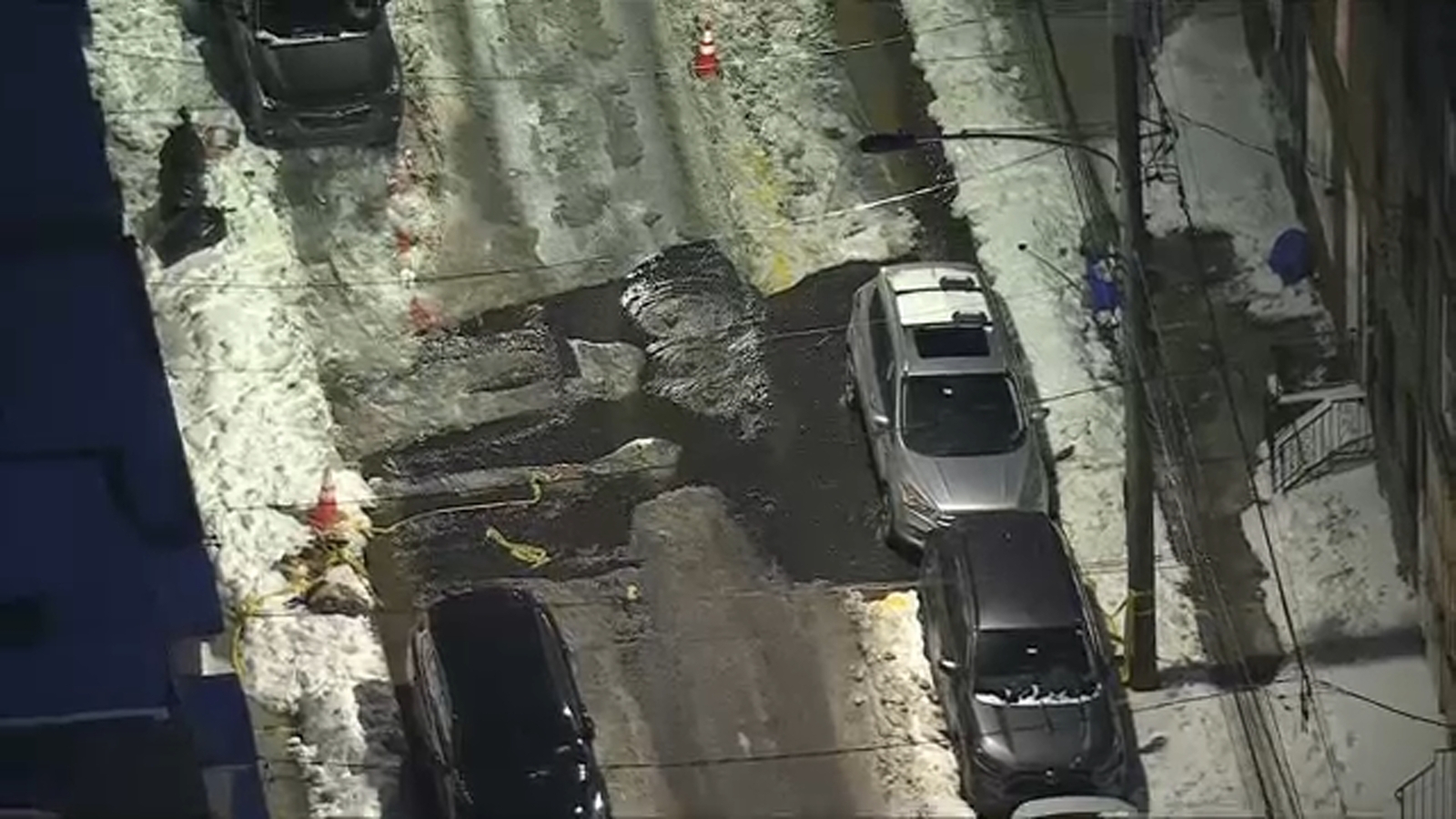
In three seemingly unrelated news items — about a woman wounded while trying to break up a fight in Harrison Township, a large police operation in Lebanon County, and a water main break in snowy Philadelphia — a common, nearly imperceptible theme emerges. It is the vulnerability of ordinary urban life and how any disruption — from street violence to infrastructure failure — instantly turns familiar spaces into potentially dangerous environments. Together these stories show how thin the line is between a “normal morning” and an emergency, and how much depends on the response of services, the readiness of systems, and people’s own behavior.
A WHIO piece describes a nighttime incident in Harrison Township. A woman attempts what many would instinctively consider “the right thing”: intervening in a dispute between two men to prevent escalation. Instead of de-escalation, there is a gunshot. According to the Montgomery County Sheriff’s Office, she is wounded, leaves the scene, and is later found at a hospital. The suspect, Cory Williamson, is also treated at another medical facility, after which he is taken into custody and booked into the county jail on two counts of felonious assault, with bond set at $50,000 and a hearing scheduled for Feb. 3.
Even in such a short report several key lines are visible. First, the violence occurs in an everyday, non-war context — it’s not a premeditated attack but an “ordinary” quarrel that instantly turns into an armed incident. Second, the person attempting to act as a mediator becomes the most vulnerable party. This raises a difficult issue: how safe is “heroic behavior” without police support, training, and an understanding of the risks? Third, the linkage “medicine — police — courts” is immediately activated: from transporting the injured person to the hospital to tracking the suspect through the hospital system and subsequent legal proceedings. Such cases illustrate how different components of urban infrastructure are simultaneously burdened in a crisis: healthcare, law enforcement, and the judicial system.
The WGAL piece from Lebanon County shows another facet of vulnerability — informational and psychological. There are few details: the report notes a significant police presence on Gable Drive around 6:30 a.m., a road closure between Limestone Drive and Gloucester Alley, and that emergency medical services were called. Journalists emphasize that “the incident remains under active investigation” and ask viewers to send photos and video if it is safe to do so.
This text is almost devoid of content but is nonetheless very telling. First, the phrasing “large police presence” and the closure of a street in a residential area create an atmosphere of anxiety: residents see many police cars and emergency units around them, don’t know what is happening, and must rely on fragmentary media reports. Second, the line “active investigation” means authorities are limiting public information, which is typical in the first hours of incidents involving possible threats to safety, death, an armed crime, or sensitive details. Third, involving citizens (asking them to submit photos/videos) turns residents into part of the observation and reporting infrastructure, but at the same time shifts some responsibility onto them for acting sensibly: the phrase “if it is safe to do so” is deliberate, since curiosity often pushes people toward risky behavior.
Harrison Township and Lebanon County are united by one thing: the sudden transformation of familiar space into an “incident zone.” People step outside or wake up and find either the scene of a crime or a large law enforcement operation nearby. This exposes how much everyday life depends on how quickly and professionally services respond, and how predictable and clear their behavior is to the public. The term “heavy police presence” or the note that EMS was called but details are lacking are markers that systems are working, but communication with the community remains a weak link.
The third story from Philadelphia, published on 6abc, at first glance belongs to a different domain: there is no violence or crime here, but a utility failure — a six-inch water main break in the Point Breeze area. Yet its consequences are structurally very similar to those of security incidents. At 6 a.m. water begins flowing onto the snow-covered street in the 1200 block of South 16th Street, turning the road into a potential skating rink. Resident Andrea Hewitt describes the situation: “It’s already super slippery, and I don’t know how they’re going to clear all that ice. I really feel for the workers who will have to fix it later.” The water department reports repair work and a crew change, and the gas company is re-inspecting its lines between Federal and Wharton Streets to check whether its equipment has been affected. According to the water department, no basement flooding has been reported so far.
This seemingly “technical” note actually reveals another dimension of urban vulnerability: critical infrastructure — water and gas networks — is as important to safety as the police. A pipe burst in freezing conditions turns an ordinary street into a source of roadway injuries and traffic disruption. The involvement of the gas company underscores the risk of cascading failures: a water main break can wash out soil, damage a gas line, create a gas leak, and lead to a fire or explosion. The same mechanism seen in criminal incidents appears here: people wake up to find that basic conditions for their safety — walking down the street, getting to work without slipping or being hit by a car on ice — are suddenly in question.
In all three cases, emergency and utility services play a key role, not only through physical work on site but also through the ability to manage risk. In Harrison Township, coordination between police and hospitals allows the suspect, who ended up at another medical facility, to be quickly tracked and detained. In Lebanon County, swift street closures and mobile deployment of forces create a security cordon around an unknown threat. In Philadelphia, the water department and gas company coordinate to minimize both the immediate risk of ice and potential damage to underground utilities. This shows that in the modern urban environment safety is not only about crime prevention but also about infrastructure resilience — the ability to “take a hit” in cold weather, under network wear, or amid population growth.
It is notable that in all three news items local media act as an interface between residents and safety systems. WHIO emphasizes that News Center 7 will continue following the case, tracking the investigation and court process. WGAL explicitly says journalists are “working to learn more” and asks viewers to share materials. 6abc conveys the voice of resident Andrea Hewitt, adding an emotional, human angle to the dry facts: sympathy for the workers who will have to toil in difficult conditions. This media intermediary role matters not only for informing the public but also for building trust: people judge the performance of safety and utility services largely through the lens of these brief reports.
The subject of private initiative and the limits of personal responsibility deserves special attention. In Harrison Township the woman who tried to “help” was shot. This raises the question: where is the reasonable boundary between civic action and risking one’s life? Modern de-escalation and public safety programs increasingly stress the importance of ordinary people knowing basic principles: when it is appropriate to intervene, when it is better to call 911, and how to assess the likelihood of weapons being present. This is not only a legal issue but a psychological one: society tends to admire “heroism” but talks too little about hidden risks and the fact that prevention and timely calls to professionals are often more effective and safer.
In Lebanon County we see another side of private initiative: citizens are asked to share photos and videos, but only insofar as that does not put them in danger. This is a fairly new balance: the smartphone camera turns everyone into a potential “reporter” and “observer,” but it also increases the temptation to get close to a scene for a good shot. The Philadelphia water main break also prompts the question: how do residents respond to such incidents — do they avoid the hazard, report new leaks, or help neighbors who have more difficulty navigating icy streets?
In terms of trends, these three episodes highlight several key developments. First, the growing importance of local security in the broadest sense — from preventing domestic violence to infrastructure resilience. Second, the increasing need for synchronization among different services: police, EMS, utilities, and gas companies. A mistake or delay by any of them can exacerbate consequences. Third, the rising significance of communication: brief news, regular updates, clear messages about road closures, risks, and preliminary conclusions. Lack of information, as seen in the Lebanon County example, itself becomes a factor of unease.
Finally, it is important to note what these texts do not address. None of the pieces raises the broader context: regional levels of gun violence, the condition of water systems and frequency of such breaks, or statistics on major police operations in residential areas. This is a typical format for local daily chronicle: attention focuses on the event “here and now,” while systemic causes remain offstage. However, looking at such reports together, as in this case, makes it clear that these are not three random incidents but a continuous, fragmentary demonstration of how fragile everyday security is and how much it depends on many interconnected factors — from who carries a weapon to how often and how well underground pipes are maintained.
In that sense, the stories from Harrison Township, Lebanon County, and Philadelphia are not just local episodes from police and utility logs. They are small illustrations of a larger question: how ready are we as a society not only to respond to incidents but to reduce risks systemically, strengthen infrastructure, train people in safe behavior, and build transparent communication between residents and services. The answer is far more complex than any single news item, but it is from such brief reports that a real picture of urban life and its vulnerabilities emerges.