In three news items that at first glance seem unrelated — mass layoffs at CarMax, Saks Global’s bankruptcy filing, and threats of executions for protesters in Iran — a common thread emerges: how authorities and leaders respond to crises. In some cases the response is cuts and management changes; in others, repression and intimidation. Everywhere it’s an attempt to quickly “straighten things out” with harsh measures, often at the expense of those who have the least control over events.
Richmond BizSense’s piece on CarMax “Breaking News: CarMax lays off hundreds more, including many in Richmond” describes how the major used‑car retailer continues to trim corporate staff. The CBS News segment “Breaking down the unrest in Iran as regime threatens executions over protests” explains how the Iranian regime is responding to protests with promises of swift trials and possible death sentences, while the U.S. threatens “strong action” in response. The Connect CRE article “BREAKING NEWS: Saks Global Files for Chapter 11; CEO Baker Out” covers how luxury holding company Saks Global enters bankruptcy proceedings and immediately changes its CEO, trying to preserve the business amid debt and falling demand.
The unifying theme is a culture of crisis management that favors blunt measures: layoffs, resignations, repression, and an effort to quickly “show strength” to investors, elites, or political opponents. This creates important trends and consequences — from transformations in the labor market to escalation of political instability.
CarMax as a symptom of a tightening, harsher market
According to Richmond BizSense, CarMax has cut more than 1,000 employees in just two years. The latest round — 230 people in the Home Office and CarMax Auto Finance, including 113 in the Richmond area. This is not a one‑off optimization but the third significant wave in a short period: 415 cuts in summer 2024, 350 two months ago, and now another 230. For a company with more than 30,000 employees this is not a collapse, but it is a systemic restructuring.
The company directly links the layoffs to the need to “reduce costs and operate with a faster, leaner corporate workforce.” The term “leaner workforce” comes from management jargon: “lean” (from “lean management”) denotes a model that eliminates all “excess” operations and roles that management deems not to add direct value. In practice this often means office layoffs, automation, and consolidation of responsibilities.
Several key points stand out in the coverage.
First, competition. The article explicitly states CarMax faces “increasingly stiff competition from main rival Carvana.” Carvana is a digital player focused on online sales, aggressive on pricing and marketing. For a traditional used‑car retailer this means margin pressure and the need to cut fixed costs — primarily the corporate apparatus.
Second, the financial and market backdrop. CarMax has a “depressed stock price and declining sales in the last two quarters” — falling share price and lower sales. For a public company this is a critical signal: investors expect rapid action. Often the first symbolic and practical step is removing the CEO, which happened here: after nine years at the helm Bill Nash was removed, David McCrate was installed as interim CEO, and the charismatic former leader Tom Folliard was brought back as a figure to “calm” the market and give a sense of “returning to roots.”
CEO changes and mass layoffs serve multiple functions simultaneously. They are a managerial tool (real cost cutting and a bid to change strategy) but also a symbolic gesture: to show shareholders and analysts that “the wheel has been taken over” and the company is ready for unpopular measures.
Third, the local dimension. More than 2,000 CarMax employees work in the Richmond region, and in the latest round 113 lost their jobs. For the city and suburbs (West Creek, Midtown, offices in Goochland and Richmond) this is a local blow to employment for highly skilled workers: finance, IT, operations specialists. Formally the company softens the blow — offering “severance pay, career support services and the opportunity to apply for open positions.” But after several consecutive rounds of cuts, the signal is clear: the corporate sector is less stable, and “office” positions no longer guarantee long‑term security.
The picture that emerges is characteristic of corporate crisis response: instead of deep conversations about the business model, competition, or shifts in consumer behavior, the emphasis shifts to rapid cost reduction and top‑management reset. CarMax is far from the only example; a similar logic appears in the Saks Global story.
Saks Global: when a bet on scale and size fails
The Connect CRE piece “BREAKING NEWS: Saks Global Files for Chapter 11; CEO Baker Out” describes an even more dramatic scenario. Saks Global Holdings LLC has filed for Chapter 11 bankruptcy in the U.S. Southern District of Texas and simultaneously changed its CEO.
It’s important to explain what Chapter 11 means. It’s a chapter of the U.S. Bankruptcy Code that allows companies not merely to liquidate but to reorganize: the business continues to operate (stores and online platforms remain open), while the debt is restructured under court supervision, assets may be sold, and terms with creditors renegotiated. In other words, it’s a controlled “reboot,” not an immediate collapse. Connect CRE emphasizes this: all brands — Saks Fifth Avenue, Neiman Marcus, Bergdorf Goodman, Saks OFF 5TH, Last Call, Horchow — will continue to operate.
Saks Global has prearranged financing of about $1.75 billion: $1.5 billion from a group of senior secured bondholders and $240 million in additional liquidity from asset‑based lenders. It’s useful to explain debtor‑in‑possession (DIP) financing, mentioned in the article. DIP financing is a special loan extended to a company during bankruptcy; it’s granted on priority terms so the business can continue operations (pay suppliers, payroll, etc.) during reorganization. In this case an ad hoc group of lenders is providing $1 billion in DIP financing and committing another $500 million after emergence from bankruptcy.
But the root cause of the crisis, Reuters notes, was a strategic decision that looks, in retrospect, like a mistake: acquiring Neiman Marcus for $2.7 billion in 2024. That move “saddled the company with debt at a time when global luxury sales were slowing.” Consultant Brittany Ladd tells Reuters: “In a market where luxury brands are moving direct‑to‑consumer and shoppers expect personalization and speed, that [merger] was always going to fail.”
This reveals an important structural trend. Traditional multi‑brand luxury department stores like Saks Fifth Avenue and Neiman Marcus are built as multi‑brand intermediaries: one store carries many labels. But the brands themselves (Louis Vuitton, Gucci, Balenciaga, etc.) are increasingly developing direct channels: branded boutiques and robust online platforms. They control the customer experience and data, set prices and margins. In that structure, the multi‑brand retailer becomes less necessary and must either dramatically upgrade service, personalization and technology, or lose ground.
Saks Global responded by scaling through acquisition. But buying Neiman Marcus in a slowing market overloaded the company with debt. The familiar crisis script followed: declining sales in a slowing luxury market, increased creditor pressure, Chapter 11 filing and a CEO exit. Richard Baker departs and Geoffroy van Raemdonck, who previously led Neiman Marcus Group, takes over the holding. Formally it’s paradoxical — the leader of the acquired asset now runs the whole holding — but the logic is clear: a crisis manager with sector experience is needed, someone who can negotiate with creditors and brands.
Van Raemdonck immediately announced an expansion of the top team: Darcy Penick becomes president and chief commercial officer with broad responsibilities (stores, marketing, e‑commerce, analytics, customer service); Lana Todorovich is named head of global brand partnerships. The bet is on strengthening capabilities in customer and brand relations, as van Raemdonck himself admits: “This is a defining moment for Saks Global, and the path ahead presents a meaningful opportunity to strengthen the foundation of our business and position it for the future.”
This is a different type of crisis management than at CarMax. There the primary response is cost cutting and replacing the CEO under investor pressure. Here the old financial structure is formally dismantled through bankruptcy in an attempt to create a new, more resilient model around the same brands. Yet in both cases the measures are extremely harsh, and the cost of past strategic errors falls on employees, suppliers and creditors.
Iran: political crisis and the logic of intimidation
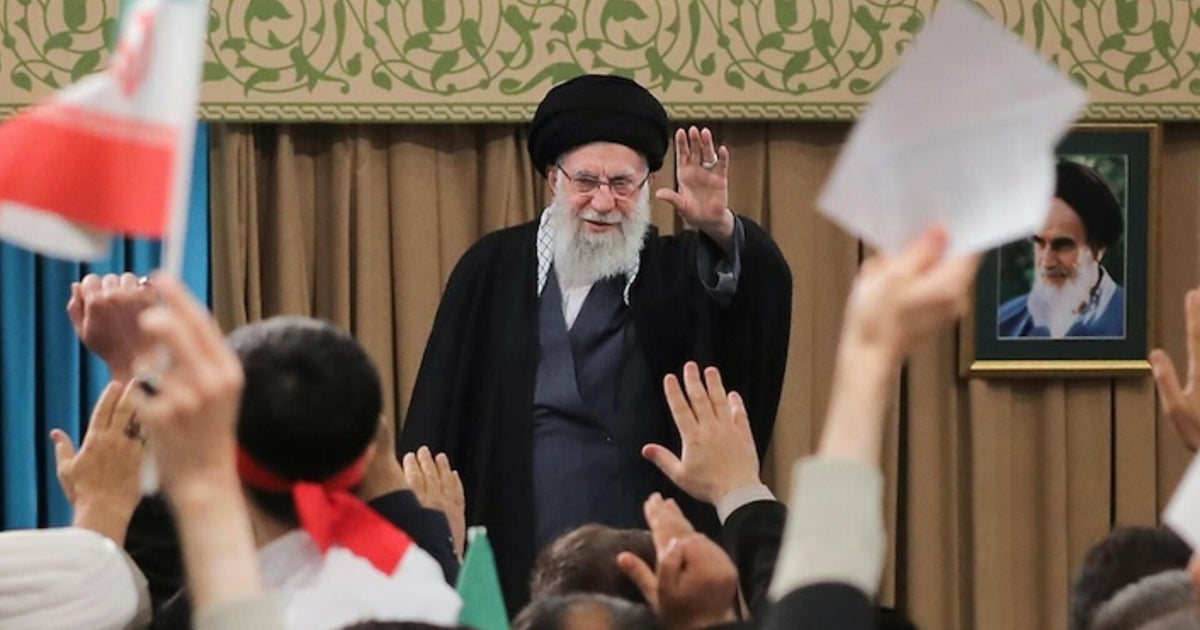
The third story is a political crisis. In the CBS News segment “Breaking down the unrest in Iran as regime threatens executions over protests” reporter Rami Inocencio explains how Iranian authorities are responding to anti‑government protests: the country’s supreme leader warns of “swift trials” and possible executions for protesters. At the same time, U.S. President Donald Trump threatens “strong action” against Iran.
Although the report is brief, it captures two levels of crisis behavior. On one hand, the Iranian regime, facing internal challenge, relies on a traditional authoritarian tool — repression and public threats. The promise of swift trials and potential death sentences is a political signal: “the cost of protest will be maximal.” In theories of political regimes this is a strategy of deterrence: demonstrating willingness to use maximum violence to prevent protests from spreading.
On the other hand, there is external pressure. Trump’s statement about “strong action” against Iran fits into U.S. geopolitical strategy where sanctions, diplomatic isolation and military rhetoric are used to deter adversaries. In the context of domestic unrest, this can reinforce the besieged mentality of Iran’s elites and, ironically, push the regime toward even greater harshness to avoid appearing weak before an external opponent.
Unlike CarMax and Saks Global, where harsh measures result in job losses and financial damage, here the cost can be absolute — loss of freedom and life. Nonetheless the logic is similar: power that does not want or cannot engage in dialogue and reform seeks to show force and resolve quickly.
The common nerve: when management reduces to showing force
Viewed as separate stories, these are different worlds — the used‑car retail sector, elite luxury retail, and a political crisis in the Middle East. But asked the same question — “how do leaders respond to crises?” — the picture becomes remarkably coherent.
In all three cases crisis management manifests as a culture of “instant toughness.”
In business that means layoffs, top‑management changes, bankruptcy, and abrupt restructuring of ownership and debt. CarMax essentially declares it will get “leaner” by cutting hundreds of corporate positions. Saks Global admits its financial model failed via Chapter 11, but keeps the brands and shifts responsibility from products and business model to financial architecture and previous leadership.
In politics that means repression, threats of executions and demonstrations of force on the external front. The Iranian regime responds to protests not with reform but with the threat of maximal punishment. The U.S., for its part, increases pressure, using the language of force. Dialogue and institutional change are pushed aside.
The consequences of this management model generate several important trends.
First, increased instability in jobs and careers. The CarMax story signals that even large, seemingly stable employers in relatively predictable sectors can reconfigure office structures multiple times over a few years. Employees must be ready for frequent job changes, retraining, and life under constant “optimization.” Severance and career services act as social cushioning, but not as guarantees of long‑term stability.
Second, accelerated transformation of business models under digitalization and direct‑to‑consumer pressure. Saks Global illustrates how bets on scale and expensive M&A without accounting for changing consumer behavior lead to bankruptcy. In a world where brands go direct to customers, intermediaries — whether car dealers or luxury department stores — must invent new sources of value: service, experience, personalization, technology, rather than simply expanding retail space and market share through debt.
Third, political escalation as a response to calls for change. In Iran the energy of protest, according to the CBS News segment, is met not with compromise but with threats and repression. This may temporarily dampen activity, but in the long term it deepens alienation between society and power and raises the risk of even sharper outbreaks.
Fourth, an erosion of trust in institutions — both corporate and political. In business, employees see strategic mistakes (bad mergers, delayed digitalization, overestimating demand) paid for with their jobs. In politics, citizens see calls for participation and justice met with repression. In both cases trust is undermined and willingness to support existing structures declines.
That said, harsh measures are not always misguided. Sometimes Chapter 11 is the only way to preserve a business and some jobs in a reduced form. Layoffs may be inevitable if a company cannot compete in its current structure. The state has an obligation to maintain order and security. The question is whether these measures are part of a considered, long‑term strategy of change, or if they substitute for one, becoming a ritual of demonstrative force.
Judging by the Richmond BizSense, CBS News and Connect CRE pieces, the latter seems to predominate. The price for past mistakes and delays is paid primarily by the most vulnerable — employees, protesters, creditor‑dependent structures. If this logic continues, we are likely to see more reports of “another round of layoffs,” “yet another bankruptcy with DIP financing,” and “another wave of repression against protests” — and far fewer conversations about how to build more resilient, flexible and fair systems of governance.