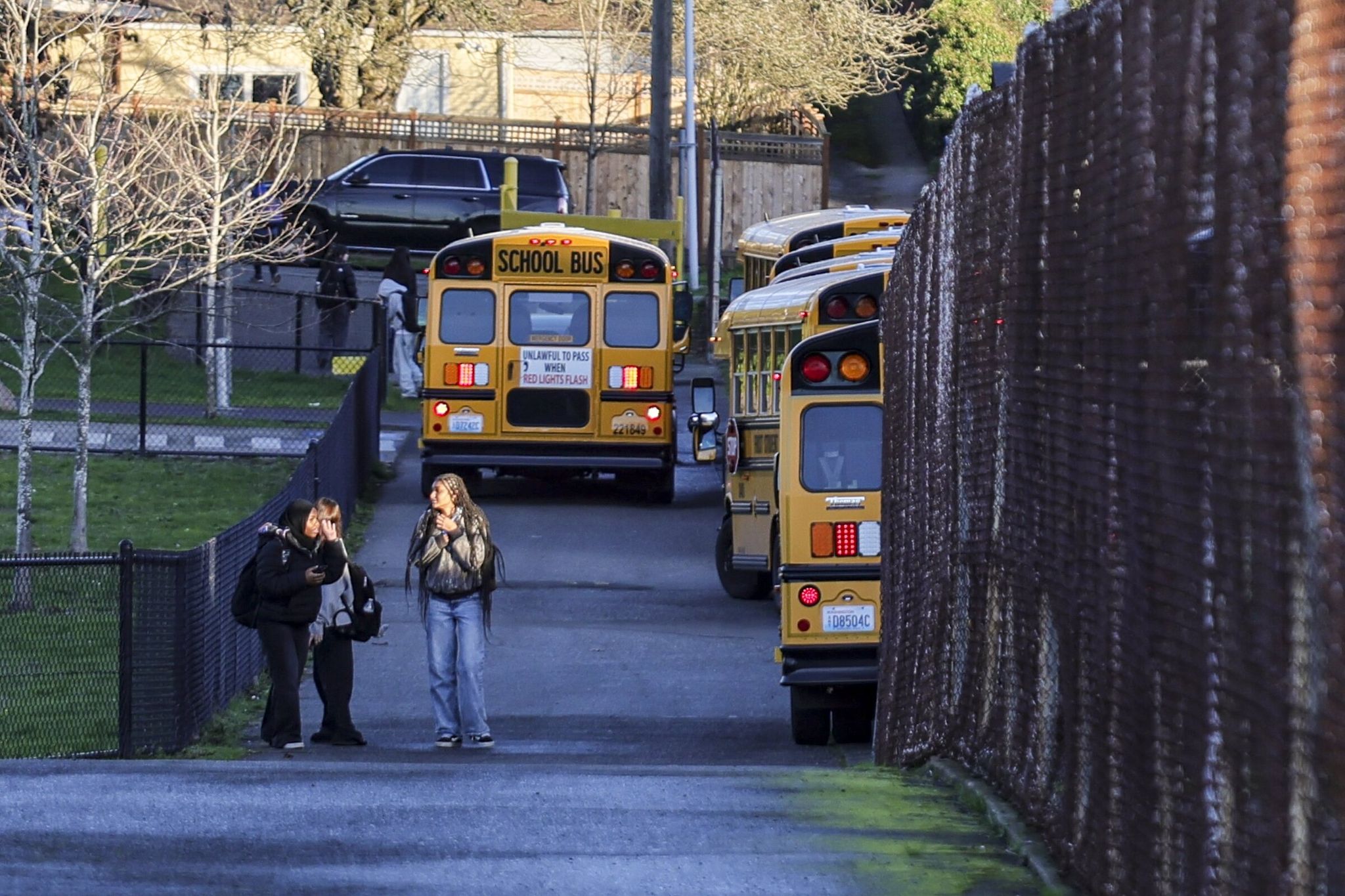
Last week four Seattle schools were forced into shelter-in-place mode because of unconfirmed rumors of U.S. Immigration and Customs Enforcement (ICE) activity nearby. The incident prompted Seattle Public Schools (SPS) leadership to quickly review and update protocols for responding to such reports to avoid unnecessary panic in the future and to be clear about how to respond.
The situation unfolds within the city’s long-standing “city of refuge” policy. That stance began to take shape in the 1980s, and in the 2000s the city council formally adopted ordinances barring city employees and police from asking about immigration status or cooperating with ICE without a court order. Since January the district has had a clear policy prohibiting ICE officers from accessing school buildings. Staff are instructed to meet agents at the door, request identification and immediately contact the principal and the legal department. Agents may enter a school only with a valid court order, which must be verified by the district’s attorneys. That policy remains unchanged.
The new protocols specifically address situations when there are reports of ICE activity near a school during school hours. Now any staff member who witnesses or receives such information must immediately notify the principal and file a report with the District Office of Safety. That office will assess potential risks and, if necessary, assemble a central rapid-response team.
Acting superintendent Fred Podesta acknowledged the difficulty of verifying such rumors. Previously the district could rely on information from local police, but now even police departments are often not notified about planned ICE operations. Despite that, SPS will work closely with the Seattle Police Department (SPD), the mayor’s office and community organizations to share resources and information. The district traditionally partners with nonprofits such as the Northwest Immigrant Rights Project (NWIRP), which provides legal help; OneAmerica, which advocates for immigrant rights; and the Latino Community Fund, which supports Latino families. These groups hold workshops in schools and help families navigate the law.
The updated access rules also apply to school buses. Asked about private transportation providers that work with the district, Podesta expressed confidence that they will observe the same protections. As for concerns that attendance might drop because of fear of immigration raids, there has been no statistically significant decline since the policy crackdowns began under the Trump administration.
The new superintendent, Ben Shuldiner, who takes office next week, emphasized the need for additional training for school leaders. He is known for his experience working in SPS and his focus on closing achievement gaps, including support for students from immigrant families. Shuldiner proposed training on situation assessment, legal issues and recognizing valid court orders. He also questioned whether last year’s shelter-in-place was necessary, given the strict rules already barring ICE agents from buildings.
The main goal of the updated protocols is not only to clearly outline actions but also to restore community trust. “The safest place for a child in America is the school,” Shuldiner said. “We must do everything so people believe that.” The district intends to use training and transparency to reduce fear and ensure a sense of safety for all students and their families.