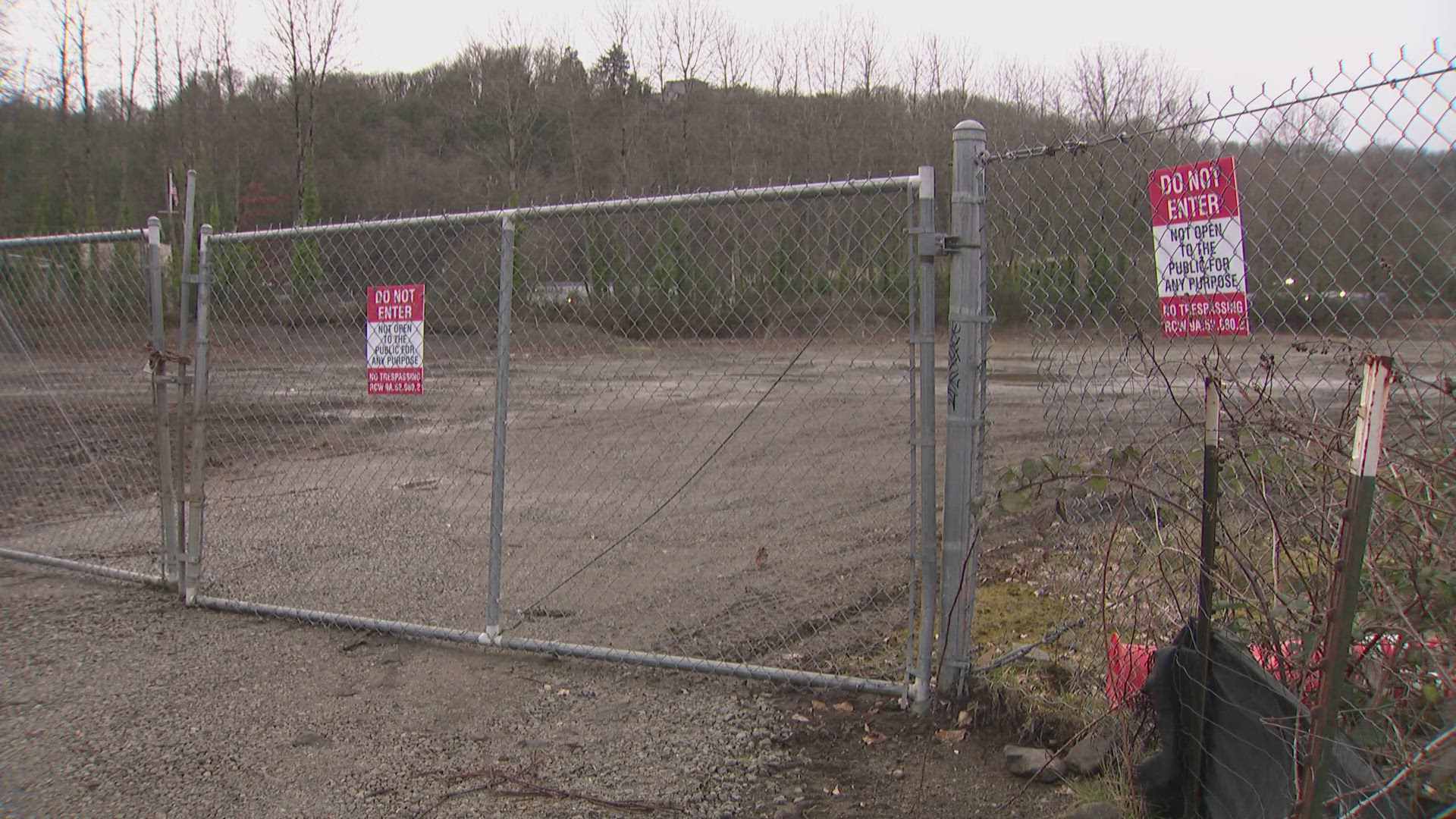
In Seattle, a vacant lot could be turned into a hub for homeless people with tiny houses. The city was found liable in the death of a teenager over an unsafe property. And the Seattle Seahawks changed their approach and are again contenders for the Super Bowl.
Vacant lot in West Seattle could become a tiny-home and RV hub
Seattle officials are considering turning an abandoned industrial parcel in West Seattle into a large temporary housing hub for people experiencing homelessness, including tiny homes and parking for recreational vehicles. While the project is in an early stage, it reflects growing pressure tied to the homelessness crisis in the area.
According to documents filed with city authorities on January 16, the site at 7201 Second Avenue Southwest is proposed as a faith-based emergency transitional housing facility. The plan includes 20 tiny houses and parking spaces for up to 72 recreational vehicles (RVs). As noted in the article on KING5.com, this scale reflects the severity of the problem in West Seattle, where, officials say, RV encampments with people living in them are concentrated more than in any other part of the city. Councilmember Rob Saka, who represents the district, confirmed that his district has “the largest number of RV camps,” roughly three times more than the next-highest district.
It’s important to understand that the project is far from realized. As the Seattle Department of Construction and Inspections explains, the submitted documents are part of a pre-application process. Formal permits have not yet been requested, the project is not under active review, and it is not approved. Saka clarified that discussions about creating safe RV parking and transitional housing facilities in the district began more than a year ago under the previous mayoral administration, in coordination with the King County Regional Homelessness Authority (KCRHA). Those conversations are continuing under the new administration.
If the project moves forward, the Low Income Housing Institute (LIHI) would manage the site; LIHI already has experience with similar housing solutions. Saka emphasized that LIHI’s operations would be subject to city oversight because the organization receives public funding. The parcel has a long history in planning discussions: in 2008 it was considered as a possible site for a new city jail, and in 2016 then-mayor Ed Murray suggested it as one of two potential safe parking locations.
Councilmember Saka describes the current proposal as a practical step to address the unsafe conditions in which people live in RV encampments. “This new site seems like a reasonable solution to help people get under a roof,” he said. “I hope many of our homeless neighbors living in RV camps across the county will be able to move into this new space.” Thus, the project represents an attempt to find a structural solution to one of the most visible and challenging forms of homelessness in the city, offering an alternative to informal parking lots. However, its fate will depend on further administrative decisions, the approval process, and likely the reaction of the local community.
Court finds Seattle liable in teen’s death: case overview
In Seattle, a court delivered a verdict in a high-profile case, finding the city liable in the death of a teenager. The decision caps a lengthy legal process and, as KIRO 7 News Seattle reports, could have significant consequences for the municipality.
The court found that city officials failed to ensure proper safety at one of their properties, which directly led to the tragic incident. Although details of the incident itself are not disclosed in the excerpt provided, the context indicates this was a case where deficiencies in the infrastructure or maintenance of city property resulted in a minor’s death. Notably, the piece begins by mentioning a separate tragic incident in Texas, where three brothers died after falling through ice on a pond during a winter storm. That serves as an example of how hazardous conditions for which local authorities or property owners are responsible can lead to irreversible outcomes. In Seattle’s case, the city’s legal liability means the court found a direct causal link between the municipality’s actions (or inaction) and the teen’s death. Such cases often involve the doctrine of premises liability — the legal principle that requires property owners (including cities) to maintain their property safely for visitors. If it is shown that a dangerous condition was known or should have been known to authorities and they failed to remedy it, civil liability follows.
A key takeaway from this ruling is its precedent: it underscores courts’ increasing strictness toward municipalities regarding the safety of public spaces. For the city, this entails not only possible compensation to the victim’s family but also likely a review of inspection and maintenance protocols across city properties — from parks and bodies of water to roads and buildings — to prevent similar tragedies in the future. For affected families, such verdicts are painful but important steps toward acknowledging mistakes and obtaining justice. While the excerpt does not include direct quotes from the ruling or family representatives, the fact that the city was found “liable” speaks to the weight of the evidence presented at trial. In the long run, this case could lead to stricter regulations and increased budget allocations for safety measures in Seattle and other cities seeking to avoid similar lawsuits and, more importantly, further loss of life.
How the Seahawks changed to contend for the Super Bowl again
Over the past 15 years, the Seattle Seahawks have been one of the NFL’s most consistently competitive teams, repeatedly stating their singular goal of winning the Super Bowl. Yet this current roster is the first in 11 years that truly looks like a championship contender. What’s the secret behind the transformation? Analysis shows the keys were strategic investments in the offensive and defensive lines, finally aligning play with the team’s stated philosophy, and a qualitative jump in personnel acquisition.
For years the Seahawks posted bright but scattered achievements: best rushing attack in the league in 2018, the top scoring defense in 2015, record-scoring offense in 2020. But that wasn’t enough for a championship breakthrough. The turning point was a deliberate strengthening of the “trenches” — the lines of scrimmage. As noted in an analysis for Seattle Sports, the team used relatively low draft positions (16th and 18th overall in the first round) to take defensive tackle Byron Murphy II and guard Ryan Zabel. That paid off: pressure on quarterback Sam Darnold was significantly reduced (just 27 sacks on the season versus 48 on his previous team), and the defensive line became one of the franchise’s strongest ever. In American football, the “trenches” refer to the offensive and defensive lines — the groups of biggest players whose battles at the line of scrimmage determine the success of both the run and the pass game.
Equally important is that the team’s play finally matched its long-standing philosophy advocated by legendary coach Pete Carroll: emphasis on the run and a balanced attack. Previously, this was undermined by contradictions: a desire to run the ball combined with large contracts for wide receivers and insufficient investment in the offensive line. This season, despite early struggles, the offense under coordinator Kubiak showed persistence, ranking in the top five in the league for rushing attempts per game and building strong momentum late in the regular season. The key was stubborn adherence to the chosen course.
Finally, the team made a qualitative leap in talent level, recognized by the “Executive of the Year” award for general manager John Schneider. Despite lacking a superstar pass rusher on the level of Myles Garrett, the Seahawks’ defense—thanks to cohesive play and standout players like Devon Witherspoon and Leonard Williams—ranked among the league leaders in sacks and quarterback pressure. This demonstrates that cohesion and sound system play can compensate for the absence of a single dominant player. Thus, the Seahawks’ path to the final is not a story of a sudden miracle but of consistent strategic building that finally produced a synergistic effect, turning a perennial contender into a genuine favorite.