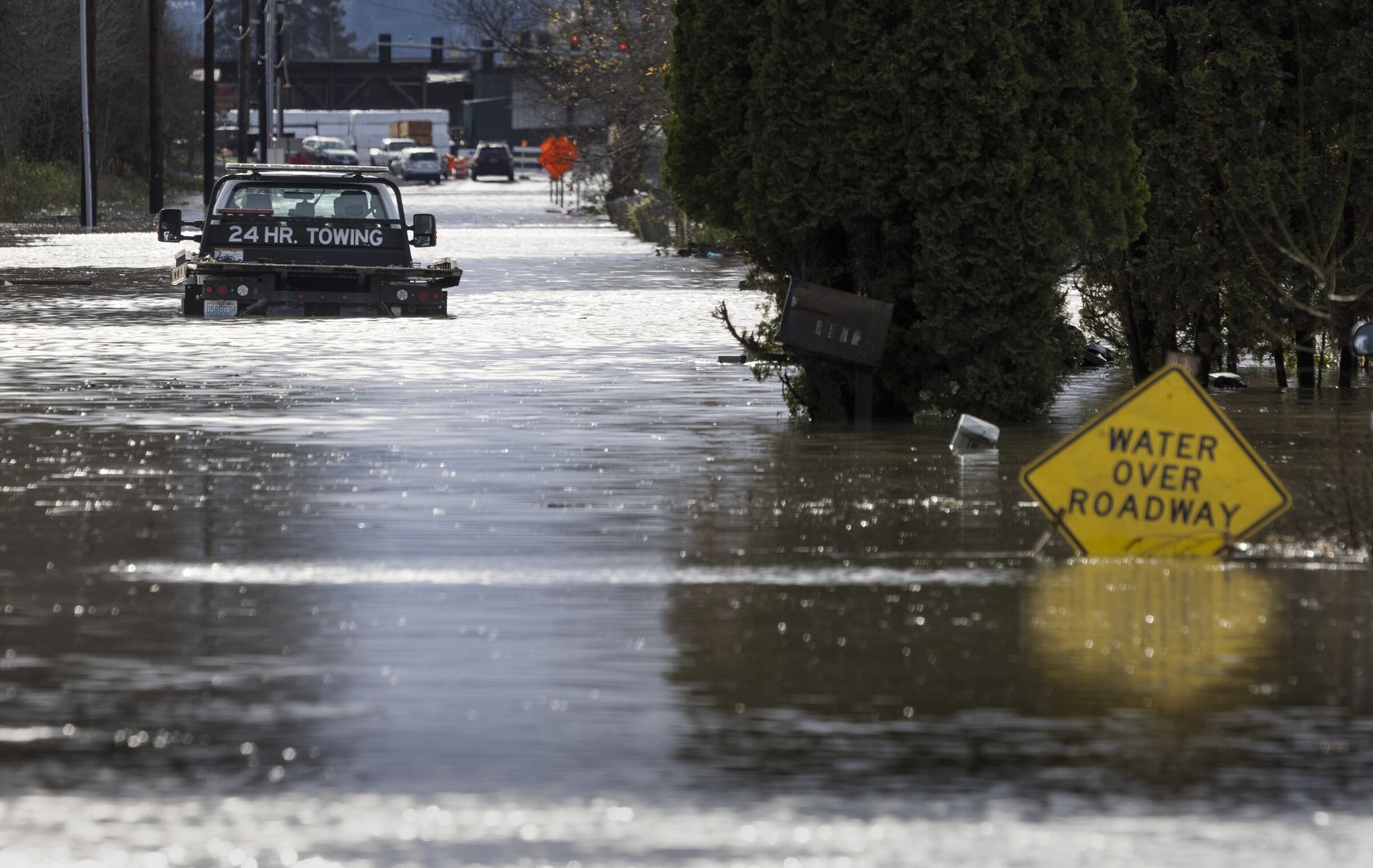
Damage from the record December floods in western Washington is becoming clearer. King County officials, who coordinate water resources and flood protection for 39 cities including Seattle, estimate total losses could reach into the billions. At a meeting with U.S. Senator Patty Murray, local mayors and officials reviewed the disaster and discussed ways to prevent similar events in the future.
The financial picture is alarming. County infrastructure damage alone is estimated at $53 million, and the total including private property will be far higher. Yet the county and state have only about $4 million available for recovery work, prompting officials to actively seek federal financial assistance and to work with agencies such as the U.S. Army Corps of Engineers.
The most severe damage came from two failures of protective structures. On Dec. 17, an earthen levee on the Green River in Tukwila breached, sending water into an industrial area. That low-lying floodplain area, historically prone to flooding, is a critical logistics and distribution hub for the entire Pacific Northwest, with Amazon, Boeing and many other businesses that provide tens of thousands of jobs. The next morning, temporary barriers failed in the city of Pacific, and the White River — one of several major rivers in the county posing threats alongside the Snohomish, Skagit and others — flooded neighborhoods, forcing the urgent evacuation of hundreds of people.
About 220 homes were damaged in Pacific, and many residents still cannot return to their flooded houses. Aid to those affected has been uneven, and some residents are even considering lawsuits against city, county or federal authorities for negligence. Pacific Mayor Vic Keve bluntly said the barrier failures in his city were "entirely preventable." The temporary structures installed in 2009 as an emergency measure after the threat of failure at the Howard Hanson Dam have long exceeded their intended lifespan. Their replacement with permanent systems has been delayed for more than a decade due to bureaucratic hurdles, difficulty coordinating funding across levels of government, and lengthy environmental review and design processes.
Despite the scale of the disaster, emergency response actions had positive aspects. Rescue teams reacted quickly to both breaches, immediately initiating evacuations and mitigation work. Their coordinated efforts, witnesses say, helped prevent even greater loss of life.
Critics, however, point out the disaster could have been avoided. Problems with the Tukwila levee and the temporary barriers in Pacific were well known to local and county officials for years, yet necessary repairs and replacements were not carried out. Individual cities, meanwhile, bear primary responsibility for local drainage systems and response measures.
Evacuation organization was another issue. An initial evacuation warning for 46,000 people in the Tukwila-Kent area — later narrowed — caused widespread panic. Kent Mayor Dana Ralph noted that this psychological shock and uncertainty could drive businesses away from the region for a long time.
Officials acknowledge there are no simple solutions. Beyond repairing existing levees, more comprehensive measures are needed: removing sediment from rivers and restoring natural floodplains to relieve water pressure. Restoring natural floodplains — which are salmon habitat and a vital part of Western Washington’s ecosystem — is extremely difficult. Many have already been developed or are used for agriculture, requiring huge costs to buy out land, relocate infrastructure and overcome resistance from landowners. Projects like these, and overall river threat management that includes levee systems and development regulation, face serious economic and logistical challenges.
In the end, county leaders agree that without large-scale, well-funded and carefully planned action, the risk of destructive floods in the future will remain very high. The road to recovery ahead will be long and difficult.