
The long-awaited direct rail connection across Lake Washington between Seattle and its eastern suburbs, such as Bellevue, will begin service March 28. The new line is intended to close a historic transportation gap created by geographic isolation and increasing bridge congestion. Bellevue, grown as a tech suburb with Microsoft offices, has long depended on buses stuck in traffic. Rapid population and job growth has increased the need for reliable, fast, and environmentally friendly transit to reduce congestion and emissions. The new line will give regional residents quick, traffic-free trips to work, school, sporting events, and the airport, fundamentally changing the transportation picture.
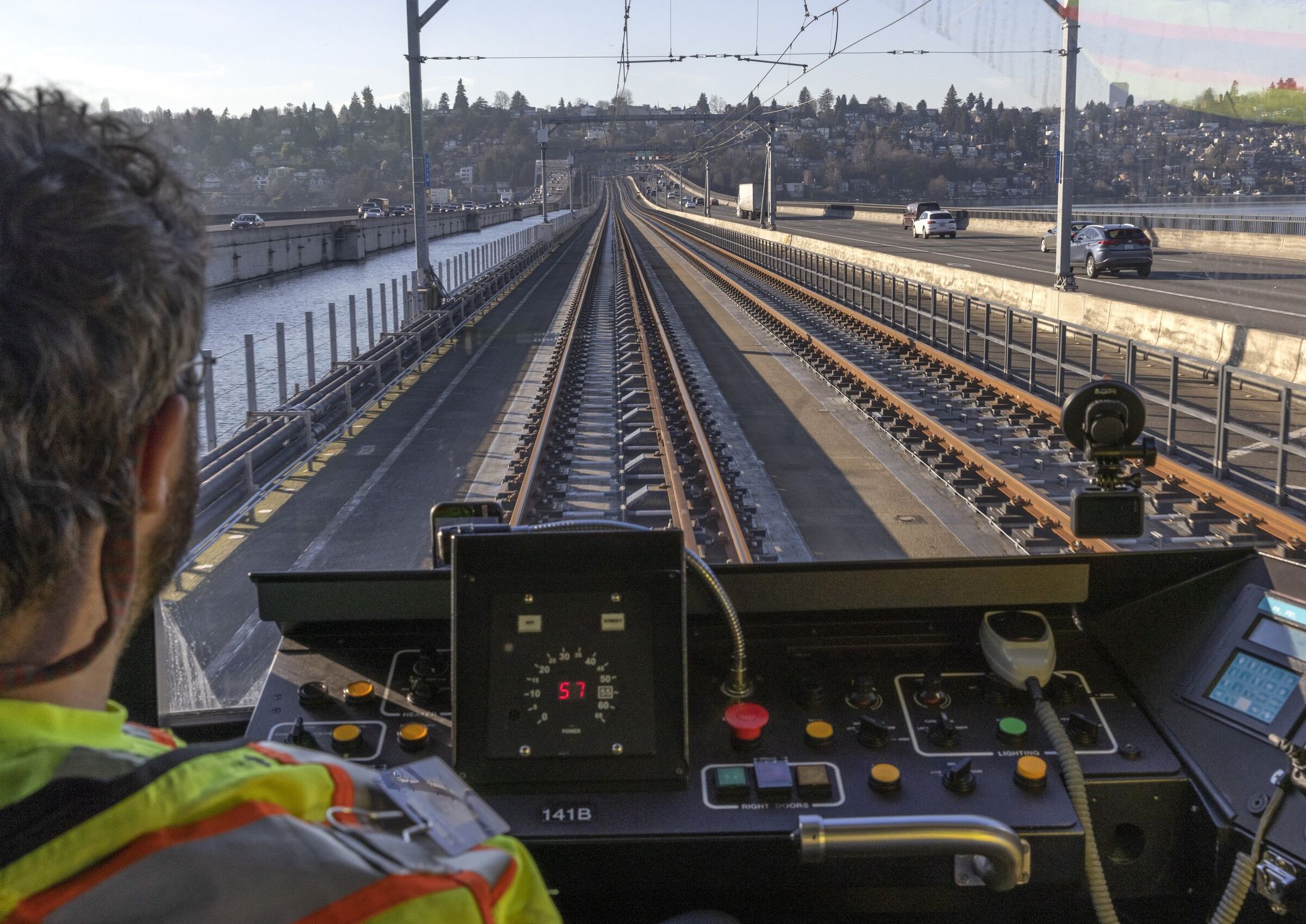
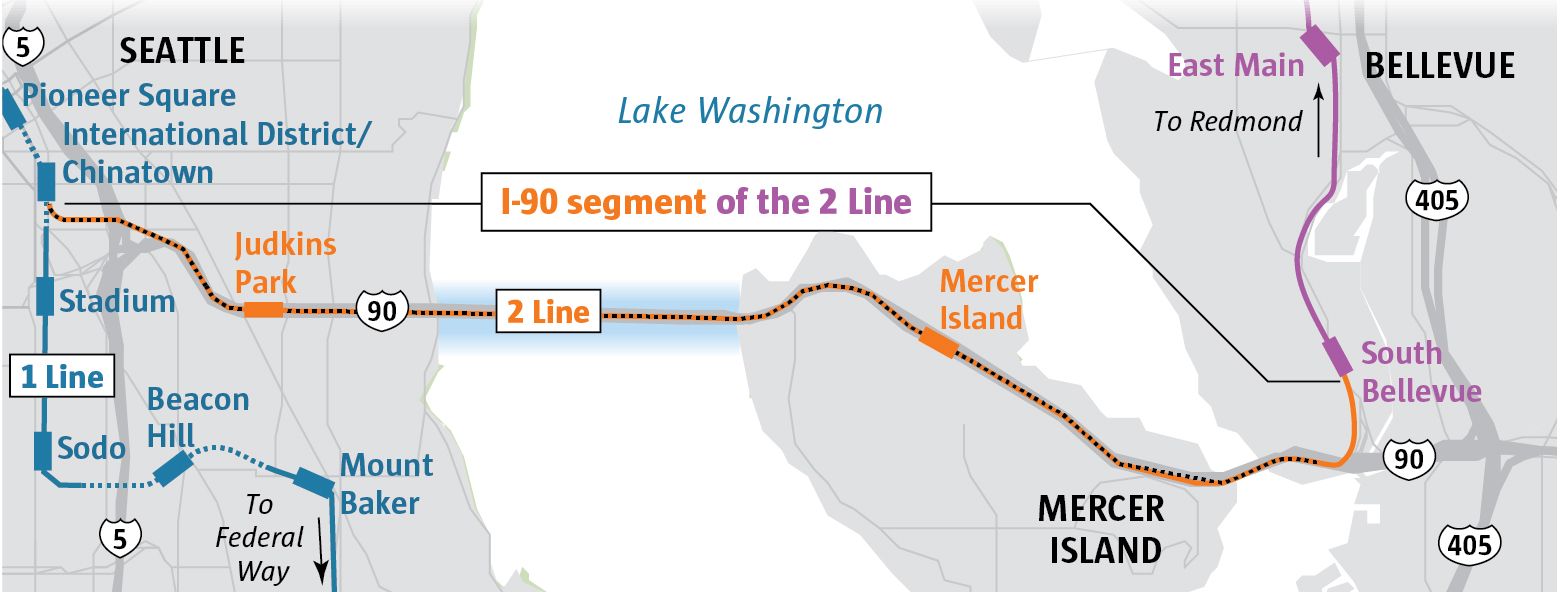
The new 12-kilometer segment will connect South Bellevue station with Seattle’s key transportation and cultural hub — the International District/Chinatown, the historic core of Asian and Pacific Islander communities. With intermediate stops on Mercer Island and at Judkins Park, the trip will take about 13 minutes because the line is routed along former express lanes of I-90. It will be the first passenger train in the world to run regularly on a floating bridge.
The line, called the 2 Line, will turn north in downtown Seattle and join the tracks of the existing 1 Line that runs to the University of Washington. That will allow train frequencies in that area to increase to every 4–5 minutes and double passenger capacity. The new branch will also expand access to 11 stations opened in Bellevue and Redmond in 2024–2025, including downtown Bellevue, the Microsoft campus, and downtown Redmond.
The project was approved by voters back in 2008, and the regional transit agency Sound Transit, responsible for developing public transportation in central Washington, initially planned to launch it by 2020. A six-year delay, however, arose from disputes over route planning in Bellevue, the need to replace thousands of defective concrete ties, and the kinds of complications typical of large infrastructure projects. Such initiatives often face delays because of coordination among many jurisdictions, strict environmental requirements, rising costs, unforeseen technical problems, and bureaucratic processes. Despite innovative designs to absorb bridge movement and train vibrations, these issues pushed back the delivery schedule.
The line’s launch is timed just ahead of the influx of visitors for the FIFA World Cup in early June and is expected to help relieve overloaded highways. At the same time, Sound Transit continues to grapple with disruptions on existing lines, although project leaders say enhanced reliability measures are in place on the new branch, including backup substations and bypass tracks.
The new line marks a historic step in the region’s public transit development. It will not only provide a signal-free crossing of the lake but also create unprecedented connections between key economic and cultural centers. For Asian and Pacific Islander communities on both sides of the water, it could bring benefits in improved access and economic activity as well as risks related to gentrification, rising rents, and added development pressure on vulnerable populations.
Based on: When will light rail service start between Bellevue and Seattle?