
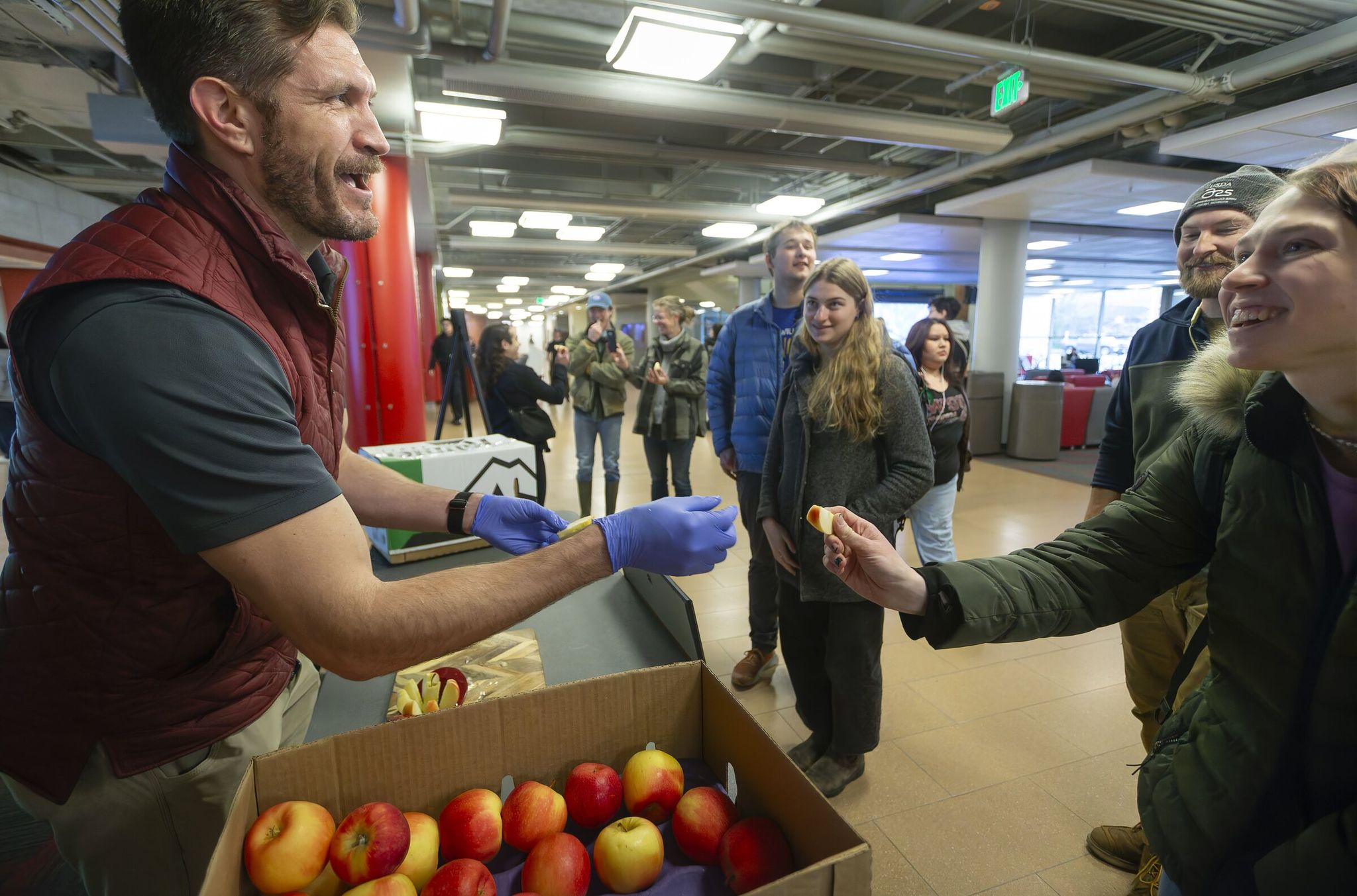
At Washington State University (WSU), the state land-grant research university whose mission includes advancing the state's agriculture, a landmark tasting was held for a new apple variety named Sunflare. The event capped nearly 30 years of breeding work by the university, which conducts long-term projects often too risky or unprofitable for private companies. Staff and students lined up to be among the first to try the hybrid—bred from the popular Cripps Pink and Honeycrisp varieties—marking an important step toward bringing the apple to consumers.
The new variety is described as crisp, juicy and firm, with flesh showing pink, orange and yellow hues. According to university representative Jeremy Tamsen, Sunflare has a balanced sweet-tart flavor that is milder and more refined than WSU’s previous development, the Cosmic Crisp. Sunflare is intended to be marketed not as a mass product but as a special, “boutique” variety, offering growers a new niche crop for their orchards.
But consumers will need to be patient: Sunflare apples are not expected on store shelves until 2030, after the first commercial harvest in 2029. Young trees already planted in Washington need time to mature and produce sufficient yields. The variety is attractive to growers because of its early ripening, disease resistance and good storability. Initially, like Cosmic Crisp, it will be grown exclusively in Washington. That exclusivity allows control over quality, supply and marketing, supporting higher prices. The state is the “apple capital” of the U.S., accounting for more than 60% of production, thanks to its unique geography: a dry climate east of the Cascade Range, extensive irrigation systems fed by the Columbia River, rich volcanic soils and an ideal combination of warm days and cool nights for apple maturation.
Sales of nursery stock, budwood, and eventually the apples themselves will generate royalties for the university. Those funds, WSU’s press release notes, will support scientific research and finance the development of future fruit varieties, returning income to research in a public-benefit model common across many U.S. states. Thus the success of Sunflare will directly affect the university’s breeding programs.
The first consumers—students on WSU’s Pullman campus—gave the newcomer enthusiastic reviews. Tasting participants noted a pleasant, gentle sweetness and an interesting texture. One student, who works in horticultural tourism and has tried dozens of varieties, said Sunflare might have become his new number-one favorite. That enthusiasm suggests the variety has strong potential.
Based on: WSU’s new Sunflare apple variety gets its first taste