A dense informational cloud is gathering again around the United States: a shift and radicalization of the Donald Trump administration’s course, an updated US National Security Strategy, an attempt to redraw the alliance system and pressure along trade and technology lines — all this is provoking a chain reaction of commentary in Moscow, Beijing and New Delhi. Viewed solely from Washington, it might seem that the world is either obediently adapting or silently irritated. Local discussions within Russia, China and India paint a much more complex picture: from anxious analysis of military scenarios to pragmatic bargaining with Washington and attempts to use the American course as an argument in their own geopolitical games.
On the surface it seems that the focus everywhere is the same: “Trumpism” as the style and substance of foreign policy, the new national security document, American pressure on rivals and partners, and the role of the US in the Ukrainian conflict and the global economy. But if one delves into national media and expert debates, it becomes clear: Russia sees the American strategy as an attempt to shift the burden of containment onto allies and to prepare for a long confrontation; China — as an acceleration of technological and military pressure from Washington and a need for internal mobilization; and India — simultaneously as a threat of US protectionism and an opportunity to maneuver between Washington, Moscow and Brussels.
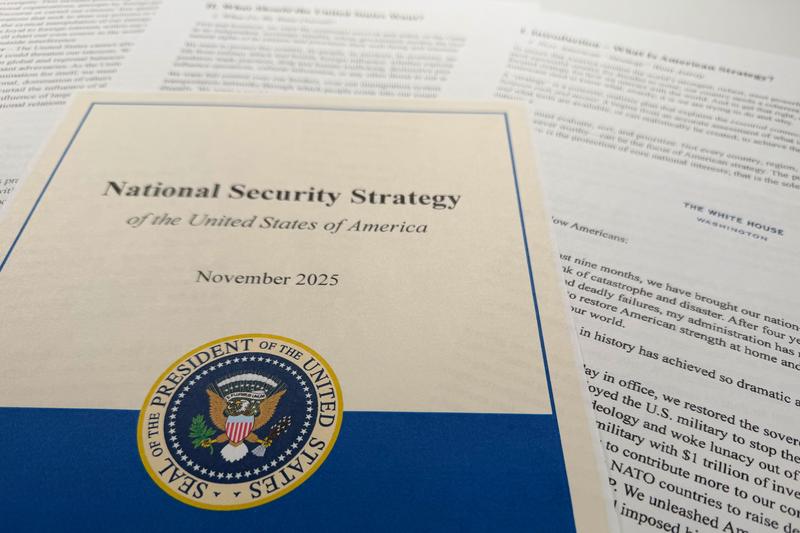
One of the key nerves of the current discussion is the new US National Security Strategy and the broader “transition” in Washington’s foreign policy. In Moscow it is dissected literally paragraph by paragraph. Foreign Ministry spokeswoman Maria Zakharova noted back in December that the document shows a “serious rethinking of US foreign policy,” but this rethinking, in the Russian view, is not toward de‑escalation but toward a tougher ideological and forceful confrontation with the “main adversaries” — Russia and China. Russian outlets emphasize that in the new American strategy Russia and China are recorded as key challenges, and the whole architecture of alliances and sanction pressure is built around this. The harshest formulations come from experts close to the security circles: in a programmatic article for EADaily, analysts describe Washington’s course as an attempt to “shift responsibility for confronting Russia onto NATO allies so that it can focus on the main adversary — the PRC,” as well as an effort to rapidly expand the US military‑industrial base and create new elements of missile defense, including the “Golden Dome” project in conjunction with strengthened control over Greenland. The same publication stresses that Washington is simultaneously increasing pressure on Canada, forcing it to limit ties with China, and uses provocative statements — from Trump’s joking hints about a possible “annexation of Canada by the US” to stoking separatism in oil‑rich Alberta — as instruments of psychological pressure and bargaining. This image of Washington — as a power combining ideology, military might and cynical exploitation of partners’ weaknesses — fits well with the Russian elite’s conception of US‑led “managed chaos” and reinforces the argument for the need for prolonged strategic endurance and nuclear deterrence.
At the same time, Russian expert institutions are conducting a cooler, academic analysis of “Trumpism” as a style. In the annual forecast “Russia and the World: 2026,” the Institute of World Economy and International Relations of the Russian Academy of Sciences describes the Trump administration’s foreign policy as a combination of “economic pragmatism” and a priority on national security, where “ultimatums and threats” remain the main tactical instrument. Researchers emphasize that this is not simply the emotional style of a president but a deliberate choice: to demonstrate toughness abroad in order to convert it into “foreign policy victories” for the domestic audience. In the Russian discourse this is perceived ambivalently: on the one hand, as a risk of escalation and unpredictability, and on the other — as a factor that can be used, understanding that Trump seeks symbolic successes above all and may pursue flexible deals if they allow him to claim victory. At the same time, these same analysts warn against overestimating the “decline” of American power: the trend of weakening US hegemony, in their view, is real, but Trump’s attempts to “stop this process” could produce the opposite result — strengthening resistance both within the US and among its allies, which is already manifesting in growing European nervousness.
Against this backdrop another major storyline is discussed — how Washington is restructuring military and political priorities, betting on China as the “primary adversary,” and what that means for Russia and India. Russian analysts note that by relegating Europe to a second echelon and pushing Europeans to independently raise their military budgets, the US is not reducing but merely reconfiguring its presence: Europe, in the words of one Russian author, is “more hostile to Russia than ever,” and therefore even a partial “US retreat to a secondary line” does not remove the threat of NATO–Russia confrontation. IMEMO’s forecast on Ukrainian conflict scenarios for 2026 emphasizes that Washington remains the key coordinator of the West’s politico‑military efforts, even if some tactical decisions are transferred to European capitals: in Russia this is perceived as a continuation of the American policy of “fighting to the last ally.”
In India the same processes are discussed in different terms, but they essentially describe the same restructuring of the global architecture around the American focus on China. Indian media actively debate both the new US strategy and Washington’s trade‑economic line, primarily through the prism of a future bilateral free trade agreement and a broader reformatting of globalization. India’s 2025–26 economic review, widely cited in Indian business press, directly states that New Delhi expects to finalize trade agreement negotiations with the US during this year; this is presented as a way to “reduce external uncertainty” and strengthen economic ties. At the same time analysts emphasize that Washington under Trump remains a stern protectionist, not hesitating to use tariffs even against close partners. Against this background the Indian elite is increasingly seeking alternative supports: as noted by a political commentator in Le Monde in an article about EU‑India rapprochement, for New Delhi signing major agreements with Europe is not only access to markets and armaments, but a signal to the world of the existence of an “alternative to American dominance” and that India can act as an autonomous pole. Notably, in this logic Europeans and Indians themselves use the US as a negative or at least contrasting example: Trump with his tariffs and threats allows Delhi and Brussels to justify the need for “diversification” of partners, even without directly breaking with Washington.
The Indian debate about the US in recent weeks is built on a dual sentiment: on one hand, the American congratulation on the 77th Republic Day of India and the traditional formulas about the “historic link between the oldest and the largest democracies” emphasize that official Washington does not want to destroy the image of a strategic partnership; on the other — the Indian press constantly reminds that behind the ceremonial gestures lie protracted frictions over visas, steel tariffs, access to IT service markets and pressure in the area of defense procurement. Analytical columns often carry the theme that Trump and his circle see India primarily as a tool to contain China and a lucrative market, not as a full partner, so New Delhi should use the window of opportunity pragmatically rather than rely on “romantic” notions of a democratic alliance. Here the Indian view unexpectedly converges with the Russian and even partially with the Chinese: in all three cases the US is described as a power acting from strictly self‑interests, ready at any moment to adjust course if domestic political calculations demand it.
The Chinese conversation about the US in recent days is less emotional and much more technocratic, but its nerve is different — it is a technological and financial war. In morning financial digests of major portals like Sina, the American factor appears indirectly: through discussion of sharp swings in the crypto market, re‑evaluation of dollar liquidity risks, plans of major companies, including Tesla, to invest tens of billions of dollars in new AI projects against the backdrop of tightening regulation and trade restrictions. For Chinese analysts this is part of a broader picture: the US, in their view, seeks to maintain leadership in critical technologies by combining massive private investments and state support with export and sanction pressure on China. Within China this is presented as a stimulus to accelerate “scientific and technological self‑sufficiency” and simultaneously as proof that Washington sees Beijing not as a partner but as a structural rival that must be contained across the board — from semiconductors to financial flows.
A notable feature of the Chinese discussion is the almost complete absence of a personalized focus on Trump. Unlike in Russia, where the image of a specific American leader plays a large role, Chinese commentators try to speak of the “US as a whole” as a system. In official and semi‑official discourse it is emphasized that changes of administrations in Washington may shift emphases but not the strategic line of containing China. That is why Chinese analysis pays far more attention to institutional documents (the same strategic reviews, the Pentagon’s budget priorities, industrial support laws) than to Trump’s public outbursts. The American course is seen as a long trend that requires a symmetric long‑term response: strengthening regional initiatives (from SCO to BRICS+), developing alternative payment systems and enhancing the resilience of the domestic market. Unlike the Russian discourse, which often contains the thesis of “US decline,” Chinese economists are more cautious: they acknowledge the US’s technological and financial superiority and talk rather about a gradual redistribution of power than about the imminent collapse of the hegemon.
At the intersection of all these conversations another important storyline emerges — Europe’s place between the US, China and India, and how Washington’s actions inadvertently push allies toward greater autonomy. The already mentioned debate around strengthening ties between the EU and India is especially indicative here. In European and Indian press this is directly interpreted as a demonstration to the world that “alternatives to the US exist”: high‑level visits, discussions of defense contracts, promotion of a free trade agreement, albeit with serious exceptions like agriculture. At the same time writers do not hide the fact that both Europe and India face criticism for excessive pragmatism: Paris and Brussels are reminded of proclaimed “values” when they strike deals with New Delhi amid reports of pressure on minorities, and India — of its unwillingness to break with Russia despite Western sanctions. In this triangular game the US appears both as an irritant and a necessary comparison: against the backdrop of Washington’s protectionism and unpredictability, any durable agreement with a “third power” is presented as a step toward a “sovereign Europe” or a “self‑reliant India.”
Interestingly, in Russia itself this Europe‑India maneuver is closely watched and usually interpreted not as India’s final break with the US but as New Delhi’s attempt to expand its maneuvering space. Russian experts remind that India remains the world’s largest arms importer and historically relied on Soviet and Russian supplies, so its current rapprochement with the EU and largely with the US is primarily utilitarian. This perspective allows Moscow to speak of “polycentricity” and a “weakening of American hegemony,” even if in practice many of Delhi’s steps objectively strengthen India’s ties with the Western bloc.
The result is a strikingly layered international portrait of the US. For the Russian audience Washington today is primarily an ideological and military adversary whose strategy requires Russia to strengthen nuclear deterrence, domestic resilience and integration with nearby allies like Belarus. For the Chinese audience it is a systemic rival in the techno‑economic sphere, forcing an acceleration of its own scientific and technological base and a reorientation of global chains. For the Indian audience it is an uneasy but necessary partner whose protectionist and unilateral moves both irritate and open opportunities for bargaining and diversification.
A common theme that unexpectedly unites these different perspectives is the belief that America can no longer, and perhaps no longer wants to be, the “world policeman” in the old sense. Russia, China and India all proceed from the assumption that Washington will increasingly shift the burden of conflict onto allies, act selectively according to domestic political cycles, and use the ideology of democracy as an instrument rather than as an absolute principle. But this realization does not lead to a simple “anti‑American consensus.” On the contrary, each of the three countries tries to incorporate the American transformation into its own strategies: Moscow — as justification for strengthening defense and a course toward a “sovereign civilization,” Beijing — as an incentive for an accelerated technological leap and expansion of its own institutions, New Delhi — as a chance to raise the stakes in bargaining simultaneously with Washington, Brussels and Moscow.
Seen only through the eyes of American or Western European press, much of this remains offstage. But these local conversations — about separatism in Alberta as a tool of pressure, about how Trump’s tariffs push Europe into deals with India, about how Chinese companies are reshaping their investment portfolios because of American crypto and high‑tech policy — show that the world is not merely “reacting” to Washington. It is learning to use a new, tougher and more egocentric America as a resource — sometimes in concert with it, sometimes against it, but almost always without the former reverence for its “leadership.”