A year after Donald Trump's return to the White House, the United States has once again become the main nerve center of world politics. But while debates about Trump inside the US often revolve around domestic scandals, other questions come to the fore across the ocean: America's reliability as an ally, the cost of its tariff war for other economies, and whether the United States remains a democracy at all. In Australia these concerns are voiced through anxiety about security and prosperity; in France — through the language of "imperialism," the "Monroe Doctrine" and a "phantom democracy"; in South Korea — through cold calculation: what will happen to deterring the DPRK and to the balance of power in Asia if Washington retreats into itself.
If we move away from English‑language sources and look at what local media write and what local politicians say, a common picture emerges. For Australia, France and South Korea, the US is ceasing to be an abstract "leader of the free world" and is increasingly perceived as a source of risk that must be insured against and constrained. But the content of these fears differs in each country.
One of the main running themes is Trump's second term and the state of American democracy. In France this topic is discussed almost as a laboratory example of an "authoritarian shift" in the Western system. The journal Le Grand Continent publishes an extended analysis under the striking question: "Les États‑Unis sont‑ils encore une démocratie?" — "Are the United States still a democracy?" The authors systematically describe how the Trump administration is expanding emergency powers: since 20 January 2025 the president has declared ten states of national emergency, far outpacing his predecessors, and uses them not for sanctions but to strengthen his own power. They list cases of the National Guard being deployed in Washington, Memphis and New Orleans, when the federal center effectively replaces local authorities, and courts only partially manage to slow these initiatives. The text explains in detail that, unlike previous emergencies related to foreign‑policy crises, the new "urgencies" serve domestic politics — from migration to tariffs — and blur the separation of powers itself.
French publicists do not shy away from harsh formulations. Former Member of the European Parliament Michel Scarbonchi, in his column for Opinion Internationale, describes Trump as a leader who has "methodically and cruelly deconstructed American democracy," emphasizes a "Congress with trampled powers," a "federal state stripped of prerogatives," "the judiciary at his service, pursuing opponents," and an "anti‑migration police with militia powers." The author compares today's US to an autocracy of a "different era" and concludes that a country long held up as a model of separation of powers is itself exiting that club standard.
These motifs also appear in official political discourse. In transcripts of French parliamentary sessions, Macron‑aligned deputies openly speak of the "deconstruction of democracy," of the Trump administration "attacking the Constitution," and of millions of Americans "seeing their model of democracy fall apart" and being ready to move to Europe. One parliamentarian urges using this moment to attract American scientists and entrepreneurs fleeing the "authoritarian drift" in the US to France, thereby strengthening the European model of liberal democracy and opposing "Trumpism."
In the French media space this is picked up and recast into more vivid formulas. Courrier International announces a special issue titled "Goodbye America," devoted to "political and social upheavals in the US," and relays the idea from The Atlantic that Trump is turning the United States into a "zombie democracy": formally the institutions are still alive, but from within they are already eroded by authoritarian logic.
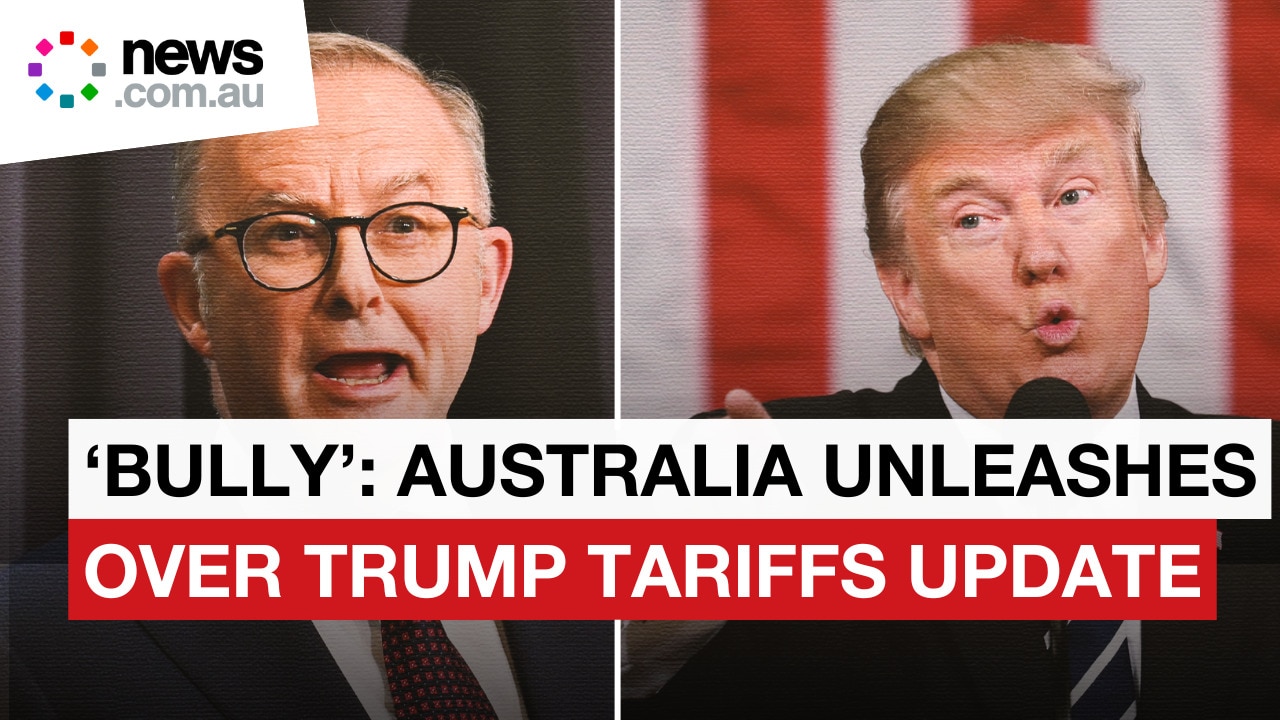
Australian press approaches the question differently: here they do not theorize about a "zombie democracy" at the constitutional level, but think much more about practical consequences for the alliance and the economy. In a major analytical piece in The Guardian Australia it is argued that "Australia's confidence in Trump's America has evaporated": new polls show that the majority of Australians do not trust the US as a reliable and principled ally. Leading foreign‑policy experts such as Michael Fullilove and Bec Streatfeild emphasize the situation's duality: on one hand, Trump undermines the rules and institutions that shaped the postwar order; on the other — in the unstable Indo‑Pacific region Australia still critically depends on the American military "umbrella." That is why the idea of "insuring" against Washington constantly recurs in analysis: strengthening one's own defense capabilities, deepening ties with Asian neighbors, and cautious but continued engagement with the US.
Interestingly, in France Trump appears more as a threat to the European order and international law, whereas in Australia he is viewed as a factor of strategic uncertainty. There is less rhetoric about the "collapse of democracy" and more pragmatic questioning: if America has become unpredictable, what should we do? This difference is also apparent in reactions to Washington's foreign policy.
French media and politicians see Trump's new foreign doctrine as a revival of old "resource imperialism" and Monroe‑style backyard logic. Mediapart, in its dossier "Trump II, l’heure du chaos mondial," writes about how the US president in December presented a new national security strategy, explicitly stating an intention to "return to the Monroe Doctrine" and reassert US guardianship over Latin America. On 3 January 2026 this already turned into a strike on Venezuela and the kidnapping of Nicolás Maduro. For French commentators the importance is not only the fate of Caracas but the principle: Washington is conspicuously acting outside international law, undermining the multilateral order that France traditionally defends.
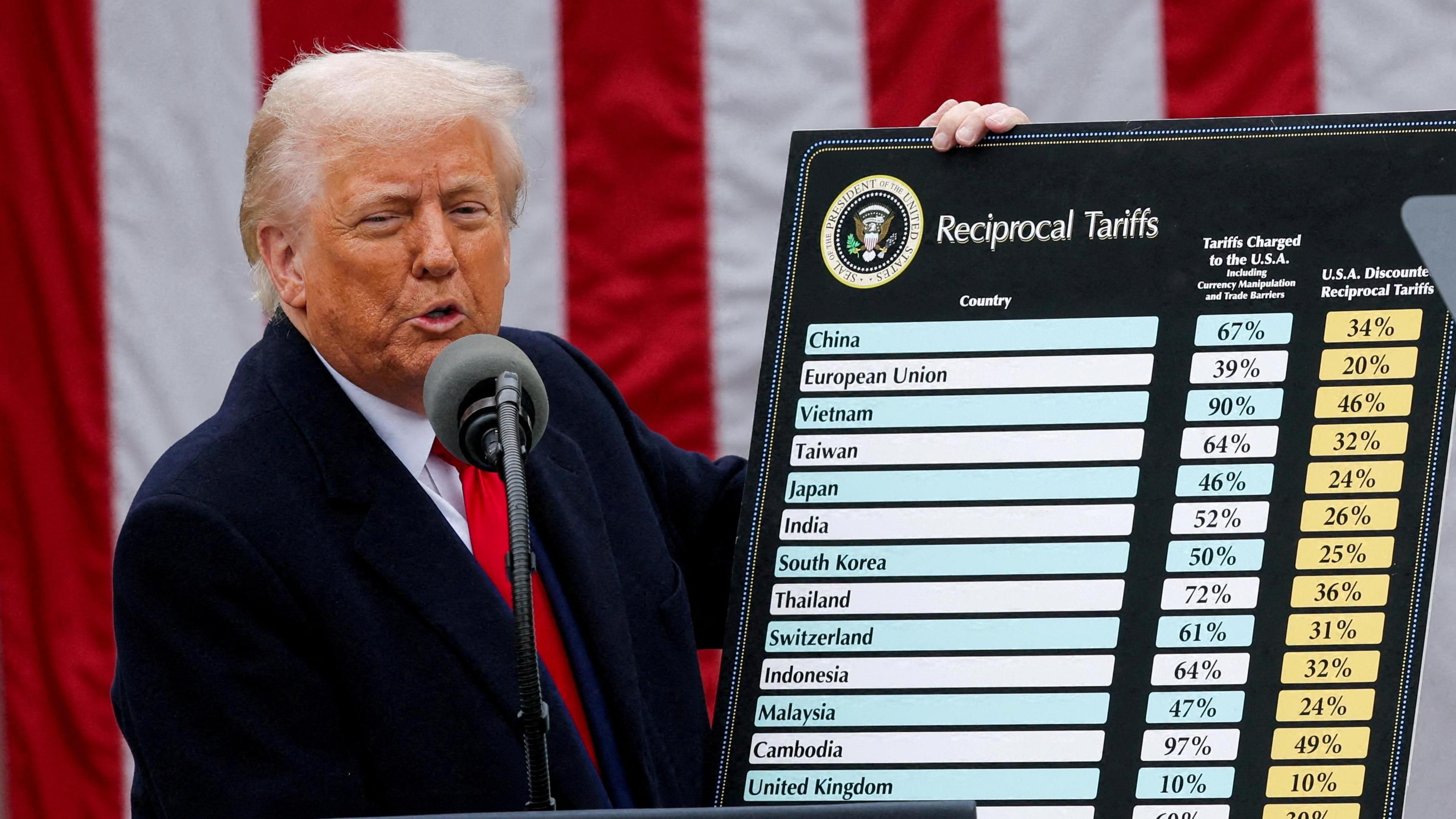
This line flows directly into discussion of transatlantic relations. In the National Assembly deputies talk about "Washington's imperialism" in Latin America and simultaneously about "tariff blackmail" directed at Europe. One speaker notes that the US "directly threatens Europe's territorial sovereignty and uses tariffs as a tool of pressure," and for this reason, he says, "there is no longer talk of ratifying" the trade agreement with Washington prepared by Brussels. France, in this context, positions itself as a locomotive for a tough response: Paris supports suspending the trade deal with the US in the European Parliament and declares it will not yield to "tariff blackmail, whatever its source."
Against this backdrop French think tanks, such as the economic research unit of BNP Paribas, try to soberly assess the cost of Trump's tariff offensive. Their reports speak of "negative political shifts for the American economy" and a renewed threat of stagflation: they estimate that a sharp rise in the average weighted tariff from roughly 2–3% to about 15–16% on imports is already pushing inflation above 3% year‑on‑year by mid‑2026, and slowing growth and falling investment make recession a quite realistic scenario. Economists note a paradox: while Trump brags about having "solved" inflation, European analysts warn that his tariff and migration policies are accelerating prices and breaking the old model of globalization.
Australian media view the same tariffs through a different prism: for them America's trade war is a blow to their own standard of living. News portals quote IMF warnings that Trump's high tariff wall — on average around 18.5% — amplifies global inflationary pressure and will hold back growth for years. One Australian article stresses: even if domestic inflation has already slipped to 3.4%, the main burden for Australia lies ahead — through trade channels and commodity prices. The piece cites estimates that medium‑term economic growth in the country will be just above 2% per year, and the Reserve Bank will find itself squeezed between the need to contain inflation and the risk of choking off weak demand.
Economists and market analysts in Australia directly link upside risks for local interest rates to "Trumpflation." Commentaries from AMP and other investment houses say that the combination of US tax cuts, protectionism, migration restrictions and attacks on Fed independence creates sustained pressure on bond yields and global rates. As AMP strategist Shane Oliver explains, US inflation driven by tariffs could trigger a "global rollback" to higher rates, including tightening by the RBA — something Australian households with large mortgages fear in particular.
Here the interests of Paris and Canberra unexpectedly intersect. Both French and Australian experts see Trump's tariff war as a factor of global stagflation, but they emphasize different aspects. For France the political aspect is more important — transforming tariffs into a weapon to pressure allies, "blackmailing" Europe and attempting to rewrite multilateral trade rules under slogans of sovereignty. For Australia, far more dependent on Asian markets and the US dollar, Trump's tariffs are first and foremost a risk of a new round of cost‑of‑living crisis and a prolonged period of "inflation pain" for the average household.
A separate theme where reactions from Australia, France and South Korea converge is whether the US can be relied upon as a military and political ally when Trumpism reigns in Washington. Australian polls reported by ABC and other local media record a sharp shift in public opinion: about two‑thirds of Australians believe the US can no longer be considered a reliable military ally, and a substantial portion favor developing a "more independent" defense capability. Experts nevertheless remind readers that they still consider America "the most important country" for Australia's foreign policy and the second most significant trade partner. This cognitive dissonance — dependence on a power you do not trust — runs like a red thread through Australian debate.
This dissatisfaction extends well beyond the elites. Young Australians, whose voices are increasingly heard in polls and reports, call the US a "political circus," point to "old leaders" and the inability of the two‑party system to meet young people's demands. In street interviews teenagers and students express fears that the cultural and political agenda of Trumpist America — from a "hard right turn" to weakening climate policy and re‑heroizing guns — could spill over into Australia, pushing local parties to mimic it. At a mundane level this results in simple formulas: "we don't want to copy America on guns" and "we must keep our politicians away from American polarization."
French politics, by contrast, is built around the idea of Europe's necessary "emancipation" from strategic dependence on the US. In parliamentary debates deputies say directly that the United States "no longer considers us allies," that Washington is deliberately trying to "divide" Europe and weaken its unity, and that the new administration in the White House is abandoning the postwar role of guarantor of pan‑European security. Against this background French authorities call for strengthening European defense autonomy and support a hard line in the EU: suspension of trade agreements, preparation of countermeasures to possible tariff attacks, and development of independent financial and technological instruments.
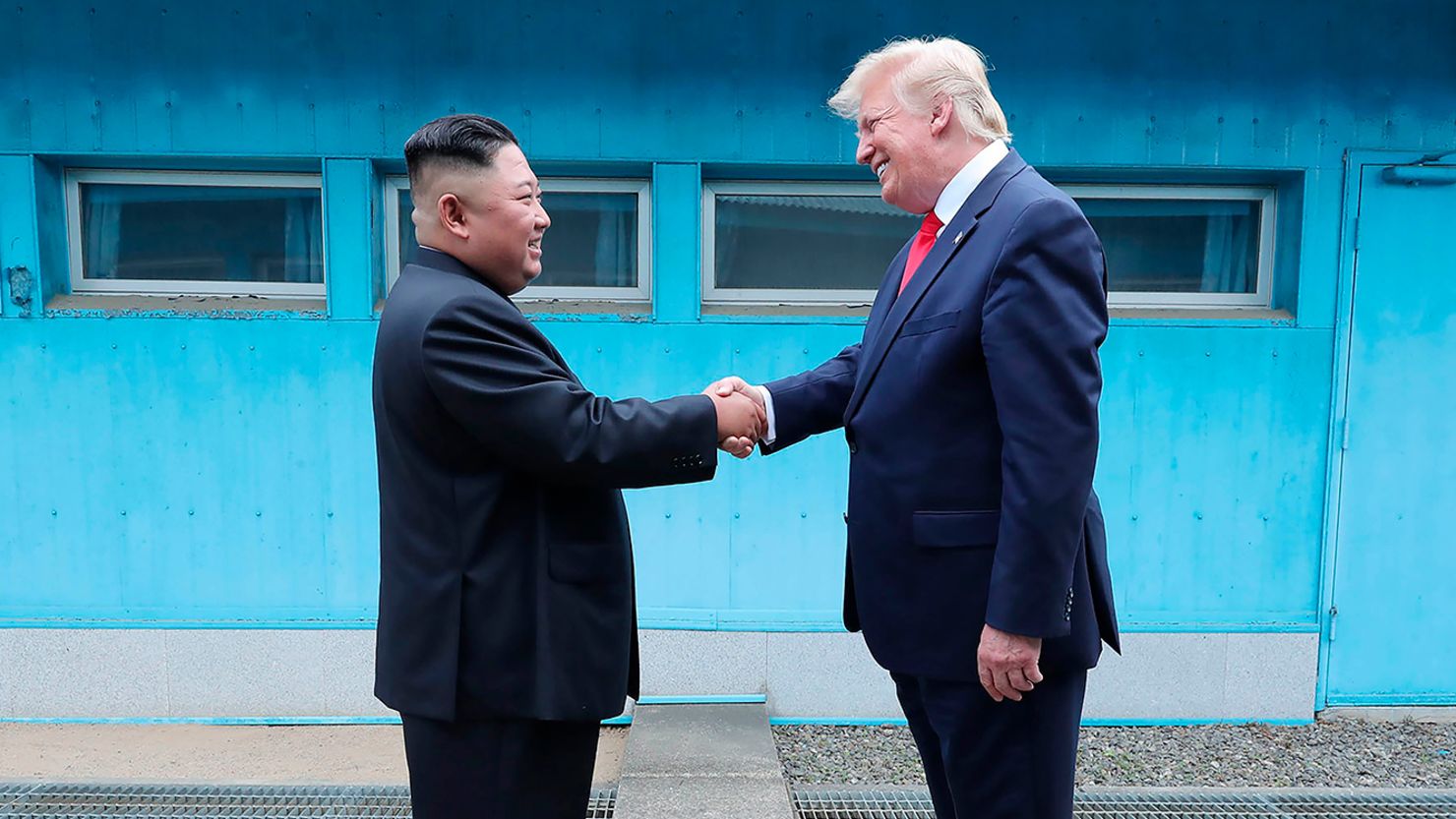
The South Korean discussion is less publicly emotional but deeply anxious. Leading Seoul newspapers and expert circles have for the third year in a row been debating whether Trumpism means a gradual US retreat from security guarantees in Asia. Tokyo and Seoul were already shocked when Trump in prior presidential campaigns called allies "freeloaders" and entertained the conditional possibility of removing the American nuclear umbrella. Now, in his second administration, Korean analysts again ask: if Washington pursues an "America First" strategy and tries to reduce its military presence on the peninsula, is South Korea ready to deter the DPRK and growing Chinese pressure on its own?
Korean commentators, unlike the French, talk less about the "death of democracy" in the US but actively emphasize the unpredictability of American foreign policy. Articles on North Korea's nuclear program and US‑China rivalry quietly but insistently repeat the thought: one should not build the entire architecture of national security on the assumption that Washington will always have rational and predictable leaders. Ideas under discussion include strengthening their own missile and air‑defense systems, expanding cooperation with Japan, and cautiously maneuvering between the US and China so as not to become hostage to someone else's tariff and military wars.
Against all this the image of America as a cultural and political model acquires special significance. And here too a shift is noticeable. If ten to fifteen years ago in France, Australia and South Korea the US was often associated with innovation, freedom and social mobility, local texts increasingly express a sense of "fatigue" with the American example. Australian teenagers tell ABC journalists that "the picture of America as a country where dreams come true is dying" amid economic crises and political chaos. French authors write that the US can no longer claim to be an exporter of democracy if a "cult of personality" branded Trump — appearing on everything from residence cards to children's savings accounts — is unfolding at home.
Paradoxically, this decline in admiration for America is accompanied by growing interest in what comes next. In Australia this turns into the question: how far can we "disconnect" from the US without destroying our economic and defense foundations? In France — into reflections on whether Europe, especially after the war in Ukraine and the Venezuelan crisis, can become an independent pole not reliant on the US. In South Korea — into the search for a balance that preserves the alliance with Washington while ensuring critical supply chains and security are not held hostage to someone else's next campaign rhetoric.
The common conclusion for the three countries is one: America is no longer perceived as a "given." Its internal crises and external unpredictability have become a factor that must be constantly taken into account, rethought and, as far as possible, insured against. Australia is doing this through a cautious reassessment of the alliance and a painful domestic debate about the tariff war and the cost of living. France — through a hard political and intellectual diagnosis of an "imperial zombie democracy" and demands for European strategic autonomy. South Korea — through technocratic strengthening of defense and cautious diversification of foreign‑policy supports.
From the Americans' point of view this may all seem like excessive dramatization: after all, institutions still function, the opposition exists, and no one has officially cancelled elections. But if one listens carefully to Australian, French and Korean voices, it becomes clear: even if American democracy is not dead, for many outside the US it has already ceased to be the idealized model that could be taken on faith. Now it is seen as a country whose decisions — from tariffs to expeditionary operations — can at any moment change the economic and political weather in the world. And this realization is now pushing allies to finally build their own, if more modest, resilience systems — not around America, but alongside it.