Abroad today, the United States is spoken of not only as a superpower but as a source of instability — a partner it is at once impossible and dangerous to sever ties with. In Donald Trump’s second term three narratives particularly stir public opinion across various parts of the globe: a radical Washington turn toward tariff protectionism, the dismantling of the postwar order through forceful actions such as in Venezuela and the scramble for Greenland, and the reconfiguration of military alliances — from nuclear submarines in Seoul to a nervous reassessment of the alliance in Canberra. Against this backdrop everyday attitudes toward America are shifting: from falling tourist interest in France to doubts about shared values in Australia.
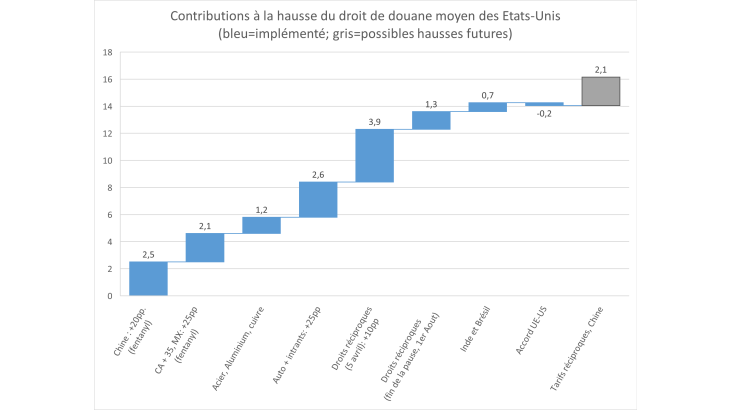
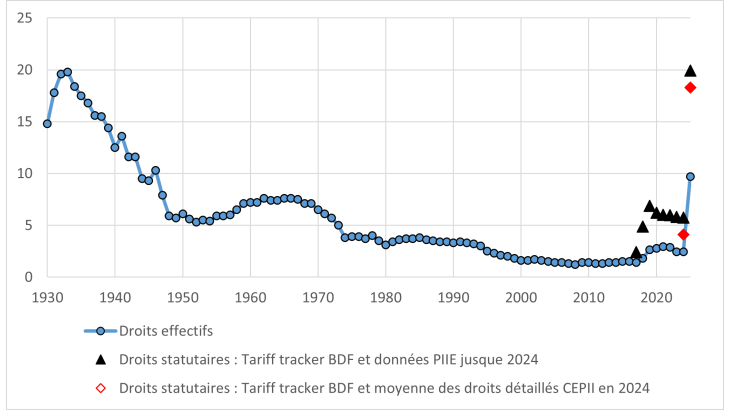
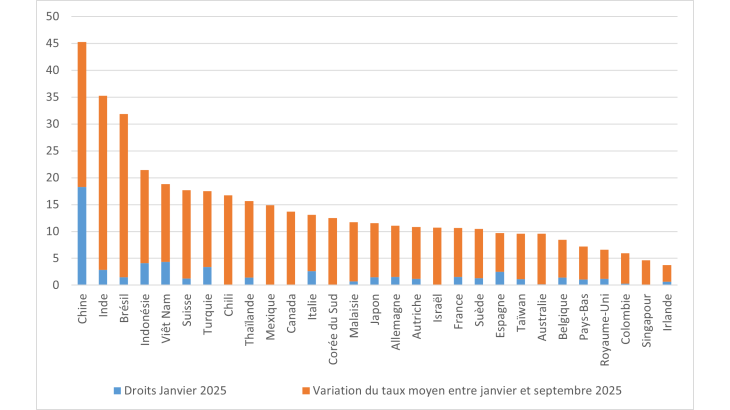
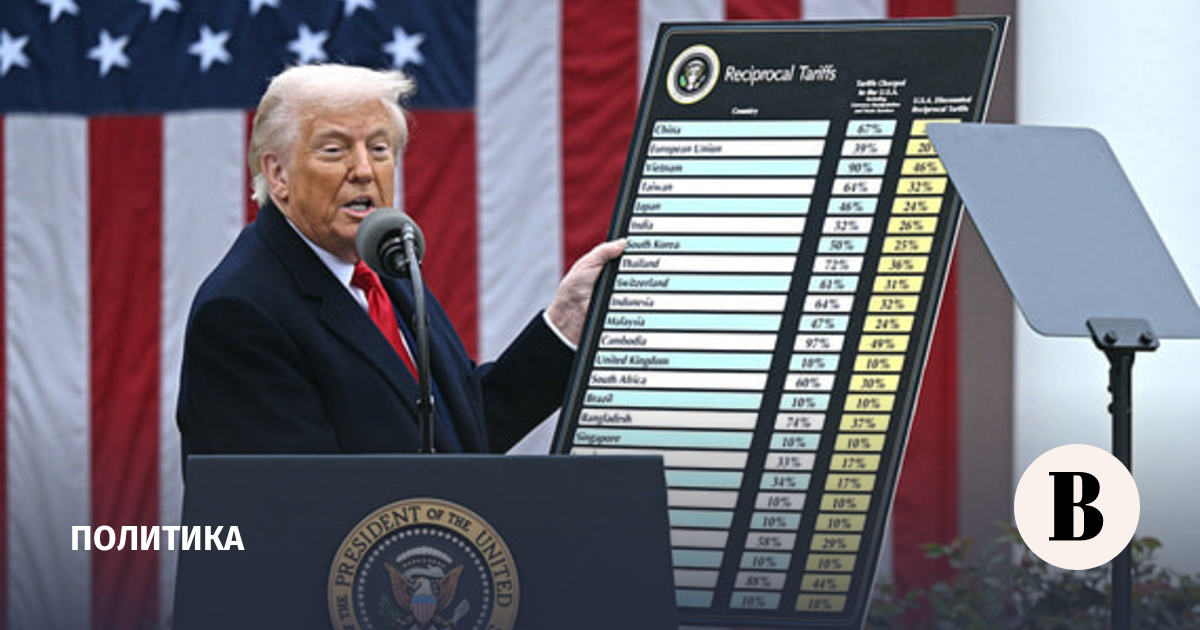
The first major strand of debate in all three countries is U.S. economic nationalism. French economists are now parsing not so much Trump’s political rhetoric as the dry numbers of his customs revolution. A Banque de France blog records that the U.S. average weighted tariff rate rose by roughly 14 percentage points between January and September 2025 to 18–20% — a level comparable, in their view, to the Smoot–Hawley tariffs of the 1930s — and that imports from France would see duties rise from 1.5% to around 11% if bilateral arrangements were fully applied. The authors explicitly call this a “historic strengthening of protectionism” and situate it on a trajectory of returning to trade barriers that began in Trump’s first term and was continued in different form under Biden. (banque-france.fr)
But unlike in past years, Europe no longer treats the surge in American protectionism as a temporary spike. The analytical journal Le Grand Continent warned that “Liberation Day” — as Trump dubbed his large tariff package — is already eroding the trade system created by the United States, on which giants like Apple and Nike depended. French readers are warned of threats of an “empire of empty shelves” in America itself, further weakening of the dollar, and boycotts of American goods in Canada and Denmark — read as a symptom of a long-term undermining of trust in the U.S. as a pillar of the global economy. (legrandcontinent.eu)
The new round of trade war — the White House’s announced additional 10% on imports from European countries that oppose the purchase of Greenland, with the prospect of rising to 25% by June 2026 — is already seen in France as a tool of political pressure rather than a classic trade measure. A piece in Benzinga France emphasizes that the tariffs deliberately target the states that have publicly objected to American plans in the Arctic: Denmark, Norway, Sweden, Germany, France, the United Kingdom and others. According to Trump’s logic, tariffs should “make them compensate for decades of ‘subsidizing’ the United States” and force a deal on Greenland. (fr.benzinga.com)
French discourse links macroeconomics to everyday life. An AFP reporter quotes the head of France’s largest tour operator association SETO, Patrice Caradec, who admits: “There is a Trump effect, let’s not deny it,” commenting on a 14.6% year‑on‑year fall in organized French travel to the U.S. through October 2025 and a further drop in bookings for summer 2026 of more than 29%. “You can’t say Trump is the best tourism ambassador for the United States,” he adds, explaining the cooling as a combination of America’s political image and high local inflation. (journaldemontreal.com)
In Australia the discussion of U.S. tariffs and the economy takes a different angle. There they closely read IMF warnings about a “prolonged cost-of-living pain,” where Trump’s tariffs are cited as one external shock contributing to stubborn inflation and weak growth. The IMF explicitly links high U.S. average tariffs — about 18.5% — to a deterioration in global trading conditions, which hits the Australian economy through falling global demand and rising prices for imported goods. (news.com.au)
At the same time, local press notes a paradoxical gain for Australia from the same American policy. As a Guardian column describes, a year into Trump’s second term Australian beef and gold exports to the U.S. more than doubled: some competitors faced even higher American tariffs, and problems in U.S. agriculture made Australian products especially sought after. Economists quoted by the paper concede that reality proved more complex than the predicted collapse. “The world adapted by redirecting flows, not through a pure trade war,” the author concludes, while warning of deep risks and Australia’s growing dependence on Washington’s whims. (theguardian.com)
In France, unlike in Australia, the tariff debate is intertwined with legal and institutional critique. Time France recounts a Kiel Institute study: an analysis of $4 trillion in shipments found that foreign exporters cover only about 4% of the “tariff burden,” while 96% falls on American consumers and importers. The authors conclude that an extra $200 billion in U.S. customs revenue in 2025 effectively represents a “tax almost entirely paid by Americans,” directly refuting Trump’s claim that “others pay for our growth.” (timefrance.fr)
In this economic conversation South Korea appears more as an object than an author: Russian and European analysts list it among countries subject to specific, higher tariffs — up to 25% for certain import categories, according to tariff-table analysis in the Russian business press that draws on American publications about “Liberation Day.” But for Seoul the hottest issues are different aspects of the American course. (vedomosti.ru)
The second, even more emotional layer of discussion is the radical break in American foreign policy, which in Paris is increasingly described as the dismantling of the postwar liberal order. French historian of American diplomacy Maya Kandel writes in Le Monde that Trump in his second term is “much more confident in using force” than before: he has dispensed with the “adults in the room” and surrounded himself with loyalists ready to implement his Hobbesian view of the world, where “the right of the strong” outweighs rules and institutions. Forceful actions in Venezuela and the attempt to “take” Greenland, Kandel stresses, are not accidental but fit a project of returning to a tightly defined American sphere of influence in the Western Hemisphere and conducting unilateral operations without regard for allies. (lemonde.fr)
France’s political and expert scene sees an alarming resemblance here with approaches taken by Russia and China — and they say so openly. Left‑leaning observers in Paris criticize “imperialism under the red MAGA cap,” right‑wing conservatives accuse the Trump administration of “hypocritical moralizing without real responsibility,” and centrists acknowledge the need to rethink European defence in case the U.S. is no longer a reliable guarantor. Specific episodes heighten this anxiety: the U.S. special operation to evacuate Nicolás Maduro to New York, followed by “increased threats” toward countries that did not support the intervention, is widely commented on in French business and political press as a moment when Europe understood that Washington is willing to act in Latin America without consultation and without regard for international law. (kiosque.latribune.fr)
Even more painful for the French audience was Greenland’s transformation from an exotic joke of Trump’s first term into a real foreign-policy line. An RTL report recalls that the appointment of a U.S. special envoy to the Danish autonomous island already sparked a burst of tension with Copenhagen, and a 2025 January poll in the local paper Sermitsiaq showed 85% of Greenlanders categorically opposed to ever coming under American sovereignty. Unauthorized “influence missions” by people linked to Trump’s circle and the vice president J.D. Vance’s attempt to fly to the island uninvited further irritated the Danes and Europeans. For French readers this is not just a story about a remote Arctic isle but a symbol: the U.S. increasingly behaves like a power that does not even recognize the formal bounds of allied respect. (rtl.fr)
In Australia the same trend is read through the prism of an alliance crisis. Columns in The Guardian Australia state that “faith in the big, powerful friend” has effectively “evaporated” over the year of Trump’s second term. Lowy Institute and YouGov polls cited by the paper show that up to 72% of Australians do not trust Trump to “do the right thing” on the world stage, and only about 8% think their country “shares values” with contemporary America. Former foreign minister Gareth Evans says in an interview that Trump’s America demonstrates “zero respect for international law, morality and the interests of allies,” while another former minister, Bob Carr, wrote on social media that “the alliance with mad U.S. policy may have run its course.” (theguardian.com)
Australian analysts, however, do not call for a sharp break: their argument combines fear of an “inconsistent and incoherent superpower” with the understanding that in the turbulent Indo‑Pacific U.S. military presence remains a cornerstone of security. Thus Canberra’s central question is not “leave or stay” but “how to reshape the alliance to reduce vulnerability to Washington’s whims.” Proposed responses include strengthening national defence capabilities, relying on regional ties, and a sober view that “Trumpism” could outlast Trump as a long-term feature of American policy. (theguardian.com)
The third strand attracting intense attention is the reshaping of military balances and alliances. Seoul and Canberra differ sharply in perspective here, but they share a common concern: how much can they rely on American guarantees and how much must they depend on their own capabilities.
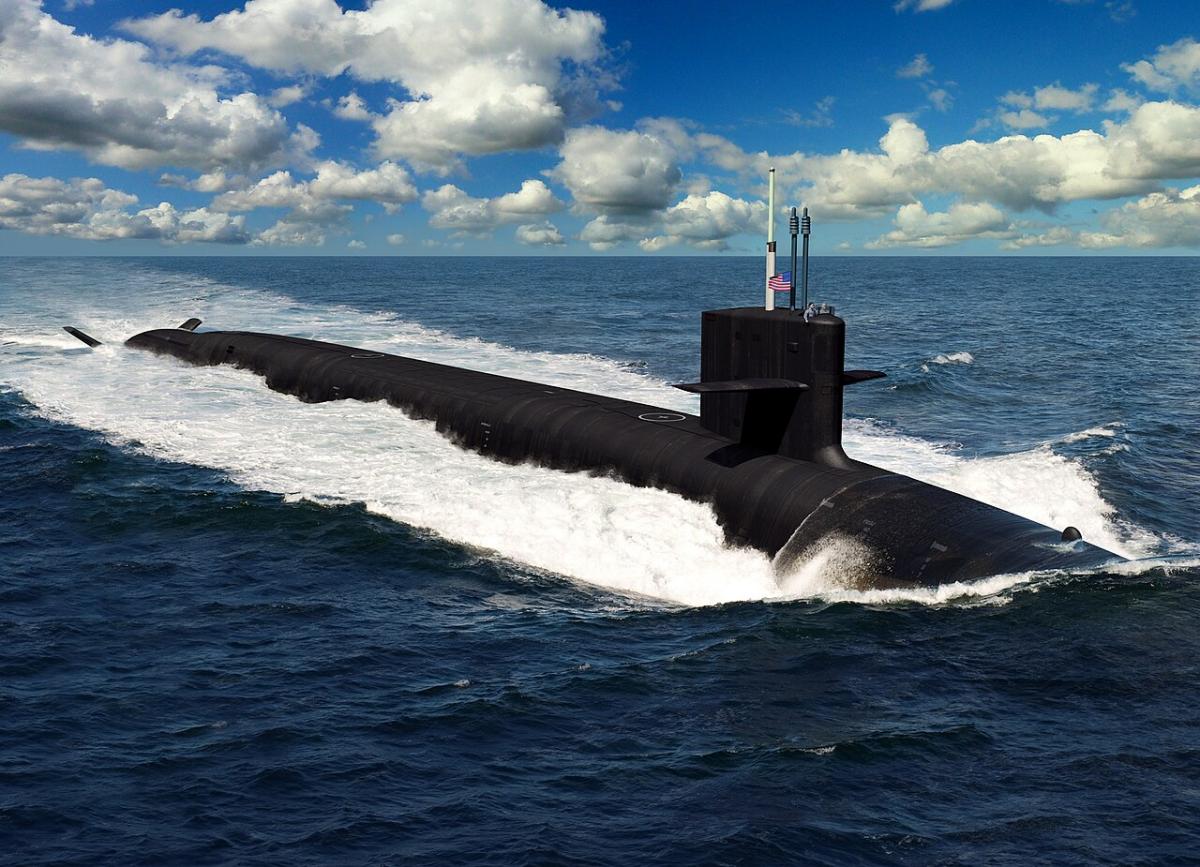
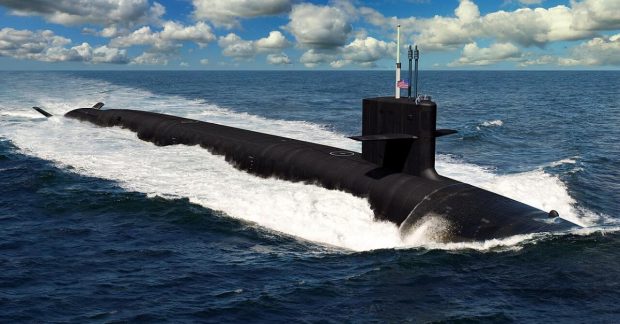
For South Korea the key theme of late 2025 became the effective “green light” from Washington to build a national fleet of nuclear submarines. As Reuters reported in December 2025 — a report echoed by several Eastern European and Asian outlets — after U.S. approval Seoul gained access to the necessary nuclear fuel and technologies, opening the door to a new-generation submarine fleet and altering the balance of power in East Asia. South Korean debate — including in conservative newspapers and expert circles — revolves around two axes: on the one hand, it is seen as a historic chance to finally build a more independent deterrent against North Korea; on the other, it risks provoking a sharp Chinese reaction and a new regional arms race. (unian.net)
Seoul commentary often contains a theme of “conditional autonomy”: political pundits stress that without Washington’s blessing such a project would have been impossible, meaning Korea gains not absolute independence but a new form of technological and political dependence on the United States. The painful question also arises: how reliable are U.S. nuclear guarantees if the same White House simultaneously undermines multilateral institutions and changes rules without hesitation for short-term gain?
In Australia, by contrast, voices argue that U.S. reliance on demonstrative actions — from Venezuela to Greenland — makes the alliance risky. Some former ministers openly call for a “mental experiment”: imagine America suddenly absent from regional security, and craft policies so that such an absence would not be catastrophic. At the same time, AUKUS agreements and closer cooperation on submarine programs under U.S. leadership appear in Australian debates as a Janus face: a military force multiplier but also an anchor that could drag the country into conflicts initiated by Washington. (theguardian.com)
The French view on the military dimension of U.S. policy is marked by polarity. On the one hand, the finance minister recently praised in the National Assembly that the U.S., despite walking back from the original global tax deal, still agreed to a minimum tax for its corporations and is willing to discuss “pillar 1” — the reallocation of taxing rights — opening space for fairer taxation of digital giants. In his speech, the transcript of which is published on the Assembly website, there was relief: Washington is at least selectively returning to multilateral frameworks. On the other hand, the same parliament and the press continue to discuss the U.S. trend of exiting dozens of international organizations and agreements, as documented in analytical pieces about Trump’s new foreign policy. (assemblee-nationale.fr)
There is also a “softer” dimension of reaction to Trump’s America — cultural and social. In France the drop in interest in travel to the U.S. is explained not only by prices but by a change in the country’s symbolic image. Tour operators tell journalists that for a significant portion of the French public America has shifted from the “land of cinema and Route 66” to a space of political stress where people do not want to vacation. This is not a severing of ties, of course, but a symptom of eroding attractiveness. (journaldemontreal.com)
Australian sociologists note a similar trend but on another plane: surveys of youth show a growing share who call the U.S. “undemocratic” or “somewhat authoritarian,” chiefly because of Trump’s rhetoric, his ambivalent stance on climate and racial justice, and the pardons for participants in the Capitol assault — widely described in Europe as a “legitimization of domestic violence.” For generations raised on the idea of American democracy as a model, this is a reversal, and Australian analysts fear that young people’s instinctive support for the U.S. alliance may weaken. (theguardian.com)
South Korean public debate, by contrast, is less ideological and more pragmatic. Commentators focus less on whether they like Trump’s America and more on how to use the moment to Seoul’s advantage while avoiding becoming hostage to someone else’s strategy. Supporting a national nuclear submarine fleet — yes — but at the same time preventing the U.S. and China from turning Korea into a stage for power projection. Few entertain illusions: if tomorrow the White House decides to change course, no treaty guarantees Seoul the same level of support.
Taken together, reactions in France, Australia and South Korea paint an image of a world that no longer assumes the U.S. is the “natural leader” by default. For Paris Trump’s America is above all a risky economic and geopolitical player forcing Europe to think about strategic autonomy and a remapping of trade. For Canberra it remains indispensable but deeply unreliable, pushing toward reappraisal of dependence and bolstering of its own defence. For Seoul the U.S. is a source of vital security and technology, but also a potential escalatory factor that requires balancing between autonomy aspirations and the fear of losing American cover.
Common to all three countries is not antagonism toward the U.S. but a loss of trust in the predictability of American policy. The world that once was built around American rules is now increasingly building systems of insurance around America — from tax agreements and trade diversification to submarine fleets and the rethinking of military alliances. According to contemporary French, Australian and South Korean debates, this is the principal effect of the U.S. in the Trump era: not the end of American influence, but the end of faith in its durability.