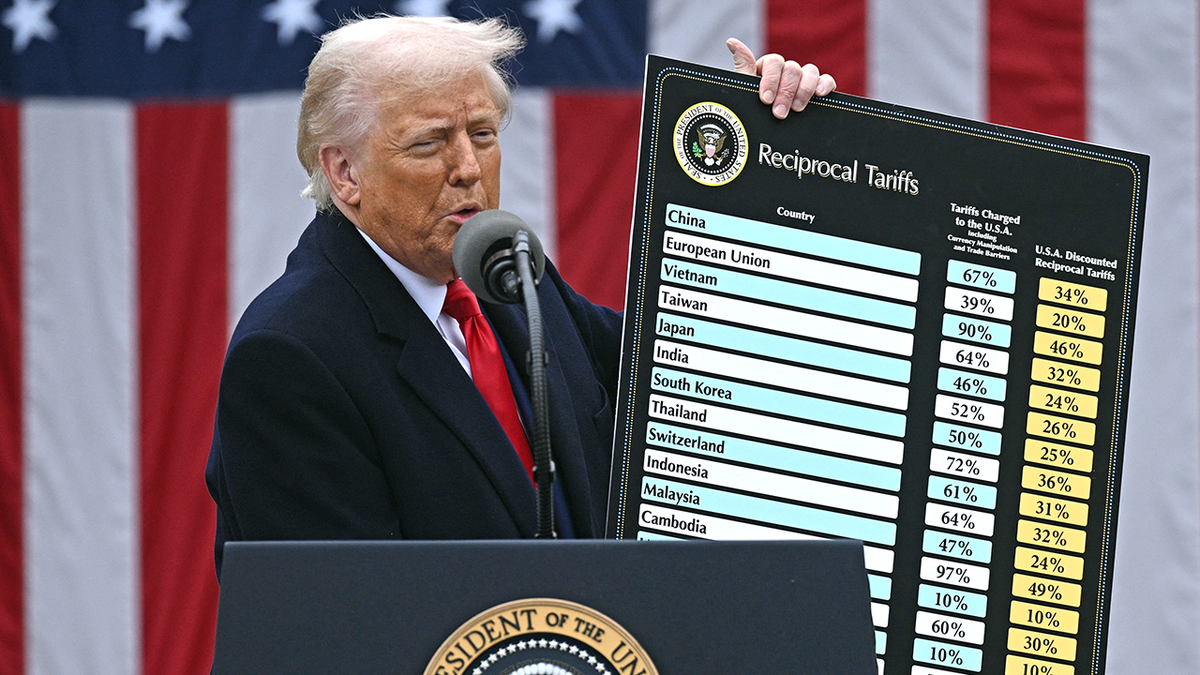
Donald Trump’s second term has put the United States back at the center of discussions in many countries, but the tone of those discussions is far from uniform. In India, Germany and Israel the United States is seen simultaneously as an indispensable partner, a source of instability, and a laboratory for politico‑economic experiments whose consequences are felt worldwide. Fresh waves of commentary were prompted by threats of sweeping tariffs against European allies to “buy” Greenland, a hard line on trade and sanctions, attempts to reshape NATO, a contentious view of the dollar and the Federal Reserve, and Washington’s push for its own architecture of “peace” in the Middle East.
The first major nerve is U.S. economic nationalism, which in Trump’s second term has taken the form of a conspicuously aggressive strategy. In Germany this line is no longer seen as eccentricity but as a systemic challenge. A mass survey published in the German press with reference to ZDF‑Politbarometer shows that 78% of Germans consider Trump’s policies a threat to NATO, and the episode with the demand to buy Greenland from Denmark is perceived not only as a diplomatic scandal but also as an erosion of trust within the alliance. The same research records outrage at unilateral use of force by the U.S., such as the arrest of Nicolás Maduro in Venezuela by American forces: 69% of respondents support a “firm EU response” to such “violations of international law” by Washington, notes an analysis in Bild summarizing Trump’s foreign policy in his second term.
German commentators see today’s Washington as a powerful but highly unreliable partner. A review of Trump’s foreign‑policy course in his second term in Die Welt describes it as an “unpredictable and ambitious force” with a “mixed record” in Ukraine, the Middle East and the Asia‑Pacific: the U.S. increased military support for Taiwan and weakened Iran, but at the same time launched a destructive trade conflict with China and undermined Europeans’, including Germans’, confidence in NATO’s long‑term commitments. For Germany, for which the transatlantic alliance has for decades been an unquestioned “anchor,” scenarios where not everything depends on American protection are being discussed seriously for the first time.
For Israel, the American economic and geopolitical pivot remains ambivalent but largely beneficial. Israeli economic and political columnists analyze in detail how U.S. inflation, Fed policy and trade wars affect the shekel, Israeli exports and the price of security. Economic outlet ynet notes that, according to December 2025 data, U.S. inflation stood at 2.7% year‑on‑year — exactly as markets expected — and emphasizes that for Israel this signals a likely near‑term Fed rate cut, which could ease debt burdens and increase investors’ risk appetite. In another piece the same portal quotes Trump’s Davos speech where the U.S. president declared, “America is thriving — the era of stagflation is over,” and against this background he pressures Europe while promoting new global initiatives. For Israeli commentators, the important issue is not only the state of the American economy but also that Trump openly uses it as an instrument of foreign‑policy pressure.
The Indian perspective is far more pragmatic. In Indian media economics sections, discussion of the U.S. almost always ties back to specific New Delhi interests: trade talks, sanctions and India’s role in an emerging multipolar world. The Times of India, covering ongoing negotiations on a bilateral trade deal, quotes Commerce Secretary Rajesh Agrawal, who emphasizes that India and the U.S. are “actively engaged” in discussing an agreement but “no timelines can be given” — a cautious formula reflecting a desire to extract the maximum concessions from Washington without burning bridges.
Even more sensitive for the Indian audience has been the approaching expiry of the U.S. sanction “waiver” for the Chabahar port in Iran. As The Economic Times notes, India’s foreign ministry openly states that it is in dialogue with Washington about extending until April 26, 2026, the special regime that allows India to use Chabahar as a strategic corridor to Afghanistan and Central Asia, bypassing Pakistan. For Indian analysts, this is an example of how the U.S. sanctions regime becomes a constant of global politics to be negotiated rather than principledly opposed: criticism of the extraterritorial nature of American sanctions coexists with the recognition that without Washington Indian plans for regional integration will be slowed.
If the German discussion of America today is built around security and international law, and the Indian one around economic opportunities and constraints, in Israel the U.S. is still primarily seen as the main political and defense guarantor. But here too the focus is less on abstract “U.S. leadership” than on Trump’s specific style. In an analytical piece for Calcalist, Adrian Pilut describes 2025 as a “year of paradigm destruction,” when Trump’s return to the White House ceased to be a “curio” and became a “formulated doctrine”: global tariffs, closed borders, ignoring the climate crisis and pressure on the Fed’s independence have become, he says, “the basis of a new reality.” The author stresses that even critics admit “something has fundamentally changed,” and in 2026 the world will only begin to grasp the balance of pros and cons of this American overhaul.
A particular worry in Israel is the intersection of Trump’s foreign‑policy activism with his domestic populism. News outlet Makor Rishon in spring 2025 quoted the U.S. president saying in an NBC interview that he was “not joking” about a potential third term and that he had allegedly been “shown plans” allowing him to circumvent the two‑term constitutional limit. The piece’s author points out that one of the scenarios Trump sketches involves a link with Vice President J. D. Vance, who could theoretically win an election and then “cede” the office. For a significant part of the Israeli audience, including the right, this is an alarming signal: a country considered a flagship of liberal democracy is flirting with the idea of eroding fundamental constitutional norms — and that inevitably undermines the argument of the U.S. as a moral arbiter in disputes with authoritarian regimes.
Another hot topic in Israel has been Trump’s attempt to institutionalize his influence on the Middle East process through the so‑called “Moatza ha‑shalom” — the “Council of Peace” for Gaza. As early as December 2025, portal Hardim10 quoted him saying that in early 2026 he would announce the creation of a “legendary Council of Peace,” which would consist “of the leaders of the world’s most important states” and would deal with Gaza’s reconstruction. As Zman Israel later wrote, Trump’s second term looks like an attempt to compensate for what he believes was a “stolen” previous term, and “from now on everything must happen by his will.” Israeli observers note that Prime Minister Benjamin Netanyahu, who received an invitation to this Council, will have to explain to his supporters why, contrary to earlier promises, Hamas has not been destroyed and representatives of the Palestinian Authority, Egypt, Turkey and Qatar receive institutionalized roles in postwar arrangements. Here the U.S. acts as the architect of a new regional construct, but the Israeli press does not hide its skepticism: many see the “Council of Peace” more as a club of billionaires and politicians planning to convert Gaza’s reconstruction into business than as a durable peace mechanism.
Against this background, German and Israeli agendas unexpectedly converge in discussing how much Trump’s America remains an “anchor” of the Western order. Israeli commentators, like their German colleagues, note strong European irritation over American tariffs and attempts to force a Greenland deal. In Channel 10’s economics section it is emphasized that Trump’s threats to impose 10% tariffs from February 1, 2026, on imports from eight European countries, including Germany, France and Denmark — and to raise them to 25% by June 1 — sent Wall Street futures tumbling and weakened the dollar, and European politicians began talking about a “day of trade reckoning” and the need to develop a “retaliatory arsenal” against the U.S. Israeli analysts point out that this is not merely a local economic conflict but a symptom of a deeper crack in Western unity, with direct consequences for the Middle East, where a coordinated Washington‑Brussels stance has always been an important lever of pressure.
In India, by contrast, the Greenland story and European tariffs are discussed much more calmly: there it is another confirmation that the world is shifting from a familiar “rules‑based order” to a world of hard bargaining and unilateral actions, to which India seeks to adapt rather than resist. At the Jaipur literary festival, reported by the Times of India, participants on the “New World Order” panel discussed the “muted reaction” of many countries to U.S. actions — from Venezuela to Greenland. Colombian lawyer and publicist Oscar Guardiola‑Rivera noted that the “particular silence” of India and Europe regarding American expansionist rhetoric worries Latin American observers: they see it as a sign that even large regional powers prefer not to confront Washington when their own economic interests are at stake.
At the same time Indian experts point out that reality is already objectively multipolar. Former British politician Vince Cable, in the same discussion as reported by the Indian press, described a world where China, India and the U.S. are three key poles, while Indonesia, Turkey and Brazil rise to the status of “middle powers.” In this narrative Trump’s America is not a solitary hegemon but one heavyweight among others, forced to reckon with peers and periodically resorting to demonstrative force (economic or military) to preserve its status. India’s reaction thus combines criticism of American unilateral moves with the understanding that Washington’s toughness accelerates the shift to a system in which Delhi (as well as Berlin) will have more room to maneuver.
Finally, a distinct thread in foreign press discussions of the U.S. concerns America’s internal resilience. Israeli media covered in detail the record 40‑day federal government “shutdown” in autumn 2025, which Israel Hayom characterized as an “unprecedented halt” in state operations due to Trump’s conflict with Congress over social and medical programs for 2026. In German and Indian analysis this episode is often cited as an example that political polarization in the U.S. has ceased to be a “domestic problem” and has become a factor of global risk: the country that issues the world’s reserve currency and controls key security institutions shows a willingness to stop its own government as a lever in internal political struggle.
Taken together, the view from India, Germany and Israel shows that the world no longer argues about whether America is “great”: it is discussing how to live in the shadow of a U.S. whose power remains enormous but whose predictability has sharply declined. For Germany it is an occasion to talk about its own strategic autonomy and a European response to Washington’s unilateral moves. For India — an opportunity to grow into an independent center of power, navigating between American sanctions and economic partnerships. For Israel — a painful realization of dependence on a leader who offers unprecedented political support while undermining the very democratic standards Israel has relied on together with the U.S.
Thus a new international debate is taking shape: not about whether the U.S. “has returned to leadership,” but about the price the world pays for America’s “reboot” under Trump — and how each country tries to turn this turbulence into its own opportunity.