At the beginning of 2026, the image of the United States in the foreign press and among expert communities is shaped around three closely connected storylines: a lightning intervention in Venezuela and the removal of Nicolás Maduro, an escalation of the struggle over Greenland and threats of a tariff war with Europe, and Washington's proclaimed updated strategy of "Monroeism 2.0" — expanding American control from the Arctic to the Caribbean. Fears, hopes and irritation of US allies and opponents converge along these three lines. Australia, Japan and Russia speak about the same phenomenon, but in very different voices: for some it is the return of a "tough but predictable" hegemon, for others — a demonstration of dangerous disregard for law and alliance obligations.
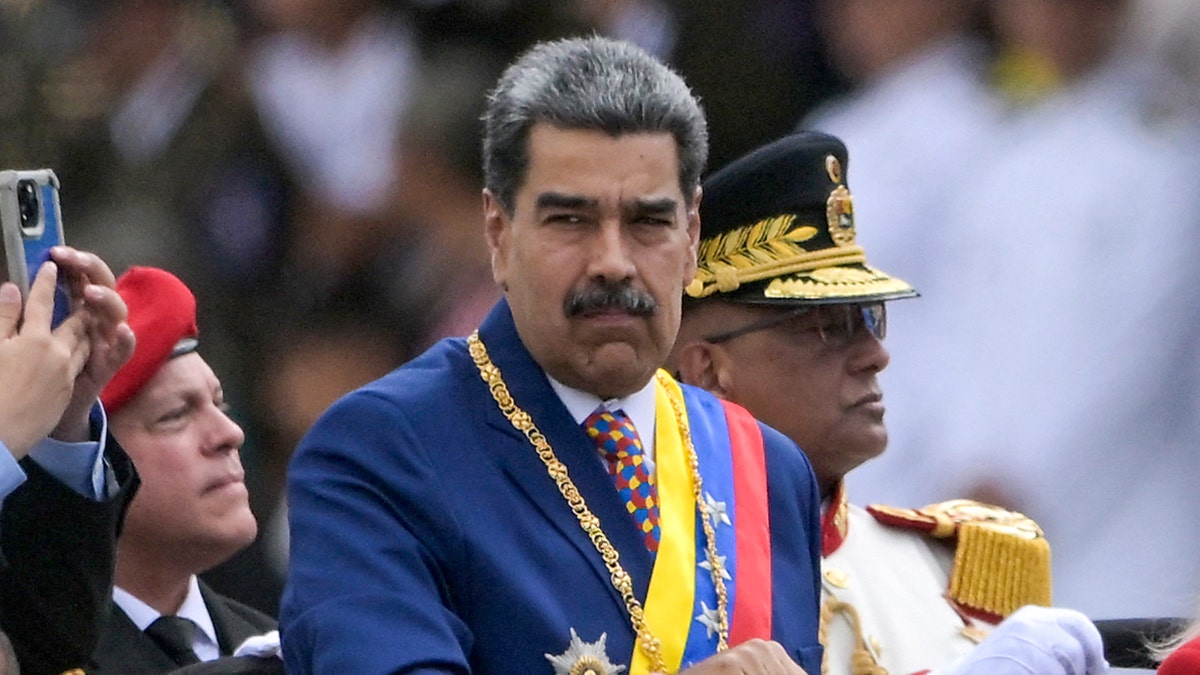
The first and sharpest nerve of the global discussion is the US military operation in Venezuela on January 3, during which Washington struck Caracas, transported Maduro and his spouse to New York, and announced it would "govern" the country until a transitional authority is formed. In Australia, Canberra's official reaction was diplomatically restrained: Prime Minister Anthony Albanese limited himself to calling for "support for dialogue and diplomacy," avoiding both direct support and harsh condemnation of Washington, as is clear from roundups of international reactions to the intervention. Australian commentators, discussing the new US National Defense Strategy, emphasize that Washington's key priority now is deterring China and protecting the "golden hemisphere" from Greenland to the Panama Canal, and that the Venezuelan episode fits precisely into this logic of projecting power in the Western Hemisphere. In The Australian's piece on the new defense strategy, it is said that the so‑called "Trump Corollary to the Monroe Doctrine" cements the US right to "not cede influence over key territories in the Western Hemisphere" and to use force against "drug terrorists and authoritarian regimes" from Greenland to the Caribbean, including reconfiguring Venezuela's oil industry to American interests. Thus, for Australian hawks the strikes on Caracas are not an anomaly but the first major case of an updated American expansionist doctrine.
The Japanese discussion is more complex: there is both fear of normalization of US "policing" military operations in Latin America and an understanding that Japan's security still critically relies on the American umbrella. Left‑liberal and solidarity organizations, such as the Japan‑Asia‑Africa‑Latin America Solidarity Committee, issued a sharp declaration calling the intervention "a crude act of aggression" that violates Venezuela's sovereignty and urging international support for the people of the country "fighting for their independence against imperial aggression"; the statement claims that the US for months conducted illegal military actions in the Caribbean, destroying ships under the pretext of fighting drug trafficking and killing more than a hundred people, and has now "flagrantly trampled the UN Charter and international law." This position was reinforced by a statement from the lawyers' association Free Bar Association of Japan, which in a separate document on January 13 called on the Japanese government to demand that the US comply with international law and refrain from "forcible alteration of the status quo"; the lawyers quote Article 2(4) of the UN Charter in detail and stress that the unilateral strike on Caracas and forcible removal of the head of state do not fall under self‑defense or Security Council authorization. On the more moderate flank, coalition partner Komeito—through its newspaper—stated that "the US military attack on Venezuela is a unilateral change of the situation by force, which undermines the foundations of the international order and must be decisively condemned," recalling that in Japanese foreign policy rhetoric since Crimea the formula "the forcible change of the status quo is unacceptable" has taken root. Meanwhile, the cabinet of Takaichi Sanae, discussed in a broad analytical essay by constitutional historian Kurayama Mitsuru in Nikkan SPA!, perceives US actions not in isolation but as part of a broader strategy against China: the author emphasizes that for Washington "priority number one is to contain the rise of China," and episodes in Latin America and the Middle East are only part of a broader pressure campaign on whose outcome Japanese security critically depends.
The Russian perspective is predictably different: the intervention in Venezuela is seen as another confirmation of the long‑standing narrative about the "imperial nature" of the United States and its habit of acting without legal justification. Reviews in Gazeta.Ru and other outlets analyze Operation "Absolute Resolve" in detail — the night strikes on Caracas, the subsequent removal of Maduro and his spouse, the charges brought against them in the US for "drug terrorism" and illegal arms trafficking, and the split in international reactions. Russian authors emphasize that although some European leaders, like Emmanuel Macron, welcomed the "end of the Maduro regime" as an opportunity for Venezuelans, many later had to "soften their tone" and acknowledge that they do not approve of the US method of action. In a Russian summary of a Die Welt article published on EADaily, it is stressed that Washington no longer even attempts in the Security Council to "support its accusations with convincing evidence, as was done before the Iraq war" — the drug trafficking argument is used as a universal key to forceful actions. Russian official and semi‑official sources see in this picture confirmation that the rules‑based international order is finally hollowed out and that the real architecture of the world will be defined by only three powers — the US, Russia and China.
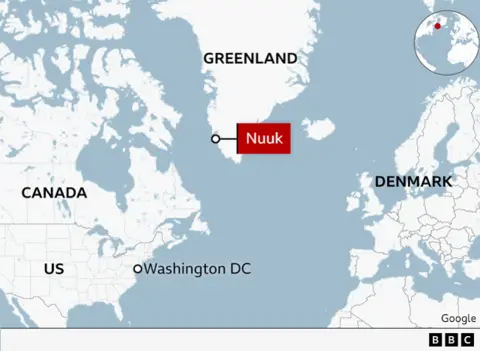
The second major knot of international disputes around the US is Washington's rapid turn to aggressive "Monroeism" in the Arctic and North Atlantic, primarily an attempt to forcibly impose control over Greenland. It is on this storyline that the divergence between Australian, Japanese and Russian perspectives is particularly visible. In Australia, whose media traditionally watch the balance of power in the Indo‑Pacific closely, discussion of the Greenland issue is viewed through the prism of the new American defense strategy. In an extensive analysis The Australian emphasizes that the document released by the Trump administration builds a hierarchy of threats that pushes Europe to the background while concentrating resources on containing China and strengthening US control over "key territories in the Western Hemisphere" — including Greenland and the Panama Isthmus. The article's author notes that the strategy contains a direct promise that the US "will no longer cede access or influence over key territories in the Western Hemisphere" and is prepared to secure this with the "speed, power and precision" of its armed forces. In another piece in the same publication about Trump's Davos speech, his statement is quoted that Greenland is "vital to US security," that America "must own it, not lease it," and that Vice President J. D. Vance and Secretary of State Marco Rubio have been authorized to negotiate with the Danish government. The US president demonstratively calls Denmark "ungrateful" and links the Greenland question to threats of tariffs against European countries that sent troops to the island for joint exercises.
For a Japanese audience the Greenland crisis is primarily interesting as a symptom of the plaster falling off the facade of the transatlantic alliance on which Japan's security is tied. Analytical columns addressing the new US strategic document emphasize that the US is openly shifting the burden of its own defense onto Europeans, concentrating on China and the first island chain in the Pacific. As Japanese commentators note, Washington is prepared to blackmail even close NATO allies with tariffs if they dare defend the sovereignty of Danish territory. For Tokyo this is a double signal: on the one hand, the alliance with the US remains indispensable in confronting China and North Korea; on the other — one cannot exclude that in case of disagreements over Taiwan or the South China Sea Washington might apply similar economic pressure to Japan as it is applying to Europe over Greenland today. Therefore Japanese analysts increasingly speak about the need for "dynamic autonomy" — strengthening Japan's own defense capabilities without breaking with the US, to preserve room for maneuver within the American orbit.
In Russia, American claims to Greenland are perceived in connection with the broader thesis of a "new US imperialism." Russian media readily quote European leaders warning of a "dangerous spiral" if the US imposes tariffs over the Arctic island, and point out that even staunch Atlanticists are forced to speak the language of sovereignty and territorial integrity not only regarding Ukraine but also toward Washington. In retellings of Western publications, the irritation of European governments at Trump's aggressive tone, his public reproaches of NATO, and his ostentatious demand that Greenland ultimately end up under the American flag are emphasized. Against this background pro‑Russian commentators draw a parallel: if forcible or economic coercion is permissible for the sake of a "strategically important territory" in the Arctic, how does this fundamentally differ from the Russian line on Crimea or Donbas? Placing Greenland in a broader picture, Russian analysts argue that the world is entering an era of "frank imperial projects" by three powers — the US, Russia and China — and that the UN has been definitively sidelined, as was argued in descriptions of the Venezuelan case.
The third common thread linking the three countries' discussions of the US is an updated American foreign‑policy doctrine in general: withdrawal from a number of UN structures, demonstrative disregard for multilateral forums, and reliance on direct force and bilateral deals. The English‑language and Australian press discuss in detail Trump's January memorandum to begin withdrawing the US from several dozen international organizations and UN agreements, including the UNFCCC climate system, as a continuation of the line to reject "tied hands" in favor of sovereign freedom of action. The Australian, analyzing the National Defense Strategy, emphasizes that the administration openly speaks of a "world through strength," sees Russia as a "manageable but persistent threat," and regards Europe as a theater where allies must shoulder the main burden of defense, allowing Washington to focus on China and the Western Hemisphere. This is presented as a sober recalculation of priorities: reducing "free security" for allies and increasing pressure on regional adversaries.
In Japan this line is perceived ambivalently. On the one hand, conservative commentators like Kurayama in Nikkan SPA! view Trump as a politician with a "clear set of priorities" who "does what he promises" — in this case pressing China, demanding increased military spending from allies, and responding harshly to challenges in Latin America and the Middle East. For them the main worry is not Washington's aggressiveness but the risk that US attention will be dispersed across China, Iran, Venezuela and the European theater, leaving Japan exposed to a growing threat from the PRC and the DPRK. Hence calls to accelerate reform of Japanese defense policy, take on a greater share of the "dirty work" in the region, and not count on America to "fight for everyone" indefinitely. On the other hand, the legal and left community sees in unilateral US actions, including withdrawals from multilateral institutions and the Venezuela operation, a troubling precedent for global law. The Free Bar Association's statement highlights precisely this aspect: if even the key architect of the postwar international legal order acts as a "rule‑breaking superpower," reliance on the UN Charter and the principles of non‑intervention becomes politically vulnerable.
In Russia the image of the US as a power beyond any norms is reinforced by events in the Islamic world and Iran — local press actively cites US State Department statements regarding Iranian protests and Senate warnings to Iran along the lines of "if you continue to kill your people, President Trump will kill you," which fits into a narrative of "cowboy foreign policy." Combined with the Venezuelan operation and the course toward withdrawal from a number of UN structures, this is used to strengthen the domestic audience's conviction that the West has no moral right to demand that Russia observe norms that it itself casually violates. At the same time, some Russian experts writing in liberal or business outlets, analyzing the same Venezuelan intervention, acknowledge that many Latin American and European states supported Maduro's overthrow or greeted it with relief — and this, in their view, shows that the anti‑American consensus is far from universal, and the world is rather entering a phase of "cynical pragmatism" where states are ready to turn a blind eye to violations if it serves their interests.
Against this backdrop, an interesting nuance in Australian and Japanese debates emerges: both countries objectively depend on American security, both are deeply integrated into the US alliance system, but in January 2026 both increasingly ask how to coexist with an America that, on the one hand, remains a "necessary hegemon" against China, and on the other — is less and less attentive to multilateral frameworks and partner opinion. In Australia this is expressed in debates about the extent to which Canberra should automatically back US initiatives like the "Trump Corollary to the Monroe Doctrine" and possible further operations in Latin America; in Japan — in a tense balancing act between the official G7 line condemning "forcible alteration of the status quo" and a pragmatic recognition that without American power it will be extremely difficult to contain China.
The result is a paradoxical picture: in Australia, Japan and Russia three seemingly contradictory intuitions are strengthening simultaneously. First — without the US, however its current authorities behave, no regional security system will endure: this is acknowledged in Canberra and Tokyo, and in Moscow — indirectly, when people say that the world will be run by "the US, Russia and China." Second — today's Trump America demonstratively casts off some of the norms and institutions on which it once built the postwar order, thereby undermining its own moral legitimacy, a point felt especially acutely in Japan's legal community and Russian rhetoric. And third — despite sharp statements and condemnations, most countries ultimately adapt to this new reality, adjusting their strategies to a tougher, more unilateral, but still indispensable global actor. It is at this intersection — the Venezuelan operation, the struggle over Greenland, and the new American doctrine of force — that these questions meet: for Australia it is about how to live in the shadow of "Monroeism 2.0" in the Indo‑Pacific; for Japan — how to both rely on the US and protect the remnants of the legal order; for Russia — how to use American "neo‑imperialism" as justification for its own moves while simultaneously building pragmatic backstage deals with Washington.