In different parts of the world today the United States is discussed in almost the same tone: it remains an indispensable power on which security, money and technology depend, but it is an increasingly unpredictable partner, especially after Donald Trump’s return to the White House. In Germany they argue about how to protect exports and investments from new American tariffs. In South Africa they discuss a humiliating attempt by Washington to exclude the country from the G20 format and an old, multilayered trauma of racial politics. In Ukraine every statement from Washington is perceived at once as a lifeline and as a source of pressure: from pauses in the delivery of air defense systems to American ideas about temporary ceasefires with Russia and invitations for Kyiv to participate in a new “Peace Council” on Gaza. Underlying all this is a single nerve: a growing conviction that the world lives in an era of “America First,” and everyone has to learn how to survive alongside this version of the United States.
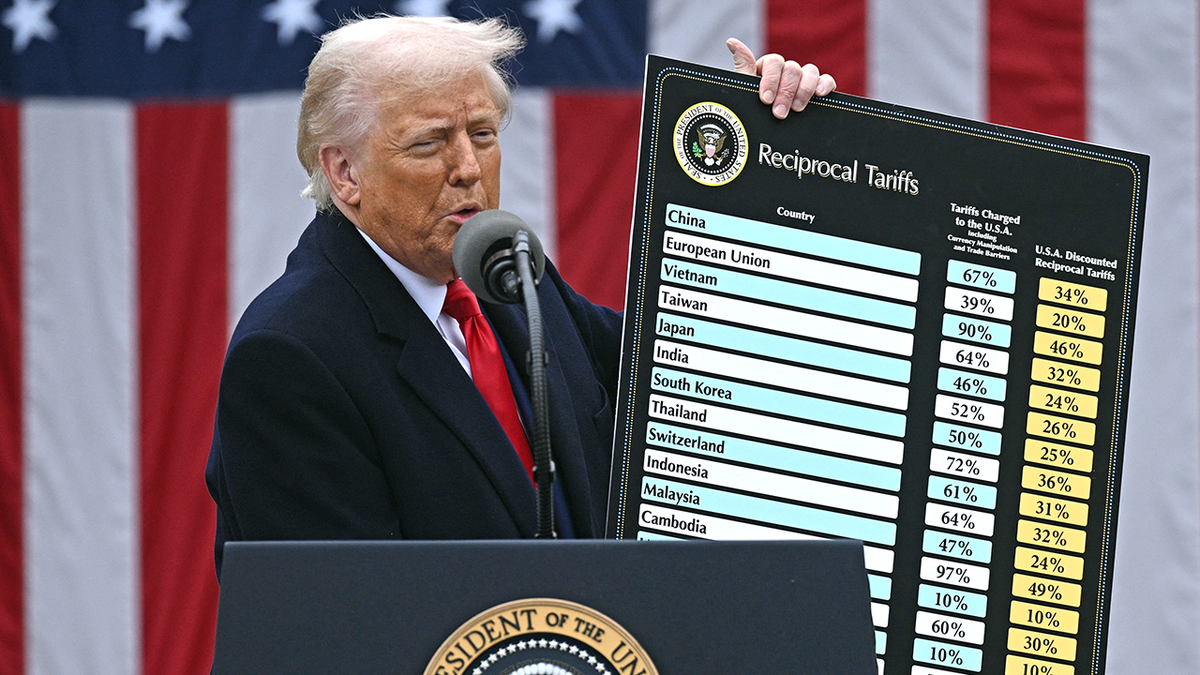
One of the central themes in German debates has become new trade and investment blows from the United States. German publications analyze in detail how in 2025 Germany’s exports to the United States fell by almost ten percent, primarily due to the automotive industry and mechanical engineering, against the backdrop of higher tariffs and threats of new duties in 2026. A Welt piece on the export decline emphasizes that Germany’s trade surplus with the US fell to its lowest level since 2021, and that new American duties of 10–25 percent on goods from several European NATO members are already being seen as the start of a new escalation of a trade war in which Washington uses the economy as a tool of geopolitical pressure; in this case the pretext was not even the classic disputes over steel or subsidies, but the conflict around Greenland and the Europeans’ stance on it. In another analysis in the same paper a mirrored effect in the capital sphere is noted: according to the German Economic Institute, Germany’s direct investments in the US in the first months of Trump’s second term fell by almost half compared with 2024 – expert Samina Sultan explains this by “political unpredictability” and tariff threats that scare off companies, even despite the continuing attractiveness of the American market. These pieces show a noticeable shift: while a few years ago Berlin debated how to “reorient” the economy away from China, now it speaks more often about the need to reduce dependence on the US as well, because the rules of the game there are no longer considered stable.
Against this background another motif appears in the German discourse – Europe’s strategic lag behind America in new technologies. An IMF review for Davos, cited by German media, compares growth forecasts: 3.3 percent for the global economy, 2.4 percent for the US, and only about 1.1 percent for Germany, while American economic success is directly linked to aggressive investments in artificial intelligence and the dominance of American tech corporations. Such a contrast intensifies a long-standing German complex: a country with a strong industrial base sees Washington and Silicon Valley turning technological leadership into a political resource, dictating terms in security, trade and digital market regulation. Here, unlike in Ukraine or South Africa, the concern is not fear of physical vulnerability but anxiety about a structural shift in which America of the new cycle uses its technological advantage as bluntly as Trump uses tariffs.
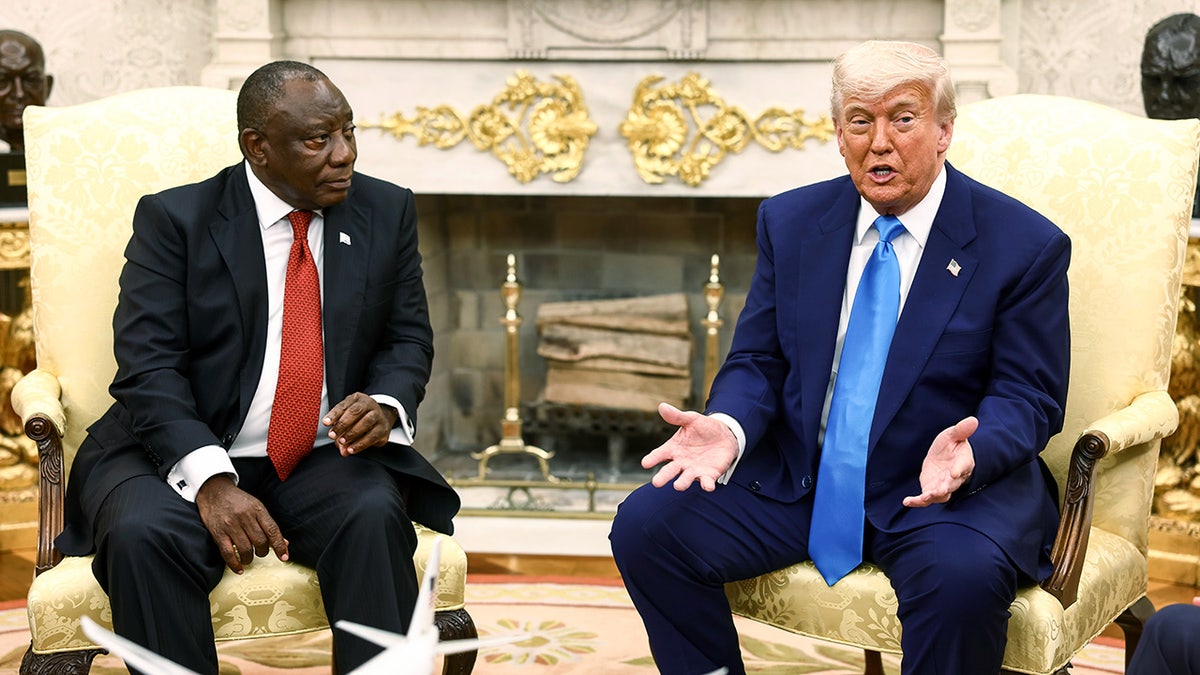
The South African discussion about the US today is, by contrast, colored primarily in political and moral tones. The occasion was a scandal around the planned 2026 G20 summit in Miami: the American president publicly stated that he intended not to invite South Africa to the meeting, accusing the country’s authorities of “genocide of white farmers” and “horrific human rights violations” against the white population. Die Zeit, among others, wrote about this, quoting in detail Trump’s accusatory posts on his social network and reminding readers that he has been exploiting this narrative for several years, contradicting data from most researchers and human rights organizations. For South African politicians and experts such statements are not only an insult but an attempt to return the discussion about the country to a colonial frame, where the history of apartheid and violence is reduced to fears about “oppression of whites.” The ruling party and many commentators respond by referring to their own heavy experience of racial segregation and emphasize that Trump’s accusations are a tool of pressure against Pretoria’s more independent foreign policy, including ties with BRICS and a relatively independent stance on Ukraine and Israel. In this conflict, as in the German tariff debate, a common line emerges: Trump uses bilateral levers – from G20 status to human rights rhetoric – to punish countries that do not fit his idea of allied loyalty, and those countries see this not as concern for values but as a continuation of a policy of power.
The Ukrainian conversation about the US has a very different tone – it is much tenser and simultaneously more pragmatic. For Kyiv, America, both under Biden and Trump, remains the key guarantor of survival in the war with Russia. Therefore every decision from Washington is seen in two dimensions: on the one hand, as vital support, and on the other, as a source of dangerous compromises imposed from outside. Ukrainian media analyzed in detail Kyiv’s March 2025 agreement to a US-proposed 30-day ceasefire in the war with Russia. In interviews with local journalists Volodymyr Zelensky explained that they agreed not because they believed in Moscow’s goodwill but so as not to play into accusations of “not wanting peace”: in his words, it was important to demonstrate that it is Russia blocking any pause in fighting, while Ukraine is ready for a limited truce if it helps strengthen the international coalition. Ukrainian commentators noted that this step simultaneously reflected a desire not to lose American support and a fear that a temporary ceasefire could be used to pressure Kyiv into consolidating a new status quo on the front.
The duality of Ukraine’s attitude toward the US was even more evident on the question of military aid. In January 2026 Zelensky, answering journalists’ questions, had to admit that no new US air defense systems had yet arrived in the country, although deliveries of missiles for existing batteries were continuing. For a society that had endured a series of massive Russian strikes on infrastructure, this news was an alarming signal: Washington still speaks of “unwavering support,” but actual deliveries, especially of the most scarce systems, are proceeding more slowly than expected. Against this background Ukrainian analysts actively discussed the US National Defense Authorization Act for 2026, passed in December 2025, which allocates relatively modest direct sums for Ukraine – $400 million for 2026 and 2027 within a nearly $900 billion military budget. For many this symbolizes that Ukraine is no longer the central storyline of American policy but has become one of many budget items in the long-term confrontation between the US, Russia and China, where the White House seeks to limit financial commitments while retaining political control over the course of the conflict.
Nevertheless, an important caveat remains in all Ukrainian discussions: without the US the war would already have been lost. This theme is also clearly audible in the words of European allies. For example, Polish prime minister Donald Tusk, in comments cited by the Ukrainian intelligence service, conveys the position of American negotiators: according to him, businessman and Trump adviser Steve Witkoff assured that America would be involved in a system of security guarantees for Ukraine in a way that would leave Russia without doubt: in case of violation of the guarantees the response would likely be military. This phrase shows how much weight Kyiv and Warsaw attach not only to formal statements from Washington but to semi-official signals of readiness to use force. At the same time Ukrainian leaders emphasize that they are watching closely how the US’s tone changes: at the end of 2025 Zelensky explicitly said that Kyiv “awaits signals” from the American delegation after its talks with Moscow, thereby acknowledging that much of the war’s fate is still decided not only on the battlefield but in the corridors of power in Washington.
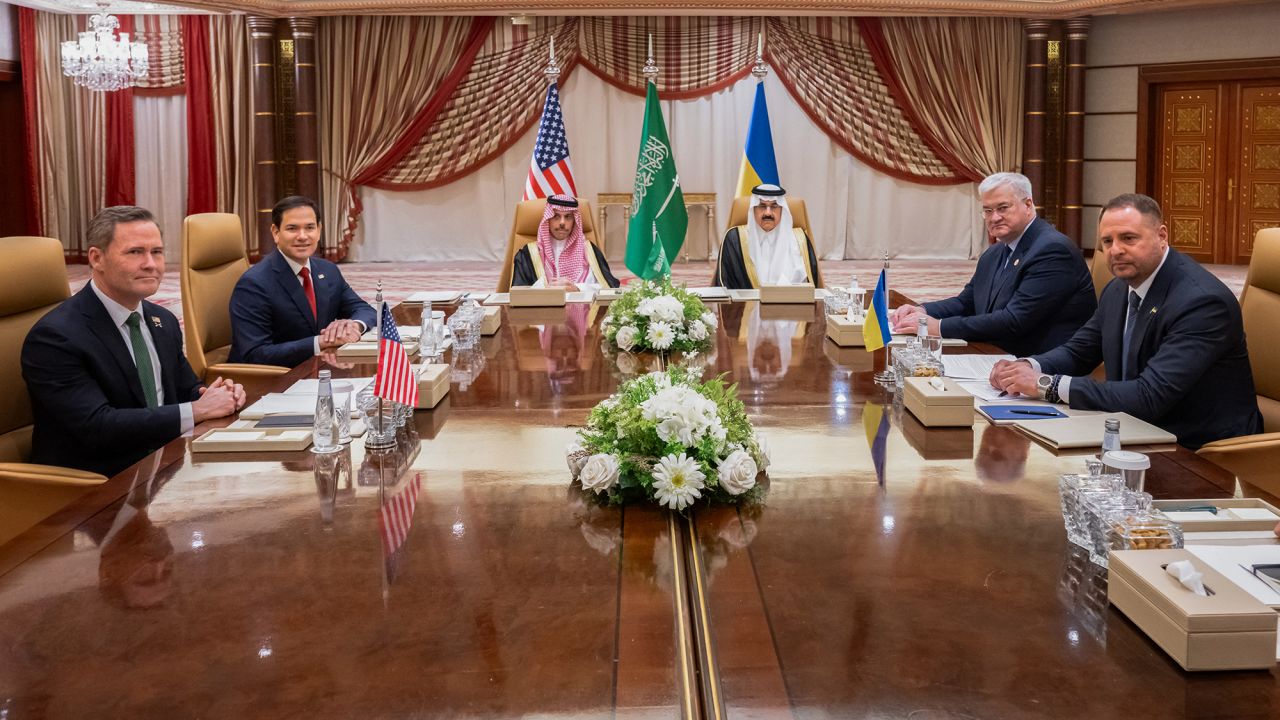
A special place in Ukrainian assessments of the US is occupied by the Middle East direction, where Washington tried to give its diplomacy a new format. In January 2026 Zelensky confirmed that the United States invited Ukraine to join the so-called “Peace Council” – a structure initiated by the Trump administration to resolve the conflict in the Gaza Strip. The mere fact of the invitation is perceived by Kyiv as recognition of its foreign-policy weight: a country recently considered peripheral finds itself participating in the global security architecture. But Zelensky almost immediately added that he finds it “very difficult to imagine” how Ukraine could sit at the same table with Russia in this structure, since Moscow remains an enemy for Kyiv. This creates a complicated diplomatic knot: on the one hand, participation in an American initiative would boost Ukraine’s legitimacy in the Middle East and strengthen its ties with Washington; on the other, forced proximity with Russian representatives in the “Peace Council” risks becoming a symbolic recognition of Russia as a partner in security matters, whereas in Ukrainian eyes it is a source of global instability, not a participant in its resolution. Commentators in Kyiv note that American attempts to integrate Ukraine into its Middle East projects reflect Washington’s desire to “normalize” the conflict, to turn it into one of many manageable crises, rather than the existential war that Ukrainians themselves see.
Interestingly, this resonates with perceptions of the US as a moral and cultural phenomenon in Germany and South Africa. In the German cultural field there is a noticeable effort to separate “America” as a source of inspiration – from jazz and film to the image of the liberator of 1945 – from the concrete policies of the current administration. Thus, well-known musician Wolfgang Niedecken in an interview calls current American-German relations “more contradictory than ever,” while emphasizing gratitude to the US for liberation from Nazism and his personal attachment to American culture. This separation—between America as an idea and the US as a state pursuing a hard line—becomes increasingly typical in the German intellectual milieu.
In South Africa, by contrast, cultural-historical experience makes many local voices particularly sensitive to how Washington treats the issue of human rights and racial justice. When Trump, speaking of a “genocide of white farmers,” effectively ignores decades of violence against the black majority and the complex reality of land reform, some South African commentators perceive this as an attempt to rewrite history in the spirit of old colonial narratives, in which black suffering is marginalized and any steps toward redistribution of resources are declared discrimination against whites. At the same time, as South African analysts note, economic ties with the US and access to American markets remain critically important for the country, creating a deep internal conflict: how to resist humiliating rhetoric and pressure without destroying the possibility of obtaining investments and technologies.
What unites Germany, South Africa and Ukraine is the feeling that the US, especially under Trump, is abandoning the role of a predictable “guardian of rules” and increasingly acts like a great power of the 19th century that uses tariffs, summit invitations, “peace council” formats and military aid as tools of bilateral bargaining. Yet none of these countries is ready to seriously talk about “decoupling” from America. German business, despite falling investments, continues to see the US as a key market and technological partner. South Africa understands that without participation in western clubs like the G20 it will be much harder to advance its agenda in a world of growing competition between blocs. Ukraine, finally, knows all too well that without American money, weapons and a political umbrella its chances of surviving a clash with Russia would be dramatically lower.
From this arises another seldom-voiced but widely felt thought: the world must simultaneously adapt to “Trump’s America” and prepare for a possible next change of course in Washington. In Berlin this stimulates the long-standing but still poorly implemented idea of European strategic autonomy – creating its own defense and technological capacities that would reduce dependence on the whims of the White House. In Pretoria there are calls to strengthen ties with BRICS and to use alternative platforms more systematically so that a single American decision cannot erase the country’s status as an important player of the Global South. In Kyiv there is a painful search for balance between maintaining a hard line in the war and being ready to account for allies’ fatigue and shifting priorities, primarily those of the US: Ukrainian authorities synchronize sanctions with Washington, adapt to American security formats, yet try to set red lines on territorial concessions and forced ceasefires.
Thus the international conversation about the US today is not a set of isolated reactions but a single, though polyphonic, story about how countries of differing size, wealth and political weight adapt to an era in which America remains a center of gravity but is less and less perceived as a moral or institutional anchor. For Germans this is primarily a question of economic resilience and technological sovereignty. For South Africans it is a matter of dignity and racial justice in relations with a former and current metropole. For Ukrainians it is the dilemma between gratitude for support and fear that their war will at some point become merely an element of a broader deal between Washington and other centers of power. This complexity cannot be seen by reading only American media: it appears precisely in local columns, interviews and political debates in Berlin, Pretoria and Kyiv—how they speak of the US, often addressing not Washington but themselves.