At the start of 2026, conversations about the United States in different parts of the world unexpectedly converge on a few common themes. Trump’s name is heard everywhere, the word "tariffs" recurs, and the question is whether Washington can still be the architect of the international order if it is the one breaking the old rules. In Australia doubts come to the fore about whether the country has become a hostage to Washington through the giant AUKUS defense deal. In Brazil people discuss a painful trade war with the US and how Trump’s protectionism will hit growth and the country’s self-image as an emerging power. In Ukraine talks about the US are tied almost exclusively to peace and war: a settlement plan, security guarantees, the likelihood of ending the conflict, and the price Kyiv will pay for American mediation.
The throughline is obvious: America is no longer perceived as the stable "anchor" of the liberal order. In different corners of the world it is feared, resented, hoped in — but almost no one speaks of the old "normality" anymore.
One of the most emotionally charged conversations today is that Trump has turned the US from a guarantor of "rules" into the main source of geopolitical turbulence. In Australia this theme unexpectedly merged with the national holiday and long-standing complexes of a junior ally. In Paul Daley’s column in The Guardian, timed to January 26 — a date already fraught with debates about colonial legacy — the idea is expressed that Australia swapped one empire for another and is now, "under the cloak of little America," tied to the US by the multibillion-dollar AUKUS deal worth $368 billion. The author asks a simple but troubling question: what would have to happen for Canberra to seriously consider terminating AUKUS and reassessing the alliance with the US, if the White House is occupied by Trump, who openly disregards "rules" and treats allies as things that cannot be "monetized"? This framing is no longer a marginal pacifist stance but a cautious mainstream of the liberal intelligentsia, for whom "Trump’s America" is not merely an inconvenient partner but a new form of dependency that threatens Australian sovereignty. The same point is made, more directly, by former prime minister Malcolm Turnbull, who called Trump a "bully" and urged current prime minister Anthony Albanese to publicly acknowledge that the global political landscape is changing under him. In an interview recounted in The Guardian piece, he criticizes the government for being unwilling to honestly tell the public that the "rules‑based order" no longer functions, and that AUKUS binds Australia even more tightly to an unpredictable Washington where, he says, negotiations with Trump only work when he is pushed back against.
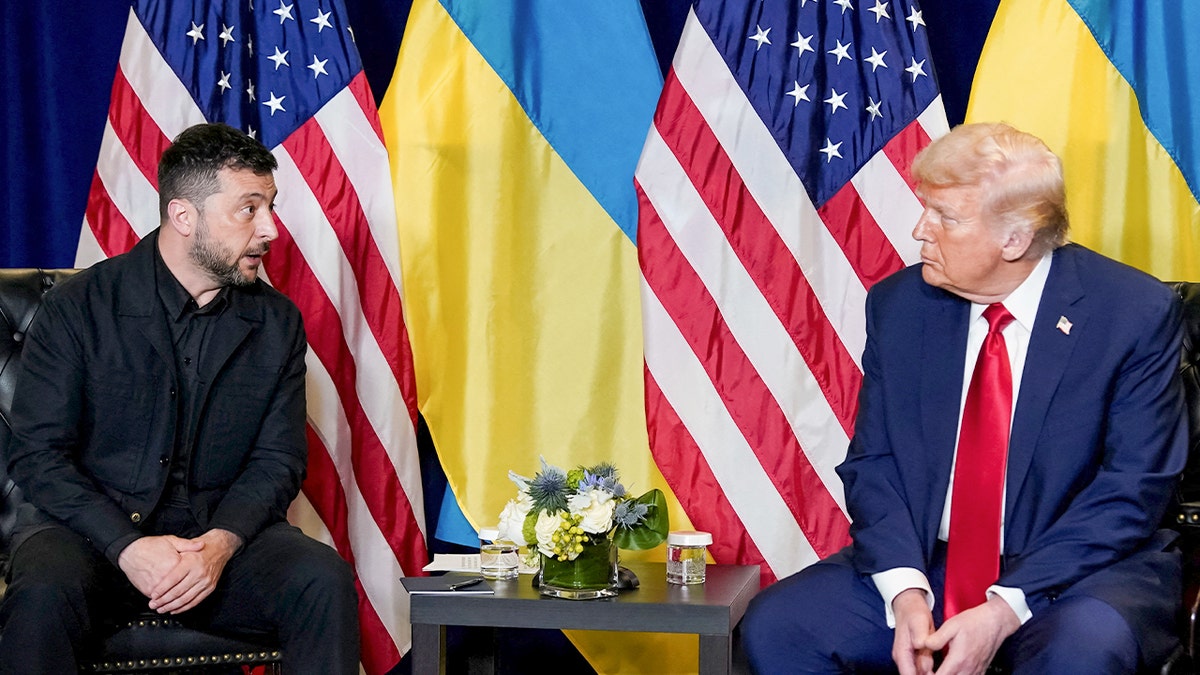
These Australian anxieties contrast with the Ukrainian perspective: in Kyiv and in the Ukrainian information space the US is still primarily perceived as the only real guarantor of the state's survival. Yet even here, at the start of 2026, there are important shifts in tone. Ukrainian and Russian‑language media are discussing a twenty‑point US peace plan that in January was discussed in Abu Dhabi by delegations from Kyiv, Moscow and Washington. After those talks, Volodymyr Zelensky said the parties had gone through all twenty points of the American proposal, stressing that Ukraine’s position remains unchanged and that any agreements should not mean capitulation or freezing the conflict at any cost, as reported by Tengrinews citing Ukrainian sources. An important detail: Kyiv emphasizes that this is a "US plan," not a joint document — and for several months Ukrainian society has been debating which concessions Washington might try to push through. In autumn 2025 a leak of a draft of this plan made noise in the Ukrainian segment of the web: MP Oleksiy Honcharenko published a 28‑point text, and American sources cited by the Russian outlet RBC claimed that Ukraine in the online version had altered an especially painful clause about auditing Western aid, replacing it with a formula of "full amnesty" for all participants in the conflict. In Ukraine that provoked an explosive reaction: for part of society any mention of amnesty for Russian soldiers and collaborators is a red line.
In January 2026 a new wave of commentary related to a draft of security guarantees for Ukraine from the US and a "coalition of the willing" surfaced in the information space and was detailed, among others, by the Russian outlet EADaily. The draft states that the US would help ensure a ceasefire using intelligence and logistics, and in the event of a new Russian attack — assist in restoring peace and impose additional sanctions. Ukrainian experts read this as a quasi‑NATO: not a formal "Article Five," but a promise that Washington will not leave the country alone with Moscow. Skeptics on Ukrainian talk shows and in independent media columns stress the conditional nature of such guarantees: they depend on the will of a particular US president, and therefore under Trump their weight could be very different from what Kyiv expected in the early months of the war.
A separate line of debate focuses on the likelihood of ending the conflict with active US mediation. US permanent representative to NATO Matthew Whitaker recently said that Ukraine and Russia "have come closer to a peace agreement than ever before" — his words were quoted by Ukrainian and Kazakh media such as Tengrinews. Russian and pro‑Russian outlets, like Gazeta.Ru, picked up another interpretation: in their retelling, based on Politico and Russian analysts, Trump leans toward making peace, and the probability of ending the conflict in 2026 is estimated as "four to one." For the Russian audience this is presented as a signal that the US is tired of paying for the war and ready to "pressure Kyiv," while for Ukrainians it is an alarming reminder that the country's fate is still largely decided not in Kyiv but in Washington and in closed forums like the UAE meeting.
Notably, in Ukraine, Australia and Brazil the same figure — Donald Trump — simultaneously embodies the US's power and unpredictability. But if for Ukraine Trump, despite all fears, remains someone who could bring a long‑awaited end to hostilities (albeit on contentious terms), for Australia he is above all a risk: a man under whom hundreds of billions of defense commitments have already been "stitched," and who could change the rules of the game overnight.
In Brazil the perception of the US is entirely different — more material and pragmatic. In recent months discussion of America there has been almost entirely focused on the trade and tariff war Trump unleashed against Brazil and much of the world. After Washington decided to raise tariffs on all Brazilian goods to 50% — a step framed as a response to a "national security threat to the US" — in São Paulo and Brasília this conflict is already called the largest bilateral crisis since the spy scandal of the early 2010s.
Brazilian analysts do not limit themselves to emotional assessments: economists at major investment houses are calculating the exact cost of "America First" for Brazil. In a note by the economic team at XP Investimentos, "Tarifas podem reduzir o crescimento do PIB do Brasil em 0,3 p.p. em 2025 e 0,5 p.p. em 2026," specialists estimate that imposing a 50% duty on Brazilian exports from August 1, 2025 could "eat away" 0.3 percentage points of GDP growth in 2025 and 0.5 points in 2026, while export volumes to the US would fall by $6.5 billion in the first year and by $16.5 billion in the following year. According to their calculations, high‑tech and capital‑intensive sectors — from aerospace to parts of manufacturing that find it hard to quickly reorient sales to other markets — would suffer most, while segments like meat could redirect exports to a greater extent, albeit with margin losses.
Against this background the tone of Brazilian media toward the US becomes truly harsh. Veja magazine published the full text of the Trump administration’s announcement about these tariffs under a headline that frames the conflict in explicitly political terms: the document says the measures aim to "counter an unusual and extraordinary threat to the national security of the United States posed by the policies and practices of the Brazilian government," and one reason explicitly named is the "prosecution and legal cases against former president Jair Bolsonaro and thousands of his supporters," described as "gross human rights violations." In Brazilian discourse this is perceived not as an economic dispute but as an open attempt by Washington to interfere in the internal struggle between the Lula and Bolsonaro camps. Left‑wing commentators call it "blackmail disguised as human rights," right‑wing voices call it "belated support for an oppressed right‑wing opposition," but the common note is outrage that a private conflict surrounding Bolsonaro has become a pretext for hitting an entire economy.
The economic consequences are visible in the markets. As Infomoney and other business outlets noted, after the announcement of "50% tariffs," yields on Brazilian futures for deposit contracts (DI contracts) rose sharply: for example, the DI rate for January 2028 updated its intraday high precisely amid news from Washington. Other pieces, such as XP’s analysis, link this not only to the direct hit to exports but to tightening financial conditions: investors price in slower growth, a weaker real, and higher debt burdens.
An interesting turn in the Brazilian debate is that local analysts use Trump’s US as a mirror to criticize their own development model. On the Instituto de Estudos para o Desenvolvimento Industrial site the logic of a Wall Street Journal piece is recounted, where Trump’s American protectionism is compared to Brazil’s long‑criticized experience of a closed economy: high barriers, a tangle of subsidies and exemptions, and the high cost of equipment and technology. The authors comment: if Trump carries his tariff policy to the end, the US risks repeating Brazil’s fate — chronic underinvestment in industry, technological lag, and expensive consumer goods. Thus America, which for years lectured Brazil, suddenly becomes for Brazilians a "cautionary example" — a country where political populism can destroy competitive advantages and lead to the very outcomes Brazil has been trying to escape.
Against this backdrop the perception of the US in Ukraine looks almost naively pragmatic: here what matters is not trade balances or even ideology but one question — will America bring peace, and if so, on what terms. Ukrainian commentators pay little attention to the internal logic of American politics, viewing it largely as a "black box." Far more attention is paid to how to use American initiatives to their advantage and not allow Washington and Moscow to strike a deal behind Kyiv’s back. Hence the keen interest in details of leaks of the US peace plan and in statements by American officials and analysts.
Russian and pro‑Russian media commenting on the same initiatives try to portray the US as a weakened hegemon trying to exit the war with minimal costs. Articles with loud headlines such as "US media think Ukraine may not survive another year of conflict" recapitulate Washington Post publications in an attempt to prove that American society is tired and that Congressional patience is not unlimited. For the Ukrainian audience such messages sound like a warning: reliance on the US is necessary, but it must not be allowed that Washington at some point decides the cost of support is too high and begins seeking "any peace."
Interestingly, the Ukrainian case best demonstrates how other countries are testing themselves against the US’s new foreign policy. In Australian debates about Trump and AUKUS the Ukrainian example is often invoked: proponents of a tight alliance remind that without US support Ukraine would be in an even worse position, and ask whether Australia would be left alone if it abandoned the American umbrella in a crisis. Critics respond that Ukraine’s example actually shows the ambiguity of American guarantees: when the administration changes, so do the style of support, rhetoric, and allowable compromises, so for Australia it is important to have a "Plan B" in the form of regional partnerships in Asia and greater strategic autonomy.
In Brazil, by contrast, Ukraine hardly figures in conversations about the US — unlike in Australia, the Brazilian focus is on its own conflict with Washington. In the Brazilian view Trump is less a geopolitical actor and more a president who uses America’s economic weight as a club in an ideological war. This is particularly noticeable in how media and experts link the tariffs to Bolsonaro’s fate. In a sense Brazil sees in America an exaggerated reflection of itself: a country where right‑wing populism and culture wars affect the economy the way they do in Brazil, only the scale of the consequences is global.
The Australian discussion, for its part, is distinguished by the depth of historical context. There the conversation about Trump’s America inevitably collides with unresolved questions about the British Empire and Australia’s own path: in columns timed to January 26 parallels between the old metropole in London and the new one in Washington are drawn almost explicitly. Journalist Paul Daley in his Guardian article nudges the reader toward the thought that "subordination to Trump’s America" is little different in essence from the previous subordination to the British crown: it’s not only about military bases and submarines but about the political elite’s willingness to tailor foreign and defense policy to the interests of a stronger ally.
As a result a curious map of perceptions of the US emerges. For Ukraine America is a necessary but dangerously strong mediator that can both provide security and impose a painful peace. For Brazil it is an aggressive trading partner ready to use the language of human rights and democracy to justify protectionism and pressure on an inconvenient government. For Australia it is an increasingly capricious patron to which the country is tied through enormous defense spending and who could at any moment turn that dependence into a tool of political pressure.
The common denominator in these different stories is one: the image of the US as "leader of the free world" is rapidly fading. In its place different, sometimes contradictory faces are appearing. In some sense the global conversation about the "new America" is only beginning. But it is already clear: to understand what international relations in the coming years will look like, it is not enough to read only the American press. Sentiments in Canberra, São Paulo and Kyiv are becoming as important indicators of the future world order as a column in The Washington Post or a presidential address to Congress.