At the end of January 2026, the United States again finds itself at the center of attention in foreign columns and political talk shows, but the perspectives on Washington from Seoul, Riyadh and Moscow diverge noticeably. For South Korea, the US remains an indispensable but increasingly demanding ally in security and high‑technology economics. For Saudi Arabia, America is a partner with whom a complex bargain is being struck over formal security guarantees, access to weaponry and room to pursue an independent Middle Eastern policy. For Russia, the US remains the main geopolitical adversary, but Russian public attitudes toward America are slowly drifting from hostility toward wary indifference, as local sociologists record.(khaberni.com)
What unites these three countries is different: in each of them the US has long ceased to be an abstract “leader of the free world” and is viewed primarily through the prism of their own interests — security, energy, sanctions, technology. The harm or benefit of American policy is measured very pragmatically, and that pragmatic outlook is what comes through in recent local commentary.
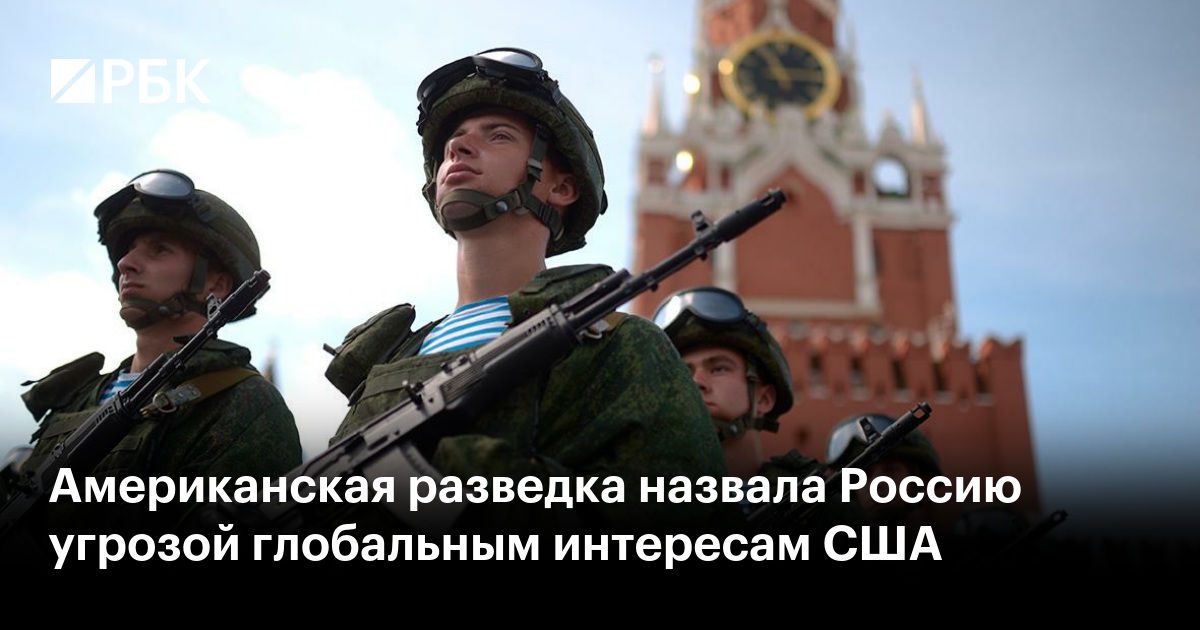
The central recurring theme of the past weeks remains the American line on the war in Ukraine and the broader confrontation with Russia. In Russia, official media and part of the expert community continue to interpret Washington’s policy as an attempt to “isolate” the country and inflict a strategic defeat, but analytical pieces increasingly emphasize the idea that sanctions have only pushed Moscow to reorient toward China, Iran, the DPRK and other states that do not follow the Western agenda. One Russian business outlet notes that, according to US intelligence assessments, whatever the outcome of the conflict, Russia will remain a resilient military and political power and a “permanent threat to US global interests,” and that rising defense spending and development of the defense industry will offset many losses.(rbc.ru)
Russian commentators deftly use these US assessments as proof that the pressure strategy has failed. One expert close to official circles told a major news portal with irony: if even American intelligence admits that Russia will remain a factor in world politics, “then talk of its ‘isolation’ long ago became a propaganda slogan for the domestic consumer in the US.” At the same time, a recent Politico review, as relayed by Russian media, says that Washington, conversely, is seeking “by way of real de‑escalation” in Ukraine a chance to revive at least minimal trust between Russia and Europe. Russian commentators read this two ways: on the one hand, as an indirect admission of the impasse of coercive pressure; on the other, as an attempt by the US to restore transatlantic unity under its umbrella, unity that was weakened in the energy crisis and disputes over frozen Russian assets.(rbc.ru)
Interestingly, against the backdrop of harsh official rhetoric, public sentiment in Russia looks more flexible. A survey by the Public Opinion Foundation shows that the share of Russians who view the US favorably rose from 10% in 2015 to 18%, while those with a definitively negative attitude fell, giving way to a large layer of the indifferent. Russian political scientists explain this by “fatigue with the conflict” and gradual habituation to the new reality: “America has ceased to be an existential enemy and has turned into another major power with which we have a prolonged dispute,” one expert formulates in a comment for RBC.(rbc.ru)
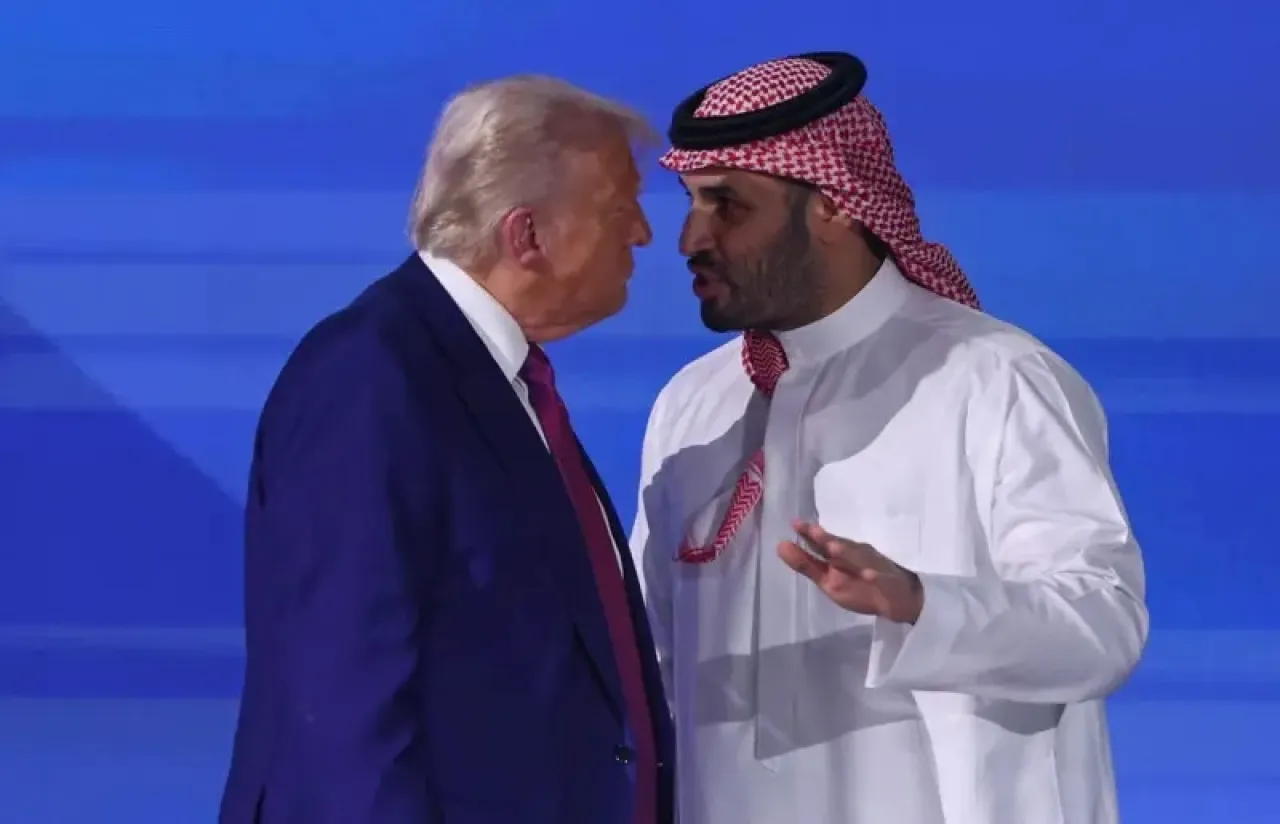
The US is seen very differently in Saudi Arabia, where the American role is assessed through three lenses: regime security, large deals and pressure on human rights. In the Arab media space, reports of talks between Riyadh and Washington on a new bilateral defense agreement sparked a wave of commentary. As Jordanian portal Khaberni relays, citing a detailed Financial Times piece, the move is about Saudi Arabia’s desire to lock in US security guarantees on paper amid regional turbulence and the emergence of competing power players. The authors note that Crown Prince Mohammed bin Salman seeks to “legalize” the American nuclear and military umbrella while preserving freedom of maneuver in relations with China and Russia.(khaberni.com)
At the same time, Saudi and neighboring Gulf outlets enthusiastically covered the signing in May 2025 of a package of “historic” US–Saudi agreements worth about $300 billion, and the Crown Prince even spoke of plans to raise total deal volumes to a trillion. A report in the Bahraini newspaper al‑Ayyam highlights that current contracts are seen as a continuation of an almost century‑long history of energy and military partnership that began with an oil concession granted to an American company in 1933. Donald Trump, in that same article, is presented as a leader for whom “the region’s future begins in Riyadh” and who promised to lift some sanctions on Syria, tying this to a new architecture of Middle Eastern security.(alayam.com)
But this picture of mutual benefit has another side that human rights organizations and some Arab commentators consistently highlight. In a joint statement by several NGOs published by Human Rights Watch ahead of the Saudi crown prince’s visit to Washington, they call on the US administration to “use the leverage” of Riyadh’s interest in a formal defense deal to compel Saudi authorities to take concrete steps on human rights. The statement lists activists, human rights defenders and bloggers who, according to the rights groups, are either imprisoned or restricted in their freedom of movement despite the formal end of bans.(hrw.org)
On the pages of some Middle Eastern newspapers this becomes a broader debate about whether American human‑rights policy changes when such sums and a vital defense architecture are at stake. One Saudi commentator notes in a column that “Washington has always been able to look the other way on inconvenient questions when it came to oil, weapons and a base in the Persian Gulf”; another fears that a new defense deal will create a “structural dependency” of the kingdom on the US and lead to increased pressure on domestic politics. In any case, for Riyadh America is neither a moral standard nor a “global policeman,” but a major supplier of security and technology with whom one must bargain toughly while diversifying external ties in parallel.
The South Korean discourse on the US in recent weeks largely centers on the classic question: how reliable are American security guarantees amid a changing global configuration. Seoul publications closely track American signals on Ukraine and Europe, comparing them with the situation on the Korean Peninsula and in the Taiwan Strait. Analytical pieces voice concern: if Washington increasingly talks about the need for “real de‑escalation” in Ukraine and restoring trust between Russia and Europe, might that become a template for East Asia too, where Washington would have to seek compromises with China and the DPRK. Korean experts remind readers that for Seoul American presence means not only troops but also the “nuclear umbrella,” and any shift in US strategic priorities is perceived as a potential risk.
At the same time, the South Korean press pays attention to the technological dimension of relations with the US: control over semiconductor supply chains, export restrictions to China, joint projects in AI and defense technologies. For Seoul, American sanctions and export controls are both an opportunity and a threat. An opportunity in the form of redirecting supply chains toward Korean companies; a threat in the risk of losing the huge Chinese market. One tech commentator in a Seoul paper puts it this way: “America wants us to bolster its technological hegemony, but at the same time expects us to bear some of the economic losses from breaking with China. This is a politically sensitive balance.”
Curiously, it is in the South Korean context that American domestic politics — polarization, elections, debates about the role of the state — occupies a relatively noticeable place. Korean commentators, looking back at their own experience of rapid democratization and elite turnover, analyze American pre‑election campaigns almost like a mirror reflecting their own fears about the influence of social networks, fakes and foreign interference. Russia appears here in another role — as a source of precedents for information operations, which Western and Asian researchers write about. This creates an interesting triangle: Russia trying to influence American society; the US trying to contain Russia with sanctions; and South Korea carefully studying both experiences to protect its own political system.
Putting these three outlooks together produces an image of the US as a power around which there is less romance and more pragmatic calculation. In Moscow, America is still the main opponent, but no longer demonized to the utmost degree; in Riyadh, it is a necessary but conditional supplier of security and investment; in Seoul, it is a guarantor against the North Korean threat and a key technological partner whose internal shifts are watched as if they were tectonic tremors beneath one’s own soil. In none of these societies is the US simply perceived as the “center of the world”; it is one of the most powerful players whose influence must be taken into account, not blindly accepted or rejected.
That is why local debates about Washington increasingly boil down to the same question: how to build relations with the US in a way that maximizes one’s own autonomy. Russia bets on creating alternative coalitions and trying to “devalue” Western sanctions. Saudi Arabia balances between the American umbrella and expanding ties with China and other Asian powers, using defense deals as leverage both in negotiations over regional conflicts and in dialogue about human rights. South Korea seeks to strengthen the alliance with the US while gaining greater autonomy in defense and technology so as not to become a hostage to American domestic crises or a change of administration one day.
For an American reader there is an important takeaway: the world in which the US is automatically perceived as the “natural leader” and moral arbiter increasingly does not match how the country is seen from Seoul, Riyadh and Moscow. There America is above all a factor of risk and a resource of opportunity, an object of cynical calculation and bargaining. Understanding this down‑to‑earth, sometimes unpleasant truth may be the first step toward a more realistic foreign policy that takes into account not only its own declarations but also how they refract in other people’s mirrors.