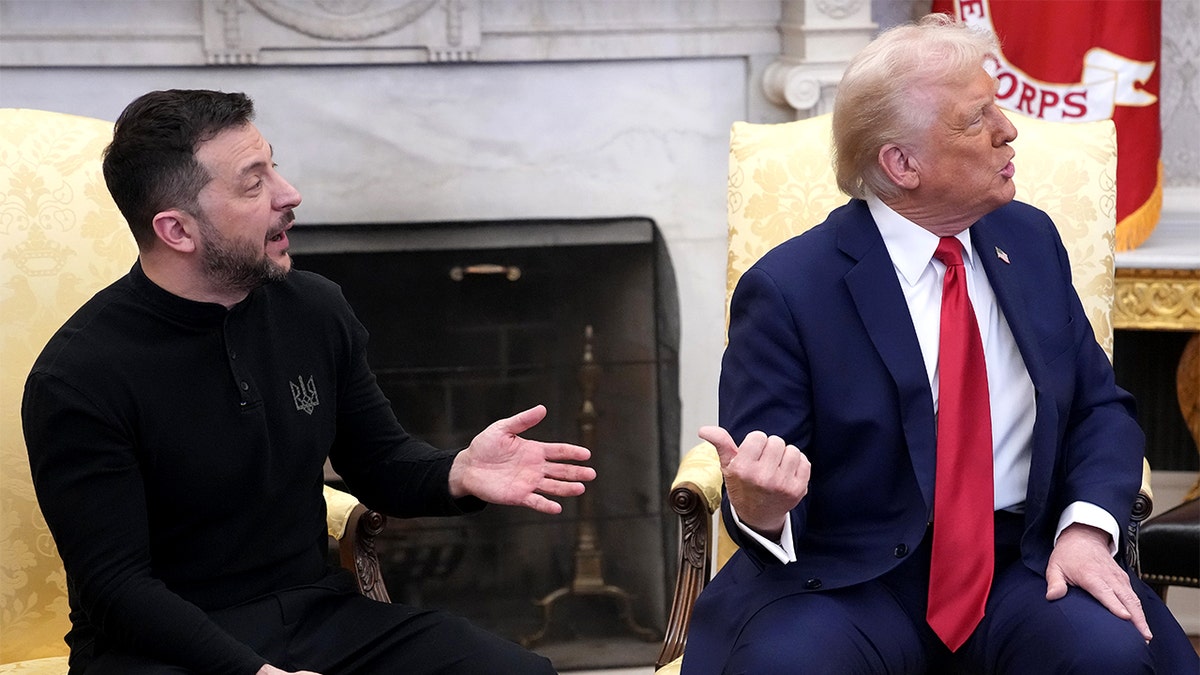
Today the world discusses the United States not as an “abstract superpower,” but as a source of direct risks and opportunities for its own security and economy. In South Korea, Turkey and Ukraine America almost always appears in two contexts: the personality of President Donald Trump and his unpredictable style; and the future of the global security architecture — from the war in Ukraine to alliances in Europe and Asia. These three countries, each dependent on Washington in different ways, watch every gesture from the White House closely and try to understand: how will their own tomorrows change.
The first common thread is the influence of domestic American politics and Trump’s presidency on the rest of the world. Turkish analysts, commenting on Trump’s campaign and subsequent steps, emphasize that current American policy is almost entirely tied to the president’s personality and to struggles among domestic lobbies. In an analytical article by Professor Mehmet Akif Kireçci of Ankara University of Social Sciences for the Anadolu news agency, under a prominent headline about who will determine the outcome of the presidential election — lobbies or “swing states” — the author effectively draws a parallel with Turkey: powerful interest groups, from the Jewish to the defense lobby, form a wide corridor for US foreign policy, but the final decision rests with the electorate of a few states, where voters think little about geopolitics and vote “for the wallet” and cultural identity. According to Kireçci, this makes Washington’s foreign policy unstable for partners: their fate is sometimes decided in Pennsylvania and Michigan, where Turkey, Ukraine or South Korea are remembered at best in the context of jobs at defense factories. The analytical text was published in the Russian-language version of Anadolu Ajansı and is available, among other places, as “ANALYTICS – Who Will Decide the Outcome of the US Presidential Election: Lobbies or ‘Swing’ States?” on the Anadolu agency website in Istanbul.
Ukrainian commentators view Trump even more harshly, because military and financial support for the country depends on his decisions. On the Freedom TV channel, political consultant Hleb Ostapenko emphasizes that the negotiation process between Kyiv and Washington “remains extremely complicated and susceptible to external influence, especially given the unpredictability of US President Donald Trump’s position,” reminding viewers that any direct communication between him and the Kremlin can sharply change the parameters of possible agreements between Kyiv and Washington. He said this in December 2025 in an interview posted on Freedom’s site under the headline “Negotiations between Ukraine and the US are Complicated by the Unpredictability of Trump’s Position, — Expert.” Ukrainian analysts thereby stress that for them the US is not only a “guarantor of support,” but also a source of constant strategic uncertainty: today the White House pressures Moscow, tomorrow it may pressure Kyiv, demanding concessions.
The second major common block is the role of the US in the war in Ukraine and in the West’s relations with Russia, which dominates the agenda especially in Kyiv and Ankara, but is also noticeable in Seoul. For Ukraine America is a key military donor and the architect of any possible peace agreement. Both the official line and independent analysts set the tone here. In February 2025 President Volodymyr Zelenskyy said in an interview with Anadolu that he counts on more active support from the US president and stressed: “I would like Mr. Trump to be more on our side. Many Republicans and Democrats in the US support us,” while also reminding that Kyiv will not accept decisions made without its participation. These remarks were published in the piece “President of Ukraine Counts on More Active Support from the US” on the Russian-language feed of Anadolu Ajansı. For a domestic Ukrainian audience such a message is double-edged: on one hand, it demonstrates dependence on the US and the need to “extract” a greater volume of aid; on the other, it asserts agency: Ukraine does not want to be the object of bargaining between Washington and Moscow.
Some Ukrainian and regional analysis is already discussing specific variants of American peace plans. In the Kazakh outlet Tengrinews, an article about the “fine-tuning of peace” examines leaks about a possible US plan in which Crimea is recognized as Russian, part of the occupied territories are returned to Ukraine, and Kyiv receives security guarantees without NATO membership but with the possibility of EU accession and allied military presence. The Tengrinews author writes that the American plan looks more favorable to Russia in terms of sanction relief, but does not satisfy its maximalist expectations regarding all occupied regions, and also notes that the European‑Ukrainian alternative plan bets on frozen Russian assets as a source for Ukraine’s reconstruction. The article was published in Tengrinews’ analytics section under the title “Fine‑Tuning of Peace. Where Negotiations Between the US, Ukraine and Russia Are Heading.”
From this, Ukrainian experts and media draw two conclusions. First, the US is seen as the architect of the future post‑war security configuration — without an American “seal” any peace plan seems fragile. Second, public sentiment within the US becomes a critical factor: Kyiv closely watches American public opinion polls that show how willing Washington is to continue or, conversely, reduce support. Ukrainian agency UNN, for example, in March 2025 extensively covered poll data according to which 46% of Americans believe the US is doing too little to help Ukraine, and 53% would like America to help Kyiv reclaim territories even at the cost of a prolonged conflict. In the piece “A Significant Number of US Citizens Support Increased Aid to Ukraine — Poll,” the agency emphasizes that these figures are perceived in Kyiv as leverage against Trump: if he makes excessive concessions to Moscow, he risks running afoul of the sentiments of a large part of his own society. That is why in Ukrainian media discourse the US appears simultaneously as the main ally and as a field of complex domestic political struggle, in which Ukraine must seek its supporters.
Turkey, meanwhile, is building a more multi‑move game around the “US — Europe — Turkey — Ukraine” triangle. In an analytical piece for AA Analitika, “Three Paths for Ukraine: The US, Europe and Turkey,” Turkish researcher Gürkan Demir outlines three scenarios for Ukraine’s future: reliance on the US with its military power and global influence; a bet on Europe with its financial resources and institutional integration; and a scenario in which Turkey acts as an independent regional guarantor and mediator. As Demir emphasizes, the American scenario promises the toughest confrontation with Russia and rapid military parity, but at the same time makes Kyiv vulnerable to the variability of Washington’s policy, which can shift attention to another region or face internal crises. The European path looks more stable in legal and economic terms, but Europe moves slower and more cautiously, while Kyiv lives in wartime mode. The Turkish option relies on Ankara’s experience in balancing between Moscow and Kyiv, as well as on its role in the grain deal and Black Sea issues. This analysis, published in the Russian‑language version of Anadolu Ajansı, is at once an assessment and a self‑presentation of Turkey as a key external center of power for Ukraine alongside the US and EU.
The South Korean discourse about the war in Ukraine is less emotional, but it views America through the prism of how Washington manages two fronts at once — the European and the Asian. For Seoul the question is whether US involvement in confronting Russia will weaken its ability to deter North Korea and China. South Korean conservative commentators typically insist that Ukraine’s defeat or a “bad peace” imposed by Americans in a compromise with Russia would signal to Pyongyang and Beijing that Washington is not prepared to go all the way for its allies. Liberal observers more often point to the need for Seoul to diversify its foreign‑policy supports, strengthening cooperation with Japan and developing its own defense industry so as not to depend so critically on the American agenda. In South Korean outlets writing about Ukraine, the US is present as the “central player”: local analysts try to gauge the scale of future American commitments in Asia through Washington’s decisions.
The third cross‑regional theme is the image of the US in multilateral formats and its influence on the global architecture. This includes the controversial boycott of the G20 summit in Johannesburg at the end of 2025, and discussions about how America treats platforms such as NATO, the UN or the G20. In a piece by the Russian business outlet RBC about the upcoming G20 summit without leaders of China, Russia and the US, Trump’s words are quoted in detail: he said that “no representative” of the US will come to South Africa because holding the summit there is a “real disgrace” due to, in his view, the persecution of Afrikaners, while at the same time enthusiastically announcing a G20 summit in Miami in 2026. This position is read in Ankara and Seoul as a signal: Washington is ready to devalue multilateral platforms if they do not suit its political taste, but seeks to turn them into instruments of its domestic politics when they are held on American soil. Turkish commentators return from this episode to the theme of “sovereignty of foreign policy”: Turkey, like other middle powers, tries to maintain maneuvering space in a world where the US alternately strengthens and devalues global institutions. South Korean analysts, by contrast, emphasize that even under such conditions there is no real alternative for Seoul to a close alliance with the US: any costs in multilateral formats are compensated by bilateral security guarantees.
The fourth important crosscutting theme is the cultural‑political perception of America as a polarized and conflictual society. Turkey, Ukraine and South Korea all actively comment on internal American splits, from debates over immigration to racial protests and the confrontation between conservatives and liberals. Turkish columns regularly compare American and Turkish polarization: Ankara sees in the United States not so much a model of democracy as an example of how institutions survive amid intense ideological conflict. Ukrainian authors, by contrast, tend to overestimate the resilience of the American system, viewing it as a guarantee that even an unpredictable president cannot fully turn the country toward Moscow. South Korean commentators most often view American politics through lessons for their own democracy: mass protests, pressure on courts, debates about freedom of speech on social networks are seen both as a warning and as an example of institutional resilience.
Against this background there is another, subtler common element — local societies’ attempt to “read” America more deeply than the English‑language news stream allows. Turkish analysts in AA Analitika carefully dissect how the American electoral map is structured, what less visible interest groups — from the agrarian lobby to shale oil producers — shape foreign‑policy priorities. Ukrainian commentators study American polls with the attention usually paid to domestic Ukrainian ratings, trying to calculate how much “window of opportunity” remains for continuing aid. South Korean experts look at the US military budget, competition with China and technological sanctions as structural trends in which personalities in the White House matter, but do not decide everything. As a result, the image of the US in these three countries turns out to be much more complex than what the American media scene often offers: it is simultaneously partner, patron, source of anxiety, object of study and, in a sense, a mirror in which each country sees its own fears and hopes.
That is why any next move by Washington — from Trump’s statement about boycotting the summit or another post on Truth Social to real decisions on Ukraine or Northeast Asia — is almost instantly reinterpreted in Seoul, Ankara and Kyiv not as an abstract news item about a distant superpower, but as an element of their own domestic and foreign policies. For Ukraine it means whether there will be cover for the skies and salaries for soldiers in six months’ time. For Turkey — whether there will remain room for “multi‑vector” policy and bargaining among Washington, Moscow and Brussels. For South Korea — how reliable American guarantees are if the White House’s attention is torn between Europe, the Middle East and the Pacific. Thus behind the façade of familiar headlines about “US decisions” emerges a picture of many local readings of America — differing in tone, but remarkably in agreement on one thing: far too much still depends on Washington for them to afford the luxury of not watching its every move.