Around the United States, a global lens is forming again: how to talk about war and peace, where the boundaries of American influence lie, and how ready — or not ready — the rest of the world is to accept that the key to ending the largest European war once again rests in Washington. In recent weeks the United States has been at the center of debates in France, Ukraine and Saudi Arabia: from a “Trumpist” peace for Ukraine to worries about the future of the transatlantic alliance and pragmatic admiration for the American–Arab energy and investment partnership.
The central theme linking all three countries is President Donald Trump’s attempt to quickly “close” Russia’s war against Ukraine through a series of negotiations, culminating in trilateral US–Russia–Ukraine meetings in Abu Dhabi without European participation. That format sparked an outpouring of commentary: in France — about Europe’s marginalization and an “American deal-based order”; in Ukraine — about the price Washington is effectively asking to be paid for peace; and on the Arabian Peninsula — about how the war in Eastern Europe became a platform to strengthen the Gulf’s geopolitical role and a new type of relationship with America. Running in parallel is a second cross-cutting theme: how American priorities for allies and partners have changed under Trump 2 — from trust to mistrust, from dependence to attempts to build autonomy, from ideological expectations to purely transactional calculations.
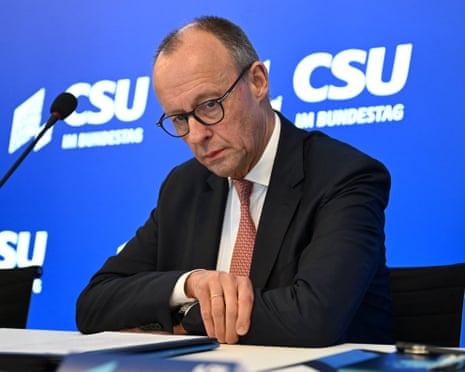
One of the most resonant points is the Abu Dhabi negotiation format itself. In France people noticed primarily what was not there: Europe. In an analysis for Le Monde, French writers stress that the trilateral talks between the US, Russia and Ukraine in the United Arab Emirates marked a “new phase” of diplomacy in which European capitals found themselves outside the door, even though the war is being fought on their borders. The report on the Abu Dhabi meetings emphasizes that the US mediators are not the classic career diplomats but Trump’s special emissary Steve Whitkoff, the president’s son-in-law Jared Kushner and his new adviser on the so-called “Peace Council,” Josh Greenbaum, a structure launched by Trump on the sidelines of the Davos forum. For French readers this appears not only as a geopolitical but also a stylistic break with traditional “Atlantic” diplomacy: one commentary for Le Monde notes that “Washington is building a parallel architecture of settlement in which the EU is assigned the role of observer, not co-architect” (lemonde.fr).
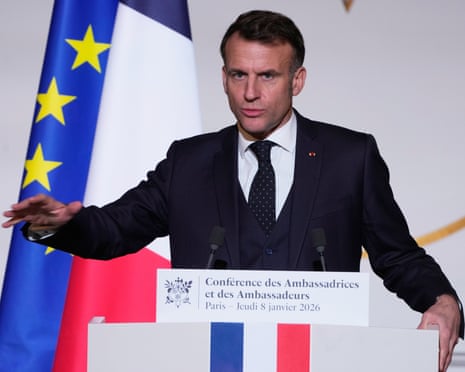
Against this backdrop, a separate storyline in France criticizes the broader US shift under Trump. In an address to ambassadors in early January, President Emmanuel Macron warned that America is “gradually turning away” from some of its allies and “exiting the system of international rules,” and that multilateral institutions are “working worse and worse” (theguardian.com). In the context of Abu Dhabi, these words are read not as abstract lament but as an accurate diagnosis: a settlement crucial for Europe is being moved into the closed rooms of the Emirates, where the EU is invited after the fact rather than as an equal participant. For the French political scene this reinforces an old argument: Europe must more quickly build its own defense and diplomatic autonomy if it does not want to wake up as a bit player in a deal between Washington and Moscow.
The Ukrainian debate about the US is, in its own way, harsher and more existential. Kyiv simultaneously depends on Washington as its main military and political guarantor and is speaking increasingly loudly about the price the American administration is proposing to pay for a ceasefire. In its analysis, ZN.ua examines documents of the so-called “new Trump peace plan,” where, according to the publication, Washington ties Ukraine’s postwar arrangement not only to territorial concessions but also to a strict agenda on “democratic standards” within Ukraine itself — from election timetables to parameters of domestic reform — while practically failing to impose mirror demands on Russia (zn.ua). The authors stress the dissonance: the White House publicly expresses concern about the state of Ukrainian democracy, but, judging by the project texts, appears uninterested in the absence of elections in Russia or the condition of its institutions.
A separate strand of Ukrainian texts focuses on what concessions the US considers “realistic.” In a ZN.ua piece recounting a Wall Street Journal analysis, it is said that Washington’s view boils down to Kyiv relinquishing parts of territory that for more than ten years were the cornerstones of its defense, in exchange for a Western military shield unacceptable to Moscow (zn.ua). At the same time, Politico, cited by Ukrainian commentators, lists three core issues blocking an agreement: the status of occupied territories, the parameters of Ukraine’s future armed forces and the extent of sanctions pressure on Russia after peace. Ukrainian analysts sum up: “An agreement is close on almost everything except what really matters” (zn.ua).
Assessments of American public opinion also play an important role in Ukraine’s domestic discussion. Ukrainian media closely cite an Economist/YouGov poll showing that nearly half of Americans disapprove of Trump’s approach to resolving the war in Ukraine (zn.ua). For Kyiv’s analysts this is a double-edged signal: on the one hand, public dissatisfaction can restrain the White House from exerting too much pressure on Ukraine; on the other, public fatigue with the conflict pushes Washington toward seeking a “quick peace,” even if it cements Russian territorial gains. In one ZN.ua commentary the author notes that “Washington is beginning to view the war through the prism of domestic politics and elections, rather than through the prism of European security,” and that this is the root of Kyiv’s anxiety.
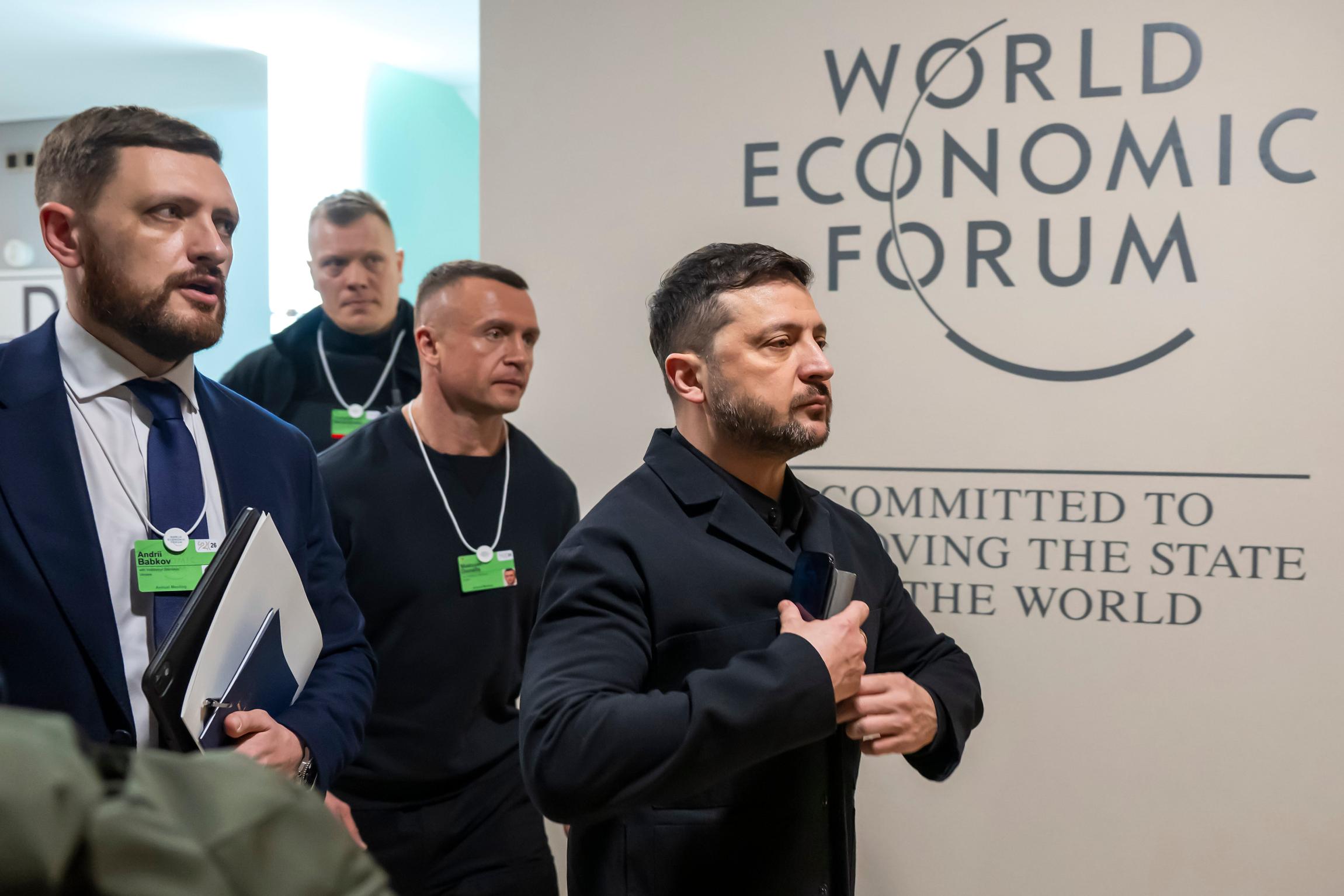
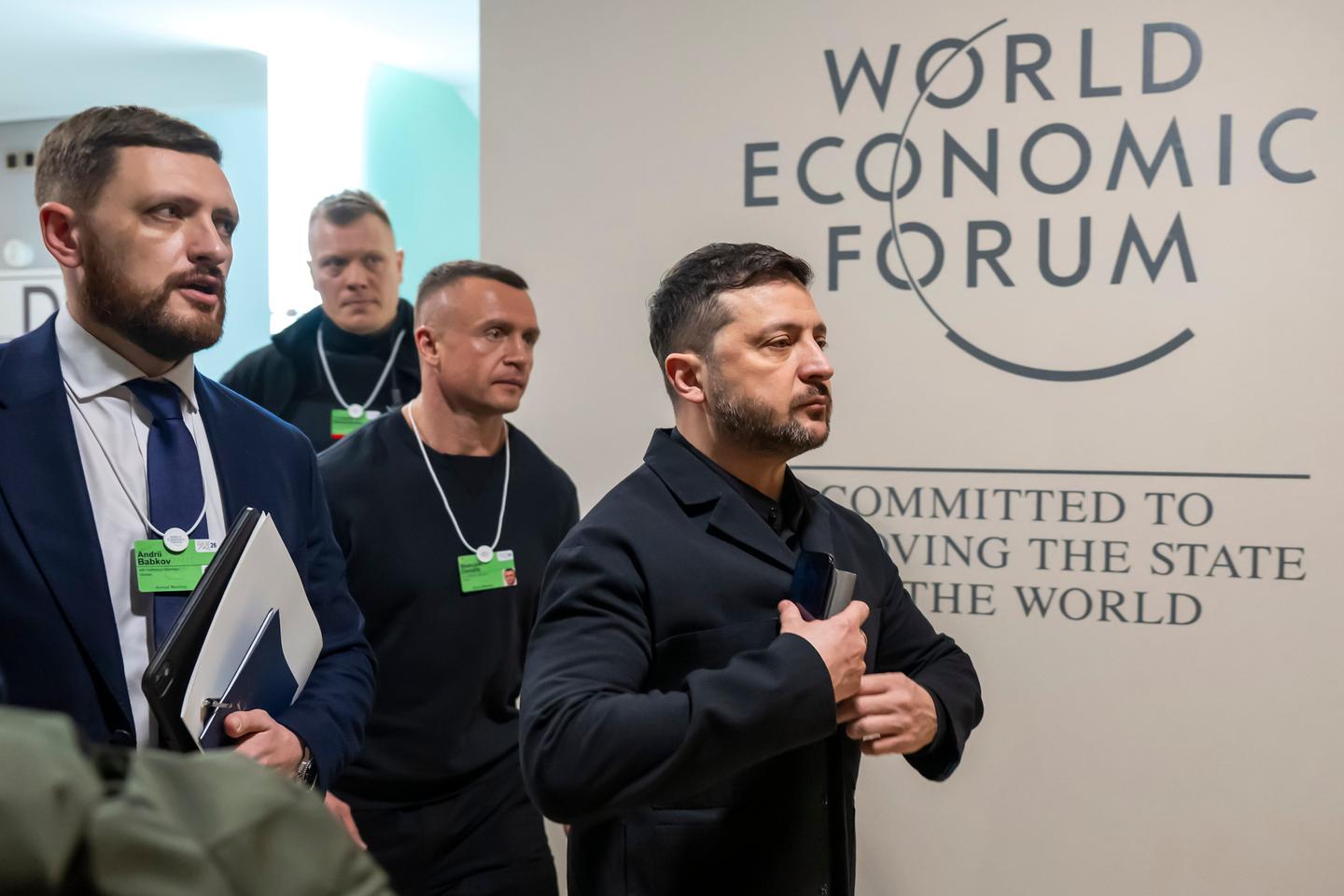
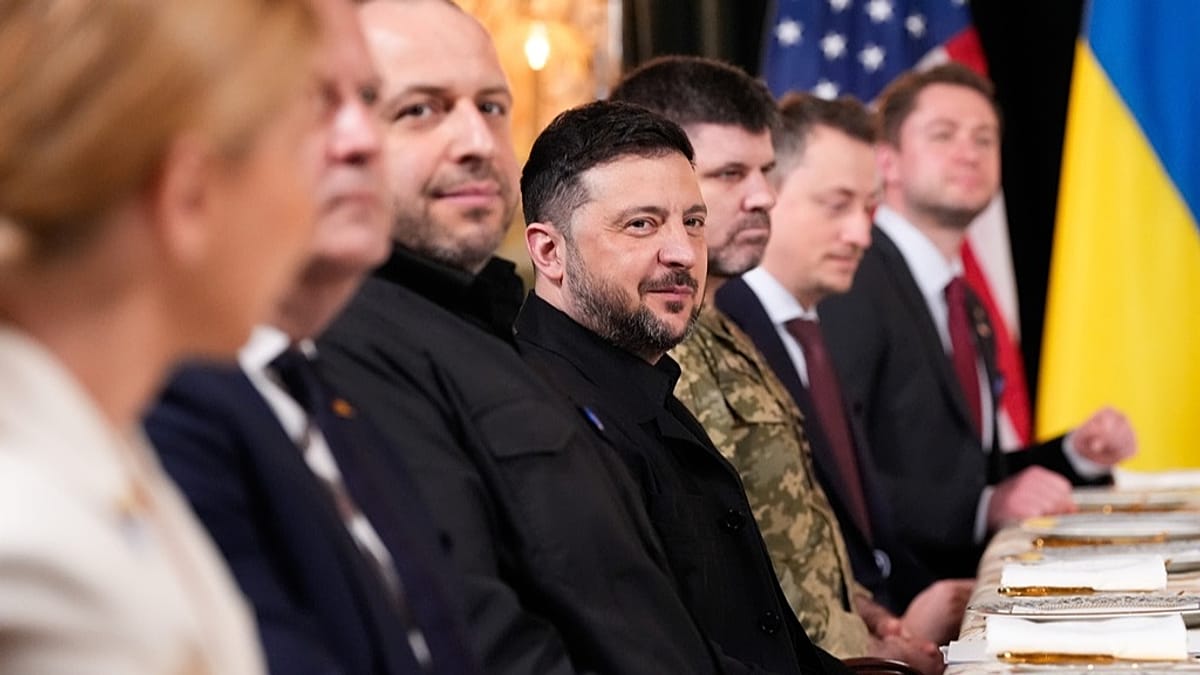
Interestingly, Ukrainian leadership in public statements tries to strike a balance. President Volodymyr Zelensky, commenting on the latest negotiation rounds and work with the US, speaks of the need to “reach a result as soon as possible” and emphasizes that together with the negotiation team and the government they “have identified things that need to be worked through more deeply in the agreement with the US on postwar recovery” (zn.ua). In Ukraine’s information space this reads as an attempt to shift the emphasis: to discuss not only the territorial parameters of peace but also the guarantee package of security and reconstruction that Washington is willing to commit to for Ukraine.
The same events are viewed from a very different angle in the Arab press, including in Saudi Arabia and the broader Gulf media space closely linked to the kingdom. For regional media, the very geography of the talks — from meetings in Riyadh and Abu Dhabi to the London track — has become a symbol that the Gulf has become a mandatory venue for major Washington deals, whether the peace in Ukraine or multi‑trillion-dollar investment packages.
Arabic-language outlets extensively cover the Abu Dhabi talks, emphasizing their “constructive” character and the parties’ readiness to continue dialogue. Euronews Arabic quotes Volodymyr Zelensky saying that “much was discussed” and that the main thing is the talks were “constructive,” with the possibility of new meetings as early as the start of the following week (arabic.euronews.com). In another piece on the Elaph portal, the talks are called the first three-way format involving Russia, Ukraine and the US since the start of the full-scale war, and Kremlin sources describe them as “useful in every respect,” while clearly stipulating that lasting peace is impossible without resolving territorial issues (elaph.com). For Arab readers this emphasis is important: America acts here less as a moral arbiter than as the chief broker of a deal between two warring parties.
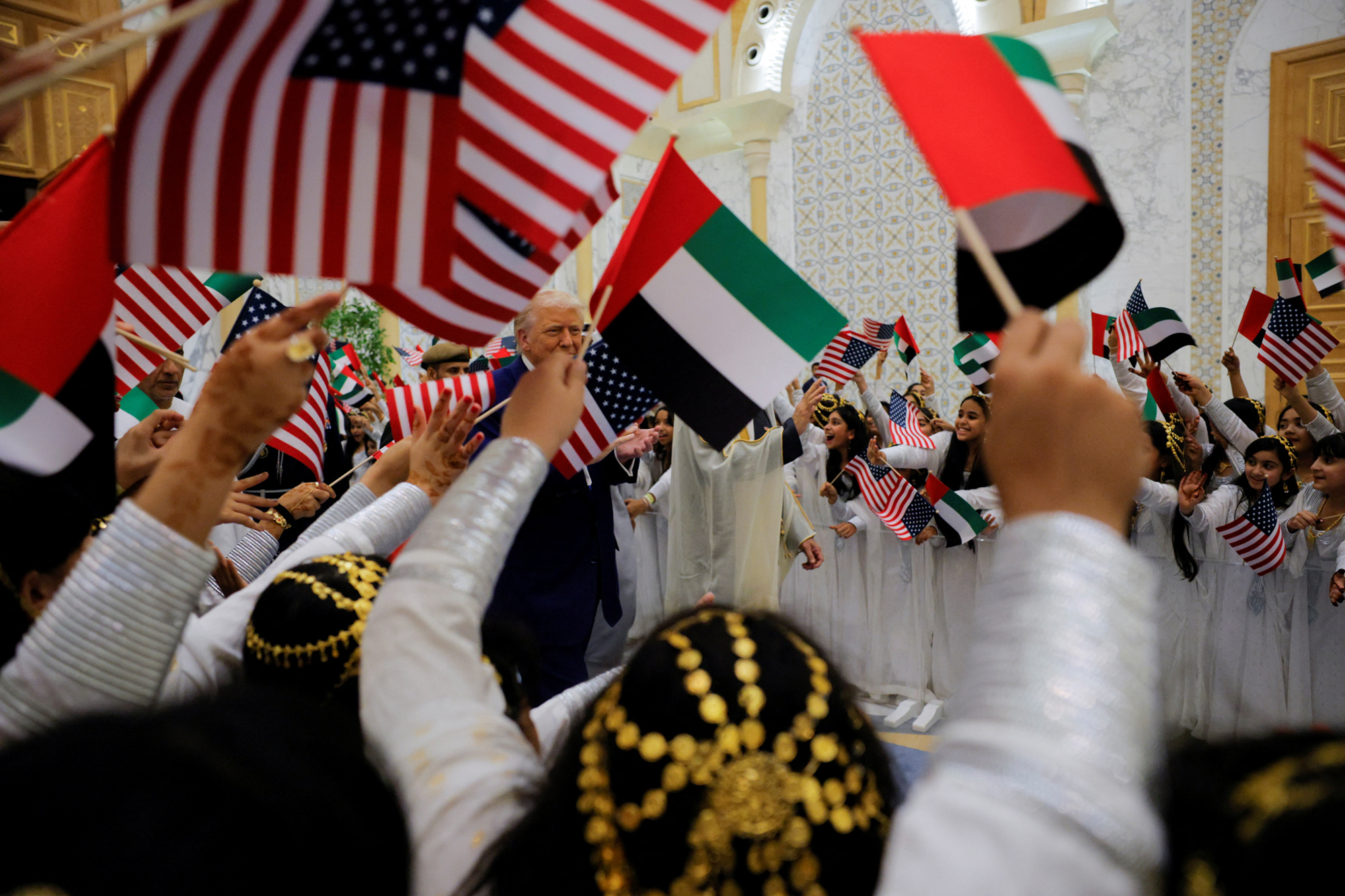
Regional analysis is also closely watching how American presence in the Gulf is changing. In an analytical piece by the Washington Institute for Near East Policy published in Arabic, Trump’s 2025 investment tour of the Gulf — including Saudi Arabia, Qatar and the UAE — is examined in detail. The author notes that the president focused on securing “$2 trillion in investment deals,” including infrastructure, energy, technology and urban development, and that in Abu Dhabi he reportedly “accelerated” a previously announced Emirati investment package into the US economy and signed a bilateral agreement on artificial intelligence (washingtoninstitute.org). This is presented as an example of a new, explicitly transactional approach: security and political patronage in exchange for massive investments and technological partnership.
A pragmatic tone dominates Saudi and Gulf-aligned Arabic media. Regarding Ukraine, the emphasis is less on the moral-legal side of the conflict and more on how an American “quick peace” strategy will affect global oil, food and energy security markets. Commenting on American pressure on Kyiv to speed up negotiations, authors on Al Jazeera Arabic’s portal note that the White House is urging Ukraine to “rationalize expectations” after almost four years of war, acknowledging the impossibility of full military recovery of territorial integrity, and sees negotiations as the best of realistic options while the balance of forces on the battlefield does not worsen further (aljazeera.net). In this logic American policy is framed not as a “betrayal of democracy” but as another episode of the big game in which Washington acts according to the balance of costs and benefits that is most advantageous to it.
Arab commentators also point to another aspect: Trump uses the Ukraine peace process and the associated “historic” session in Abu Dhabi — that is how White House press secretary Caroline Levitt described these talks (arabic.rt.com) — as a tool to bolster his international image as a “deal-maker” and peacemaker who has “ended eight wars,” as he likes to emphasize. An Al Jazeera piece covering his meetings with Zelensky in Florida quotes Trump saying he is “in the final stage of negotiations” and that if an agreement is not concluded now “the war could drag on,” while also asserting that Putin is “seriously committed to peace” (aljazeera.net). For an Arab audience, accustomed to US presidents’ primary focus on the Middle East, the transfer of the “peacemaker” image to Eastern Europe looks like an expansion of a familiar model — but with the same instruments of pressure and incentives the region knows well from Middle Eastern cases.
Comparing the three countries’ attitudes toward the broader theme “the US and its allies after Trump 2” yields an even more layered picture. The French discussion revolves around trust and predictability. On one hand, official leaders including Macron publicly congratulate Trump on his victory and state their readiness to “work together, as in the previous four years” (aljazeera.com). On the other hand, French analysts, including in the left-liberal press, raise the question of how much Europe can rely on an American ally who openly questions the meaning of NATO and demonstrates a willingness to ignore European interests when making deals with Moscow. In one commentary reported by English-language media, Macron speaks openly of a world of “great powers,” in which there is again “the temptation to divide the world into spheres of influence” (theguardian.com) — and for French readers the identity of those powers is obvious: the US, China, Russia, not the EU as an independent pole.
The Ukrainian perspective is essentially a debate about where alliance ends and coercion begins. When American mediators in Florida tie security issues, the unblocking of Russian assets and the holding of elections in Ukraine into a single package, as the Ukrainian press wrote citing ABC News sources (zn.ua), this is perceived as a signal: support is not unconditional, and Washington is ready to bargain hard even with the victim. It is no accident that in Kyiv calls are increasingly heard not only to strengthen ties with the US but also to expand room for maneuver — from deepening cooperation with the UK and individual EU countries to more active engagement with the Global South.
In Saudi Arabia and neighboring countries the view is the opposite: the US is still seen as the key security guarantor and main economic partner, but a partner with whom relations must be built on a strictly pragmatic, almost corporate basis. Deep investment deals, joint technologies, oil and gas coordination, and now diplomatic mediation on their soil — all these form an image of America not as the “leader of the free world” but as a powerful, yet perfectly rational counterparty with whom it is possible and necessary to bargain. Analysis following Trump’s investment trip to the region emphasizes that preserving American interests amid such large-scale deals will require “constant and careful oversight” from Washington, otherwise the balance could shift in favor of regional players (washingtoninstitute.org). For the Saudi elite this means one simple thing: the space for maneuver and playing off US tensions with China, Russia and Europe may never have been so wide.
A detail not obvious to an American reader in all these discussions is how differently the idea of an “American peace” is perceived across the three countries. In France it is more a reminder of the painful experiences of Iraq, Libya and Afghanistan and a fear that another “deal-based” settlement under US auspices will legitimize territorial grabs and undermine the remnants of international law. In Ukraine it is the agonizing question of whether there is any alternative to a peace on terms advanced by Washington, and how to avoid becoming an object of trade among great powers. In Saudi Arabia it is an almost cynical but sober view: if an American peace is going to be built anyway, one should be not a passive observer but the venue and participant in the deal, converting it as much as possible into money, technology and enhanced influence.
Taken together, this leads to a paradoxical conclusion. Under Trump 2, the United States is simultaneously losing the aura of moral “leader of the West” and strengthening its status as an indispensable broker and military superpower. France responds with anxiety and talk of autonomy, Ukraine with a mixture of gratitude and fear about the cost of a “quick peace,” and Saudi Arabia with pragmatic calculation and a desire to fit into the new architecture of deals. None of these perspectives fully matches how America describes itself. And it is precisely in this divergence that the main thing to note about the world’s reactions to the US today lies: even those who need American power increasingly disbelieve the American narrative, while becoming ever more tied to American reality.