Imagine a huge gate for ships that almost blocked the way home for thousands of fish. That nearly happened in Ballard more than a century ago when the famous locks were built. But a group of immigrant women from Norway and Sweden noticed something the engineers with university degrees had missed. They knew a secret passed down in their families for generations: salmon always return home, and if you block their path the river will die.
This is the story of how knowledge brought in suitcases across an ocean saved an entire ecosystem and taught America a new way to build without destroying nature.
Locks that forgot about fish
In the early 1900s Ballard faced a big problem. Lake Washington sat too high, and ships couldn’t sail from it to the ocean. Engineers came up with a brilliant solution—build locks that work like an elevator for boats. A vessel enters a special chamber, the water level is raised or lowered, and the ship ends up at the needed elevation.
When construction began in 1911, everyone marveled at this technical wonder. Newspapers wrote that Ballard would become the most important port on the West Coast. But the engineers’ plans said nothing about the salmon that each year swam this route to the places where they were born to lay eggs for the next generation.
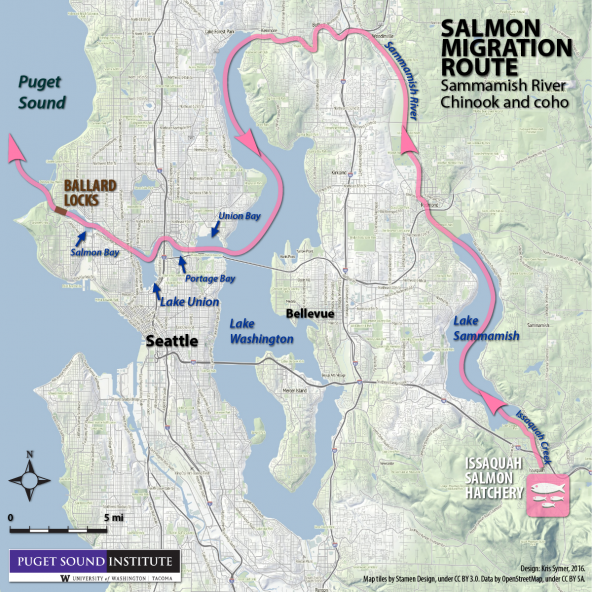
For salmon this journey is a matter of life and death for the species. They are born in rivers, go out to the ocean, grow there for several years, and then, driven by an ancient instinct, return to the exact stream where they were born. Scientists still marvel at how fish find their way through thousands of miles of ocean. If you block that route, salmon cannot reproduce, and within a few years they are gone.
Women who remembered the fjords
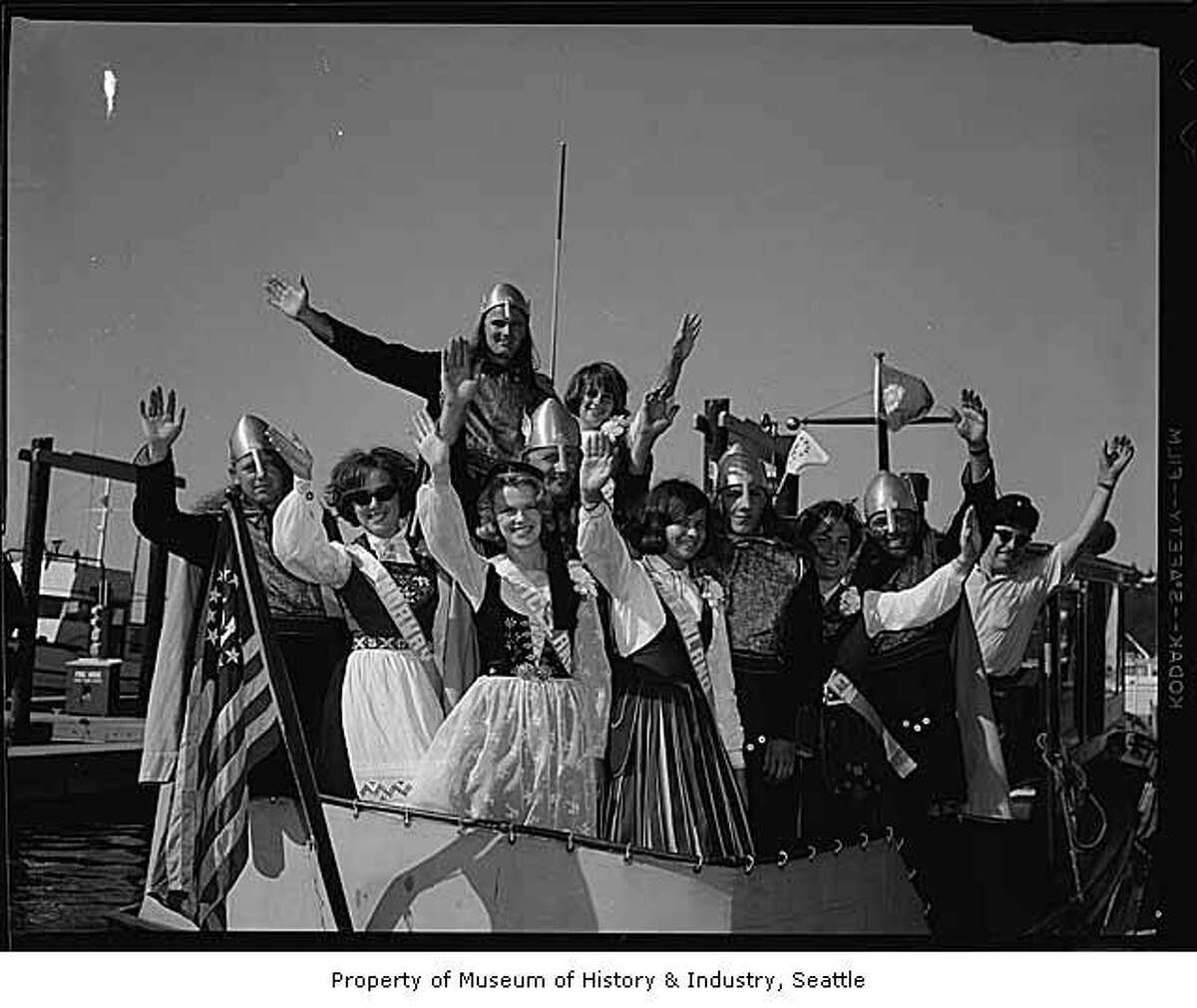
Among the lock builders were many immigrants from Scandinavia—Norway and Sweden. They came to Ballard because there were fish plants here and people were needed who knew how to work with fish and the sea. Men built the locks and worked on fishing boats, while women mended nets, cured fish, and raised children.
Many of these women had grown up by Norwegian fjords—narrow sea inlets surrounded by high mountains. There everyone knew: salmon are not just fish, they are the heart of the river. An old Norwegian proverb says, “A river without salmon is like a home without children.” In Scandinavia there were strict rules: you could not build dams or barriers that prevented fish from traveling upstream.
When the women saw the lock plans they grew worried. Ingeborg Larsen, whose husband worked as a stonemason on the construction, told her neighbors: “Back home in Norway my grandfather always left a passage for salmon when he built a mill on a stream. He said that if you don’t respect the fish, the river will punish you.” Other women recalled similar stories from their villages.
Gardens for little salmon
These women decided to act. They began attending builders’ meetings—which was very unusual for the time when women were seldom heard on technical matters. They brought their children and explained to the engineers what they knew from generations of experience.
“Salmon must return to where they were born,” Sigrid Andersen patiently repeated at a meeting in 1913. “If you build this wall without a passage, in five years there will be no salmon and no work for our husbands at the fish plants.”
The women told engineers about a tradition they had brought from Scandinavia—laksehage, which means “salmon garden.” These were small shallow pools families created near their homes. In spring, when the young salmon (called smolts) prepared for their voyage to the ocean, children would catch a few and place them in these gardens for a few days.
Children fed the fish, watched them, and gave them names. It was a way to teach the next generation to respect salmon and understand their life cycle. Before releasing the fish back into the river, the family gathered and the oldest would say, “Swim to the ocean, grow strong, and return home.” It was a lesson about the bond between people and nature and our duty to care for one another.
The ladder that saved the river
At first the chief engineer, Hiram Chittenden, didn’t want to listen. He thought the fish would find a way around the locks, or that it wasn’t that important. But the women were persistent. They organized a petition, gathered signatures from fish-plant owners (who realized they would lose business without salmon), and even wrote a letter to the Seattle Times.
In a letter published in 1914, a group of Scandinavian families wrote: “We came to America for a better life, and we found it here in Ballard. But we also brought with us the wisdom of our ancestors about living beside the sea and rivers. Please listen to us. Salmon are not just fish, they are the future of this place.”
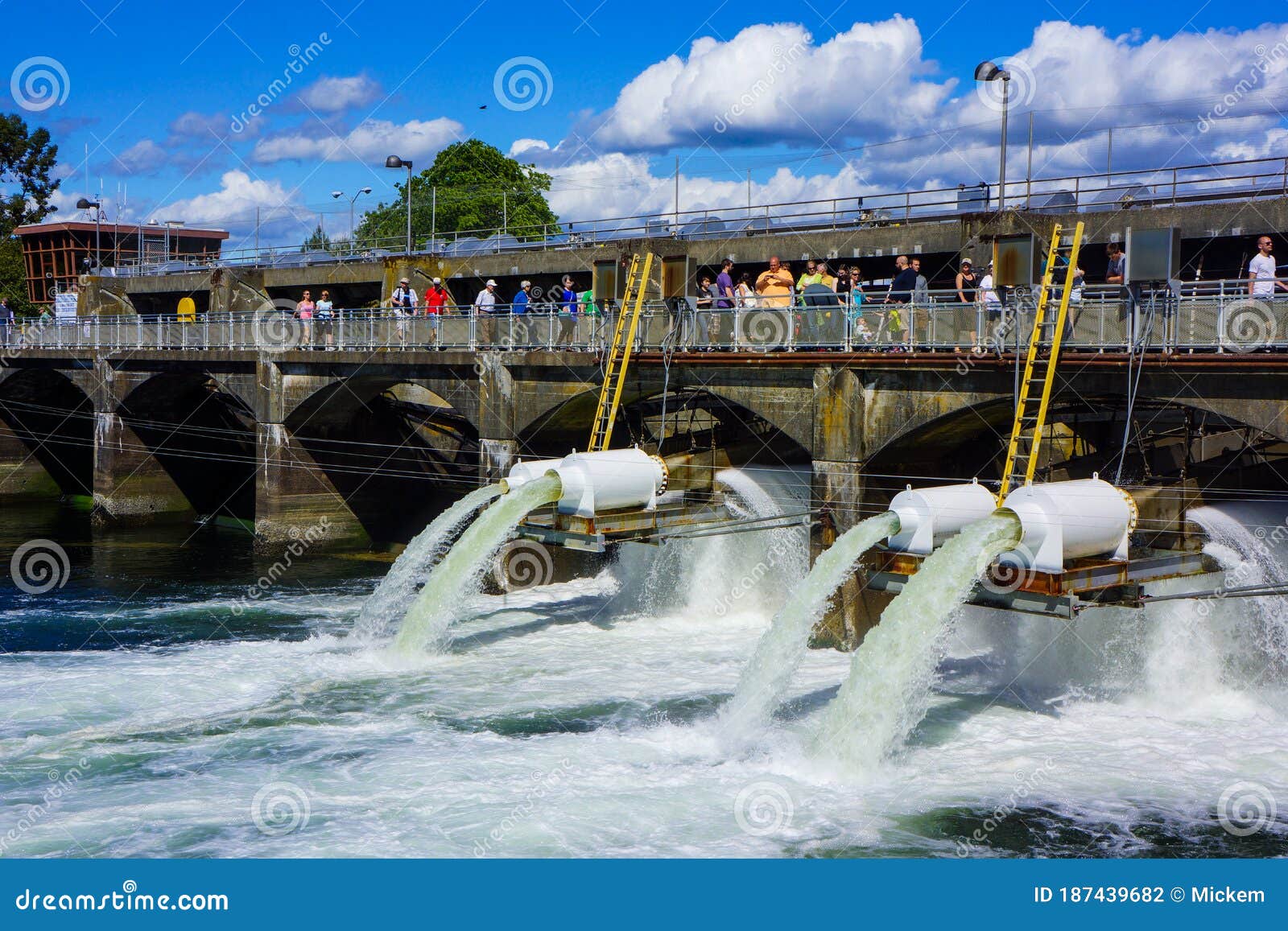
Finally, in 1916, during construction, engineers agreed to add a fishway to the project—a special “ladder” for salmon. It consisted of a series of small pools rising in steps that fish could ascend to reach the height of the locks. Water flowed down these steps, creating a current that showed the salmon the way up.
This was one of the first fishways of that size in the United States. Engineers learned from the Scandinavian immigrants how to calculate the height of each step, the flow speed, the width of the passage—everything so even tired fish could make the climb.
A tradition that lives on
When the locks opened in 1917, Scandinavian families started a new tradition in Ballard. They created small “salmon gardens” near the locks where children could watch fish through the viewing windows of the fish ladder. Parents brought children to see salmon making their journey home and told stories about perseverance and the importance of remembering where you come from.
That tradition evolved into what today are the viewing windows of the Ballard Locks fish ladder. Each year thousands of people, especially children, come to watch salmon climb the ladder. There is also a small educational center that explains the salmon life cycle.
Interestingly, thanks to the immigrants’ persistence, the Ballard Locks fish ladder became a model for hundreds of similar structures across America. Engineers from other states came to study its design. The principle the Scandinavian women defended—“build with nature, not against it”—became a foundation of modern ecological engineering.
Why it’s important to remember
Today about half a million salmon pass through the Ballard Locks fish ladder each year. Species include Chinook, coho, chum, and others. They climb the very steps that exist because a group of immigrant women were not afraid to tell the educated engineers, “You are missing something.”
This story teaches several important lessons. First, knowledge comes from many sources. Sometimes wisdom passed from grandmothers to grandchildren matters more than university textbooks. Second, when people move to new places they bring not only suitcases of clothes but also the experiences of their peoples—and that experience can help solve problems in their new home.
Third, voices that initially seem unimportant—those of women, immigrants, people without degrees—sometimes speak the most crucial truths. If engineers had not listened to the Scandinavian women, the Lake Washington Ship Canal would today be dead, without salmon and without the many other fish and animals that depend on salmon.
Finally, this story reminds us that caring for nature is not a new fashionable idea. Many cultures have long known we must live in harmony with rivers, forests, and animals. Sometimes we just need to stop and listen to those who remember these ancient lessons.
The next time you see a salmon—in a store, in a book, or, if you’re lucky, in a river—remember the women who crossed an ocean and carried the wisdom of the fjords. Remember the children who named little fish in salmon gardens. And remember that any one of us can be the voice that protects what cannot speak for itself.