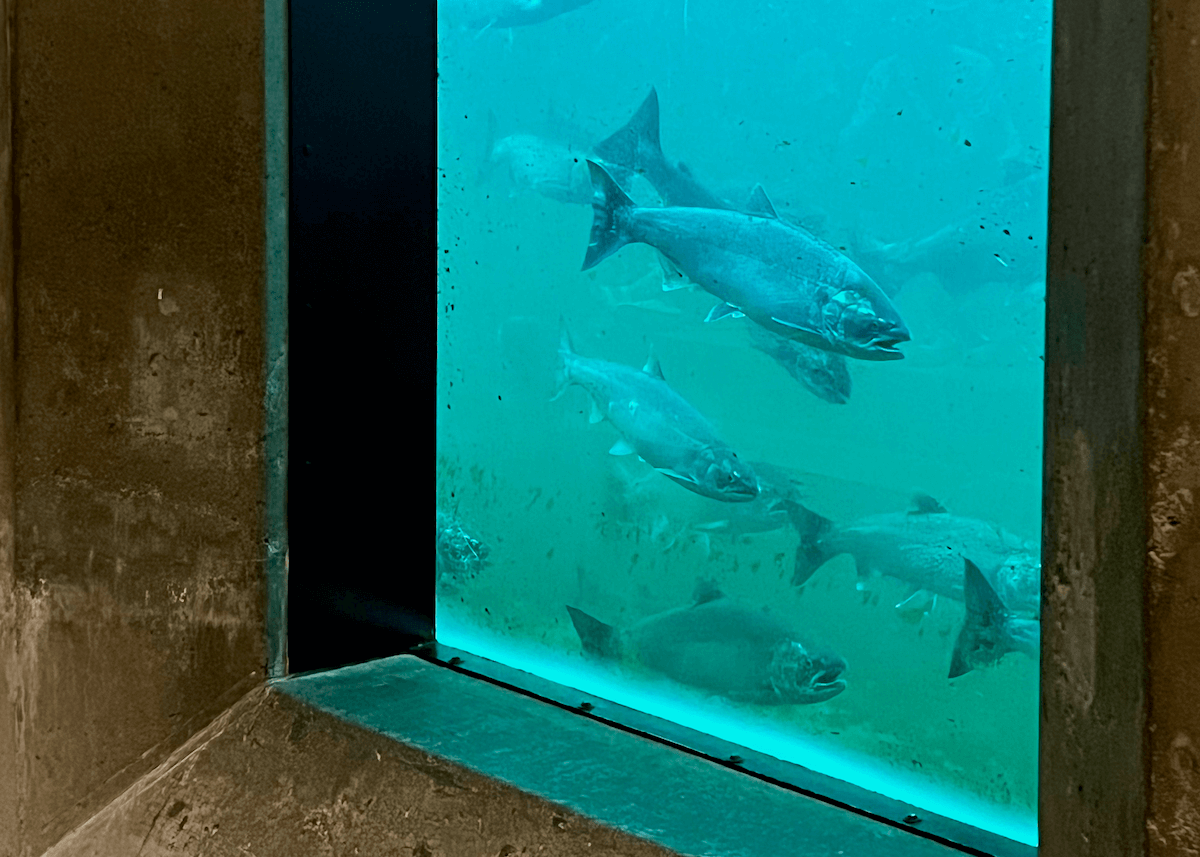
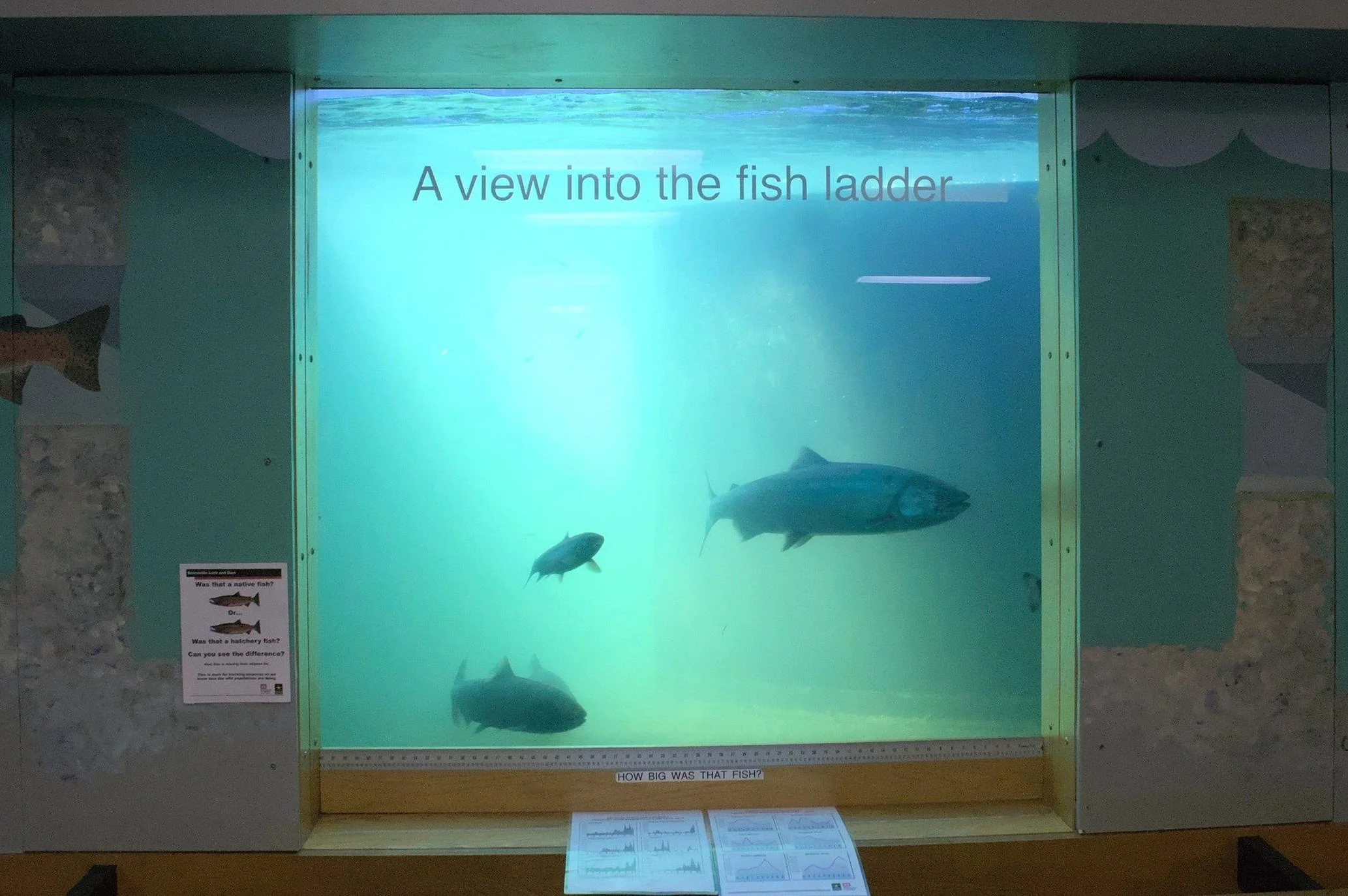
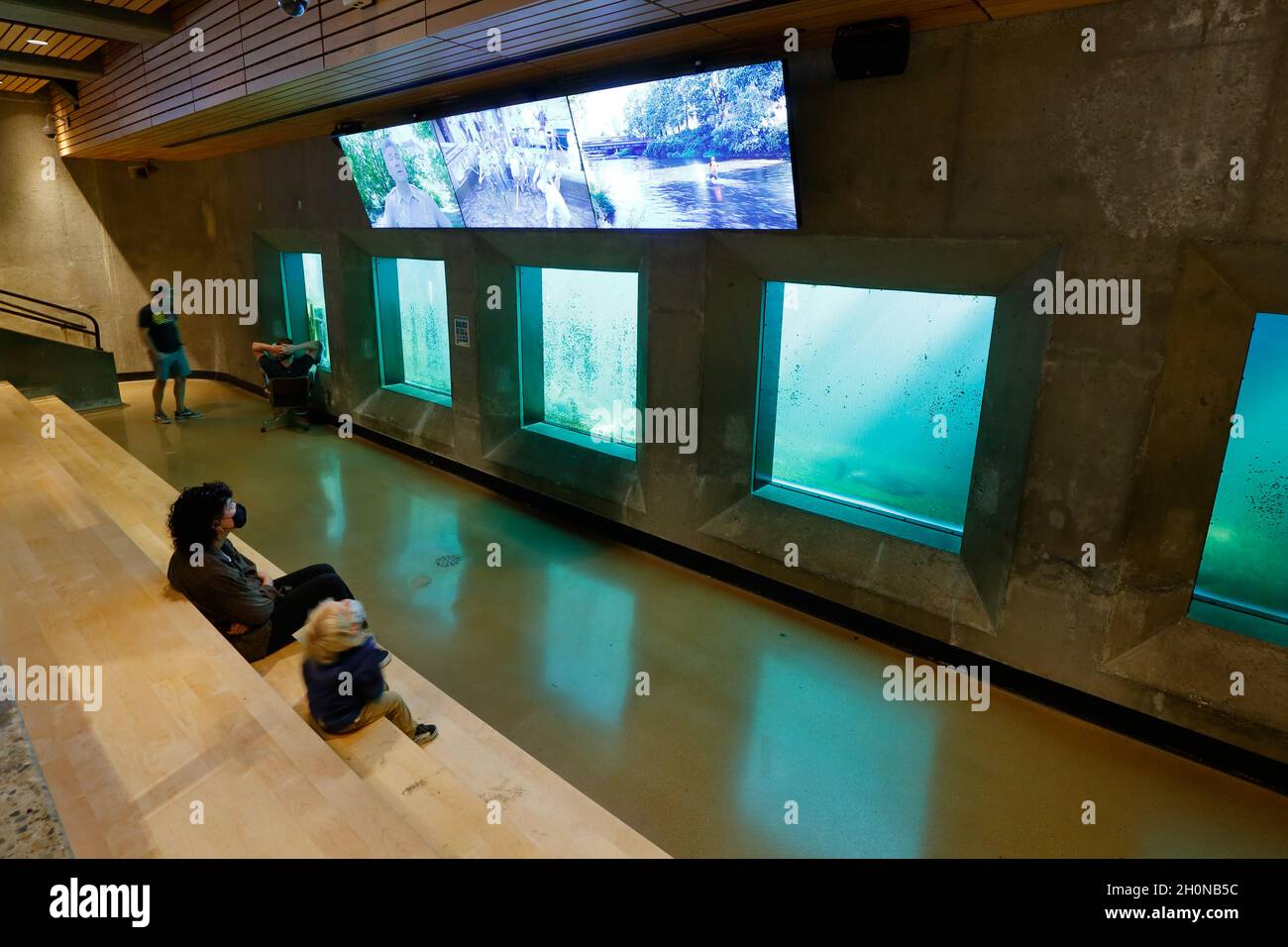
Imagine standing in an underground room with huge windows as large silvery fish, almost the size of your hand, glide past you. They’re not in an aquarium — they’re swimming up a real underwater staircase, rising from the ocean into a lake as if the fish can climb steps! This is not fiction; it’s a real place in Ballard, Seattle, and more than a hundred years ago grown-ups argued fiercely about whether those windows were needed at all.
This story began with a big problem and ended with one of the city’s most beloved places. The most interesting part is that the engineers who built this marvel initially thought the glass viewing windows for watching fish were a foolish waste of money. One man disagreed, and because of his stubbornness millions of children (and adults!) have been able to see this natural wonder with their own eyes.
The problem: how to build a waterway for ships without blocking the fish
In the early 1900s, Ballard was home to many people from Norway, Sweden, and Denmark — countries in northern Europe where people had been fishing and building boats for centuries. They came to America and established fishing businesses in Ballard because there was a lot of salmon — a valuable and tasty fish.
But there was a problem. The ocean (Puget Sound) was at one level, and Lake Washington and Lake Union were at a higher level. Ships needed to pass between them, but simply connecting the waters with a channel wouldn’t work — all the fresh water from the lakes would drain into the salty ocean! Engineers came up with a solution: build locks — special water elevators for ships. A vessel sails into a large chamber, gates close, and the water is raised or lowered, lifting or lowering the ship.
Locks solved the shipping problem but created a huge problem for fish. Every year millions of salmon swam from the ocean upstream to lay eggs where they themselves were born. This is called spawning, and for salmon it is the most important journey of their lives. Now their route was blocked by a giant concrete wall as tall as a three-story building!
If the fish couldn’t pass, they would die without leaving offspring. And without salmon, Ballard’s fishermen would lose their livelihoods. For Scandinavian immigrants who had lived by fishing their whole lives, this was a catastrophe.
The solution: a fish ladder and an argument over unnecessary windows
The project’s chief engineer, Hiram Chittenden, came up with a brilliant solution: a fish ladder. It’s not a conventional staircase but a series of small pools connected to each other. Water flows from the upper pool to the lower one in little cascades. Salmon are powerful fish and can leap against currents, so they can hop from one pool to the next, gradually overcoming the whole height.
Picture it: 21 pools, each the size of a small room, connected in sequence. A fish rests in a pool, gathers strength, then jumps to the next. Step by step, pool by pool, it climbs the height of a three-story building!
But Chittenden wanted to add something else: underground viewing windows through which people could watch the fish from inside the ladder. He wanted children and adults to see these amazing fish up close, to understand how they travel, and to learn to respect nature.
Many other engineers and officials opposed it. They said: - "It’s too expensive!" - "Why spend money on windows? The fish don’t need them!" - "People won’t come to watch fish underwater anyway." - "This isn’t an engineering structure, it’s entertainment!"
But Chittenden insisted. He believed an engineering project could be not only useful but educational. He argued that if people saw salmon with their own eyes, they’d understand why it’s important to care for nature. In the end, he got his way — the windows were built.
Scandinavian values: when progress respects nature
For Ballard residents the fish ladder meant more than just an engineering fix. In the Scandinavian countries many of the fishermen came from there was a long-standing tradition: nature and people should live in balance. Norwegian fishermen never took all the fish — they always left enough so fish could reproduce.
This philosophy is reflected in the design of the Ballard Locks. Engineers didn’t just build a route for ships — they built a route for ships and for fish. They didn’t say, “Progress is more important than nature.” They said, “We can have both.”
Today you can still see that Scandinavian culture in Ballard. There’s the Nordic Heritage Museum, an annual Norwegian Day celebration on May 17, and many fishing businesses are still owned by descendants of those Norwegian immigrants. The locks and fish ladder have become symbols of those values — respect for nature, foresight, and care for future generations.
From dispute to treasure: what happened to the “unnecessary” windows
The Ballard Locks opened in 1917. And you know what? The engineers who said no one would come to watch fish through the underground windows were wrong. Very, very wrong.
About 500,000 people visit those windows every year. Kids press their noses to the glass, watching huge salmon swim by just inches away. Parents explain where the fish are going and why it matters. Teachers bring entire classes on field trips. People who have lived in the city their whole lives and never seen wild nature up close suddenly realize: these fish travel thousands of miles to return home!
It’s especially impressive in the fall, when the spawning season begins. Then thousands of salmon move through the ladder. Some are enormous, over a meter long! Their scales shine silver, and in some species the males turn bright red with green heads. They swim with such determination and drive — and children watching them learn what true persistence looks like.
The viewing windows have also proven valuable to scientists. Researchers use them to count fish, study behavior, and check health. Thanks to the windows, biologists have learned a lot about how salmon orient themselves, how they choose routes, and how different species behave differently.
Today those windows are one of Seattle’s most beloved attractions. A place once called “a waste of money” is now priceless. It taught millions of children to respect nature. It showed that engineering can be about more than concrete and steel — it can be about beauty, education, and connecting people with the natural world.
The lesson of a stubborn engineer
The story of the Ballard Locks and their viewing windows teaches an important lesson: sometimes the most valuable parts of a project are the ones that seem “unnecessary.” The engineers who argued with Chittenden thought only about practical function: let the ships pass, let the fish pass, that’s it. Chittenden thought bigger. He understood that an engineering structure can change how people relate to nature.
He was right. Today the children who look at salmon through those windows grow up understanding that wild nature is important and must be protected. Many of them become biologists, environmental advocates, and engineers who, like Chittenden, look for ways to combine human progress with nature’s well-being.
The Ballard Locks have operated for more than 100 years. Ships pass through them every day. Every year thousands of salmon ascend the fish ladder. And every day children stand at those very windows — the ones people once refused to pay for — and discover the wonder of nature.
That is the true treasure — not gold or jewels, but knowledge, wonder, and the bond between a city and the natural world. All thanks to one stubborn engineer who refused to listen to those who said “it’s not necessary,” and insisted on what he believed in. Sometimes the most important decisions are the ones you have to fight for.