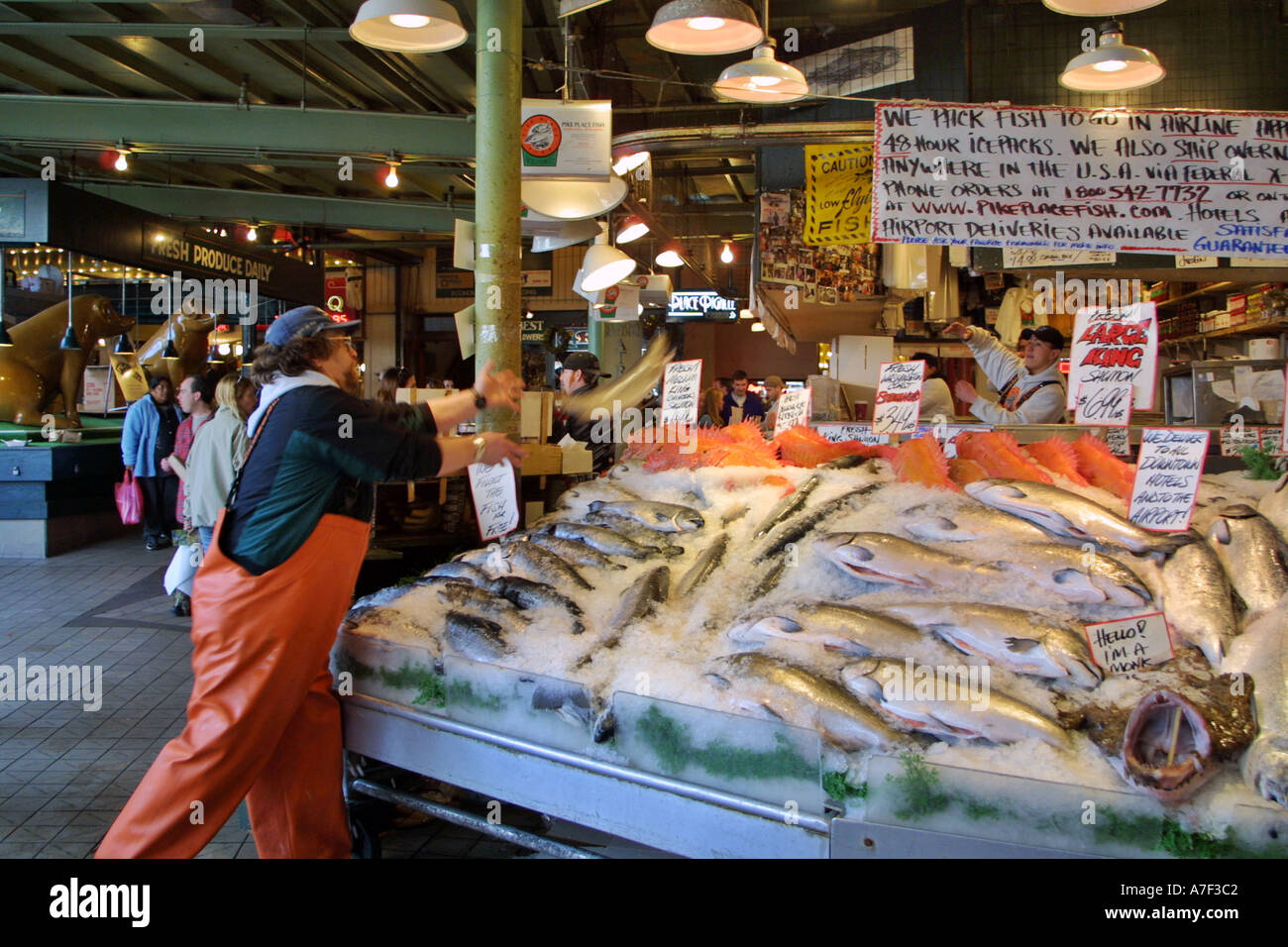
Imagine this: you walk into a bustling market right by the ocean—and suddenly an enormous fish flies over your head. People laugh, clap, shout—and no one runs in panic. That’s exactly what the famous fish counter at Seattle’s Pike Place Market looks like, where for several decades sellers have been throwing fish to each other across the counter. But few people know that this cheerful tradition didn’t begin as a game at all—and that at first it caused a real scandal.
When the Job Became Too Hard
In 1986, ordinary fishmongers worked at the Pike Place Fish Market counter. Their job was simple but exhausting: moving heavy fish—sometimes weighing several kilograms—from one end of a long counter to the other. Again and again, all day long. Your back ached, your arms got tired, and by lunchtime your mood was soaked through.
That’s when a manager named John Yoshimura suggested something unusual: what if they just threw the fish? Not carried it, stumbling along from fatigue, but tossed it to a colleague who would catch it. It was faster, easier on the back—and, honestly, it was fun. The sellers tried it. It worked. And they liked it.
But not everyone at the market was on board.
A Scandal Over Flying Fish
Pike Place is an old and respected market. It opened back in 1907 and has always been seen as a serious place where people come for fresh food—not for circus acts. When neighboring vendors saw salmon and halibut flying over the counter, many of them were outraged.
“This is disrespectful to customers,” some said. “It’s not serious,” others added. “Fish is food, not a ball!” a third group argued. There were even attempts to ban the new tradition. Market administration received complaints. It seemed like the strange idea would last at most a couple of weeks.
But something unexpected happened: customers fell in love with the flying fish. People came just to watch. They laughed, took photos, and came back again and again. The counter—once just one of many—became the most famous spot in the entire market.
Joy as a Secret Ingredient
Over time, the Pike Place Fish Market sellers noticed something important: when the job brings joy, everything changes. They didn’t just throw fish anymore—they started joking with customers, guessing what people wanted to buy, and making surprises for children. One vendor, Ronnie Nichols, described it like this: “We decided that every person who walks up to us deserves the best moment of their day.”
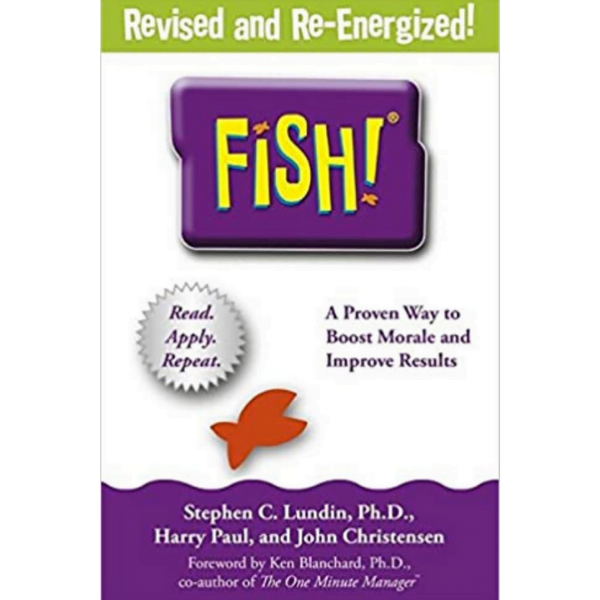
That idea—that you can choose a good mood even at a tough job—really resonated with a consultant named Stephen Lundin. He watched the vendors, talked with them, and in 2000 wrote a book with the simple title “Fish!” (“Fish!”). In it, he outlined four rules that made the counter a happy place:
- Play — find fun even in everyday tasks
- Be there — truly listen to the people around you
- Make their day — try to delight everyone
- Choose your attitude — you decide whether to get angry or smile
The book spread around the world. It was translated into 30 languages. Adults read it in serious business-management courses. And it all traces back to a few tired sellers choosing to throw fish instead of carrying it.
Fish That Changed More Than One Market
Today, the Pike Place Fish Market counter is one of Seattle’s most photographed attractions. Tourists from all over the world come specifically to see silver salmon flash through the air. Some even ask permission to catch the fish themselves—and the sellers, of course, agree, because that’s part of their philosophy: make each person’s day just a little better.
To me, there’s something important in this story—not just for adults, but for all of us. Sometimes the strangest, funniest idea is exactly the one that changes everything. Everyone kept saying “No,” “Not serious,” “That’s wrong”—and it turned out that the very thing they dismissed was actually right. The flying fish taught the whole world that joy isn’t a reward for hard work. Joy is a tool that hard work begins with.
Conclusion: Sometimes You Just Have to Throw the Fish
The story of the fish counter is a reminder that change often starts with a small, almost silly decision. No one planned to create a philosophy or write books. A few people were simply tired of carrying heavy loads and decided to try something new. They faced criticism—and still kept going. And in the end, their small idea circled the world—almost as if their fish were flying over the counter every day.
So if anyone ever tells you your idea is too strange or too unserious, remember the flying salmon of Seattle. Sometimes exactly those ideas end up being the most important.