Imagine your mom works all day—clearing tables in a café, washing dishes, smiling at customers—and then comes home in the evening and realizes that the money still isn’t enough for a decent dinner. Not because she’s working badly. Because that’s just how the rules are set up. This is exactly what was happening to thousands of people in the American city of Seattle—and that’s why one of the most unusual stories about how ordinary people can change the law began there.
A woman with a microphone and a big idea
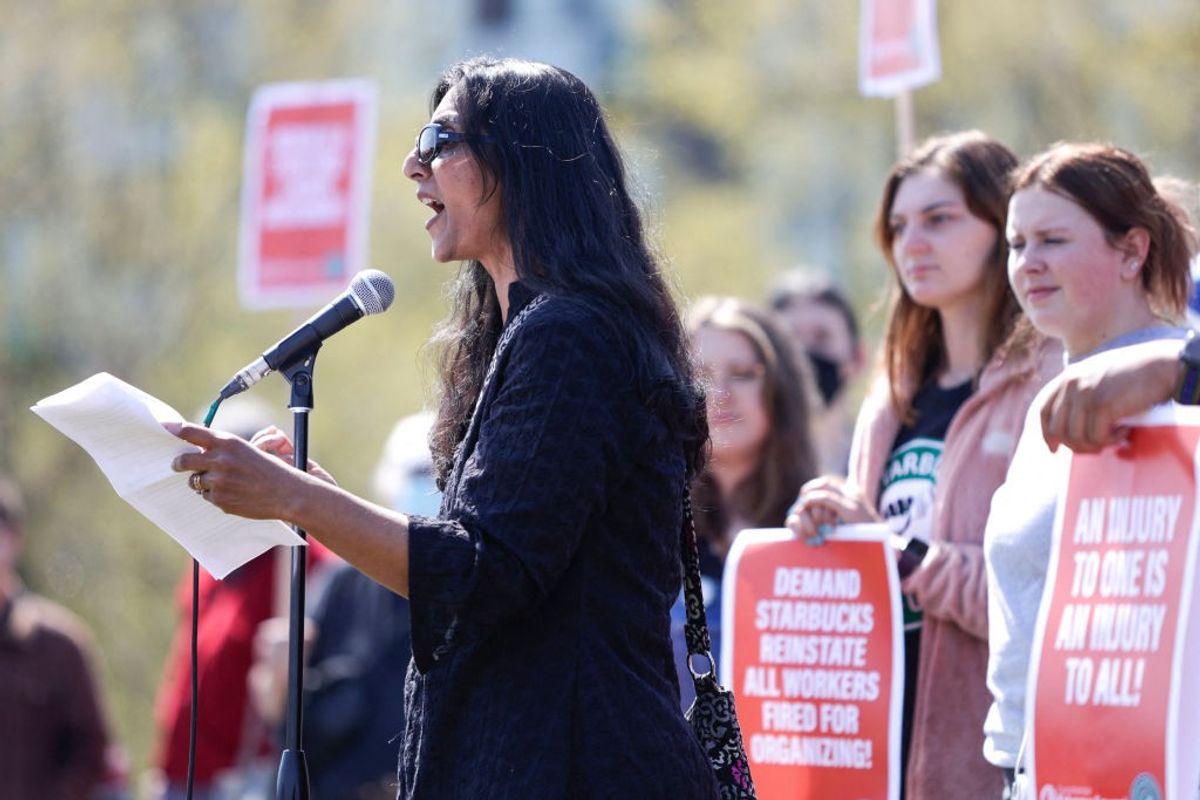
In 2013, Seattle had an unusual candidate running for a seat on the city council. Her name was Kshama Sawant. She moved from India, worked as an economics teacher, and said very simple things: people who work full-time should earn enough to live normally. Not lavishly—just normally.
She had almost no money for her campaign. She didn’t buy expensive TV ads. Instead, she walked the streets, knocked on doors, talked to people—cooks, cleaners, bus drivers. And people listened to her, because she was talking about their lives.
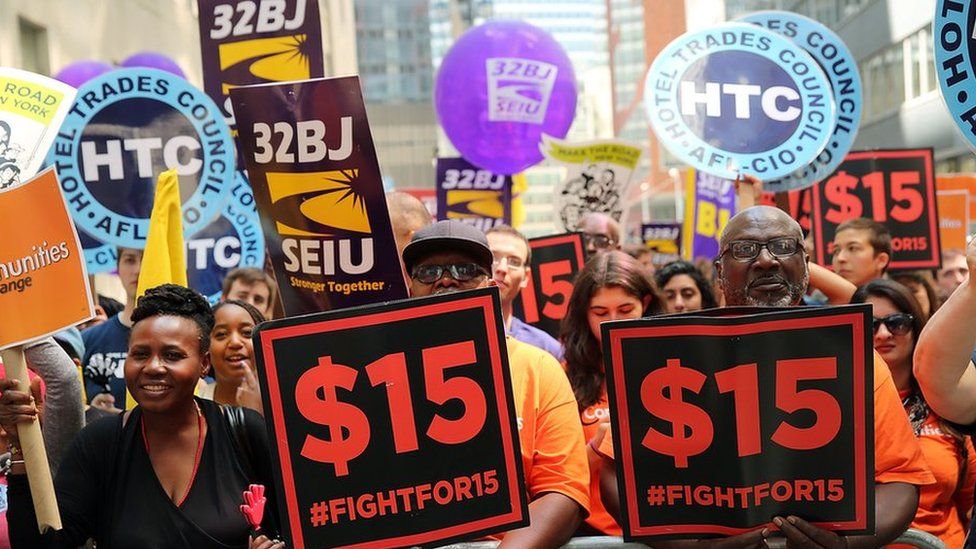
Kshama Sawant won the election. Then she did what she promised: she proposed a law on a minimum wage of fifteen dollars an hour. In 2014, Seattle became the first major city in the United States to adopt such a law. The world watched.
What is a minimum wage—and why it matters
To understand what this is about, imagine a game. In a class there’s a rule: nobody can get less than a four on a test—even if they wrote badly, the teacher still gives at least four. A minimum wage works in a similar way: the government tells employers, “You can’t pay people less than this amount.” It’s a floor—below which you’re not allowed to go.
Before the new law in Seattle, the minimum wage was about nine dollars an hour. It sounds like money, but if you calculate how much it costs to rent an apartment, buy food, and pay for transportation in a pricey city like Seattle, it simply wasn’t enough. Many workers were holding down two or three jobs at once and still barely made ends meet.
Fifteen dollars is almost twice as much. Sounds like great news for everyone. But it wasn’t that simple.
The big fight: what happens to the city?
Once the law was approved, a real storm of arguments began. Restaurant owners and small shopkeepers said they couldn’t pay that much to all their employees—and would have to close or lay people off. Economists argued with one another. Newspapers ran frightening headlines. Some predicted that Seattle would lose thousands of jobs.
It was a real experiment—like in a science class, except instead of test tubes there were real people and an entire city.
Scientists from the University of Washington—right there in Seattle—decided to closely study what was happening. They tracked the numbers for several years and found something unexpected. Yes, some employers reduced employees’ hours a bit. But those who kept working got significantly more per hour. And when the researchers added everything up—the final result in workers’ pockets increased. People earned more.
Of course, it wasn’t perfect. Some small cafés really did close. Prices at restaurants rose a little. Life rarely turns into a simple problem with one right answer. But the catastrophe that had been predicted never arrived.
An experiment that changed the rules everywhere
Seattle’s story mattered not just for the city itself. Politicians, scientists, and ordinary people across America—and across the world—watched it. If one city decided to try it, others could too. And that’s what happened: after Seattle, similar laws were adopted in New York, Los Angeles, and San Francisco. Then whole states got involved. The conversation about fair pay grew louder and more serious.
Kshama Sawant—the same microphone-carrying woman who walked around the neighborhoods talking to cooks—kept working in the Seattle city council for many more years. Her story is a reminder that sometimes one stubborn idea, plus the willingness to talk to people, can change the rules of the game for a great many.
It’s also a story about how big questions—for example, how much a person should earn for honest work—don’t have easy answers. They have to be asked again and again, tested against results, debated, thought through. That’s exactly how a living city works.