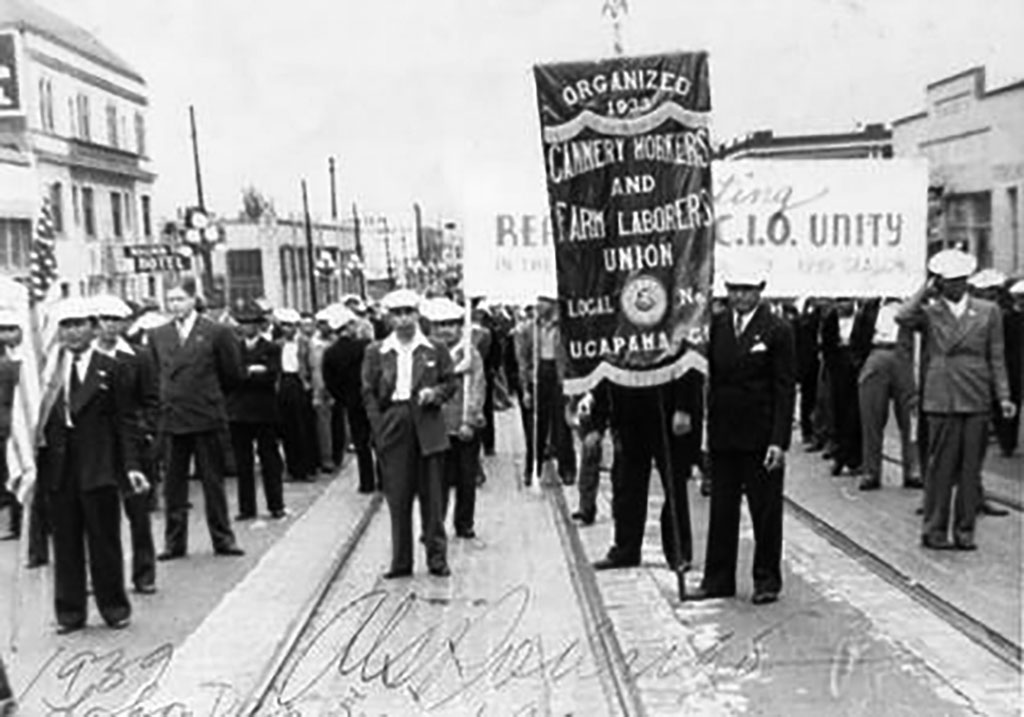
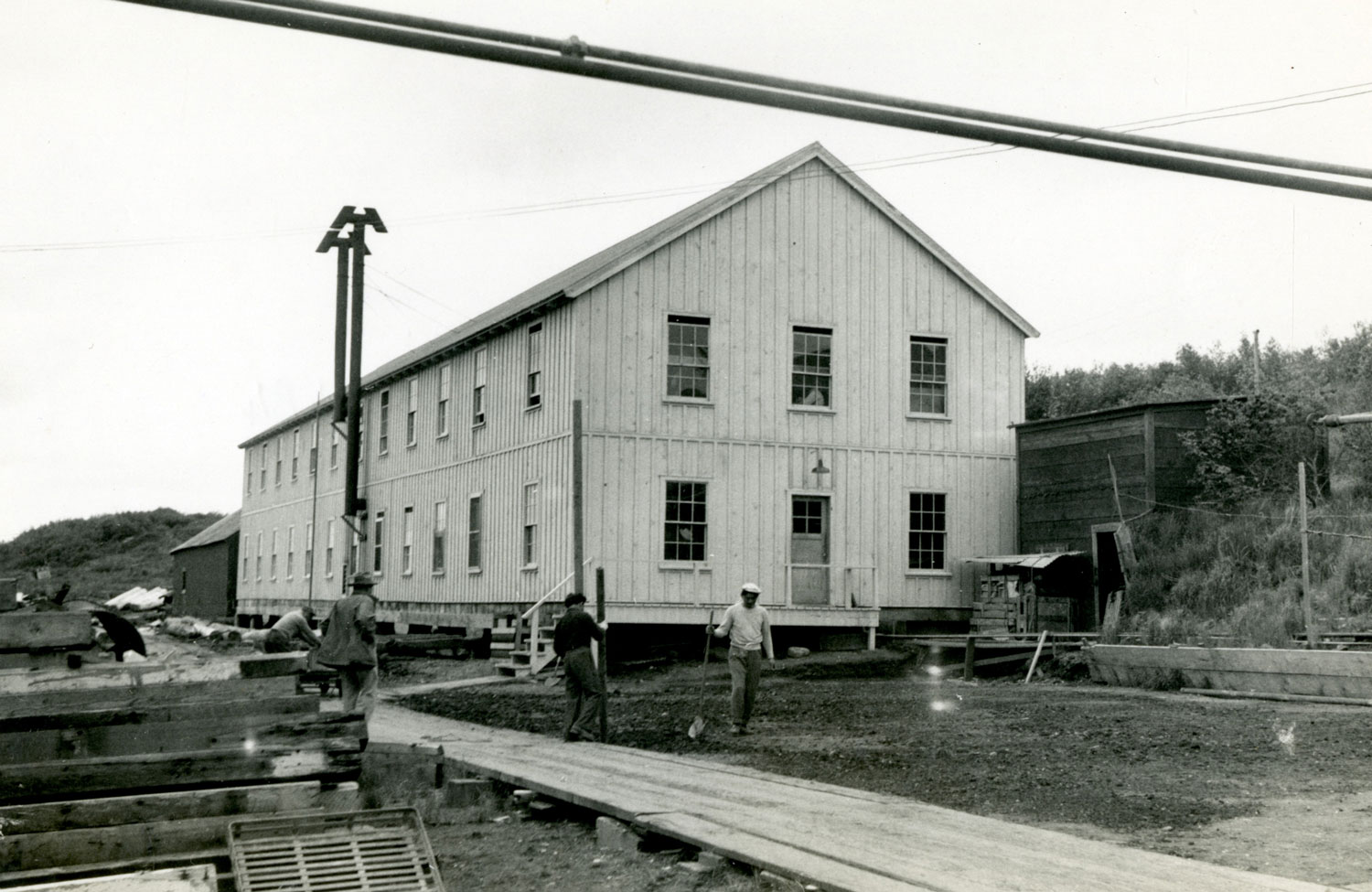
Imagine living in a large room where beds are stacked on top of one another, and you’re only allowed to eat at a separate table, away from everyone else. That’s how many cannery workers in Alaska lived in the 1930s. Among them were young Filipinos, known as “Alaskeros.” In 1933, they began organizing a union and demanding better conditions. Their story shows how a city’s buildings and streets can both divide people and help them find one another.
Who Were the Alaskeros?
At the time, the Philippines was under U.S. rule. Filipinos were considered U.S. “nationals”—they could come to the country, but they could not become full citizens. Thousands of young men went in search of work. Many ended up in Seattle, where each spring they boarded steamships and headed north to Alaska.
That was the start of the salmon season. Huge schools of fish swam up the rivers, and the salmon had to be cleaned, cut, and packed into cans quickly. The work was hard, and there was little time to rest. In the fall, the workers returned to Seattle. They were usually hired through contractors, who assembled crews and kept a share of their earnings.
Bunkhouses and Dining Halls: Walls Between People
Now for what interests us most: the buildings. Workers lived in long wooden bunkhouses by the water, often built on pilings. Inside were rows of tiered beds, a stove, and very little personal space.
But here’s what matters even more. According to historians, housing and dining halls at the canneries were often segregated by ethnicity: Chinese, Japanese, Filipino, and other workers lived separately. This made it easier for factory management to control them and kept them from forming close ties. When workers live and eat separately, it’s harder for them to come to an agreement.
It’s like a school where children are seated at different tables and forbidden to talk, and then people wonder why they don’t become friends. The building acts like an invisible instruction: “Stay apart.”
Hotels and a Hall Where People Could Talk Things Over
In winter, workers returned to Seattle and settled near what is now the International District. It’s an old neighborhood with beautiful brick buildings. Many were built as inexpensive hotels for men who had come to the city for work: small rooms, long corridors, and a shared lobby downstairs.
Life in these places unfolded in communal spaces. Lobbies, benches, cafés, and shops became places where workers met, exchanged news, and found out who was paying what. Crews were also hired there. But these were also places where workers could discuss unfair conditions and decide what to do about them.
When workers began organizing a union in 1933, they needed a place to gather and make decisions together. The union hall became for them what a classroom or schoolyard might be for you: a place where you’re not alone, but part of a team. In the bunkhouses, workers were divided into groups; in the hall, they came together. That was the “architectural” victory: a space created by the people themselves overcame one designed to keep them apart.
What Remains Today
Many of the neighborhood’s old buildings have survived. One of them, built in the early 1910s by Chinese residents of Seattle, now houses the Wing Luke Museum. It tells the stories of Asian Americans, including those of the Alaskeros. Buildings that once served simply as homes and workshops have become repositories of memory.
I think this is one of the most beautiful things about cities. A building is more than a roof over your head. It can be a place where people are seen, heard, and brought together. And if you look closely at old buildings, you can find traces of people whose stories rarely make it into textbooks.
Conclusion
The story of the 1933 strike shows that space shapes how people relate to one another. Bunkhouses with separate dining halls were designed to keep workers apart. Hotel lobbies and the union hall helped them find common ground. So when you pass an old building, it’s worth asking yourself: Who lived here? Who gathered in these rooms, and what did they dream of?