In the fall of 1999, something unusual happened in the American city of Seattle. Thousands of people marched through the streets, including some dressed as giant green “sea turtles.” They weren’t putting on a play or getting ready for a carnival. They were telling adults: “Please think about nature when deciding how to trade.” This story links a very simple thing—shrimp on a plate—to a much bigger question about how the world works.
What Is Trade Between Countries, and Who Makes Sure the Rules Are Followed?
Imagine that all the kids in your neighborhood are swapping toys. One brings toy cars, another brings dolls, and a third brings stickers. To make sure no one cheats, you need rules: what can be traded, how to trade it, and what to do if someone breaks an agreement. Trade between countries works the same way. One country grows wheat, another makes phones, and a third catches fish, and they trade with each other.
To make sure this exchange is fair, the World Trade Organization, or WTO, was established in 1995. You can think of it as a referee on a playground: if two “players” argue, the referee checks the rules and decides who is right. More than a hundred countries belong to the WTO, and they have agreed to settle disputes by following rules rather than shouting.
Shrimp, Nets, and a Turtle Escape Hatch
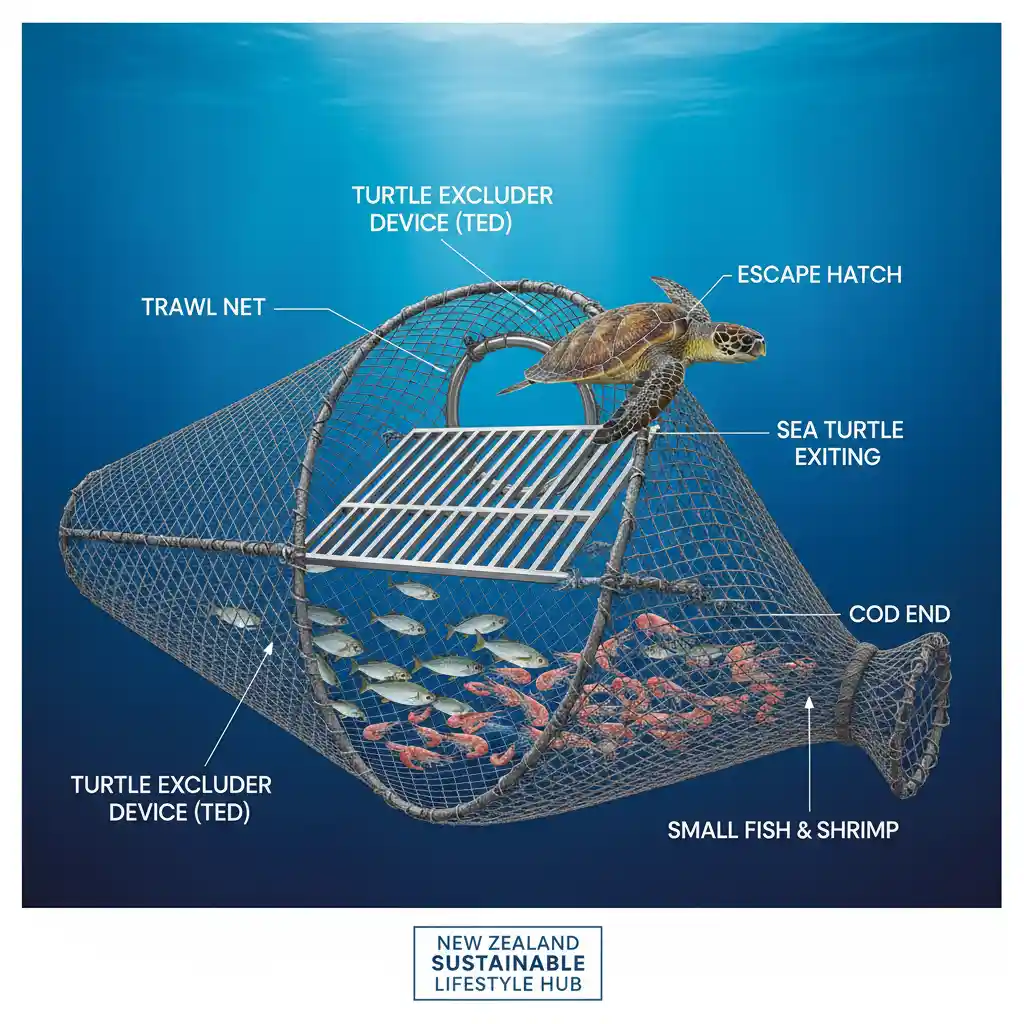
Now for the most interesting part. In many countries, shrimp are caught with large nets dragged along the seafloor. Sometimes sea turtles get caught in these nets along with the shrimp. They can’t swim back out because they need to breathe air, and many of them died.
Scientists came up with a solution: a special “window” is fitted into the net to let turtles escape—like a cat flap, only underwater. The shrimp stay in the net, while the turtle can slip out. The device is known as a turtle excluder device.
The United States decided that shrimp from other countries could be imported only if they had been caught using nets with this kind of “window.” Some Asian countries disagreed. They thought, “That’s not fair—we have different rules and different conditions!” So they filed a complaint with the WTO.
In 1998, WTO judges (the organization’s Appellate Body) heard the case, which became known as “Shrimp-Turtle.” They ruled that the goal of protecting turtles was good and legitimate. But the way the United States had gone about it was not entirely fair: it helped some countries prepare for the new rules, but not others. The United States later changed its rules, and in 2001 the WTO found that they were now acceptable.
| Year | What happened |
|---|---|
| 1995 | The WTO was established |
| 1998 | Ruling in the shrimp-turtle case |
| 1999 | Protests in Seattle |
| 2001 | The United States changed its rules, and the WTO found them acceptable |
The Battle of Seattle: Why People Took to the Streets
In late November 1999, representatives from countries around the world gathered in Seattle to discuss new rules for global trade. But thousands of people also took to the streets: environmentalists, workers, students, and farmers. Some feared that animals and forests would suffer for the sake of profit. Others worried that jobs would disappear. Still others believed that rich countries were dictating terms to poor ones.
The people dressed as sea turtles became one of the most memorable images of those days. They reminded everyone that trade decisions are about more than money—they affect living creatures, too. The streets were packed, many roads were blocked, and the meeting had to be postponed before eventually ending without an agreement. The events became known as the “Battle of Seattle,” though most of the protesters were peaceful, carrying signs and singing.
I think there is something touching about serious, grown-up people putting on funny green shells so they would be heard. Sometimes an important conversation needs something eye-catching—and then even the most formal debates suddenly remember the turtles.
What Still Matters Today
Decisions made in the past often return as questions we face today. People still debate: Can we protect nature without getting in the way of fair trade? How can we help poorer countries meet complex rules? Who should decide what matters more—a quick profit or the health of the ocean?
The shrimp story showed that there is no one-word answer to these questions. We need to find solutions that don’t leave anyone worse off: turtles, fishers, or shoppers.
In Closing
The next time you see a shrimp on your plate, remember the little “window” in the net, the judges who settled the dispute, and the people in turtle costumes on the streets of Seattle. A simple story like this gave us an important lesson: even the biggest decisions about money and goods are connected to the natural world around us. And the more people think about that, the kinder the rules can become.
.jpg?itok=AKb2vRrU)