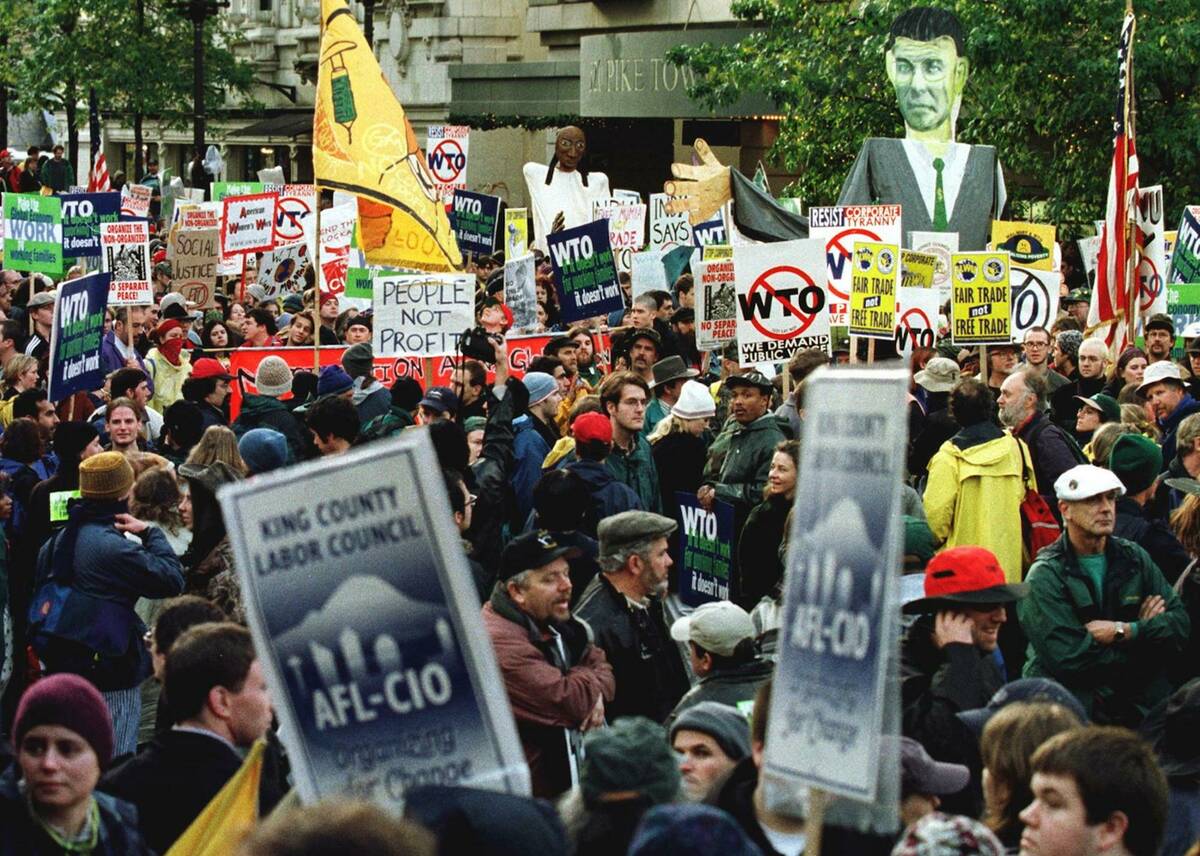
In 1999 something very strange happened on the streets of Seattle: people dressed in giant sea turtle costumes walked arm in arm with workers in orange vests and hard hats. They sang songs, carried signs and blocked traffic together. It looked like a parade, only very serious. And the most surprising thing was these two groups normally didn’t get along at all. But that day they realized they wanted the same things, they just spoke about them differently. This unusual friendship changed Seattle forever, and its traces can still be seen around the city today.
Why the turtles met the builders
Imagine: environmentalists had always said that factories should be shut down to save forests and oceans. And factory workers replied, "But how will we feed our families?" They argued for years. Environmentalists seemed to workers like people who didn’t understand how hard it is to make a living. And workers seemed to environmentalists like people who didn’t care about the planet.
But in the fall of 1999 very important people from many countries were due to come to Seattle — the World Trade Organization. They wanted to create new rules for the whole world: how to sell goods, where to build factories, how much to pay people. Suddenly both the turtle protesters and the workers realized the same thing: these new rules would be bad for animals and for ordinary people. Factories would move to countries where people could be paid pennies and pollution could be dumped into rivers. American workers would lose their jobs, and sea turtles in the ocean would choke on the waste.
Then a union leader named Ron Juddgie met an environmental activist. They talked for a long time and decided: "Let’s take to the streets together." It was as if cats and dogs suddenly agreed to be friends.
The day the city stopped
On November 30, 1999 about 50,000 people took to the streets of Seattle. That’s more than all the students in every school in the city combined! People in giant green turtle suits (a symbol of marine protection) marched shoulder to shoulder with truck drivers, builders, and teachers in their work clothes.
A girl who was 12 at the time later recalled, "I saw my electrician dad holding a sign next to someone in a butterfly costume. They were smiling at each other. Before, Dad used to say that ‘those environmentalists’ wanted him to lose his job. But now they were friends."
The protests were so large that the meeting of important people from different countries couldn’t get started at all. The city stopped. But most importantly — people saw that together they were stronger. Builders explained why unfair wages are wrong. Environmentalists explained why dirty factories are wrong. And everyone understood: these are parts of the same big problem.
What remained in Seattle from that friendship
More than 20 years have passed, but that unusual friendship between turtles and builders changed Seattle. The city became a place where people aren’t afraid to join together and speak out about what they don’t like.
Now every neighborhood in Seattle has "neighborhood councils" — where ordinary residents gather and decide what their street needs: a new playground? More trees? A safe crosswalk? They learned this from the turtles and the builders: together you can change the city.
"Community gardens" appeared across Seattle — plots of land where neighbors grow vegetables and flowers together. An elderly grandmother teaches a student how to plant tomatoes. A programmer helps a builder fix a fence. This too is a legacy of 1999: different people working together.
Even schoolchildren in Seattle are different. The city has programs where kids learn to protect nature and at the same time help homeless people. They learned the lesson of the turtles and builders: you can’t save the planet while forgetting people, and you can’t help people by destroying the planet.
A city that remembers how to be friends
Today, when you walk the streets of Seattle you might not see people in turtle suits. But the spirit of that unusual friendship lives everywhere.
At the Pike Place Farmers Market farmers sell produce grown without chemicals at fair prices — care for both the land and the people. In big company offices employees form unions and demand environmental protections — just like the turtles and builders in 1999. When something new is proposed in the city, people gather and ask: "Will this be fair for everyone? Will it harm nature?"
A teacher in Seattle tells her students: "In 1999 our city showed the world that people who seem very different can find common ground. The turtle and the builder understood each other. And that is the most important lesson: if you want to change something, find people who are not like you and befriend them. Together you will be stronger than you thought."
So the once-forgotten story of turtles and builders continues to live in Seattle — in every neighborhood council, in every community garden, in every group of kids who clean up a park together. The city remembers: real strength lies in the friendship of unlike people.