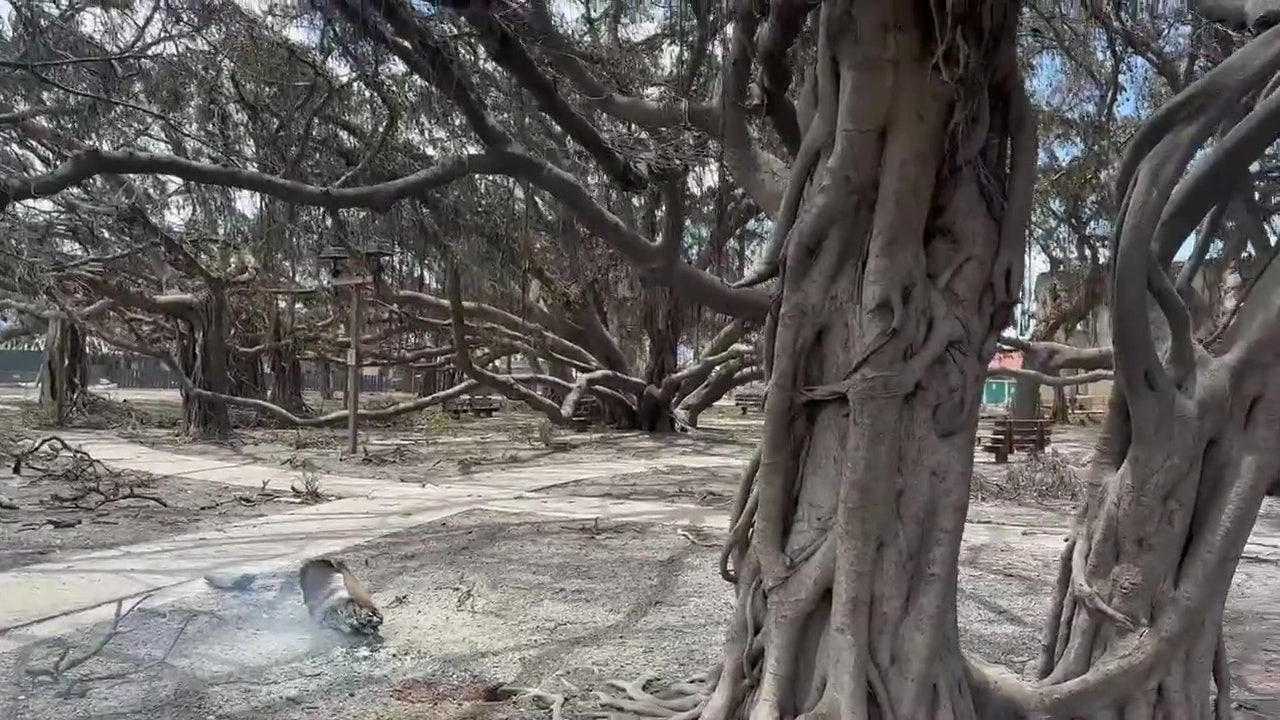
Imagine you're a tree. You're 150 years old; you've watched the first wooden houses go up around you, carts with horses roll down muddy roads, the first cars appear, and later — skyscrapers. One morning people come to your roots with blueprints and say, “We're going to build a huge building here.” What would you do? That's exactly what happened to a special Douglas fir in Seattle’s South Lake Union neighborhood when Amazon began transforming the old quiet block into a modern tech campus.
This is the story of how one tree turned out to be stronger than the plans of billionaires, and how builders became detectives to save a living memory of the city.
Tree detectives and their secret mission
When Amazon announced in 2010 that it would build new offices in South Lake Union, many residents were worried. The neighborhood was old — small houses, local shops, and large trees along the streets that remembered when Seattle was still a very small town.
The company hired a special team — “tree detectives.” This is a real profession! These people are called arborists, and their job is to study trees, determine their age, health and historical value. The team was tasked with finding all important trees in the area and figuring out how to save them.
The detectives walked the streets with special devices that could “look” inside a tree without harming it. They took tiny wood samples (imagine giving the tree a small prick, like a shot) and counted the rings in the trunk to determine age. They talked with longtime residents who remembered the trees from their childhood. They dug through old photos and documents in the city archives.
And then they found it — a Douglas fir more than 150 years old. It stood exactly where the foundation for the new building was supposed to go.
The tree that saw it all
Arborists learned surprising things about this fir. It began growing around the 1860s — before Seattle became a real city! At that time the future neighborhood was forest, and local Native people — the Duwamish tribe — came here to fish in Lake Union.
When settlers arrived in the late 1800s, they cut down almost all the trees to build houses. But someone spared this fir. Maybe it grew in someone’s yard and the owners liked to sit in its shade? Or maybe it was just too beautiful to cut down?
In an old 1920s photograph the detectives found, children in old-fashioned clothes are playing near the tree. One of those girls, about eight in the photo, turned out to still be alive — she was over ninety! She recalled that as children they called the fir “Big Green” and had picnics under it. “It was the tallest tree on our whole street,” she remembered. “We believed it was magical because each spring the same birds built nests on it.”
Workers on the site, after learning this story, gave the tree a new name — the “Witness Tree.” It had witnessed a century and a half of the city’s history!
A puzzle even universities would struggle with
Now Amazon’s engineers faced an incredible challenge. Normally, to build a large building you dig a deep pit for the foundation — the base that goes far underground. But the Witness Tree’s roots spread out underground in every direction for 15 meters! That’s about the length of five rooms laid end to end. Damaging those roots would kill the tree.
The project’s chief engineer, a woman named Sara Chen, later said in an interview: “I’ve built bridges and skyscrapers, but I’d never faced a puzzle like this. We needed to construct a 37-story building without touching the tree’s roots. It’s like building a huge tower of blocks on a table without knocking over a teacup that’s sitting nearby.”
The engineering team worked for six months to find a solution. They designed a special foundation that avoided the tree. Imagine building a sandcastle on a beach with a big rock in the middle — you build around it, right? The engineers did the same, except their “castle” was made of steel and concrete.
But that wasn’t all. Large trees don’t like construction nearby; they need light, air, and rainwater. So they created a protective zone around the Witness Tree. During construction it was surrounded by a tall fence so no one would accidentally damage the bark or branches. An arborist was assigned as a dedicated “guard” who checked the tree’s condition every day.
The tree that changed the city
When construction finished, the Witness Tree stood in a small park right among the new glass Amazon buildings. The company built a circular bench around it, where people now sit for lunch, read books, or simply watch the branches that remember an earlier Seattle.
The most interesting thing happened afterward. The story of the Witness Tree inspired others, and other construction companies began seeking out and saving old trees too. Seattle even adopted a new rule: before building a large structure, developers must check whether historically significant trees are on the site.
A ten-year-old girl from a local school came up with a project called “A Tree’s Biography.” With classmates she created a neighborhood map marking all the old trees and collected stories about each. It turned out many trees were planted by the neighborhood’s earliest residents — immigrants from different countries. A Japanese cherry tree recalled a family from Tokyo. A Norwegian spruce remembered fishermen from Scandinavia. Each tree preserved someone’s memory.
Now Seattle schoolchildren regularly visit the Witness Tree on field trips. They touch its bark carefully (so as not to harm it!), try to wrap their arms around the trunk (it takes five people!), and imagine what life was like when this tree was just a sapling.
Why one tree mattered more than a thousand blueprints
You might ask: was it worth changing plans and spending so much money for one tree? Amazon spent more than $2 million on redesigning the project — enough to plant a whole forest of new trees!
But the adults making the decision understood something important. You can plant a new tree in a minute, but to grow one this large and wise takes a century and a half. In that time six generations of people will pass! Your great-great-grandchildren might be grandparents before a new fir reaches the size of the Witness Tree.
Old urban trees are more than decoration. They clean the air better than young trees (one such tree can do the work of twenty small ones), provide shade on hot days, and offer homes to birds and squirrels. Most importantly, they connect us to the past. Standing next to a tree that grew before airplanes, computers and the internet, you understand that the world is much bigger and older than your own life.
Sara Chen, the chief engineer who figured out how to save the tree, said in an interview: “My daughter asked me, ‘Mom, why did you try so hard?’ I answered: because someday you’ll have children of your own, and I want you to be able to bring them to this tree and say — your mother helped it survive. That’s more important than any building I’ve built.”
Today the Witness Tree keeps growing. Each year it gets a little taller and its trunk a bit thicker. Arborists check its health regularly and say that with proper care it could live another 200–300 years. That means your great-great-grandchildren could stand in its shade and remember that once, long ago, people decided a living tree mattered more than convenience and changed their plans for it.
And that is probably one of the kindest lessons a city can teach: you can grow and change without forgetting those who were here before — whether people or trees.