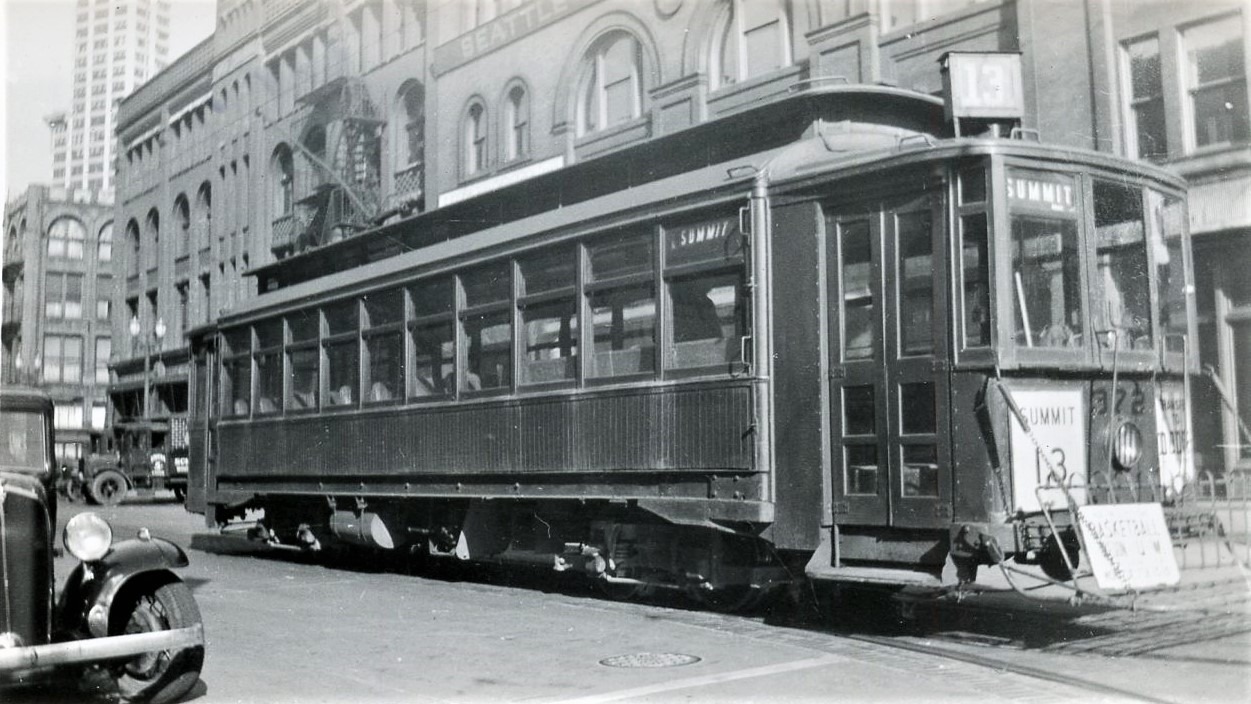
Picture this: a morning with fog over the bay, and down the street rolls a big yellow car. It doesn’t honk angrily like a vehicle— it rings. Inside, it smells of wood and a little bit of oil; the seats are polished by thousands of hands, and outside the window, hills, shops, and neighbors’ faces drift by. This was a Seattle tram. And almost nobody today knows why it disappeared.
A City That Rang
In the early twentieth century, Seattle was a tram city. Rails stretched in every direction— to Pike Place Market, to the shores of Lake Washington, and into the working neighborhoods in the north and south. The system was called the Seattle Municipal Railway, and at its best it carried more than fifty million passengers a year. Imagine it: every resident of the city would get on a tram almost every day.
People who had ridden those trams as children remembered them with special warmth. In Seattle’s archives, there are letters and interviews recorded in the mid-twentieth century. One elderly woman described how, every Sunday, her family would board a line to Leschi Park— right by the lake— and it was a whole journey. The car swayed, the conductor in a uniform cap punched tickets with special pliers, and the children pressed their noses to the windows. The park, the boats, ice cream— and then back on the tram, tired and happy.
Conductors knew their passengers by name. If you were late and sprinted to the stop, the car would wait for you. It wasn’t just transportation. It was part of the city’s life— like a shared backyard or a favorite bench in the park.
The Mystery of Disappearance
And this is where things get most interesting— and a little sad— the way they do in a detective story.
By the late 1930s, tram systems across America began shutting down. One after another. At first, it seemed simple: cars appeared, people want to drive themselves, trams are outdated. But historians who studied the documents closely found something strange.
There was a company called National City Lines. At first glance, it looked like a normal transportation firm. But behind it were three very well-known names: General Motors (they made cars and buses), Firestone (tires), and Standard Oil (gasoline). Those three companies put money into National City Lines, and it began buying tram systems across the country. Then it would close them down. And offer cities buses instead of trams— of course, General Motors buses on Firestone tires running on Standard Oil gasoline.
If you explain it very simply: imagine someone bought your favorite playground, removed the swings and slide, and then said, “Don’t be upset! Buy this toy from me instead.” That’s what happened to the trams.
In 1949, a U.S. court found these companies guilty of conspiring against public transportation. But it was already too late. The trams disappeared. The last Seattle tram of the old system ran on its route in 1941.
The Last Bell
Archived photos from that day still exist. In them, you can see people standing along the tracks. Some are waving. Someone holds children on their shoulders so they can see better. The conductors put on their uniforms one last time.
One of them— Charles Hopkins, who had worked on the tram for more than twenty years— told a local newspaper reporter something like: “I don’t understand why it’s being done. People like the tram. It doesn’t get in anyone’s way.” His words were printed in small type on the last page. Nobody really paid much attention.
The rails were rolled into asphalt. The cars were sold or dismantled. The city became different— louder, smokier, with traffic jams and parking lots where yellow cars used to glide. Many residents at first didn’t even notice the loss. Then— they did. But it was too late.
This is a story of how big money can quietly change an entire city. And of how important it sometimes is to ask: why, exactly, did it disappear? Who benefited?
The Tram Comes Back
But this story has a sequel— and it’s a good one.
In 2007, a tram system reopened in Seattle. Small and modern, but real. Then another line appeared. The city remembered that rails are not old-fashioned— they’re smart. A tram doesn’t sit in traffic, doesn’t pollute the air the way a gasoline bus does, and it can carry a lot of people at once.
Around the world, cities that once got rid of trams are now building them again. It’s expensive and takes a long time— since the rails have long been under the asphalt, and the cars need to be ordered again. But people understood something: what seemed outdated was actually very right.
Sometimes the smartest decisions are the ones that were invented a long time ago. And sometimes a city needs to lose something important in order to realize just how badly it was needed. The yellow car that rang in Seattle’s fog knew that from the very beginning.