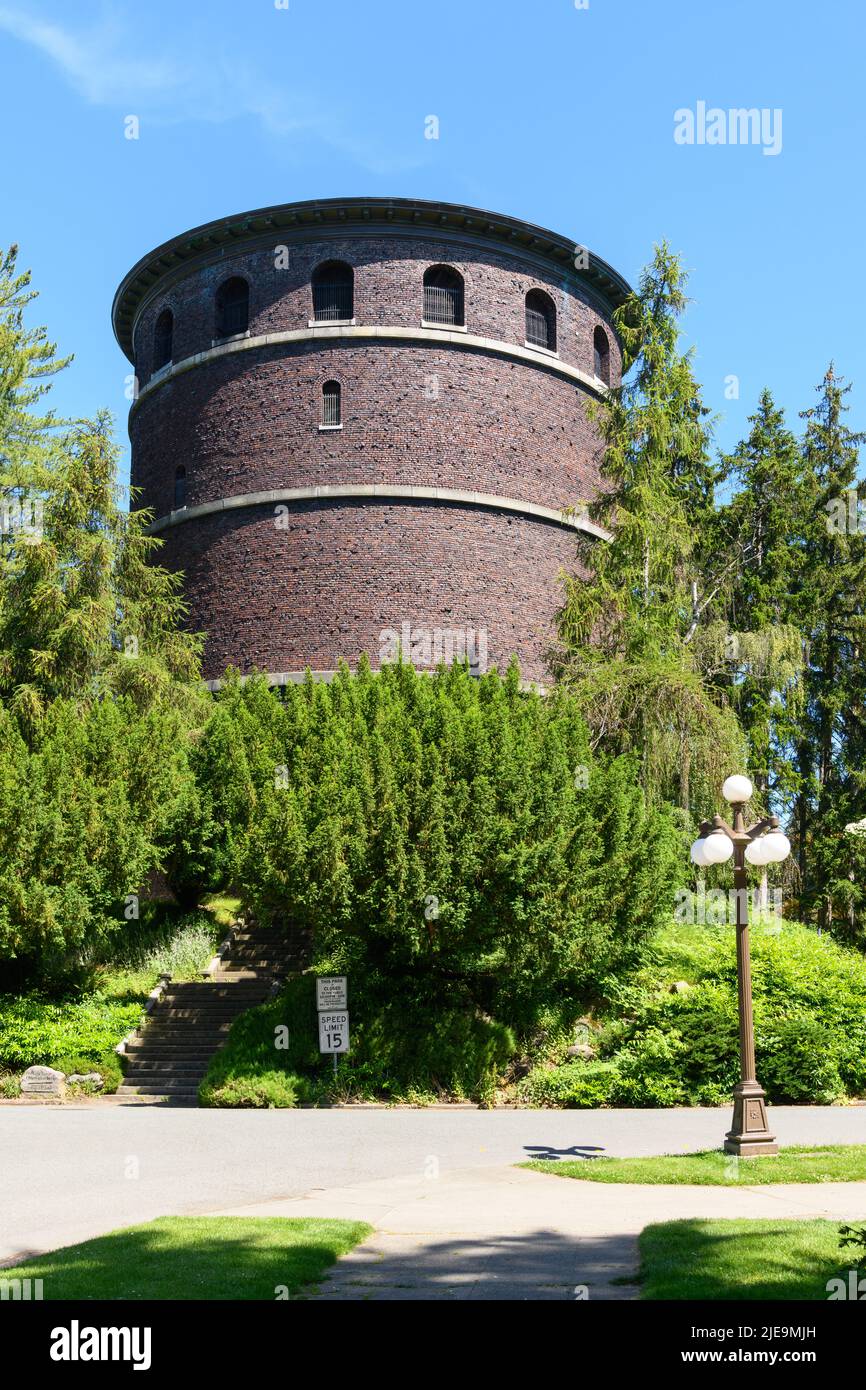
In a park on a high hill in Seattle stands a brick tower with a sweeping view of the whole city. Today, it looks like a pretty observation deck. But nearly 120 years ago, it was part of a clever invention: engineers made water climb uphill. The story helps explain why people can live on Seattle’s hills at all.
The Puzzle: Why Water Doesn’t Want to Climb
Imagine pouring water onto a hill. It immediately runs downhill. Water always flows toward lower ground—that’s a rule every child knows from sending a toy boat down a stream.
Now imagine you’re a Seattle resident in the early 20th century. The city is built on hills, and people wanted water in their homes even at the top of one of them, Capitol Hill. They wanted to wash, cook, and water their flowers. But water from the main sources couldn’t reach the summit on its own: it didn’t have enough force to rise above a certain level.
That’s a challenge for real engineers: how do you make water flow uphill?
How the Engineers Solved It
The solution was a clever trick that relied on storing water high up. First, the water had to be pumped to a high point and stored there. Then it could flow down through pipes to homes under its own weight. The higher the water is stored, the stronger the pressure. Imagine squeezing a balloon: the harder you squeeze, the faster the air rushes out. Water works in a similar way: a high “level” of stored water creates pressure.
So water was stored in a reservoir near the top of the hill, while a tall tower helped maintain the necessary pressure in the pipes. The details of how the whole system worked changed over time as technology advanced and pumps improved. I won’t give the old reservoir’s exact dimensions or the dates when it stopped being used, to avoid getting them wrong. But the main idea remains: water was stored high up so it could reach people’s homes.
A Park Designed by Architect Brothers
The place where the tower stands is called Volunteer Park. It was designed by the Olmsted Brothers. Their father, Frederick Law Olmsted, created the famous Central Park in New York City. His sons carried on his work, designing parks across America, including in Seattle.
They liked to make parks more than just lawns with benches. They thought about where people would look, where there would be shade, and where beautiful views would open up. That’s why the tower on the hill became not only part of the water system but also a place people wanted to climb. It was built in 1906 and is now considered an important historic landmark.
106 Steps to the Top
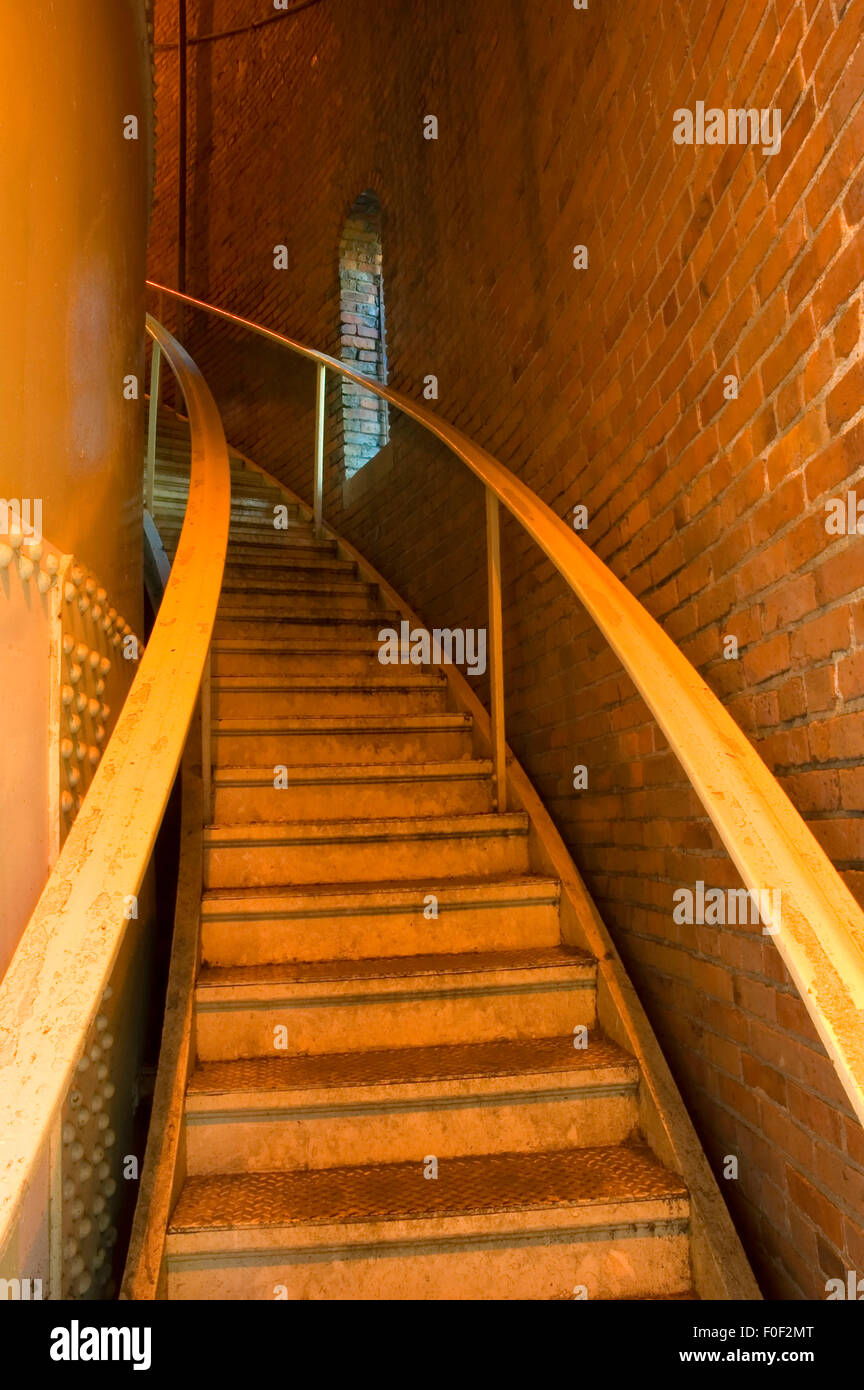
The most fun part is climbing the tower. Inside, there’s a spiral staircase that winds around like a spring. They say it has 106 steps. You can go and count them yourself! At the top is a viewing platform where you can see the city, Elliott Bay, and, on a clear day, snow-covered mountains. The windows up there are like picture frames, and the pictures in them are always changing: fog, sunshine, clouds.
I think there’s a special kind of pride in looking down at the city, knowing that this very tower once helped bring water to people’s homes. You’re not just standing on a pretty platform—you’re standing where a real engineering idea once did its work.
Why It Matters Today
Modern Seattle stands on hills, and life here would be very different without the ability to lift and distribute water. Every time you turn on a faucet, there’s a whole chain of pipes, pumps, and reservoirs behind it—something someone once designed and built. The tower in Volunteer Park is one of the few such “helpers” that isn’t hidden underground but stands in plain sight.
So the next time you wash your face or pour a glass of water, remember: water won’t climb uphill by itself. People lifted it—with their ingenuity, calculations, and brick towers. And sometimes those towers become places where you can see the whole world.