
In 1906 an unusual problem arose in Seattle. The city needed a water tower — a huge water reservoir on a hill. Engineers proposed building an ordinary gray tank. But a group of women said, "No. If we're building something that will stand for a hundred years, it must be beautiful." And they won — even though they didn't have the right to vote.
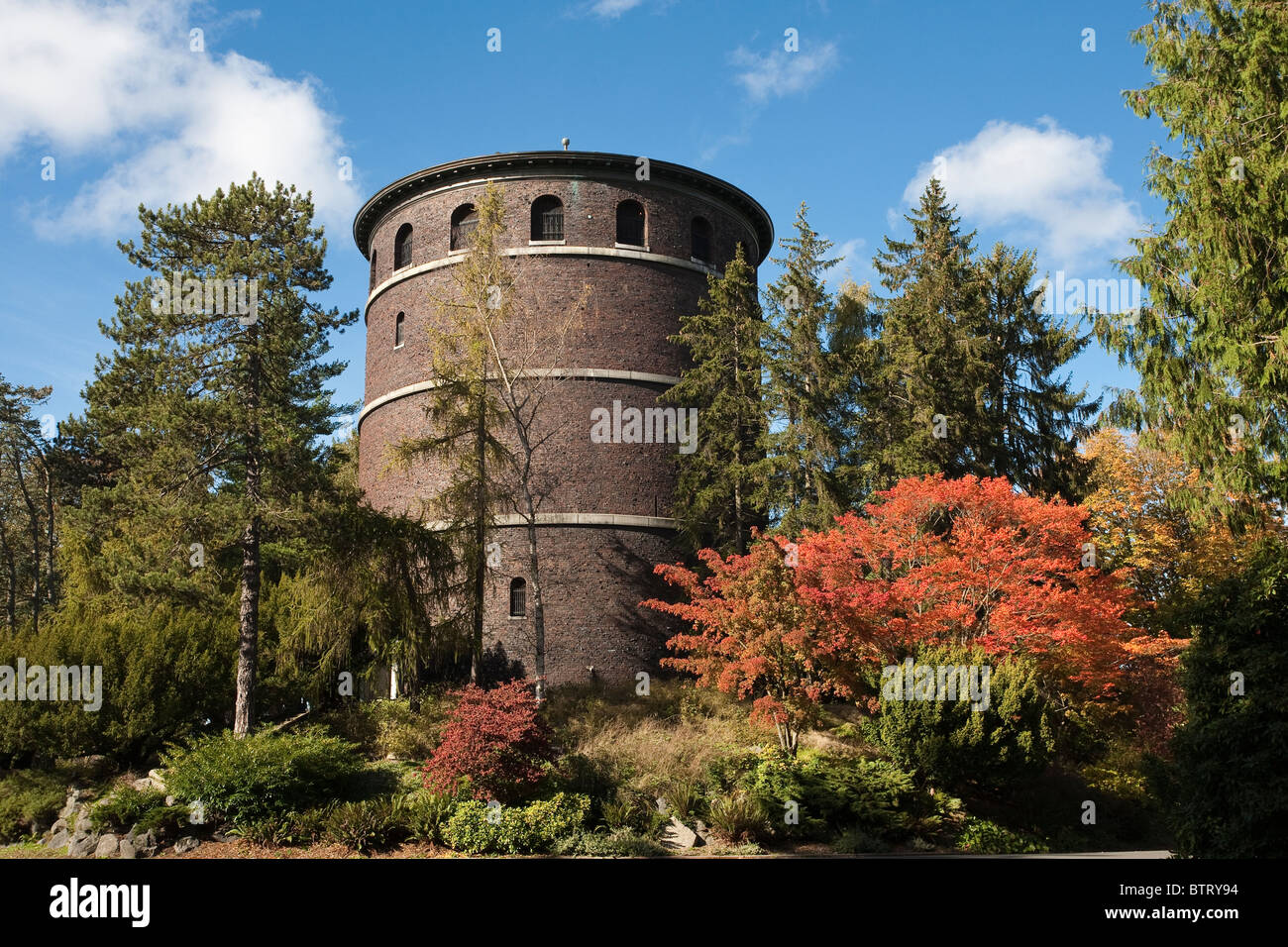
Today the Volunteer Park tower looks like an Italian bell tower transplanted to America. Its brick walls, graceful windows and an observation deck 23 meters high seem too elegant for an ordinary water reservoir. But behind that beauty is a story about how an idea can change an entire city — if determined, passionate people stand behind it.
The women who believed in the magic of beauty
At the beginning of the 20th century the City Beautiful Movement was gaining ground in America. Its followers believed that if people were surrounded by beautiful buildings, parks and fountains, they would become better, kinder, more cultured. Sound naive? Maybe. But in Seattle this idea was taken up by women's clubs — organizations of educated women who engaged in charity and civic work.
The most active was the Seattle Federation of Women's Clubs. Its members — wives of doctors, teachers, writers — could not vote in elections (women in Washington State only gained the vote in 1910). But they could organize campaigns, write letters to newspapers, and hold public lectures. And they used every opportunity.
When the city council announced plans to build a water tower in a new park on the Capitol Hill, the women saw a chance. "This will not be just a reservoir," one activist wrote in the Seattle Times, "this will be a symbol of the kind of city we are building for our children." They insisted the tower should be an architectural work of art, not an industrial object.
The battle for beauty versus practicality
City officials resisted. Why spend extra money on decoration for a water tank? Engineers argued that adornment was unnecessary — the main thing was that the structure be reliable and cheap. But the women's clubs did not give up.
They organized a series of public events where they showed photographs of European cities with their magnificent towers and squares. They invited architects who explained that a beautiful building need not be more expensive if the design is considered from the start. They gathered signatures from citizens for petitions.
Their key argument became the idea of "civic pride." The women argued that if Seattle wanted to be a great city, it should look like a great city. "We cannot allow our children to grow up among ugly boxes," one movement leader said at a public meeting. "Beauty educates the soul."
In the end, the city council agreed to allocate additional funding. The architect chosen was John Olmsted — a member of the famous dynasty of landscape designers who helped create New York's Central Park. He designed the tower in the Italian Renaissance style, with brickwork, arched windows and a spiral staircase inside.
The tower that changed the rules
The Volunteer Park tower was completed in 1907. It stands 23 meters tall, with an internal reservoir holding 4.5 million liters of water. But most importantly — it is truly beautiful. Visitors climb 107 steps of the spiral staircase to an observation deck with views of the city, the Cascade Mountains and Puget Sound.
The success of this project changed Seattle's approach to public buildings. After the tower, city officials began to demand aesthetic quality from all major structures. Fire stations, schools, libraries — all began to receive architectural attention. The City Beautiful idea took root in Seattle's culture.
Interestingly, Volunteer Park got its name in honor of volunteers who went to the Spanish–American War in 1898. But the tower became its symbol — not a war memorial, but a monument to beauty and civic pride.
The women who fought for this tower achieved more than just a pretty building. They proved that public opinion can influence government decisions, even if you don't have the vote. They showed that concern for beauty is not frivolous, but a serious civic matter.
A legacy visible from the hill
Today the Volunteer Park tower is one of Seattle's most recognizable landmarks. Each year thousands of people climb to its observation deck. Many don't even know that inside is a functioning water reservoir, part of the city's water system.
But the influence of that old movement is felt throughout Seattle. The city is known for its parks (more than 400!), attention to landscape design, and the care that even utilitarian objects look dignified. That tradition began with a group of women who believed that beauty makes us better.
Maybe they were right. Modern psychological research shows that people do behave more politely and considerately in beautiful, well-kept spaces. What seemed a naive idea in 1906 turned out to be a scientific fact a century later.
The story of the Volunteer Park tower teaches us: even if you cannot vote, you can change the world. All you need is conviction, persistence and a willingness to explain your dream again and again. Sometimes the most lasting victories are not won at the ballot box, but in debates about what an ordinary water tank on a hill should look like.
:max_bytes(150000):strip_icc()/GettyImages-610712690-5c3ba9c646e0fb00018dead8.jpg)