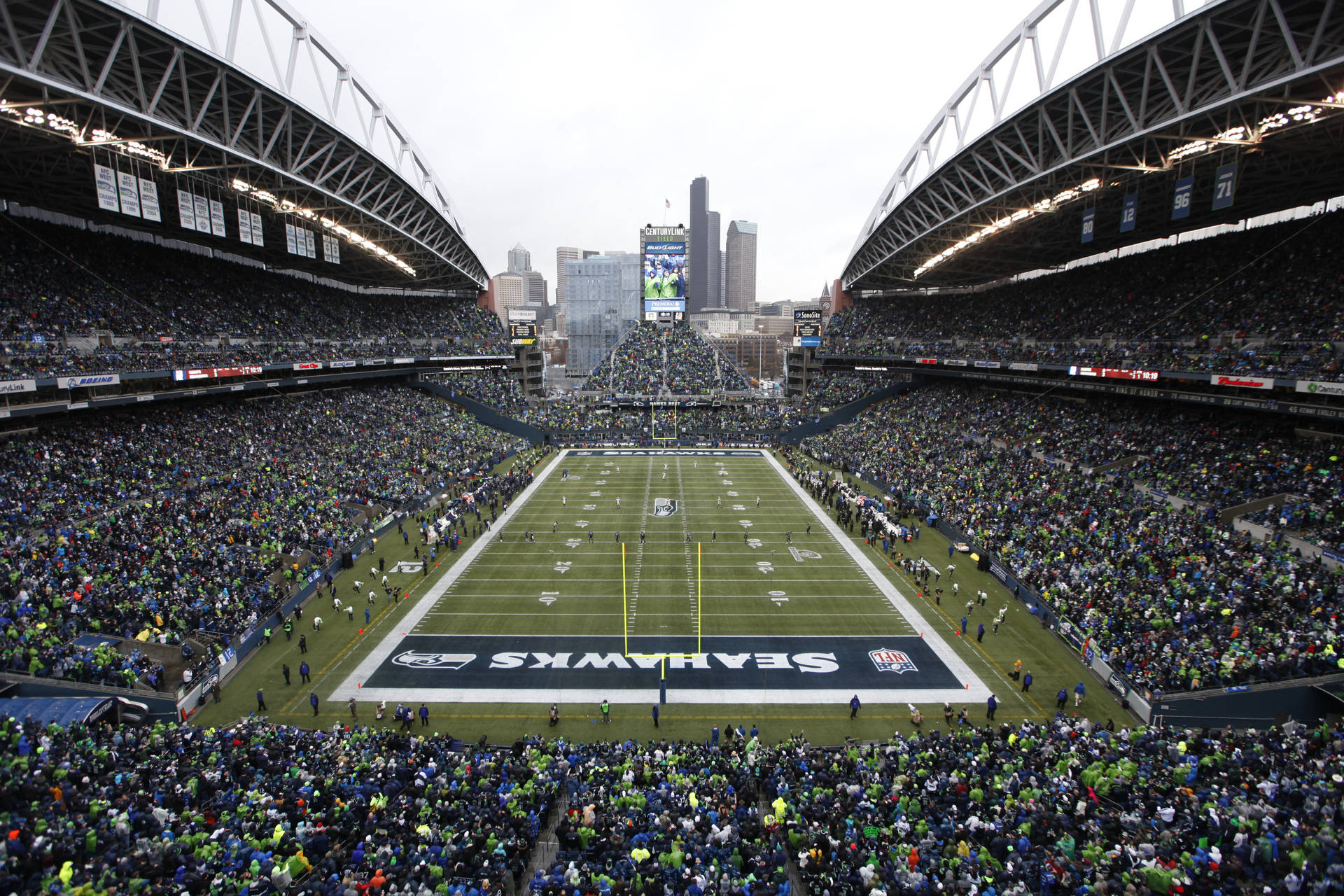
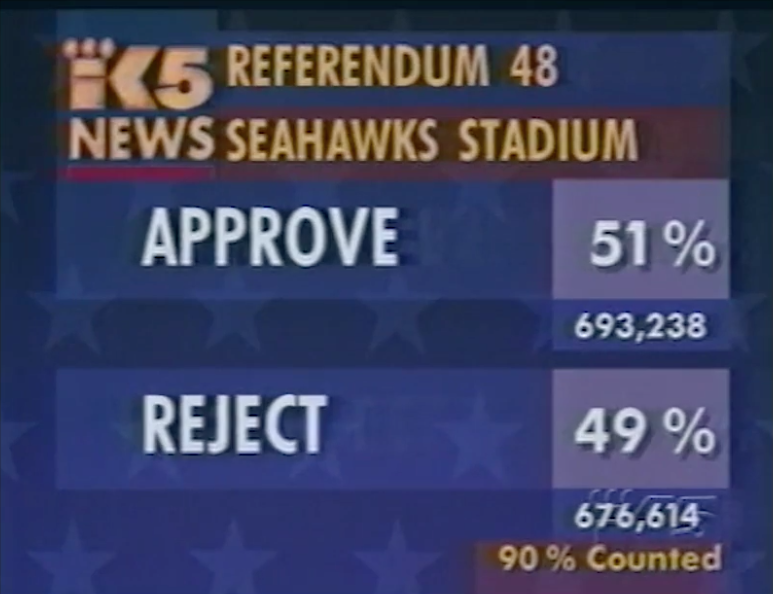
If you find yourself in downtown Seattle on a Sunday in the fall, you’ll hear thousands of people shouting so loudly the air seems to shake. They’re Seahawks fans at their stadium. Few people think about the fact that the stadium might never have been built. In 1997, Washington state residents voted on it, and “yes” won by about one percentage point. And even earlier, the team had already started packing up to move to California.
The Old Dome That Started “Dropping” Its Ceiling
At first, the Seahawks played in a building called the Kingdome. It opened in 1976. It was a huge concrete dome that kept out the rain—and it rains often in Seattle. At first, it seemed like a great idea: games could be played in any weather. But spectators weren’t all that comfortable. The concrete walls felt oppressive, the seats were far from the field, and the building was shared by football’s Seahawks and the Mariners baseball team. The two sports needed different fields, so everything had to be redone each time.
In 1994, disaster struck: several acoustic ceiling tiles fell from the Kingdome. No one was hurt because the building was empty, but the stadium was closed, and the Mariners had to play their games on the road. After that, many people realized the aging dome needed to be replaced. But whose responsibility was it, and who would pay?
At first, the debate was about a new baseball stadium. In 1995, King County residents were almost evenly divided in a vote: the tax for a new baseball stadium was rejected. Then the Mariners won a nail-biting series of games in the fall, and the city fell in love with the team. State officials found another way to raise the money. The story of football was only just beginning.
The Team Packs Its Bags
In 1996, Seahawks owner Ken Behring decided Seattle wasn’t a good deal for him. He moved part of the team to California, closer to Los Angeles. Imagine if your favorite school team were suddenly taken to another city: you show up for a game, and the place is empty.
But Washington state didn’t give up. The state went to court, and the court made the team come home. After that, it was clear that the team needed a new owner and a new home. The new owner was Paul Allen, one of the founders of Microsoft. He agreed to buy the team, but on the condition that residents vote in favor of a new stadium.
Here’s how things unfolded:
| Year | What happened |
|---|---|
| 1976 | The Kingdome opens |
| 1994 | Tiles fall from the ceiling |
| 1996 | The team tries to leave; a court makes it return |
| 1997 | Referendum: “yes” wins by a narrow margin |
| 2000 | The Kingdome is demolished |
| 2002 | The new stadium opens |
A Vote Won by One Percent
Imagine your class is deciding whether to buy a new playground for everyone to share. Some kids say, “That’s great—everyone will get to play!” Others reply, “What’s it got to do with us? We’d be better off spending the money on something else.” The statewide debate went something like that, except that instead of a playground, the issue was a stadium costing hundreds of millions of dollars.
The plan put to a vote was this: the state would contribute no more than $300 million toward the stadium, but the money would come not from ordinary taxes for schools and hospitals, but from special sources. Some of it came from special lotteries and taxes on events and hotels—in other words, from people connected in some way to entertainment and events. Paul Allen’s team would pay anything above that amount. He spent several million dollars campaigning for a “yes” vote. Critics said a rich man was buying votes. Supporters replied that otherwise the team would be lost for good.
The result: “yes” won, by about 51 percent to 49. Many people felt it was almost a tie.
What Happened Next: The Blast, Construction, and New Questions
The Kingdome was demolished on March 26, 2000. The whole dome came down in about sixteen seconds, making it one of the largest concrete-domed buildings ever demolished with explosives. Thousands of people stood watching.
While the new stadium was being built, the Seahawks played two seasons at the University of Washington’s stadium. Then, in 2002, they returned to their new field, which is now called Lumen Field. At first, the stadium was called Seahawks Stadium, then it changed its name several times along with its sponsors. That’s common when companies pay to have their names on a building.
How did the stadium affect the city’s finances? Economists disagree. Many studies show that stadiums rarely bring a city as much money as their supporters promise. People who come to a game usually spend their money on the game, rather than on something else in the city. But there’s another way of looking at it: an entire neighborhood has grown up around the stadium. It hosts not only Seahawks games, but also Seattle Sounders soccer matches, concerts, and large celebrations. Some of the money comes back through taxes, and some goes to people who work in shops, cafés, and the stadium itself. The exact figures can be calculated in different ways, so the debate continues to this day.
What I Think About This Story
I think the most interesting thing here isn’t the dollar amount, but how adults made an important decision. They argued, voted, went to court, and had doubts. If everyone had agreed from the start, this wouldn’t have been a story about making a choice. And when the “yes” and “no” votes are almost equal, the choice is very difficult: either outcome will disappoint someone.
The next time you hear the roar of the stadium, remember: it exists because of a small margin of votes and the people who decided the team should stay home. The stadium became a place where neighbors with different opinions cheer on the same side. And maybe that matters more than any numbers.