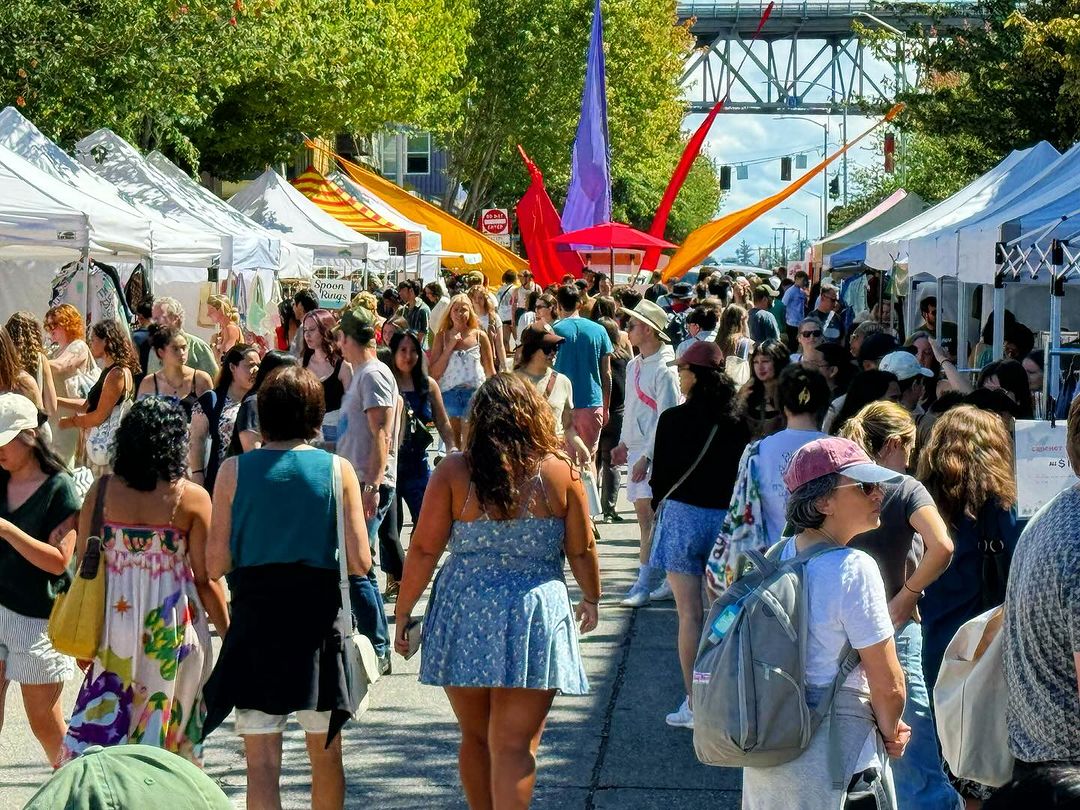
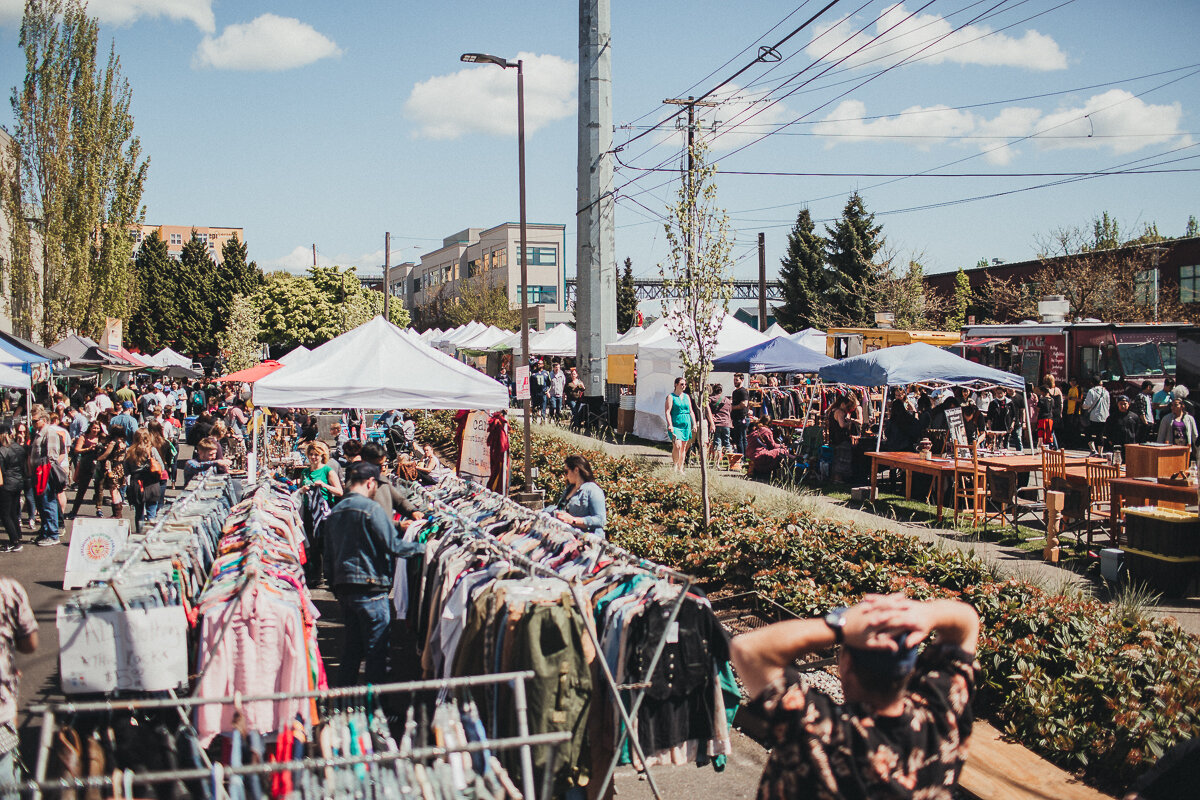
Imagine it: early Sunday morning, a typical Seattle drizzle hanging in the air, and the street already smells of hot coffee and old books. People spread out vinyl records, handmade earrings, worn-out jackets, and porcelain little cats on their tables. Someone is selling, someone is bargaining, someone just wanders around and looks. This is the Fremont Sunday Market—and it has been running every weekend for more than thirty years. Even when it pours. Even when everything around it changes. Even when very rich people really want it gone.
A Market That Lives Against All Odds
The Fremont Sunday Market began in the early 1990s in the Fremont neighborhood in north Seattle. Back then, the neighborhood was a little odd—in the best way. Artists, musicians, students, and just people who liked doing things differently lived there. They’re the ones who came up with the idea for the market: a place where you can come with what you no longer need, sell it for a few dollars, and buy something else—something from someone else that’s interesting.
The market was never owned by a big company. It was run by the residents themselves—those who sold there and those who came to visit. That matters. Because when a market is owned by a corporation, it can decide at any moment, “You know what, it would be more profitable to build an office here.” But when a market belongs to everyone, it’s not that easy to shut down.
One of the most surprising things about this market is that it operates year-round. In Seattle, rain falls for about nine months a year, and still every Sunday the vendors put up tents, haul out their goods, and set up at their tables. Regular visitors say that on rainy days the market is even cozier—everyone crowds under the awnings, drinks coffee, and stays longer than usual.
When Big Money Moved In
In the 2010s, Fremont began to change. Right next to the market, a huge Google office opened. Other tech firms followed. Programmers with high salaries started moving into the area. Home prices climbed. Small cafés and workshops began to close—rent became too expensive to keep paying.
Developers—people who buy land and build new buildings on it—looked at the market and didn’t see a place where neighbors trade old things. They saw costly square footage in the heart of a trendy neighborhood. More than once the question came up: wouldn’t it be better to demolish all of this and build something “useful” instead?
Fremont residents answered very clearly: no. They collected signatures, wrote letters to the city council, showed up at hearings, and kept explaining over and over that this market isn’t just a flea market. It’s the heart of the neighborhood. Remove it, and Fremont becomes just another dull place with expensive coffee shops and glass towers.
But residents had another argument too—one far more convincing to anyone who thinks in dollars.
Money Nobody Counts
Here’s something economists who studied similar markets across America discovered: when people have it harder, the market becomes more necessary, not less.
During the 2008 economic crisis, when many Americans lost their jobs, farmers’ markets and flea markets across the country didn’t empty out—they overflowed. People without income came to sell things from their homes. People with less money came to buy—because it was cheaper at the market than in a store. The market became a lifeline.
The same thing happened in Fremont. Every time the city was struggling, the market sprang back to life. And along with it, the whole block around it came alive: people who came to the market went into nearby cafés, bought something at the small shops, ran into acquaintances, and made plans for new ventures.
Economists call this the “multiplier effect”: one dollar spent at a local market “circulates” within the neighborhood and benefits several people at once. A dollar spent at a large shopping center goes to a corporation’s headquarters—and disappears for the neighborhood.
If you compare how money moves in different places:
| Where a Dollar Is Spent | Where It Goes Next |
|---|---|
| Local market | Vendor → nearby café → local supplier |
| Big chain | Into the corporation’s office in another state |
| New office complex | Investors, often living far from the neighborhood |
That doesn’t mean big stores are evil. It just means a small market can do something a big store can’t: keep money inside the neighborhood.
Why It Matters for All of Us
To me, the story of the Fremont Market is a story about how some things seem insignificant while they exist. A place for secondhand goods? So what. But imagine it’s gone—and suddenly you realize it was somewhere neighbors knew each other by sight. Where a grandmother could sell her old cups and buy warm socks for herself. Where a child first tried selling something they made with their own hands and felt that it was possible.
The Fremont Market still runs today. Every Sunday, in the rain and in rare Seattle sunshine. The neighborhood around it has changed—grown richer and more expensive. But the market has stayed itself: a little noisy, a little chaotic, and very much alive.
Sometimes the most important thing in a city isn’t the prettiest or the most expensive. Sometimes it’s simply a place where people come back again and again. And when someone tries to take such a place away, you find out that many people are ready to fight for it—because without it, something real will disappear forever.