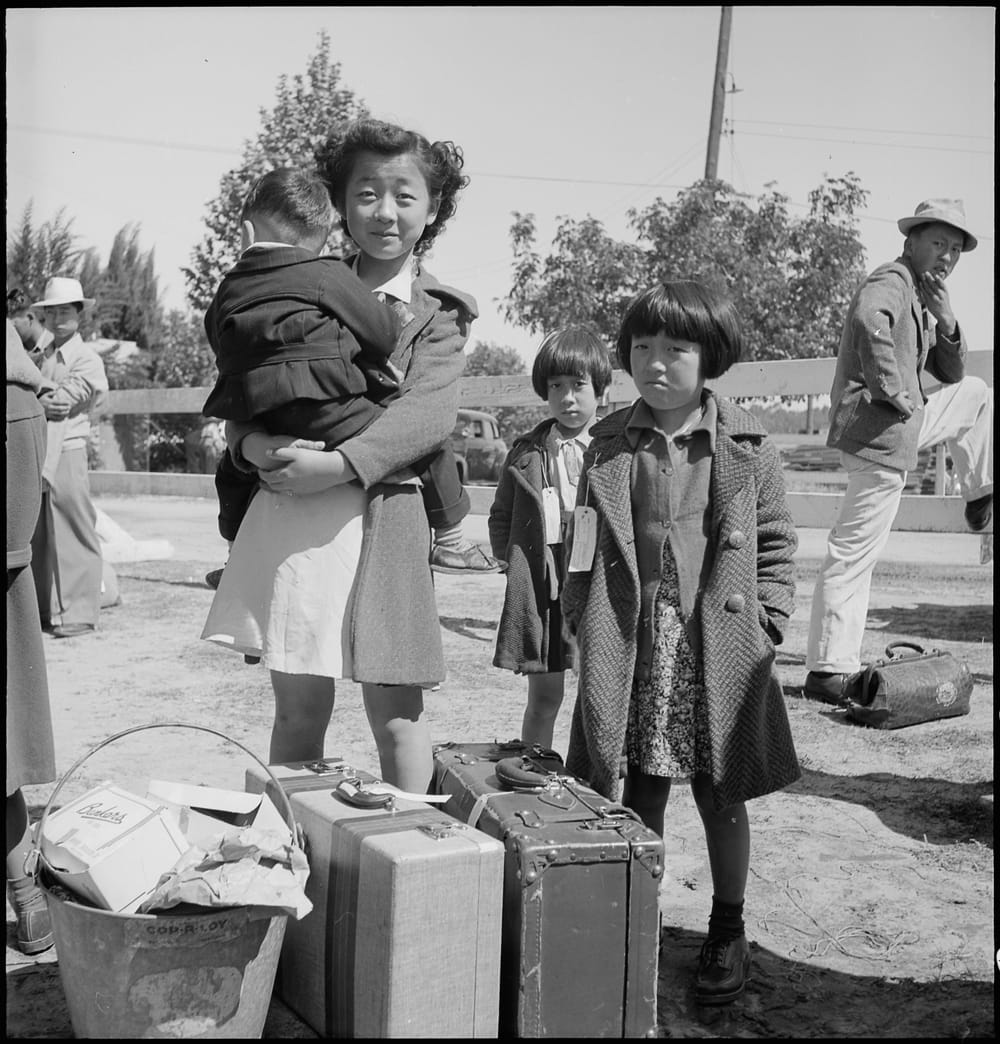
Imagine one morning you are told: you have a week to pack one suitcase and leave your home. You don’t know when you’ll return. Maybe in a month, maybe never. What will you take with you? That’s what happened to thousands of families in Seattle in the spring of 1942 — and that story still lives in the walls of one special neighborhood in the city.
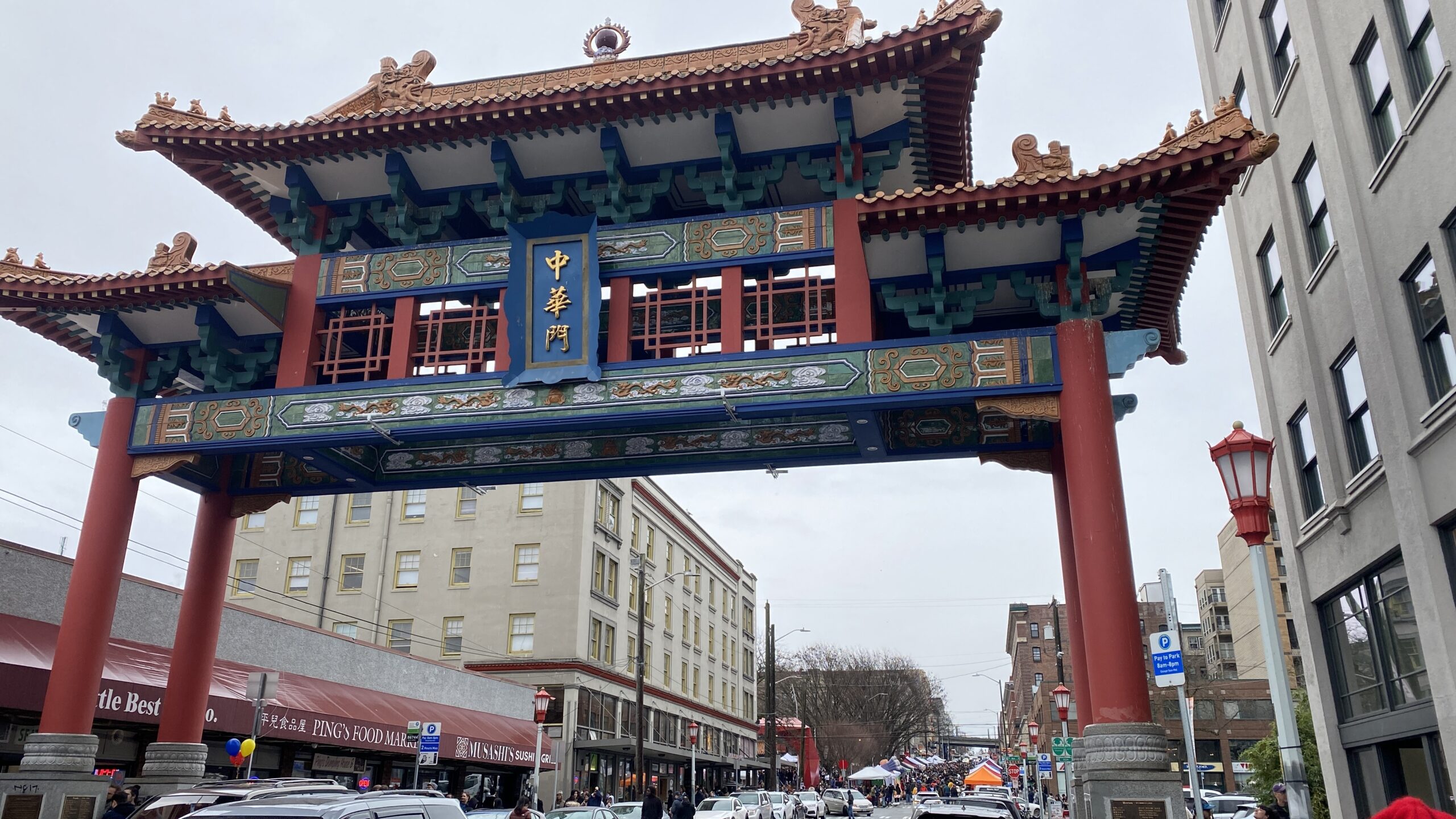
In Seattle’s old Japantown, now called the International District, there are buildings that remember that spring morning. They remember families closing Japanese sweet shops, hotel owners locking their doors, lights going out in windows. These buildings hold a secret about how one grave injustice unexpectedly tied together very different people — and that connection changed the city forever.
The spring when neighbors disappeared
In 1942, during World War II, the U.S. government made a strange and deeply unjust decision. It declared that all people of Japanese ancestry — even those born in America, even children — were dangerous. They were forced to leave their homes and live in special camps, surrounded by barbed wire, far out in the desert or mountains.
About 7,000 Japanese families lived in Seattle. Many owned small shops, hotels, and restaurants in the neighborhood that was the heart of their community. In one week they had to decide: what to do with everything they had built? Some asked neighbors to watch their belongings. Others sold everything for pennies — because buyers knew the families had no choice. Still others simply boarded up their doors and left, hoping to return.
A girl named Mary Matsuda later recalled how her family hid their most valuable items — family photographs, her grandmother’s kimono, her father’s tools — in the basement of their small hotel. “Mom said: when we come back, everything will be waiting for us,” Mary wrote. But when they returned three and a half years later, the hotel belonged to someone else, and the basement was empty.
New residents in empty homes
Here’s what’s interesting: while Japanese families lived behind barbed wire, other people came to Seattle who also needed housing. They were African American workers from the South. They came to work in the shipyards and aircraft plants building for the war. They needed places to live, but at that time in America there were unfair rules: African Americans were barred from renting apartments in most neighborhoods.
These new workers moved into the empty Japanese hotels and homes. The Nichibei Hotel became home to families from Louisiana. Mr. Yamamoto’s shop turned into a barbershop. A Japanese noodle restaurant became a place serving Southern fried chicken.
Something remarkable happened: two peoples who had never met found themselves connected by the same injustice. Both could not live where they wanted. Both were judged not by their actions but by skin color or ancestry.
Return and new neighbors
When the war ended in 1945, Japanese families were finally allowed to come home. But “home” was not what it had been. Some found their shops occupied. Others discovered their houses had been sold to cover debts. Many simply could not return — they had no money to start over.
But there were also acts of kindness. Old Mr. Johnson, an African American who had rented a room in a Japanese hotel, had saved money for three years. When the owners returned, he handed over the entire sum — it was rent he had set aside for them all that time, though he could have kept it. “You trusted me with your home,” he said. “I could not let you down.”
Not all stories were so kind. Many Japanese families lost everything and chose to start over in other cities. But those who stayed found their neighborhood changed. Japanese, Chinese, Filipino, and African American residents lived side by side. They opened shops near one another, their children attended the same schools, and they learned to cook each other’s food.
What remains in the walls
Today, if you walk the streets of Seattle’s International District, you will see buildings that remember this history. In one old hotel, now turned into a museum, hidden items were found: Japanese dolls wrapped in a 1942 newspaper, a tea set, old photographs. Someone hid them before leaving and never returned.
On the walls of some buildings you can see layers of old signs: first Japanese characters, then English signs for African American businesses, then Japanese again, and above them — Vietnamese or Thai. Each layer is a story of people who were looking for a place to belong.
In one elementary school in the neighborhood there is a special tradition. Each year children do a project: they interview longtime residents — Japanese grandmothers and African American grandfathers — and record their stories. Then they draw a large map of the neighborhood marking who lived where, what shops existed, and what events happened. That map shows how injustice can unexpectedly bind people together and teach them to protect one another.
The lesson the city didn’t forget
Why does this story matter today? Because it teaches us three things.
First, it shows that when we are unjust to one group of people, it harms everyone. Japanese families lost homes, but the whole city lost — lost good neighbors, talented people, and a beautiful culture.
Second, it teaches that hardship can bring very different people together. Japanese and African American families in Seattle did not plan to be neighbors, but when it happened, they found much in common. Both groups knew what injustice felt like, and that helped them understand each other.
Third, this story reminds us: it’s important not to forget. Seattle now has a monument to Japanese internment, museums, and school lessons. The city chose to remember its mistake so it would never be repeated. When, after the September 11, 2001 attacks, some people suggested creating camps for Muslims, Seattle residents — Japanese, African American, and others — said together: “No, we remember what that leads to. We will protect our neighbors.”
The old buildings of the International District still stand. In their walls are suitcases full of stories — stories of loss and hope, of injustice and friendship, and of the importance of remembering the past to build a better future. And every time someone finds an old photograph or a hidden item in those buildings, the city receives a reminder: our neighbors are our responsibility, and we must protect one another, no matter what.