Imagine a street where neither buses nor cars are passing by, but a bright yellow streetcar is ringing its bell as boys run alongside, trying to secretly catch hold of its rear step. That is what Seattle looked like more than a century ago. Today, hardly anyone remembers it, but the city was once crisscrossed by so many streetcars that their rails connected even neighborhoods separated by entire hills. And most astonishing of all—for the sake of the streetcar, residents literally washed away a mountain with water.
A City Covered in Rails
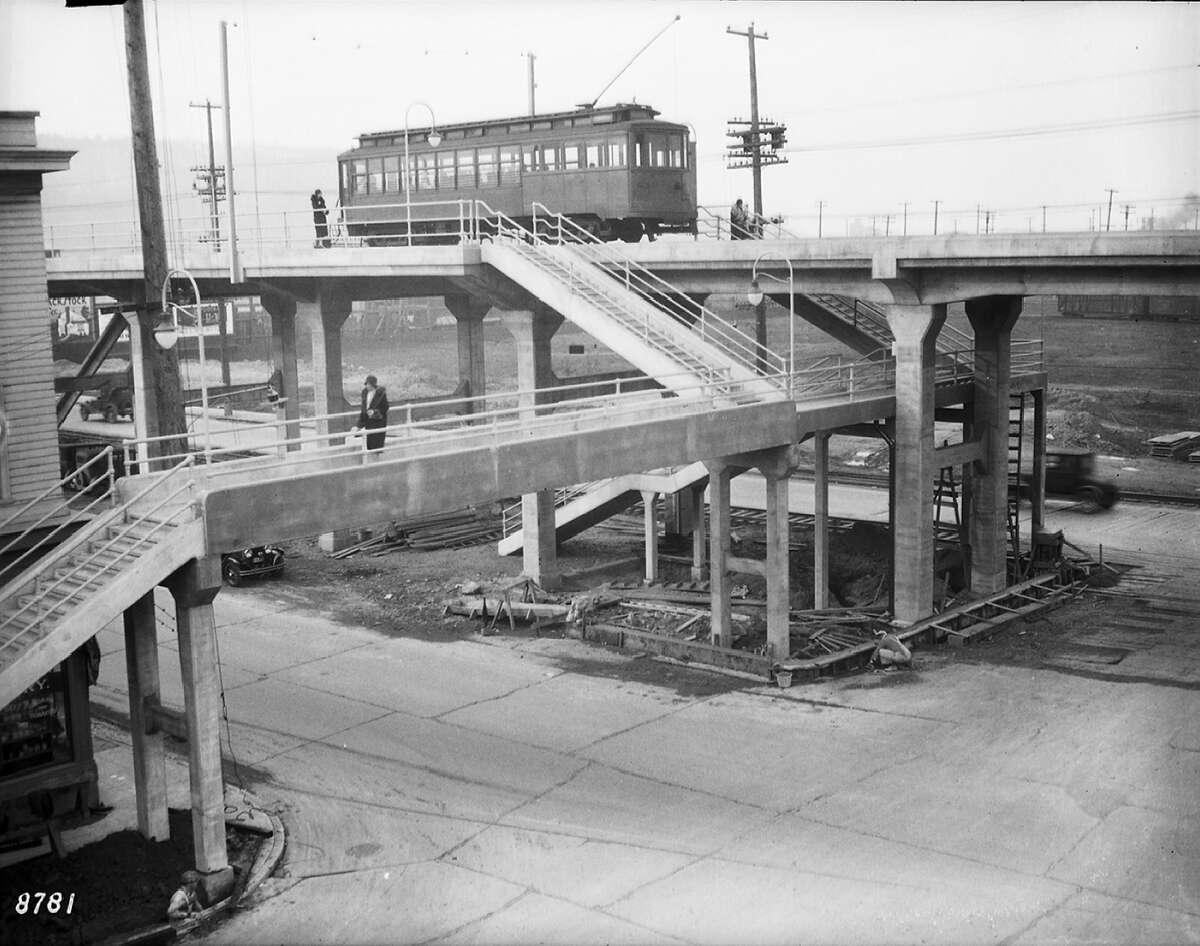
At the beginning of the 20th century, Seattle was growing so quickly that its streets could not keep up. To help people get to work, school, and the port, the city built a huge streetcar network—more than 400 kilometers of track! It was one of the largest streetcar systems on the American West Coast.
Streetcars ran almost everywhere: from Ballard to Columbia City, from Lake Union to downtown. A ticket cost just a few cents, and the streetcar became for city residents what the phone is for us today—an ordinary, familiar part of everyday life.
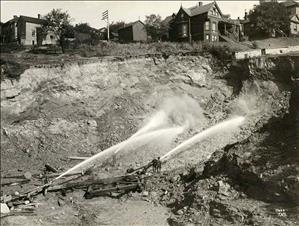
But one hill stood in the way of progress: Denny Hill, a massive mound right in the center of the city. Building tracks up the hill was too difficult for the streetcars of the time. So Seattle residents decided not to go around the hill, but to... wash it away. Literally. Workers directed powerful streams of water from hoses at the hill, eroding the earth and carrying it away by barge into the bay. This process, known as the Denny Hill Regrade, continued for several decades and completely transformed the city’s appearance—while also clearing the way for streetcar lines.
Voices That Have Almost Been Forgotten
The history of streetcars is usually told through figures and maps. But the real heroes of this story were ordinary people. Conductors who greeted the same passengers every day. Motormen who knew every turn in the rails by heart, like the back of their hands. And children—yes, children—who turned riding on the streetcar’s step into a genuine street pastime.
It was called “hopping the trolley”—jumping onto the streetcar. Boys would grab onto the rear bumper and ride for free until the conductor noticed. Many conductors, knowing that children would find a way to ride anyway, simply pretended not to see them. Newspapers of the time contain reports in which parents complained about the “dangerous habit,” while admitting that they had done the same thing when they were children.
For many Seattle residents—especially immigrants from Scandinavia, Italy, and Japan who worked in sawmills and at the port—the streetcar was more than just transportation. It was a meeting place where people from different parts of the city found themselves sitting together, hearing different languages, and gradually getting used to one another.
How the Streetcar Disappeared Almost Overnight
What happened next is a real detective story. In the 1930s, a company called National City Lines emerged in the United States. It was financed by major automobile and oil companies, including General Motors. The company bought up streetcar lines across the country—including in Seattle—and then shut them down, replacing them with buses.
Officially, the explanation was simple: buses were cheaper and more flexible, while rails were outdated. But many historians believe there was more to it than that—large corporations had more to gain from selling gasoline and tires than from supporting streetcars, which did not need gasoline at all.
The last streetcar in Seattle ran on the rails in 1941. Just imagine: a city where hundreds of ringing cars had been running only the day before switched entirely to buses within a few years.
| Year | Event |
|---|---|
| 1884 | First horse-drawn streetcar in Seattle |
| 1900s | Peak of the network’s development—more than 400 km of track |
| 1907–1930 | Denny Hill Regrade—the hill is washed away with water |
| 1939–1940 | National City Lines buys up the lines |
| 1941 | Last streetcar in Seattle |
| 2007 | Opening of the new South Lake Union Streetcar |
Why It Matters Today
Interestingly, nearly 70 years after the old streetcars disappeared, rails returned to Seattle—first with the streetcar in the South Lake Union neighborhood, and later with the modern Link light rail system. It was as if history had come full circle.
To me, the most valuable part of this story is not the rails or the numbers, but the people behind them: the conductors, the children, and the immigrants who together created the city life we barely notice today. The next time you see an old photograph of a streetcar, remember that behind every car were real voices, hopes, and small adventures that have almost disappeared from the city’s memory—but still live on in its soil, right beneath our feet.
/cdn.vox-cdn.com/uploads/chorus_image/image/56738081/capitol_hill_streetcar.0.jpg)