Long ago, when your great-great-grandparents were the same age as you, lights came on every evening in the clubs along one Seattle street, and music poured out through the doors. The street was called Jackson Street. At that time, the city had unfair rules that separated people by skin color, but on this street, music helped people sit side by side and listen to the same thing. Here’s how that happened and why it is worth remembering.
What “Segregation” Was and Why It Was Unfair
Imagine that your school has a rule: girls with braids can play only on one half of the playground, while girls without braids must stay on the other. And no one can explain why. You would feel hurt and confused, right?
That is roughly how segregation worked—a system that separated people by skin color. In Seattle in the 1930s and 1940s, the laws did not always state this directly, as they did in some other parts of America, but in practice things were similar. Black people found it very difficult to buy or rent homes in many neighborhoods. Many of them lived in what was known as the Central District. In addition, not all restaurants, theaters, and clubs allowed them into the audience or onto the stage.
This was unfair. But, as often happens in history, when people are shut out of some doors, they find—or sometimes build—others.
Jackson Street: The Street That Never Slept
More than two dozen clubs sprang up in the Central District along Jackson Street. Each featured jazz—music in which the musicians seem to talk to one another through their instruments. One plays a melody on the trumpet, another answers on the saxophone, and a third picks it up on the piano. It is like a cheerful wordless conversation in which everyone can add something of their own.
Some clubs had beautiful and unusual names: the Rocking Chair, the Congo, and the Palomar. One was called the Black and Tan—a term used at the time for places that welcomed guests of different skin colors. The name suggests the most important thing: everyone came here. Black musicians played onstage, while Black and white listeners—students, sailors, neighbors, and people coming in after work—sat in the audience.
What is especially interesting is that many clubs stayed open almost until morning. Musicians who had finished performing in larger halls came here to keep playing for themselves, try out new ideas, and invent new melodies. Imagine: you are already lying in bed and dreaming, while somewhere in the city, a song is being born that people will later hear all over the world.
Two Teenage Friends Brought Together by Music
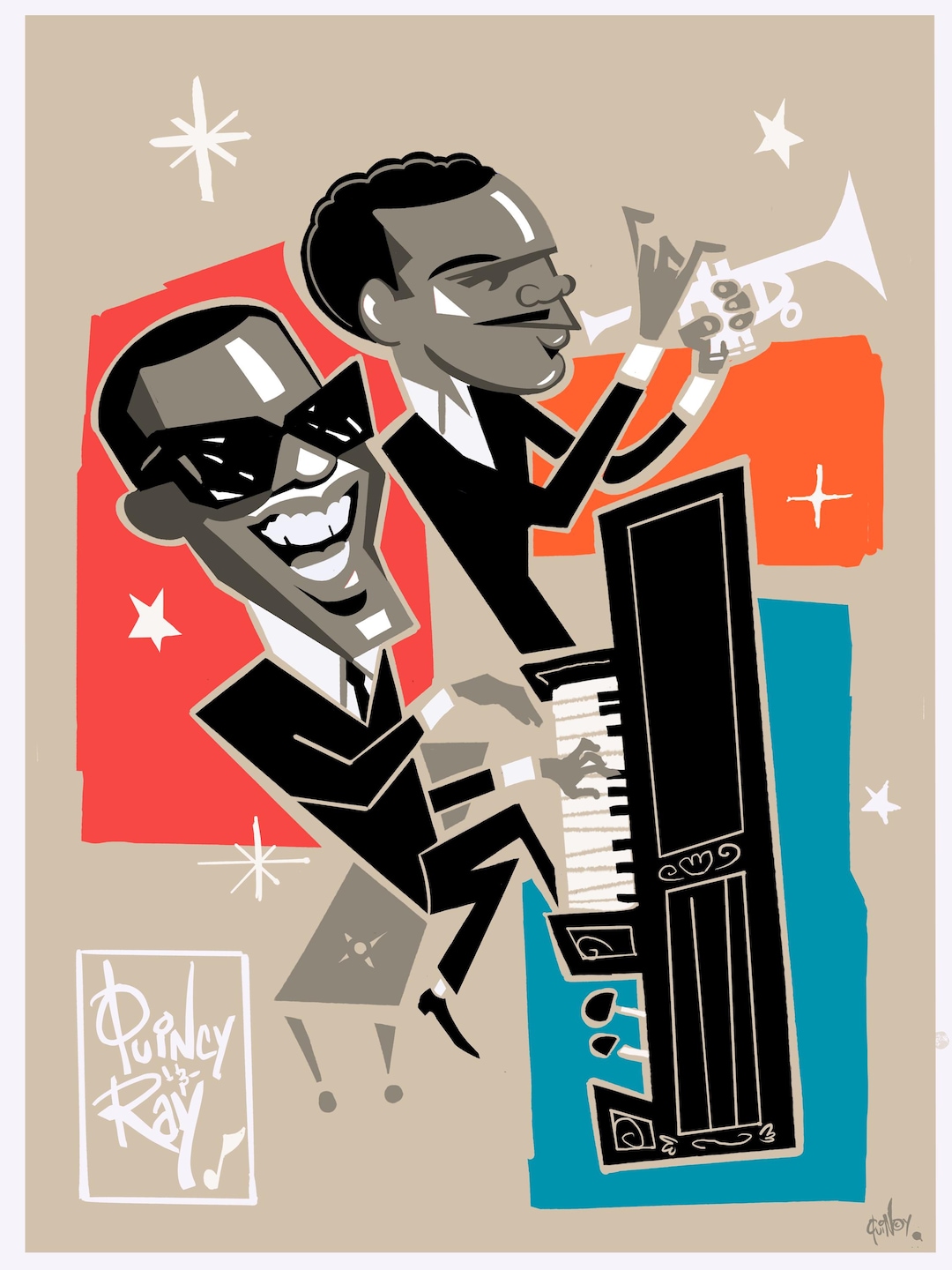
The most touching story from this street is about two boys. In the late 1940s, Ray Charles moved to Seattle. He was about seventeen and had been blind since childhood, but he played the piano so brilliantly that adult musicians listened to him open-mouthed. In Seattle, he performed in clubs, recorded his first records, and began to feel like a real musician.
A very young Quincy Jones was nearby—he was about thirteen or fourteen. He also dreamed of music and played the trumpet. Quincy later said that Ray became an older friend and teacher to him: he showed him how to write melodies on paper and how to turn them into complete compositions—a process called “arranging.” Imagine someone explaining how to turn a simple drawing into a real painting filled with colors and shadows.
Many years later, both became world-famous. Ray Charles became one of the greatest singers and pianists of the twentieth century. Quincy Jones became a composer and producer who helped create music for some of the world’s best-known performers. The famous song “We Are the World” was also made with his involvement. And it all began on a small street in Seattle, where two teenagers simply listened and played.
Ripples on the Water: What Remained After the Clubs
Do you remember what ripples look like when you toss a pebble into a pond? One small splash, and the circles spread farther and farther. The same thing happened with the jazz clubs of Jackson Street.
First, they helped people get used to one another. When Black and white listeners sat in the same room, applauded the same musicians, and shared the same joy, it became harder for them to believe in the foolish idea that some people were “better” than others. Music did not change the laws in one evening, but it prepared the ground: people already knew what it was like to be together.
Second, these clubs nurtured an entire generation of musicians. It is said that the young Jimi Hendrix, who also grew up in Seattle and became a legendary guitarist, absorbed the musical atmosphere of the city.
Third, Seattle still remembers the legacy of jazz today. Museums and local histories tell its story, while people in the Central District preserve the memory of the old clubs. Many of them closed long ago, and the buildings have changed, but the stories remain.
It seems to me that the most important lesson of this story is this: positive change does not always begin with grand speeches. Sometimes it begins with a single melody played together. When you hear jazz—the trumpet “arguing” with the piano and the drums bouncing along—remember the small street in Seattle where people who had been told, “You cannot come in here,” built a place where everyone could enter.
In Conclusion
The story of Seattle’s jazz clubs reminds us that even in unfair times, people can create islands of kindness and friendship. Music became a bridge, and a bridge is something that connects two shores. As long as we remember stories like these, we better understand how important it is to be open, curious, and kind toward people who are different from us.