Imagine a narrow street lit by yellow streetlamps. Trumpets drift from the open doors of clubs, drums beat out a fast rhythm, and a boy stands on the sidewalk simply listening—for he is too young to go inside, while the music is so good that leaving is impossible. That boy was Quincy Jones, who many years later would become one of the world’s most famous music producers. The street was Jackson Street, and it was located in Seattle—a city you may think of as a city of coffee and rain, but not jazz. You would be wrong.
The City Divided in Two
In the middle of the twentieth century, unjust rules existed in America: Black people were forbidden from living in many parts of a city simply because of the color of their skin. This was called segregation. In Seattle, such rules forced Black residents to settle mainly in one neighborhood—the Central District. Jackson Street ran straight through its heart.
It might seem that the unjust division of the city could lead only to poverty and sadness. But something unexpected happened: people who were barred from other neighborhoods created something extraordinary on their own street—a whole world of music that became famous across the country.
The Street Where Seattle Jazz Was Born
Over roughly twelve blocks, about thirty jazz clubs lined Jackson Street. Thirty! It was as if your city had thirty movie theaters in a row on a single street, each showing something different and special.
Most remarkably, Black and white patrons often sat together in these clubs and listened to music in the same room, even though that was nearly impossible elsewhere in the city. Music seemed to erase the invisible line drawn by unjust laws.
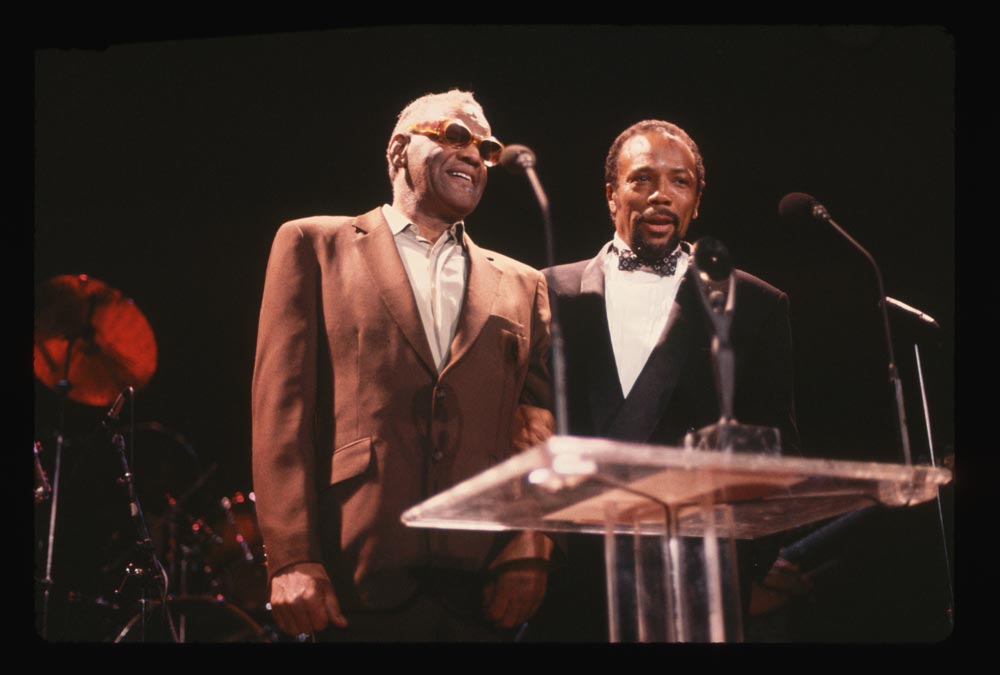
It was here that future great musician Ray Charles performed as a boy after moving to Seattle as a teenager. Young Quincy Jones, who later produced Michael Jackson’s albums, admitted that the sounds of Jackson Street determined his destiny:
“I didn’t learn about jazz from textbooks. I learned about it by standing on this street and listening to music pour out of every door,” he recalled years later.
An Economy Built on Trumpets and Drums
Here is what is especially interesting: clubs were about more than music. They also provided work for many people. For a club to operate, it needed cooks, waiters, doormen, taxi drivers, tailors who made musicians’ elegant suits, and even craftsmen who repaired instruments.
Because Black residents of Seattle were shut out of many other professions in the city, this musical economy became a vital source of employment and income for the entire neighborhood. People who were rejected from many ordinary jobs created their own—and it flourished.
| Who earned a living | What they did |
|---|---|
| Musicians | Played in clubs every night |
| Tailors | Made stage costumes |
| Cooks and waiters | Fed club patrons |
| Taxi drivers | Drove guests around the city at night |
| Hotel owners | Housed visiting musicians |
In this way, one music-filled street supported hundreds of families. It was like a single bright flower in a difficult drought attracting bees, butterflies, and birds—and an entire small ecosystem of life unexpectedly blossoming around it.
What Remains of Jackson Street Today
Today, Seattle is home to the Northwest African American Museum and related projects, which carefully preserve the stories of those clubs, photographs of the musicians, and recordings of their performances. Many of the buildings are gone, but their memory lives on—even plaques have been installed along the streets, telling passersby that jazz once sounded here, music listened to throughout the city.
The story of Jackson Street matters not only because future stars performed there. It matters because it shows that even when the rules were unjust, people found a way to create something beautiful and powerful—with their own hands, their own music, and their faith in one another. Sometimes the truest history of a city is the story of a street that once sounded louder than any injustice.

+-+Jackson+Street+Jazz+Walk.jpg)